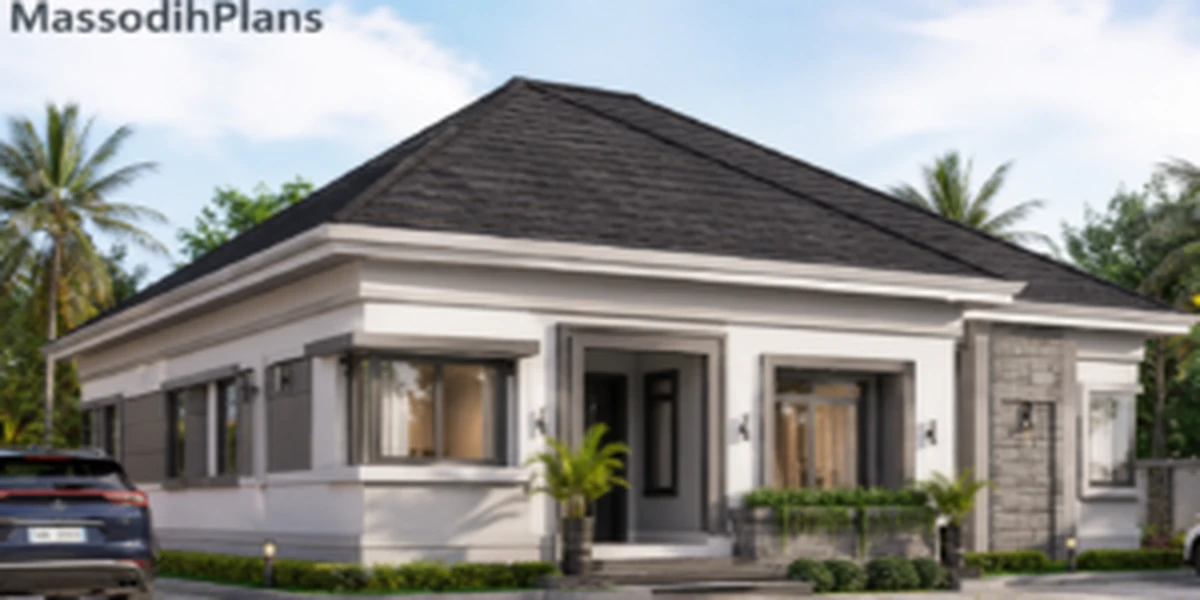
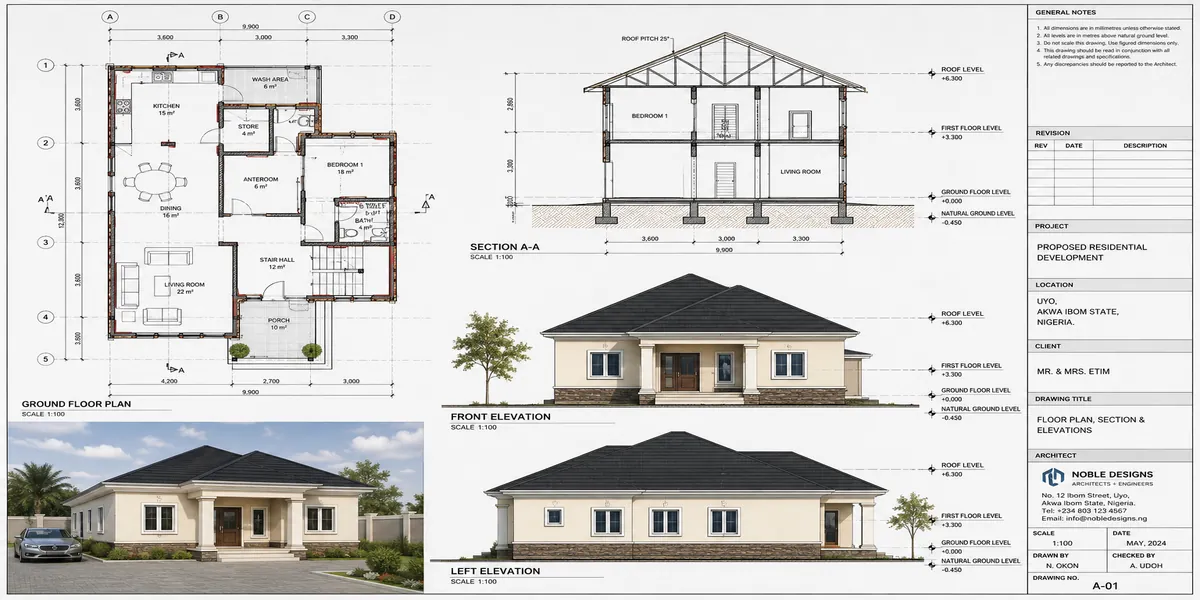
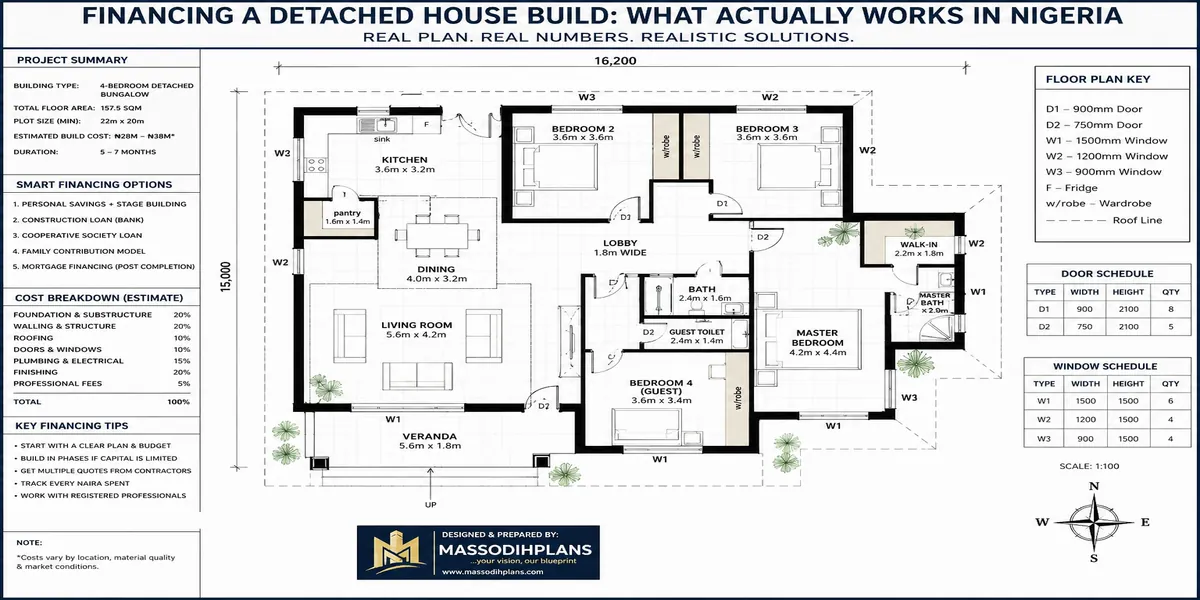
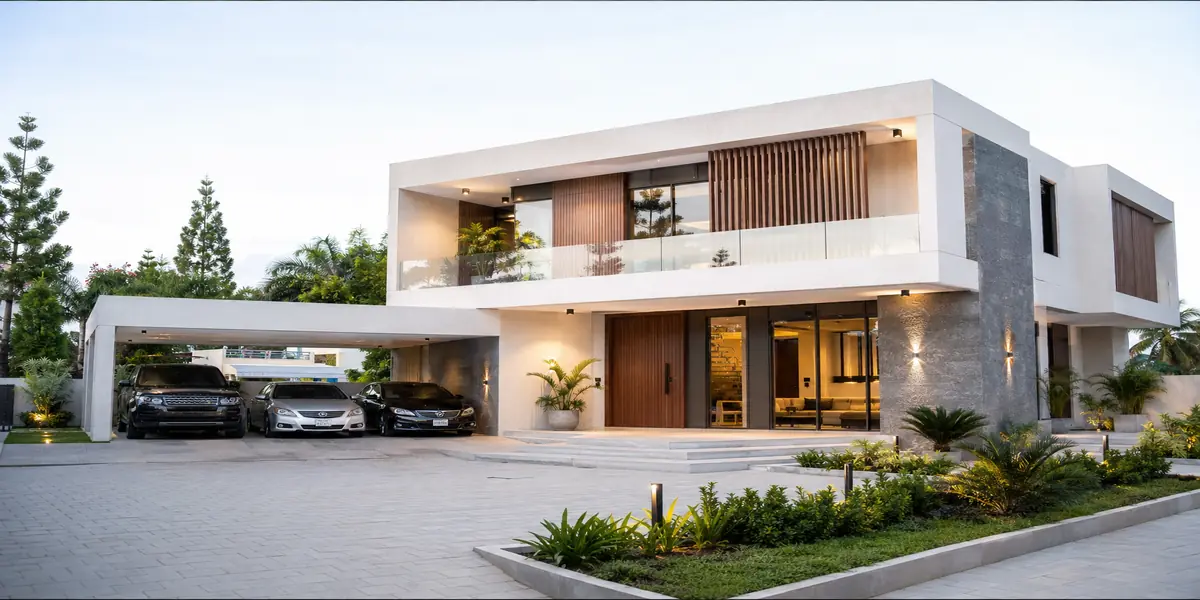
You Have a Narrow Plot. Here Are 25 House Plans That Turn That Constraint Into Something You Will Actually Be Proud Of
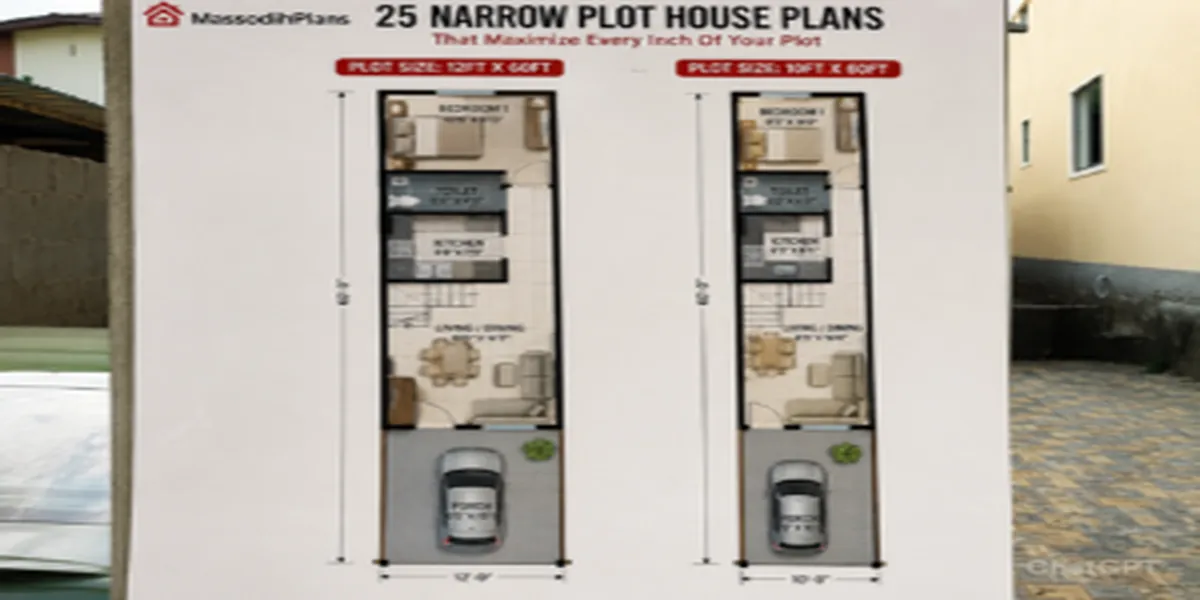
25 narrow plots design
If Someone Told You That You Cannot Build a Good House on a Narrow Plot, They Were Wrong
I want to start by saying something directly: some of the most thoughtful, functional, and liveable homes I have seen in Nigeria and other part of he world were built on narrow plots. Not in spite of the constraint, but because the constraint forced the designer to think harder.
A narrow plot in Lagos, Port Harcourt, Uyo, Enugu, or Abuja is not a problem. It is a design brief. And when you approach it the right way, that brief produces homes with efficient layouts, smart ventilation, honest room proportions, and a sense of order that badly-planned bigger houses rarely achieve.
The challenge is that most people who own narrow plots in Nigeria do not know what is possible. They either scale down their ambitions to match what they think the land can carry, or they hire someone who jams a large plan onto a small lot and produces a building that is dark, cramped, and impossible to live in comfortably.
This article is my attempt to change that. I am going to walk you through 25 narrow lot house plan concepts that I have developed, studied, or advised on in the Nigerian context. For each one, I will tell you the plot dimensions it suits, the layout logic, the ventilation strategy, what kind of family it works for, and what to watch out for during construction.
Read it from start to finish if you are still deciding on your design. Or jump to the plan type that matches your plot and your needs. Either way, by the time you finish, you will have a clear picture of what your narrow land can become.
What Counts as a Narrow Lot in Nigeria?
Before we get into the plans, let me define what I mean. In Nigeria, a narrow lot is generally any plot where the width (the short dimension, usually the frontage facing the street) is significantly smaller than the depth. There is no single official threshold, but from a design standpoint, I consider any plot where the width is 12 metres or less relative to a depth of 25 metres or more to be a narrow lot design challenge.
Common narrow plot configurations in Nigerian urban areas include:
Plots of 9 metres by 30 metres (roughly 270 square metres) in dense urban layouts in cities like Lagos Island, Aba, and Onitsha.
And plots of 10 metres by 30 metres or 10 metres by 40 metres in semi-urban residential areas in cities like Uyo, Owerri, and Calabar.
Plots of 12 metres by 25 metres in older residential zones of cities like Ibadan, Enugu, and Kano.
Also plots of 7 metres to 9 metres wide in deeply urban areas where land subdivision has produced very tight but surprisingly buildable pieces of land.
Each of these configurations has its own set of design possibilities and constraints. The plans below cover all of them.
Why Narrow Lots Demand Better Design Thinking
A wide plot gives a designer room to spread. Rooms can be arranged side by side, access can come from multiple directions, and ventilation can be achieved without much deliberate planning. The width forgives mistakes.
A narrow lot does not. Every decision on a narrow lot has a consequence. Put the staircase in the wrong place and you block the only cross-ventilation path in the building. Make the corridor too wide and you lose a bedroom. Push the building too close to the boundary and your neighbour’s wall becomes your only view from the side window.
This is why narrow lot house plans in Nigeria need to be designed by someone who understands how these constraints interact. Not just drawn from a template.
The good news is that the design principles for narrow lots are learnable, repeatable, and highly effective when applied correctly. I teach the underlying principles in detail in the Plan School section of MassodihPlans, but in this article I want to show you those principles in action through 25 real plan concepts.
The Core Principles Behind All 25 Plans
Every plan in this list follows a set of design principles that I apply consistently to narrow lot projects in Nigeria. Understanding these principles will help you evaluate any plan you encounter, not just the ones in this article.
Principle 1: Build deep, not wide
On a narrow plot, the building footprint grows towards the rear of the plot, not sideways. A building that is 7 metres wide and 18 metres deep can accommodate the same floor area as a building that is 12 metres wide and 11 metres deep, but it does it on a much narrower lot.
Principle 2: Keep the corridor minimal
A corridor that runs the length of a narrow building consumes valuable width. On a 9-metre-wide plot with a 1.5-metre setback on each side, you have only 6 metres of buildable width. A 1.2-metre corridor takes 20 percent of that. The best narrow lot plans either eliminate the corridor entirely or reduce it to the absolute minimum needed for circulation.
Principle 3: Stack functions vertically
On a duplex or storey building, the plan benefits from putting different functional zones on different floors. Living and social spaces on the ground floor. Private bedrooms upstairs. This vertical stacking reduces the footprint required on each floor while increasing total usable area.
Principle 4: Use the full depth strategically
The rear of a narrow plot is often underused. A well-designed narrow lot plan uses the rear portion for service spaces (kitchen, utility room, bathroom, generator area, borehole access) and keeps the front and middle for living and sleeping spaces.
Principle 5: Design for cross-ventilation deliberately
On a narrow plot, the prevailing wind usually enters from the front and needs to exit at the rear. Every room must have a pathway to that air movement. This requires careful positioning of internal doors, windows, and openings so that air can flow through the building even when all doors are closed.
The 25 Narrow Lot House Plans
Plan 1: The 9m x 30m Single-Bedroom Starter Plan
Plot suitability: 9 metres by 25 metres or deeper Best for: Young couples, singles, or as a rental income unit Recommended setbacks: 1.5 metres each side, 3 metres front, 3 metres rear
This is the most basic narrow lot plan I work with, and it is also one of the most underestimated. On a 9-metre-wide plot, after 1.5-metre setbacks on both sides, you have 6 metres of buildable width. That is enough for a single-bedroom plan that is genuinely comfortable if the layout is designed properly.
The floor arrangement places the living room and dining area in the front third of the building, the bedroom and bathroom in the middle, and the kitchen and utility area at the rear. No corridor is needed. The living room opens directly into the dining area, which connects to a short hallway leading to the bedroom and bathroom. The kitchen has a rear door that accesses the external utility and service area.
Cross-ventilation is achieved through a front window in the living room, a side window in the bedroom (positioned facing the side setback space), and a rear window in the kitchen. When the front and rear openings are open simultaneously, air moves through the entire plan.
What builders get wrong here: They often place the bathroom in the rear corner and the kitchen adjacent to the bedroom, forcing a long internal circulation route that makes the plan feel small. The kitchen should always be accessible from outside for domestic use, which means it belongs at the rear with its own external access.
Cost guidance: At current Nigerian material prices, a single-bedroom bungalow of this type on a concrete strip foundation, block walls, and long-span aluminium roofing sheet will cost between 2.5 and 4.5 million naira depending on specification and location.
Plan 2: The 9m x 30m Two-Bedroom Compact Bungalow
Plot suitability: 9 metres by 28 metres minimum Best for: Small families, starter homes, rental investment Roof type: Hip roof or gable with wide overhangs
This plan adds a second bedroom while maintaining the same 6-metre buildable width. The key design move is stacking the two bedrooms side by side in the rear half of the plan, each with its own window to the side setback. The bathroom is shared but positioned centrally between the two bedrooms for equal access.
The living room occupies the front of the plan with a large window facing the street. The kitchen sits at the rear with external access to the service yard. A small store or pantry is tucked between the kitchen and the rear bedroom.
Parking is accommodated in the front setback as an open hardstand. There is no space for a covered garage on a 9-metre plot, but a properly surfaced open bay with a kerb drop from the street is entirely adequate.
Ventilation strategy: Both bedrooms receive cross-ventilation from the side setback windows, which are positioned on opposite sides of the plan. The living room ventilates front-to-side. The kitchen ventilates rear-to-side. The bathroom has a high louvre window to a side setback for permanent ventilation.
Family suitability: This plan works well for a couple with one or two young children. It is tight but liveable, and the absence of wasted corridor space means the actual room sizes are better than you would expect from the plan area.
Plan 3: The 10m x 30m Two-Bedroom Bungalow with Car Porch
Plot suitability: 10 metres by 28 metres or deeper Best for: Nuclear family, first home, rental property Distinguishing feature: Covered car porch within the setback
With 10 metres of plot width and 1.5-metre setbacks, the buildable width increases to 7 metres. This extra metre makes a meaningful difference. It allows a covered car porch to be integrated into the plan as a projecting element within the front setback, which is permitted in most Nigerian planning regulations as long as it does not exceed the allowed setback encroachment limit.
The floor plan is similar to Plan 2 but with better room proportions. The living room gains an extra 500mm of width which allows a standard three-piece suite to be arranged without feeling forced. The bedrooms are more generous. The kitchen is larger and has room for a separate small dining nook that serves as an informal eating space separate from the main dining area in the living room.
Drainage consideration: The car porch must be graded away from the building and connected to a surface drain that leads to the front of the plot and exits to the street drainage channel. A common builder mistake is to leave the car porch area ungraded, which channels rainwater against the external wall and causes dampness at foundation level within two or three rainy seasons.
Plan 4: The 10m x 35m Three-Bedroom Bungalow for Narrow Urban Plots
Plot suitability: 10 metres by 32 metres minimum Best for: Nuclear family with three children, or family with domestic staff Layout logic: Linear plan with rear service zone
This is one of the most practical plans in this entire list for urban Nigeria. A three-bedroom bungalow on a 10-metre-wide plot is achievable without compromising on room quality if the layout is handled correctly.
The design places the master bedroom at the rear of the plan, away from the street noise, with its own bathroom. Two additional bedrooms are positioned in the middle of the plan, sharing a common bathroom. The living and dining area occupies the front, with the kitchen and utility at the rear adjacent to the master bedroom wing.
The circulation within the plan uses a short central hallway that connects all three bedroom doors and leads to both the living room and the kitchen. This hallway is kept to 1.0 metres wide to minimize its consumption of floor area.
Privacy consideration: The master bedroom at the rear gives the parents separation from the children’s bedrooms and from the noise of a living room that may be active in the evening when children are in bed. This is a detail that most template plans for narrow lots completely miss.
Security note: The only external doors in this plan are the front entrance and the kitchen rear door. Both should be steel-frame doors with proper deadbolts. The single entrance point at the front simplifies security management and makes it easy to monitor who enters and leaves.
You can find complete drawings for this plan type in the Plans Library section of MassodihPlans.
Plan 5: The 10m x 40m Three-Bedroom Bungalow with Staff Quarters
Plot suitability: 10 metres by 38 metres or deeper Best for: Family with domestic staff, or income-generating rental unit attached
When your plot is deep enough, you can add a small domestic staff room and bathroom at the very rear of the plan, separated from the main house by the kitchen and utility zone. This room can serve as a domestic staff quarter during occupancy or as a rentable room for additional income.
The key design challenge here is keeping the staff quarter sufficiently separate from the main living spaces for privacy on both sides while still connecting it to the house through a controlled access point in the kitchen or utility room. I always recommend a separate external entrance for the staff quarter so that domestic staff do not need to pass through the main living area to come and go.
Generator space in this plan: With the extra depth, a small generator enclosure can be positioned against the rear boundary wall, accessed from the service yard, and separated from the staff quarter by at least 3 metres. This spacing reduces noise and fume intrusion into the habitable rear room.
Plan 6: The 7m x 25m Minimal Footprint Two-Bedroom Plan
Plot suitability: 7 metres to 8 metres wide, 24 metres deep minimum Best for: Very dense urban areas, Lagos Island, Onitsha, older town layouts Special consideration: Requires careful setback negotiation with local planning authority
Seven metres is genuinely narrow. After 1-metre setbacks on each side (which some urban local planning authorities permit in high-density zones), you have only 5 metres of buildable width. This is a tight number but it is not impossible.
The plan I use for this width places two bedrooms on a single floor with a bathroom between them, and combines the living and dining area into a single open-plan space at the front. The kitchen is at the rear with direct external access. There are no corridors. Movement from the living area to the bedrooms is through a single connecting door.
Why this works despite the width: Because every square metre is accounted for. There is no wasted space anywhere in this plan. The rooms are compact but they are properly proportioned, which means furniture can be arranged in a way that feels ordered rather than crammed.
What to avoid: Do not attempt to add a fourth space (a study, a storeroom, an extra bathroom) to this plan without professional design input. The temptation is understandable but the consequence is always the same: the circulation becomes impossible and the rooms lose their minimum viable dimensions.
Plan 7: The 12m x 25m Three-Bedroom Plan with Side Garage
Plot suitability: 12 metres by 24 metres minimum Best for: Urban and semi-urban families, professionals, middle-income households Distinguishing feature: Garage integrated into the main building footprint
At 12 metres of plot width, you have enough room to do something that narrower plots cannot accommodate: integrate a single-car garage into the main building footprint. After 1.5-metre setbacks on both sides, the buildable width is 9 metres. A standard garage bay is 3 metres wide. That leaves 6 metres for the living spaces, which is entirely workable for a three-bedroom plan.
The garage occupies one end of the ground floor plan. The living and dining area takes the centre and front of the remaining width. The bedrooms are at the rear. The kitchen connects the dining area to the rear service yard.
Roof type: For this plan, a hip roof that covers both the main building and the garage in a single continuous roof form works best both aesthetically and practically. It eliminates the junction between a main roof and a garage lean-to, which is a common source of water ingress in Nigerian construction.
Plan 8: The 9m x 30m Two-Storey Duplex for Maximum Floor Area
Plot suitability: 9 metres by 28 metres minimum Best for: Larger family that needs more rooms without a larger footprint Staircase consideration: Straight-flight staircase along the rear wall
When a narrow plot needs to accommodate more rooms than a single floor can provide, the answer is to go up. A two-storey building on a 9-metre-wide plot can deliver four or five bedrooms while maintaining a modest, manageable ground floor footprint.
The ground floor of this plan places the living room, dining area, kitchen, a guest toilet, and a small study or reception room. The first floor contains three or four bedrooms with bathrooms. The staircase runs along the internal side wall of the plan, parallel to the building’s long axis, which means it consumes minimal floor area on both levels.
Staircase design advice: On a narrow plan, the staircase should have a straight single flight wherever possible. A dog-leg or quarter-turn staircase requires a wider landing and more floor area. A straight flight with risers of 175mm and goings of 250mm, width of 900mm, and a total height of approximately 3 metres will fit in a floor area of roughly 3 metres by 1.2 metres. That is the target.
Structural alignment: The walls on the ground floor must align directly with the walls on the first floor. On a narrow plan where every structural wall does double duty as a spatial divider, misalignment between floors will require expensive transfer beams and may introduce structural risk. This is one of the most common mistakes on narrow duplex projects in Nigeria.
I cover duplex design in more detail in the duplex house plans section of our Plans Library.
Plan 9: The 10m x 35m Four-Bedroom Duplex for Urban Families
Plot suitability: 10 metres by 32 metres minimum Best for: Growing family, multi-generational household Investment value: High rental yield potential in urban locations
Four bedrooms on a 10-metre-wide plot requires a two-storey solution. The ground floor carries the living room, dining area, kitchen, one ground-floor bedroom (which can double as a guest room or an elderly parent’s room), and a common toilet. The first floor carries three bedrooms, each with access to a shared bathroom and one with its own en-suite.
Elderly accessibility note: If the household includes an elderly parent or someone with mobility limitations, the ground floor bedroom in this plan is critical. It should be sized at a minimum of 3.5 metres by 3.5 metres, with an en-suite bathroom that has enough turning space for a wheelchair (1.5 metres by 1.5 metres minimum). Do not make the ground floor bedroom an afterthought. In many Nigerian households, it becomes the most important room in the house within ten years of construction.
Balcony: A 1-metre-deep balcony on the first floor front elevation provides shade for the ground floor, gives the first-floor bedrooms an outdoor space, and significantly improves the external appearance of the building without adding to the footprint.
Plan 10: The 10m x 30m Three-Bedroom Duplex with Rental Unit
Plot suitability: 10 metres by 28 metres minimum Best for: Owner-occupier with rental income ambition Layout concept: Owner on upper floor, tenant on ground floor
This plan divides the two floors of a duplex into separate self-contained units. The ground floor unit has two bedrooms, a living room, kitchen, and bathroom, with its own external entrance from the compound. The first floor unit has two bedrooms (or optionally three compact bedrooms), a living area, kitchen, and bathroom, accessed by an external staircase that rises along the side of the building.
By giving each unit its own separate entrance, you create a building that functions as a rental investment from day one while still being manageable as an owner-occupied upper-floor residence.
Privacy between units: The separation of floor levels means sound transmission between units is the main concern. Specifying a reinforced concrete slab rather than a timber floor for the upper level, and using a 225mm block wall (double-leaf) for the wall between the internal staircase landing and the ground floor unit, significantly reduces sound transmission and improves both tenant and owner comfort.
Plans 11 through 15: The Corner Plot Advantage
Corner plots in Nigerian urban layouts present a unique narrow lot opportunity. The plot may be narrow on one face but the corner condition means the building has two street frontages, which opens design possibilities that interior narrow plots do not have.
Plan 11: The 10m x 25m L-Shaped Three-Bedroom on a Corner Plot
The L-shape takes advantage of both frontages. The short wing of the L faces the secondary road and contains the kitchen and service zone. The long wing faces the main road and contains the living and bedroom spaces. The corner itself becomes an outdoor courtyard that provides cross-ventilation and natural light to both wings.
Plan 12: The Corner Duplex with Double Entry
A corner plot duplex can have a pedestrian entrance from the main road and a vehicular entrance from the side road, which completely solves the parking problem that most narrow plot plans struggle with.
Plan 13: The Corner Bungalow with Wraparound Veranda
A veranda that wraps around two faces of the building provides shade on two elevations, dramatically reduces the solar heat load on the building, and gives the home a character that interior narrow plots cannot achieve.
Plan 14: The Corner Three-Bedroom with Commercial Ground Floor
On a busy corner in an urban Nigerian neighbourhood, a commercial ground floor (a shop, pharmacy, or small office) with a residential first floor is one of the highest-value uses of a narrow corner plot. The commercial space fronts the main road. The residential entrance is from the side road.
Plan 15: The Corner Two-Bedroom Starter on a Small Corner Plot
Even a small corner plot of 8 metres by 20 metres can accommodate a compact two-bedroom starter home with a corner courtyard and a proper parking bay from the side road.
Plans 16 through 20: The Duplex Series for Mid-Size Narrow Plots
These five plans address the 10-metre to 14-metre-wide plot range with two-storey solutions optimized for different family sizes and income brackets.
Plan 16: The 11m x 28m Four-Bedroom Family Duplex
Buildable width of 8 metres. Ground floor: living, dining, kitchen, one bedroom, one bathroom, car porch. First floor: three bedrooms, two bathrooms, balcony. Hip roof. Reinforced concrete slab. Staircase in the centre of the plan with landing that serves all three first-floor rooms.
Plan 17: The 12m x 30m Five-Bedroom Prestige Duplex
Buildable width of 9 metres. Ground floor: living, formal dining, kitchen, family lounge, one bedroom with en-suite, car porch. First floor: four bedrooms including master bedroom with en-suite and dressing area. Feature balcony on front elevation. This plan is appropriate for a professional household that wants a prestige address without a large land holding.
Plan 18: The 10m x 40m Duplex with BQ and Garden
When the plot is deep enough, a boys’ quarters (BQ) building at the rear of the compound adds domestic staff accommodation or a separate rental income unit. The BQ is kept small (one room, one bathroom, kitchenette) and is positioned against the rear boundary wall so it does not interfere with the main building’s rear setback space.
Plan 19: The 12m x 25m Duplex with Covered Garage and Generator Room
This plan integrates a covered single-car garage and a generator enclosure within the ground-floor footprint. A side setback provides direct access to the generator enclosure. Hollow block walls with acoustic lining reduce noise, while a conduit in the shared wall links the enclosure directly to the building’s electrical system.
Plan 20: The 14m x 28m Six-Bedroom Family Duplex for Extended Households
At 14 metres of plot width, the narrow lot constraint relaxes somewhat, but the design discipline of the narrow lot approach still produces better outcomes than spreading the building without purpose. This plan delivers six bedrooms across two floors with two bathrooms per floor and an arrangement that can accommodate an extended family with genuine comfort.
Plans 21 through 25: Special Condition Narrow Lot Plans
Plan 21: The Flood-Zone Narrow Lot Plan
For plots in flood-prone areas of cities like Port Harcourt, Benin City, and parts of Lagos, the ground floor finished floor level is raised to 900mm above the surrounding ground level. The structural approach uses a suspended ground floor slab rather than a solid raft, which allows floodwater to pass beneath the building without hydrostatic pressure building against the foundation. External steps replace a ramped approach. The building sits higher and drier, and the elevated position provides better visual privacy and natural ventilation as a secondary benefit.
Plan 22: The North-Facing Narrow Lot Plan for Hot-Dry Climate Zones
For plots in Kano, Sokoto, Kaduna, and other northern Nigerian cities where the climate is hot and dry, the design strategy is different from the approach used in the humid south. Smaller windows reduce solar heat gain during the day. Thick walls (225mm block minimum) provide thermal mass that moderates internal temperatures. A flat or low-pitched roof with a ceiling void ventilated by small continuous louvre openings at the eaves reduces the heat load from above. Internal courtyard or atrium space provides light and ventilation without the direct sun exposure of large external windows.
Plan 23: The Phased Construction Narrow Lot Plan
This is the most practical plan in this entire list for many Nigerians who are building with limited funds and cannot complete the entire building at once. The plan is designed from the beginning to be built in two or three phases without structural or aesthetic compromise at any stage. Phase one delivers a two-bedroom unit that is fully habitable. And phase two extends the building rearward to add a third bedroom, a dining room, and an expanded kitchen. Phase three adds a first floor. The structural design from phase one accounts for the loads that will be added in phases two and three, so no retrofitting of columns or foundations is required.
Plan 24: The Narrow Lot Plan with Home Office
As more professionals in Nigerian cities work from home, this plan provides a dedicated home office with a separate entrance from the compound, a closed-door separation from the main living area, and ample natural light and ventilation for long hours of productive work. The design places the office at the front of the ground floor beside the main entrance, allowing clients or colleagues to visit directly without passing through the family living area.
Plan 25: The Narrow Lot Investment Plan for Rental Income
This plan prioritizes rental income per square metre above all other considerations. On a 10-metre by 35-metre plot, it delivers three self-contained single-room and parlour units on the ground floor and two additional units on the first floor, all accessible from a central external staircase in the rear compound. The owner can occupy one unit and rent the others, or rent all five and receive income from a single plot. Each unit has its own kitchen space, bathroom, and sleeping area. The design is compact but each unit is self-sufficient.
Nigerian Reality: What Affects All 25 of These Plans
Material Prices and When to Buy
Cement, blocks, steel, roofing sheets, and tiles in Nigeria are subject to price fluctuations that can be severe. In 2023 and 2024, the price of a 50kg bag of cement more than doubled within a twelve-month period. Anyone who had purchased and stored cement before the price spike saved significant money.
For narrow lot projects, which are typically smaller in total volume than large compound houses, the total material quantities are manageable to stockpile. I always advise clients to purchase and store cement, steel reinforcement bars, and roofing sheets when prices are stable, before construction begins, rather than buying on demand during construction when prices may have moved against them.
Power Supply and Generator Sizing
Every narrow lot plan I design includes a provision for a generator space. The size of that space depends on the size of the generator you intend to use. A 5 KVA generator requires an enclosure of approximately 1.5 metres by 1.5 metres. A 10 KVA generator requires 2 metres by 2 metres. The enclosure must be ventilated (louvre openings at low and high level for air circulation), positioned away from sleeping rooms, and connected to the building electrical system with proper cabling and a changeover switch.
For a two or three-bedroom home, a 5 KVA generator is adequate for essential loads. For a four or five-bedroom home with air conditioning, a 10 KVA generator is more appropriate. Plan this before construction, not after.
Flooding and Drainage on Narrow Plots
Narrow plots in urban Nigeria are particularly vulnerable to flooding because the building occupies a high percentage of the plot area, leaving little soft ground to absorb rainwater. The hardstanding areas (paths, driveways, car parks) are impermeable surfaces that direct all rainwater directly to the drainage channels.
Every narrow lot plan needs a site drainage plan that shows how rainwater from the roof, the compound hardstanding, and the driveway reaches the street drainage channel or a soak pit. Without this planning, water pools in the compound, erodes the external wall finishes at foundation level, and eventually causes dampness inside.
For plots on streets without a functioning drainage channel, a French drain along the front boundary of the compound discharges to an on-site soak pit. This is a solution I specify for many plots in urban Nigerian neighbourhoods where public drainage infrastructure has not kept pace with development.
Borehole Planning on Narrow Lots
On a narrow lot, fitting a borehole that respects the 15-metre separation distance from the septic tank or soak pit is a spatial challenge. The solution is to position the septic tank at the rear of the plot and the borehole at the front, which on a 30 or 35-metre deep plot easily achieves the required separation. Never position them on the same side of the building at the same depth of the plot.
The borehole must remain accessible to a drilling rig during sinking. Keep the access route from the gate to the borehole location free of permanent structures. Size and position the gate pillars to allow a drilling vehicle to enter the compound whenever the borehole sits away from the gate.
Common Mistakes to Avoid on Narrow Lot Builds
These are the mistakes I see most often on narrow lot projects in Nigeria. Most of them are preventable with a good plan and a professional who is paying attention.
Ignoring setbacks to gain floor area. I understand the temptation. When your buildable width is 6 metres and the plan needs 7 metres, it is tempting to reduce the setback. Do not do this. Planning authorities in Nigeria are increasingly enforcing setback violations, and a building constructed in violation of setbacks can be ordered demolished even after completion.
Building without site drainage. A compound that has no drainage plan will have flooding problems. Not maybe. Will. Design the drainage before you pour the slab.
Using the staircase as dead space storage. Under a staircase is often the first place Nigerian clients want to put a store. This is fine if it is designed for. It is a problem when the builder creates an enclosed storage space under the stairs after the concrete has been cast, because the enclosure may trap moisture and is difficult to ventilate.
Making all bedrooms the same size. On a narrow lot, bedroom sizes are already constrained. Making them all equal may seem fair but it wastes the opportunity to create one genuinely good master bedroom. One room slightly larger with an en-suite is more valuable to the building’s occupants and its resale price than three equal but mediocre bedrooms.
Underestimating roof overhang importance. Wide roof overhangs on a narrow lot building are not just aesthetic. They protect the external walls from rain, reduce solar heat gain on the walls, and extend the life of the external render. Specify a minimum 600mm overhang all around.
Investment Value of Narrow Lot Homes in Nigeria
Narrow lot homes in urban Nigeria have strong investment fundamentals for several reasons.
Location. Narrow lots are most common in dense urban areas where land is scarce and expensive. A home in a central urban location, even on a narrow lot, commands a premium rental price and resale value compared to a larger home in a less accessible location.
Rental demand. Compact well-designed homes on narrow lots are exactly what the rental market in Nigerian cities needs most. Young professionals in Lagos, Abuja, Port Harcourt, and Uyo want functional, modern homes with reliable water and power supply, in accessible locations, at manageable rents. A narrow lot home designed for rental use delivers this.
Phased development potential. A narrow lot can accommodate a single-storey home today and support redevelopment into a duplex or even a three-storey building as the owner’s resources increase. A central narrow lot often delivers greater long-term development value than a larger peripheral plot because it supports higher-density redevelopment instead of remaining limited to single residential use.
Estate and neighbourhood fit. In many Nigerian residential estates, narrow lot homes are the majority typology. A well-designed narrow lot home fits the estate character and benefits from the security and infrastructure that estate developments provide.
How to Choose the Right Plan from This List
The right plan depends on your plot size, family needs, budget, and local planning rules on setbacks and building height. Measure your plot accurately, including width, depth, and any irregular boundaries. Check your local planning authority’s setback requirements for your zoning area. Knowing your buildable envelope helps eliminate unsuitable plans and focus on workable options.
For professional guidance, explore MassodihPlans services for site analysis, design, and approval documentation for Nigerian residential projects.
FAQs: Narrow Lot House Plans in Nigeria
What is the minimum width of a plot that can support a two-bedroom home in Nigeria?
The practical minimum is 7 metres of plot width. After 1-metre setbacks on each side, you have 5 metres of buildable width, which is enough for a two-bedroom plan if the layout is designed very carefully. Below 7 metres, a single-bedroom plan is more appropriate.
Can I build a duplex on a narrow 9-metre plot in Nigeria?
Yes. After setbacks, a 6-metre buildable width is enough for a two-storey duplex with two or three bedrooms per floor if the layout is designed for the narrow condition. The staircase must be a straight single flight and all first-floor walls must align with ground-floor structural walls.
How do I get cross-ventilation in a narrow building?
Position windows on the front and rear faces of the building rather than just on the side faces. On a narrow plan, the prevailing wind enters through the front and needs an exit at the rear. Side windows supplement but do not replace front-to-rear ventilation.
What roof type is best for a narrow lot house in Nigeria?
A hip roof with wide overhangs (600mm to 900mm) works best for most narrow lot homes in Nigeria. It provides weather protection on all four faces of the building and suits the tropical rainfall pattern. In northern Nigeria, a low-pitched roof with a thick ceiling may be preferred for heat management.
Can a narrow lot home be built in phases?
Yes, if it is designed for phased construction from the beginning. The structural design must account for the additional loads that later phases will introduce. Building phase one and then trying to extend without an original phased design often leads to structural and spatial problems.
Is a narrow lot home suitable for resale in Nigeria?
Yes, particularly in urban areas where land is scarce. A well-designed, well-constructed narrow lot home in a good location in Lagos, Abuja, Port Harcourt, or any major Nigerian city holds strong resale value and attracts rental interest. The design quality matters significantly for resale. A cramped or poorly ventilated narrow lot home will underperform relative to a well-designed one.
How much does it cost to build a three-bedroom narrow lot bungalow in Nigeria?
Costs vary significantly by location and specification. At current prices, expect a range of 6 to 14 million naira for a three-bedroom bungalow on a narrow lot in a mid-tier Nigerian city. You can find more detailed cost guidance in our building cost guides for Nigerian cities.
Referenec: Nigerian Institute of Architects
Your Narrow Plot Is Not the Problem. The Plan Is What Changes Everything.
I have seen large plots become uncomfortable homes because the design ignored proper planning and efficient spatial arrangement.
I have seen narrow plots feel spacious and airy because careful layout planning maximized ventilation, comfort, and functionality.
The difference is always the plan.
>If you have a narrow lot in Nigeria and you want to build something that works for your family, serves you for decades, and holds its value in the market, the next step is a conversation about your specific plot.
You can reach me directly through the Contact page. Tell me your plot dimensions, your location, and what you want to build, and I will give you an honest assessment of what is achievable.
While you are thinking it over, here are three places to keep exploring on MassodihPlans:
The Plans Library for complete design examples suited to Nigerian plot sizes, including narrow lots.
>The Plan School for the practical knowledge you need to evaluate any plan you are shown, whether it comes from us or from someone else.
The Services section for details on what professional design, planning, and approval support involves and how it works in practice.
Your narrow plot has more potential than you think. The right plan reveals it.
Related Post
- Nigerian duplex plans with modern roofing
- Best Nigerian Duplex Designs for 40×80 Plots
- Beginner’s Guide to House Plan Drawing in Nigeria
- Affordable Architectural Drawing Services in Nigeria
- 4 Bedroom Duplex Plan for 100×150 Plot in Nigeria
- 7 Cheapest Areas to Buy Affordable Land in Uyo Before Prices Increase
- Best Places to Buy Land in Uyo for Fast Development and High Property Value
- How a State Master Plan Works: A Complete Guide to Modern Infrastructure Development
- The MegaRegion FlowPlan for Balanced Urban Expansion
- The Proposed FutureGrid Nation Blueprint for Smarter Land Development
- How to Draw a 3 Bedroom Floor Plan in a Small Plot Step by Step
- Best Small Plot House Designs for Modern Urban Living
- Modern Nigerian House Plan for a 30×60 Plot in Ibadan: The Complete Practical Guide
- Building Approval in Nigeria: Costs, Requirements, Process and How to Get Your House Plan Approved Fast
- Full Cost Breakdown for Building a Duplex on a Small Plot in Kano Nigeria
- Industrial Estate Layout Design in Nigeria: Smart Master Plan for Small Industrial Plots
- Small Residential Estate Layout Design in Nigeria: Smart Master Plan Ideas for Limited Land
- Smart Duplex Design for Narrow Plots in Lekki, Nigeria: Complete Practical Guide
- Best Roofing Sheets for Nigeria Compared with International Brands
- Cost of Building a House in Nigeria: A Complete Guide for Nigerians Living Abroad
- Cost of Roofing a 4 Bedroom Duplex in Abakaliki (Complete Guide)
- How to Choose Roofing Materials for Nigeria’s Climate: Advice for Overseas Homeowners
- Cheap Nigerian House Plans That Still Look Modern
- Best 2 Bedroom House Plans for Small Plots
- Land Use Act and Building Development in Nigeria: What Every Landowner Should Know
- Estate Layout Design Services for Property Developers in Nigeria
- How to Practically Draw and Design a Duplex for Small Plots
- Layout Plan Cost in Nigeria and Abroad: What Every Landowner Must Budget Before Building
- Luxury 5 Bedroom Duplex Plan With Penthouse in Nigeria
- Modern 3 Bedroom Bungalow Plan for Small Nigerian Families