I Almost Lost My House Because I Skipped Building Approval. Here Is What You Must Know
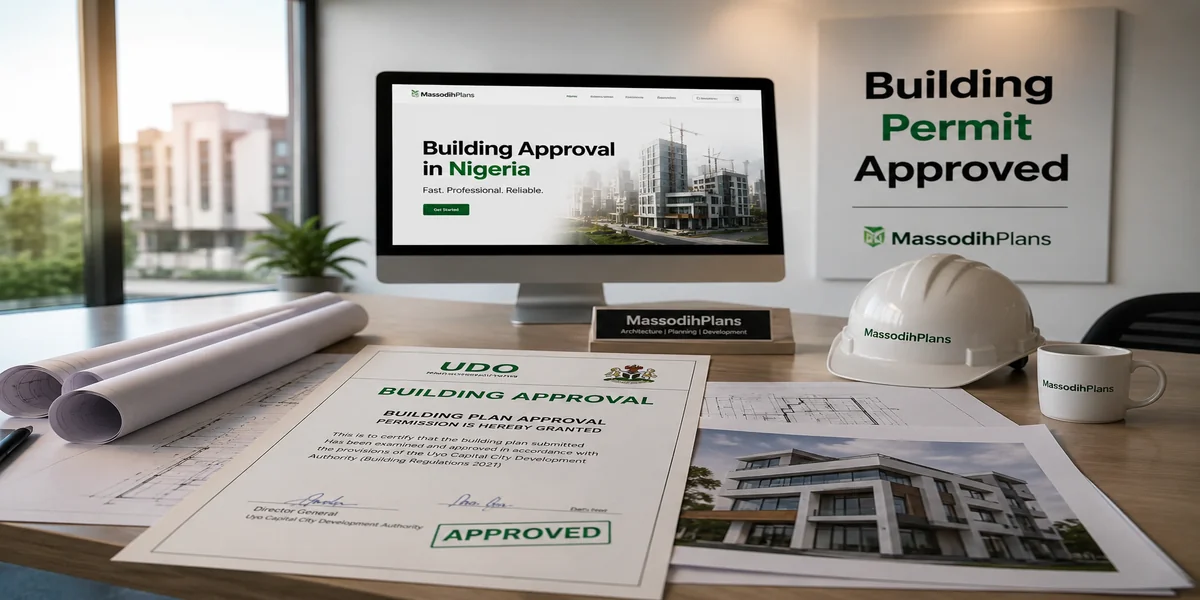
Building Approval in Nigeria: Costs, Requirements, Process and How to Get Your House Plan Approved Fast
Building approval in Nigeria is the legal permission you must obtain from the relevant state development control authority before starting construction. Whether you are building a bungalow, duplex, block of flats, commercial complex, church, or any other structure, getting your building plan approved is not optional it is a legal requirement that protects your investment from fines, stop-work orders, and even demolition. If you want to know how building approval works, the documents you need, how much it costs, and how to avoid costly mistakes, this guide covers everything.
Unfortunately, thousands of Nigerians still begin construction without securing approval, believing they can “regularize it later.” That decision often turns a dream project into a financial nightmare. Property owners who have already spent millions on excavation, foundations, blockwork, roofing, or finishing suddenly receive enforcement notices, are forced to halt construction, pay substantial penalties, redesign their buildings, or, in the worst cases, watch parts of their developments demolished.
The reality is that development control authorities across Nigeria are enforcing building regulations more aggressively than ever. From Lagos and Abuja to Port Harcourt, Uyo, Enugu, Ibadan, and other rapidly growing cities, compliance is no longer something developers can ignore. Every construction project is expected to meet approved planning, zoning, environmental, and building standards before work begins.
This guide explains the entire building approval process in Nigeria from start to finish. You’ll learn the required documents, the government agencies involved, estimated approval costs, processing timelines, common reasons applications are rejected, practical tips for faster approval, and the mistakes that cost property owners millions. By the time you finish reading, you’ll know exactly how to secure your building approval correctly and avoid the expensive errors that continue to trap countless developers across Nigeria.
What Actually Happened to Me
I’ll tell you exactly why I wrote this guide, because I promised you that story in the title, and you deserve to hear it before anything else.
Early in my career, I supervised a family’s bungalow project on the outskirts of town. The client was in a hurry a relative’s wedding was approaching, and he wanted the roof up before the event. We had architectural drawings ready, but the town planning documentation, the SPAR specifically, was still being processed. Against my advice, he authorized the contractor to begin foundation work while we “waited for the paperwork to catch up.”
Eleven weeks later, a development control team visited the site. The foundation was in, block work was rising toward lintel level, and a stop-work order was issued on the spot. The site sat untouched for four months while we regularized the approval retroactively a process that cost nearly three times what the original application would have cost, plus a penalty fee for unauthorized construction. The wedding came and went with the house still roofless.
I have never forgotten that lesson, and I have seen it repeat with other clients since: the paperwork you’re tempted to skip “just this once” is never actually optional, and the cost of skipping it is never smaller than the cost of doing it right. Everything in this guide comes from wanting to make sure you never have to learn that lesson the expensive way.
What Is Building Approval in Nigeria?
Building approval is the official government permission that allows you to legally construct on your land. Before construction begins, the relevant authority reviews your proposed design to confirm it meets specific standards.
These standards cover:
- Zoning and land use rules
- Structural safety requirements
- Setback regulations
- Drainage and environmental standards
- Road alignment compliance
- Ventilation and plot coverage rules
Without this approval, your building is considered an illegal structure regardless of how well it is constructed.
Why Building Approval Matters More Than Most Nigerians Think
Many property owners believe approval is only relevant for large commercial developments. That assumption has destroyed many investments.
What building approval protects you from:
- Demolition notices and construction shutdowns
- Government fines and legal disputes
- Structural failures linked to unapproved designs
- Insurance rejections
- Difficulties selling or transferring property
- Tenant legal complications
What approval improves:
- Property market value and resale attractiveness
- Eligibility for bank loans and mortgages
- Acceptance into estates and gated developments
- Rental confidence and buyer trust
- Long term investment security
I always tell clients: an approved building is a safer investment, a stronger asset, and a much easier property to sell, rent, or mortgage when the time comes.
Government Agencies Responsible for Building Approval in Nigeria
Approval authorities differ from state to state. Knowing the right agency for your location saves time and prevents misdirected submissions.
| State | Responsible Authority |
|---|---|
| Lagos | Lagos State Physical Planning Permit Authority (LASPPPA), with construction-phase supervision under LASBCA |
| Abuja (FCT) | Federal Capital Development Authority (FCDA) |
| Rivers State | Rivers State Ministry of Urban Development |
| Akwa Ibom | Akwa Ibom State Physical Planning Board |
| Anambra | Anambra State Ministry of Lands, Survey and Physical Planning |
| Benue | Benue State Urban Development Board |
| Abia | Abia State Ministry of Lands, Survey and Urban Planning |
| Kano | Recently restructured building approval formerly handled by KNUPDA has moved to two new metropolitan agencies (KAMA and KADKA) under the Kano State Ministry of Land and Physical Planning, following a July 2026 legislative change |
If you’re planning a duplex in Awka, a family home in Makurdi, a bungalow in Umuahia, or a duplex in Kano, this table gives you the correct authority to start with and you’ll find location-specific guidance for each of these in our companion guides on duplex construction costs in Awka, family house plans in Makurdi, and duplex costs in Kano.
Most states operate through urban planning boards, physical planning authorities, or development control departments. If you are unsure, visit your state ministry responsible for lands and urban planning to confirm the right agency.
Documents Required for Building Approval in Nigeria
Incomplete document submissions are one of the biggest causes of approval delays. I always advise clients to prepare everything in a single complete package before walking into any approval authority.
Land Documents
- Certificate of Occupancy (C of O) or Deed of Assignment
- Registered survey plan
- Registered title documents
Architectural Documents
- Architectural drawings (floor plans, elevations, sections, site plan, roof plan)
- Site layout showing drainage and parking arrangement
Engineering Documents
- Structural drawings
- Foundation details and specifications
- Structural calculations
Town Planning Documents
This is where many applicants get caught off guard. Beyond architectural and structural drawings, local planning authorities all the state approval authorities require formal town planning documentation prepared and signed by a registered town planner.
Site Planning Analysis Report (SPAR)
A SPAR is a technical document prepared by a registered town planner that analyses your proposed development in relation to its immediate environment. It covers:
- Land use compatibility with surrounding developments
- Compliance with the area’s zoning designation
- Traffic and pedestrian access implications
- Setback verification against approved planning standards
- Plot coverage and open space assessment
- Parking adequacy for the proposed use
- Relationship of the development to existing infrastructure
The SPAR essentially confirms to the approval authority that your proposed building fits legally and functionally within its planning context. Without it, many authorities will not process your application.
Environmental Impact Assessment Report (EIAR)
For larger developments, mixed use projects, commercial buildings, estate developments, and projects in environmentally sensitive areas, an Environmental Impact Assessment Report is required. This document is also prepared or supervised by qualified professionals and covers:
- Potential environmental effects of the proposed construction
- Soil and groundwater disturbance assessment
- Waste generation and disposal plan during construction
- Noise and air quality impacts on surrounding residents
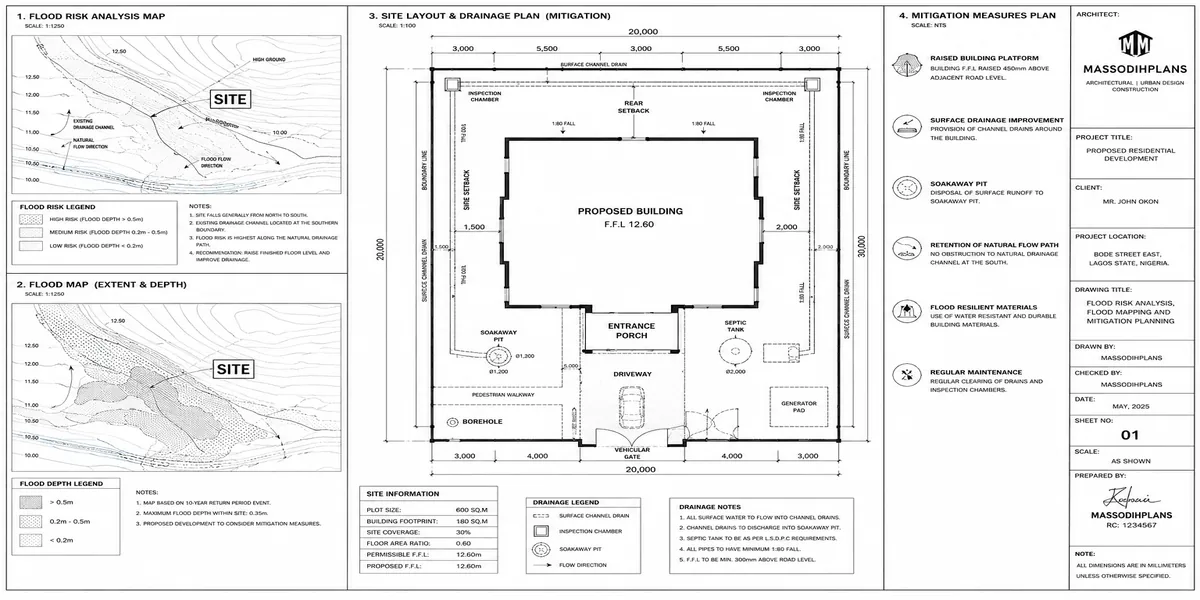
- Drainage and flooding risk assessment
- Mitigation measures for identified environmental concerns
- Post construction environmental management plan
Even for some residential projects in flood prone zones or ecologically sensitive areas like parts of the Niger Delta, coastal Lagos, and certain areas of Akwa Ibom, an EIAR or a simplified Environmental Impact Statement may be requested before approval is granted.
Town Planner’s Report and Certification
Beyond the SPAR, some state authorities require a separate professional report and certification signed by a town planner registered with the Nigerian Institute of Town Planners (NITP). This certification confirms that:
- The design complies with applicable planning regulations
- The proposed land use is consistent with the zoning for that area
- Setbacks, plot coverage, and open space meet required standards
- The development does not violate any regional or local planning scheme
In states like Lagos, Rivers, and Akwa Ibom, submitting drawings without this professional town planning input is increasingly becoming grounds for outright rejection.
Supporting Documents
- Soil test report
- Tax clearance certificate (required in some states)
- Passport photographs of the applicant
- Completed application forms with appropriate fee receipts
Know Who’s Actually Allowed to Sign Your Documents
One detail that trips up even careful homeowners: not just anyone can legally prepare or endorse your approval documents. Nigeria’s built environment professions are each regulated by a specific body, and submitting documents signed by someone without valid registration is a fast way to get your application rejected.
ARCON (Architects Registration Council of Nigeria) regulates architects and must endorse your architectural drawings
COREN (Council for the Regulation of Engineering in Nigeria) regulates structural, civil, and other engineers; your structural drawings and calculations require COREN-registered endorsement
CORBON (Council of Registered Builders of Nigeria) regulates builders responsible for construction management and supervision
NITP (Nigerian Institute of Town Planners) regulates town planners; your SPAR and town planning certification must come from an NITP-registered planner
Before you pay any consultant, ask for their registration number and verify it directly with the relevant council. This takes minutes and protects you from the single most common cause of approval rejection: documents endorsed by someone who technically has no legal authority to endorse them at all.
Which Buildings Require Approval in Nigeria?
Almost every permanent structure requires formal approval before construction.
Residential: Bungalows, duplexes, terraces, flats, and mini estates
Commercial: Shops, offices, hotels, warehouses, and filling stations
Institutional: Schools, churches, hospitals, and factories
Even fence walls and gatehouses may require approval in urban areas across Lagos, Abuja, and Port Harcourt. Do not assume any structure is too small to need documentation.
Step By Step Building Approval Process in Nigeria
Step 1: Conduct Proper Land Verification
Before buying any land, verify:
- Government acquisition or revocation status
- Road alignment and expansion plans
- Flood risk and drainage corridor status
- Existing boundary disputes
- Zoning restrictions for your proposed use
I have seen people pour money into foundations only to discover their land falls inside a government drainage corridor or road expansion zone. Verify first, build later.
Step 2: Carry Out a Site Survey
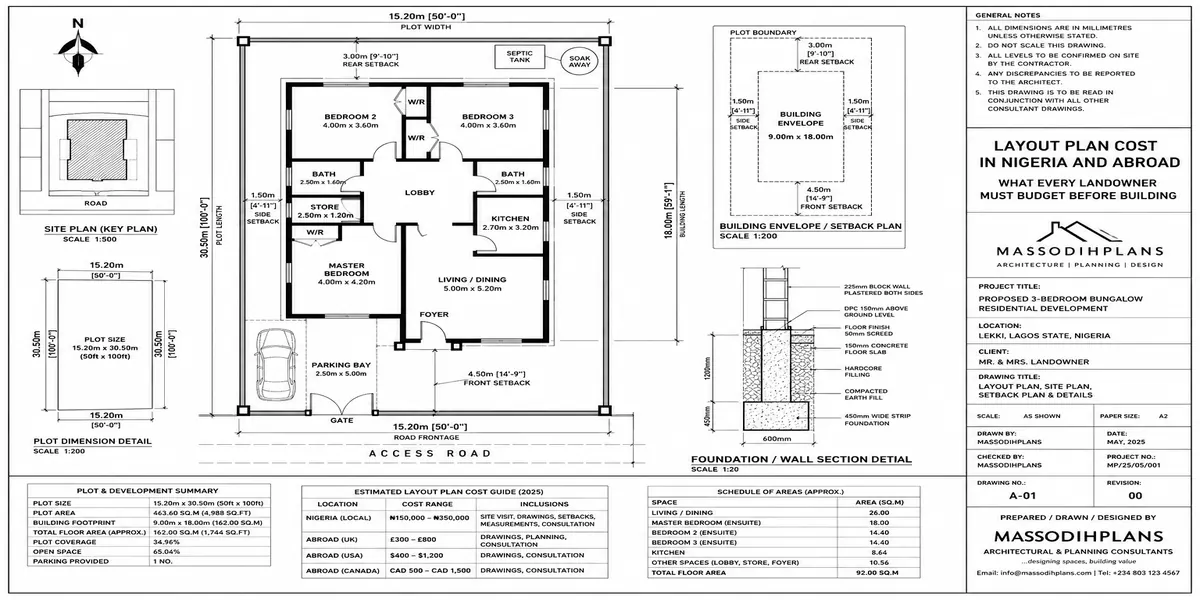
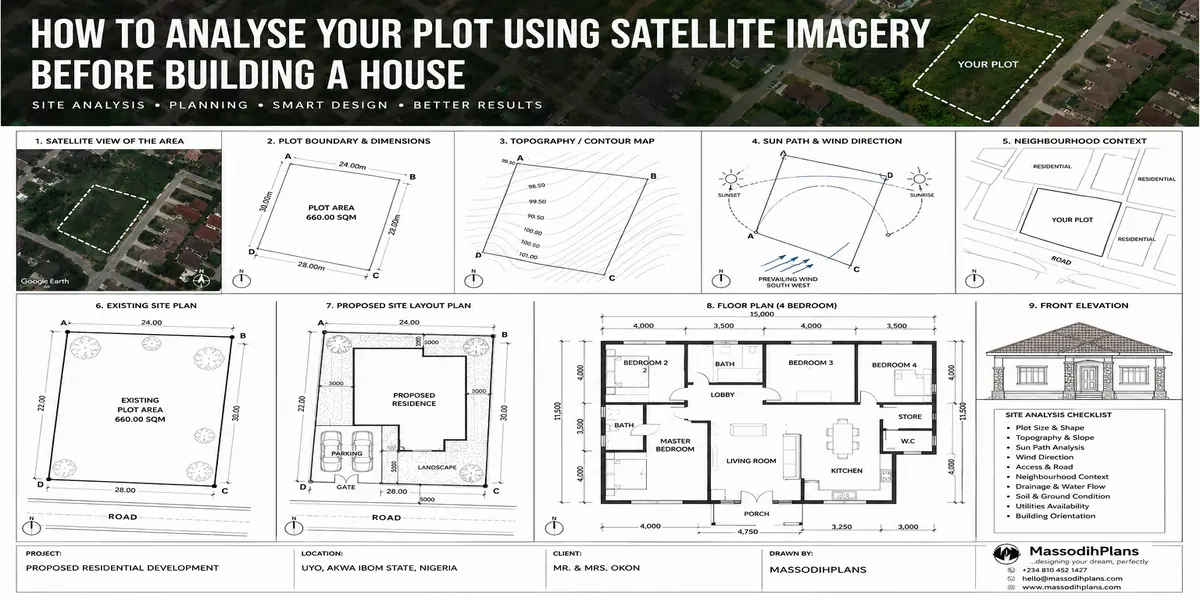
A licensed surveyor prepares your survey plan showing land dimensions, coordinates, adjoining roads, existing structures, and site orientation. This document determines your building position, setbacks, parking layout, and drainage flow.
Step 3: Prepare Architectural Drawings
Your architect prepares floor plans, elevations, roof design, site layout, septic layout, and drainage proposal. This stage is critical. Poorly prepared drawings are one of the most common causes of approval rejection.
Step 4: Structural Design Preparation
Your structural engineer designs the foundation system, columns, beams, slabs, and reinforcement specifications. In areas like parts of Port Harcourt and coastal regions with difficult soil conditions, this stage directly impacts construction safety and cost.
Step 5: Submit to the Approval Authority
Your consultant submits all drawings, application forms, supporting documents, and payment receipts to the relevant authority.
Step 6: Site Inspection
Government officials visit your plot to verify plot size, existing structures, road setbacks, drainage conditions, and neighborhood compliance.
Step 7: Approval Review
The authority formally reviews structural safety, ventilation adequacy, plot coverage, fire safety, parking provision, and environmental compliance.
Step 8: Approval Issuance
Once your application passes review, the approval stamp is issued, your drawings are signed, and construction can legally begin.
Getting Your Permit Is Not the Finish Line
This is a genuinely important distinction most guides skip entirely: your building approval is not a single event. In several states, particularly Lagos, construction is monitored through staged inspections after your permit is issued, not just checked once at the start.
Typically this involves:
Commencement authorization formal confirmation that you may begin construction, issued after your permit
Stage-by-stage inspections officials verify your foundation, decking, and other structural milestones actually match your approved drawings as construction progresses
Certificate of Fitness for Habitation (CFH) the final certification issued after completion, confirming the finished building is safe and legally fit for occupation
Skipping any of these stage inspections, even after your initial permit was granted, can still result in queries or a stop-work order if inspectors find your build has deviated from the approved drawings. Treat your approval as an ongoing relationship with the authority throughout construction, not a document you file away after Step 8.
How Long Does Building Approval Take in Nigeria?
| Project Type | Estimated Timeline |
|---|---|
| Simple bungalow | 2 to 8 weeks |
| Duplex | 1 to 3 months |
| Commercial building | 3 to 6 months |
| Estate development | Several months or more |
Delays are usually caused by incomplete document submissions, incorrect setbacks, land ownership disputes, structural drawing inconsistencies, outstanding fees, or poor coordination between consultants.
Cost of Building Approval in Nigeria
Approval cost depends on your state, plot size, building size, number of floors, property use, and location value.
| Building Type | Estimated Approval Cost |
|---|---|
| Small bungalow | N200,000 to N800,000 |
| Standard duplex | N500,000 to N2 million |
| Commercial building | N1 million and above |
| Estate development | Several millions |
Premium urban areas in Lagos and Abuja attract higher fees. Always budget for approval costs before starting your project.
How Approval Fees Are Actually Calculated (Using Lagos as the Model)
Most guides give you a vague range and stop there. Here’s how the calculation genuinely works in Lagos, which several other states have adapted variations of:
Approval Fee = (Building Volume × Zone Rate) + Fencing Fee + Layout Fee (₦100,000) + Registration Fee (₦50,000) + LPO (10% of Building Assessment)
Building Volume is calculated as Length × Breadth × Height of your proposed structure. Zone Rate varies depending on which planning zone your plot falls within higher-value zones carry higher rates.
Worked example: For a modest 4-bedroom bungalow with a building volume producing a base assessment of roughly ₦350,000 at a standard zone rate, once you add the fixed layout fee, registration fee, and 10% LPO charge, your total typically lands somewhere around ₦550,000 to ₦600,000 which lines up with real reported figures from recent applications.
Other states don’t always publish an identical formula, but most base their fees on a similar combination of building size, zone or location value, and fixed administrative charges. When budgeting, ask your consultant to show you the actual fee schedule for your specific state rather than accepting a flat “estimate” the difference between zones within the same city can be substantial.
Hidden Costs Most Nigerians Ignore
Soil Testing
Poor soil can silently destroy your foundation. Soil testing is especially critical in waterlogged areas of Port Harcourt, Lagos Island, and parts of the Niger Delta region.
Estimated cost: N150,000 to N600,000 depending on location and project size.
Environmental and Drainage Levies
Some states require environmental impact fees, waste management levies, and drainage assessment charges on top of standard approval fees.
Professional Consultant Fees
You will need a registered architect, structural engineer, licensed surveyor, and in many cases a town planner. These are not optional. Professional fees are part of building legally and safely.
Mistakes Nigerians Make During Building Approval
Starting Construction Before Approval Arrives
This is the single most common and costly mistake. Many developers begin fencing, foundation work, or block laying before their approval is issued. The consequences include site sealing, demolition threats, and significant financial loss.
Using Unqualified Designers
Cheap, unregistered designers often produce drawings with wrong setbacks, poor ventilation, unsafe structural layouts, and non-compliant dimensions. These drawings fail during review, wasting time and money.
Ignoring Drainage Planning
Flooding is a real problem in many Nigerian cities. Poor drainage design leads to foundation damage, water stagnation, and shortened property lifespan. Always plan surface drainage, water channels, and rainwater flow from the design stage.
Violating Setback Requirements
Authorities pay close attention to front, rear, and side setbacks. Submitting drawings that push too close to boundaries is one of the fastest ways to delay or lose your approval.
Nigerian Climate, Ventilation, and Building Design Realities
Nigeria’s tropical heat, heavy rainfall seasons, and high humidity directly affect how buildings should be designed and approved.
Ventilation requirements: Cross ventilation reduces heat buildup, humidity, and energy consumption. Your bedroom positioning, window arrangement, and corridor planning must support natural airflow.
Heat management: Good design includes wide roof overhangs, heat resistant roofing materials, proper ceiling insulation, and shaded window placement.
Flooding concerns: Flood prone areas require elevated foundations, proper drainage slope, strong concrete mix specifications, and reinforced foundation systems.
These are not optional considerations. They directly affect whether your building performs well and lasts long in Nigerian conditions.
Nigerian Reality Layer: What Most Building Guides Skip
Generator Space Planning
Most Nigerian homes depend on generators. When designing your layout, plan dedicated space for:
- Generator housing with adequate ventilation
- Noise separation from living areas
- Clear exhaust path away from windows
Poor generator placement creates heat problems, noise complaints, and carbon monoxide risks.
Borehole and Water Tank Positioning
Public water supply is unreliable across most Nigerian cities. Plan your compound layout with:
- Clear access for borehole drilling equipment
- Elevated water tank positioning for gravity flow
- Space for pump housing and maintenance access
Compound Security and Gatehouse Positioning
Security planning matters for both daily living and approval compliance. A poorly positioned gatehouse can obstruct drainage channels or road setbacks, creating approval problems.
Practical tips:
- Avoid blind corners that compromise visibility from the main house
- Ensure clear gate sightlines from inside the compound
- Separate pedestrian access from vehicle entry where possible
Lifestyle Planning Inside Your Approval Design
A building design that works for your lifestyle produces a home that serves your family for decades.
Family movement: Children need safe, visible play areas near living spaces. Design corridors and open areas with family flow in mind.
Guest privacy: Plan guest toilet and sitting room positions to keep visitors away from private family areas.
Elderly access: If elderly family members will live with you, avoid split levels and long corridors. Ground floor bedroom access matters.
Work from home: Dedicate a quiet room away from children’s areas for productivity. This is increasingly important for Nigerian professionals.
Future growth: Design with expansion in mind. A building that can accommodate an additional room or floor later protects your investment.
Investment Value of an Approved Building
An approved building consistently outperforms an unapproved one across every financial metric.
Resale value: Buyers pay more and negotiate less for approved properties
Rental income: Tenants prefer legally documented buildings
Bank financing: Mortgages and construction loans require approved plans
Estate acceptance: Gated communities and estate developers demand compliance
Long term security: Approved properties face no demolition threat from government
If you are building as an investment, approval is not an expense. It is the foundation of your return.
If You’re Building From Abroad, Your Approval Documents Are Your Remote Dashboard
A significant number of the people I work with are building in Nigeria while living abroad, and for this group, building approval documentation matters even more than for someone physically supervising their own site.
When you can’t personally inspect a foundation or verify a decking pour, your approved drawings, permit documentation, and stage-inspection records become the only objective way to confirm your project is progressing as agreed. Practical steps:
Request copies of every stage-inspection record from your consultant or supervisor, not just a verbal update
Compare photos and videos from site visits directly against your approved architectural and structural drawings, not just against what “looks right”
Never approve a payment milestone based on a phone call alone ask for documentation that ties the payment to a specific, verified, approved stage
If possible, engage an independent site supervisor whose only role is verification, separate from the contractor doing the building
Full, complete approval documentation turns a project you can’t physically see into one you can still genuinely verify from anywhere in the world.
Practical Ways to Speed Up Your Building Approval
- Hire registered professionals from the start. Architects and engineers registered with their professional bodies produce drawings that pass review faster.
- Submit complete documents in one package. Returning multiple times with missing items causes weeks of delay.
- Follow setback regulations exactly. Do not try to recover every centimeter of land illegally.
- Conduct soil testing early. Discovering soil problems after design submission forces expensive redesigns.
- Maintain a dedicated approval file. Keep every receipt, stamped document, and correspondence organized.
What Builders Usually Get Wrong After Approval
Getting your plan approved is only the beginning. Execution matters just as much.
Poor supervision: Approved drawings can still fail if the construction site is not properly supervised. Visit your site regularly or hire a site supervisor.
Material waste: Poor storage, theft, wrong measurements, and unnecessary rework are expensive. Plan material deliveries in phases.
Structural shortcuts: Some artisans quietly remove reinforcement bars or reduce structural beam sizes to cut costs. This is dangerous and invisible until the building fails. Know what your approved drawings specify and verify it is being built.
Quick Summary
Before construction:
- Verify land documents legally
- Conduct site survey
- Hire qualified professionals
- Prepare complete drawings
During approval:
- Submit all documents together
- Follow setbacks strictly
- Pay all required fees
During construction:
- Supervise work properly
- Avoid structural shortcuts
- Manage drainage carefully
Frequently Asked Questions
How much does building approval cost in Nigeria?
Approval can cost between N200,000 for a small bungalow and several million naira for commercial or estate projects. Costs vary by state, plot size, building height, and location.
Can I build without approval in Nigeria?
Technically yes, but it is illegal in most states and carries serious consequences including fines, stop work orders, demolition notices, and difficulty selling your property later.
How long does building approval take in Nigeria?
Simple residential approvals take 2 to 8 weeks. Larger commercial and estate projects can take 3 to 6 months or more depending on document completeness and state authority workload.
Can my building approval application be rejected?
Yes. Common rejection reasons include wrong setback dimensions, incomplete documents, structural safety concerns, and zoning violations.
Do I need approval for a fence wall in Nigeria?
In many urban areas, yes. Lagos, Abuja, and other major cities require formal approval even for perimeter fencing and gatehouses.
Does building approval increase property value?
Significantly. Approved buildings sell faster, attract higher prices, qualify for mortgages, and are accepted in estates and gated developments.
Related Posts
- Cost of Building a Duplex in Nigeria
- Best House Plans for 450sqm Plots in Nigeria
- Smart Duplex Design for Narrow Plots in Lekki, Nigeria: Complete Practical Guide
- How to Practically Draw and Design a Duplex for Small Plots
- Cost of Roofing a Bungalow and Duplex in Abuja Small Plot Now
- 7 Small Plot Design Mistakes Nigerians Make (And How to Fix Them)
- Modern Bungalow Designs for Small Nigerian Plots
- How to Reduce Building Costs in Nigeria
- Modern Nigerian House Plan for a 30×60 Plot in Ibadan: The Complete Practical Guide
- Best Small Plot House Designs for Modern Urban Living
- How to Draw a 3 Bedroom Floor Plan in a Small Plot Step by Step
- Best Places to Buy Land in Uyo for Fast Development and High Property Value
- 7 Cheapest Areas to Buy Affordable Land in Uyo Before Prices Increase
- 4 Bedroom Duplex Plan for 100×150 Plot in Nigeria
- Affordable Architectural Drawing Services in Nigeria
- Nigerian duplex plans with modern roofing
- Beginner’s Guide to House Plan Drawing in Nigeria
- Nigerian House Plans for Family Homes in Makurdi, Benue State, Nigeria
- Duplex Construction Cost in Awka, Anambra State: Complete Budget Breakdown
- Cost of Building a 3 Bedroom Bungalow in Umuahia, Abia State (Current Price Guide)
- Nigerian House Plans Suitable for Hot Weather in Sokoto
- Cost of Building a Duplex in Yenagoa: Materials and Labour Guide
- Building Drawings Explained: Types, Symbols and Real Construction Examples
- Building Regulations Every Nigerian Property Developer Must Know
- Architectural Design Principles Every Architect and Homeowner Should Know
- National Building Code of Nigeria Explained for Beginners
- Land Use Act and Building Development in Nigeria: What Every Landowner Should Know
- Town Planning Services: Plans, Permits and Land Development
Call to Action
Planning to build in Nigeria soon?
At MassodihPlans, I help homeowners, investors, and developers with modern house plans, small plot solutions, duplex designs, architectural drawings, site planning, and approval support guidance.
Whether you are building on a compact urban plot or planning a full residential development, proper planning can save you millions in future corrections.
Explore more practical Nigerian building guides on MassodihPlans and start your project the right way.
About Author
Massodih Okon is a built environment professional with a background in architecture and urban planning. He specializes in practical Nigerian house design guidance through MassodihPlans.com.. He has a Master’s degree in Urban and Regional Planning, a first degree in Geography and Environmental Management, and professional certificates in Architectural Design, Landscape Design, and GIS. With over 15 years of hands‑on experience in architecture, town planning, GIS, and building economics across Nigerian residential and institutional projects, he understands the real challenges Nigerians face when planning and building homes.
At MassodihPlans, Massodih shares practical Nigerian building guides, modern bungalow and duplex house plans, and built environment resources created specifically for Nigerian homeowners, developers, and property investors. His work is based on real‑life conditions in Nigeria, climate‑responsive design, and cost‑effective planning, aimed at helping everyday Nigerians make smarter, more confident building decisions.