What It Really Costs to Build a Duplex in Kano Today
Full Cost Breakdown for Building a Duplex on a Small Plot in Kano Nigeria
Let me be honest with you from the start.
Most building costs analysis in Nigeria are made by people who have never stood on a construction site in the blazing Kano afternoon sun, watched a bag of cement disappear without a matching improvement in the wall, or received a contractor’s quote that doubled between mobilization and roofing. Those analysis give you figures that look clean on screen but fall apart the moment your foreman hands you the first invoice.
This guide is different. It is written for real Nigerians who are planning a real investment and need accurate, current information before they commit their money, their family savings, or their borrowed capital to a duplex project in Kano.
So let me answer your core question immediately: a standard 4-bedroom duplex in Kano currently costs between ₦75 million and ₦140 million, depending on your finishing quality, roofing choice, plot size, and how carefully you manage the process. A luxury duplex with imported fittings, stone-coated roofing, swimming pool provision, and high-end tiling can easily reach ₦200 million to ₦300 million. A compact but functional family duplex on a 450sqm plot, built with smart decisions, can come in closer to the ₦75 million range if inflation holds and you supervise closely.
But the total figure is only part of what you need to know. The more important questions are: where does the money go, stage by stage? What do most homebuilders get wrong? And how do you prevent a ₦90 million project from silently becoming a ₦130 million one?
That is exactly what this guide covers.
Why Duplexes Are Becoming the Default Choice in Kano
Kano is one of the fastest growing cities in northern Nigeria, and land in urban areas like Nassarawa GRA, Bompai, Sharada, Yankaba, and Falgore Road is becoming too valuable to build across instead of upward. A duplex solves that problem elegantly. You double your usable floor area without doubling your land cost.
Beyond land economics, Kano families are increasingly choosing duplexes for reasons that are both practical and social. A duplex provides genuine separation between the family’s public and private spaces. Downstairs receives guests and manages the flow of daily family life. Upstairs remains a private retreat for the bedrooms and personal living. This separation is something a bungalow simply cannot offer on a standard plot.
There is also the investment dimension. A duplex holds its value far better than a bungalow in the same neighborhood. When rented out, either entirely or floor by floor, a duplex generates significantly stronger income. And for families who may want to accommodate aging parents or an adult child returning from university, the duplex layout provides natural accommodation zones without the friction of sharing one floor.
If you are still comparing whether a duplex or bungalow makes more sense for your situation, the Plans Library on MassodihPlans has detailed design explorations and layout comparisons that can help you decide based on your actual plot and family structure.
The Honest Cost Overview: What to Expect in 2026
Before we go stage by stage, here is the full cost summary for a standard duplex project in Kano based on current 2026 market realities.
| Duplex Category | Estimated Total Cost |
|---|---|
| Basic Functional Duplex (4 bedrooms) | ₦75 million to ₦95 million |
| Standard Modern Duplex | ₦95 million to ₦140 million |
| Premium Quality Duplex | ₦140 million to ₦200 million |
| Luxury Duplex | ₦200 million to ₦300 million and above |
These figures exclude land purchase cost. In most parts of Kano, a 450sqm to 600sqm residential plot in a good neighborhood currently costs between ₦8 million and ₦40 million depending on location, access road quality, and title documentation.
One thing I want you to hold in mind throughout this guide: material prices in Nigeria today are not stable. Cement, reinforcement rods, roofing sheets, and diesel for your generator and concrete mixer can shift significantly within the life of a single project. A duplex that starts construction in January with one set of figures may face 15% to 20% higher material costs by the time it reaches roofing stage in July. This is not speculation. It has happened to many homebuilders. Building in a contingency fund of at least 20% of your total budget is not optional. It is survival planning.
Where in Kano You Build Changes Everything: Neighbourhood-by-Neighbourhood Cost Reality
The national or even city-wide averages above only tell you half the story. Where exactly in Kano you build shifts both your land cost and, in real ways, your construction cost too access road quality affects haulage cost, some layouts have stricter setback and finishing expectations, and land documentation status varies enormously by area.
Here’s a realistic planning comparison across the neighbourhoods I get asked about most:
| Neighbourhood | Typical Plot Price (500–600sqm) | Typical Standard Duplex Build Cost | Realistic Total Investment |
|---|---|---|---|
| Nassarawa / Nassarawa GRA | ₦25m – ₦40m | ₦90m – ₦140m | ₦115m – ₦180m |
| Bompai | ₦15m – ₦28m | ₦80m – ₦120m | ₦95m – ₦148m |
| Zoo Road | ₦12m – ₦22m | ₦78m – ₦110m | ₦90m – ₦132m |
| Sharada | ₦10m – ₦20m | ₦75m – ₦100m | ₦85m – ₦120m |
| Hotoro | ₦8m – ₦15m | ₦75m – ₦95m | ₦83m – ₦110m |
| Gwale / Kano Municipal (older layouts) | ₦6m – ₦12m | ₦70m – ₦90m | ₦76m – ₦102m |
Nassarawa and Nassarawa GRA remain Kano’s most expensive residential areas, commanding land and property values well above the rest of the city. If your budget is flexible, this premium buys you stronger title documentation, better access roads, and a neighbourhood where high-end finishing is the norm rather than the exception which matters if resale or rental to professionals and expatriates is part of your plan. Structville
If your budget is tighter, areas like Sharada and Hotoro let you build a genuinely comfortable duplex for considerably less, provided you personally verify title documentation before purchase older and developing layouts vary far more in documentation quality than GRA-type estates.
Choosing the Right Plot Size for Your Kano Duplex
The plot size you start with determines most of your design decisions. Let me explain the three most common options and what each realistically delivers.
| Plot Size | Best Suited For |
|---|---|
| 450 sqm | Compact urban duplex, limited parking, tight compound |
| 600 sqm | Comfortable family duplex, good compound, two parking spaces |
| 900 sqm and above | Luxury duplex, boys quarters, swimming pool, generous compound |
A 450sqm plot can work beautifully with intelligent design. I have seen compact duplexes on tight plots in Kano that feel spacious because the architect used internal courtyards, generous ceiling heights, and open living areas to create the perception of space. However, you need an architect who understands small-plot constraints from the beginning, not one who will shrink a 900sqm design to fit your land and wonder why the result feels cramped.
A 600sqm plot gives you real breathing room. Your compound can accommodate two vehicles properly, you can have a small garden or outdoor sitting area, and the building proportions will feel generous without being wasteful.
For the purposes of this cost breakdown, I am working with a standard 4-bedroom duplex on a 600sqm Kano plot as the reference project.
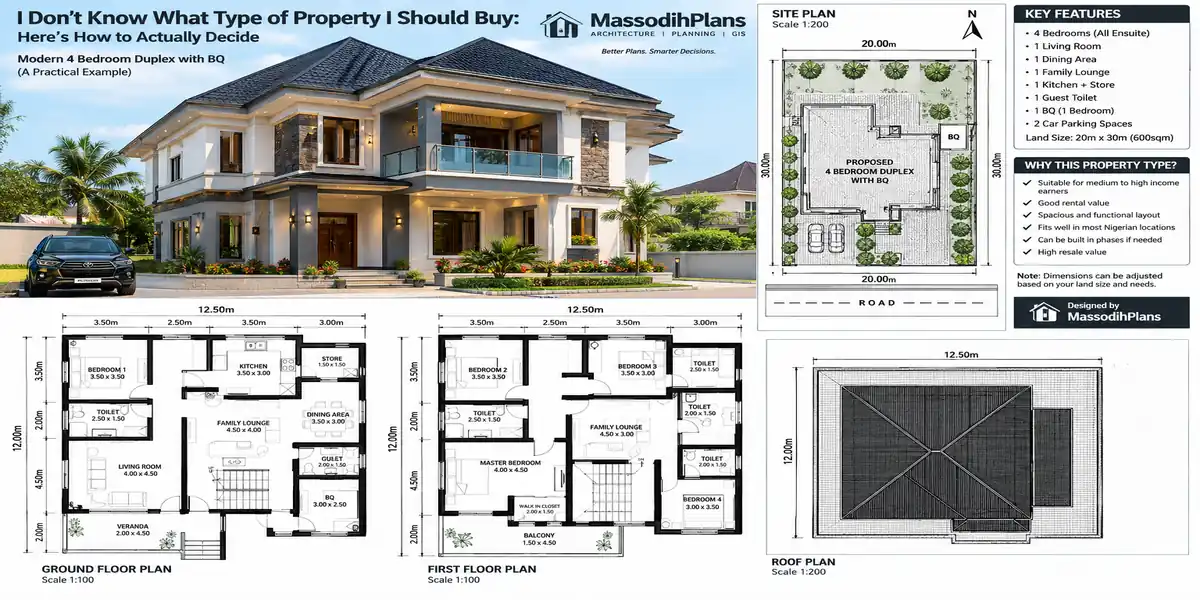
Typical Duplex Layout for a Kano Family
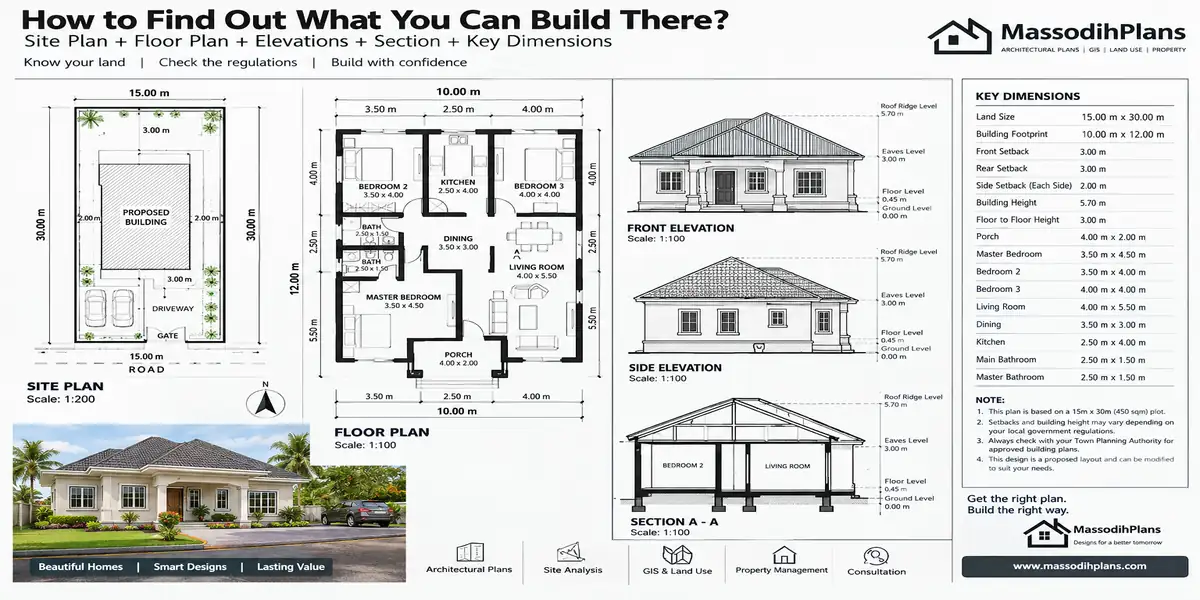
Before spending money, understand what you are paying for. A well-designed 4-bedroom duplex in Kano will typically look like this:
Ground Floor
- Visitors sitting room
- Family lounge or secondary living area
- Dining room
- Kitchen with pantry provision
- Guest bedroom with attached toilet
- Staircase lobby
- Storage room or utility space
- Visitors toilet
Upper Floor
- Master bedroom with en suite bathroom and wardrobe
- Two additional bedrooms, each with attached bathrooms
- Family lounge or TV room
- Balcony facing the front
- Prayer or quiet room (optional but increasingly requested in Kano)
This arrangement gives the family genuine zoning between public and private life, which is one of the strongest reasons Kano families invest in duplexes despite the higher construction cost compared to bungalows.
Understanding these spaces in detail before your architect starts drawing will save you money. Design changes during construction are expensive. Changes on paper are free.
Stage by Stage Cost Breakdown
Stage 1: Site Preparation and Setting Out
Estimated cost: ₦800,000 to ₦2.5 million
This first stage is often treated casually, but it sets the tone for everything that follows. Site preparation includes clearing the land, temporary fencing, mobilization of labor, and formal setting out of the building on the ground before excavation begins.
In some parts of Kano, the soil is predominantly sandy or loose. This matters significantly because sandy soil affects your foundation design decisions. If your engineer does not conduct a proper soil test before foundation design, you may discover the problem only after cracking appears in your walls or your floor slab settles unevenly. Soil testing typically costs between ₦150,000 and ₦400,000 and is non-negotiable on any serious project.
Stage 2: Foundation
Estimated cost: ₦8 million to ₦18 million
The foundation is the most consequential stage of any building project. Every structural decision made here follows you for the life of the building. Cut corners on the foundation and the building will remind you for decades.
Foundation work covers:
- Excavation to approved depth
- Hardcore and blinding layers
- Reinforcement fabrication and placement
- Concrete pouring for bases, beams, and ground floor slab
- Damp proof course installation
- Foundation block work up to ground level
The most common and most expensive mistake I observe in Nigerian construction is homebuilders reducing reinforcement quantity or cement ratio at foundation stage to save money. The short-term saving is usually between ₦500,000 and ₦1.5 million. The long-term cost when cracking or settlement appears years later can easily be ten times that amount.
If you have any intention of adding a third floor in the future, tell your structural engineer at the foundation design stage. The cost difference of designing for future load from the beginning is relatively small. Retrofitting a structure for additional load after construction is extremely expensive and sometimes impossible without demolition.
Stage 3: Block Work
Estimated cost: ₦6 million to ₦15 million
Block work covers the external walls, internal partitions, lintels above openings, and parapet walls above the roofline.
Block quality in Kano varies enormously. I have seen blocks that crumble when you press them with a thumb, and I have seen blocks that ring like ceramic when tapped. Poor quality blocks do three harmful things to your building: they crack under load, they absorb moisture and facilitate damp issues, and they reduce the thermal performance of your walls, making interior rooms hotter.
Before buying blocks in bulk, do a simple site test. Drop a block from chest height onto a hard surface. A quality block should not shatter. Soak a block in water overnight. A good block should not disintegrate. These two simple checks will save you from buying thousands of defective blocks at full market price.
The price of blocks in Kano currently ranges from ₦450 to ₦700 per block depending on size and location. A standard 4-bedroom duplex typically requires between 6,000 and 9,000 blocks for all wall elements.
Stage 4: Concrete Framework and Decking
Estimated cost: ₦12 million to ₦25 million
This is the most structurally intensive stage of building a duplex. It is also where the most dangerous structural shortcuts occur in Nigerian construction.
Decking involves constructing the reinforced concrete suspended slab that forms the first floor of your duplex. This stage includes:
- Column construction from ground to first floor level
- Beam construction at first floor level
- Formwork fabrication and installation
- Reinforcement laying and inspection
- Concrete mixing and placement
- Curing period before formwork removal
The formwork removal timing issue is one of the most common and most serious safety failures in Nigerian site practice. Concrete gains its structural strength progressively over 28 days. Removing formwork at 7 to 10 days to save the rental cost is a dangerous shortcut that compromises the strength of the slab permanently. Your supervising engineer should control formwork removal, not your contractor who is anxious to reuse the timber.
Concrete mix ratio is the other critical factor. A 1:2:4 cement to sand to granite ratio is the minimum acceptable for structural elements. Some contractors quietly stretch the mix to 1:3:5 to reduce cement consumption. The structural consequences may not be visible for years, but they are real and dangerous.
This stage is where having a qualified structural engineer on your team earns back its cost many times over.
Stage 5: Roofing
Estimated cost: ₦6 million to ₦18 million
Roofing cost in Kano depends primarily on three things: the roof span, the complexity of the design, and the roofing material selected.
Kano’s climate is harsh. The harmattan is intense and dry. The hot season is long. A roof in Kano must do more than keep rain out. It must manage solar heat gain seriously, or you will spend the rest of your life in that house running air conditioners and ceiling fans beyond what your electricity budget can sustain.
| Roofing Option | Cost Performance | Heat Performance |
|---|---|---|
| Long span aluminum (reflective) | Moderate cost | Good with proper ventilation |
| Stone coated steel roofing | Higher cost | Excellent, adds premium finish |
| Concrete roof tiles | High cost | Very good with heavy mass |
| Insulated roofing systems | Highest cost | Best performance in hot climates |
For a standard duplex in Kano, I recommend long-span aluminum with a reflective coating as the practical choice. Stone-coated roofing is excellent but adds significantly to cost. If your budget allows it, the long-term indoor comfort improvement justifies the premium.
Regardless of your roofing material choice, ensure your roof design includes wide overhangs of at least 600mm to 900mm around the building perimeter. Wide overhangs shade your walls and windows from direct afternoon sun, dramatically reducing heat gain through the building envelope.
Stage 6: Doors and Windows
Estimated cost: ₦4 million to ₦12 million
Window and door costs in Nigerian construction are frequently underestimated because most homebuilders think about the frames and forget the quality difference between what a cheap supplier and a reliable fabricator deliver.
For a Kano duplex, your window specification should include:
- Sliding aluminum windows with insect mesh
- Burglar-proof steel grilles properly welded and painted
- Louver windows in kitchen and bathrooms for ventilation without rain penetration
- Reinforced entrance door with quality deadbolt locks
Security considerations have become more prominent in Kano in recent years. Modern duplex owners in the city are increasingly specifying CCTV camera provisions during construction, security lighting circuits around the compound perimeter, and reinforced frame doors at the main entrance. Installing conduit runs and cable provisions for these systems during construction costs very little. Adding them after is messy and expensive.
Stage 7: Plumbing
Estimated cost: ₦3 million to ₦8 million
A complete plumbing installation for a Kano duplex covers all cold water supply pipes, hot water provisions where required, drainage pipes from all wet rooms to the drainage system, sanitary ware, soakaway construction, and overhead tank provisions.
Water supply in many Kano neighborhoods is irregular. Planning your plumbing to include a functional borehole provision from the beginning is not a luxury. Your structural engineer should know the intended borehole location before column positions are finalized because borehole placement relative to soakaway systems has minimum separation distance requirements for health and safety.
Specify your sanitary fittings carefully before installation begins. There is an enormous price difference between local sanitary ware and mid-grade imported fittings, and an even larger difference when you move to high-end specifications. Decide your tier before your plumber starts purchasing, or you will get whatever is cheapest and find yourself replacing it within three years.
Stage 8: Electrical Installation
Estimated cost: ₦3 million to ₦10 million
Electrical installation cost depends heavily on the complexity of your lighting design, the number of air conditioning points you are providing for, and whether you are integrating backup power provisions from the start.
Given the reality of NEPA supply in Kano, every serious duplex project today should plan for at least one of the following backup power configurations:
- Automatic transfer switch system for seamless generator changeover
- Inverter system with battery bank for essential circuits
- Solar panel provision with pre-installed conduit and wiring routes
Planning electrical circuits for solar or inverter integration during construction is straightforward and inexpensive. Retrofitting it after construction is expensive, disruptive, and structurally damaging.
The electrical installation for your duplex should be handled by a licensed electrician who issues a completion certificate. This is important for your building approval documentation and for any future insurance or property sale requirements.
Stage 9: POP Ceiling and Interior Finishing
Estimated cost: ₦5 million to ₦15 million
Finishing quality is where duplexes diverge most dramatically in cost. Two duplexes of identical size and structural specification can differ by ₦30 million in total project cost purely because of finishing choices.
POP ceiling installation, interior and exterior plastering, painting, and decorative features all fall within this broad category. Some specific decisions that significantly affect cost:
Ceiling height matters beyond aesthetics. In Kano’s heat, a ceiling height of at least 3 meters is practically important for thermal comfort. Very low ceilings trap hot air and make rooms feel suffocating during the afternoon heat. If your budget is tight, prioritize ceiling height in the living areas and bedrooms before spending on decorative POP moldings.
Interior painting quality matters more than most homebuilders appreciate. Cheap paints in Nigerian humidity will chalk, stain, and peel within two to three years, forcing a full repainting cycle that costs nearly as much as doing it right the first time.
For exterior painting in Kano specifically, use weather-resistant and UV-stabilized exterior paint. The harsh Kano sunlight and the dusty harmattan conditions degrade standard exterior coatings unusually quickly.
Stage 10: Tiling and Flooring
Estimated cost: ₦4 million to ₦12 million
Flooring choice affects the long-term maintenance effort and perceived quality of the finished building more than almost any other finishing element.
For a Kano duplex I consistently recommend:
| Area | Recommended Tile Type | Reason |
|---|---|---|
| Living and dining | Large format porcelain or vitrified | Durable, easy to clean, premium appearance |
| Bedrooms | Vitrified tiles or polished concrete | Comfortable underfoot, long life |
| Kitchen | Non-slip ceramic or vitrified | Hygiene, durability, chemical resistance |
| Bathrooms | Smaller format non-slip ceramic | Water safety, easy grouting maintenance |
| Outdoor areas | Interlocking or non-slip outdoor tiles | Weather resistance, drainage |
The single most common tiling mistake I see in Nigerian construction is grout that is applied too thin or too inconsistently. Tiles laid with poor grout joint control crack at the edges within a few years because the substrate movement has nowhere to absorb. A tiling contractor who rushes the screeding and curing stages before laying tiles will always produce cracked floors sooner or later.
Stage 11: Kitchen Installation
Estimated cost: ₦2 million to ₦10 million
Kitchen cost ranges enormously depending on whether you are installing a basic Nigerian kitchen with tiled surfaces and simple cabinetry or a fitted modern kitchen with imported units, island bench, extractor hood, and built-in appliances.
For a functional standard duplex kitchen in Kano, the most important non-negotiable elements are proper ventilation and durable surface materials. A kitchen with poor ventilation in the Kano heat creates a cooking experience that is genuinely unpleasant and accelerates wall and ceiling deterioration from heat and moisture. Install operable windows that create cross-ventilation through the kitchen space, not just a single louvered opening.
A kitchen exhaust fan provision should be built into the electrical design from the start.
Stage 12: Painting and External Decoration
Estimated cost: ₦2 million to ₦6 million
External painting in Kano is a different conversation from external painting in Lagos or Port Harcourt. Kano’s harmattan deposits a persistent layer of dust on every external surface. Its dry season sun is punishing. Select exterior paint that is specifically formulated for high UV environments with good washability characteristics.
Neutral or warm exterior tones with strong weather-resistant topcoats tend to perform best and age most gracefully in Kano’s climate. Very dark exterior colors absorb heat aggressively, which increases wall temperature and indirectly raises the interior temperature of the building.
Stage 13: External Works and Compound Finishing
Estimated cost: ₦5 million to ₦20 million
External works is the category most homebuilders run out of money for, and it is the one that determines how the completed duplex actually feels to live in and how it presents to visitors.
External works includes:
- Interlocking paving stones for driveway and compound
- Perimeter fencing and gate
- Gate house if required
- Drainage channels and soakaway finishing
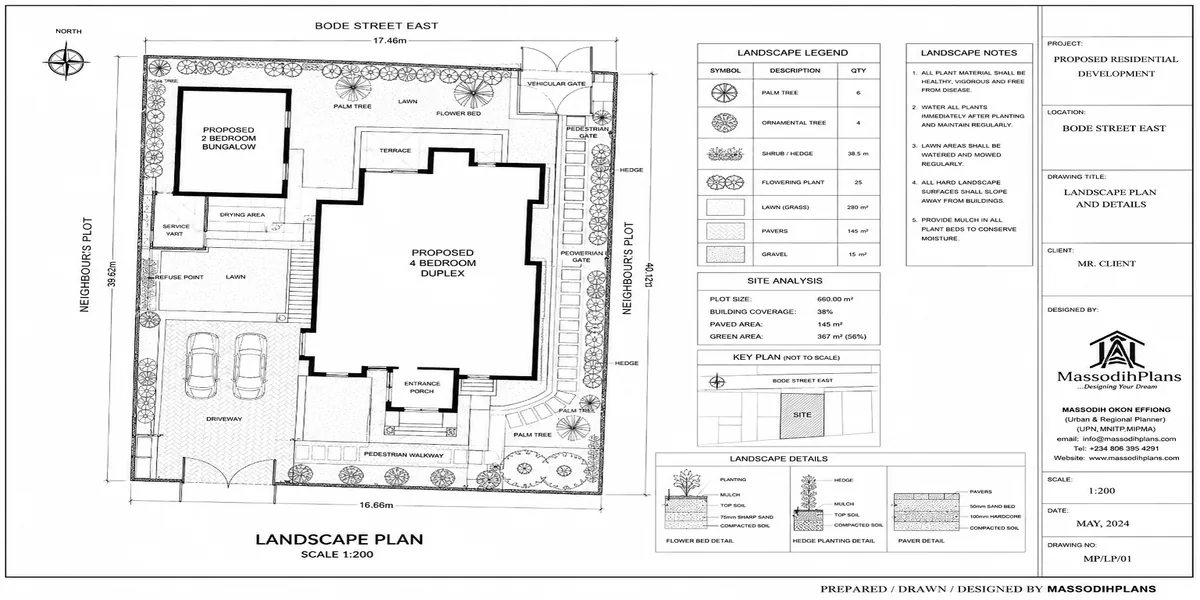
- Compound landscaping
- Exterior lighting
- Generator house or enclosure
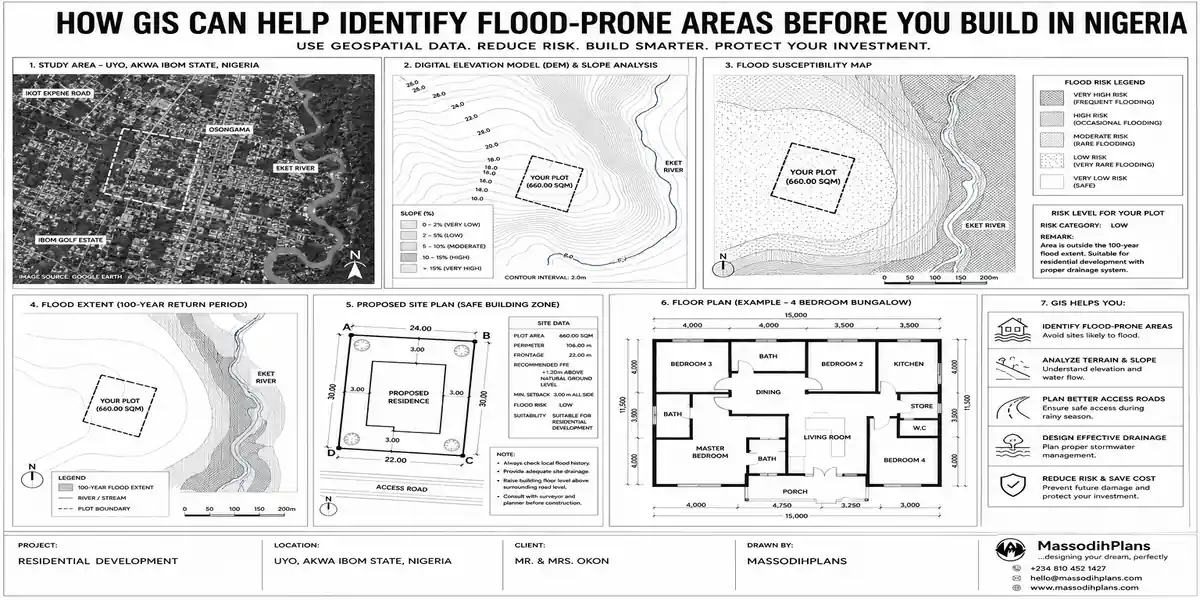
Drainage deserves special attention. Poor compound drainage is one of the most common problems I see in completed Nigerian buildings that were otherwise well constructed. The compound must slope away from the building foundation consistently. Every drainage channel must connect to a functioning outlet. If your compound floods after heavy rain, you will spend years watching your foundation gradually weaken, your fencing lean, and your interlocking stones crack and sink.
Every Kano duplex project should have a drainage plan drawn before compound work begins. This plan should show finished ground levels, drainage flow directions, channel positions, and soakaway locations. It takes relatively little time to produce but prevents extremely expensive remediation work later.
Complete Quick Reference: Duplex Construction Cost in Kano 2026
| Construction Stage | Conservative Estimate | Higher Estimate |
|---|---|---|
| Site preparation and setting out | ₦800,000 | ₦2.5 million |
| Foundation | ₦8 million | ₦18 million |
| Block work | ₦6 million | ₦15 million |
| Concrete framework and decking | ₦12 million | ₦25 million |
| Roofing | ₦6 million | ₦18 million |
| Doors and windows | ₦4 million | ₦12 million |
| Plumbing | ₦3 million | ₦8 million |
| Electrical installation | ₦3 million | ₦10 million |
| Ceiling and interior finishing | ₦5 million | ₦15 million |
| Tiling and flooring | ₦4 million | ₦12 million |
| Kitchen installation | ₦2 million | ₦10 million |
| Painting and decoration | ₦2 million | ₦6 million |
| External works and compound | ₦5 million | ₦20 million |
| Total (excluding land) | ₦60.8 million | ₦171.5 million |
Add your 20% contingency fund on top of whichever range your design falls within.
A Real Project, Real Numbers: What Actually Happened On Site
Numbers on a page are easy to trust until you watch them meet real ground. Let me walk you through one project I supervised closely, with the details that matter changed for privacy.
The client had ₦85 million budgeted for a 4-bedroom duplex on a 600sqm plot in a developing layout off Zoo Road. The initial contractor quote looked clean: ₦78 million, structure to finishing, with ₦7 million held back as the client’s own contingency.
Here’s where the real budget diverged from the paper budget:
Soil test revealed a weaker sub-layer than expected, pushing foundation cost from a planned ₦9 million to ₦12.5 million. This is exactly why soil testing before design, not after mobilization, protects you.
Cement prices rose roughly 14% between foundation stage and decking stage, adding close to ₦2 million against the original block work and decking estimate.
The client added a borehole mid-project after realizing water supply to the site was unreliable a cost that should have been in the original plan, not an afterthought, and added ₦1.8 million.
Finishing took longer than expected because the client, wisely, refused to compromise on tiling quality after seeing a neighbour’s cracked floor from rushed grouting this added time, not significant cost, but delayed occupancy by nearly four months.
Final actual cost: approximately ₦94 million, against an original ₦78 million quote a 20% overrun, almost entirely explained by the soil condition and material price movement this guide already warns you about. The client’s ₦7 million contingency covered less than half the gap. This is precisely why I recommend a 20% contingency on your full budget, not a flat reserve figure decided in isolation.
The Hidden Costs That Quietly Eat Your Budget
Every experienced Nigerian construction professional knows that the figures in a contractor’s initial quotation represent only the visible part of the cost iceberg.
Professional fees and documentation are the costs most first-time homebuilders fail to budget for. A complete set of drawings, covering architectural plans, structural drawings, electrical layouts, plumbing layouts, and site plan, typically costs between ₦500,000 and ₦2.5 million depending on the complexity of the building and the architect’s experience. This is not negotiable. Without complete professional drawings, your project will experience constant confusion, material waste, and structural decision-making on-site by people who should not be making those decisions.
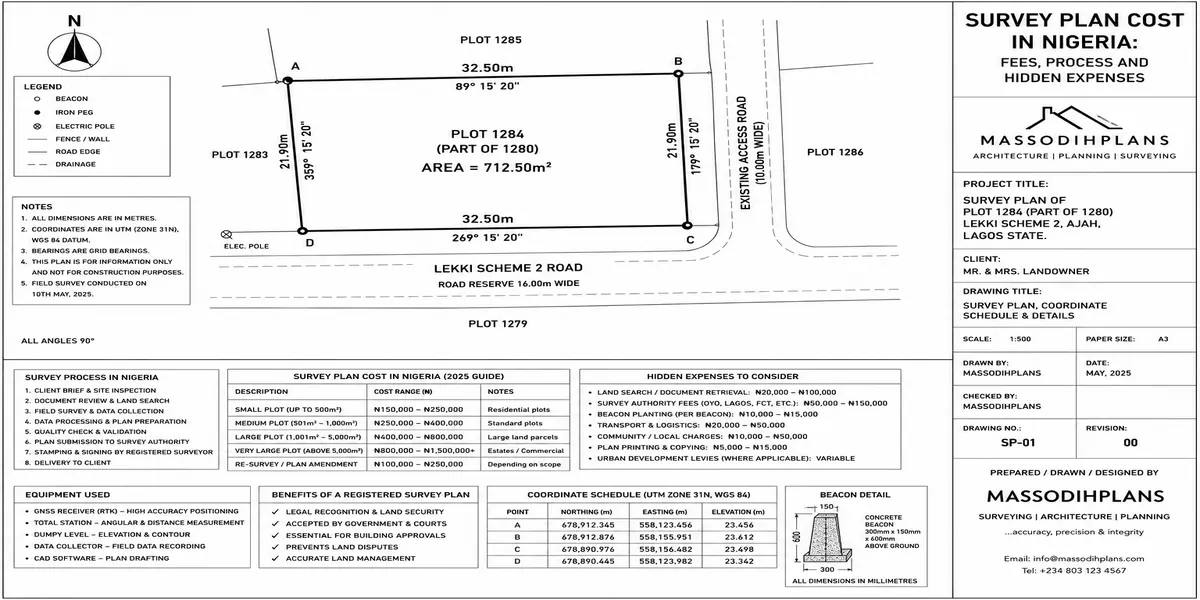
Building approval fees in Kano State involve town planning authority submissions, environmental impact documentation, survey plan preparation, and approval processing fees. These vary by zone and property size but typically add between ₦300,000 and ₦1.5 million to your project cost.
Diesel costs for the duration of construction are significant and frequently overlooked. Your concrete mixer, vibrator, and water pump all run on diesel. In a project that takes 18 to 24 months, diesel cost for site equipment can add ₦500,000 to ₦1.5 million to your total expenditure.
Material price escalation between project start and completion is perhaps the single largest hidden cost risk in Nigerian construction today. Always lock in your material prices wherever possible through bulk purchase agreements. For materials you cannot purchase in advance, a 20% contingency allocation is your only real protection.
Important: Kano’s Building Approval Authority Just Changed
This is genuinely new information, and if you’re planning a build in Kano right now, you need to know it before you submit any paperwork.
For years, building approval in Kano ran through the Kano State Urban Planning and Development Authority, known as KNUPDA. In mid-July 2026, the Kano State House of Assembly passed the Kano State Physical Planning and Development Control Bill, officially dissolving KNUPDA and replacing it with two new metropolitan development agencies, the Kano Metropolitan Development Authority (KAMA) and KADKA, which now operate directly under the Kano State Ministry of Land and Physical Planning. KanostateWikipedia
What this means practically for your project:
Building approval, development permits, and construction inspections that used to run through KNUPDA now fall under whichever of the two new metropolitan agencies covers your specific area.
The underlying documentation requirements are likely to carry over from KNUPDA’s existing process, which required: a valid Right of Occupancy, three sets of architectural drawings (structural drawings too for buildings above two floors), a geo-referenced site plan sealed by a registered Town Planner, and a site analysis report similarly certified.
If you’re mid-application or about to submit, confirm directly with the Kano State Ministry of Land and Physical Planning which of the two new agencies now handles your zone, since the transition is only weeks old at the time of writing.
Expect closer enforcement going forward the stated intent behind the restructuring is specifically to curb undocumented, unapproved construction, which has become common in some developing layouts.
Budget between ₦300,000 and ₦1.5 million for approval-related fees, and build in extra time for your paperwork during this transition period rather than assuming the old KNUPDA timelines still apply exactly as before.
What Makes Kano Specifically Different for Construction Planning
Building in Kano is not the same as building in Lagos, Abuja, or Port Harcourt. There are specific Kano factors that every serious planner must account for.
Climate and heat design are primary considerations. Kano sits in the Sudan savanna climate zone with extremely high temperatures from March to June, a short rainy season, and a long dry harmattan period. Buildings that are not designed specifically for this climate will be deeply uncomfortable for most of the year.
Key design responses for Kano heat:
- Orient the building with primary living spaces facing north or south rather than east and west
- Minimize west-facing glass areas to reduce afternoon heat gain
- Specify wide roof overhangs to shade walls
- Use light exterior wall colors to reflect rather than absorb solar radiation
- Design for natural cross-ventilation in every habitable room
- Consider ceiling insulation in the roof space to reduce heat radiation from the roof slab into living rooms below
Sandy soil conditions in parts of Kano require deeper foundation attention than would be necessary on laterite soils common in southern Nigeria. Always engage a structural engineer with site-specific experience for Kano conditions.
Water supply unreliability in most residential areas of Kano makes borehole provision a non-negotiable design element, not an optional upgrade.
Smart Cost Saving Strategies That Do Not Compromise Quality
There is a difference between saving money intelligently and cutting corners. Here is how experienced builders reduce cost without damaging structural quality or long-term livability.
Build with complete drawings before mobilization
Incomplete drawings are the single greatest source of cost waste on Nigerian construction sites. When your contractor is making structural decisions on-site because the drawings do not specify clearly, those decisions will cost you money in rework, structural uncertainty, or material waste.
Purchase structural materials in bulk early
Cement, reinforcement, and roofing materials are your largest material costs and the ones most exposed to inflation risk. Buying early when your budget is intact protects you from mid-project price increases.
Invest in daily supervision
Material theft and waste are real site problems in Nigeria. A trusted site supervisor who is physically present reduces cement disappearance, reinforcement shortages, and work quality issues dramatically. The cost of a good supervisor is recovered many times over in reduced material waste alone.
Phase your finishing wisely
If your budget is under pressure as you approach finishing stage, it is always smarter to complete the structural work and basic finishes to a high standard and defer luxury elements like fitted kitchen units, premium tiles, and decorative ceiling work to a later phase. A well-built house with basic finishes is a solid asset. A poorly built house with luxury finishes is a liability.
Avoid design changes during construction
Every time you change a room dimension, move a wall, or relocate a staircase during active construction, you generate demolition cost, material waste, structural confusion, and labor loss. Spend more time on the drawing stage and the construction stage will be smoother and cheaper.
For professional guidance on how to approach your project drawing and space planning before construction begins, the Plan School resources on MassodihPlans cover floor plan reading, space planning principles, and design decision-making for Nigerian builders and homeowners.
How to Actually Vet a Contractor Before You Pay a Single Naira
I mentioned earlier that hiring the cheapest contractor without verification ends badly. Here’s exactly how to verify one properly, not just in theory.
Before you agree to anything, ask for:
- At least two completed projects you can physically visit, not just photographs
- Contact information for the owners of those projects, so you can ask them directly about delays, quality, and cost overruns
- A written quotation broken down by stage, not a single lump sum
- Evidence of the supervising engineer’s registration, separate from the contractor themselves
Red flags that should make you pause:
- A quote significantly below every other contractor you’ve spoken with, with no clear explanation
- Reluctance to let you speak with previous clients
- Pressure to pay more than 30% upfront before any work begins
- No mention of a supervising structural engineer, especially at foundation and decking stages
- Verbal-only agreements with nothing in writing
Your payment structure should look like this, stage-tied, not calendar-tied:
- An initial mobilization payment, tied to site preparation actually beginning
- A foundation-stage payment, released only after your engineer confirms the work independently
- A decking-stage payment, again independently confirmed before release
- Progressive finishing payments, tied to visible, verified completion at each point
- A final retained percentage (5–10%), held back until snag issues are resolved after practical completion
This structure protects you far more than any verbal assurance ever will, and any contractor unwilling to work this way is telling you something important before you’ve spent a naira.
Common Mistakes That Have Ruined Real Nigerian Duplex Projects
I want to share specific mistakes I have seen end badly, because reading about them is cheaper than experiencing them.
Hiring the cheapest contractor without verification. Cheap contractors in Nigeria typically produce outcomes in one of two ways: they abandon the site when underpayment frustration exceeds their tolerance, or they deliver a structurally compromised building that you live in nervously for decades. Check references. Visit completed projects. Insist on a written agreement with clear payment milestones tied to completion stages.
Starting construction without building approval. Kano State Zoning and Regulation Authority has been enforcing compliance more actively. Building without approval exposes you to demolition orders, fines, and the cost of applying retroactively, which is more complex and expensive than applying upfront.
Underestimating finishing cost. Many homebuilders fund structural work adequately and then run out of money at finishing stage, resulting in a structurally sound duplex that sits roofless or without windows for two years while the owner struggles to raise finishing funds. The building meanwhile deteriorates from weather exposure. Budget for the complete project before breaking ground, not stage by stage.
Ignoring drainage until compound work begins. Drainage decisions made too late are expensive to reverse. The drainage design must inform site layout from the earliest foundation planning stage.
How Kano Compares to Kaduna and Katsina
If you’re weighing Kano against other northern cities before committing to land, here’s a quick honest comparison:
Kaduna generally runs slightly below Kano on both land and construction cost, with a similarly harsh dry-season climate demanding the same heat-management design responses covered in this guide.
Katsina tends to be more affordable still on land, though contractor availability and material supply chains are thinner, which can mean longer project timelines even where raw costs look lower on paper.
Kano sits as the natural hub for both better material availability, a deeper pool of experienced contractors and engineers, and stronger resale and rental demand than either Kaduna or Katsina, which is a real factor if long-term investment value matters to your decision.
If cost alone is your deciding factor, Kaduna and Katsina may look attractive on paper. If reliable execution and long-term asset value matter more, Kano’s slightly higher cost is generally the better-informed choice.
Investment Outlook: Is a Kano Duplex Worth Building in 2026?
Despite high construction costs, a well-built duplex in a good Kano neighborhood remains one of the most rational property investments a Nigerian family can make today.
Rental demand for quality residential duplexes from professionals, government officials, and expatriate workers in Kano remains consistently strong. A well-finished 4-bedroom duplex in areas like Nasarawa GRA, Trans-Amadi extension, or Bompai Road can generate annual rental income of ₦3 million to ₦8 million, representing a meaningful return on a ₦100 million total investment when land is included.
The resale market for quality duplexes in Kano has also held value better than many other asset classes through the inflation pressures of recent years. Real estate in well-serviced Kano neighborhoods has broadly tracked or exceeded inflation as a store of value.
For a Nigerian family that builds smart, supervises closely, and finishes to a reasonable standard, a Kano duplex is an asset that will provide family shelter, rental income, or resale value for decades.
If you want to see practical duplex layout ideas across different plot sizes and budget levels, browse the current designs in the Plans Library at MassodihPlans. You will find architect-designed concepts developed specifically for Nigerian plots and building realities.
For professional support with your project, including customized drawings, design review, or construction guidance, visit the MassodihPlans Services section to see how we can help you build smarter.
How Nigerians Are Actually Funding Duplex Projects in Kano
Very few people fund a duplex project from one lump sum, and pretending otherwise doesn’t help you plan. Here’s how real Kano homebuilders typically structure financing:
Phased self-funding the most common route. Foundation and structural work funded first, with finishing deliberately delayed until additional savings are available. This is safer than starting a full project on a budget that assumes uninterrupted future income.
Cooperative society loans common among salary earners in Kano, particularly civil servants and bank staff, where cooperative contributions are leveraged into building loans at more favourable terms than commercial bank lending.
Diaspora-funded builds a genuinely significant pattern in Kano given the size of the diasporan community. If you’re funding from abroad, the single most important decision is who supervises on your behalf. A trusted, independent site supervisor reporting to you directly, separate from the contractor, is essential when you cannot physically inspect progress yourself.
Mortgage financing still less common for self-build projects in Kano compared to purchasing completed properties, since most Nigerian mortgage products are structured around finished, title-verified homes rather than staged construction lending.
Whichever route applies to you, never release a full stage payment based on a phone call or a photograph alone. Independent verification, whether that’s you physically present or a trusted supervisor you’ve vetted separately from the contractor, is the one financing safeguard that applies no matter how you’re funding the project.
Frequently Asked Questions
How much does it cost to build a duplex in Kano in 2026?
A standard 4-bedroom duplex in Kano currently costs between ₦75 million and ₦140 million depending on finishing quality, roofing specification, and plot configuration. Luxury duplexes with premium fittings can reach ₦200 million to ₦300 million. Always add a minimum 20% contingency fund on top of your baseline estimate.
Is a duplex more expensive to build than a bungalow in Kano?
Yes, a duplex is more expensive to build than a bungalow of equivalent bedroom count because the duplex requires reinforced concrete decking, columns, beams, a staircase, and a stronger structural system overall. However, a duplex delivers more usable floor area on the same plot size, which often makes the cost per square meter more competitive over the life of the investment.
Which roof type is best for a duplex in Kano?
Long-span aluminum roofing with a reflective finish is the practical standard choice for Kano because it manages heat gain reasonably well at moderate cost. Stone-coated steel roofing is superior for both heat performance and premium finish but costs more. Insulated roofing systems deliver the best thermal performance but represent the highest upfront cost. Avoid dark roofing colors in Kano’s intense heat environment.
Can a 4-bedroom duplex fit on a 450sqm plot in Kano?
Yes, with intelligent architectural design. A compact 4-bedroom duplex can work on a 450sqm plot, but the design must carefully manage setbacks, parking provision, and building footprint from the very beginning. You need a designer who understands small-plot constraints, not one who simply scales down a larger design.
What is the typical construction timeline for a duplex in Kano?
A well-funded and consistently supervised duplex project in Kano typically takes 18 to 24 months from site preparation to final finishing. Projects with funding gaps, design changes during construction, or poor contractor management can extend to 3 years or more.
What professional fees should I budget for?
Budget between ₦500,000 and ₦2.5 million for a complete set of architectural and structural drawings. Building approval fees typically add ₦300,000 to ₦1.5 million. Structural engineering and supervision fees vary by scope but are a non-negotiable investment in your structural safety.
Why does construction cost rise unexpectedly in Nigeria?
The primary causes are cement and reinforcement price increases driven by forex fluctuations, diesel price increases affecting transportation and on-site equipment costs, design changes during active construction, material theft or waste from poor site supervision, and unforeseen foundation or soil conditions. A 20% contingency fund and strong site supervision are your best defenses against all of these.
Is a duplex a good investment in Kano?
Yes, when built in a good location with quality structural work and reasonable finishing. Rental demand from professionals and officials in Kano is consistent. Resale values for quality duplexes have tracked inflation better than many other asset classes. The long-term shelter and income security a well-built duplex provides for a Nigerian family is difficult to match with other investment vehicles.
Final Words Before You Break Ground
Building a duplex in Kano is one of the biggest financial decisions of your life. The families and developers who build successfully are not necessarily the ones with the biggest budgets. They are the ones who planned carefully, hired the right professionals, supervised consistently, and made smart decisions at every stage instead of cheap ones.
Before you mobilize any contractor, make sure you have complete professional drawings. And before you buy any materials in bulk, price them from at least three suppliers. Before you pay any contractor more than 30% upfront, visit their completed projects and speak with their previous clients.
At MassodihPlans, my focus is on giving Nigerian homebuilders, developers, and students the practical knowledge and design tools they need to build smarter and avoid the mistakes that have cost so many others dearly. Whether you need duplex design ideas for different plot sizes, construction guidance, or professional drawing support for your Kano project, explore the Plans Library, the Plan School, and the Services section to see how we can support your project from concept to completion.
Build smart. And Build right. Build once.
About Author
Massodih Okon is a built environment professional with a background in architecture and urban planning. He specializes in practical Nigerian house design guidance through MassodihPlans.com.. He has a Master’s degree in Urban and Regional Planning, a first degree in Geography and Environmental Management, and professional certificates in Architectural Design, Landscape Design, and GIS. With over 15 years of hands‑on experience in architecture, town planning, GIS, and building economics across Nigerian residential and institutional projects, he understands the real challenges Nigerians face when planning and building homes.
At MassodihPlans, Massodih shares practical Nigerian building guides, modern bungalow and duplex house plans, and built environment resources created specifically for Nigerian homeowners, developers, and property investors. His work is based on real‑life conditions in Nigeria, climate‑responsive design, and cost‑effective planning, aimed at helping everyday Nigerians make smarter, more confident building decisions.
Related Posts
- 7 Small Plot Design Mistakes Nigerians Make (And How to Fix Them)
- Modern Duplex House Plan for 50×100 Plot in Lagos
- Bungalow vs Duplex: Which is Better to build in Nigeria Today?
- Cost of Building a 4 Bedroom Duplex in Lagos (Complete Guide)
- Best Roofing Sheets for Nigerian Weather: Complete Guide
- How to Practically Draw and Design a Duplex for Small Plots
- Building Materials Price Guide in Nigeria (Full Cost Guide)
- Smart House Design Ideas for 50×100 Plots in Nigeria
- Affordable Bungalow Plan for 40×80 Plot in Port Harcourt
- Cost of Roofing a Bungalow and Duplex in Abuja Small Plot Now
- Best 4 Bedroom House Plan for Small Plots in Abuja
- Smart Duplex Design for Narrow Plots in Lekki, Nigeria: Complete Practical Guide
- Current Cost of Building a House in Port Harcourt (Professional Analysis)
- Building Approval in Nigeria: Costs, Requirements, Process and How to Get Your House Plan Approved Fast
- Modern Nigerian House Plan for a 30×60 Plot in Ibadan: The Complete Practical Guide
- Best Small Plot House Designs for Modern Urban Living
- How to Draw a 3 Bedroom Floor Plan in a Small Plot Step by Step
- Best Places to Buy Land in Uyo for Fast Development and High Property Value
Others
- 7 Cheapest Areas to Buy Affordable Land in Uyo Before Prices Increase
- 4 Bedroom Duplex Plan for 100×150 Plot in Nigeria
- Cost of Building a House in Uyo: Honest Budget Guide for Property Owners
- Nigerian House Plans Suitable for Hot Weather in Sokoto
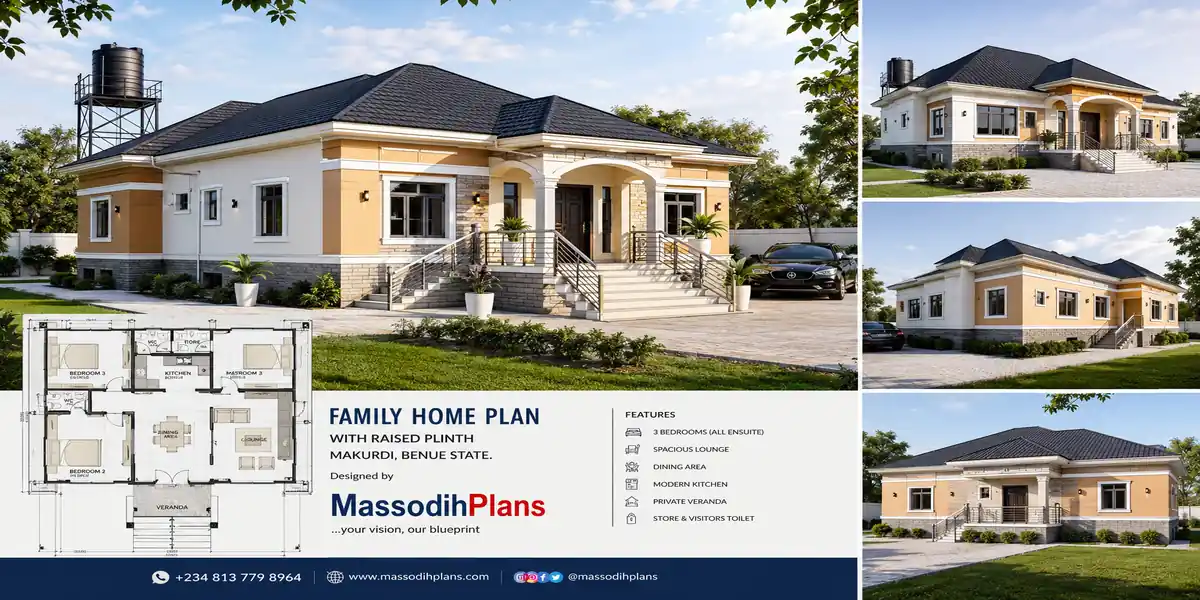
- Nigerian House Plans for Family Homes in Makurdi, Benue State, Nigeria
- Duplex Construction Cost in Awka, Anambra State: Complete Budget Breakdown
- Cost of Building a 3 Bedroom Bungalow in Umuahia, Abia State (Current Price Guide)
- Cost of Building a House in Damaturu, Yobe State: Materials, Labour and Finishing
- Duplex vs Bungalow in Benin City: Which Should You Build?
- Cost of Building a Duplex in Yenagoa: Materials and Labour Guide
- House Plans for Small Plots in Yola: Modern Nigerian Designs Explained
- Cost of Building a Modern Bungalow in Calabar (Updated Guide)
- House Plans for Sloping Land in Jos, Plateau State, Nigeria: Smart Nigerian Designs
- Best Roofing Options for Houses in Gusau city of Zamfara State, Nigeria: Prices and Durability
External Reference: For construction cost benchmarking methodology and building stage cost analysis in Nigerian conditions, Structville provides detailed engineering-level breakdowns that complement practical site-level estimates.