Cost of Roofing a Bungalow and Duplex in Abuja
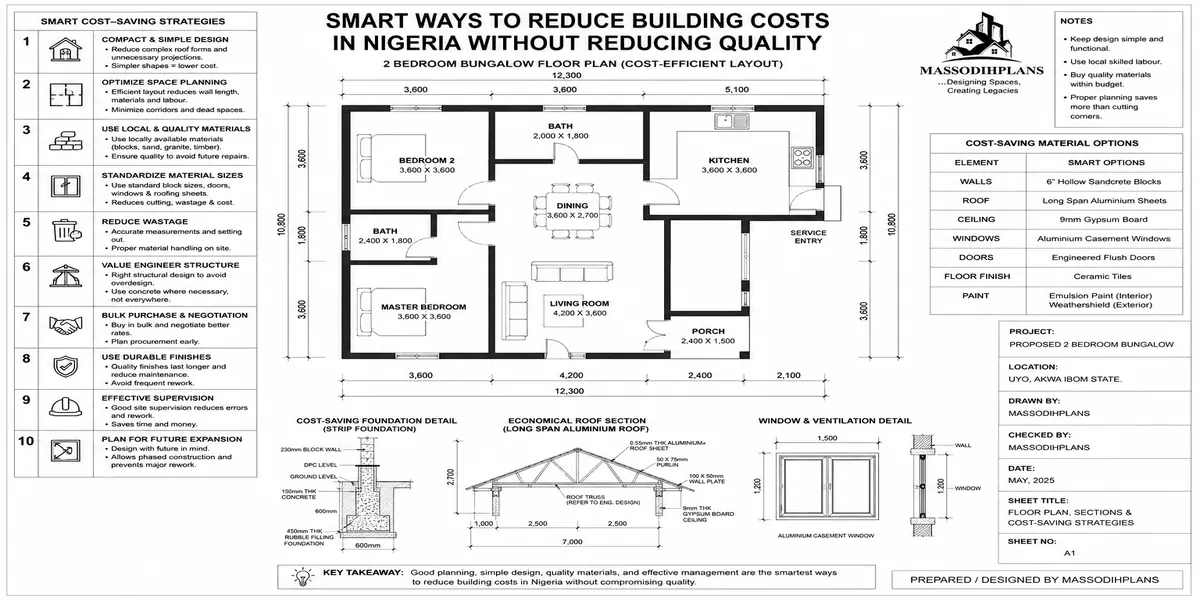
Let me answer the question immediately: roofing a bungalow in Abuja in 2026 can cost about ₦6 million–₦10 million for a 2-bedroom, ₦9 million–₦16 million for a 3-bedroom, and ₦14 million–₦25 million for a 4-bedroom bungalow. For a luxury bungalow with premium roofing materials, complex roof geometry and higher-end finishes, ₦25 million or more may be required.
But here is the part many homeowners miss: the number of bedrooms alone does not determine your roofing cost. The size of the building, roof design, roof pitch, number of valleys and hips, roofing material, timber or steel structure, ceiling design, labour rates and even wastage can change your final bill by millions of naira.
That is why two Abuja homeowners building houses with the same number of bedrooms can receive completely different roofing quotations.
In this guide, I will break down the actual cost components, show you what you should expect to pay for materials and labour, explain why some roof designs are significantly more expensive, and reveal practical ways to reduce unnecessary costs without compromising the strength or appearance of your roof.
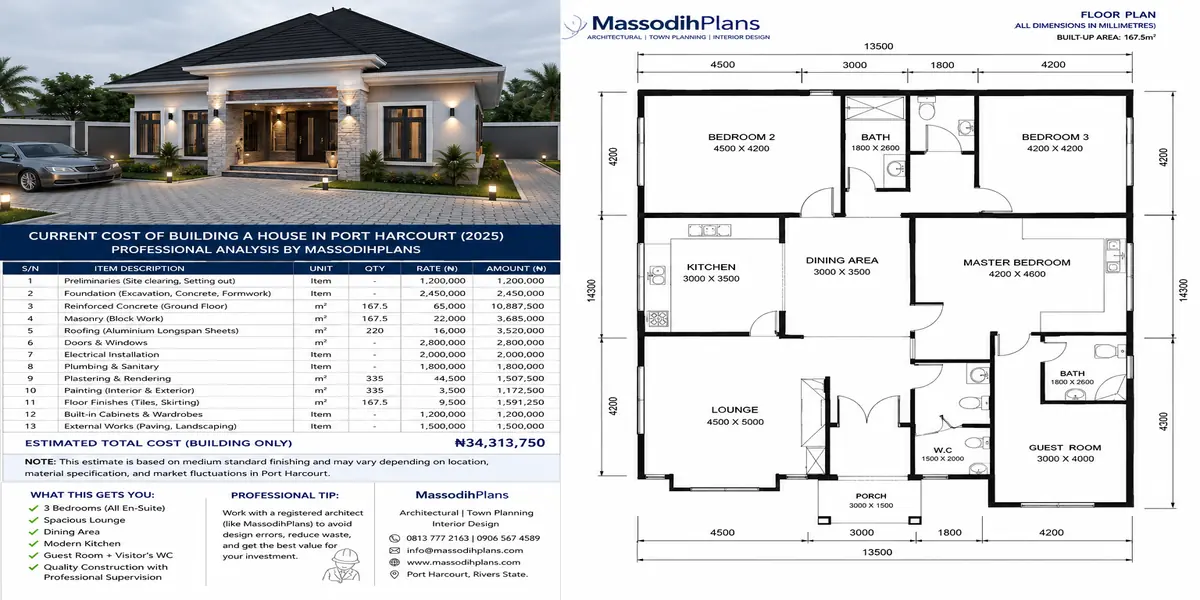
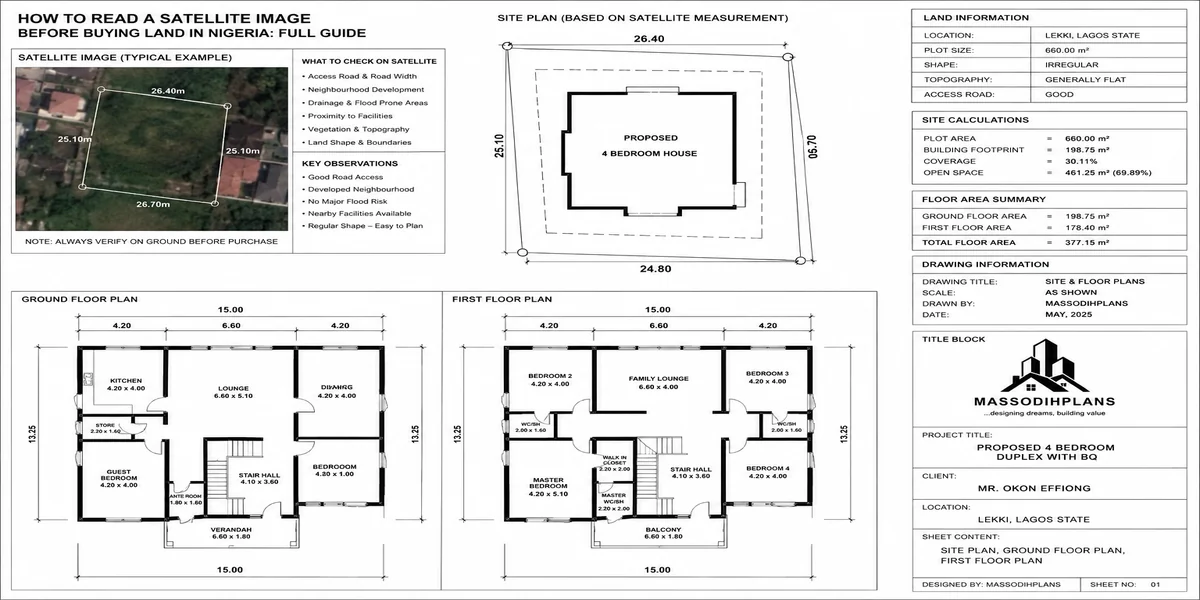
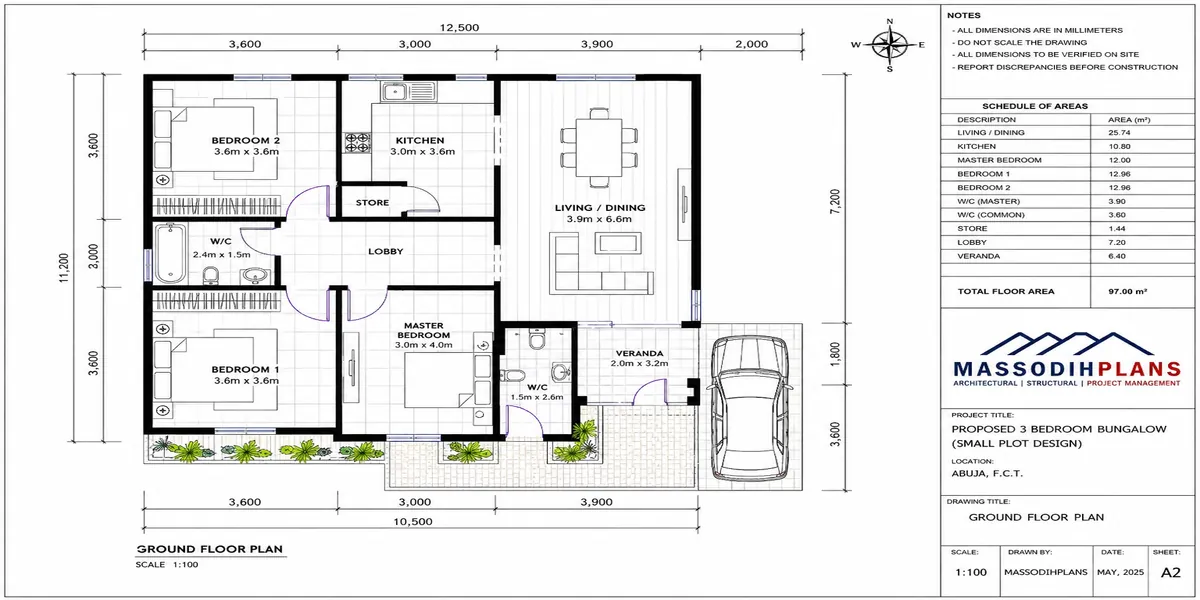
I will also show you how your house plans, floor plans and building design can influence roofing costs long before construction begins.
So, before you accept the first quotation from a contractor, keep reading. The most expensive roofing mistakes are often made before the first roofing sheet is purchased.
Why Roofing Costs in Abuja Are Not Like Other Nigerian Cities
Abuja operates differently from Lagos, Port Harcourt, Enugu, and many other Nigerian cities when it comes to construction costs. If you compare roofing quotations from Abuja with prices from another state, you may end up with unrealistic expectations.
One major reason is labour cost. Skilled roofing artisans in Abuja charge far more because of the city’s high cost of living. A roofing carpenter can earn between ₦15,000 and ₦25,000 daily, while labourers may charge ₦6,000 to ₦10,000 per day. Over a roofing project lasting two to three weeks, labour alone can consume millions of naira.
Transportation also increases roofing costs significantly. Most roofing sheets, timber, and accessories are supplied from cities like Lagos, Onitsha, and Kaduna. By the time transport charges and diesel expenses are added, material prices rise well above factory rates.
Another factor is estate compliance. Many Abuja estates regulate roofing colours, building heights, and approved materials. Ignoring these rules can lead to penalties, redesigns, or costly rework during construction.
Material prices are also unstable. Roofing sheets depend heavily on aluminium coil prices, which are affected by the naira to dollar exchange rate. Once the exchange rate changes, roofing prices respond almost immediately. A quotation received today may no longer apply within a few weeks.
These realities explain why roofing a bungalow or duplex in Abuja costs more than many online estimates suggest. The safest approach is to budget using current Abuja market prices and include extra contingency funds for inflation and material fluctuations.
What Exactly Is Included When Contractors Quote Roofing?
Before you can evaluate any quotation, you need to know what should be included in a roofing job. Many homeowners receive a price and do not know what it covers. Some contractors give a low number and exclude critical items, then add them back later as extras.
A complete roofing job for a standard bungalow in Abuja should include all of the following:
- Roofing sheets (the covering material itself)
- Roofing timber or steel trusses (the structural framework that carries the sheets)
- Fascia boards (the wooden or uPVC boards that finish the roof edges)
- Rain gutters (the channels that collect and direct rainwater off the roof)
- Roofing nails, screws, washers, and accessories
- Ridging (the capping material that seals the peak of the roof)
- Hip capping (the material that seals the sloped edges where roof sections meet)
- Transportation from the point of purchase to your site
- Labour for framework installation, sheet installation, and finishing
When a contractor quotes you a number, ask them specifically whether all of these items are included. If any item is missing, do not compare that quote to another quote that includes everything.
Items that are usually NOT included in a standard roofing quote include POP ceiling installation, electrical ceiling fittings, insulation boards, and any ceiling work below the roof. Those are separate contracts.
Full Cost Breakdown by Bungalow Type
Here is a detailed breakdown that goes beyond the headline numbers. These estimates reflect Abuja 2026 market conditions.
2 Bedroom Bungalow: N6 million to N10 million
A 2 bedroom bungalow typically covers a floor area of roughly 80 to 120 square metres. Roof area is usually larger than floor area because of overhangs and pitch, so expect your actual roofing surface area to be around 120 to 180 square metres depending on design.
- Roofing sheets: N2.5 million to N4 million
- Timber framework: N1.5 million to N2.5 million
- Labour: N800,000 to N1.5 million
- Fascia and gutters: N400,000 to N900,000
- Transportation: N200,000 to N500,000
- Accessories: N150,000 to N400,000
Total: N5.5 million to N9.8 million
With a 10 percent contingency buffer, your working budget should be N6 million to N10.8 million.
3 Bedroom Bungalow: N9 million to N16 million
A 3 bedroom bungalow covers approximately 120 to 180 square metres on the floor. Roof surface area typically ranges from 180 to 270 square metres.
- Roofing sheets: N4 million to N7 million
- Timber framework: N2 million to N4 million
- Labour: N1.2 million to N2.5 million
- Fascia and gutters: N500,000 to N1.5 million
- Transportation: N300,000 to N900,000
- Accessories: N200,000 to N600,000
Total: N8.2 million to N16.5 million
With contingency, your working budget should be N9 million to N18 million.
4 Bedroom Bungalow: N14 million to N25 million
A 4 bedroom bungalow can cover 180 to 260 square metres on the floor. Roof surface area with generous overhangs can reach 280 to 400 square metres.
- Roofing sheets: N6 million to N11 million
- Timber framework: N3 million to N6 million
- Labour: N2 million to N4 million
- Fascia and gutters: N900,000 to N2 million
- Transportation: N500,000 to N1.2 million
- Accessories: N400,000 to N900,000
Total: N12.8 million to N25.1 million
With contingency, your working budget should be N14 million to N28 million.
Luxury Bungalow: N25 million and above
Luxury roofing typically involves stone coated tiles, steel trusses, premium insulation, large overhangs, multiple roof intersections, and specialized labour. These projects easily exceed N40 million when the full scope is factored in.
Roofing Sheet Types Available in Abuja and What Each Costs
Your choice of roofing sheet is the single biggest cost decision in any roofing project. The sheet type affects material cost, installation cost, heat performance, aesthetics, and long term maintenance. Here is a full explanation of what is available in Abuja in 2026.
Long Span Aluminium Roofing (Most Common)
Long span aluminium is the most widely used roofing sheet in Nigeria. You see it on houses across all income levels. It comes in corrugated and flat profile variants and is sold by gauge (thickness) and brand.
Gauge matters enormously. Thicker gauge sheets are heavier, stronger, and more resistant to deformation in heat. Thinner gauge sheets are cheaper upfront but may begin to ripple, loosen, or develop leakage problems faster.
Common gauges available in Abuja:
- 0.45mm gauge: lower quality, suitable for temporary structures and very tight budgets
- 0.55mm gauge: minimum recommended for a permanent residential building
- 0.65mm gauge: good quality, good durability for residential use
- 0.80mm and above: premium thickness, excellent durability
Estimated cost per square metre for long span aluminium in Abuja in 2026: N6,500 to N12,000 depending on gauge and brand.
Well known brands in the Nigerian market include Metcoppo, Gerard, Eureka, and various local manufacturers. Always verify the gauge claimed by a supplier before purchase because some suppliers misrepresent the thickness of what they sell.
Step Tile Aluminium Roofing (Very Popular in Modern Builds)
Step tile aluminium has a tiled profile that gives the appearance of individual roof tiles while actually being one continuous sheet. It has become very popular in modern Nigerian bungalow and duplex designs because it looks expensive and finishes well.
Step tile is heavier than flat long span and drains water very efficiently because of the tile profile channels. It also looks substantially better than plain long span on a finished building.
Cost per square metre in Abuja in 2026: N8,000 to N15,000 depending on gauge and brand.
Installation is slightly more labour intensive than flat long span because the profile requires more careful alignment and fastening.
Stone Coated Steel Roofing (Premium)
Stone coated roofing is a steel base sheet that is coated with a layer of acrylic and stone granules. The result looks like terracotta clay tiles or natural stone tiles but is significantly lighter, more durable, and easier to install than actual clay tiles.
Stone coated roofing is common in high end Abuja estates like Maitama, Asokoro, Wuse 2, Gwarinpa, and Jabi. Estate developers and luxury home builders prefer it because of aesthetics, heat reduction, and long lifespan.
Advantages of stone coated roofing:
- Significantly reduces heat transfer into the building
- Reduces rain noise
- Has a lifespan of 40 to 50 years with proper installation
- Adds premium aesthetic value that increases property resale value
- Resistant to strong winds when properly fixed
- Disadvantages:
- Expensive upfront
- Requires skilled and experienced installers
- Cost per square metre in Abuja in 2026: N14,000 to N25,000 depending on brand and profile.
- Brands like Metcoppo, Gerard, and Decra are common references in the Abuja market.
Concrete and Clay Roof Tiles (Rare but Available)
Clay tiles and concrete tiles are traditional roofing materials with excellent heat performance and aesthetics. They are heavy, which means your structural framework must be engineered to carry the additional load. They are also fragile during installation and require very skilled tilers.
These materials are rarely used in standard Nigerian bungalow construction but occasionally appear in heritage-style or very high-end projects.
Cost per square metre: N18,000 and above depending on source.
Asphalt Shingles (Very Rare in Nigeria)
Asphalt shingles are common in North America and Europe. They are rarely used in Nigeria because of supply difficulties and the heat performance challenges in a tropical climate. You will not encounter these in a typical Abuja roofing market.
Roofing Timber and Structural Framework: What You Are Actually Paying For
Many homeowners focus all their attention on roofing sheets and completely ignore the structural framework beneath. This is a critical mistake. If your framework is weak, undersized, or made from poor quality timber, no amount of expensive roofing sheet will protect your building.
The roofing framework is the skeleton that carries the weight of your roofing sheets, resists wind pressure, and distributes load to your ring beam and walls. It must be properly sized, properly seasoned, and properly connected.
Timber Types Used for Roofing in Abuja
Hardwood is the standard for roofing timber in Nigeria. Common species include Opepe, Iroko, and Ekki. Softwood is sometimes used for lighter elements like ceiling battens but should not be used for main structural members.
The key roofing timber members are:
- Wall plate: the horizontal member that sits on top of your ring beam and receives the rafters
- Rafter: the sloped member that runs from wall plate to ridge board, giving the roof its pitch
- Ridge board: the horizontal member at the peak of the roof where rafters from both sides meet
- Purlins: horizontal members running across the rafters that the roofing sheets attach to
- Hip rafter: the diagonal rafter at corners of a hip roof
- Valley rafter: the diagonal rafter at internal corners where two roof slopes meet
- Ceiling joists: horizontal members that support the ceiling board below
Each of these members must be sized correctly for the span it covers. A rafter spanning 3 metres without intermediate support needs to be a different size from one spanning 5 metres. This is where a structural engineer or experienced roofing contractor earns their fee.
Timber Prices in Abuja in 2026
Hardwood roofing timber is sold per length and per size. Common sizes are 2 by 3 inches, 2 by 4 inches, 2 by 6 inches, and 3 by 3 inches.
Approximate prices per 12-foot length in Abuja in 2026:
- 2 by 3 inch hardwood: N2,500 to N4,000 per length
- 2 by 4 inch hardwood: N3,500 to N5,500 per length
- 2 by 6 inch hardwood: N5,000 to N8,000 per length
- 3 by 3 inch hardwood: N4,500 to N7,000 per length
A standard 3 bedroom bungalow may consume between 300 and 600 lengths of timber depending on roof design complexity and the sizes required.
Timber or Steel: Which Framework Should You Choose?
This is a question many Abuja homeowners ask when they are planning a premium build.
Timber roofing framework is traditional in Nigeria. It is widely understood by carpenters, easy to source, faster to install, and costs less upfront. The vulnerabilities are termites, moisture damage over time, and occasional inconsistency in timber quality.
Steel roofing trusses are fabricated from hollow sections or angle iron and then welded or bolted together. A steel truss can span much larger distances without intermediate support, is completely termite proof, and is significantly stronger under wind loading.
Steel framework costs between 30 percent and 60 percent more than equivalent timber framework in Abuja. However, for premium projects in Abuja’s upscale estates, steel trusses are increasingly specified because of their long term performance and the fact that they are compatible with stone coated tile systems that require uniform, strong support.
If you are building a 2 or 3 bedroom bungalow on a standard budget, timber framework using good quality seasoned hardwood remains entirely appropriate. If you are building a luxury bungalow or a large 4 to 5 bedroom structure with wide spans, discuss steel truss options with a structural engineer.
Understanding Roof Design and Why Simplicity Saves Money
The shape of your roof is one of the most controllable cost factors in roofing. Many homeowners see complicated roof designs on Instagram and want to replicate them without understanding that roof complexity is one of the fastest ways to inflate a roofing budget.
Here is how different roof designs affect cost.
Simple Hip Roof
A hip roof has four sloping sides meeting at a ridge. It is the most common bungalow roof in Nigeria and it works excellently. It drains water on all sides, handles wind well, and is straightforward for carpenters to construct.
A simple hip roof uses fewer special cuts, produces less material waste, and takes less labour time to complete. It is the most cost-efficient option for a bungalow.
Gable Roof
A gable roof has two sloping sides meeting at a central ridge, with triangular wall sections (gables) at each end. It is also common in Nigeria and is slightly simpler to construct than a hip roof in some configurations.
Gable roofs work well for narrow rectangular plans. They cost similarly to a simple hip roof.
Multiple Valley Roof Designs
When a building has L-shaped, T-shaped, or U-shaped plan configurations, the roof develops internal valleys where different roof sections meet. These valleys are the most technically demanding and most leak-prone parts of any roof.
Multiple valleys increase:
- Labour time significantly
- Material waste from cutting sheets to fit complex angles
- Risk of leakage at junctions if not well executed
- Cost of roofing accessories for valley lining
A bungalow with a simple rectangular plan and a clean hip or gable roof will cost meaningfully less to roof than one with a complex multi-section plan.
Cantilever Overhangs and Decorative Features
Some modern bungalow designs include large overhangs, extended eaves, or decorative fascia projections. These look good but each extension adds timber, labour, and roofing material.
If you are on a budget, keep your overhangs to a practical 600mm to 900mm beyond the wall line. This is enough to protect your walls from rain and is structurally straightforward. Overhangs beyond 1.2 metres require additional structural consideration and cost more.
When you are studying modern bungalow plans on our Plans Library, pay attention to the roof design because a well-designed compact roof can look sophisticated without requiring excessive complexity.
Roof Pitch and Why It Matters in Abuja’s Climate
Roof pitch is the angle of slope of your roof surfaces measured in degrees or as a ratio of rise to run. In Nigeria, pitch is usually discussed in degrees.
Abuja experiences intense seasonal rainfall concentrated in the rainy season from April to October, with very heavy downpours particularly in July and August. The city also experiences strong harmattan winds from November to February. Your roof pitch affects how well your roof handles both.
Recommended Pitch Range for Abuja Bungalows
A pitch between 25 degrees and 35 degrees is generally recommended for residential bungalows in Abuja. This range achieves good water runoff speed, acceptable aesthetics, and structural stability.
Pitches below 20 degrees slow down water drainage and increase the risk of water backing up under sheets during heavy rain. This is especially problematic at sheet overlaps.
Pitches above 40 degrees are sometimes used for aesthetic reasons or to create usable attic space, but they increase material quantities significantly and are rarely necessary for a standard bungalow.
Very Flat Roofs
Some contemporary designs use very low pitch roofs for a minimalist appearance. These designs can work but require professional waterproofing membrane installation and very careful detailing at every edge and joint. An improperly waterproofed flat or near-flat roof in Abuja’s rainy season will leak and may cause significant damage to ceilings and walls.
If you want a flat roof appearance for your bungalow, do not treat it as a cost saving measure. A properly executed flat roof system costs more than a conventional pitched roof.
Ventilation: The Most Underestimated Part of Roofing in Nigeria
If you have ever been inside a Nigerian house that felt like an oven during dry season, poor roof ventilation is almost certainly part of the reason.
Heat enters your house through the roof more than through any other building element. The sun heats your roofing sheet. That heat then radiates downward into the space between the sheet and your ceiling. Without ventilation, that trapped hot air has nowhere to go. It heats your ceiling, which heats the air inside your rooms. Your air conditioner or fan has to work much harder to cool the space.
Good roof ventilation removes that trapped hot air and significantly improves indoor comfort.
How to Achieve Good Roof Ventilation in an Abuja Bungalow
Ridge vents are openings at the peak of the roof that allow hot air to escape by convection. As hot air rises to the ridge, it escapes through the ridge vent and draws cooler air in from the eaves below.
Soffit vents are openings in the underside of the roof overhang (soffit) that allow fresh air to enter the roof space. They work together with ridge vents to create airflow through the roof cavity.
Gable vents are louvred openings in the gable walls of a roof that allow cross ventilation through the roof space.
Roof insulation boards placed between the purlins and the roofing sheet reduce the amount of heat that conducts from the sheet into the roof space. This is sometimes called thermal insulation or foil insulation in the Nigerian market.
High ceiling clearance between your ceiling board and your roofing sheet also helps because it creates more volume for hot air to occupy before it radiates into living spaces. A minimum of 900mm clearance between ceiling level and the lowest purlins is recommended.
Many people on tight budgets skip ventilation considerations entirely. This is a decision they regret for the entire life of the building. Adding ventilation features at the design stage costs very little extra. Trying to add them after construction is expensive and disruptive.
If you want to learn more about designing thermally comfortable Nigerian homes, our Plan School has practical guides that go into climate-responsive design principles for Nigerian residential buildings.
Roofing and Water Drainage: Two Systems That Must Work Together
A roof that sheds water beautifully but drains it poorly into your compound is a design failure. In Abuja, where rainy season downpours can be intense, compound drainage planning must be done together with roofing.
Rain Gutters
Gutters are channels fixed along the lower edge of your roof that collect rainwater running off the roofing sheets and direct it to downpipes that carry water to ground level. Without gutters, roof water falls freely off the roof edge, splashes against your walls, soaks into the ground immediately adjacent to your foundation, and erodes your compound surface.
In Abuja’s rainy season, a 3 bedroom bungalow with a large roof can shed thousands of litres of water per heavy rainfall event. That water directed properly into underground drainage or a storage tank is a resource. Directed poorly, it becomes a problem.
Gutter types available in Nigeria:
- Aluminium gutters: lightweight, rust resistant, popular, N3,500 to N6,000 per metre installed
- PVC gutters: cheaper, lighter, but less durable under sun exposure over time
- Half round gutters: traditional profile, good flow capacity
- Box gutters: flat bottom rectangular profile, popular for modern designs
Downpipes
Downpipes carry water from gutters to the ground. They should discharge water at least 300mm from your wall face and ideally connect into an underground drainage channel or a rainwater harvesting tank.
If your downpipes simply discharge water at the base of your wall, you will develop foundation moisture problems and dampness at ground level over time.
Compound Drainage
The compound around your bungalow should slope gently away from the building on all sides. Water from downpipes and from rainfall on the compound surface should flow away from the building toward drainage points at the perimeter.
Poor compound drainage causes:
- Foundation weakening from constant moisture
- Wall dampness and paint peeling at ground level
- Mosquito breeding grounds in pooled water
- Slippery compound surfaces that create fall risks
- Compound flooding that enters ground floor rooms
Underground drainage channels or properly graded surface channels are the solutions. Discuss your compound drainage plan with your builder before roofing is completed because the positioning of downpipes affects where drainage channels need to go.
You can find Nigeria-specific guidance on compound and site drainage in our Plan School resources.
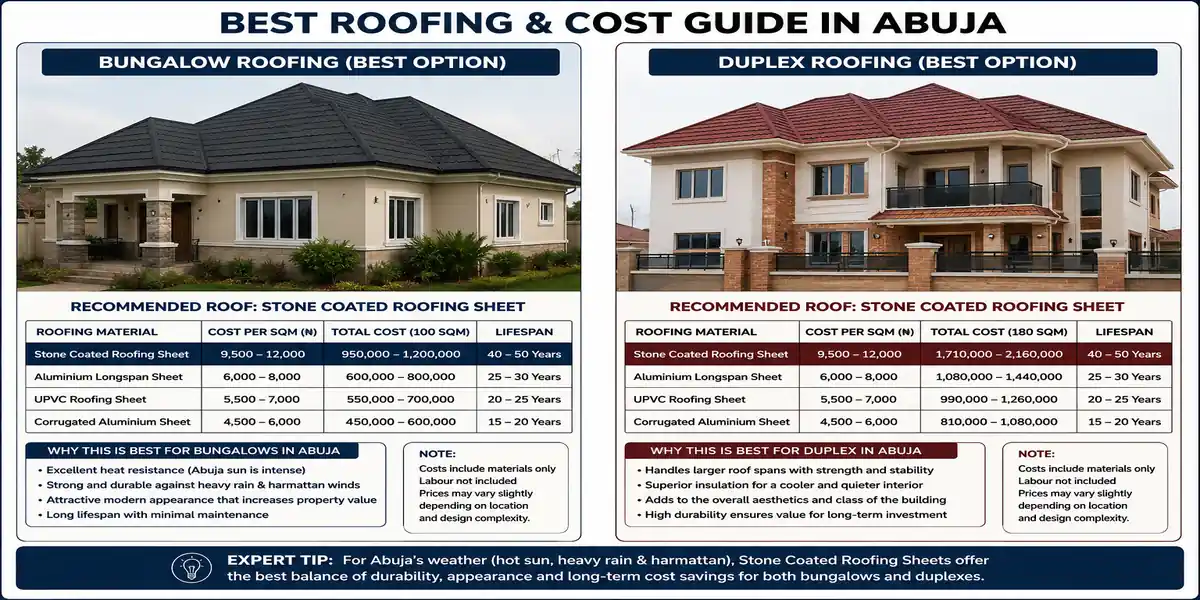
Roofing Sheet Types Available in Abuja and What Each Costs
Heat and Roof Orientation: A Detail Most Builders Ignore
The direction your building faces and the orientation of your roof surfaces affect how much heat your building absorbs from the sun.
In Abuja, which is in Nigeria’s Middle Belt, the sun travels from east to west across the southern sky. This means:
South-facing roof surfaces receive the most total solar radiation over the day
West-facing roof surfaces receive intense afternoon sun when temperatures are already at their daily peak
East-facing surfaces receive morning sun when temperatures are lower
North-facing surfaces receive the least direct sun in Nigeria’s latitude
A bungalow where the largest roof surface faces west will be significantly hotter in the afternoon than one where the largest surface faces south or east. When you are reviewing your building plan orientation, ask your architect or designer about solar orientation and whether the roof plan has been considered in that context.
Where you have flexibility in siting your building on your plot, orienting the building so that the main ridge runs east-west allows the two largest roof slopes to face north and south. South-facing receives controlled sunshine and north-facing stays cooler. This is the most thermally comfortable configuration.
Where site constraints force a different orientation, compensate with roof insulation, wide eaves that shade walls, and good ventilation design.
Roofing on Small Plots: Special Considerations
Abuja housing development increasingly involves compact plots ranging from 300 to 500 square metres. Estate developments in areas like Lugbe, Gwarinpa, Kado, Galadimawa, and Wumba often have individual plot sizes in this range.
On a small plot, roofing design has implications beyond just the roof itself.
Setback Requirements
The Abuja Development Control regulations specify minimum distances between your building and your plot boundaries. Your roofing overhang must not extend beyond your plot boundary or violate minimum setback rules. Before designing a roof with large overhangs on a small plot, confirm your development control allowances.
Water Discharge
On a small plot, water running off your roof can easily discharge onto your neighbour’s land if drainage is not properly planned. This causes neighbour disputes and, in some cases, regulatory problems. Install gutters and ensure all water from your roof discharges within your plot boundary into proper drainage.
Roof Visual Scale
A very large, high-pitched roof on a small plot can look disproportionate and actually make the building look smaller rather than grander. A simpler roof design at a moderate pitch can look more elegant on a compact plot than an oversized decorative roof trying to look like a mansion.
Our Plans Library includes designs developed specifically for Nigerian plot sizes including compact 50 by 100 plots in Abuja, where roof design has been considered as part of the overall building proportions.
Estate Rules and Roofing in Abuja
If you are building in a managed estate or a Federal Housing Authority development in Abuja, your roofing options may be regulated. Before purchasing roofing materials, investigate the following:
Approved roofing colours: Many Abuja estates specify permitted roof colours to maintain visual consistency. Some require terracotta colours. Some specify only grey or silver. Using a non-approved colour can result in a stop-work order.
Approved roofing materials: Some premium estates specify stone coated tiles and do not permit plain aluminium long span. Check this before buying.
Maximum building height: Your roof pitch contributes to your overall building height. In some areas, height limits apply and must be respected.
Water discharge systems: Some estates require specific approaches to drainage and prohibit unmanaged surface discharge.
Development control clearance: In Abuja, building approval from the FCDA (Federal Capital Development Authority) is required before construction. Your approved drawings define what roof configuration you are permitted to build. Building a different roof from what was approved can create legal problems.
If you need support understanding how to work with Nigerian building regulations and approvals for your project, our Services page outlines how we can assist.
Hidden Roofing Costs That Will Surprise You
Many homeowners budget for roofing sheets and timber, receive those materials, and then discover that they need additional funds to complete the job. These are the hidden costs that experienced builders prepare for.
Scaffolding
For a bungalow with a high roof pitch or for any multi-storey element within your building, scaffolding may be necessary for safe and efficient roofing work. Scaffolding rental in Abuja costs N200,000 to N600,000 or more depending on the scope.
Some carpenters use improvised access methods that avoid formal scaffolding costs but also introduce safety risks. This is a decision to discuss with your contractor.
Security for Stored Materials
Roofing materials are expensive and attractive to thieves. Aluminium roofing sheets, timber, and accessories left on site overnight are vulnerable. Abuja construction sites experience material theft regularly. Factor in watchman costs or ensure your site has adequate security before roofing materials are delivered.
Generator and Fuel
Roofing work requires cutting equipment for roofing sheets and sometimes welding equipment for steel connections. These run on electricity. If your site does not have stable power (which most Abuja sites do not), generator fuel will be a cost. Estimate N30,000 to N80,000 for fuel during the roofing period.
Rain Delay Costs
Roofing cannot proceed in rain. If rainfall is frequent during your roofing period, workers may lose productive days. Labour contracts that are day-based mean you may still owe workers for reduced-productivity periods or need to extend the project duration, which has knock-on costs.
Material Wastage
Cutting roofing sheets to fit complex roof geometry produces waste. For a simple rectangular roof, wastage may be 5 to 10 percent. For a complex roof with multiple hips, valleys, and dormers, wastage may reach 15 to 20 percent. Always factor wastage into your material quantity estimate.
Price Changes Between Quotation and Purchase
Roofing material prices in Nigeria can change within weeks. If your contractor quotes based on prices from January and you are actually purchasing in March or April, prices may have increased. Either buy materials promptly after receiving a quotation or include a price escalation buffer in your budget.
Recommended Contingency
Add a minimum of 15 percent to your total roofing estimate as a contingency buffer. In a volatile market like Nigeria’s 2026 construction environment, 20 percent is more prudent.
How Roofing Affects Your POP Ceiling
Many homeowners install POP (Plaster of Paris) suspended ceilings beneath their roof. The condition of your roofing directly affects how well your POP ceiling performs.
Problems That Roofing Causes for POP Ceilings
Roof leakage is the most damaging issue. Even a minor roof leak, if undetected or ignored, allows water to enter the ceiling cavity. Water saturates the POP ceiling board, causes staining, weakens the structure, and eventually causes sections of ceiling to crack, sag, or collapse. Repairing or replacing a POP ceiling that has been water damaged is expensive and disruptive.
Poor ventilation between roof and ceiling creates trapped hot air that bakes the POP ceiling surface. Over time, this causes hairline cracks in the plaster finish that require regular repainting and patching.
Timber moisture problems occur when roofing timber is not properly seasoned before installation. Green timber contains moisture that escapes slowly as the timber dries. This moisture can affect ceiling boards and cause POP to crack.
What to Do Before Installing POP Ceiling
Ensure there are no roof leakage points at any overlap, junction, or accessory fixing before installing ceiling boards.
Confirm that ridge ventilation and soffit ventilation are in place so that hot air has an escape route.
Allow roofing timber to stabilize for at least 3 to 4 weeks before installing ceiling systems.
Check all roofing accessories including ridge cappings, hip cappings, and gutter connections before closing up with ceiling.
Practical Contractor Management: How to Avoid Being Cheated
Roofing is unfortunately one of the construction stages where financial manipulation is most common. Here is what to watch for and what to do.
Verify Timber Deliveries Yourself
When timber is delivered to your site, count the pieces and record the sizes. Do not rely on verbal confirmation from your contractor. Keep a written record of every delivery. If timber is delivered in multiple batches, record each batch separately.
Verify Roofing Sheet Thickness
Some suppliers and contractors supply thinner gauge sheets than what they quoted or claimed. A 0.55mm sheet looks identical to a 0.45mm sheet to the untrained eye. If you have concerns, a digital vernier caliper costs less than N5,000 and allows you to measure gauge thickness at delivery. For a purchase of millions of naira, this is a reasonable investment.
Monitor Timber Cutting and Usage
Experienced carpenters are efficient with timber. Watch for excessive waste. Some carpenters deliberately generate waste that is then removed from site for personal use. Good carpenters optimize their cutting to minimize waste.
Stage-Based Payment
Never pay a contractor the full labour amount upfront. A reasonable payment structure for roofing is:
30 percent on mobilization when materials are confirmed on site
40 percent when framework is complete and inspected
30 percent on final completion when all accessories are in place and inspected
Request Detailed Quotations
A contractor who gives you a single lump sum figure without breakdown is harder to evaluate and harder to hold accountable. Request a quotation that breaks down materials, labour, and every category of expense separately.
Use Architectural Drawings
Do not allow improvised roofing decisions on site. Your approved architectural drawings specify your roof design, pitch, and configuration. Any deviation from the drawings should be discussed and agreed before implementation, not discovered after.
What Makes a Good Roofing Contractor in Abuja
Finding a good roofing contractor in Abuja is not as simple as picking the cheapest quotation. Here is what to look for.
Ask to see completed projects. A contractor who has done good work in Abuja should be able to show you at least 3 to 5 completed buildings where you can physically inspect the roof. Look for clean ridge lines, even sheet installation, proper fascia finishing, and well-connected gutters.
Ask about their timber sourcing. Good contractors know where to get quality seasoned hardwood. Contractors who buy the cheapest available timber without considering seasoning or species are taking shortcuts that affect your building.
Ask about their team structure. Who is the lead carpenter? How many experienced workers do they have? How many labourers assist? A competent roofing team for a 3 bedroom bungalow should have at least 2 to 3 experienced carpenters and 3 to 4 labourers.
Check whether they understand ventilation. Ask the contractor directly how they plan to ventilate your roof space. A good contractor will have a clear answer. A contractor who has never thought about this is not someone you want designing your roof.
How Long Does Roofing Take in Abuja?
For planning purposes, here is a realistic timeline for roofing a standard bungalow in Abuja.
- Wall plate installation: 1 to 2 days
- Framework (rafter, ridge, purlin) installation: 5 to 12 days depending on complexity
- Roofing sheet installation: 4 to 10 days
- Fascia and soffit installation: 2 to 5 days
- Gutter installation: 2 to 4 days
- Final inspection and touching up: 1 to 2 days
Total: approximately 3 to 5 weeks for a standard bungalow
Weather delays during the rainy season can extend this by 1 to 2 weeks. Plan your roofing timeline to avoid the peak of rainy season if possible, which in Abuja falls between July and September.
Pre-Roofing Checklist: What Must Be Done Before Roofing Begins
Roofing cannot happen in isolation. Several things must be complete and verified before roofing materials are ordered or work begins.
Ring beam must be cast and fully cured. Roofing puts lateral thrust on your wall tops. Your ring beam must be strong and fully cured (minimum 28 days after casting) before wall plates are installed.
Wall alignment must be checked. If your walls are not level and plumb, your roof will not sit properly. Check wall heights at all corners and correct any discrepancies before roofing.
Borehole positioning must be confirmed. If you plan to drill a borehole inside or near your building, do this before roofing closes off access. Post-roofing borehole drilling near a building can be complicated.
Septic tank and drainage positions must be finalized. The positioning of soakaway pits and drainage channels should be resolved before your compound level is disrupted by roofing activities.
Electrical conduit in roof space must be positioned. If your electrical design includes conduit that runs through the roof space, these must be positioned before ceiling boards are installed.
Plumbing penetrations must be planned. Any plumbing vent pipes that exit through the roof must be planned and coordinated with the roofer so that the roofing sheet is properly sealed around penetrations.
Cost Saving Strategies That Do Not Compromise Quality
You can reduce roofing cost in Abuja without reducing quality. Here is how to do it intelligently.
Simplify Your Roof Design
This is the single most effective cost reduction strategy available to you. Choose a simple hip or gable roof. Avoid multiple valleys, dormers, and complex intersections. A clean simple roof executed well looks better and costs less than a complicated roof executed poorly.
Buy Materials Promptly
Material prices in Nigeria are not stable. The longer you wait after receiving quotations, the more likely prices will have increased. Once you have confirmed your material quantities and suppliers, purchase promptly.
Use Accurate Quantity Survey
Overpurchasing materials increases cost. Underpurchasing causes delays and may require purchasing additional material at a higher price. Work with your contractor to prepare an accurate bill of quantities before purchasing. Our Services page includes quantity surveying and cost estimation support for Nigerian building projects.
Avoid Unnecessary Roof Decorations
Decorative ridges, finials, and ornamental fascia elements add cost without adding function. Keep your roof design elegant and functional.
Purchase Materials Directly
Some contractors add markups on materials they purchase on your behalf. Where possible, purchase roofing sheets, timber, and accessories directly from suppliers and have them delivered to site. Pay your contractor a labour-only fee. This requires you to be more involved in the procurement process but can save 10 to 15 percent on material costs.
Plan One Mobilization
Roofing materials delivered in multiple small batches cost more in total transportation than one well-planned bulk delivery. Prepare complete material lists before any delivery and transport everything in as few deliveries as possible.
Roofing and Your Home’s Long Term Value
In Abuja’s property market, the condition and quality of a building’s roof is one of the first things prospective buyers and valuers assess. A poor quality roof is visible from outside and immediately suggests that other aspects of the building may have been done cheaply.
A roof that leaks, shows visible rusting, has misaligned sheets, or has poorly finished fascia reduces the perceived and actual value of your property. In an Abuja market where buyers are knowledgeable and valuers are thorough, roofing quality directly affects resale price.
Conversely, a well-executed roof using quality materials, with clean lines, proper ventilation, and good drainage, adds to the property’s first impression and resale value.
Investing an additional N1 million to N2 million in better quality roofing materials or a more experienced contractor on a project costing N80 million to N150 million is a rational decision when you consider the impact on long term asset value.
For more on how design decisions affect Nigerian property value, you will find useful reading in our Plan School resources.
Reference Resource
For additional technical guidance on structural behaviour of roof systems and the physics of heat transfer through roofing materials, the Nigeria Building and Road Research Institute (NBRRI) publishes technical bulletins on construction standards for Nigerian climatic conditions. Their material is useful for homeowners who want to understand the engineering basis for roofing design decisions: NBRRI Official Website
Frequently Asked Questions
How much does it cost to roof a 3 bedroom bungalow in Abuja in 2026?
A standard 3 bedroom bungalow in Abuja costs between N9 million and N16 million to roof completely. This includes roofing sheets, timber framework, labour, fascia, gutters, transportation, and accessories. Add a 15 to 20 percent contingency buffer for market fluctuations.
Which roofing sheet is best for Abuja weather?
Quality aluminium long span at 0.55mm gauge or above and step tile aluminium are both good choices for Abuja’s climate because they resist corrosion and handle heat and rainfall effectively. For premium buildings, stone coated steel tiles offer better heat reduction and aesthetics but at a higher cost.
Is stone coated roofing worth the extra cost in Nigeria?
Yes, for premium homes and estate properties in Abuja, stone coated roofing is worth the additional investment. It offers better heat reduction, aesthetic quality, noise reduction, and a lifespan of 40 to 50 years. The higher upfront cost is offset by lower maintenance needs and better property value retention.
Can roofing cost be reduced without affecting quality?
Yes. The most effective cost reduction strategies are simplifying your roof design, purchasing materials directly from suppliers, preparing accurate quantity surveys, and buying materials promptly before price increases. None of these strategies require reducing material quality.
Which is better for roofing structure: timber or steel?
Steel trusses are stronger, more durable, and termite-proof. Timber framework is more affordable, widely understood by Nigerian carpenters, and entirely appropriate for standard residential bungalows. For luxury builds or wide-span structures, steel is worth the additional cost.
Does roof orientation affect indoor temperature?
Yes significantly. Roof surfaces facing west receive intense afternoon heat. Where possible, orient your building so that the largest roof surfaces face north and south, minimizing west-facing exposure. Pair this with insulation and ventilation for best results.
How can I prevent roof leakage?
Use experienced, referenced installers. Maintain a pitch of at least 25 degrees. Use quality accessories at all overlaps, ridges, hips, and valleys. Install gutters to control water runoff. Inspect all junctions carefully before ceiling boards are installed.
How long does roofing a bungalow take in Abuja?
A standard bungalow takes approximately 3 to 5 weeks from wall plate installation to final gutter fitting. Weather delays during rainy season can extend this.
What is the minimum gauge of roofing sheet I should use?
For a permanent residential building in Abuja, do not go below 0.55mm gauge for long span aluminium. Anything thinner will begin to show deformation and weakness within a few years in Nigeria’s climate.
Do I need building approval before roofing?
Yes. In Abuja, you need development control approval from the FCDA before any stage of construction including roofing. Building without approval creates legal and financial risks. Ensure your approvals are in place before work begins.
Quick Reference Summary
Roofing cost by bungalow type in Abuja in 2026:
- 2 bedroom: N6 million to N10 million
- 3 bedroom: N9 million to N16 million
- 4 bedroom: N14 million to N25 million
- Luxury: N25 million and above
Key cost factors: roof design complexity, sheet type, framework material, labour rates, and market timing.
Best sheet options: 0.55mm and above long span aluminium, step tile aluminium, stone coated steel tiles for premium builds.
Always add 15 to 20 percent contingency to any roofing estimate.
Prioritize: ventilation, correct pitch, good drainage, experienced installer, accurate quantity survey.
About the Author
Massodih Okon Effiong is a Built Environment Expert and Senior Researcher based in Nigeria. He has a Master’s degree in Urban and Regional Planning, a first degree in Geography and Environmental Management, and professional certificates in Architectural Design, Landscape Design, and GIS. With over 15 years of hands‑on experience in architecture, town planning, GIS, and building economics across Nigerian residential and institutional projects, he understands the real challenges Nigerians face when planning and building homes.
At MassodihPlans, Massodih shares practical Nigerian building guides, modern bungalow and duplex house plans, and built environment resources created specifically for Nigerian homeowners, developers, and property investors. His work is based on real‑life conditions in Nigeria, climate‑responsive design, and cost‑effective planning, aimed at helping everyday Nigerians make smarter, more confident building decisions.
You can explore his full library of Nigerian house plans at the Plans Library, learn more about Nigerian building design through Plan School, or get direct support for your building project through Services.
Related Posts
- Smart House Design Ideas for 50×100 Plots in Nigeria
- Building Materials Price Guide in Nigeria (Full Cost Guide)
- Best Roofing Sheets for Nigerian Weather: Complete Guide
- Cost of Building a 4 Bedroom Duplex in Lagos (Complete Guide)
- How to Practically Draw and Design a Duplex for Small Plots
- Bungalow vs Duplex: Which is Better to build in Nigeria Today?
- Modern Duplex House Plan for 50×100 Plot in Lagos
- 7 Small Plot Design Mistakes Nigerians Make (And How to Fix Them)
- House Plan Selection Guide: How to Choose the Right House Plan for Your Land, Budget and Lifestyle
- Land-Buying Checklist: 100+ Things to Check Before Buying Land in Nigeria
- Building Project Budget Template: Complete House Construction Cost Planner
- Homeowner’s Construction Checklist: 150+ Things to Check Before and During Building
- Building Materials Checklist: 100+ Materials You May Need When Building a House
- Site Analysis Checklist: 50+ Things to Check Before Building on Your Land
- House Planning Checklist: 50+ Essential Things to Check Before Building a House (Complete Guide)
- Building Cost Calculator Nigeria: Estimate Your House Cost in 60 Seconds
- What Principles Guide the Design of an Air Force Base Master Plan?
- How Do You Design Army Barracks for Security and Daily Operations?
- Nigerian House Plans for Family Homes in Makurdi, Benue State, Nigeria