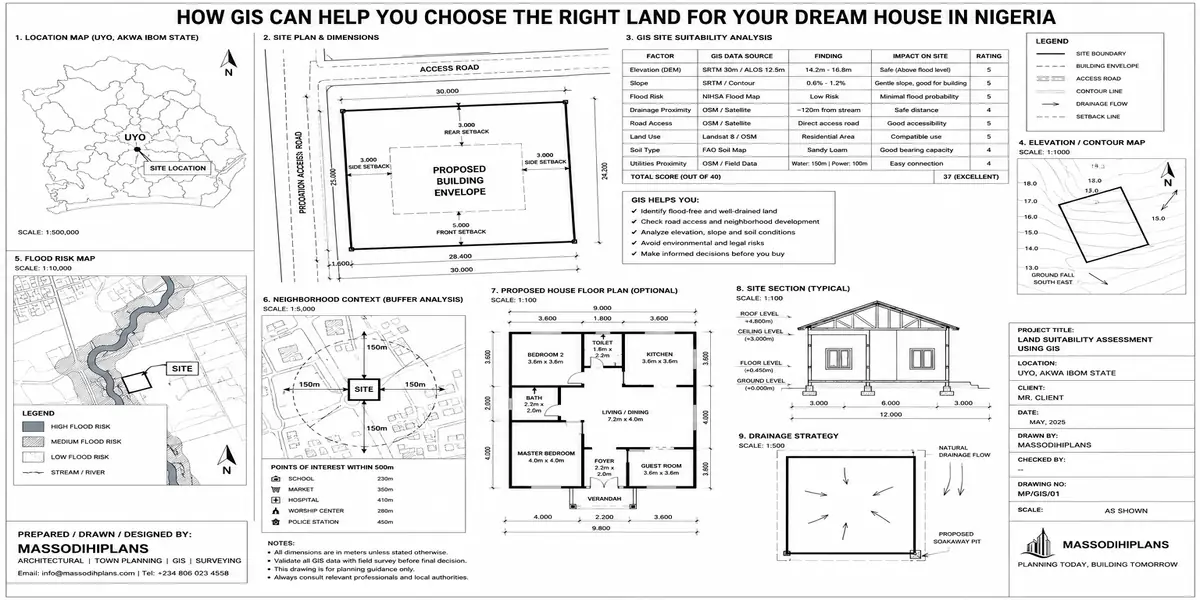
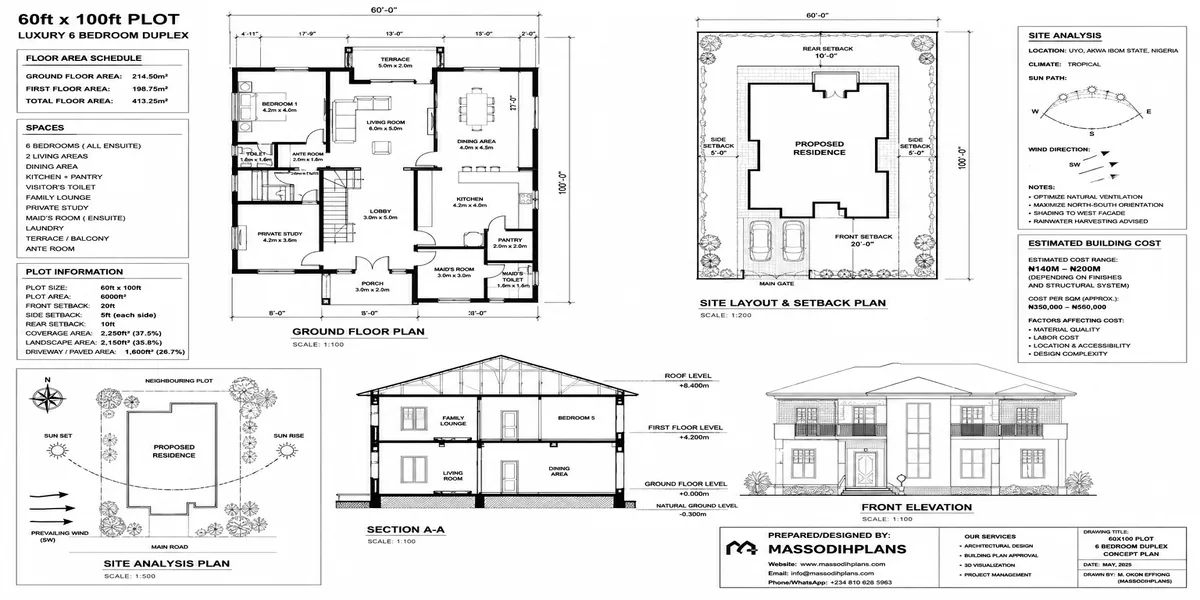
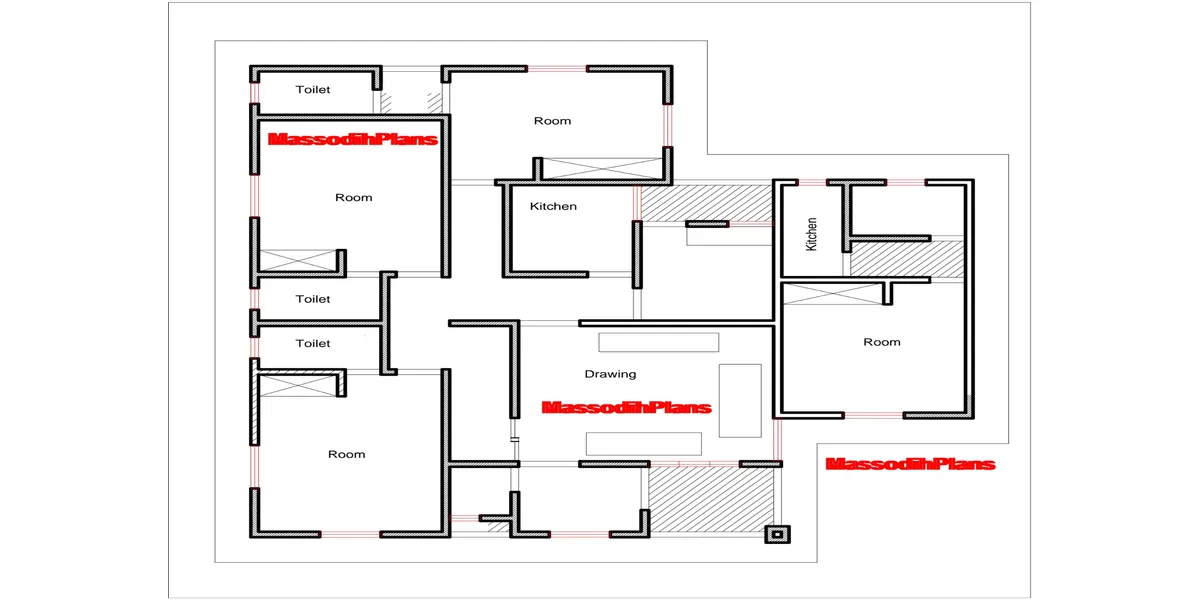
Smart Small Plot Building for Comfortable Urban Living
Best Small Plot House Designs for Modern Urban Living
If you’re wondering whether your plot is too small for the home you want to build, the answer is probably no. In most cases, the real limitation isn’t the land it’s the design. With the right planning, even a compact plot can accommodate a beautiful, comfortable, well-ventilated home with adequate parking, proper drainage, and room for future expansion. That’s why reading this guide could save you from one of the costliest building mistakes.
It is one of the most common questions I hear from people preparing to build. They look at their plot, consider their family size, picture their dream home, and ask, “Is this land too small for what I want to build?” It is an honest question, and the answer surprises most people.
I have seen attractive, spacious homes built on plots many people would have dismissed as too small. I have also seen large plots wasted by poor layouts that ignored airflow, parking, drainage, family circulation, privacy, and long-term flexibility. The difference between a home that works and one that doesn’t has very little to do with plot size and almost everything to do with how intelligently the design responds to the land.
That is exactly what I will show you in this lesson.
If you’re building on a small plot and want a home that feels spacious instead of cramped, stays cool instead of stuffy, drains properly during heavy rains, and remains practical for years to come, keep reading. The principles you’ll discover are based on real project experience, practical design decisions, and proven planning strategies that consistently produce comfortable homes on constrained urban land.
What Counts as a Small Plot in Urban Areas?
Before anything else, it helps to define what we mean by a small plot in the context of urban residential development.
The classification varies by country and city, but in most rapidly developing urban environments, the following sizes are generally considered small residential plots:
| Plot Size | Approximate Metric Dimensions |
|---|---|
| 30 by 60 feet | 9m by 18m |
| 40 by 60 feet | 12m by 18m |
| 40 by 80 feet | 12m by 24m |
| 50 by 80 feet | 15m by 24m |
These are not unusually small plots by any global standard. In many dense Asian and European cities, houses are built successfully on land sizes much smaller than these. The challenge is not the size itself. The challenge is that many people approach small plots using design instincts developed for larger land, and the result is a series of costly compromises that were completely avoidable with better planning at the start.
Here is how small plot sizes compare internationally:
Country/Region | Typical Small Urban Plot
Nigeria (urban) | 9m x 18m to 15m x 24m
United Kingdom | 6m x 12m to 10m x 20m
United States (urban infill) | 12m x 30m
Continental Europe (dense cities) | 6m x 15m to 10m x 20m
Why Small Plot House Design Has Become So Important
Urban land prices have been rising steadily across cities worldwide. As population density increases and urban land becomes more valuable, the average plot size available to residential buyers has been shrinking consistently.
This is not a temporary situation. It is a structural shift in how cities grow.
The result is a generation of homebuilders who are purchasing smaller plots not because they want to, but because that is what they can realistically afford in the locations they need to live. And yet their expectations for comfort, privacy, parking, storage, ventilation, and aesthetics have not shrunk alongside the land.
Good small plot house design exists to bridge that gap. It makes limited land perform at its maximum potential, not by cramming in more rooms, but by planning every square metre with genuine intelligence.
The difference between a house that feels generous and one that feels suffocating on the same plot size is almost entirely a product of planning quality.
The Core Principles That Make or Break a Small Plot Design
Before I walk you through specific design types, you need to understand the foundational principles that distinguish a good small plot house from a bad one. These apply regardless of building type, style, climate, or budget.
1. Space Efficiency Over Room Count
The biggest mistake people make on small plots is focusing on the number of rooms rather than the quality and usability of space. I have seen three-bedroom designs where no single bedroom was actually comfortable because every square metre was divided into as many rooms as possible without considering furniture placement, natural light access, or airflow.
A well-designed small plot house prioritizes:
- Open plan arrangements that combine living, dining, and kitchen spaces visually
- Compact staircases that do not consume excessive floor area
- Multipurpose spaces that serve more than one function without feeling awkward
- Smart storage built into the architecture rather than added as furniture afterthoughts
- Flexible room configurations that can adapt as family needs change
Fewer well-proportioned rooms will always outperform more poorly-proportioned ones.
2. Ventilation Is Not Optional
In warm and tropical climates, poor ventilation in a compact home is a serious quality of life problem. When houses are packed close together on small plots with minimal setbacks, natural airflow becomes restricted. Indoor temperatures rise. The building becomes uncomfortable to live in without constant mechanical cooling, which adds to energy costs significantly.
A properly designed small plot house addresses ventilation through:
- Cross ventilation achieved by positioning openings on opposite sides of each room
- Correct building orientation to reduce solar heat gain, particularly on west-facing walls
- Window positions that align with prevailing wind directions
- High ceiling heights that allow hot air to rise away from the occupant level
- Internal courtyards or light wells where space permits
Getting ventilation right is not expensive. It is a design decision made at the planning stage that costs nothing if done correctly and a great deal if corrected after construction.
3. Drainage Planning Before Aesthetics
This is the principle that homebuilders consistently underestimate until the first heavy rainy season.
Urban areas with dense development and high impermeable surface coverage flood easily. On a small plot with a building that covers most of the land, water has very few places to go during heavy rainfall. If your design does not account for surface water movement, roof water discharge, compound slope, and soakaway positioning from the very beginning, you will pay for it later through structural damage, foundation erosion, and a permanently waterlogged compound.
Always plan drainage before you finalize the building footprint. The drainage solution affects where the building sits, how the compound slopes, where the soakaway goes, and how the gate and parking areas drain.
4. Parking Must Be Part of the Plan From Day One
Parking is the element most commonly forgotten during the initial design phase and most regretted after construction is complete.
It is not enough to assume that a vehicle will fit somewhere on the compound. The parking bay must be dimensioned properly, at a minimum width of 2.7 metres per vehicle with adequate turning radius to reach the gate. The gate position must align with the parking arrangement. The surface must drain properly.
I have seen beautiful homes where the owner cannot park inside their own compound because nobody thought carefully about the turning geometry when the gate was positioned. That is a problem that a basic site plan review would have caught in an afternoon.
The Best Small Plot House Designs Explained
With the foundational principles established, here are the design types that consistently perform well on constrained urban plots.
Design 1: The Compact Modern Bungalow
Best For: Small families, retirees, young professionals, first-time builders, and anyone who prefers single-level living.
Ideal Plot Size: 9m by 18m upward
The compact modern bungalow remains one of the most practical and financially realistic housing options for small plots in any climate. When designed well, a bungalow on a modest plot can deliver genuine comfort, efficient circulation, excellent ventilation, and strong visual appeal without the structural complexity and cost of multi-storey construction.
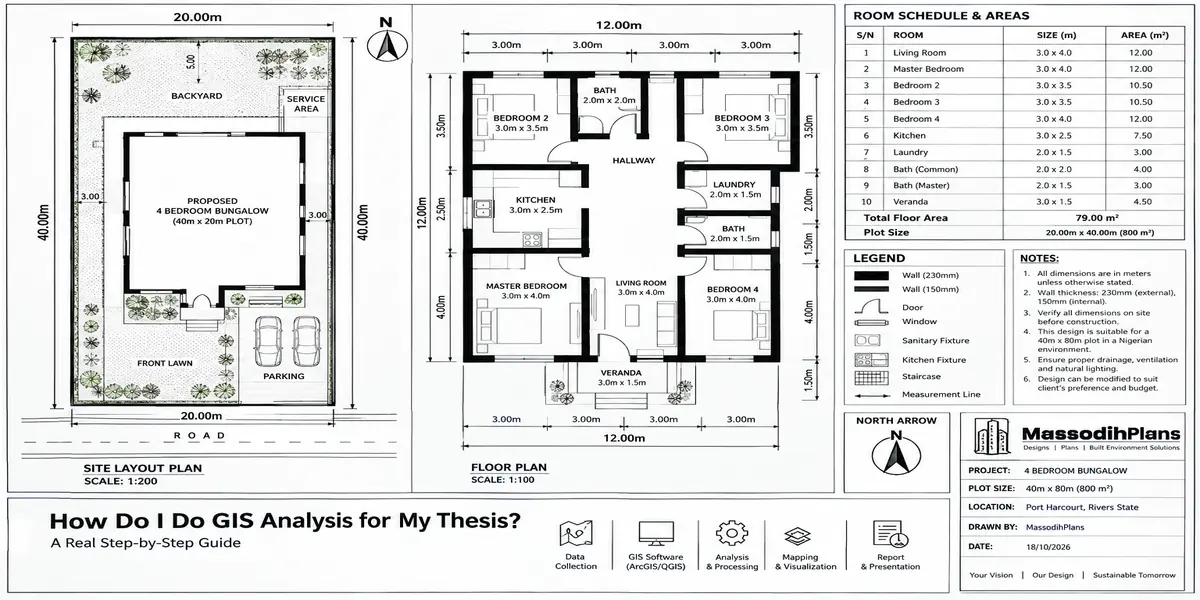
A well-planned compact bungalow on a small urban plot typically includes:
- Open plan living and dining with a direct kitchen connection
- Two or three bedrooms of appropriate dimensions
- A visitor toilet separated from the bedroom corridor
- A compact covered veranda at the front
- Integrated front parking within the setback zone
- A utility or laundry area at the rear
The key to making this work is resisting the temptation to add rooms without justification. Every room added to a small bungalow plan takes space from every other room. The goal is a layout where every space feels comfortably proportioned and properly connected.
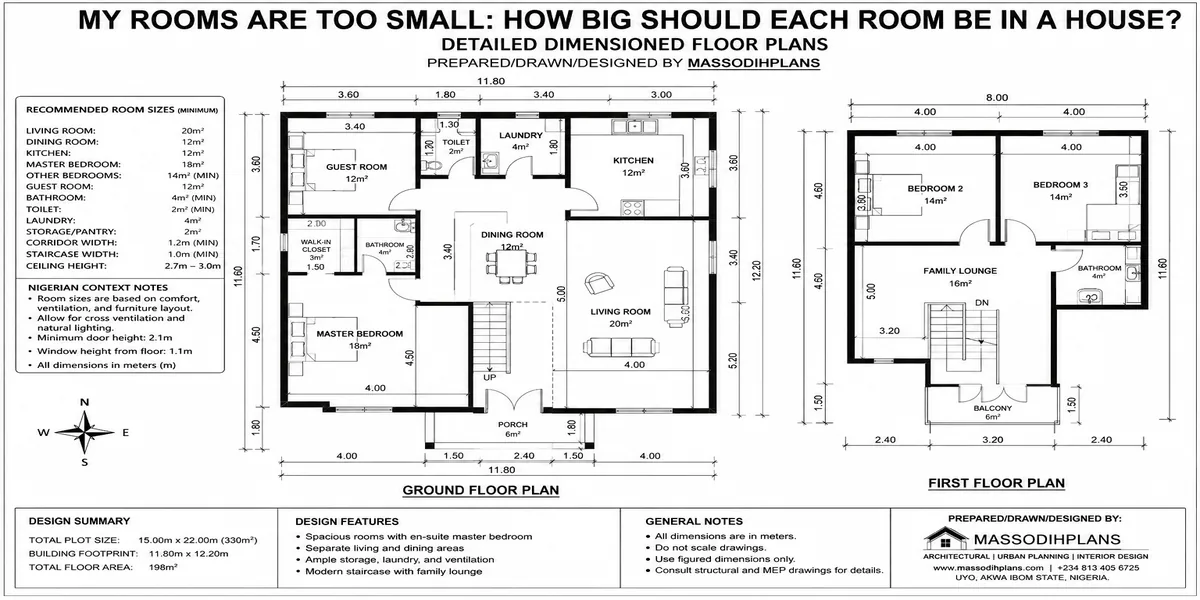
Recommended Room Dimensions for a Compact Bungalow:
| Room | Recommended Dimension |
|---|---|
| Living Room | 4.0m by 5.0m |
| Master Bedroom | 4.0m by 4.5m |
| Secondary Bedrooms | 3.0m by 3.6m |
| Kitchen | 3.0m by 4.0m |
| Visitor Toilet | 1.2m by 2.0m |
These are not minimum dimensions. They are dimensions that allow standard furniture to be placed comfortably with adequate circulation space around it. If you go below these, you will notice the discomfort every single day.
Roofing Options: A simple hip roof handles rainfall well and is familiar to most local contractors. A modern parapet roof creates a cleaner, more contemporary urban appearance but requires careful waterproofing detailing at the parapet edges and internal gutters. Both are appropriate for compact bungalows.
You can explore a range of bungalow and duplex layout options in the MassodihPlans Plans Library, which covers modern residential design concepts developed for real plot sizes and construction conditions.
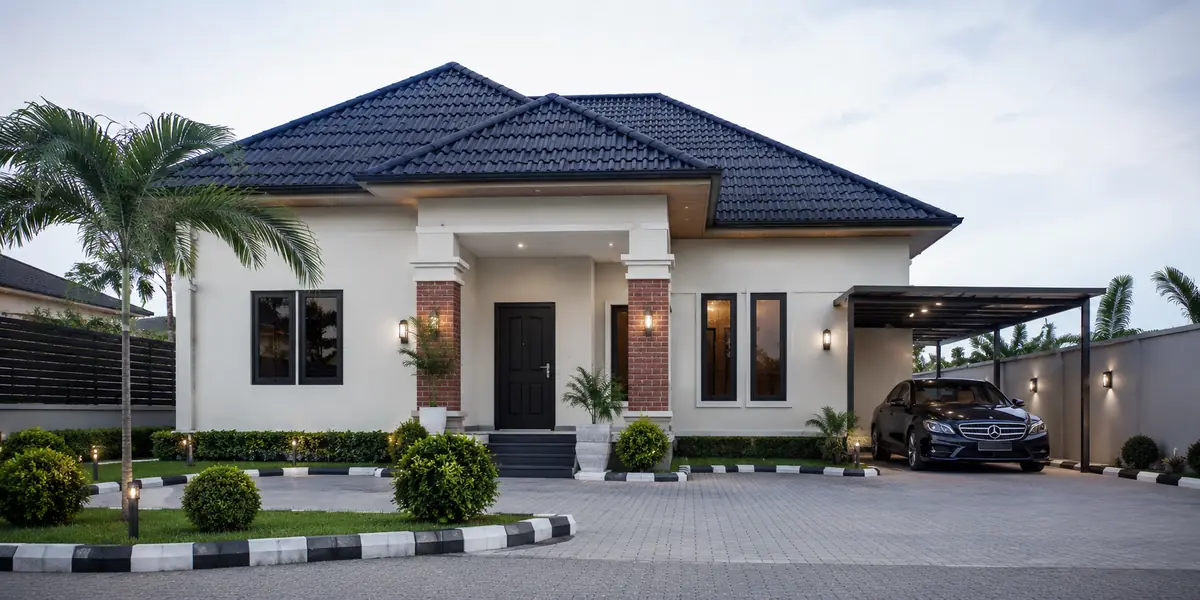
The Compact Modern Bungalow
Design 2: The Narrow Urban Duplex
Best For: Growing families, urban property investors, estate developments, and anyone wanting to maximize floor area on limited ground coverage.
Ideal Plot Size: 12m by 24m and above
When you cannot build outward, you build upward. That is the core logic of the duplex on a small plot, and when it is executed with proper planning, it delivers results that a bungalow simply cannot achieve on the same land.
The vertical arrangement of a duplex allows the ground floor coverage to remain smaller, leaving more of the compound for parking, ventilation setbacks, drainage, and landscaping. All of that floor space is recovered on the upper level, where the overall footprint cost of the building is lower per square metre of usable space.
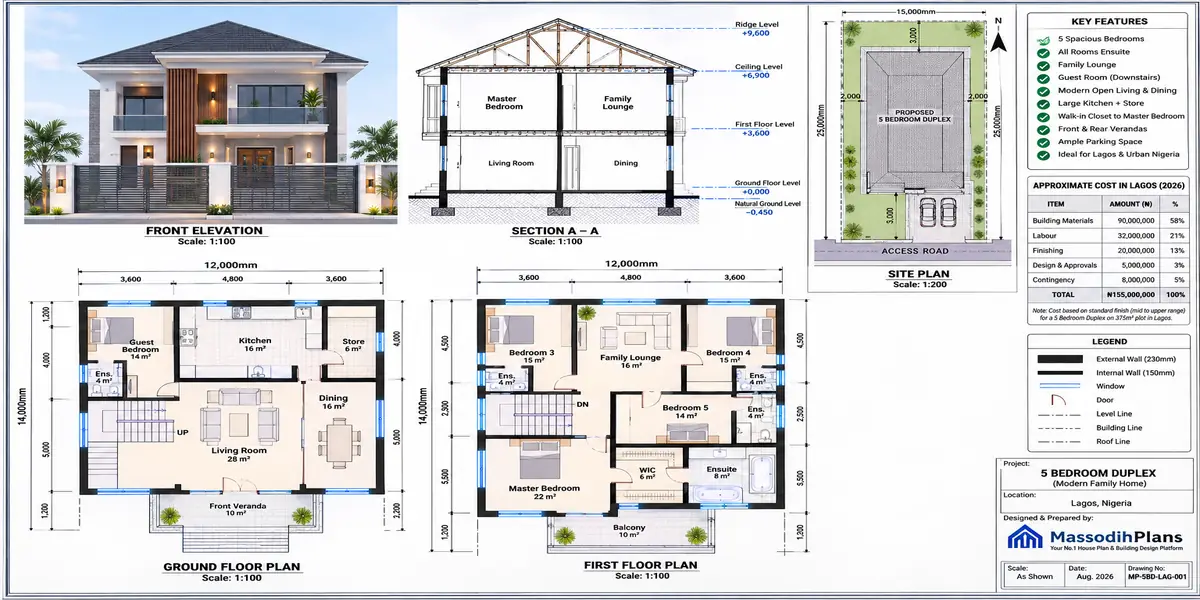
A well-organised small plot duplex typically arranges spaces as follows:
Ground Floor:
- Living room with separate dining zone
- Kitchen with direct rear access
- Guest bedroom or study
- Visitor toilet
- Covered entrance
Upper Floor:
- Family lounge or sitting area
- Master bedroom with en suite bathroom
- Two additional bedrooms
- Family bathroom
- Balcony overlooking the front compound
The staircase is the critical element in a compact duplex design. A poorly positioned or oversized staircase will consume floor area on both levels and create awkward circulation. A well-designed compact staircase in the right position can save several square metres that translate directly into larger rooms.
For practical layout references, the modern duplex house plan for 50×100 plots on MassodihPlans demonstrates how a duplex can fit comfortably on a standard urban plot while delivering generous living spaces across two floors.
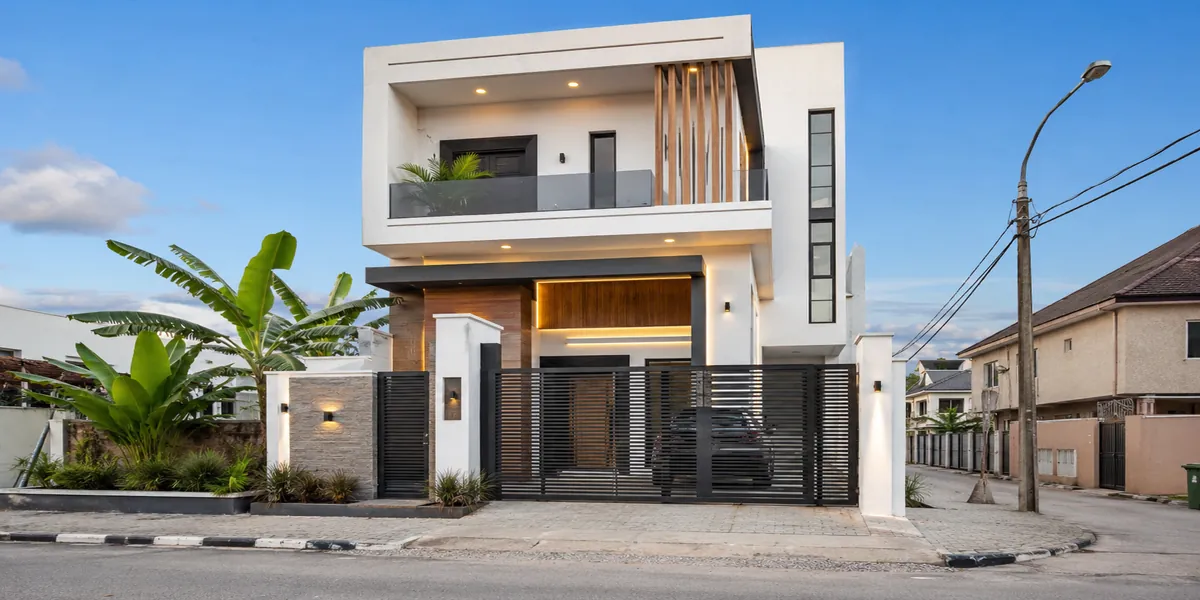
The Narrow Urban Duplex
Design 3: The Courtyard-Inspired Compact House
Best For: Warm climate locations, dense urban neighbourhoods, privacy-conscious families, and plots where side setbacks are minimal.
This design approach is increasingly being adopted in dense urban residential areas because it solves several problems that conventional linear house layouts struggle with on small plots.
The concept involves introducing a small internal courtyard or light well into the building plan. Even a modest courtyard of 2m by 3m creates a dramatic improvement in natural lighting and airflow throughout the interior. Rooms that would otherwise rely on small side windows or electric lighting during the day can open to a sky-lit internal space that brings in light and air naturally.
Beyond the functional benefits, courtyards create a strong sense of architectural quality. A house with an internal garden or open sky connection feels fundamentally different to occupy than one that does not have it, even when the overall floor area is identical.
The design does require careful planning to ensure the courtyard does not become a water collection point during heavy rainfall. Proper drainage at the courtyard floor level and a clearly designed overflow route are essential.
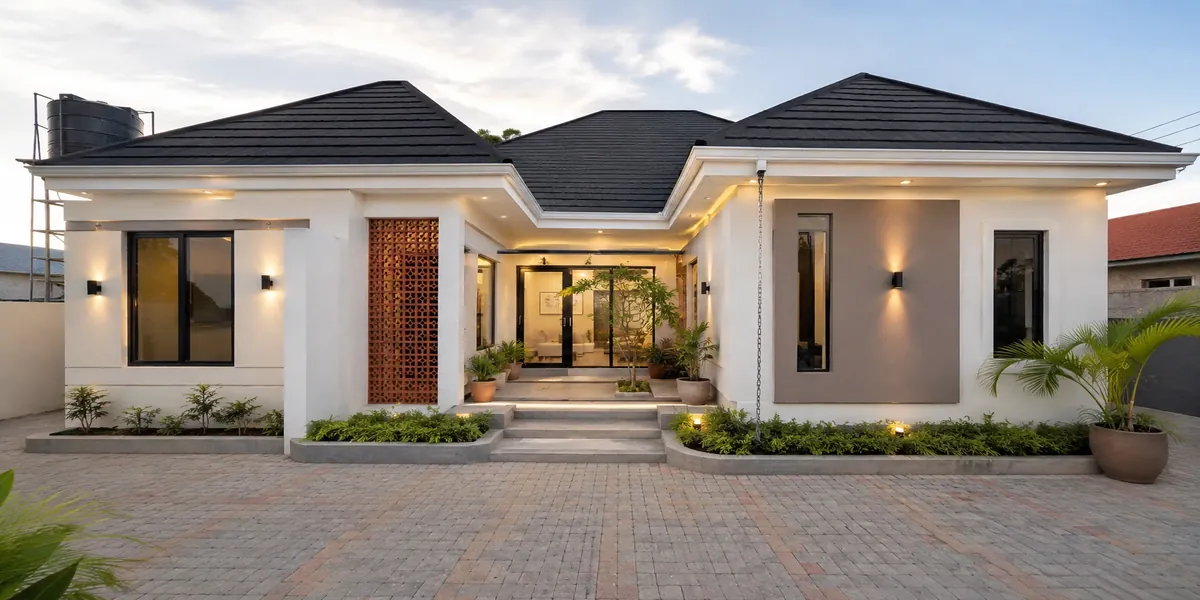
The Courtyard-Inspired Compact House
Design 4: Rental-Focused Mini Flat Configurations
Best For: Property investors, urban landlords, and builders with rental income as the primary objective.
This design category approaches the small plot from an investment performance perspective rather than a single-family occupancy perspective. The goal is to arrange multiple compact self-contained units on a single plot in a way that maximises rental yield without creating poor living conditions for tenants.
A well-designed rental configuration on a small urban plot might include:
- Two self-contained one-bedroom units on the ground floor
- Two self-contained one-bedroom units on the upper floor
- Shared external staircase with proper rain cover
- Individual utility connections or metered shared connections
- Adequate ventilation and natural lighting for each unit
The key principle is that compact does not mean uncomfortable. Rental units that are badly designed, poorly ventilated, and dark will attract lower rents and higher vacancy rates than compact units that are thoughtfully planned with good light and airflow. Investors sometimes underestimate this relationship and then wonder why their tenants do not stay long.
Smaller, well-designed units often generate stronger rental income per square metre than larger, poorly designed spaces, because tenants respond to how a space feels to live in, not just its size on paper.
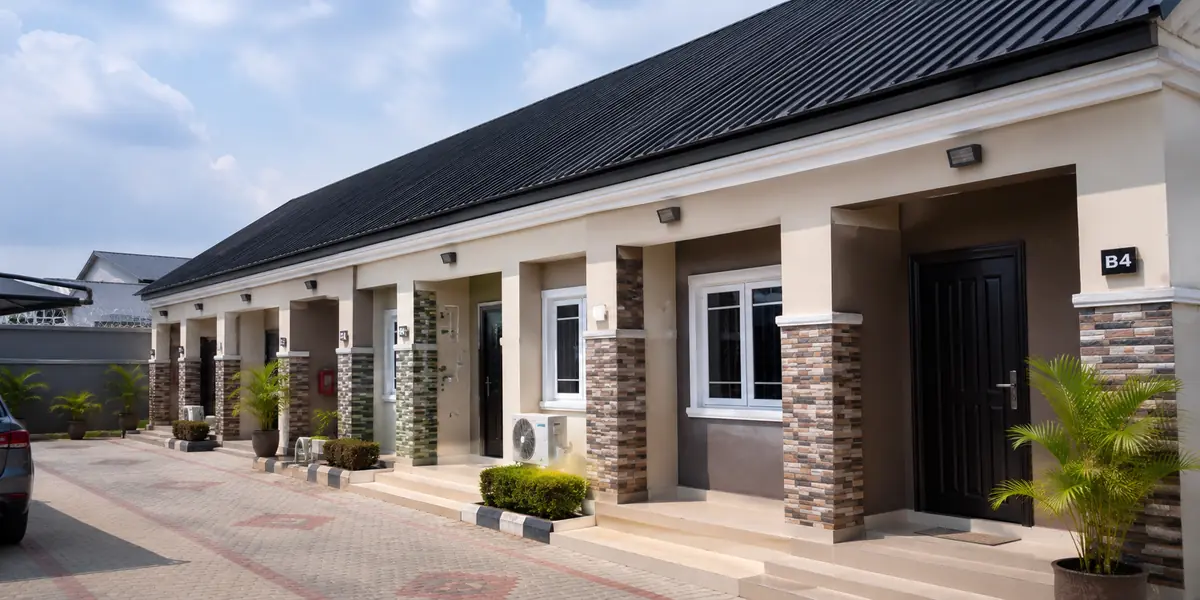
Rental-Focused Mini Flat Configurations
Climate-Responsive Design: Why It Matters on Small Plots
Climate considerations become more critical as plot size decreases, because the margin for error shrinks. A poorly oriented large house on a generous plot might be uncomfortable but livable. A poorly oriented small house on a compact plot with minimal setbacks can become genuinely difficult to occupy, particularly in hot climates.
Reducing Heat Gain
The single most effective passive cooling strategy for small urban homes is correct orientation. Reducing large window openings on the western elevation significantly lowers indoor temperatures in the afternoon and early evening when western sun is most intense.
Other heat reduction strategies that work well on compact plots:
- Light-coloured or reflective roofing materials to reduce heat absorption
- Wide roof overhangs to shade wall surfaces and windows
- Ventilation blocks in non-structural wall positions to allow continuous airflow
- Planted screening on west-facing boundaries where space permits
Managing Heavy Rainfall
Dense urban areas with high surface coverage flood quickly. On a small plot where the building footprint covers a large percentage of the land, this challenge is amplified.
Design strategies for effective rainfall management include:
- Raising finished floor levels above the surrounding ground level
- Grading the compound surface to direct water toward designated drain channels and away from the building
- Installing roof gutter systems that discharge water to proper drain points
- Positioning soakaways away from the building foundation and boundary walls
- Including drain channels along boundaries to intercept run-off from adjacent plots
Roofing Decisions for Small Plot Homes
Roofing affects the appearance, the cost, the maintenance demands, and the performance of a small plot home significantly.
| Roof Type | Advantages | Considerations |
|---|---|---|
| Hip Roof | Excellent rain control, wind resistance, familiar construction | Slightly more complex roof framing |
| Parapet Roof | Modern urban appearance, clean elevation lines | Requires excellent waterproofing at parapets and internal gutters |
| Gable Roof | Simple construction, cost effective, good ventilation | Less effective wind performance on exposed sites |
For modern urban aesthetics on compact plots, the parapet roof delivers a clean, flat-topped appearance that photographs well and reads as contemporary. However, every parapet-roofed home I have seen that experienced leaking problems did so because the waterproofing at the internal gutter was poorly executed. If you choose this roof type, insist on proper waterproofing membrane application with adequate falls toward the drain outlets.
Parking, Generators, and Boreholes: The Three Things People Always Plan Last
These three elements are consistently treated as afterthoughts, and that decision costs money every time.
Parking: Determine your parking arrangement before you finalise the building footprint. The building position should respond to where the vehicles will go, not the other way around. Minimum comfortable parking width is 2.7 metres per vehicle. For two vehicles, you need at least 5.5 metres of clear width with adequate depth and turning space.
Generator positioning: A generator needs ventilation, noise separation from living spaces, rain protection, and safe fuel access. When it is planned late, it usually ends up squeezed into a position that creates noise problems in bedrooms or kitchen areas. Plan the generator corner at the same time as the building layout.
Borehole location: This should be determined in relation to the soakaway position and the drainage routing. A borehole placed too close to a soakaway or drainage line creates a contamination risk. It also needs to be positioned in a location that does not conflict with the parking circulation or future foundation works.
None of these elements are difficult to plan correctly. They just need to be included in the design conversation from the beginning rather than resolved on site after construction has started.
Common Small Plot Design Mistakes That Cost Real Money
Building too close to all boundaries: This is the most common mistake. The temptation is to maximise the building footprint, but the result is a house with no usable external space, no ventilation setbacks, poor natural lighting to side rooms, and potential regulatory compliance problems. Setbacks are not just regulatory requirements. They are breathing room for the building.
Ignoring drainage completely: I cannot overstate how often this happens. A beautiful compound with no drainage planning becomes a muddy, flooded, structurally compromised mess after the first serious rainfall. Always prioritise drainage before finalising any aspect of site layout.
Excessive decorative elements: Large ornamental columns, oversized balcony projections, decorative arches, and elaborate facade features consume plot space, add structural cost, increase maintenance demands, and often make compact homes look more congested rather than more impressive. Modern compact design favours clean, simple lines that create visual spaciousness rather than visual complexity.
Poor staircase design in duplexes: A staircase that is too wide, too long, or badly positioned wastes significant floor area on both levels. It can also create awkward circulation where occupants pass through private bedroom zones to reach common areas. Get staircase positioning right early in the design process.
Designing for current family size only: A home should be planned with some thought for how the family will grow and change. This does not mean building extra rooms immediately. It means ensuring that the structure, services, and site layout can accommodate future expansion without requiring demolition of completed work.
Bungalow or Duplex on a Small Plot? How to Decide
This is one of the most common questions, and the honest answer is that it depends on your priorities rather than on a universal rule.
| Decision Factor | Bungalow | Duplex |
|---|---|---|
| Construction Cost | Lower | Higher |
| Space Efficiency | Moderate | High |
| Elderly or Mobility Friendly | Excellent | Moderate |
| Urban Luxury Appeal | Moderate | Strong |
| Parking Flexibility | Better | Moderate |
| Rental Income Potential | Moderate | High |
| Maintenance | Simpler | More complex |
| Speed of Construction | Faster | Slower |
If you have elderly family members, young children, or anyone with mobility limitations living in the home, a bungalow is almost always the better choice. If you are building primarily for rental investment or want to maximise floor area on limited ground coverage, a well-designed duplex will usually outperform.
For a more detailed breakdown of this decision, the bungalow versus duplex comparison on MassodihPlans explores the real differences between these two building types across cost, lifestyle, and investment performance.
A Real Small Plot Decision
A family came to me recently with a 40 by 60 feet plot in Uyo and two competing goals: enough room for their three children now, and rental income from part of the property later. A straight bungalow would have used the full footprint and left nothing for future income. Instead, we designed a compact 2-floor duplex with the family’s living space on the ground floor and two self-contained rentable units upstairs, reached by a separate external staircase. The build came in within the compact duplex range above, and the family now has rental income covering a meaningful share of their monthly costs. The lesson was simple: the plot was never too small for both goals, the first draft plan just hadn’t asked what the land needed to do for them long-term.
Space Maximisation Techniques That Actually Work
These are not theoretical strategies. They are practical design decisions that produce measurable improvements in how a small home feels and functions.
Open plan ground floor living: Combining the living room, dining area, and kitchen into a single connected space does not mean eliminating privacy or separation. It means removing unnecessary wall divisions that reduce visual spaciousness and natural light without providing any functional benefit. A kitchen counter or a change in ceiling height can define zones without closing them off.
Vertical storage thinking: Every wall surface has storage potential. Built-in shelving, under-stair storage, integrated wardrobes, and overhead cabinets reduce the need for bulky freestanding furniture that consumes floor space and makes rooms feel smaller.
Multifunctional spaces: A guest bedroom that also functions as a home office, a landing that serves as a reading area, a dining zone that doubles as a workspace when needed. On a small plot, every space that can serve two purposes without compromise is a significant design win.
Compact but proportionate circulation: Corridors that are too wide waste space. Corridors that are too narrow feel uncomfortable and make furniture movement difficult during setup and rearrangement. A corridor width of 900mm to 1,000mm is the working minimum. 1,200mm is more comfortable for daily movement.
If you want to understand the spatial planning principles behind these decisions more deeply, the Plan School section on MassodihPlans covers architectural drawing, space planning logic, and practical design thinking in accessible detail.
Building Regulations and Estate Compliance
Before construction begins, verify the setback requirements, height limits, parking standards, and permissible roof types that apply to your specific plot. These vary by jurisdiction, planning authority, and in some cases, by estate covenant.
Common regulatory requirements for small residential plots include:
- Front setback from boundary to building face
- Side and rear setbacks
- Maximum building height and number of floors
- Minimum parking provision
- Boundary wall height limits
- Drainage requirements before occupancy certificate
Non-compliance with these requirements can result in stop-work orders, demolition notices, or refusal of an occupancy certificate. All of these outcomes are more expensive and disruptive than the professional planning advice that would have prevented them.
If you need professional support navigating planning requirements or preparing compliant building documentation, the MassodihPlans Services section covers architectural design, site planning, building approval guidance, and related professional services.
Setback Rules by Location
Setback requirements are not uniform across Nigeria, and it is a mistake to assume one state’s rule applies elsewhere.
In Lagos State, the Lagos State Physical Planning Permit Regulations require a minimum 6 metre front setback for standard residential buildings, with 3 metres on both sides and at the rear, plus a 900mm soft-landscaping recess at the front boundary. Victoria Island, Ikoyi, Apapa, and the Lekki Peninsula schemes require a 9 metre setback instead of 6.
In the FCT (Abuja), setbacks are governed district by district through the FCT Development Control Manual rather than a single blanket figure, so you must confirm the specific requirement for your district with the Development Control Department before finalising a design.
In Akwa Ibom, Rivers, and other South-South states, approval runs through the state’s own development control authority (UCCDA in Uyo, for example), and setback figures should be confirmed with that authority directly, since they can differ from Lagos and Abuja practice.
The rule that never changes: verify setback figures with the relevant authority for your specific plot before finalising drawings. A design that respects Lagos setbacks may not clear approval in Abuja or Uyo.
For the complete approval process, see the building approval guide covering costs, requirements, and timelines.
Realistic Cost Ranges for Small Plot Homes
Construction costs vary considerably based on location, material prices, structural complexity, finishing standards, and foundation conditions. The ranges below are indicative estimates based on typical construction scenarios and should be verified against current local material and labour rates before budgeting.
Building Type | Indicative Cost Range (2026)
2 Bedroom Compact Bungalow (70–100 sqm) | ₦18 million – ₦35 million
3 Bedroom Compact Bungalow (120–150 sqm) | ₦27 million – ₦60 million
Compact Duplex, 2 floors (180–220 sqm) | ₦45 million – ₦95 million
Rental Mini Flat Configuration (4 units) | ₦50 million – ₦110 million
These ranges assume basic to mid-range finishes at current 2026 material and labour rates, and will vary by location, contractor, and finishing choices. Confirm against current local quotes before budgeting, since cement, iron rod, and labour costs shift throughout the year.
Finishing level has an enormous impact on final cost. A building with standard finishes will cost significantly less than an identical structure with high-end tiles, imported fixtures, feature ceilings, and premium joinery. Both can produce comfortable, functional homes. The difference is in the materials, not in the design quality.
Material costs fluctuate with currency movements, supply chain conditions, and seasonal demand. Good design minimises material waste through modular room dimensions, simplified structural geometry, standardised window sizes, and compact roof forms. Every unnecessary complication in a design adds cost at every stage of construction.
For a full city-specific breakdown, see the cost guides for building a duplex in Kano, in Awka, Uyo, Calabar, Lagos, Jos, Sokoto, Makurdi, Zamfara, Yenagoa, Benin, Ibadan and a bungalow in Umuahia.
Site Supervision: Where Good Designs Go Wrong
Even an excellent architectural design fails if site supervision is inadequate. The most common execution errors I have encountered include:
- Room dimensions that differ from drawings because workers set out from the wrong baseline
- Reinforcement installed with incorrect spacing or bar sizes
- Drainage slopes that run in the wrong direction
- Windows built at heights that do not match the design
- Plumbing routes that conflict with structural elements
The way to prevent these errors is consistent measurement and comparison during construction. Check dimensions regularly. Compare completed work against drawings before the next stage begins. Inspect reinforcement before concrete is poured. Verify drainage slopes before fill is placed over underground pipes. These checks take minutes and save weeks of remediation work.
A Quick Checklist Before You Finalise Your Small Plot House Design
Use this checklist before approving any house plan for construction:
- Have all setbacks been respected on all four sides of the plot?
- Is there clearly dimensioned parking for at least one vehicle with proper turning space?
- Does every bedroom have a window on an external wall with natural ventilation?
- Is the building oriented to minimise western sun exposure on large glazed openings?
- Is the drainage route for rainwater from all roof areas clearly shown?
- Is the soakaway positioned away from the building foundation and boundary walls?
- Has the generator location been incorporated into the compound plan?
- Does the staircase in a duplex design allow comfortable movement with furniture?
- Have estate or planning authority setback requirements been specifically verified?
- Has a qualified professional reviewed the structural implications of the design?
If any of these questions cannot be answered confidently, the design needs further review before construction begins.
Frequently Asked Questions
What is the best house type to build on a small plot?
The best type depends on your goals. For single-family living with lower cost and simpler maintenance, a compact modern bungalow is excellent. For maximising floor area or generating rental income, a well-planned duplex on the same plot will outperform a bungalow significantly.
Can I build a duplex on a very small plot?
Yes, but the design must be professionally prepared to manage parking, setbacks, staircase positioning, drainage, and structural requirements correctly. A duplex squeezed onto a plot without adequate planning will produce a building that looks completed but performs poorly for its occupants.
Which roof type works best for compact urban homes?
Hip roofs are practical, durable, and familiar to most local contractors. Parapet roofs deliver a more modern aesthetic and are increasingly popular for urban homes, but require higher quality waterproofing execution to perform well long term.
How do I improve ventilation in a small home?
Focus on cross ventilation by placing openings on opposite sides of each room. Correct orientation to reduce western exposure. Use high ceilings where possible. Consider an internal courtyard or light well if the plot configuration allows it.
Is building on a small plot a good long-term investment?
Compact urban homes in well-located areas consistently hold value and generate strong rental demand because they are accessible to a wider range of buyers and tenants than large expensive properties. The quality of the design, not the size of the plot, is the primary determinant of long-term value.
How much open compound space should I leave on a small plot?
As a working principle, aim to cover no more than 60 to 65 percent of the plot with built structure and paved surfaces combined. This leaves enough open ground for drainage, ventilation setbacks, landscaping, and future flexibility. Many small plot homes exceed this and create problems as a direct result.
Do I really need a professional architect for a small house?
Yes, without qualification. The cost of professional architectural services is a fraction of the cost of correcting errors made because a plan was not properly designed. On a small plot where every dimension matters, the value of experienced design input is even higher, not lower.
Conclusion
A small plot is not a limitation. It is a design challenge, and design challenges have design solutions.
The homes that work best on constrained urban land are not the ones built by people who accepted those constraints reluctantly. They are the ones built by people who understood that thoughtful planning, proper orientation, smart spatial arrangement, and early attention to parking, drainage, and ventilation could turn a modest piece of land into something genuinely worth living in.
You do not need more land. You need a better plan.
Whether you are still exploring design options, ready to start drawing, or looking for professional support to take your project from concept to approved documentation, MassodihPlans covers all of it. Start with the Plans Library for layout ideas and design concepts, build your knowledge through the Plan School for practical architectural understanding, and reach out through the Services section when you are ready for professional input tailored to your specific plot and goals.
About Author
Massodih Okon is a built environment professional with a background in architecture and urban planning. He specializes in practical Nigerian house design guidance through MassodihPlans.com.. He has a Master’s degree in Urban and Regional Planning, a first degree in Geography and Environmental Management, and professional certificates in Architectural Design, Landscape Design, and GIS. With over 15 years of hands‑on experience in architecture, town planning, GIS, and building economics across Nigerian residential and institutional projects, he understands the real challenges Nigerians face when planning and building homes.
At MassodihPlans, Massodih shares practical Nigerian building guides, modern bungalow and duplex house plans, and built environment resources created specifically for Nigerian homeowners, developers, and property investors. His work is based on real‑life conditions in Nigeria, climate‑responsive design, and cost‑effective planning, aimed at helping everyday Nigerians make smarter, more confident building decisions.
Related Post
- Modern Nigerian House Plan for a 30×60 Plot in Ibadan: The Complete Practical Guide
- Building Approval in Nigeria: Costs, Requirements, Process and How to Get Your House Plan Approved Fast
- Full Cost Breakdown for Building a Duplex on a Small Plot in Kano Nigeria
- Industrial Estate Layout Design in Nigeria: Smart Master Plan for Small Industrial Plots
- Small Residential Estate Layout Design in Nigeria: Smart Master Plan Ideas for Limited Land
- Smart Duplex Design for Narrow Plots in Lekki, Nigeria: Complete Practical Guide
- Current Cost of Building a House in Port Harcourt (Professional Analysis)
- Best 4 Bedroom House Plan for Small Plots in Abuja
- Cost of Roofing a Bungalow and Duplex in Abuja Small Plot Now
- Affordable Bungalow Plan for 40×80 Plot in Port Harcourt
- Affordable Bungalow Plan for 40×80 Plot in Port Harcourt
- 2 Bedroom Flat Plan for Narrow Plots in Nigeria: Complete Layout, Dimensions, and Building Guide
- 4 Bedroom Duplex Plan for 100×150 Plot in Nigeria
- 7 Cheapest Areas to Buy Affordable Land in Uyo Before Prices Increase
- Best Places to Buy Land in Uyo for Fast Development and High Property Value
- Building Materials Price Guide in Nigeria (Full Cost Guide)
- Commercial Development Planning Costs: What Every Investor Must Know Before Spending a Kobo
- Cost of Roofing a Bungalow and Duplex in Abuja Small Plot Now
- Current Cost of Building a House in Port Harcourt (Professional Analysis)
- Environmental Management Plan Cost Guide for Developers in Nigeria and Beyond
- How Do I Get Land Survey and Building Approval in Nigeria From the USA?
- How Can I Build a House in Nigeria From Switzerland on a Small Plot?
- What Are the Best Nigerian House Plans for Small Plot Property Investment?
- Architectural Drawings Guide: Types, Symbols, Standards, Dimensions and Examples
- Architecture Ideas That Match Global Design Trends and Modern Living
- ArchDaily Inspired Designs for Modern Homes and Contemporary Architecture
Reference: Federal Ministry of Housing and Urban Development