Estate Layout Design Services for Property Developers in Nigeria
You Have Land. Now What?
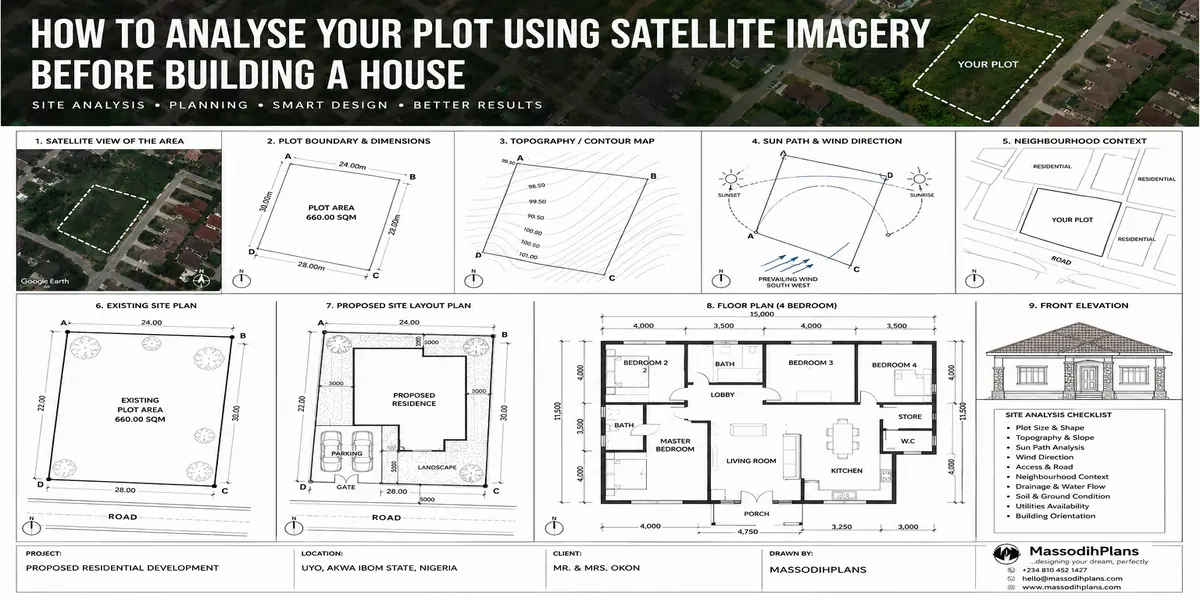
If you are a property developer in Nigeria, an estate layout is not simply a drawing showing where plots should go. It is the planning framework that determines whether your land becomes a functional, marketable and sustainable estate or a collection of plots that creates expensive problems later.
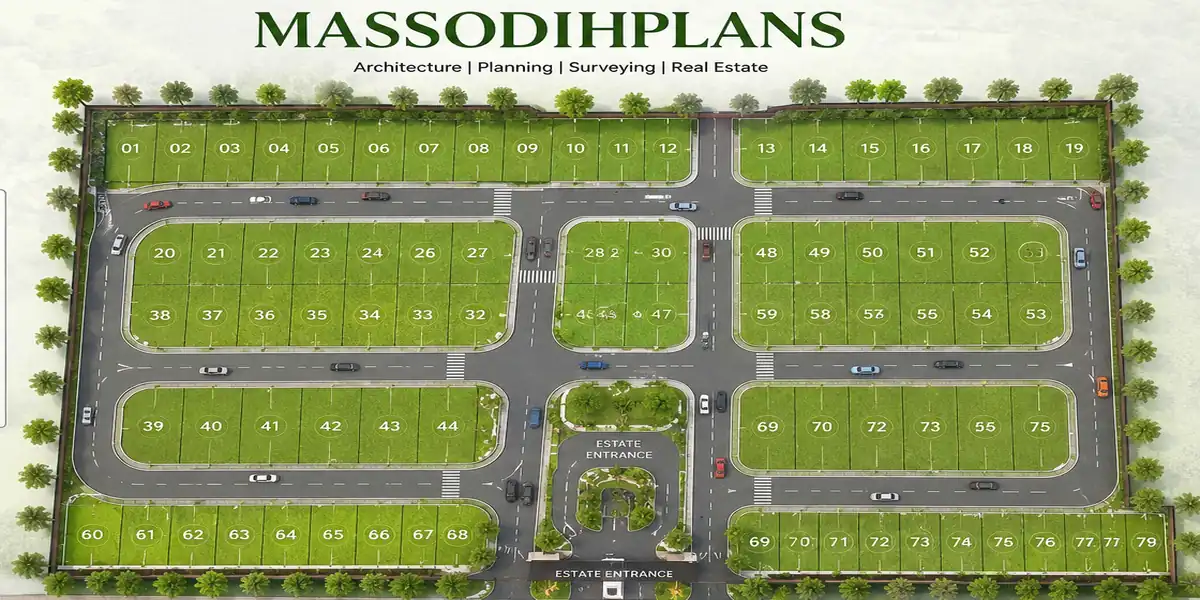
Estate layout design services bring together land surveying, physical planning, road hierarchy, plot subdivision, drainage, access, open spaces, utilities, community facilities and development standards into one coordinated plan. A good layout answers the questions that matter before you start selling plots: How many plots can the land realistically accommodate? Where should the main entrance and internal roads be? How will stormwater leave the site? Where should recreation, security, electricity infrastructure and other shared facilities go? And how can every plot remain accessible and usable?
This is where many developers make an avoidable mistake. They focus on maximizing the number of plots while overlooking circulation, drainage, setbacks, infrastructure corridors and approval requirements. The result can be poor accessibility, flooding, awkward plots, infrastructure conflicts, delayed approvals and reduced buyer confidence. Nigerian planning authorities can require site analysis, technical reports, professional drawings and other supporting documents depending on the location, land size and proposed development.
In this guide, I will show you what professional estate layout design involves, what a complete layout should contain, how the design process works, the documents and professionals you may need, common mistakes that cost developers money, and how a well-planned estate can improve both development efficiency and property value.
If you are preparing land for an estate development, don’t start with plot numbers. Start with a plan that makes the entire development work right from the beginning of development.
What Is an Estate Layout Design?
An estate layout design is a professionally prepared spatial plan that organizes land into functional zones, plots, roads, open spaces, utility corridors, and drainage channels, following approved planning standards and regulations.
Think of it as the constitution of your estate. Everything that will ever happen on that land, who builds where, how roads connect, where water goes, how many houses can sit per hectare, all of it begins with the layout.
During my undergraduate studies in Town Planning at the University of Uyo, one thing our lecturers constantly emphasized was this: a layout is not decoration. It is infrastructure. If your layout is wrong, everything built on top of it is wrong.
In Nigeria, estate layout design falls under the authority of town planning authorities. And in Lagos, that is LASPPPA and LABCA. In Abuja, it is FCDA. In most states, it is the State Ministry of Urban and Regional Development or Land Use and Physical Planning. Before any estate layout can be used to sell plots or register land in Nigeria, it must receive planning approval. Full stop.
Why So Many Nigerian Estates Fail Before They Even Start
This is one of the most common misconceptions I encounter. Many property developers in Nigeria assume that buying land and hiring a surveyor to peg plots is enough. My experience suggests otherwise.
From what I have seen in practice, the number one reason Nigerian estates collapse, either physically or financially, is the absence of a proper layout plan at the beginning.
Let me break down what happens when a developer skips this step:
Uncontrolled Urban Growth
When there is no layout, development happens randomly. People build anywhere. A neighbor extends into public land. Another blocks a footpath. Someone else builds a fence across a drainage reserve. Before long, you have an unplanned settlement, not an estate.
Buildings come up without setbacks. This creates fire risks, blocked natural light, and impossible maintenance access. Urban sprawl follows as more buyers try to squeeze in, and what started as a clean investment becomes an informal settlement that no government agency will touch.
I have seen this play out in towns across Akwa Ibom, Rivers, and Anambra. Estates that started with genuine intention but ended up looking like the worst parts of Lagos mainland because nobody planned the land properly before selling.
Traffic and Transportation Problems
One lesson I learned early is that a road that looks wide enough on paper can be completely unusable in real life if you do not account for pedestrians, parking, vehicle turning radii, and future road expansion.
Without a proper estate layout:
- Roads become too narrow for two cars to pass at the same time
- No parking provisions mean residents park on roads, blocking traffic permanently
- Emergency vehicles like ambulances and fire trucks cannot navigate the estate
- Public transport routes cannot be established because there is no proper access road network
- Pedestrians walk on vehicle roads because there are no walkways
I once reviewed a plan where the developer allocated 6-metre road widths for a 500-plot estate. When I pointed out that NITP recommends at least 9 metres for residential collectors in an estate that size, the developer was surprised. He genuinely did not know. That is the kind of knowledge gap that destroys estates before the first house is built.
Housing Quality Problems and Slum Formation
Without a layout, residential plots get mixed up with commercial activities, workshops, and in some cases, light industries. That cement mixing shed your buyer’s neighbor erects will destroy the residential character of your estate within three years.
Without zoning, slum formation follows naturally:
- Overcrowding because plot sizes were never standardized
- Poor housing quality because there are no development control standards attached to the layout
- Incompatible land uses destroying neighborhood character
- Buyers losing confidence and refusing to develop their plots, leaving the estate stagnant
Land Use Conflicts
I have worked with clients who had serious boundary disputes because their surveyor simply pegged plots without a proper layout plan. When land use conflicts develop, markets emerge where residential was planned, religious buildings create neighborhood noise conflicts, and commercial activities invade quiet residential streets.
This is not just uncomfortable. It is legally expensive. And it invites litigation. It invites Development Control demolition notices.
Infrastructure Deficiencies
Without a layout, there is no planned utility corridor. No planned water supply route. And no planned drainage network. No space allocated for electrical substations or transformer mounting points.
What this means practically is that when NEPA, EEDC, or your state electricity company tries to run cables into your estate, they will charge you for diverting around obstacles that should never have been there in the first place. Water companies cannot extend pipes because buildings have blocked every natural service route.
Based on my experience, retrofitting infrastructure into an already-developed unplanned estate costs three to five times more than installing it during the initial development phase.
Flooding and Drainage Issues
This one alone has destroyed more Nigerian estates than any other single problem.
Nigeria sits in a tropical climate with intense rainy seasons. Any estate development that does not account for natural drainage channels, flood plains, and stormwater runoff is an estate waiting to drown.
I have seen beautiful-looking estates in Portharcourt and Calabar that flood every rainy season because the developer built on what was clearly a natural drainage corridor. The houses are there. The roads are there. But from June to September, residents wade through knee-deep water to get home.
A proper estate layout:
- Maps existing drainage channels and natural water flow paths
- Designs estate drainage networks to connect with these natural systems
- Avoids building on flood plains and natural retention areas
- Allocates drainage reserves along road setbacks
- Designs culverts and channelization structures at crossing points
The Components of a Professional Estate Layout Design
Let me walk you through what a professionally prepared estate layout contains, because this is exactly what you are paying for when you engage a town planner for estate layout design services.
1. The Master Plan Concept
A master plan is the big picture. It takes your land, studies it, and creates a vision for how the entire development will work, now and in the future.
At MassodihPlans, our master planning process starts with understanding what you want the estate to achieve. Is it a pure residential estate? A mixed-use development? A workers estate near an industrial area? An estate with commercial frontage on the main road?
The master plan answers these questions first, before we touch the drafting table.
2. Land Use Distribution and Zoning
Every good estate layout starts with a land use plan. This divides your land into clear zones:
- Residential zones: Pure housing areas, protected from noise and incompatible uses
- Commercial zones: Shopping areas, usually placed near estate entrances or main road frontage
- Institutional zones: Schools, health centers, places of worship
- Industrial or light industrial zones: Only where appropriate and away from residential
- Open spaces and recreation: Parks, playgrounds, green belts
- Circulation corridors: Roads, footpaths, cycling lanes
- Utility zones: Water treatment, electricity substations, waste management facilities
The international planning standard for residential estates generally recommends allocating approximately:
- 50 to 60 percent of land to residential plots
- 15 to 20 percent to roads and circulation
- 10 percent to open spaces and recreation
- 5 to 10 percent to social infrastructure
- Remainder to commercial and utility uses
One thing our lecturers constantly emphasized was that a good land use distribution is not just about following percentages. It is about understanding how people actually move, shop, play, and live in Nigerian communities.
3. Zoning Hierarchy
Zoning hierarchy means organizing your zones from the most sensitive (residential, especially low density) to the most active (commercial, industrial). You never place incompatible uses next to each other without a transition zone, buffer, or green belt.
Practical zoning hierarchy in a Nigerian estate layout:
Low Density Residential (largest plots, quietest areas, deepest inside the estate) Medium Density Residential (smaller plots, closer to community facilities) High Density Residential (smallest plots or apartments, near commercial areas) Neighbourhood Commercial (shops, markets, at estate entrances) Institutional (schools, churches, clinics, distributed throughout) Open Space (parks, playgrounds, buffer zones at boundaries)
This is not theory. I have seen what happens when this hierarchy is ignored. Religious buildings planted beside residential plots. Mechanic workshops three doors from a home. A primary school next to a printing press. All because nobody thought about zoning hierarchy when the layout was prepared.
4. Road Hierarchy and Circulation System
A road hierarchy is one of the most critical components of your estate layout. Roads are not all the same. They serve different functions, carry different traffic volumes, and require different widths.
Standard road hierarchy for Nigerian residential estates:
Primary Access Road (Estate Arterial)
- Connects estate to the external road network
- Recommended minimum width: 18 to 24 metres (carriageway plus setbacks)
- Carries the highest traffic volume in the estate
Secondary Collector Road
- Connects different zones within the estate
- Recommended minimum width: 12 to 15 metres
- Carries moderate traffic between neighbourhoods
Tertiary Residential Street (Local Access)
- Serves individual plots directly
- Recommended minimum width: 9 to 12 metres
- Low traffic, low speed
Pedestrian Pathways
- Footpaths, cycle ways, green corridors
- Minimum 2 to 3 metres
- Separate from vehicle roads for safety
During my internship, I observed that many developers in Nigeria try to save land by reducing road widths. This is a serious mistake. The land you save on roads, you lose three times over in flooding problems, traffic gridlock, and emergency access failures.
5. Plot Arrangement and Dimensions
Plot arrangement follows from zoning and road hierarchy. In a good estate layout, plots are arranged in blocks, with each plot having direct road frontage. Interior plots accessed through shared driveways are acceptable for higher density developments but must be designed very carefully.
Standard plot sizes in Nigerian estate planning:
| Zone | Typical Plot Dimensions | Area |
|---|---|---|
| Low Density Residential | 18m x 30m or 15m x 30m | 450-540 sqm |
| Medium Density Residential | 12m x 24m or 15m x 24m | 288-360 sqm |
| High Density Residential | 9m x 18m or 10m x 20m | 162-200 sqm |
| Commercial | 12m x 30m or larger | 360 sqm+ |
These are planning standards. Your state planning authority may have specific minimum requirements. Always confirm before final layout preparation.
6. Setbacks
A setback is the minimum distance a building must maintain from a road, boundary, or another structure.
Setbacks protect:
- Emergency access along road corridors
- Natural light and ventilation between buildings
- Future road expansion
- Underground utility installation
- Fire spread prevention
Typical setback standards in Nigerian town planning:
- Front setback (from road): 3 to 6 metres, depending on road class and zone
- Side setback: 1.5 to 3 metres minimum
- Rear setback: 3 to 6 metres
Without defined setbacks in your estate layout, buyers will build to their boundary walls. When that happens, you lose all the functional benefits above. Development Control will have no legal basis to enforce setbacks because they were never defined in the approved layout.
7. Open Space Allocation
Every properly planned estate must allocate functional open spaces. Open spaces are not wasted land. They are community assets that raise property values, improve resident wellbeing, and satisfy planning approval requirements.
Types of open spaces in estate layouts:
- Neighbourhood parks: Small green areas within 400 metres walking distance of every home
- Estate central park or green: Larger recreation area at estate centre
- Playground equipment zones: Specifically for children, with safety surfaces
- Green buffer zones: Planted areas between incompatible uses or at estate boundaries
- Tree-lined street corridors: Trees planted along road setbacks, cooling the estate
In my experience, developers who allocate generous open spaces sell their plots faster at higher prices. Buyers recognize quality. A well-landscaped estate entrance and a central park tell the buyer: this is a serious development.
8. Physical Planning Standards
Physical planning standards are the technical rules governing how land is used and how buildings relate to each other. In Nigeria, these standards come from:
- The Urban and Regional Planning Law (various state versions)
- NITP planning standards and guidelines
- State-specific planning regulations
- Federal Ministry of Works road standards (for road widths)
Key standards we apply in MassodihPlans estate layout designs:
- Plot coverage ratios (how much of a plot can be built on)
- Floor area ratios (total building floor area relative to plot area)
- Building height limits by zone
- Density standards (number of dwelling units per hectare)
- Parking standards (minimum spaces per unit type)
These standards are not optional. They are what stand between your estate and rejection by the planning authority.
9. Drainage System Design
The drainage system in an estate layout is not an afterthought. It is a fundamental infrastructure layer, just like roads.
A professional estate drainage system includes:
Surface Drainage Network
- Roadside drains (open channels along road edges)
- Cross-culverts under road intersections
- Swale systems within green corridors
- Detention ponds at estate low points
Storm Water Management
- Retention ponds or infiltration basins where land allows
- Runoff calculations based on catchment area and rainfall intensity
- Outlet structures connecting estate drainage to natural watercourses
During field inspections at various sites, I discovered that the greatest drainage mistakes in Nigerian estates happen not because developers ignored drainage entirely, but because they designed drainage for normal rainfall, not for extreme rainy season events. In Akwa Ibom and Rivers States especially, a single-day rainfall event can dump 100 to 150 millimetres. Your drainage design must handle that, not just the average day.
10. Environmental Management
A responsible estate layout design incorporates environmental management principles from the beginning:
- Vegetation conservation: Identifying trees worth preserving before clearing
- Topographic respect: Working with natural slopes, not fighting them
- Wetland avoidance: Mapping and protecting seasonal wetlands and flood corridors
- Green infrastructure: Using planted surfaces to manage runoff and reduce heat
- Waste management planning: Designating collection points and transfer station space
For large estate developments, Nigerian planning law may require an Environmental Impact Assessment Report (EIAR) before planning approval. We assist clients with EIAR preparation as part of comprehensive layout design services.
11. GIS and Mapping Integration
Modern estate layout design uses Geographic Information System tools to prepare accurate base maps, analyze site conditions, and present layouts in ways that planning authorities understand and accept quickly.
At MassodihPlans, we integrate GIS mapping into our estate layout services. This means:
- Accurate survey data integration
- Topographic analysis and slope mapping
- Drainage catchment area delineation
- Land use conflict identification
- Boundary verification against government cadastral data
GIS integration reduces errors, speeds up planning approval, and produces layouts that stand up to technical scrutiny. My academic training at the department of geography and regional planning, University of Uyo exposed me to GIS tools in environmental planning, and practical field experience has shown me how much quality they add to professional layout preparation.
12. Population Projections and Density Planning
A serious estate layout is not just about today. It plans for growth.
Population projection in estate planning estimates:
- How many people will live in the estate at full buildout
- What community facilities will be needed
- How much daily water demand the estate will generate
- What traffic volumes the access roads must handle at full occupancy
- How much solid waste the estate will produce for collection planning
This is not excessive. This is responsible planning. I first learned population projection methods while studying Town Planning at university. The concept was immediately practical: if you know how many people will live somewhere, you can design properly for their needs from day one.
13. Urban Growth Strategy and Future Expansion
Every good estate layout must answer the question: what happens when this estate is full and the land next door becomes available?
Urban growth strategy in estate layout design means:
- Designing primary roads with extension potential at estate boundaries
- Avoiding cul-de-sac dominance that blocks future connections
- Reserving land near boundaries for future community facilities
- Designing the drainage system to accommodate catchment expansion
- Maintaining corridor options for future utility extensions
This is the smart growth principle. Plan for today, design for tomorrow.
14. Transportation Integration
Your estate does not exist in isolation. It connects to the wider city. A proper estate layout considers:
- Public transport stops and bus terminal space within or near the estate
- Pedestrian connections to nearby markets, schools, and health facilities
- Cycle routes for the growing cycling culture in Nigerian cities
- Road connections to existing city routes at multiple points to prevent single-access vulnerability
- Truck routes separated from residential streets in mixed-use developments
15. Development Control Framework
Your estate layout becomes the basis for development control. When it is properly done, every plot buyer knows:
- What they can build
- How big it can be
- Where it must sit on the plot
- What uses are permitted
- What the approval process is for their building plans
Without this framework defined in the layout, you as the developer face constant pressure from buyers doing whatever they want. And when Development Control finally steps in, your estate becomes a problem, not a premium development.
16. Mixed-Use Integration
Many of the best estates in Nigeria today are not pure residential. They mix residential uses with convenience commercial, small offices, and hospitality.
A thoughtful mixed-use estate layout:
- Places commercial uses at estate entrances and main roads where they serve both estate residents and passing traffic
- Keeps commercial noise and activity away from deep residential zones
- Designs transition zones between commercial and residential areas
- Allocates separate access for commercial traffic to avoid mixing with residential traffic
From a planning perspective, I strongly recommend that any estate larger than 2 hectares consider at least a small commercial node. It raises the estate’s self-sufficiency, reduces resident travel, and increases the attractiveness of plots near the commercial zone.
17. Planning Approval Process
This is where many Nigerian developers lose months, sometimes years.
The estate layout approval process typically follows these stages:
Preparation of layout drawings: Full set of professionally prepared drawings by a registered NITP member or ARCON-registered architect
Environmental clearance: For large developments, an EIAR may be required
Submission to planning authority: With application forms, ownership documents, survey plans, and supporting reports
Technical review: By the planning authority’s technical team
Approval in principle: With conditions attached
Condition satisfaction: Developer meets conditions (drainage study, traffic study, etc.)
Final approval: Signed, stamped layout plan returned to developer
Registration: Layout registered with the relevant Lands Registry
Working alongside experienced planners during my internship taught me that the most common cause of approval delays is not politics. It is incomplete documentation and layouts that do not meet minimum technical standards. Get these right from the beginning and your approval process moves smoothly.
18. Development Phases
For large estate developments, phasing is essential. A phasing plan:
- Identifies which areas to develop first based on accessibility and demand
- Sequences infrastructure installation to avoid waste
- Manages cash flow for the developer
- Allows early revenue generation from initial plot sales to fund later phases
- Maintains development momentum without overextending resources
A typical phasing approach for a 200-plot estate:
Phase 1: Road network and drainage infrastructure plus 60 to 80 initial plots Phase 2: Next 60 to 80 plots with community facilities Phase 3: Final plots, commercial zone, and open space landscaping
19. Investment Potential and Property Value
Based on my experience, properly designed and approved estate layouts command significantly higher plot prices than informal unplanned developments.
Why? Because buyers are not just paying for land. They are paying for:
- Legal certainty (approved layout, clean title)
- Environmental security (proper drainage, no flood risk)
- Community quality (compatible neighbours, protected residential character)
- Infrastructure readiness (roads, drains, utilities in place or planned)
- Future value growth (estates grow in value; slums depreciate)
I have encountered cases where plots in properly planned estates within the same local government area sold for 200 to 400 percent more than plots in unplanned estates nearby. The difference was entirely the quality of the planning.
20. Climate Responsiveness
Nigerian estates face serious climate challenges: intense heat, heavy rainfall, high humidity. A climate-responsive estate layout addresses these through:
Orientation planning: Aligning streets and plots to maximize natural ventilation from prevailing winds
Tree canopy planning: Mature trees providing shade to streets and open spaces
Permeable surface integration: Reducing heat islands from hard paving through strategic landscaping
Flood-resilient design: Designing drainage for intensifying rainfall patterns, not historical averages
Green infrastructure: Living walls, green roofs, planted swales that work with climate instead of against it
This is not architecture jargon. This is practical. An estate where it is cooler because of tree planting and orientation is an estate people want to live in. An estate that drains well is an estate people trust.
The Nigerian Reality Layer: What Most Professionals Will Not Tell You
Let me be honest with you about the Nigerian context of estate layout design, because the reality on the ground is often different from what many people expect.
Land documentation issues are common. Many estate developers in Nigeria are working with customary rights or informal certificates of occupancy that have never been properly surveyed. Before layout design can begin, title must be clear and survey accurate.
Community interests must be managed. In many parts of Nigeria, especially in the South-South and South-East, community approval or consultation is not just advisable, it is practically necessary. Ignoring community leaders and interests can halt estate development completely, regardless of government approval.
Service provider coordination is underestimated. Getting NEDC, water board, and telecom companies to confirm service routes before finalizing your layout can save enormous cost later. I strongly recommend formal pre-design consultation with all service providers.
Development Control capacity varies enormously between states and local governments. In Lagos and Abuja, enforcement is serious. In smaller states, enforcement may be weaker, but the approval requirement is still legally binding. And weak current enforcement does not mean permanent impunity. As urban pressures increase across Nigeria, enforcement will tighten.
Mistakes to Avoid in Estate Layout Development
These are mistakes I have seen repeatedly across Nigeria. Learn from others:
Skipping topographic survey: Building on unmapped slopes creates drainage disasters
Underestimating road width: Roads cannot be widened later without demolition
Ignoring drainage reserves: Building on drainage corridors floods the estate
Over-densifying: Squeezing too many plots in destroys the estate’s character and value
No community facilities: Estates without schools, churches, and health access lose buyers
Selling without approved layout: This is illegal and exposes both developer and buyer to enormous risk
No phasing plan: Developers who try to develop everything at once usually stall mid-development
Ignoring setbacks: This creates permanent legal liability and neighbor conflicts
No open space allocation: Planning authority will not approve a layout with no open spaces
Using unregistered professionals: Only NITP-registered town planners and ARCON-registered architects can prepare and sign plans for approval
Feasibility Realities: What You Need Before Layout Design Starts
Before we begin estate layout design at MassodihPlans, these are the minimum requirements we need from you as a developer:
- Clear land title document (Certificate of Occupancy, Deed of Assignment, or Governor’s Consent)
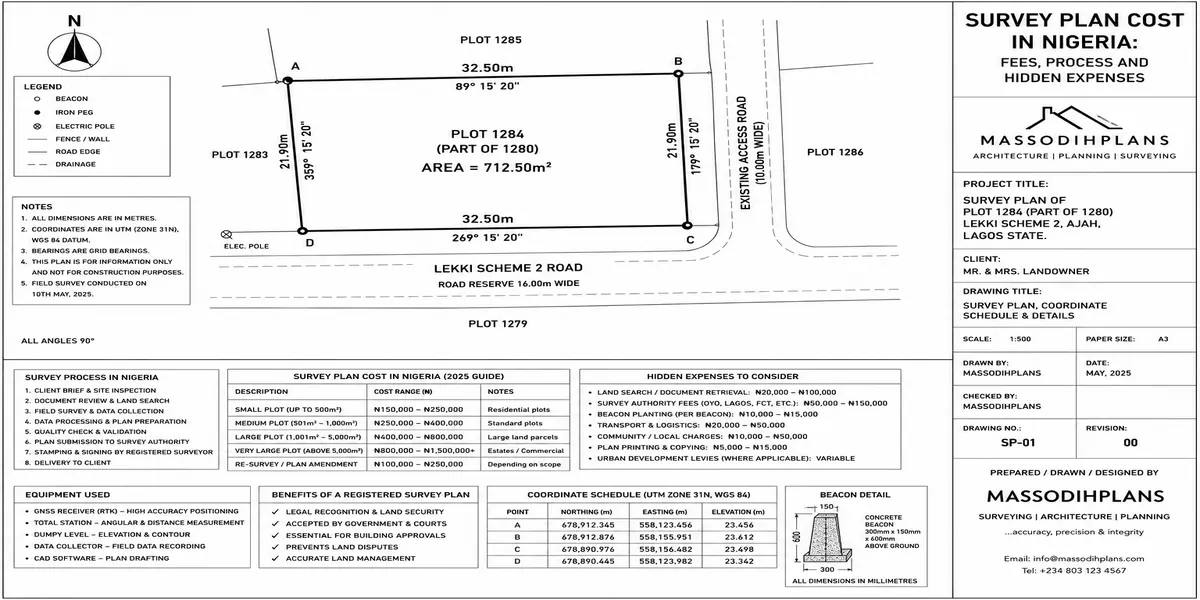
- Survey plan by a registered surveyor, with coordinates
- Site photographs and site description
- Your development vision and target market (low, medium, or high density)
- Budget indication for the layout and infrastructure
- Any existing planning restrictions or right-of-way notifications on the land
With these in hand, we can prepare a proper brief, conduct site analysis, and deliver a professional estate layout design that will pass planning authority review.
Expert Note: Smart Growth is Not Just a Western Concept
I want to speak directly to Nigerian developers for a moment.
Smart growth, the idea of building compact, well-planned, mixed-use, transit-friendly, environmentally responsible communities, is not a foreign concept borrowed from Western urbanism. It is simply what good Nigerian town planning practice has always recommended.
The problems we see in Nigerian cities today, flooding, slums, traffic chaos, environmental degradation, are not because Nigeria lacks smart people. They are because smart planning got bypassed in the rush to sell plots and make money quickly.
The developer who invests in a proper estate layout today is not spending money. They are protecting money. And they are building a legacy. They are creating something that will stand, that people will actually want to live in, and that will appreciate in value year after year.
That is what this is really about.
Quick Summary
| What You Get With a Professional Estate Layout | What You Risk Without It |
|---|---|
| Planning approval and legal title transfer | Illegal estate, no title possible |
| Flood-protected community | Flooded estate every rainy season |
| Proper road access for all users | Traffic chaos and emergency access failure |
| Compatible, value-protecting zoning | Slum formation and value collapse |
| Infrastructure-ready corridors | Impossible and expensive retrofitting |
| Premium buyer confidence | Low confidence, slow sales |
| Future expansion capability | Dead-end development |
Our Estate Layout Design Services at MassodihPlans
At MassodihPlans, we offer professional estate layout design services for:
- Residential estate layouts (all densities)
- Mixed-use estate layouts
- Industrial estate layouts
- Commercial estate developments
- Government housing scheme layouts
- Private developers and cooperatives
- Community estate upgrades and regularisation
Our service package includes:
- Site analysis and feasibility review
- Full set of estate layout drawings (site plan, land use plan, road hierarchy, drainage plan, utility plan, phasing plan)
- Planning standards compliance review
- Planning application submission support
- Development control framework preparation
- GIS mapping integration where required
We serve developers across Akwa Ibom, Rivers, Cross River, Enugu, Anambra, Lagos, Abuja, and other Nigerian states. We also serve Nigerian diaspora investors planning estate development from abroad.
To discuss your estate layout project, visit our Services page or contact us directly through the site.
Frequently Asked Questions
How long does estate layout design take?
A standard residential estate layout design takes 4 to 8 weeks from site data receipt to completed drawings, depending on estate size and complexity. Planning authority approval timelines vary by state, typically 4 to 12 weeks after submission.
Do I need an estate layout even for a small land parcel?
If you are selling more than one plot from your land, or if you are developing for residential purposes with multiple units, you need a layout plan and planning approval. This applies even for small 10 to 20 plot developments.
Can I use a surveyor instead of a town planner for estate layout?
A surveyor does survey and pegging work. Estate layout design and planning approval require a registered Town Planner (NITP) and in many cases an ARCON-registered architect. These are different professions with different legal mandates.
What is the difference between an estate layout and a site plan?
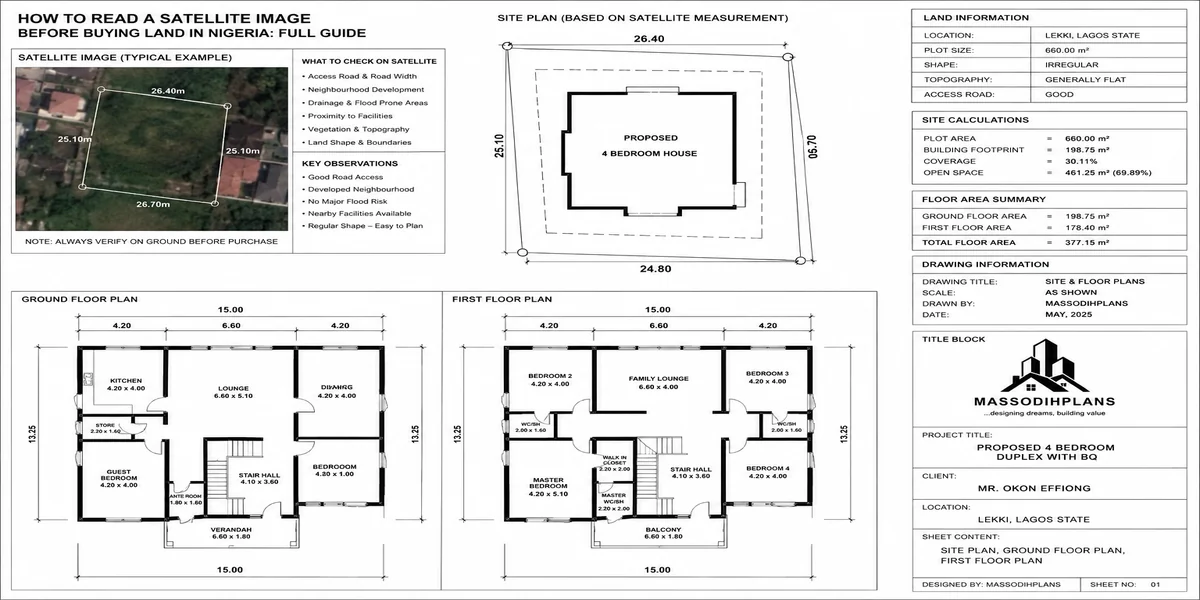
A site plan shows a single building on a single plot. An estate layout covers the entire land parcel, showing all plots, roads, zones, drainage, open spaces, and community facilities together.
How much does estate layout design cost in Nigeria?
Cost depends on land size, complexity, and location. Contact MassodihPlans for a specific quote based on your project details. Attempting to budget without a specific project review usually leads to incorrect expectations.
Can I develop without planning approval in Nigeria?
Technically possible in some locations today. But legally, no. Development without planning approval exposes you to government demolition, buyer litigation, and inability to complete clean title transfer to buyers. The risk is real and growing as state governments intensify Development Control enforcement.
What happens if I sell plots without an approved layout?
Buyers cannot register their plots. You as the developer have legal liability. Government can declare the estate illegal and order demolition of structures. Banks and mortgage institutions will not finance buyers in unapproved estates.
Does MassodihPlans help with planning approval submission?
Yes. We prepare the full documentation package and can represent clients during the planning authority review process.
Conclusion: Your Estate Can Be Different
Nigeria does not need more failed estates. We have enough of those.
What Nigeria needs, what your buyers need, what your investment deserves, is a properly planned, professionally designed, government-approved estate that functions like a real community.
I have spent years watching developers lose money, buyers lose plots, and communities lose quality of life because estate layout design was treated as optional. It is not optional. It is the foundation.
If you have land and you are serious about development, start with the layout. Get it right. Invest in the professional service. The rest of the development, roads, drains, utilities, plot sales, building approvals, all of it becomes straightforward when the layout is solid.
At MassodihPlans, this is the work we do. Not for algorithms. Not for rankings. For Nigerian developers who want to build something real.
Visit our Services page to learn more. Browse our Plans Library to see what professional residential design looks like in Nigerian context. Explore Plan School if you want to deepen your understanding of Nigerian building and planning processes.
And if you have a project and want to talk, reach us through MassodihPlans.com. Let us build something worth building.
Recommended Article:
- House Plan Drawing Services in Nigeria
- Building Plan Approval Process in Nigeria
- Industrial Estate Layout Design in Nigeria
- Consequences of Unplanned Urban Development in Nigeria
- Structure Plans in Nigeria
- Nigerian House Plans for Small Plots
- Nigerian Estate Master Plan for Small Plots: Modern Residential Layout Strategies That Maximize Space
- What Happens When a City Develops Without a Master Plan
- How a State Master Plan Works: A Complete Guide to Modern Infrastructure Development
- The MegaRegion FlowPlan for Balanced Urban Expansion
- The Proposed FutureGrid Nation Blueprint for Smarter Land Development
- Building Materials Price Guide in Nigeria (Full Cost Guide)
- Estate Development Cost Breakdown: What Developers Should Budget For
- Cost of Blocks, Cement, Iron Rod and Roofing Sheets in Uyo: Real Prices From the Field Now
- Layout Plan Cost in Nigeria and Abroad: What Every Landowner Must Budget Before Building
Others
- Environmental Management Plan Cost Guide for Developers in Nigeria and Beyond
- Site Development Plan Cost: What Every Property Owner Must Know Before Building
- Why District Planning Is Important for Urban Development
- Commercial Development Planning Costs: What Every Investor Must Know Before Spending a Kobo
- Housing Estate Layout Plan: Why Every Estate Needs One in Nigeria and Beyond
- Master Plan Preparation Process Explained Step by Step
- Cost of Master Plan Preparation for Communities and Institutions
- What Makes a Good Estate Layout Plan? A Practical Guide for Nigeria and Beyond
- How to Evaluate Land in Lagos Before Choosing a House Plan to Build Safely (15 Best Ways)
- How to Choose the Right Residential Location in Abuja Before You Build (20 Best Areas Ranked for Buildability)
- How to Choose the Right Residential Location in Lagos Before You Build
- 10 Best House Plans for Small Plots in Nigeria: What Buyers Should Consider
- How to Choose the Right House Plan Based on Your Plot Size in Nigeria Today
- How GIS Can Help You Choose the Right Land for Your Dream House in Nigeria
- How to Identify Flood Risk Before Building a House in Nigeria Today, Safely
Authority: Nigerian Institute of Town Planners (NITP)
Massodih Okon is a Nigerian built-environment professional with academic and professional experience in urban and regional planning, geography, architectural design, Landscape Design, GIS and land development.
He holds a Master’s degree in Urban and Regional Planning from the University of Uyo and a first degree in Geography and Regional Planning.
Through MassodihPlans, he publishes practical guides on Nigerian house plans, building design, physical planning, site planning, development approval and residential construction. Read the full author profile →