Architecture Ideas That Match Global Design Trends and Modern Living
Architecture Ideas That Match Global Design Trends and Modern Living: Every “architecture trends” article online is written from the same handful of cities London, Milan, Los Angeles and assumes the reader is building somewhere cool, dry, and grid-stable. In my years designing homes across Akwa Ibom, Lagos, Kano and Rivers States, I’ve watched clients bring me photos of stunning European or American homes and ask for the exact same thing, without realising some of what makes those designs beautiful in their own climate would actively work against them here. This guide will take you through the real global trends shaping modern living in 2026 and exactly how to translate each one so it actually performs in a Nigerian, tropical context.
Quick Answer: The architecture trends defining modern living in 2026 are biophilic design, natural and sustainable materials, climate-resilient construction, abundant natural light, smart home technology, regional material identity, and modular construction. Each one can be beautifully adapted to a Nigerian home but only if it’s translated for tropical heat, humidity, and power supply first, rather than copied directly from a cooler climate.
What’s in This Guide
- Biophilic design and connection to landscape
- Natural and sustainable materials and their Nigerian equivalents
- Climate-resilient architecture for flood and heat
- Natural light and large glazing the caution nobody gives you
- Smart home technology built for unstable power
- Regionalism and local identity as a modern trend
- Modular and phased construction
- How to adopt global trends without fighting your climate
- A real-life example
- Common mistakes
- FAQs
Biophilic Design and Connection to Landscape
Globally, biophilic design bringing nature into the built environment through greenery, natural materials, and views out to landscape is one of the strongest trends shaping modern homes right now. In a Nigerian context, this translates beautifully into courtyard designs, where an internal open-air space brings greenery into the heart of the home while also improving natural ventilation meaning the trend and the climate need actually work together here, rather than against each other. Indigenous plants suited to local humidity, rather than imported ornamentals that struggle in the heat, make this both more authentic and easier to maintain.
Natural and Sustainable Materials And Their Nigerian Equivalents
International trend reports now celebrate clay, cork, plywood, and terracotta as the “hero materials” of sustainable design. Nigeria already offers equivalents that suit the climate even better and remain far more accessible locally, including laterite, modernized adobe or mud-brick construction, locally fired clay bricks, bamboo, and indigenous timbers. A rammed-earth or laterite wall gives you the same warm, textured, sustainable aesthetic currently trending in Milan and Los Angeles with better thermal performance in our heat than imported cork ever will, and without the shipping cost.
Climate-Resilient Architecture for Flood and Heat
Globally, climate-resilient design is trending toward elevated foundations, water-repellent materials, and passive cooling strategies to withstand extreme weather. This isn’t a distant future concern for Nigeria it’s already a present necessity in flood-prone parts of Port Harcourt and low-lying Lagos, where elevated foundations and proper drainage design aren’t a stylistic trend at all, but a practical requirement. Passive cooling cross-ventilation, deep roof overhangs, and orientation away from direct afternoon sun achieves the same “climate-resilient” trend goal at a fraction of the cost of imported mechanical cooling systems.
Expert Note: If you’re in a flood-prone area, don’t treat “elevated foundation” as an aesthetic trend to consider treat it as a non-negotiable design decision, informed by a proper site and soil assessment before anything else is finalised.
Natural Light and Large Glazing The Caution Nobody Gives You
This is the trend most global guides get dangerously wrong for a tropical audience. Large glass walls and frameless glazing are everywhere in 2026 trend reports, framed purely as bringing in natural light and outdoor views. What they don’t mention: in direct tropical sun, that same glazing becomes a serious heat-gain problem without deliberate shading. The trend can absolutely work here but only paired with deep roof overhangs, brise-soleil screens, or louvred shading elements positioned according to the sun path. Natural light without a heat management strategy isn’t modern living it’s an expensive air conditioning bill waiting to happen.
Smart Home Technology Built for Unstable Power
Globally, “smart living” trends focus on seamless, hidden technology smart thermostats, voice control, invisible speakers. In Nigeria, the same aspiration needs one extra design layer most guides never mention: smart systems that gracefully handle grid instability, synced properly with inverter and solar setups rather than assuming constant grid power. A beautifully integrated smart home that goes completely dark and unresponsive during a power outage isn’t actually modern living here it’s a design that only works part of the time.
Regionalism and Local Identity as a Modern Trend
One genuinely exciting global shift for 2026 is architects moving away from generic international style and toward regional materials and traditional craft techniques, creating buildings with real local identity. This is where a Nigerian home can lead rather than follow: incorporating traditional motifs, local artisan woodwork, or regionally specific patterns into a clean, modern form gives you a home that’s genuinely on-trend globally while being unmistakably, proudly Nigerian not a copy of somewhere else.
Modular and Phased Construction
Prefabricated and modular construction is trending globally for speed and reduced waste. In Nigeria, the more common and equally valid version of this trend is phased construction a complete design built in stages as funds allow, which achieves the same core benefit modular construction is chasing globally: getting a functional, livable structure up faster, without compromising the final design.
How to Adopt Global Trends Without Fighting Your Climate
The pattern across every trend above is the same: the aspiration is universal, but the execution has to be local. Before adopting any trend from an international magazine, ask one question: does this trend assume a climate, power supply, or material availability that doesn’t match where I’m actually building? If the answer is yes, the trend isn’t wrong it just needs a Nigerian translation, the same way courtyard design translates biophilia, and laterite translates the clay-and-cork material trend.
A Real-Life Example
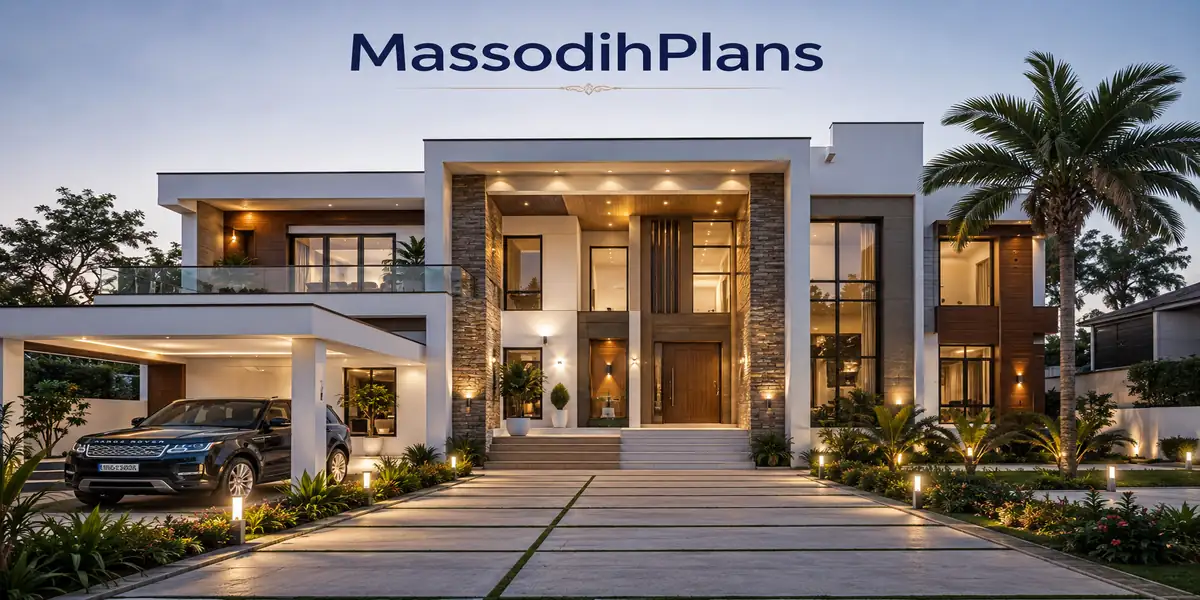
A client in Uyo brought me a photo of a home from an international design magazine with a fully glazed front façade and no visible shading at all. We kept the aspiration the open, light-filled feeling she wanted but redesigned it with a deep roof overhang and a vertical louvre screen on the most sun-exposed section. The finished home still reads as strikingly modern and matches the trend she fell in love with, but stays genuinely comfortable through the hottest part of the day, which the original reference image never had to consider.
Common Mistakes
Copying a glazing-heavy design from a cooler climate without adding shading for tropical sun exposure.
Choosing imported “trending” materials over better-performing local equivalents, purely because they were featured internationally.
Installing smart home systems without planning for how they behave during a power outage.
Treating elevated foundations and passive cooling as optional style choices rather than climate necessities in flood-prone or high-heat areas.
Chasing a global aesthetic so closely that the design loses any local identity at all.
Frequently Asked Questions
Q: Can I have large glass walls in a tropical climate without overheating my home?
Yes, but only with deliberate shading deep roof overhangs, brise-soleil screens, or louvres positioned according to the sun path designed alongside the glazing, not added afterward.
Q: What’s the Nigerian equivalent of the trending clay and cork materials?
Laterite, modernized adobe or mud-brick construction, locally fired clay brick, and indigenous timber all achieve the same warm, sustainable, textured aesthetic, often with better local climate performance.
Q: Is smart home technology practical with Nigeria’s power supply?
Yes, if it’s designed to integrate with inverter or solar backup systems from the start, rather than assuming constant grid power the way most international smart-home guides do.
Q: How do I make a modern design feel authentically Nigerian rather than copied?
Incorporate local materials, traditional motifs, or regional artisan craft into a clean, modern form this is exactly the “regionalism” trend currently gaining ground globally, and Nigeria has genuine material and cultural depth to draw from.
Q: Is phased construction the same as the modular construction trend?
They pursue the same goal building a livable structure faster and at a lower cost but they use different methods. Phased construction offers the most common and practical approach for most Nigerian homeowners.
Finally
The best modern Nigerian homes right now aren’t the ones copying an international reference photo exactly they’re the ones that borrow the aspiration behind a global trend and rebuild it correctly for tropical heat, unpredictable power, and locally available materials. That translation step is where the real design work happens.
If you are currently planning a build and want a genuinely modern design that still performs properly in our climate, you can explore our full plans library for ready designs, or check our design services if you need something custom-drawn around your plot and lifestyle. If you’re new to reading drawings altogether, our Plan School section breaks things down for beginners. And if this is your first time here, feel free to look around the homepage for more practical guides like this one.
Drop your questions in the comments if you’re trying to bring a design idea you’ve seen online into a Nigerian context I read every one, and I’d genuinely love to help you translate it properly. ArchDaily.
Related Guides
- I Don’t Know Which Location to Buy In: How to Choose the Best Location
- I Don’t Know What Type of Property I Should Buy: Here’s How to Actually Decide
- Can’t Find a Property Within Your Budget? Here’s the Part Nobody’s Telling You
- I Don’t Know Where to Find the Right Property in Nigeria | Buyer Guide
- I Need a Real Estate Agent to Help Me Buy a Property in Nigeria Safely
- Property for Sale in Nigeria: The Buyer’s Guide Nobody Publishes Today
- How Do I Get Natural Ventilation? Best Ways to Improve Airflow at Home
- Where Should My House Face? Best Direction for Sun, Wind and Comfort
- I Can’t Understand or Visualize My Floor Plan — Let’s Fix That Right Now
- My Floor Plan Has Poor Circulation: How to Fix It and Improve Flow
- I Don’t Know How to Arrange My Rooms: Here’s How to Actually Figure It Out
- My Rooms Are Too Small: How Big Should Each Room Be in a House?
- I Don’t Know How Big Each Room Should Be: Standard Room Size Guide
- How Much Building Can I Put on My Plot? Building Coverage and Setbacks
- My House Plan Doesn’t Fit My Land: What to Do Before You Build
- I Need a House Plan That Fits My Plot with Exact Dimensions and Layout
- I Don’t Know What House Plan to Build? Here’s How to Decide
- Architect’s Guide to Better Project Planning, Design, and Client Results
- ArchDaily Inspired Designs for Modern Homes and Contemporary Architecture
- Modern House Design Ideas for Every Budget, Style and Lifestyle
- Duplex vs Bungalow in Benin City: Which Should You Build?
Author
Massodih Okon is a Nigerian built-environment professional with academic and professional experience in urban and regional planning, geography, architectural design, Landscape Design, GIS and land development.
He holds a Master’s degree in Urban and Regional Planning from the University of Uyo and a first degree in Geography and Regional Planning.
Through MassodihPlans, he publishes practical guides on Nigerian house plans, building design, physical planning, site planning, development approval and residential construction. Read the full author profile →