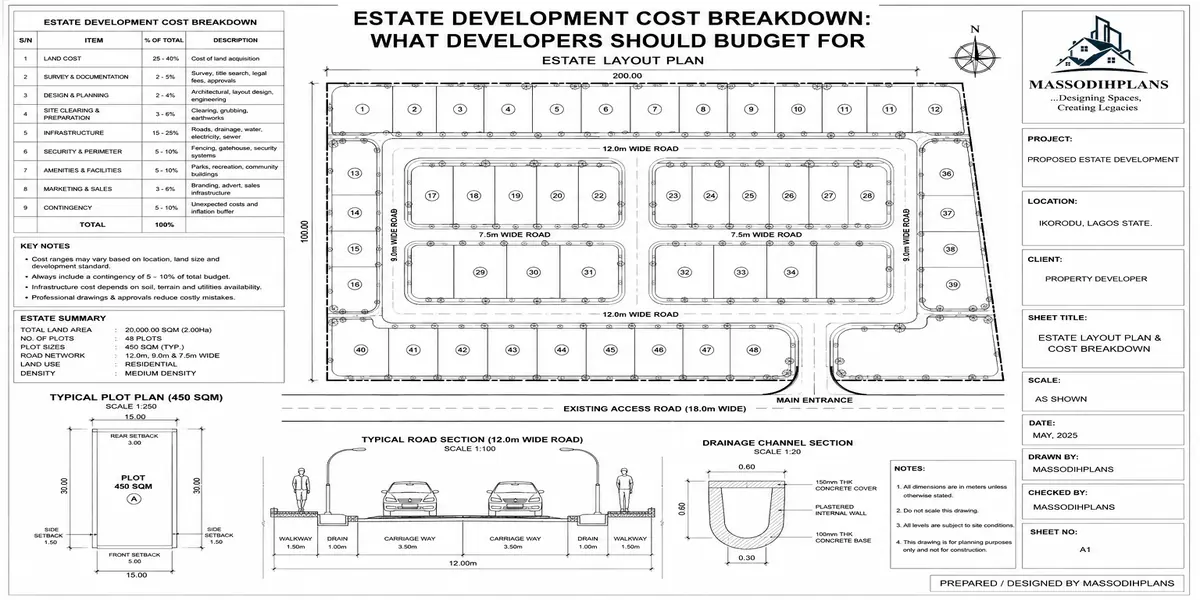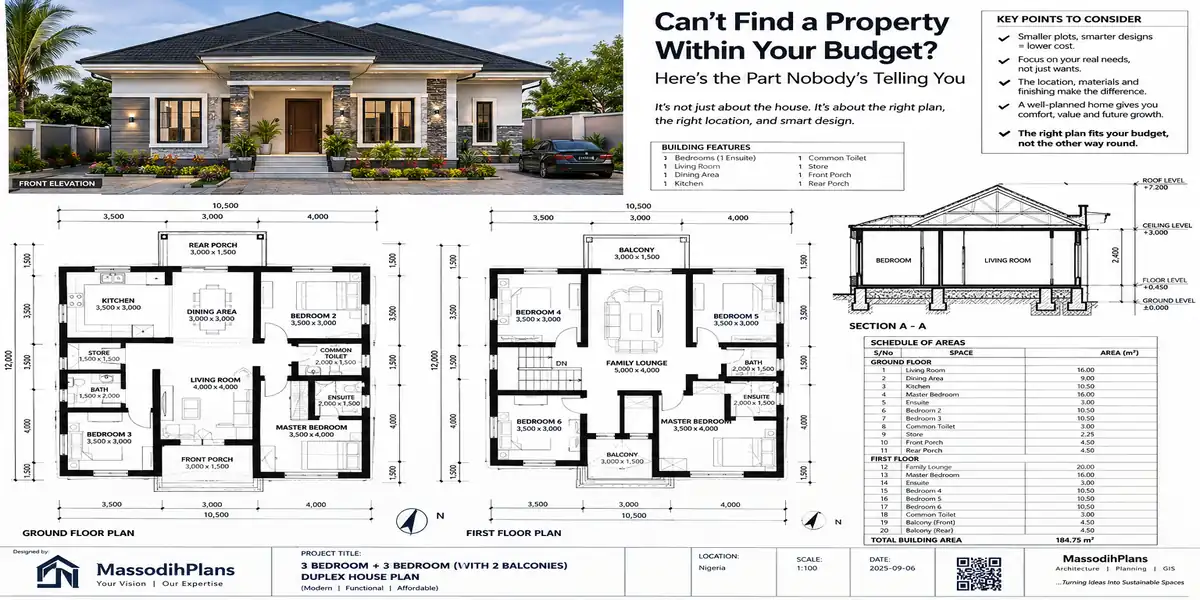
Can’t Find a Property Within Your Budget? Here’s the Part Nobody’s Telling You
Let me guess where you are right now. You’ve got a number in your head your actual budget, the one your bank account agrees with, not the one you wish were true. You’ve typed “affordable houses for sale” or “houses under my budget” into search bars more times than you’d like to admit. Every result either doesn’t exist anymore, needs work you can’t afford on top of the purchase price, or is quietly ₦15-20 million above what you said your budget was, because agents list “negotiable” prices that never actually move down to where you are.
I’m not going to tell you to “just save more” or “widen your search radius.” You’ve heard that. It’s not wrong, but it’s not the whole answer either, and if it were, you wouldn’t still be reading this.
I want to talk to you the way I’d talk to a client sitting across from me, or a student asking me this after class. Because underneath “I can’t find a property within my budget” is usually a second, quieter question that people don’t say out loud: if buying isn’t working, what am I even supposed to build instead? That second question is the one this article actually answers.
First, You’re Not Bad at This. The Market Genuinely Shrank.
I want to say this plainly because a lot of people quietly blame themselves for not finding anything, when the honest truth is that housing inventory the actual number of decent, affordably priced properties available at any given time has been tight for years, and it hasn’t fully recovered. Industry estimates point to a housing shortfall in the hundreds of thousands to over a million units in some markets, and that gap is a big part of why prices haven’t come down even where demand has cooled. Builders are dealing with rising material costs and labour shortages on top of that, which slows down how fast new affordable supply can even get built.
In plain terms: it’s not that you’re searching wrong. It’s that “affordable property near me,” “cheap houses for sale,” and “houses under $X” are genuinely a smaller pool of real options than they were a few years ago, in most markets, including Nigeria’s. Affordability and insufficient inventory are consistently the two barriers prospective buyers report most not lack of effort, not bad taste, not being “too picky.”
That reframe matters, because it changes what you should actually do next.
If you’ve been feeling like you’re the problem because nothing on the market fits your budget, sit with this for a second you’re not competing with the market fairly. You’re competing for a shrinking slice of it against everyone else searching the same listings. That’s a structural problem, not a personal failure, and structural problems need a different strategy, not more scrolling.
The Advice Everyone Gives You (And Why It Only Gets You So Far)
Every article on this topic tells you the same four things: widen your search area, lower your must-haves, get pre-approved, consider a fixer-upper. None of that is bad advice. All of it assumes the same thing that your only path into a home is finding one that already exists and is for sale.
That assumption is the actual bottleneck. If existing inventory is tight and overpriced everywhere you look, “search harder within the same category of solution” just means doing the same losing thing more thoroughly.
Here’s what almost nobody tells the person stuck in this exact spot: you don’t have to find a finished house. You can build the house your budget actually supports.
I know that sounds like a bigger project than what you came here for. Stay with me, because this is genuinely the part that changes the math.
Why Building Sidesteps the Whole Inventory Problem
When you’re hunting for an existing property, you’re competing against every other buyer for a fixed, shrinking pool of listings and the price is set by what the seller thinks it’s worth, not by what it costs to actually deliver.
When you buy land and build, you’re not competing with anyone for a listing. You’re not paying someone else’s profit margin on a finished house. You’re paying for materials, labour, and land at something much closer to their real cost and critically, you get to decide the size and scope of the house to match what your budget can actually carry, instead of hunting for a stranger’s idea of an “affordable” finished home that happens to already exist.
This is the single biggest thing separating people who eventually get into a home from people who stay stuck scrolling listings for another two years: they stopped treating “buy something that already exists” as the only route, and started asking “what can I build with what I actually have?”
That question has an answer. Let’s get to it.
The Real Question: “I Don’t Know What House Plan to Build”
This is where I want to slow down, because this is the question that actually traps people even after they’ve accepted the idea of building. You’ve decided to build instead of buy. Now you’re standing in front of a hundred house plan designs online, none of which tell you whether they fit your actual budget, and you genuinely don’t know where to start.
Here is the framework I actually use with clients and students. It’s simple on purpose, because the goal is to get you unstuck, not to give you another thing to research for six months.
Step 1: Work Out Your Real, Total Budget Not Just the “House” Number
Your budget isn’t just what you’d spend on a finished house. It’s land, plus construction, plus approval and documentation costs, plus a buffer for the things that always come up. A lot of people budget for “the house” and forget that land alone, in many areas, eats 30-60% of the total. Write down one honest number that covers everything land, build, fees, and a contingency of at least 10-15% before you look at a single design.
Step 2: Convert That Budget Into a Buildable Floor Area
Once you know your total budget minus land cost, divide the remaining construction budget by the realistic cost-per-square-metre for the finish level you can actually afford (basic finish is meaningfully cheaper than mid-range, which is meaningfully cheaper than high-end). That calculation gives you an honest number of square metres you can build not what you’d like to build, what your money actually supports.
This step alone solves 80% of “I don’t know what house plan to build.” Most people are choosing plans based on how many bedrooms sound respectable, then discovering the plan is 320 square metres and their budget supports 180. Work backwards from money to size, not forward from a Pinterest wishlist.
Step 3: Match Your Buildable Area to a Realistic Plan Type
Once you have your real floor area, you’re choosing between plan types, not colours and facades:
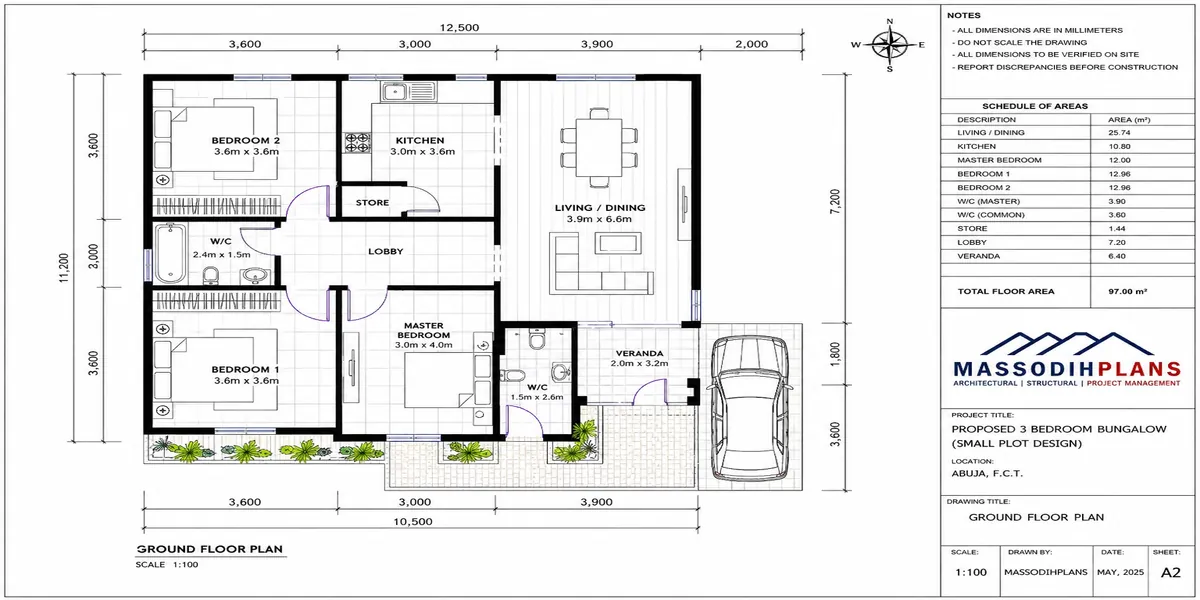
- Under roughly 100-120 sqm: a compact 2-bedroom bungalow, tightly zoned with minimal circulation waste
- Roughly 120-180 sqm: a 3-bedroom bungalow, or a very compact 3-bedroom duplex if land is scarce and you need to build up instead of out
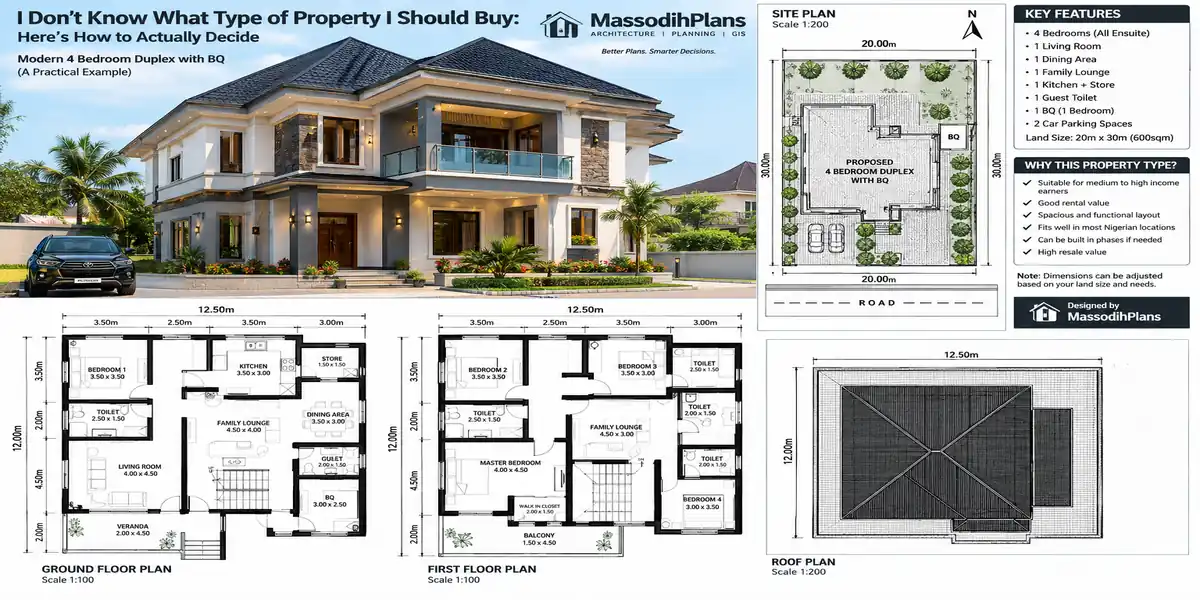
- Roughly 180-250 sqm: a comfortable 3-4 bedroom bungalow or a modest 4-bedroom duplex
- 250 sqm+: a full 4-5 bedroom duplex with proper room sizes and some flexibility
If your honest number lands you in the first bracket and you’ve been eyeing a plan from the last bracket, that mismatch not your effort, not the market is why you feel stuck. Fix the mismatch, not your motivation.
Step 4: Consider an Expandable-Core Plan (The Layer Almost Nobody Talks About)
This is the one genuinely underused idea in this whole conversation. Instead of forcing your full “dream house” into a budget that can’t carry it today, build a smaller, fully complete core now a proper 2-3 bedroom home with the foundation, roof structure, and services (electrical, plumbing, septic) sized and positioned for a planned future extension and add the rest in a second phase once you’re financially ready.
Done properly, this means:
- Your foundation and roof are engineered from day one to support the future extension, so you’re not weakening or awkwardly patching the structure later
- You move into a genuinely complete, comfortable home now, instead of waiting years for the “full” version
- Your second phase is a planned extension, not an emergency renovation
This is completely different from “just build small and hope for the best.” An expandable-core plan is deliberately engineered for a specific future addition from the first drawing which is exactly why it needs an architect involved from the start, not a generic downloaded plan that was never designed to grow.
Step 5: Watch for the Plan-Selection Mistakes That Trap Budget-Conscious Builders
- Choosing a plan based on the facade photo without checking the actual floor area against your budget math from Step 2
- Ignoring foundation cost differences a plan that looks identical to another on paper can cost significantly more if your soil needs a stronger foundation type
- Skipping structural drawings to save on design fees, then discovering the “savings” cost far more in rework
- Picking a plan with a large footprint because “the land is big enough,” without checking whether your budget can actually finish that footprint to a livable standard a half-finished large house is worse than a fully finished small one
A plan is only “affordable” if the number you calculated in Step 2 actually matches its floor area at your realistic finish level not at the finish level shown in the marketing render. Always ask for the floor area in square metres before falling in love with any plan’s photos.
Finding Land You Can Actually Afford (Without Getting Burned)
Land is usually the biggest lever in this whole equation, so it deserves its own honest section.
Look further out, deliberately, not as a last resort. Emerging and outskirt areas are cheaper precisely because infrastructure is still developing that’s a trade-off to make consciously, not a compromise to feel bad about.
Consider family or ancestral land where it genuinely exists and is properly documented. This can remove the single largest cost in your budget entirely, but only if the title and boundaries are verified undocumented family land is one of the most common sources of building disputes later.
Look at cooperative or group land purchase schemes, where a group buys a larger parcel together and subdivides it, sharing survey and documentation costs across more people and reducing the per-person land cost meaningfully.
Check government or housing scheme land allocations and installment-based land sales, which exist in many states specifically to address this affordability gap, and are often overlooked simply because people don’t know to ask about them.
Never buy land priced suspiciously below the surrounding market rate without independently verifying the title. Cheap land with unclear documentation isn’t affordable it’s expensive litigation waiting to happen.
Before you fall in love with a cheap plot, spend the relatively small cost of a proper title search and survey verification. It’s the cheapest insurance you’ll ever buy against losing everything you saved toward this.
Stretching a Tight Budget Further Legitimately
Phase your build deliberately using the expandable-core approach above, rather than trying to force the full house into money you don’t yet have
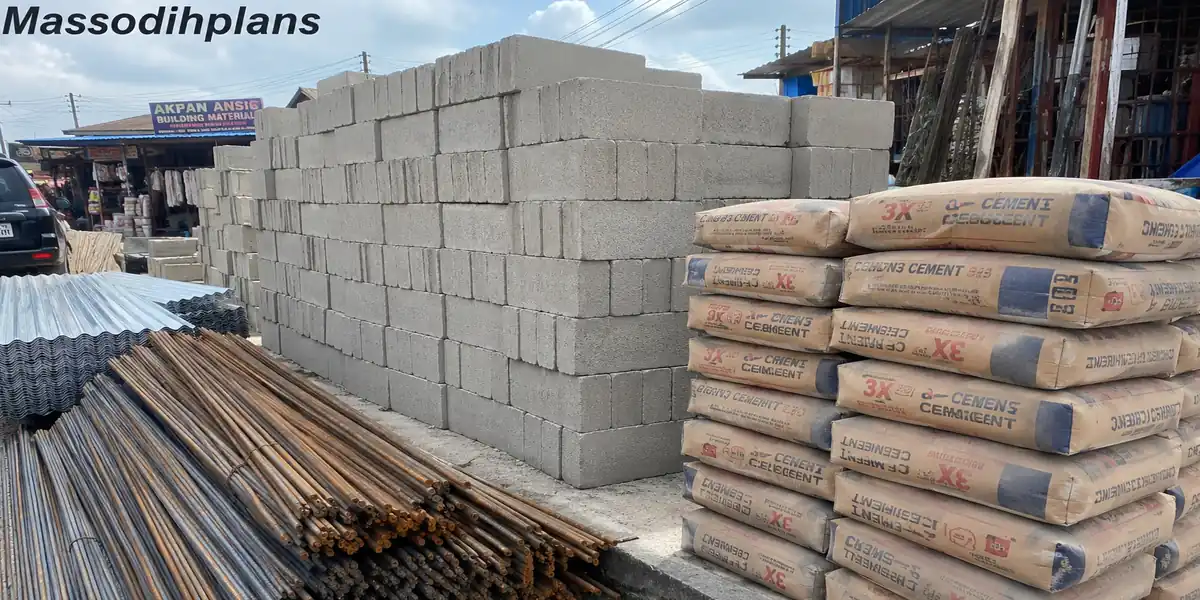
Buy structural materials (cement, steel, roofing) during price dips rather than piecemeal as construction proceeds, since material costs move constantly
Get a proper Bill of Quantities before you commit a single naira, not a verbal estimate this alone prevents the majority of budget overruns that push a “just barely affordable” project into “can’t finish it” territory
Explore cooperative housing societies, employer housing schemes, and national housing fund contributions where you qualify these exist specifically to bridge the gap between what you have and what a full property costs, and are underused simply because people don’t ask
Resist the pressure to match a finished size or finish level you see on social media. A modest, fully completed home you can actually afford to live in and maintain beats a bigger one you can’t finish or furnish.
Frequently Asked Questions
I keep seeing “houses under my budget” listings that turn out to be far above what was advertised what’s going on?
Many listings use a lower headline price to attract clicks, then reveal additional costs (agency fees, “negotiable” pricing that never actually drops, or a smaller unit type than implied) once you inquire. This is extremely common in tight, low-inventory markets, and it’s part of why searching harder within listings often doesn’t solve the problem.
Is it actually cheaper to build than to buy an existing property?
Often yes, especially once you account for the fact that an existing property’s price includes someone else’s profit margin, not just raw cost. But it depends heavily on land cost in your specific area run the numbers for your situation using the budget-to-floor-area method above rather than assuming either option is automatically cheaper.
What if my budget genuinely can’t cover a full house plan and land at once?
This is exactly the scenario the expandable-core approach is designed for buy land and build a smaller, fully complete core home now, engineered from the start to support a planned second-phase extension later, rather than waiting years to afford the full version upfront.
How do I know what size house plan actually fits my budget?
Take your total budget, subtract land cost and a 10-15% contingency, then divide the remaining amount by the realistic construction cost per square metre for your target finish level. That number is your real buildable floor area choose a plan type that matches it, not one that matches your wishlist.
Is cheap land ever actually a good deal?
Only if the title and boundaries are independently verified. Land priced well below the surrounding market rate without a clear, verifiable title is a common trap the money you save upfront is frequently lost many times over in later disputes.
Where This Leaves You
If you’ve been stuck searching listings for a property within your budget and finding nothing, the honest answer is that the market genuinely made that harder than it should be but it also means the search itself was never going to be the thing that got you into a home. Buying land and building a right-sized, properly planned house, even in phases, sidesteps the entire inventory problem, because you’re no longer competing for someone else’s finished product.
If you’re at the point of turning your actual budget into an actual floor area and plan, our Plans Library has house plans organized by size and finish level so you can match one to real numbers instead of guesswork, and Plan School walks through how to read and evaluate a plan before you commit to it. If you want direct help working through your specific budget-to-plan math, including an expandable-core design, our Services page outlines how we work with clients on exactly this. You can also explore more building and planning guides on our Homepage.
- I Don’t Know Where to Find the Right Property in Nigeria | Buyer Guide
- I Need a Real Estate Agent to Help Me Buy a Property in Nigeria Safely
- Property for Sale in Nigeria: The Buyer’s Guide Nobody Publishes Today
- How Do I Get Natural Ventilation? Best Ways to Improve Airflow at Home
- Where Should My House Face? Best Direction for Sun, Wind and Comfort
Author
Massodih Okon is a Nigerian built-environment professional with academic and professional experience in urban and regional planning, geography, architectural design, Landscape Design, GIS and land development.
He holds a Master’s degree in Urban and Regional Planning from the University of Uyo and a first degree in Geography and Regional Planning.
Through MassodihPlans, he publishes practical guides on Nigerian house plans, building design, physical planning, site planning, development approval and residential construction. Read the full author profile →