If You Are Looking to Buy Land or Build in Uyo, Read This First
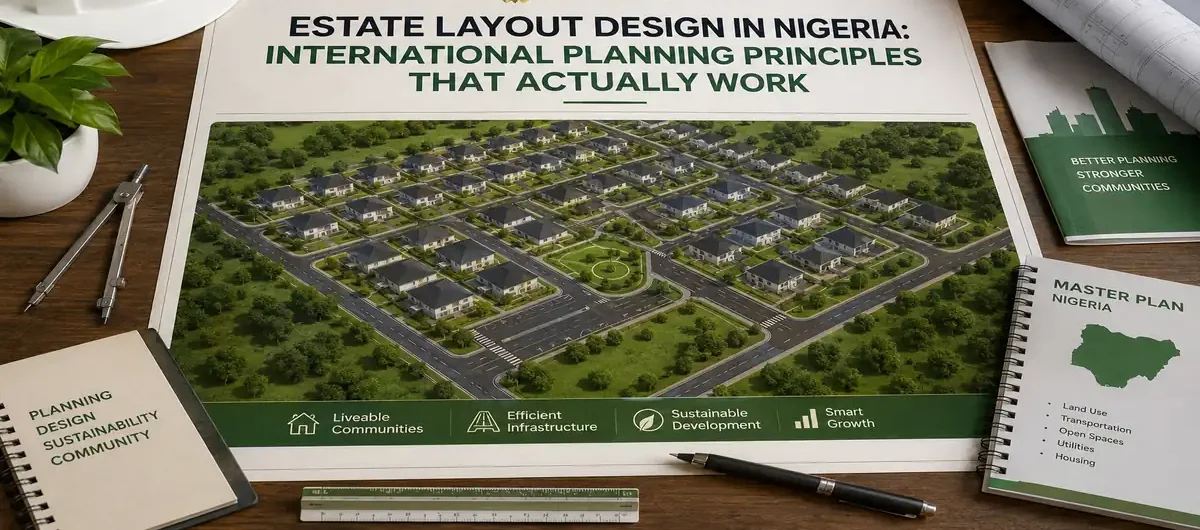
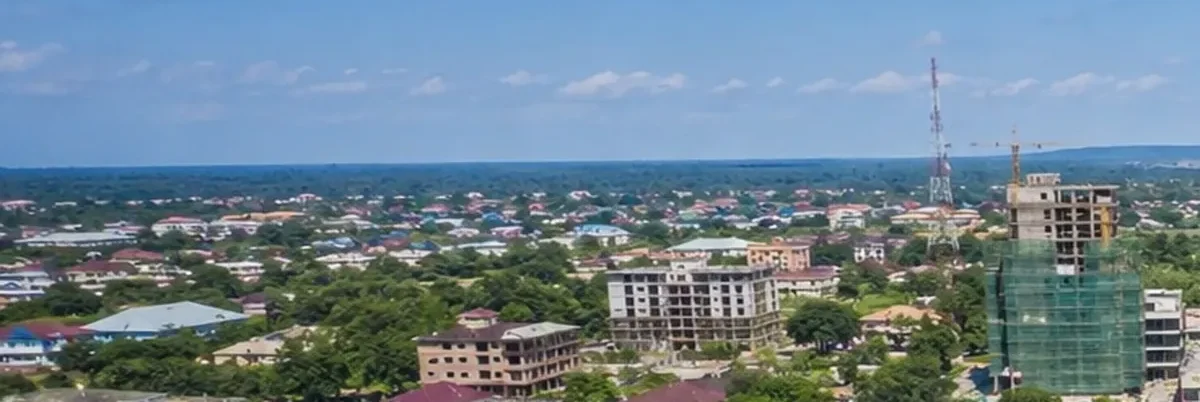
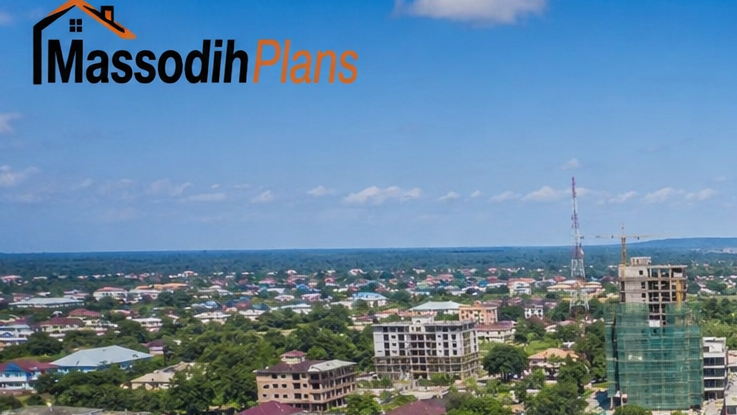 Uyo, Akwa Ibom State, showing the expanding urban landscape across multiple development corridors including new residential estates and road infrastructure.
If you are reading this from Lagos, Abuja, Port Harcourt, or from the diaspora, and you are thinking about buying land or building in Uyo, then this article is for you.
Uyo is growing. That is the simple truth. The capital of Akwa Ibom State has transformed dramatically over the past two decades, and it is still transforming. New road networks, government residential layouts, commercial developments, and private estate projects are continuously changing the landscape of this city.
But here is what most property agent in Uyo will not tell you: not every corridor is growing at the same rate. Not every cheap land is a good deal. Not every road that looks finished today has functional drainage. And not every estate selling plots right now has clean title documentation.
I have spent over 15 years working on building projects, land planning, and development consultancy across Akwa Ibom State as a Planner. And I know these corridors personally. I have driven them, worked on projects along them, and advised clients who bought land on many of them.
What I am about to share with you is not a marketing pitch. It is a practical, honest guide to making a good property and development decision in Uyo today.
Why Uyo Is a Serious Real Estate Market Right Now
Before I take you corridor by corridor, let me give you the bigger picture.
Uyo became the Akwa Ibom State capital in 1987. Since then, government investment in infrastructure has been consistent and, by Nigerian standards, substantial. The road network is better than most state capitals in the south. The city has functioning hotels, a modern sports stadium, a functional airport, major oil company offices, and a growing university population.
Key economic drivers that make Uyo a strong property market:
- Akwa Ibom is Nigeria’s third-largest oil-producing state, generating significant government revenue
- The presence of international oil companies and their contractors creates consistent demand for quality housing
- The University of Uyo and several other tertiary institutions generate student and staff accommodation demand
- Government workers, contractors, and support professionals need housing close to institutional corridors
- Uyo is a destination for returning diaspora Nigerians who want to build or invest back home
In my experience, Uyo is one of the more undervalued property markets in southern Nigeria relative to its infrastructure level. Lagos and Port Harcourt get more attention, but the fundamentals in Uyo are solid and the entry prices are still comparatively affordable.
That said, the opportunities are not evenly distributed. Let me take you through the corridors that actually matter.
The Key Investment Corridors in Uyo: What I Have Seen on the Ground
Nwaniba Road
Nwaniba Road is one of the most active development corridors in Uyo right now. It connects the city centre to the eastern fringes and passes through areas that are transitioning from low-density residential to mixed-use development.
What makes it attractive:
- Relatively newer road infrastructure with better surface conditions
- Growing middle-class residential development
- Several private estate projects offering plots at varying price points
- Proximity to university communities creating demand for rental accommodation
- Land is still available at prices that make investment feasible
Investment reality: Rental apartment development along Nwaniba Road is one of the most consistent performers in Uyo right now. A two or three bedroom flat in a well-finished block can command between ₦600,000 and ₦1,500,000 annually depending on finish quality and exact location.
Watch out for: drainage issues in low-lying sections. Some plots along this corridor sit in areas where natural drainage channels have not been properly managed. Before you buy, check the site elevation and ask specifically about flooding history. I have seen clients buy what looked like level, dry land along this corridor and experience flooding in their first rainy season.
Oron Road
Oron Road is one of Uyo’s most established corridors. It runs from the city core toward Oron and passes through densely developed residential and commercial zones.
The sections closer to the city centre are essentially fully developed. Investment opportunities here are more in the line of redevelopment: buying an old property, pulling it down, and building something modern in its place.
Further out along Oron Road, there are still land opportunities at reasonable prices, but you need to look carefully at:
- Title documentation (this corridor has some family land with complicated ownership histories)
- Road condition at the specific section you are looking at
- Drainage and flood exposure
From a development perspective, Oron Road has strong rental demand because of its accessibility and established neighbourhood character. It is a good area for mid-range rental development targeting government workers and oil sector professionals.
Aka Road
Aka Road and its surrounding streets form one of the more established middle-to-upper-income residential zones in Uyo. This is the kind of area where expatriate staff, senior government officials, and oil company managers want to live.
Property values here are higher, but so is rental demand and quality of tenants. If you are developing a fully furnished or high-specification rental property targeting the international or upper-professional market, Aka Road and its environs deserve serious consideration.
Land in this area is not cheap and not easily available. When it comes up, it moves quickly. If you are in the diaspora and want to invest in something that will hold its value and generate stable rental income from quality tenants, this corridor is worth the premium.
The challenge: buildings here are subject to stricter development control scrutiny because the area is well established and neighbours are protective of neighbourhood character. Do not plan to build anything that violates setbacks or ignores parking requirements. Your building permit application will face resistance and your neighbours will not be friendly about it.
Shelter Afrique and Ewet Housing Estate
These are government-planned residential estates and they represent some of the most clearly titled, best-organised residential land in Uyo.
Shelter Afrique was developed as a federal housing scheme. Ewet Housing is a state government layout. Both have structured plot layouts, defined road networks, and documented title documentation that is significantly more reliable than most of the informal and family land you will find in other parts of Uyo.
In my experience, buying into a government-planned estate like these, when resale plots are available, is one of the lowest-risk property investments you can make in Uyo. The documentation is cleaner. The boundaries are clearer. The infrastructure is at least partially established.
These areas command premium prices relative to undeveloped corridors, but the premium is justified. What you are paying for is reduced risk and established infrastructure.
Ikot Ekpene Road
This is a corridor with significant development momentum. Ikot Ekpene Road runs northward from Uyo and passes through areas that are seeing rapid residential development as the city expands in that direction.
Land is still at prices that make development viable. The road infrastructure has improved substantially in recent years. Several private developers have established estate projects along this corridor, which is creating a development momentum that tends to be self-reinforcing: one estate attracts another, which attracts commercial development, which raises land values around them.
For land banking strategy, sections of Ikot Ekpene Road beyond the current dense development frontier are worth serious consideration. Buy now, hold, and develop or sell as the urban frontier advances toward you.
Watch out for: some sections of this corridor have deep gully erosion issues in adjacent areas. Do any site that interests you there with a physical inspection at ground level, not just a satellite view. Erosion near Uyo is not always obvious from the road.
Abak Road
Abak Road runs southwest from the city and is another corridor experiencing growth pressure as the city expands. It has good road connectivity and is seeing increasing residential and light commercial development.
This is a corridor where small-scale developers building blocks of flats for the rental market are doing reasonably well. The tenant profile tends to be civil servants, teachers, and lower-to-mid-level professionals. Rental yields are decent if you manage costs well.
The entry price for land is still moderate compared to the more established corridors, which gives a reasonable development margin for those willing to go through the construction process properly.
Four Lane (Aka-Eto Road) and Atiku Abubakar Avenue
This area is essentially the premium commercial and institutional spine of modern Uyo. The Four Lane road and Atiku Abubakar Avenue are where government institutions, banks, hotels, corporate offices, and high-end commercial development have concentrated.
Residential development immediately adjacent to this spine has a significant premium attached to it. If you can find a plot or property within reasonable distance of this corridor, the combination of address prestige, accessibility, and commercial proximity makes it one of the strongest capital appreciation plays in Uyo.
Pure residential development here competes with commercial and mixed-use pressure on land values, which means construction costs need to be managed carefully to ensure the numbers work. But for a well-capitalised investor or developer, this corridor offers the best combination of rental income, capital appreciation, and exit liquidity.
Airport Road
Airport Road is one of Uyo’s growth frontiers. With Akwa Ibom International Airport as its anchor, this corridor is seeing increasing interest from hospitality, commercial, and residential developers.
Short-term rental properties (serviced apartments and guest houses targeting business travellers and visitors) are a particularly interesting opportunity along this corridor. The airport generates consistent arrivals who need accommodation options beyond the major hotels.
The further you go along Airport Road away from the city centre, the more land is available at prices that still make development economics work. The medium-term trajectory of this corridor is positive, particularly if Akwa Ibom State continues to develop its aviation sector and economic free zone ambitions.
Idoro Road
Idoro Road is a residential growth corridor in the northern part of Uyo. It has seen significant private residential development over the past decade and represents a solidly middle-class neighbourhood profile.
For developers targeting owner-occupiers rather than renters, Idoro Road is an attractive area. Families who want to own their homes in a reasonably established neighbourhood with decent road access look at this corridor seriously.
Land is available here but is becoming less so as development fills in. Prices have risen notably over the past five years and will likely continue to rise as the corridor matures.
Land Acquisition in Uyo: The Real Risks You Must Know
This section could save you a very large amount of money, so please read it carefully.
The Family Land Problem
A significant proportion of land in Uyo and its environs is held under customary tenure by family groups. This means the land belongs collectively to a family, and any individual member can potentially attempt to sell it without authority from the full family.
I have encountered this situation multiple times in my practice. A client buys land, pays a family member, gets a receipt, starts building. Then a different faction of the same family shows up, claims their consent was not obtained, and threatens legal action or physical obstruction.
How to protect yourself:
- Insist on a proper Deed of Assignment, not just a receipt
- Require that the transaction is executed by at least the Umunna head (family head) and witnessed by recognised community leaders
- Commission a proper land search at the Akwa Ibom State Land Registry before paying any significant sum
- Engage a reputable lawyer based in Uyo who understands local land tenure practice, not just general property law
The Fake Document Problem
From what I have seen in practice, forged Certificates of Occupancy and fake survey plans are more common than most people expect. Someone prints a C of O with the right-looking stamps and presents it to a buyer who does not know what a genuine one looks like.
Verification steps that are non-negotiable:
- Take the C of O number to the Akwa Ibom State Ministry of Lands for physical verification
- Commission a surveyor to confirm that the survey plan beacon numbers match those registered with the State Survey Department
- Do not pay any amount beyond a small commitment fee until verification is complete
The Layout-Without-Approval Problem
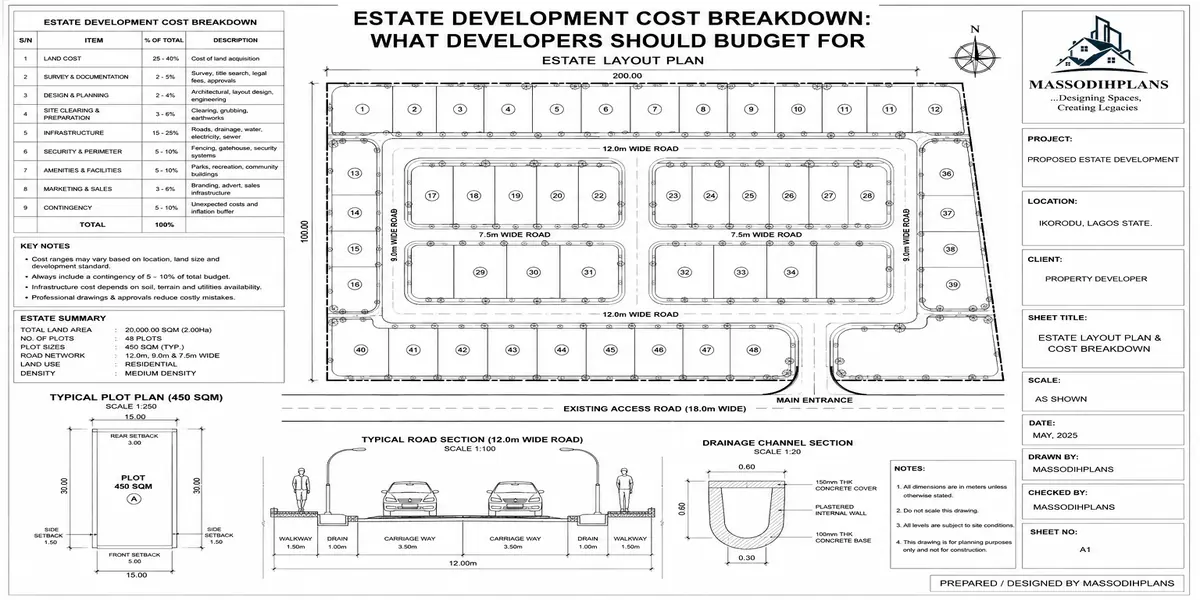
Some private estate developers in Uyo sell plots in layouts that have not received approval from the State Ministry of Physical Planning and Urban Development. When you build on such a plot, you may face problems getting a building permit, and in worst cases, the entire layout may be subject to enforcement action.
Always ask: does this estate layout have an approved layout plan from the Ministry of Physical Planning? Ask to see it. A reputable developer will show it to you without hesitation.
Building in Uyo: Practical Construction Realities
Material Costs and Inflation
Building material prices in Nigeria generally and in Uyo specifically are volatile. Based on projects I have worked on, the safest approach to construction budgeting in the current environment is to add a minimum 20 percent contingency above your contractor’s estimate, and to revisit your budget every quarter during a long construction project.
Items that have shown the most price volatility:
- Cement (price can move significantly within weeks during high-demand periods)
- Iron rods and structural steel
- Roofing materials (especially long-span aluminium sheets)
- Electrical cables and fittings
Strategy: buy critical materials in bulk at the start of each phase when you have a reliable supplier locked in at a known price. Do not buy everything at once (storage and deterioration risks) but do not buy piecemeal either (you pay premium prices for small quantities every time).
Contractor Selection and Management
I have seen this mistake repeatedly: a client hires the cheapest contractor they can find, pays 70 percent of the contract sum upfront, and then struggles to get work done properly.
My honest advice to anyone building in Uyo:
- Get at least three written quotations from contractors who have completed verifiable projects you can inspect
- Never pay more than 30 percent upfront. Structure payments to milestones: foundation completion, lintel level, roof completion, and finishing
- Hire an independent site supervisor or architect to provide oversight. This is not a luxury. It is the single most cost-effective decision you can make on a construction project
- Put everything in writing. Scope of work. Materials specification. Payment terms. Timeline. Dispute resolution. A verbal agreement with a contractor is not an agreement
Building Approval in Akwa Ibom State
You need a building permit before you start construction in Uyo. The process is managed by the Akwa Ibom State Ministry of Physical Planning and Urban Development.
What you need for a building permit application:
- Site plan (prepared by a registered surveyor)
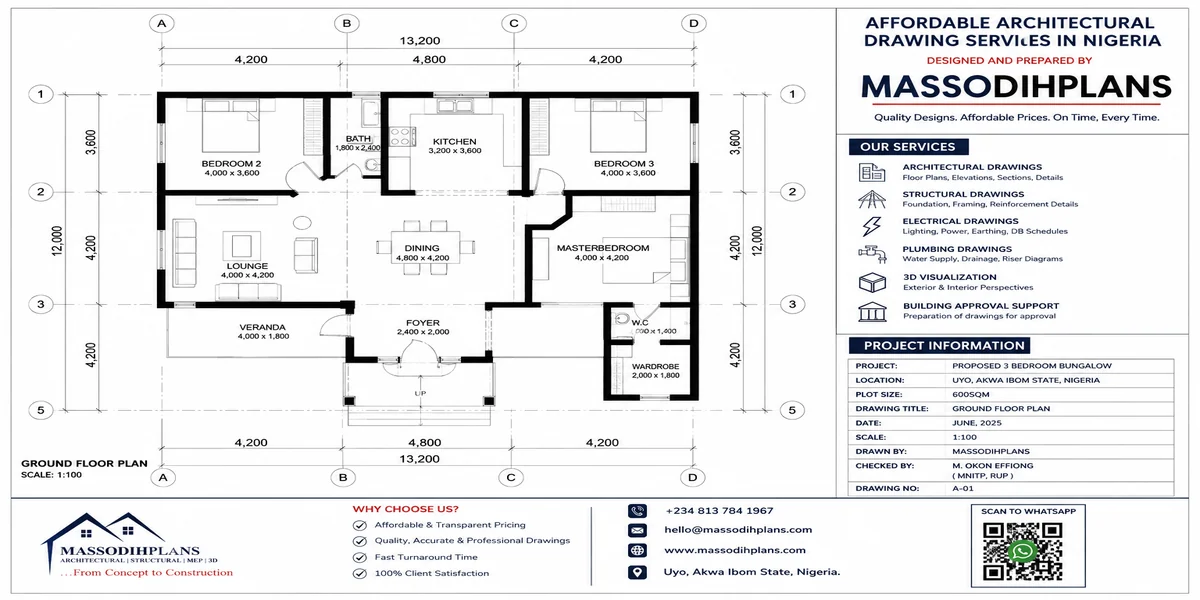
- Architectural drawings (prepared by a registered architect)
- Structural drawings (for multi-storey buildings)
- Proof of land ownership (C of O, deed of assignment, or governor’s consent)
- Application form and prescribed fees
Building without a permit is a risk that goes beyond the immediate enforcement exposure. When you eventually want to sell, mortgage, or transfer the property, the absence of approved drawings and a development permit creates serious legal complications.
For a step-by-step guide to building approval in Nigeria, our Plan School section breaks down the process in plain language.
Small Plot Development in Uyo: Making Limited Land Work
Many of the available plots in Uyo’s established corridors are 50 by 100 feet or smaller. This is not a problem if you plan properly.
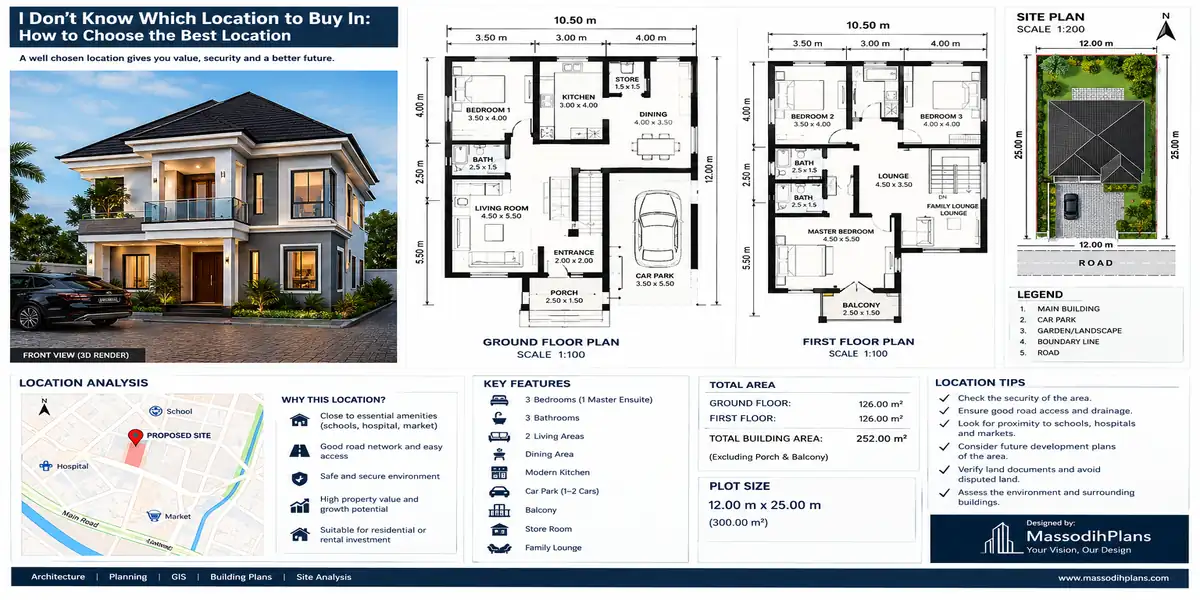
On a standard 50 by 100 feet plot in Uyo, after applying the required setbacks, a well-designed 3 bedroom bungalow or a modest duplex can fit comfortably. The key is engaging an architect who understands small-plot design, not just someone who will hand you a generic plan from a catalogue.
Things that small-plot design in Uyo must account for:
- Parking space (most planning approvals in Uyo now expect provision for at least one car)
- Generator house position (Uyo’s power supply is unreliable; your gen house is not optional)
- Drainage: your compound must be graded to drain away from the building and toward the road drain or a designated outlet
- Security: compound wall height, gate positioning, and external lighting
- Future expansion: even if you are building a bungalow today, a good structural engineer can design your foundation and roof beams to support a future second floor
Browse our Plans Library for small plot house designs that are specifically proportioned for Nigerian plot sizes.
Investment Returns: What Is Realistic in Uyo Right Now
Let me give you realistic numbers rather than the inflated promises you sometimes see in property marketing.
Rental yields by property type (estimated current ranges):
| Property Type | Annual Rent Range | Estimated Development Cost |
|---|---|---|
| Self-contained studio | ₦180,000 – ₦350,000 | ₦3.5M – ₦6M |
| 2-bedroom flat (standard) | ₦450,000 – ₦900,000 | ₦8M – ₦14M |
| 3-bedroom flat (well-finished) | ₦700,000 – ₦1,500,000 | ₦13M – ₦22M |
| 3-bedroom bungalow (owner) | ₦800,000 – ₦2M | ₦12M – ₦20M |
| Short-let serviced apartment | ₦15,000 – ₦40,000/night | ₦15M – ₦30M+ |
Key factors that push rent higher in Uyo:
- 24-hour borehole and overhead tank (Uyo’s public water supply is unreliable)
- Dedicated car parking space per flat
- Perimeter fence with good security
- Generating set with automatic changeover or inverter provision
- Quality tiles, fittings, and finishing (Uyo tenants, especially oil sector professionals, are quality-conscious)
- Location within or near established corridors
Land appreciation: In my experience tracking land values along Uyo’s growing corridors, land that was purchased 5 to 7 years ago in areas like parts of Nwaniba, Ikot Ekpene Road, and Idoro Road has appreciated between 150 and 300 percent depending on specific location and road development in that period. This is not guaranteed for future investment, but it reflects the trajectory of a genuinely growing city.
The Nigerian Reality Layer: What Uyo Property Articles Usually Skip
Flooding in Uyo is real and location-specific.
Several sections of the city, particularly in low-lying areas and near natural drainage channels, experience significant flooding during heavy rains. Before you buy any land in Uyo, visit the site during or just after heavy rain if you can. Ask neighbours directly about flooding history. A few dry-season site visits will not tell you what you need to know.
The electricity situation. Uyo is better than many Nigerian cities but still far from reliable. Any residential or commercial development that does not include a dedicated power backup solution will struggle to attract quality tenants. Budget for this from the beginning, not as an afterthought.
Road dust and surface water. Even on Uyo’s better roads, some access roads into residential areas are untarred and become difficult in wet season. Tenants with private cars, which is the target tenant profile for quality rentals, care about this more than many developers expect.
Neighbourhood character changes. Some corridors in Uyo that were purely residential five years ago now have significant commercial activity. Petrol stations, churches, commercial buildings, and markets are appearing in what were planned residential areas. This is a development control enforcement problem that Akwa Ibom State is working to address, but it is a reality you need to factor into your assessment of any specific location.
Frequently Asked Questions
Is land in Uyo affordable compared to other Nigerian cities?
Yes, relative to Lagos, Abuja, and Port Harcourt, land in Uyo is still significantly more affordable in most corridors. A plot that would cost ₦50 million in a comparable Lagos location might be available for ₦5 million to ₦15 million in Uyo depending on the specific corridor. This affordability gap is one of the strongest arguments for investing in Uyo now, before appreciation narrows it further.
What documents should I collect when buying land in Uyo?
At minimum, you need: a Deed of Assignment or Certificate of Occupancy, a registered survey plan with beacon numbers verified at the State Survey Department, Governor’s Consent (where the land has previously been assigned), and a Land Registry search result confirming no prior encumbrance or dispute on the property. For family land transactions, also obtain a family consent resolution document executed by the appropriate family heads.
How long does a building permit take in Akwa Ibom State?
Processing times vary but typically range from 4 to 12 weeks for standard residential applications when documentation is complete. Delays usually occur when drawings are incomplete, ownership documentation is unclear, or the plot is in an area with planning complications. Engaging a registered architect and town planner to handle your submission from the start significantly reduces processing delays.
Is short-let property a good investment in Uyo?
For the right property in the right location, yes. Uyo has a consistent flow of business visitors, oil sector contractors, government visitors, and event attendees. A well-managed, well-located serviced apartment can generate significantly higher income per square metre than a conventional long-let flat. The key success factors are location (accessibility to Four Lane, Aka Road, and the airport corridor), finish quality, and professional management.
What is the minimum plot size I can build on in Uyo?
The Akwa Ibom State Physical Planning regulations specify minimum plot sizes for different zones. In most residential zones, a plot of 300 square metres (approximately 30 by 10 metres) is the practical minimum for a detached residential building after applying setbacks. Smaller plots may be viable for terraced or semi-detached configurations. Always confirm applicable standards with the Ministry of Physical Planning for your specific location before purchasing.
Can I buy land in Uyo as a Nigerian in the diaspora?
Yes. Many Nigerians in the diaspora buy land and develop property in Uyo. The practical challenge is managing the transaction and development process from a distance. The safest approach is to engage a trusted professional locally (a registered architect, town planner, or estate surveyor) to conduct due diligence, supervise transactions, and manage construction on your behalf. Do not rely solely on family members who lack professional property experience, no matter how trustworthy they are.
Further Reading
- Best Places to Buy Land in Uyo for Fast Development and High Property Value
- 7 Cheapest Areas to Buy Affordable Land in Uyo Before Prices Increase
- 3 bedroom bungalow plans for standard Nigerian plots
- Small plot house designs that maximise space in Nigerian cities
- Nigerian Estate Master Plan for Small Plots: Modern Residential Layout Strategies That Maximize Space
- Duplex plans for 50 by 100 feet Nigerian plots
- Bungalow vs Duplex: Which is Better to build in Nigeria Today?
- How to Practically Draw and Design a Duplex for Small Plots
- Our professional architectural and town planning services in Uyo
- Home page: MassodihPlans Nigerian house plans and building guidance
Authority Reference: Akwa Ibom State Ministry of Lands.
Conclusion
Uyo is a real opportunity. Not the kind of inflated opportunity that property marketers shout about, but a genuine, infrastructure-backed, steadily appreciating market that rewards people who do their homework and move thoughtfully.
The corridors are clearly differentiated. Nwaniba, Ikot Ekpene Road, and Airport Road offer growth potential for patient investors. Aka Road and Shelter Afrique offer stability and premium-tenant access. Abak Road and Oron Road offer accessible entry points for rental development targeting working professionals.
But every single one of these opportunities is conditional on doing three things right:
First, verify your land thoroughly before you pay a significant sum. Second, plan your development properly with professionals who know local regulations and conditions. Third, manage your construction with discipline and professional oversight.
If you skip any of those three steps, Uyo’s opportunities become Uyo’s risks very quickly.
My team at MassodihPlans provides architectural design, site planning, development consultancy, and building approval services in Uyo and across Akwa Ibom State. If you are ready to buy land, design a house, get a building permit, or develop a property investment project in Uyo, we are here to walk through the process with you professionally.
Visit our Plans Library to see house designs proportioned for Nigerian plots, or go to Plan School to build your understanding of the building and approval process before you start spending money.
Uyo is growing. The question is whether your investment will grow with it or fall behind. Make the right decisions now.
Call to Action: Ready to buy land, design a house, or develop a property in Uyo? Contact MassodihPlans for a professional consultation. We help you buy land, verify it, plan, design and build properly from start to finish.