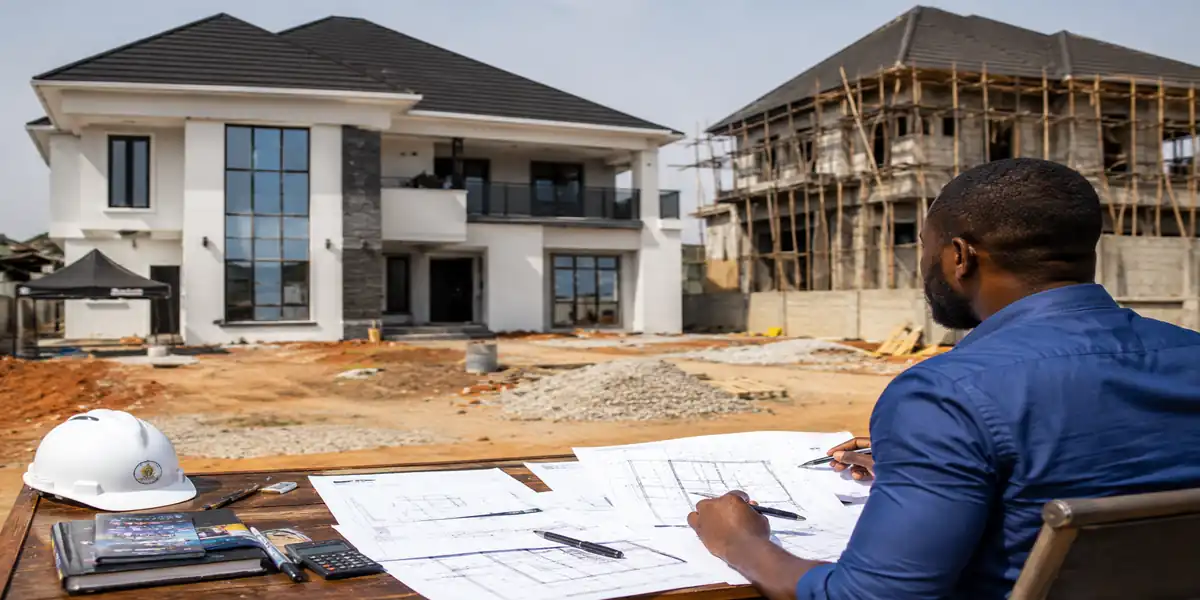
Building approval in Gombe State involves paying the applicable GOSUPDA processing fee, submitting the required building documents, and following the official assessment and approval process. For a standard four-bedroom bungalow on a plot of 500 square metres or less in Gombe metropolis, the fee is stated here as ₦30,000 under the revised 2021 charge schedule, although you should confirm with GOSUPDA that this rate remains current before making payment. Beyond this headline figure, the fee structure includes multiple building categories, a density classification system that can affect your charges, and an approval timeline that may differ from the official estimate. This guide explains how to identify your applicable fee, prepare your application documents, follow the approval steps, and avoid common mistakes that can cause delays or unnecessary expenses.
I approach this subject from the perspective of a town planner who understands how planning authorities assess applications and an architectural designer who has helped clients navigate document reviews, queries, and final approvals. Although I do not practise in Gombe daily, I understand the planning and building approval procedures used across Nigerian states. For this guide, the aim is to distinguish GOSUPDA’s published requirements from practical advice, so you can understand what to prepare, what to verify, and how to approach your building approval application with greater confidence.
Who Actually Approves Your Building in Gombe State
Every building approval conversation in Gombe runs through one agency: the Gombe State Urban Planning and Development Authority, known locally simply as GOSUPDA. GOSUPDA is the Gombe State government agency established to facilitate and enforce planning regulations for development across the state, and it issues and regulates building approval for individuals or organizations developing land there. Wikipedia
GOSUPDA’s mandate goes beyond stamping drawings. The authority also handles Right of Way custody for both federal and state roads, street naming and house numbering, signage and billboard approval, and issuing completion certificates once a project is finished. Their stated vision “a strict, fast-tracked and sustainable development control for a modern Gombe State” tells you something useful before you even submit a single document: this is an agency that wants speed and compliance at the same time, which shapes how the whole process is designed.
Before we get into fees and paperwork, let’s deal with the question hiding underneath almost every search for this topic.
Do You Actually Need Approval Before You Build in Gombe?
Yes and not as a formality you can quietly skip if your plot is small or your building is “just” a bungalow. Nigerian planning law, and GOSUPDA’s own guidelines, require building plan approval before construction starts, regardless of plot size or building type. The idea that small residential buildings or rural structures are exempt is one of the most persistent myths in Nigerian self-building, and it’s the reason so many finished houses end up with retrospective approval headaches, fines, or in worse cases demolition orders.
What does change with plot size and building type is the fee you pay and, in rural areas specifically, the structure classification. We’ll get to exactly how that works in a moment. First, let’s talk about what GOSUPDA actually wants to see from you.
The Documents GOSUPDA Will Ask You For
Based on GOSUPDA’s published application requirements and the standard practice followed by Nigerian urban planning authorities generally, here’s what you should have ready before you approach their office:
Evidence of title/ownership of the land your Certificate of Occupancy, Right of Occupancy, deed of assignment, or equivalent title document proving the land is legally yours to build on
Three (3) copies of your building plan GOSUPDA’s own guideline specifically asks for three copies, prepared and signed by a qualified architect
Survey plan of the plot, showing accurate boundaries and coordinates
Completed application form for building plan approval
Evidence of payment of the processing fee (we’ll calculate exactly what this should be in the next section)
Recent passport photographs of the applicant
Current site photographs, showing the plot as it stands before construction
Structural drawings where the project involves more than a simple single-storey bungalow
GOSUPDA’s application requirements, like most Nigerian planning authorities, can be revised without wide public notice, and requirements sometimes differ slightly for commercial, institutional, or multi-storey projects. Always confirm the current exact checklist directly with the GOSUPDA office Ministry of Works, Jekada Fari, Gombe before you prepare your documents, so you’re not making a second trip to add something you didn’t know you needed.
Now that you know what’s going into the folder, let’s talk about the part everyone actually wants to see clearly: the money.
How GOSUPDA Classifies Your Plot (and Why It Decides Your Fee)
Here’s something almost nobody explains about Gombe’s building approval fees: you can’t calculate what you’ll pay without first knowing which density category your plot falls into. GOSUPDA splits Gombe urban area residential development into four tiers, purely by plot size:
| Density Classification | Plot Size Range |
|---|---|
| High Density | Up to 500 sq. metres |
| Medium Density | 501 – 1,000 sq. metres |
| Low Density | 1,001 – 2,500 sq. metres |
| Very Low Density | 2,501 – 5,000 sq. metres |
| Housing Estate | Above 5,000 sq. metres (charged per appropriate category and number of houses) |
This classification isn’t just bureaucratic labelling it’s the first input into the fee formula you’re about to use. Note something important here before we move further: “High Density” in Gombe’s fee schedule simply means a small plot. If you own 500 square metres or less which describes the overwhelming majority of urban residential plots bought by first-time builders and small-plot homeowners across Nigeria you are automatically in the cheapest fee bracket GOSUPDA operates. We’ll return to why that matters for you specifically a little later.
The Complete GOSUPDA Building Plan Fee Schedule (Revised, Effective 1st January 2021)
This is the actual schedule published by GOSUPDA, and to my knowledge, no other article on building approval in Gombe has laid it out this completely in one place. All figures are in Naira (₦).
Residential Development Gombe Urban Area
| Plot Density | 1 Bedroom | 2 Bedrooms | 3 Bedrooms | 4 Bedrooms | Extra Bedroom |
|---|---|---|---|---|---|
| High Density (≤500 sqm) | ₦15,000 | ₦20,000 | ₦25,000 | ₦30,000 | +₦5,000 |
| Medium Density (501–1,000 sqm) | ₦15,000 | ₦20,000 | ₦30,500 | ₦35,000 | +₦5,000 |
| Low Density (1,001–2,500 sqm) | ₦25,000 | ₦30,000 | ₦40,000 | ₦50,000 | +₦10,000 |
| Very Low Density (2,501–5,000 sqm) | ₦25,000 | ₦30,000 | ₦40,000 | ₦50,000 | +₦10,000 |
Rooming-Type Residential (mini-flats / lodging rooms)
| Rooms | Rate |
|---|---|
| First 5 rooms | ₦10,000 per room/parlour |
| Next 5 rooms (6th–10th) | ₦5,000 per room |
| Beyond 10 rooms | Additional ₦5,000 per room |
Walling or Fencing Without an Accompanying Building Plan
| Type | Fee |
|---|---|
| Wire fencing | ₦50,000 |
| Railing | ₦50,000 |
| Block walling | ₦50,000 |
| Perimeter walling exceeding 200 metres | ₦100,000 |
Commercial Development
| Type | Rate |
|---|---|
| Shop (not exceeding 2m x 3m) | ₦15,000/shop |
| Shop (above 2m x 3m) | ₦20,000/shop |
| Warehouse | ₦1,000/m² |
| Motel | ₦500/m² |
| Hotel | ₦1,000/m² |
| Mechanical/other workshop | ₦500/m² |
| Bank/financial institution | ₦2,500/m² |
| Office | ₦500/m² |
| Filling station | ₦75,000 per pump |
| Cinema house | ₦150,000 |
| Supermarket | ₦1,000/m² |
| Food canteen | ₦50,000 |
| Property walling/fencing | ₦50,000 |
Institutional Development
| Type | Fee |
|---|---|
| Nursery/pre-nursery | ₦50,000 |
| Primary school | ₦100,000 |
| Post-primary school | ₦150,000 |
| Lower institution (tertiary) | ₦200,000 |
| Upper institution (tertiary) | ₦300,000 |
| Mosque/church | ₦30,000 |
Industrial, Health, and Other Urban/Rural Categories
| Type | Fee |
|---|---|
| Industrial development | ₦1,000/m² |
| Health facilities (hospital, clinic, pharmacy, etc.) | ₦1,000/m² |
| Traditional house (rural areas) | ₦5,000 |
| Modern structure (rural areas) | ₦10,000 |
| Rural commercial | ₦70/m² |
| Block moulding site | ₦100,000 (urban) / ₦50,000 (rural) |
| Borehole for water supply | ₦100,000 |
Notice that rural areas have their own, much lower flat fees ₦5,000 for a traditional house and ₦10,000 for a modern structure completely separate from the urban density tiers above. If your plot is outside Gombe metropolis proper, don’t assume the urban fee schedule applies to you; ask specifically which schedule your location falls under before budgeting.
As my elders would joke back home: “Government no dey collect bribe for building approval na only correct fee dem dey collect, and even that one, some agent go still find way add extra ‘processing wahala’ fee for you if you no sabi the real figure.” Knowing the actual published numbers, like the table above, is exactly how you avoid paying for imaginary “wahala.”
The Building Approval Fee Formula: Calculate Yours Before You Call Anyone
Now let’s turn that table into something you can actually compute yourself. For a standard residential building, the GOSUPDA fee formula works like this:
Total Fee = Base Fee (by density tier and bedroom count) + [Extra Bedroom Rate × (Total Bedrooms 4)], if bedrooms exceed 4
Worked Example 1 Small Plot, Modest Home
You own a 450 sqm plot (High Density tier) and are building a 4-bedroom bungalow.
→ Total Fee = ₦30,000 (flat, no extra bedrooms)
Example 2 — Small Plot, Larger Family Home
Same 450 sqm plot, but you add a 5th bedroom.
→ Total Fee = ₦30,000 + (₦5,000 × 1) = ₦35,000
Worked Example 3 — Medium Density Plot
You own a 750 sqm plot (Medium Density tier) and are building a 3-bedroom house.
→ Total Fee = ₦30,500
Worked Example 4 — Low Density Plot, Larger Home
You own a 1,500 sqm plot (Low Density tier) with a 6-bedroom house (4-bedroom base + 2 extra).
→ Total Fee = ₦50,000 + (₦10,000 × 2) = ₦70,000
For rooming-type developments (common with boarding-style rentals or staff quarters), the formula shifts slightly:
Total Fee = (First 5 rooms × ₦10,000) + (Next 5 rooms × ₦5,000) + (Rooms beyond 10 × ₦5,000)
Worked Example 5 — 12-Room Lodge
= (5 × ₦10,000) + (5 × ₦5,000) + (2 × ₦5,000) = ₦50,000 + ₦25,000 + ₦10,000 = ₦85,000
Running your own numbers through these formulas before you visit GOSUPDA means you walk in knowing exactly what to expect which, as anyone who has dealt with a government office in Nigeria will tell you, changes the entire tone of the conversation.
With your fee calculated, let’s walk through what actually happens after you submit.
Step-by-Step: The Gombe Building Approval Process
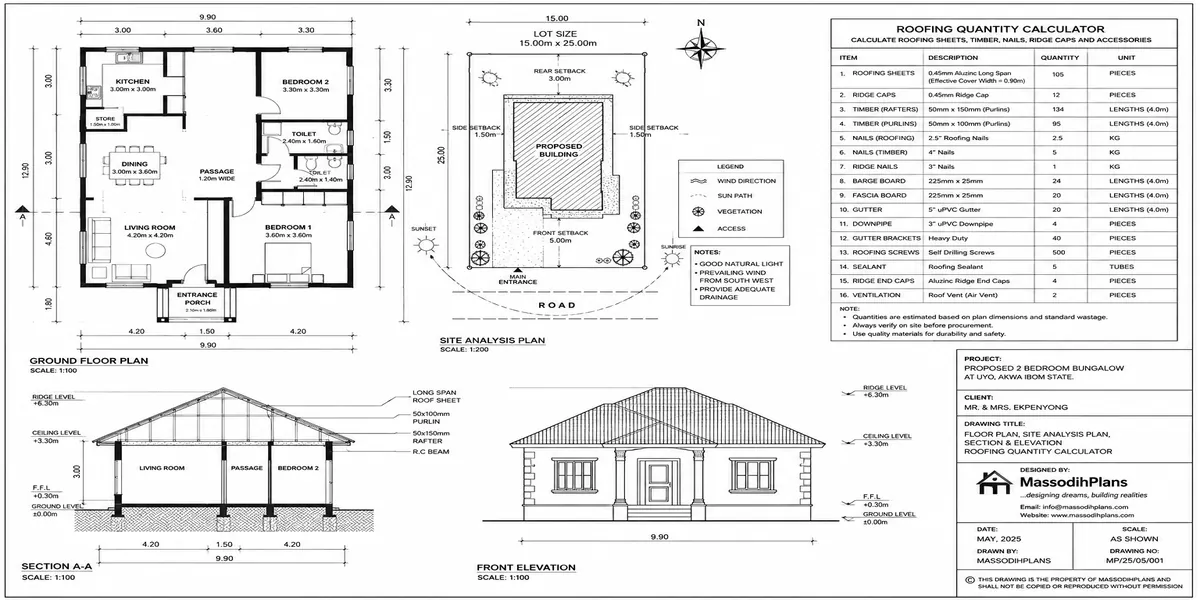
Prepare your documents and drawings. Commission your building plan from a qualified architect, get your survey plan ready, and gather your title documents and photographs as listed earlier.
Complete and submit your application at the GOSUPDA office, along with the three required copies of your building plan.
Pay the processing fee, calculated using the density tier and formula above, and retain your payment evidence.
Technical assessment. GOSUPDA’s planning officers review your drawings against development control standards setbacks, plot coverage, and the zoning classification of your specific location.
Site verification, where applicable, confirming that what’s on the drawing matches the actual plot conditions.
Approval and collection of your stamped building plan, which becomes your legal authorization to begin construction.
The Official 24-Hour Promise vs. the Real-World Timeline
GOSUPDA’s own published guideline states that building approval can be obtained within 24 hours of submitting all required documents. I want to be straightforward with you here, the way I would with a client sitting across from me: treat that 24-hour figure as the best-case scenario, not the number to build your construction schedule around.
In practice, across Nigerian state planning authorities generally, a clean application correct documents, accurate drawings, no queries raised can indeed move fast. But any missing document, any drawing that doesn’t match development control standards, or any backlog in the office on a given week will stretch that timeline to days or occasionally weeks. The honest practitioner’s advice: submit a complete, accurate application the first time, and budget a week or two of buffer into your construction start date rather than assuming next-day approval. As we like to say with a smile in this business: “Oga, 24 hours wey government talk, na like say danfo conductor talk ‘we dey come now now’ sometimes na true, sometimes e go still gather passenger small small first.”
Now, here’s a layer that connects directly back to why this matters for the kind of builder I write for most.
Small Plot Owners in Gombe: Why “High Density” Actually Works in Your Favour
If you’re building on a plot of 500 square metres or less which describes the vast majority of first-time homeowners, young families, and modest self-builders across Nigeria you fall into GOSUPDA’s High Density classification. Look again at the fee table above: it is, bedroom-for-bedroom, the cheapest residential tier GOSUPDA charges. A 4-bedroom bungalow on a 450 sqm plot pays ₦30,000, while the identical house on a 1,500 sqm Low Density plot pays ₦50,000 for the same building.
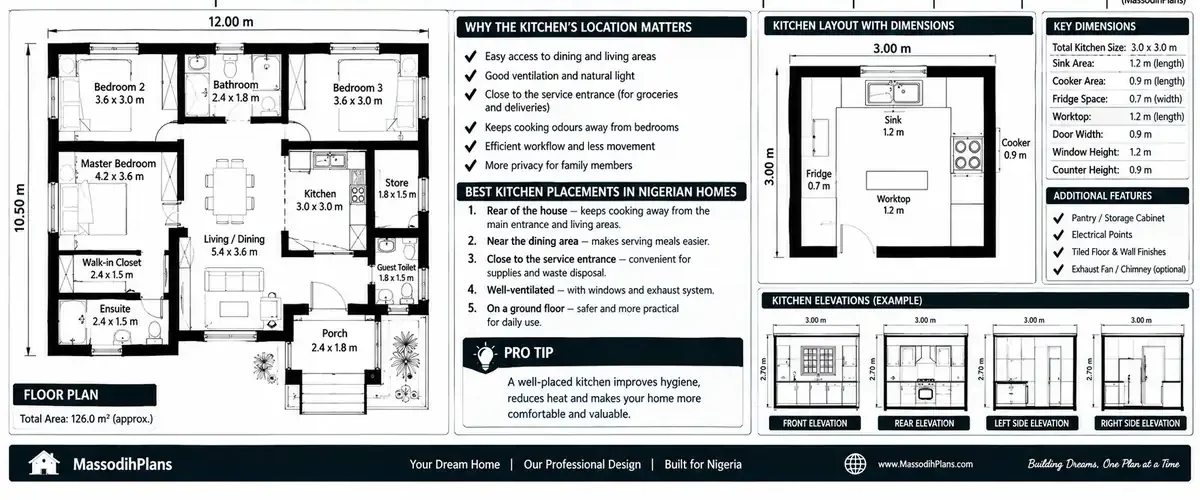
This matters beyond the fee itself. Small plots force genuinely disciplined design: efficient room layouts, careful setback planning, and floor plans with no wasted space, because there’s simply less land to work with. That discipline is exactly the design philosophy behind the house plans and layout guidance we focus on building well within a small footprint isn’t a compromise, it’s a design skill, and Gombe’s own fee structure quietly rewards it financially as well.
If you’re choosing between land options in Gombe and your budget is tight, factor the density-tier fee difference into your land decision too not just the purchase price per square metre. A smaller plot, well-designed, can genuinely cost less at every stage, from approval fee to foundation size.
Building in Gombe from Abroad: A Diaspora Playbook
A growing number of Nigerians planning a home in Gombe are doing so from Houston, Manchester, Frankfurt, Dubai, Reykjavik, Luxembourg City, Geneva, Doha, Toronto, Sydney, or Singapore managing a construction project thousands of kilometres and several time zones away from the actual site. If that’s you, a few things make this process smoother:
Appoint a registered architect or project supervisor physically present in Gombe to handle document preparation, submission, and follow-up with GOSUPDA on your behalf a Power of Attorney document, properly executed and often notarized at a Nigerian embassy or consulate in your country of residence, is typically needed to authorize this.
Confirm title documents before you commit funds, ideally through an independent verification rather than relying solely on a family member’s assurance land disputes discovered after money has been sent are far harder to resolve from overseas.
Plan around time zone overlap.
Gombe runs on West Africa Time (WAT), which is the same as UK and most of continental Europe in winter, one hour behind during European summer time, five to six hours ahead of US Eastern Time, and several hours behind UAE, Qatar, Singapore, and Australia schedule calls with your site representative accordingly rather than assuming business-hours overlap that doesn’t exist.
Send approval fees and professional fees through traceable channels, and request a receipt and photograph of the stamped application as proof, since you won’t be there to witness the transaction yourself.
Build in a buffer for document delays caused by distance a missing signature or document that would take you an hour to fix locally can take days when it has to be couriered or scanned across continents.
And yes, even diaspora clients appreciate a bit of home humour in the middle of a serious conversation: as the saying goes, “When you dey abroad dey send money come build house for Naija, na only two people sure say the money reach your mama, and GOSUPDA cashier.”
Common Mistakes That Delay or Derail Gombe Building Approval
Submitting only one or two copies of the building plan instead of the required three
Mismatched plot size between the survey plan and the building plan, which immediately triggers a query
Assuming rural fee rates apply within Gombe metropolis, or vice versa, and budgeting the wrong amount entirely
Starting construction before the stamped approval is actually collected, relying only on the submission receipt this is not the same as approval and carries real enforcement risk
Ignoring setback and density requirements tied to your plot’s classification, which can cause rejection even when the fee and documents are otherwise in order
What Happens If You Build Without Approval
Building without GOSUPDA approval exposes a project to stop-work orders, fines, and in persistent cases, demolition the same enforcement risk that exists across Nigerian state planning authorities generally. Beyond the legal exposure, an unapproved building creates serious complications later: difficulty obtaining a certificate of completion, problems during resale or mortgage, and disputes with neighbours or the authority over setback violations that were never caught at the design stage because there was no design stage reviewed by anyone qualified. The fee amounts in this guide are genuinely modest set against that risk.
Frequently Asked Questions
How much does building approval cost in Gombe State?
It depends on your plot’s density classification and bedroom count from ₦15,000 for a single-bedroom structure on a small plot up to ₦50,000 or more for larger homes on bigger plots, using the formula and tables above.
How long does GOSUPDA take to approve a building plan?
Officially, 24 hours from submission of a complete application. In practice, allow for a longer, more realistic window, especially if any document needs correction.
Do I need approval to build a traditional house in a rural part of Gombe State?
Yes. Rural areas have their own, lower flat fee (₦5,000 for traditional structures, ₦10,000 for modern ones), but approval is still required.
Can I get building approval in Gombe while living abroad?
Yes, typically through a Power of Attorney authorizing a representative usually your architect or a trusted agent to handle submission, queries, and collection on your behalf.
What is the difference between “High Density” and “Low Density” in GOSUPDA’s fee schedule?
It’s purely a plot-size classification, not a description of your neighbourhood’s population. High Density means a plot of 500 sqm or less; Low Density means 1,001–2,500 sqm and the classification directly determines which fee tier you pay.
Where This Actually Leaves You
Building approval in Gombe isn’t the mysterious, unpredictable process it can feel like from the outside it runs on a published fee schedule, a documented classification system, and a defined (if optimistic) timeline, and now you have all three laid out with real numbers and worked examples. Whether you’re building on a small plot in Gombe metropolis or managing the project from Luxembourg or Doha, the path is the same: get your classification right, calculate your fee honestly, assemble a complete document folder the first time, and budget realistic time rather than the best-case promise.
If you’re still at the design stage, our Plans Library has house plans suited to small and medium plots like those in Gombe’s High and Medium Density tiers, and Plan School walks you through reading and evaluating a building plan before you commission one. For direct support getting your drawings and documentation approval-ready, our Services page outlines how we work with clients from design through to submission. You can also explore more state-specific building approval guides on our Homepage.
- Building Approval Fees in Maiduguri: Exact Costs, Charges & Approval Process Explained
- Cost of Building a House in Enugu: Complete Budget Guide, Prices & Real Costs
- How Much Does It Cost to Build a 4 Bedroom Duplex in Minna?
- Cost of Building a Bungalow in Osogbo: Full Construction Guide
- Jalingo Building Approval Process: Steps, Documents and Fees
Author
Massodih Okon is a Nigerian built-environment professional with academic and professional experience in urban and regional planning, geography, architectural design, Landscape Design, GIS and land development.
He holds a Master’s degree in Urban and Regional Planning from the University of Uyo and a first degree in Geography and Regional Planning.
Through MassodihPlans, he publishes practical guides on Nigerian house plans, building design, physical planning, site planning, development approval and residential construction. Read the full author profile →