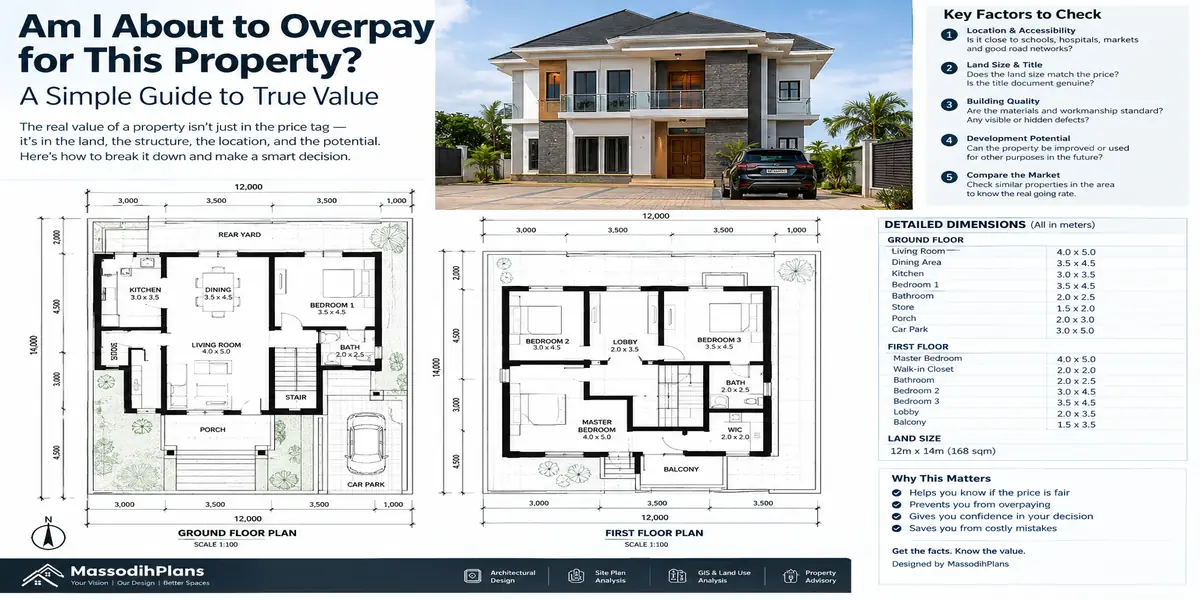
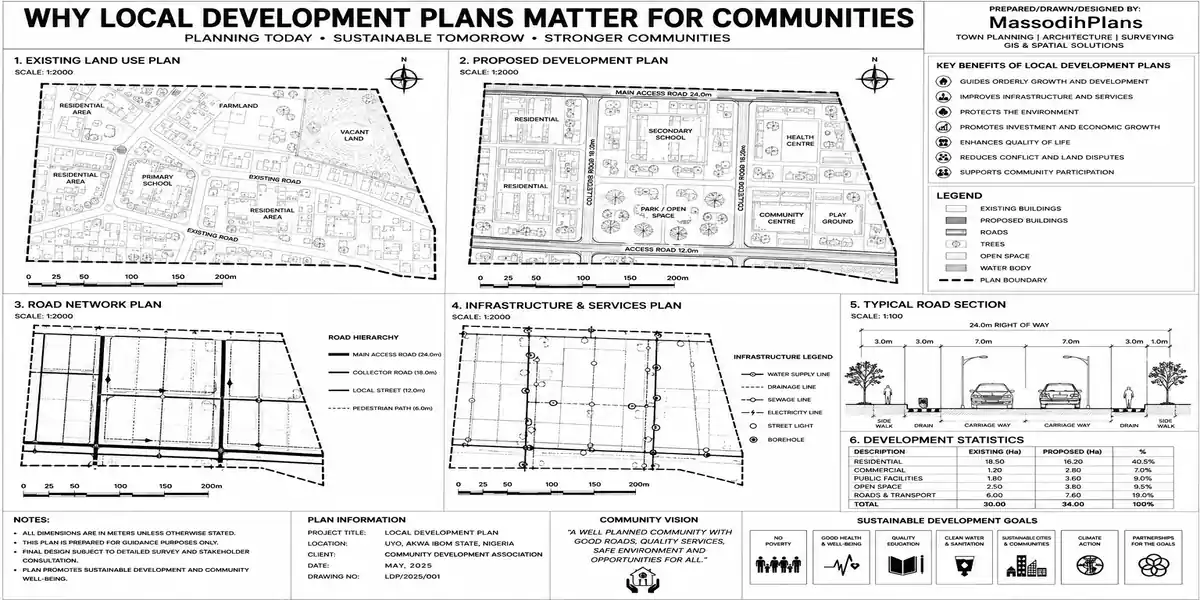
Last Updated: July 2026: Prices reflect current Cross River State material and labour rates.
Before You Buy That Plot in Calabar, Read This: The Real Cost of Building a Modern Bungalow (Updated Guide)
Contemporary doesn’t have to mean complicated or expensive
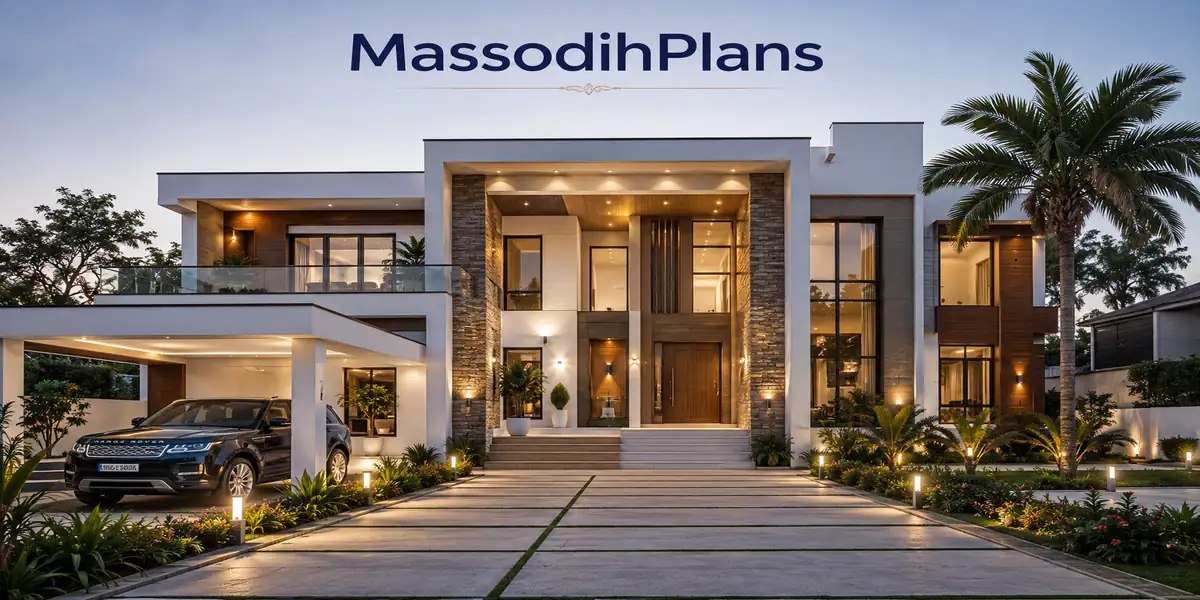
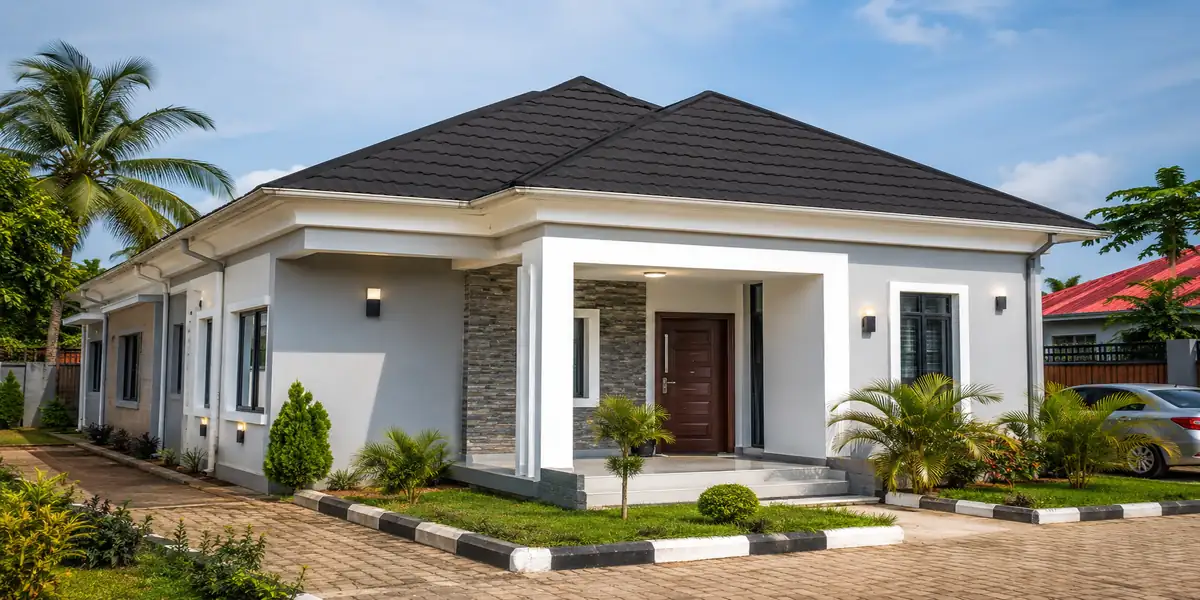
A completed modern bungalow project in Calabar illustrating the standard of finish achievable at mid-range budget levels.
Building a modern bungalow in Calabar currently costs between N9 million and N85 million, depending on the size, location corridor, and quality of finish you choose. A two-bedroom bungalow on a modest plot around 8 Miles or Ikot Ansa can come in around N12 million to N16 million if you manage costs carefully. A four-bedroom modern bungalow with contemporary finishes in State Housing or along Atekong Drive can push past N60 million. This is not theory. These are figures I work with regularly on client projects across Cross River State.
The problem most people face is that they get a rough figure from a neighbour, a returnee relative, or a contractor, and that figure is almost always wrong. It is either too low and they run out of money at roof level, or so inflated they abandon the project before it starts. Neither outcome helps you or the community we are trying to build here in Calabar.
This guide gives you a clear, location-specific, and honest breakdown of what building a modern bungalow actually costs in Calabar today. I cover building types, corridor differences, materials, labour, approvals, hidden costs, ownership costs after completion, and practical advice for managing your project from start to finish.
Why Building Costs in Calabar Are Different from Other Nigerian Cities
Calabar is not Uyo. It is also not Port Harcourt or Aba, even though it borrows material supply lines from all three. The city has its own terrain challenges, contractor culture, and regulatory environment. Anyone quoting you Port Harcourt or Lagos prices for a Calabar project without adjustment is either inexperienced or not being honest with you.
Here is what drives building costs specifically in Calabar:
Material supply: Most cement, iron rods, and roofing materials come through Port Harcourt or are shipped directly, given Calabar’s port access, which occasionally works in the city’s favour on transport cost. Still, transport adds between 5 and 12 percent to base material prices depending on the season and road conditions.
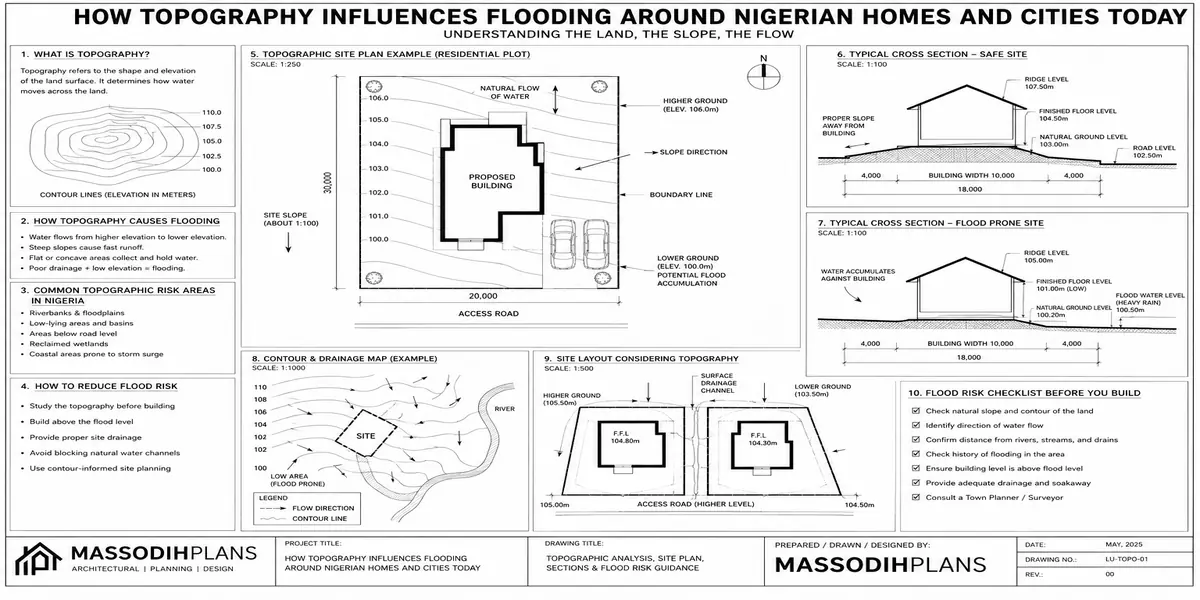
Terrain and soil conditions: Calabar’s undulating terrain, especially around Anantigha, Diamond Hill, and parts of Ika Ika, often requires additional excavation, retaining work, or foundation reinforcement that flat-plot cities do not face as frequently.
Labour availability: Calabar has a solid pool of experienced artisans, partly shaped by the city’s long construction history. During peak dry season (November to April), daily labour rates rise by 15 to 25 percent as demand increases.
Regulatory costs: Building approval fees under the Cross River State Urban Development Authority are not always predictable and vary by project type, plot size, and corridor.
Drainage and flooding realities: Low-lying areas near Calabar River, parts of Anantigha, and sections of 8 Miles require deeper foundations and serious drainage engineering that add meaningful cost to a project.
Contractor management culture: Calabar contractors, like most Nigerian cities, often juggle multiple sites at once. Without proper supervision, this leads to quality lapses and delays that translate directly into cost overruns.
From My Experience: On a project I worked on around Ikot Ansa, the client received three separate contractor quotations for the same three-bedroom modern bungalow design. The quotes ranged from N19 million to N34 million. The variance was not fraud. It reflected different assumptions about excavation depth, material grade, and supervision frequency. Understanding what drives cost is the only way to compare quotes intelligently.
Building Cost Estimates for Modern Bungalows in Calabar
These are realistic estimates based on current material prices and labour rates. Figures cover construction cost only. They do not include land purchase, professional fees, or building approval costs, which I address separately below.
| Building Type | Size | Low Budget (N) | Mid-Range (N) | High-End (N) |
|---|---|---|---|---|
| 1-Bed Bungalow | 45-55 sqm | 9M – 12M | 12M – 16M | 16M – 20M |
| 2-Bed Bungalow | 75-95 sqm | 14M – 18M | 18M – 24M | 24M – 32M |
| 3-Bed Bungalow | 110-140 sqm | 20M – 27M | 27M – 36M | 36M – 48M |
| 4-Bed Modern Bungalow | 160-200 sqm | 32M – 42M | 42M – 58M | 58M – 85M |
| Self-Contain Apartment x4 | 30 sqm each | 20M – 26M | 26M – 34M | 34M – 46M |
Table 1: Estimated building costs for modern bungalows in Calabar, Cross River State. Figures cover structural and finishing work only.
Cost Per Square Metre Quick-Reference
Quick Reference: Cost Per Square Metre in Calabar
- Low budget: N175,000 – N220,000 per sqm
- Mid-range: N220,000 – N290,000 per sqm
- High-end: N290,000 – N420,000 per sqm
Use this to sanity-check any contractor quote against your building’s actual floor area a fast way to spot a quote that’s dangerously low or suspiciously inflated before you commit to it.
How Location Affects Your Building Cost in Calabar
How Calabar Compares to Other Nigerian Cities
People searching for building costs often start broad “how much does it cost to build in Nigeria” before narrowing down to their specific city. Here’s where Calabar sits in that wider picture:
| City | 3-Bed Bungalow (Mid-Range) |
|---|---|
| Lagos | N32M – N45M |
| Abuja | N30M – N42M |
| Port Harcourt | N28M – N38M |
| Calabar | N27M – N36M |
| Uyo | N24M – N32M |
Calabar sits in a comfortable mid-range position nationally meaningfully cheaper than Lagos or Abuja, but with better terrain and material access than several neighbouring states. If you’re comparing cities before deciding where to build, this is where Calabar earns its place.
Important note on these figures: Low budget means basic block construction with minimal ornamentation, standard tiles, and functional finishes. Mid-range adds quality tiling, plaster finishing, better roofing, and contemporary architectural detailing such as clean parapets, large window openings, and simple feature walls. High-end assumes architectural supervision, quality sanitary ware, imported tiles or stone, feature designs, and consistent quality control throughout.
How Location Affects Your Building Cost in Calabar
Where your plot sits within Calabar affects your total project cost more than most people realise. I have broken this down corridor by corridor based on what I observe across active projects.
State Housing and Federal Housing Estates
These are among the most established and desirable residential corridors in Calabar. Both estates carry a reputation for planned layouts, defined plot sizes, and reasonably mature infrastructure, which simplifies design and approval. Building quality expectations here are high, and anything below mid-range finish is likely to affect resale value.
Expect to budget at the mid to high end of any range for these corridors.
Atekong Drive and Marian Road
Atekong Drive has become one of the most desirable modern residential addresses in Calabar, with strong demand for contemporary bungalow and duplex designs. Marian Road carries a mix of commercial and residential development, with good road access and mature infrastructure. Both corridors support premium construction, but Atekong Drive in particular commands the strongest resale and rental value for well-finished modern bungalows.
Ekorinim, Ikot Ansa, and Ika Ika
These corridors offer some of the best value land opportunities in Calabar right now. Ekorinim is rapidly developing with improving infrastructure. Ikot Ansa carries strong residential demand and reasonable land prices. Ika Ika, while requiring more attention to terrain and foundation work due to its undulating landscape, offers genuine value for buyers willing to plan around the topography.
Building costs here can come in toward the lower end of the ranges above if you engage the right contractor and budget properly for any extra foundation work the terrain requires.
Anantigha and Diamond Hill
Anantigha carries scenic appeal given its proximity to the waterfront, but low-lying sections require serious drainage planning and higher foundation costs. Diamond Hill’s elevation offers good drainage naturally but demands more excavation and retaining wall work in places. Both corridors reward buyers who commission a proper soil and site assessment before finalising a house design.
8 Miles and Odukpani Road Corridor
This corridor is seeing significant residential growth due to relatively affordable land and improving road access. It offers strong opportunity for rental income development, particularly self-contained apartments, though building costs in the more low-lying pockets should include a realistic drainage allowance.
Investment Insight: In my assessment, Ekorinim and the 8 Miles corridor currently offer the best ratio of land cost to rental return for residential apartment development in Calabar. A four-unit self-contained apartment block on a standard plot can generate between N4.5 million and N7 million in annual rental income at current market rates, against a total investment of N28 million to N44 million.
Real Case Study by Corridor
What Actually Happened on Three Recent Calabar Projects
Ekorinim: A client budgeted N26 million for a 3-bedroom bungalow, expecting flat, easy terrain. A soil test revealed a soft pocket requiring extra foundation reinforcement, adding N1.8 million before block work even started. The lesson: even in “easier” corridors, always commission a soil test before finalizing your budget.
Diamond Hill: A client’s plot required a retaining wall due to the slope, something their initial contractor quote never mentioned. The final structural cost came in 22 percent above the original estimate, entirely due to unaddressed terrain work.
8 Miles: A client building a 4-unit self-contain block underestimated drainage needs for a slightly low-lying section of the plot. After one heavy rainy season, they had to retrofit a proper perimeter drain at a cost that would have been a fraction of that if included in the original design.
The pattern across all three: the surprises weren’t in the building itself. They were in what the land needed before building could safely begin.
What Else You’re Really Buying: Amenities by Corridor
Land price and soil conditions matter, but so does what surrounds your plot every single day. Here is what to weigh corridor by corridor:
State Housing and Federal Housing: Strong access to established schools, government offices, and mature markets, which partly explains the premium pricing here.
Atekong Drive and Marian Road: Excellent access to private schools, newer hospital facilities, and commercial conveniences, supporting the higher cost of building in these corridors.
Ekorinim, Ikot Ansa, Ika Ika: Amenity access is improving quickly but still uneven. Confirm the specific distance to a functioning school and reliable clinic before committing to a plot, as this varies street by street.
Anantigha and Diamond Hill: Scenic and increasingly residential, though families should verify proximity to healthcare and schooling, as some pockets are still filling in.
8 Miles and Odukpani Road: Convenient for those needing quick access to the city’s outskirts and improving commercial activity, though amenity density is still catching up to the older corridors.
I always tell clients: don’t just ask what the land costs. Ask what your daily life will look like once you’re living there. A slightly more expensive plot near a good school can save you far more in time, fuel, and stress than the price difference ever costs you upfront.
Full Cost Breakdown: What You Are Actually Paying For
Many people only think about the cost of blocks and cement. A complete building project has multiple cost layers. Here is what you are actually paying for when you build a modern bungalow in Calabar.
1. Land Acquisition Cost
Land prices in Calabar vary enormously by location. The following are approximate ranges for residential plots as of 2025 to 2026:
- State Housing, Federal Housing, Atekong Drive: N6 million to N28 million per plot (depending on size and proximity to infrastructure)
- Marian Road, Diamond Hill: N4 million to N18 million
- Ekorinim, Ikot Ansa: N1.8 million to N9 million
- 8 Miles, Odukpani Road corridor: N900,000 to N4.5 million
Always verify land with a licensed surveyor and confirm title with the Cross River State Lands Bureau before paying any money. Family land disputes are common in Calabar. Do not bypass this step regardless of how trusted your seller appears to be.
Warning Signs: How to Avoid Land and Contractor Fraud in Calabar
This is one section I want you to read slowly, save, and refer back to before you commit any money.
Watch out for these red flags when buying land:
- The seller cannot produce an original survey plan, only a photocopy or a “coming soon” promise
- On family land, the seller cannot name or produce consent from all co-owners in writing
- The price is noticeably below the going rate for that corridor, with no clear explanation
- The seller pressures you to pay quickly “before another buyer takes it”
- Title documents show inconsistencies in names, boundaries, or plot dimensions compared to what you were shown on site
Watch out for these red flags when hiring a contractor:
- Refusal to work from a written contract with a detailed bill of quantities
- Requesting mobilisation above 30 percent of total contract value
- Inability or reluctance to show you two previously completed projects
- No registered business name or tax identification when asked
- Verbal-only promises about material quality, with resistance to putting specifications in writing
I have seen this issue firsthand, more than once. The pattern is always the same: pressure to move fast, resistance to documentation, and a story that sounds reasonable until you ask one specific question too many. Slow down. Verify everything. A few extra days of due diligence has saved every client of mine who took it seriously.
2. Survey and Documentation Costs
You will need a Certificate of Occupancy (CofO) or Right of Occupancy for secure land ownership. If your land has a deed of assignment only, budget for conversion. Surveying fees in Calabar range from N160,000 to N520,000 depending on plot size and complexity. Processing a CofO can cost between N320,000 and over N1.1 million when you include all government charges and professional processing fees.
3. Building Approval Costs
You cannot legally build in Calabar without obtaining a development permit from the Cross River State Urban Development Authority and the relevant local government area. The approval process involves:
- Submission of architectural and structural drawings prepared by a registered architect and engineer
- Payment of application fees based on building type and floor area
- Site inspection visits
- Approval of drainage and setback compliance
- Issuance of development permit
Total building approval costs in Calabar for a standard residential project typically range from N220,000 to N850,000. Complex or multi-storey projects can exceed N1.1 million in regulatory fees. Building without approval exposes you to demolition notices, fines, and loss of investment. I have seen this happen. It is not worth the risk.
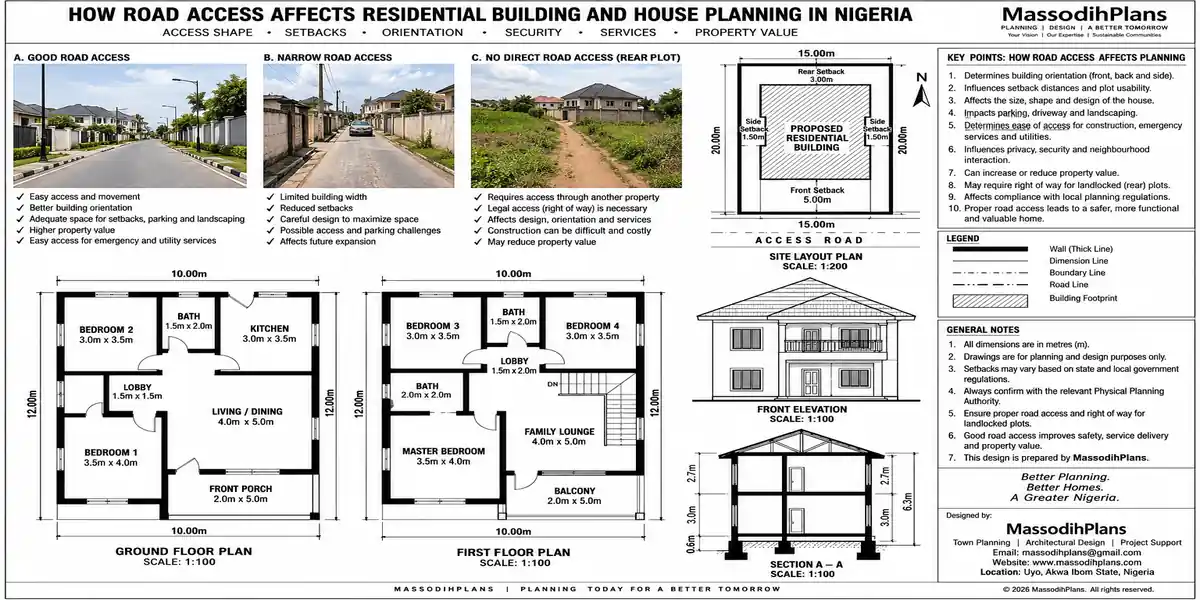
Key setback requirements in Calabar for residential development: front setback minimum 3 metres from plot boundary to wall, side setbacks minimum 1.5 metres, rear setback minimum 3 metres. These vary by road classification and development zone, and terrain-sensitive corridors like Ika Ika and Diamond Hill may carry additional conditions related to slope and drainage. Your town planner will advise on the specific requirements for your plot.
4. Professional Fees
For a project in Calabar, you should budget for:
- Architectural design and drawings: N160,000 to N850,000 depending on project size
- Structural engineering: N110,000 to N420,000
- Town planning consultancy: N85,000 to N260,000
- Quantity surveyor (optional but valuable for cost control): N100,000 to N320,000
At MassodihPlans, we offer comprehensive design and town planning approval packages for clients across Cross River State. Our services cover architectural design, building approval, and site development planning from a single professional team.
5. Construction Costs: Materials
Materials typically account for 55 to 65 percent of your total construction budget. The following are current approximate prices for key materials in Calabar:
| Material | Unit | Approx. Cost (N) |
|---|---|---|
| Dangote Cement (50kg) | Per bag | 8,700 – 10,200 |
| Blocks (9-inch hollow) | Per unit | 460 – 620 |
| Iron rods (12mm) | Per length | 4,600 – 5,600 |
| Roofing sheets (aluminium) | Per metre | 3,600 – 5,100 |
| Plumbing pipes (3/4 inch) | Per length | 1,850 – 2,600 |
| Electrical cable (2.5mm) | Per metre | 620 – 920 |
| Floor tiles (60×60) | Per sqm | 4,600 – 7,200 |
| River sand | Per tipper | 58,000 – 78,000 |
| Sharp sand | Per tipper | 62,000 – 82,000 |
| Granite (3/4 inch) | Per tipper | 92,000 – 125,000 |
Table 2: Approximate material costs in Calabar, Cross River State. Prices fluctuate with market conditions. Verify with local suppliers before finalising your budget.
6. Labour Costs
Labour accounts for 25 to 35 percent of construction cost. In Calabar, daily labour rates are approximately:
- Block layer (skilled): N8,200 to N15,500 per day
- Carpenter (form work and roof): N8,200 to N14,500 per day
- Iron bender/steel fixer: N8,200 to N13,500 per day
- Tiler (floor and wall): N8,200 to N14,500 per day
- Plumber: N8,200 to N15,500 per day
- Electrician: N8,200 to N15,500 per day
- General labourer: N3,600 to N6,200 per day
Labour costs increase during dry season when multiple projects compete for the same pool of skilled artisans. Starting foundation work early in the dry season while finishing work runs into the wet season can help manage this cost pressure.
7. Hidden and Overhead Costs
This is where many building projects go wrong in Calabar. Hidden costs rarely included in initial contractor quotes include:
Water supply for construction: If there is no borehole on site, water trucking can cost N42,000 to N85,000 per month during active construction
Perimeter fencing (required before approval in many zones): N420,000 to N1.6 million depending on plot size and fence type
Generator for power tools: N2,200 to N5,200 per day in fuel during critical construction phases
Security for the construction site: N32,000 to N62,000 per month for a nightwatchman
Material wastage allowance: Add 8 to 12 percent to all material quantities to account for breakage, offcuts, and over-ordering corrections
Terrain and drainage contingency: For plots in Anantigha, Ika Ika, or other undulating or low-lying areas, add a further 10 to 20 percent to foundation and drainage line items
Inflation contingency: Add 10 to 15 percent to your total budget as a general reserve
From What I Have Seen in Practice: I have watched more projects stall in Calabar at roof level than at any other stage. The reason is almost always the same. The owner spent everything budgeted for construction before reaching the roof, then had nothing left for roofing materials, which are among the most expensive single-item purchases in any building project. Always budget your roof covering, fascia boards, and gutters as a separate and protected budget line from day one.
The Cost of Owning Your House After Construction Ends
Most guides stop talking about money the moment the last coat of paint dries. In my experience, that is exactly where a second, quieter phase of spending begins, and nobody prepares new homeowners for it.
Here is what your budget should account for once you move in:
Annual repainting and touch-ups: Calabar’s humidity and rain cycles mean exterior paint typically needs attention every 2 to 3 years. Budget N160,000 to N420,000 depending on house size.
Generator servicing and fuel: Even with improving grid supply, most Calabar households still run a generator regularly. Servicing costs N16,000 to N32,000 every few months, on top of ongoing fuel costs.
Borehole pump maintenance: Submersible pumps typically need servicing or replacement every 3 to 5 years, costing N85,000 to N260,000 depending on pump capacity.
Septic tank desludging: Depending on household size and tank capacity, expect to desludge every 2 to 4 years, at N42,000 to N95,000 per exercise.
Gutter and roof drainage clearing: Before every rainy season, gutters need clearing of debris. This is a small cost, but skipping it is how roof leaks and foundation dampness quietly begin, particularly given Calabar’s heavy rainfall.
Continued security arrangements: If you employed a nightwatchman during construction, most families retain one afterward. This is an ongoing monthly cost, not a construction-phase-only expense.
From what I have seen in practice, the families who budget for these costs from year one are the ones who keep their houses looking good for decades. The families who don’t are the ones whose beautiful new build starts looking tired within five years.
Construction Timeline and Phased Building Strategy for Calabar
Most residential buildings in Calabar are not completed in a single construction season. Phased construction is a practical and financially sound approach, especially if you are funding the project from personal savings or a salary.
Typical Timeline for a 3-Bedroom Modern Bungalow in Calabar
- Site clearing, setting out, and foundation: 3 to 6 weeks (longer on sloped or low-lying plots)
- Block work to lintel level: 4 to 6 weeks
- Lintels, roof plates, and roof structure: 3 to 4 weeks
- Roofing and fascia work: 2 to 3 weeks
- Windows, doors, and plastering: 4 to 6 weeks
- Electrical and plumbing rough-in: 2 to 4 weeks
- Floor screeding and tiling: 2 to 3 weeks
- Wall tiling, ceiling, and painting: 3 to 5 weeks
- Final fittings and landscaping: 2 to 3 weeks
Total realistic timeline: 7 to 13 months for a well-funded, properly supervised project. Underfunded projects routinely take 3 to 7 years in Calabar because of stop-start construction cycles. This not only extends your inconvenience, it increases your total cost as contractor remobilisation fees, material price inflation, and maintenance of a partially completed structure add up.
The Phase 1 / Phase 2 Strategy
If your total budget does not cover the full house, build what you can complete and make habitable as Phase 1. A well-finished two-bedroom bungalow, or a two-bedroom design with provision for expansion, is a better outcome than a four-bedroom shell sitting unroofed for three years. You can generate rental income from Phase 1 while saving toward Phase 2.
Choosing the Right Contractor in Calabar
This section will save you more money than any other part of this guide if you take it seriously.
Calabar has hundreds of building contractors, and the quality variance is enormous. Here is how I advise clients to approach contractor selection:
- Get at least three written quotations for the same detailed bill of quantities. Never compare quotes without a common reference document.
- Visit at least two completed projects by any contractor you are considering. Speak to the building owners directly, not in the contractor’s presence.
- Check that the contractor can show you proof of tax identification and has a registered business name. This matters for any dispute resolution.
- Avoid contractors who ask for more than 30 percent of the total contract sum as mobilisation. The standard in Calabar is 20 to 25 percent upfront.
- Insist on a written contract that specifies scope, materials schedule, payment milestones, and a penalty clause for delays. Verbal agreements do not hold.
- Engage a resident site supervisor or a professionally qualified clerk of works if you are not able to visit the site daily. Unsupervised construction in Calabar is one of the greatest sources of quality failure I observe in this industry.
I Have Seen This Mistake Repeatedly: A client around Ekorinim hired a contractor based on the cheapest quote without doing any reference checks. By foundation level, the contractor had used substandard blocks, reduced the reinforcement in the column footings, and quietly substituted a lower-grade cement brand. The structural remediation work cost more than the difference between this contractor and the next-best quote. Cheapest is rarely cheapest when you measure the full outcome.
Building From Abroad: What Diaspora Clients Must Get Right
I have worked with clients managing their entire Calabar building project from the UK, the US, and the Gulf, and the pattern is consistent: distance is manageable, but only with the right structure in place.
Here is what I advise every diaspora client before they send the first payment:
Formalise a Power of Attorney. If you cannot be physically present for land transactions or approvals, a properly drafted Power of Attorney, prepared by a lawyer, protects you legally in your absence.
Set up remote site monitoring. Weekly video walkthroughs on WhatsApp, timestamped photos, and where possible, drone flyovers for larger projects, give you an honest record of progress that a phone call alone cannot.
Never wire the full contract sum upfront. Structure payments strictly against completed and verified milestones, exactly as you would if you were on-site.
Appoint an independent supervisor, separate from your contractor. This is the single most important decision a diaspora client makes. A contractor supervising himself has no real accountability. An independent clerk of works, even visiting just twice a week, changes everything.
Watch for these red flags from a distance: long unexplained gaps in photo updates, requests for a fresh cash advance before previous work is verified, or vague answers when you ask specific questions about material quantities delivered.
I have encountered this situation multiple times: a diaspora client who trusted family members to “keep an eye on things” without any formal supervision arrangement, only to discover months later that construction had stalled while money kept disappearing. A little structure at the start prevents a lot of heartbreak later.
Building Approvals in Calabar: What You Must Know
Building approval in Cross River State is governed by the Cross River State Urban Development Authority and the state’s Physical Planning Law. You need a development permit before any physical construction begins on your property. The process is not optional, and penalties for building without approval are real.
The Approval Process Step by Step
- Engage a registered architect to prepare your architectural drawings in accordance with Cross River State physical planning standards
- A registered town planner prepares or reviews the site plan and development brief
- Submit a formal application to the relevant authority with payment of application fees
- A site inspection is conducted to verify the application against physical conditions
- Approval or conditional approval is issued. Conditions typically relate to setbacks, drainage, and access roads
- Development permit is collected and must be on site throughout construction
MassodihPlans Service: We handle the complete building approval process in Cross River State for our clients, including design preparation, submission, follow-up, and permit collection. Contact us at massodihplans.com/services to discuss your project.
Small Plot Development: Making the Most of Your Land in Calabar
The reality of land prices in Calabar is that many buyers end up with plots of 300 to 500 square metres, especially in the more affordable corridors. This does not limit your building options as much as you might think.
On a 450 square metre plot in Calabar with standard setbacks applied, you typically have a buildable footprint of approximately 175 to 215 square metres. This is enough for:
- A three-bedroom modern bungalow with a separate boys quarter and parking
- A two-unit semi-detached design with both units as two-bedroom apartments
- Four self-contained studio apartments arranged in a 2-over-2 configuration
- A two-bedroom bungalow with provision for future upward or lateral expansion
The key is designing intelligently within your setback envelope from the start, rather than building and then discovering you need to demolish a structure because it violates setbacks. This is not a hypothetical risk. Development control enforcement in Calabar has increased significantly, and setback violations are being flagged during routine inspections.
Visit our Plans Library at massodihplans.com to see modern bungalow options specifically designed for small to medium plots in Nigerian cities including Calabar.
Investment Opportunities: Where Building a Modern Bungalow in Calabar Makes Financial Sense
Beyond building your own family home, Calabar offers genuine investment returns for property developers who understand the market.
Rental Apartment Development
The demand for rental accommodation in Calabar is driven by the state’s civil service population, the University of Calabar and its staff and student population, a growing private sector, and steady tourism-linked short-let demand around the city’s more scenic corridors. One-bedroom and two-bedroom self-contained apartments in accessible locations command rents of N650,000 to N1.9 million per year depending on the corridor and finish quality.
Mixed-Use Development Corridors
Marian Road, Atekong Drive, and parts of State Housing are emerging as active mixed-use development corridors. Ground-floor commercial space with residential apartments above is a development format that performs well along high-traffic corridors. If you have a plot along any of these roads, the mixed-use development model deserves serious consideration in your planning.
Land Banking Strategy
If you are a diaspora investor or a Nigerian professional who cannot immediately build, land banking in Calabar remains a sound strategy. The corridors showing the strongest appreciation potential over the next five to ten years, based on current infrastructure investment and urban growth trends, are Atekong Drive, the Ekorinim expansion zone, and the 8 Miles corridor as road access continues to improve. Buying and holding undeveloped land in these corridors while the market matures is a lower-risk entry into the Calabar property market.
Investment Caution: Land banking only works if your title is clean and your possession is active. Calabar has cases of absentee buyers returning from abroad to find their plot encroached upon, disputed, or subject to a government acquisition notice they were never informed of. Always ensure your land is surveyed, documented, and has at minimum a perimeter fence or a caretaker arrangement before you leave it unattended.
Building for the Way You Actually Want to Live in Calabar
Why You’re Really Building This House
Before we get into design checklists, I want to pause on something more important than any of them.
Nobody builds a house in Calabar purely for the square metres. In my years of practice, the clients who sit across from me are really talking about something deeper: an end to paying rent every year with nothing to show for it, a house they can hand down to their children, a physical marker of everything they have worked for, sometimes across years abroad and difficult sacrifice.
I say this because it matters for how you make decisions. A stalled project is not just a financial setback. It carries a real emotional weight, the quiet frustration of driving past an unfinished building month after month, knowing what it was supposed to mean. Building smart, with the right budget and the right professionals, is not just about protecting your money. It is about protecting that dream from becoming another abandoned structure by the roadside.
Keep that in mind as you go through the practical factors below. They are not just design details. They are how you protect the reason you started building in the first place.
Beyond the numbers, your building brief should reflect the life you want to live in that house. In my years of practice, the biggest regret I hear from homeowners in Calabar is not about cost overruns. It is about design decisions made too quickly that do not match how their household actually lives.
Factors to Consider when briefing your architect:
Security: Calabar’s urban density is increasing. External perimeter walls, secure gate positioning, and proper boundary definition from the design stage are not luxuries. They are necessary planning for a comfortable life.
Cross-ventilation: Calabar is humid and rainy for much of the year. A house designed for natural ventilation through well-positioned windows and openings will be significantly more comfortable and cheaper to cool than a poorly ventilated alternative.
Parking: As vehicle ownership in Calabar increases, inadequate parking becomes a major quality-of-life issue. Design parking provision into your footprint from the start.
Work from home provision: If you or any household member works from home, design a dedicated workspace that is quiet and separate from the main living areas. This has become a practical requirement for many Calabar professionals.
Generator and solar provision: Power supply in Calabar, while improving, remains unreliable. Design your electrical layout from the start for generator and potential solar integration. Retrofitting is expensive.
Water storage: A ground-level tank plus overhead tank system is the minimum standard for comfortable living in Calabar. Design the structural provision for water storage into your plan before construction begins.
Drainage-first design: Given Calabar’s heavy rainfall, ensure your house design channels roof and compound water actively away from the building, rather than treating drainage as an afterthought once construction is complete.
A Real Calabar Build, Start to Finish
Let me walk you through one project, with names withheld, because it captures almost everything this guide has tried to teach you.
A client came to us wanting a three-bedroom modern bungalow around Ikot Ansa. Budgeted at N29 million, mid-range finish, with a six-month timeline in mind. Land was already owned, title clean, survey confirmed.
Here is what actually happened. Foundation and block work went smoothly, on budget, in the first two months. Then, at roof level, a nationwide spike in cement and roofing material prices hit, adding almost 17 percent to the remaining budget overnight. The client, understandably shaken, considered pausing construction entirely.
Instead of stopping, we restructured. We moved to the Phase 1 strategy described earlier in this guide: completed the roof, plastering, and two bedrooms fully, while leaving the third bedroom and some external finishing for a second phase six months later, once the client had rebuilt some savings.
Final outcome: total cost came in at N34.2 million against the original N29 million estimate, roughly 18 percent over. Timeline stretched to twelve months instead of six. But the client moved into a fully liveable, secure, beautifully finished two-bedroom home with a clear plan and budget already set for phase two.
The lesson from this project is not that budgets are unreliable. It’s that a realistic contingency, and a willingness to phase construction instead of abandoning it, is what separates a stalled shell of a building from a family actually living in their home. This is not just theory. I have seen it happen, and I have seen the alternative too, and there is no comparison.
Frequently Asked Questions
How much does it cost to build a 3-bedroom modern bungalow in Calabar?
A three-bedroom modern bungalow in Calabar currently costs between N20 million and N48 million depending on finish quality, location corridor, and current material prices. Budget at the mid-range (N27 million to N36 million) for a comfortable, well-finished home in an accessible corridor like Ekorinim or Ikot Ansa.
Do I need a building permit to build in Calabar?
Yes. Building approval from the Cross River State Urban Development Authority is legally required before construction begins on any residential or commercial structure in Calabar. Building without approval exposes you to fines, stop-work orders, and potential demolition. Approval fees range from N220,000 to N850,000 for a standard residential project.
What is the cheapest area to buy land in Calabar?
The most affordable land in Calabar is currently found along the 8 Miles and Odukpani Road corridor, and parts of Ekorinim and Ika Ika. Plots in these areas can be found from N900,000 to N4.5 million. Always verify title and access road quality before purchase.
How long does it take to build a modern bungalow in Calabar?
A properly funded and supervised residential project in Calabar takes 7 to 13 months from foundation to completion. Projects funded incrementally or without consistent supervision commonly take 2 to 5 years. Starting with a clearly scoped Phase 1 budget is the most effective way to achieve completion within a reasonable timeline.
What professionals do I need to build legally in Calabar?
You will need a registered architect for building drawings, a structural engineer for structural calculations, and a registered town planner for site planning and development permit processing. At MassodihPlans, we offer all three as an integrated service. Visit massodihplans.com/services for details.
Can I build on family land in Calabar?
You can build on family land, but you must first resolve all family consent and co-ownership issues in writing before investing any money in development. Family land disputes are among the most common causes of construction abandonment and legal losses in Calabar. A registered town planner or property lawyer should review all family agreements before you begin any development.
Further Reading
- Modern bungalow options specifically designed for small to medium plots
- Cost of Building a House in Uyo: Honest Budget Guide for Property Owners
- Cost of Building a House in Nigeria: A Complete Guide for Nigerians Living Abroad
- Building Approval in Nigeria: Costs, Requirements, Process and How to Get Your House Plan Approved Fast
- Cost of building a house in Uyo
- Site development planning
- Cost of Roofing a 4 Bedroom Duplex in Abakaliki (Complete Guide)
- Best Real Estate Investment Opportunities Right Now
- Cost of Blocks, Cement, Iron Rod and Roofing Sheets: Real Prices From the Field Now
- 7 Cheapest Areas to Buy Affordable Land Before Prices Increase
- 7 Small Plot Design Mistakes Nigerians Make (And How to Fix Them)
- Bungalow vs Duplex: Which is Better to Build in Nigeria Today?
- Small Residential Estate Layout Design in Nigeria: Smart Master Plan Ideas for Limited Land
- Survey Plan Cost in Nigeria: Fees, Process and Hidden Expenses
- Best Roofing Options for Houses in Gusau: Prices and Durability
- Lost Survey Beacon in Nigeria: What to Do, Replacement Cost, and Legal Process
- Modern Duplex House Plan for 50×100 Plot in Lagos
- Cost of Building a 4 Bedroom Duplex in Lagos (Complete Guide)
- Best Roofing Sheets for Nigerian Weather: Complete Guide
- How to Practically Draw and Design a Duplex for Small Plots
- Building Materials Price Guide in Nigeria (Full Cost Guide)
- Affordable Bungalow Plan for 40×80 Plot in Port Harcourt
- Smart Duplex Design for Narrow Plots in Lekki, Nigeria: Complete Practical Guide
About This Guide
This cost breakdown is compiled from active client projects across Cross River State, cross-referenced against current material and labour rates in the Calabar market. Figures are reviewed and updated periodically to reflect market movement always confirm current pricing with your contractor before finalizing a budget.
Conclusion: Build Smart, Budget Right, and Get Professional Help Early
Building a modern bungalow in Calabar is one of the most meaningful financial decisions you will make. The city is growing. The opportunities are genuine. The challenges are manageable if you approach them with the right information and the right professional team around you.
The biggest mistake I see people make in Calabar is starting construction without a complete design, a realistic budget, and approved drawings. These three foundations are not bureaucratic formalities. They are the difference between a completed home and a stalled project that costs you more stress and money every year it sits unfinished.
Here is what I recommend you do next:
- Get your land verified and your title confirmed before anything else. A clear title is the most important asset in any property project.
- Commission a proper set of architectural and structural drawings from a registered professional. Designing properly before you build is always cheaper than fixing construction errors mid-project.
- Obtain your building approval before any material is ordered or any contractor is engaged. This is not optional.
- Prepare a realistic budget using the ranges in this guide, then add a 15 percent contingency before you speak to any contractor.
- Visit massodihplans.com or contact us directly to discuss your project. We work with landowners, families, and investors across Cross River State and beyond.
Calabar is the right city to invest in. Build it the right way.
READY TO START YOUR BUILDING PROJECT IN CALABAR?
MassodihPlans provides architectural design, building approval, site planning, real estate and construction advisory services across Cross River State. Whether you are designing your first home, seeking approval, or managing a development project, we are ready to help.
Visit massodihplans.com/services or contact us today to get started.