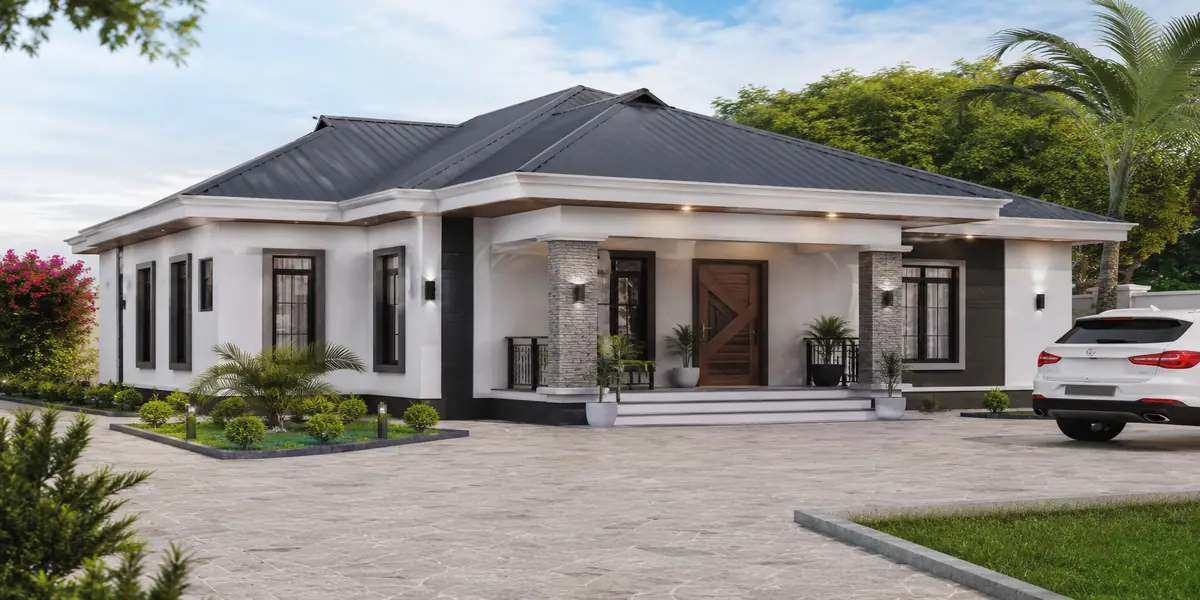
Before You Roof That House in Gusau, Read This First
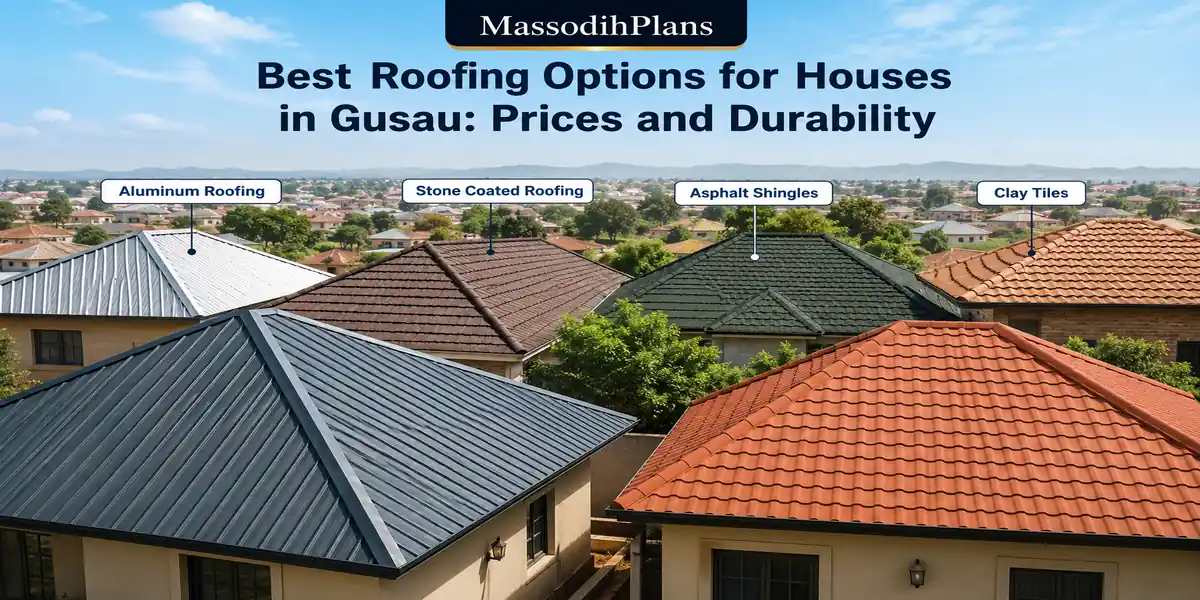
A roof built for heat, not just rain
If your question is “which roofing option is best for a house in Gusau,” here’s the straight answer: for Gusau’s intense heat, dusty harmattan winds, and long dry season, aluminum long-span roofing sheets (properly insulated) and stone-coated tiles are your two strongest options aluminum for affordability and heat reflection, stone-coated for durability and a premium finish. Everything else on the market either costs more than it’s worth in Gusau’s climate, or won’t last as long as the seller promises. Let me break down exactly why, and what each option will actually cost you.
I have handled roofing decisions for clients building in similarly hot, dry parts of the country, and the mistake I see repeatedly is people choosing a roof based on what looks good in a Lagos or Abuja showroom, without asking whether that material can survive Gusau’s specific weather pattern. A roof that works beautifully in a humid coastal town can underperform badly under Gusau’s dry heat and dust. This guide will save you from that exact mistake.
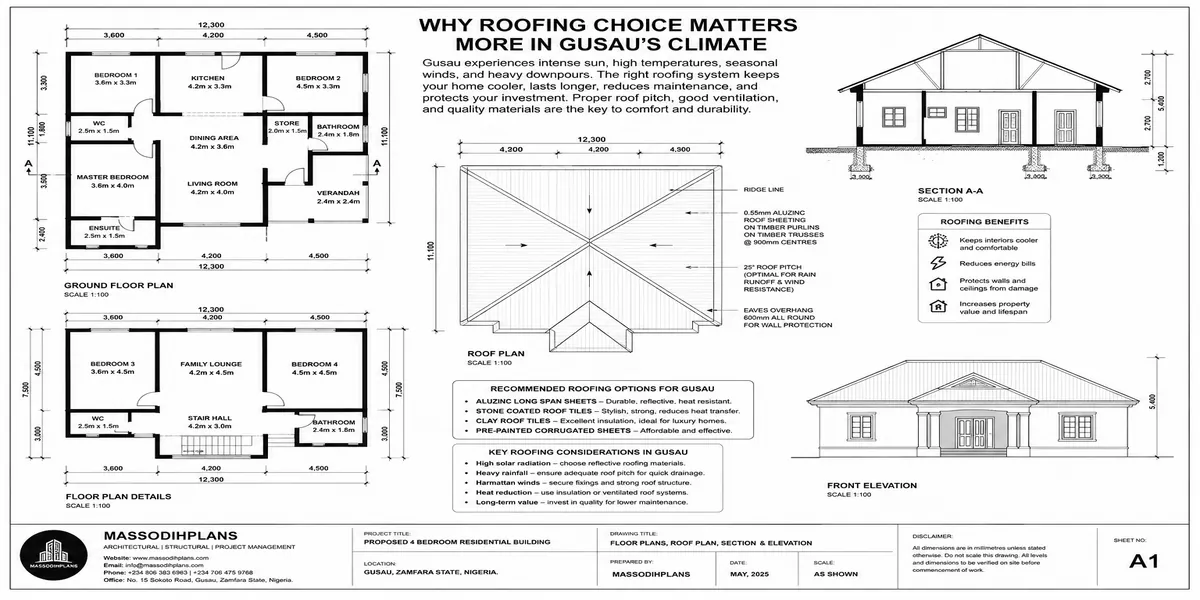
Why Roofing Choice Matters More in Gusau’s Climate
Gusau sits in a region with a long dry season, intense daytime heat, harmattan dust, and a shorter but often heavy rainy season. That combination puts specific demands on a roof:
- It must reflect heat rather than trap it inside the building
- It must resist expansion and contraction from big day-to-night temperature swings
- It must handle dust accumulation without corroding
- It must still perform well during short, intense rainfall
In my experience, roofs that fail early in this kind of climate almost always failed because the material or installation wasn’t suited to heat cycling, not because of poor rainfall handling alone.
Why Roofing Choice Matters More in Gusau’s Climate
Roofing Option 1: Aluminum Long-Span Sheets
This remains the most popular roofing choice across northern Nigeria, and for good reason.
Advantages:
- Lightweight, reducing the load on your roof structure
- Reflects heat well, especially in lighter colors
- Relatively affordable compared to tile options
- Fast to install, reducing labor costs
- Long-span design means fewer joints and lower leak risk
Cost consideration: Aluminum long-span sheets are generally the most budget-friendly option per square meter, though prices shift often I always tell clients to get a current quote rather than rely on last year’s figures, because material prices in Nigeria move constantly.
Durability note: With proper gauge thickness (avoid the thinnest, cheapest gauge) and correct installation, aluminum roofing can last 15–25 years in a dry climate like Gusau’s.
Roofing Option 2: Stone-Coated Roofing Tiles
This has become the premium choice for clients who want a more upscale finish without the weight and cost of clay or concrete tiles.
Advantages:
- Excellent durability, often rated 40–50 years with proper installation
- Strong heat and impact resistance
- Attractive, modern appearance that photographs well for resale
- Handles temperature swings better than thinner sheet materials
Cost consideration: Stone-coated tiles cost more upfront than aluminum sheets, but I have seen this mistake repeatedly: clients choosing the cheaper option and needing repairs or replacement within a decade, ending up paying more over the building’s lifetime than if they’d installed stone-coated tiles from the start.
Roofing Option 3: Zinc/Corrugated Iron Sheets
This is the older, still-common option, especially for lower-budget builds.
Advantages:
- Very low upfront cost
- Widely available in every local market
- Simple to install and repair
Disadvantages in Gusau’s climate:
- Poor heat reflection, meaning hotter indoor temperatures during the day
- Faster corrosion if not properly galvanized or maintained
- Shorter lifespan, often 8–12 years before significant rusting
If I were advising a client today on a tight budget, I would recommend this only as a temporary or low-priority structure roof a gatehouse or store rather than the main family house.
Roofing Option 4: Concrete/Clay Tiles
Less common in this region due to weight, but worth mentioning for context.
Advantages:
- Very long lifespan
- Excellent thermal mass, keeping interiors cooler in some conditions
Disadvantages in Gusau’s context:
- Heavier roof structure required, increasing overall building cost
- Higher transportation cost to inland northern locations
- More complex installation, needing skilled labor that may be harder to source locally
Comparison at a Glance
| Roofing Type | Upfront Cost | Durability | Heat Performance | Best For |
|---|---|---|---|---|
| Aluminum Long-Span | Low–Medium | 15–25 years | Good (light colors) | Most family homes |
| Stone-Coated Tiles | Medium–High | 40–50 years | Excellent | Premium/long-term builds |
| Zinc/Corrugated | Lowest | 8–12 years | Poor | Temporary/low-priority structures |
| Concrete/Clay Tiles | High | 50+ years | Good | Large budget, statement homes |
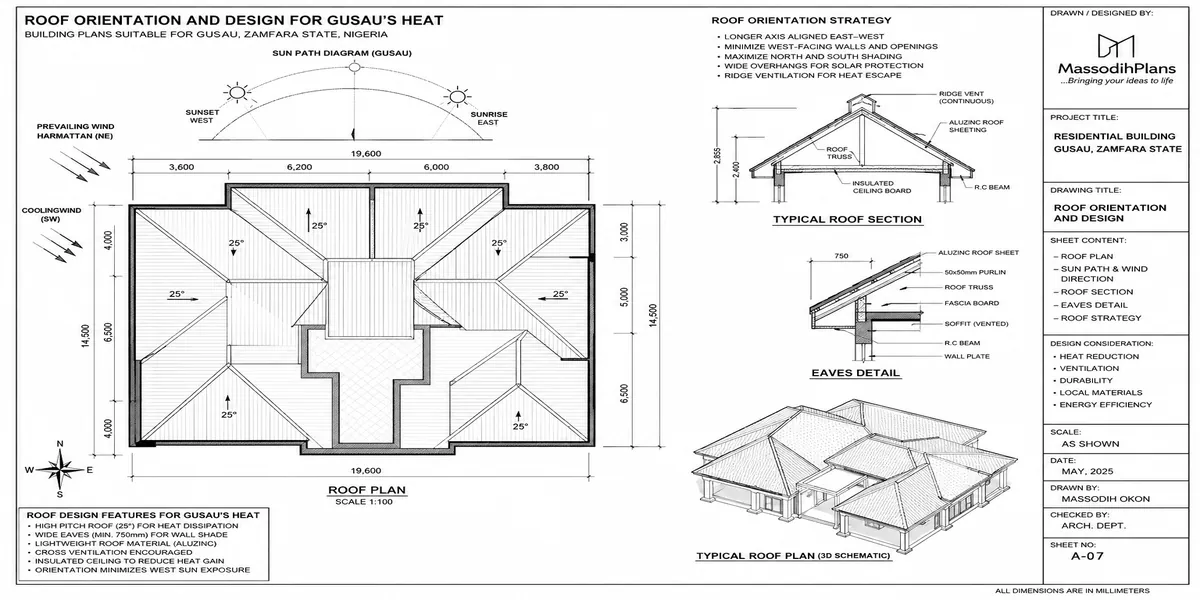
Roof Orientation and Design for Gusau’s Heat
Roofing material is only half the story. Orientation and design matter just as much:
- Wide roof overhangs reduce direct sun exposure on walls and windows
- A slightly steeper pitch improves heat dissipation and helps during the short, intense rains
- Ceiling insulation or a ventilated roof space dramatically reduces indoor heat, regardless of roofing material chosen
- Light-colored roofing reflects more heat than dark colors, which matters more in Gusau than in cooler regions
During site analysis assignments in my training, we were taught that roof design decisions made at the drawing stage often matter more for indoor comfort than the roofing material itself.
Roof Orientation and Design for Gusau’s Heat
Plot Fit, Setbacks, and Drainage Considerations
Whatever roofing option you choose, it must work with your compound’s drainage and setback plan:
- Roof water must be directed away from the building foundation, not toward it
- Gutters and downspouts should feed into a proper drainage channel, especially important given Gusau’s short but sometimes heavy rainy-season downpours
- Setbacks must allow enough eave overhang without encroaching on neighboring plots or the building line
I once reviewed a plan where a beautiful roof design was compromised because the eaves extended past the approved setback line, forcing a costly redesign after construction had already started. Confirm your roofing design fits within your approved building plan before construction, not after.
Nigerian Reality Layer
From what I have seen in practice, roofing decisions in Nigeria are shaped by more than just material preference:
Unstable material prices: roofing sheet and tile prices shift often due to exchange rate and import cost fluctuations, so always request a fresh quote close to your purchase date
Power supply realities: if you’re planning solar panels on your roof (increasingly common given unreliable grid power), your roofing structure and orientation need to accommodate that from the design stage, not as an afterthought
Flooding issues: poor roof drainage combined with poor compound drainage is a common cause of foundation damage during Gusau’s rainy season
Generator space and borehole planning: these compound features often affect roof and gutter layout on smaller plots, so plan them together
Compound security and gatehouse positioning: the gatehouse roof should match your main roofing choice for a cohesive, secure-feeling compound
Small Plot Optimization Layer
On a smaller plot, roofing choices interact with space in ways many people don’t consider:
- Long-span aluminum sheets reduce the number of roof joints, which matters more on compact, simply-shaped roof designs typical of small plots
- Avoid overly complex roof geometry on small plots every additional roof valley or junction is a potential leak point and adds cost without adding usable space
- A single, well-oriented roof plane often outperforms a fragmented, multi-angled design both in cost and in heat performance
Human Lifestyle Layer
A roof affects daily comfort more than people realize until they’re living under a poorly chosen one:
Heat management directly affects how comfortable bedrooms feel at night, especially for elderly family members sensitive to indoor heat
Work-from-home considerations a well-insulated roof reduces daytime indoor heat buildup, which matters if you’re spending working hours indoors
Future family growth a durable roofing choice today avoids disruptive re-roofing work later when the household has grown and construction noise becomes far more inconvenient
Construction Experience Layer
What builders usually get wrong, based on projects I’ve supervised or reviewed:
- Installing roofing sheets without proper insulation, assuming the sheet alone will manage heat
- Using undersized gutters that overflow during Gusau’s short, intense rain bursts
- Skipping proper fastening details, leading to sheets lifting during strong dry-season winds
- Poor supervision allowing contractors to substitute a thinner gauge material than specified, to save cost at the client’s expense
A practical lesson from my internship was learning to physically check the gauge thickness of delivered roofing sheets against what was specified in the contract because substitution happens more often than most homeowners realize.
Investment Layer
For anyone thinking about resale or rental value:
- A stone-coated tile roof consistently improves a property’s perceived value and appeal to serious buyers or tenants
- Aluminum long-span roofing, done well with proper insulation, offers the best balance of cost and rental profitability for standard family housing
- Avoid the cheapest zinc option for any property you intend to rent or resell the shorter lifespan becomes a buyer’s or tenant’s bargaining point against your asking price
Mistakes to Avoid
- Choosing roofing material based on cost alone, without checking climate suitability
- Skipping insulation to save money, then struggling with indoor heat for years afterward
- Ignoring gutter and drainage sizing for Gusau’s rainfall pattern
- Allowing roofing design to violate approved setbacks
- Not confirming gauge thickness or material specification before installation
Quick Summary
For Gusau’s hot, dry, dusty climate: aluminum long-span sheets offer the best value for most family homes, while stone-coated tiles offer superior long-term durability for those who can invest more upfront. Whatever you choose, insulation, correct orientation, and proper drainage matter as much as the material itself.
Frequently Asked Questions
Which roofing option lasts longest in Gusau’s climate?
Stone-coated roofing tiles typically offer the longest lifespan, often 40–50 years with proper installation, outperforming most other options in heat and dust conditions.
Is aluminum roofing durable enough for Gusau’s heat?
Yes, provided you choose an adequate gauge thickness and add proper ceiling insulation thin, low-gauge sheets are the main cause of early failure, not the material itself.
Do I need special roofing for a small plot house?
Not special roofing, but simpler roof geometry fewer joints and valleys performs better and costs less on compact plot layouts.
How much does roofing typically add to overall building cost?
This varies significantly by material and roof complexity, so it’s best to get a current, project-specific quote rather than rely on a general percentage figure.
Conclusion
Your roof is one decision you don’t get to easily undo once construction is complete, so it deserves real thought — not just a quick pick based on what’s cheapest at the market this week. For Gusau’s climate, prioritize heat performance and proper insulation over appearance alone, and always confirm your roofing design fits your approved building plan.
If you’re planning a house in Gusau or anywhere in the region, browse the MassodihPlans Plans Library for designs already suited to hot, dry climates, or explore MassodihPlans Services if you need a custom plan built around your specific plot. For a deeper understanding of building materials and standards, MassodihPlans Plan School has more lessons, including our earlier guide on roofing material selection by climate zone, our estate layout design walkthrough, our building approval checklist, our modern house plans collection, our guide on the cost of building in Nigeria today, our diaspora investment building guide, our piece on choosing plot sizes for small family homes, our article on drainage planning for residential compounds, our explainer on setbacks and why they matter, and our guide on generator and borehole space planning. Visit the Homepage to see everything else MassodihPlans has to offer.
Reference: Zamfara State Government (Official)
Read the following to complete this lesson:
- Cost of Blocks, Cement, Iron Rod and Roofing Sheets in Uyo: Real Prices From the Field Now
- Cost of Roofing a House in Uyo: Current Prices Explained
- Cost of Roofing a Bungalow and Duplex in Abuja Small Plot Now
- Best Roofing Sheets for Nigeria Compared with International Brands
- Best Roofing Sheets for Nigerian Weather: Complete Guide
- How to Draw a Roofing Plan Step by Step (Manually and in AutoCAD): Complete Guide with Practical Examples
- Best Nigerian House Plans for Nigerians Living in the UK, USA and Canada
- Cost of Roofing a 4 Bedroom Duplex in Abakaliki (Complete Guide)
- How to Choose Roofing Materials for Nigeria’s Climate: Advice for Overseas Homeowners
- How Do I Get Natural Ventilation? Best Ways to Improve Airflow at Home
- Where Should My House Face? Best Direction for Sun, Wind and Comfort
- I Can’t Understand or Visualize My Floor Plan — Let’s Fix That Right Now
- My Floor Plan Has Poor Circulation: How to Fix It and Improve Flow
- I Don’t Know How to Arrange My Rooms: Here’s How to Actually Figure It Out
- My Rooms Are Too Small: How Big Should Each Room Be in a House?
- I Don’t Know How Big Each Room Should Be: Standard Room Size Guide
- How Much Building Can I Put on My Plot? Building Coverage and Setbacks
- My House Plan Doesn’t Fit My Land: What to Do Before You Build
- House Plans for Sloping Land in Jos, Plateau State, Nigeria: Smart Nigerian Designs
Author
Massodih Okon is a Nigerian built-environment professional with academic and professional experience in urban and regional planning, geography, architectural design, Landscape Design, GIS and land development.
He holds a Master’s degree in Urban and Regional Planning from the University of Uyo and a first degree in Geography and Regional Planning.
Through MassodihPlans, he publishes practical guides on Nigerian house plans, building design, physical planning, site planning, development approval and residential construction. Read the full author profile →