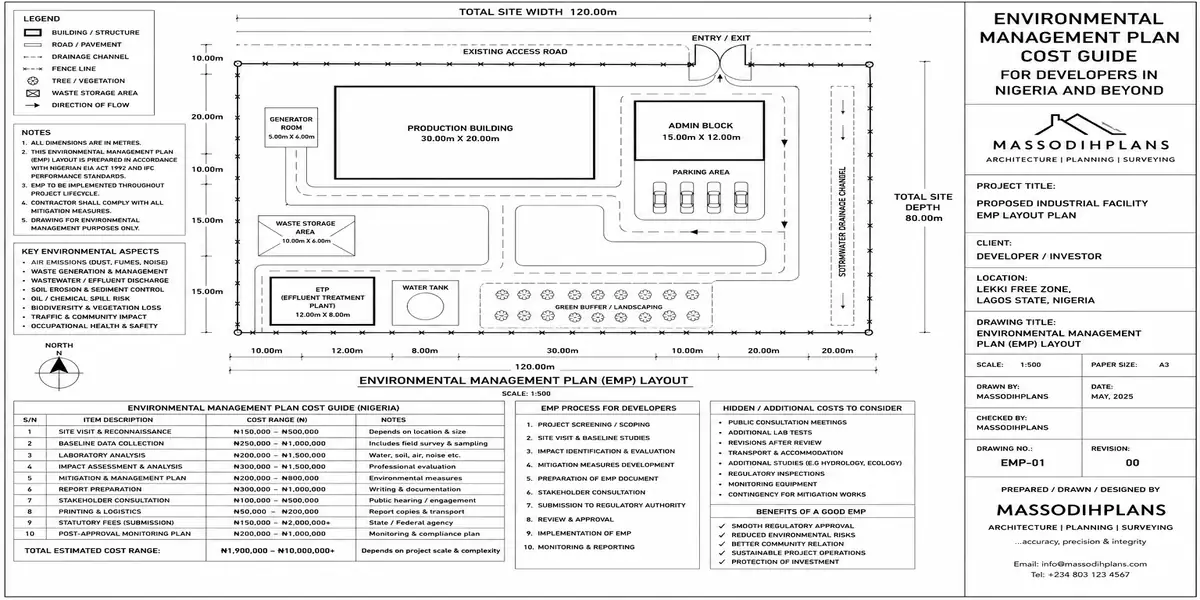
Environmental Management Plan Cost Guide for Developers in Nigeria and Beyond
Introduction
If you are planning a building, estate, factory, hotel, road, filling station, agricultural project, or other development in Nigeria, one question can quickly become expensive: how much will an Environmental Management Plan (EMP) cost, and what exactly are you paying for? The honest answer is that there is no single Nigeria-wide price. Your final cost depends on the project type, size, location, environmental risks, field investigations, professional scope, regulatory requirements, and whether the EMP stands alone or forms part of a wider environmental assessment.
That is why I created this guide not simply to give you a tempting figure, but to show you how the cost is actually built. Official fee schedules can separate government processing or submission charges from professional and project-implementation costs, while environmental regulators may require supporting documents and an EMP as part of specific approvals.
Here, I will break the cost into the parts developers usually overlook: site reconnaissance, baseline data, laboratory testing, GIS and mapping, impact assessment, mitigation planning, monitoring, report preparation, consultations, statutory payments, inspections, revisions, printing, logistics, and compliance after approval. In other words, we will look beyond the consultant’s quotation and calculate the potential “true cost” of environmental compliance.
I will also explain when an EMP may be required, how it differs from an EIA or ESMP, what can make a small project surprisingly expensive, which costs may be negotiable, which are statutory, and how to request a quotation without getting caught by vague “all-inclusive” pricing.
Whether you are a first-time developer, estate investor, contractor, company owner, architect, planner, or student, this guide will help you budget intelligently, compare professional proposals, avoid hidden expenses, and understand what your money should deliver properly.
What Is an Environmental Management Plan?
An Environmental Management Plan commonly called an EMP is a formal document that identifies the potential environmental impacts of a proposed development and sets out specific measures to prevent, reduce, or manage those impacts during construction and throughout the life of the project.
It is not the same as an Environmental Impact Assessment, though the two are related. The EIA is the study that investigates potential impacts. The EMP is the action plan that comes out of that study the document that tells contractors, site supervisors, and regulatory agencies exactly what will be done to protect the environment at every stage.
One thing our lecturers constantly emphasized at the University of Uyo was this: an EIA without an EMP is a diagnosis without a prescription. You have identified the problem but made no commitment to solving it. Government agencies in Nigeria and internationally are increasingly demanding both and rightly so.
An EMP covers the full project lifecycle:
- Pre-construction environmental preparation
- Construction-phase environmental controls
- Operational-phase environmental management
- Decommissioning or end-of-life environmental restoration
Why Developers in Nigeria Underestimate the EMP
Many people assume that an EMP is only for oil companies, factories, or large infrastructure projects. My experience suggests otherwise.
I have seen this mistake repeatedly: a residential estate developer in Rivers State proceeds without an EMP because “it is just housing, not industry.” Construction begins. Excavation disturbs a natural drainage channel. The adjacent community floods. Regulatory authorities issue a stop-work order. The developer now faces legal claims, project delays, and the cost of drainage remediation all of which dwarf what an EMP would have cost.
This is not just theory. I have seen it happen. And it happens because developers confuse the absence of a regulatory requirement with the absence of risk. Environmental risk does not wait for your approval certificate before it materializes.
The problems that an EMP is designed to prevent are the same problems destroying Nigerian communities:
- Flooding from disturbed drainage channels
- Erosion from cleared vegetation and exposed soil
- Water contamination from construction waste
- Air and noise pollution affecting neighbouring residents
- Loss of trees and green spaces that once managed surface water
- Inadequate waste management during and after construction
Every one of these problems costs more to fix than to prevent.
When Is an Environmental Management Plan Required?
In Nigeria, the requirement for environmental documentation varies by project type, scale, and state. Here is how the regulatory framework works in practical terms.
Federal-Level Requirements (NESREA and FMENV)
The National Environmental Standards and Regulations Enforcement Agency (NESREA) and the Federal Ministry of Environment regulate projects with federal implications — particularly those crossing state boundaries, those involving federal land, or those falling in sectors like oil and gas, mining, manufacturing, and large-scale infrastructure.
For such projects, a full Environmental Impact Assessment with an accompanying EMP is mandatory before any approval can be granted.
State-Level Requirements
Most Nigerian states have their own environmental agencies State Environmental Protection Agencies (SEPAs) or Ministries of Environment. These agencies regulate development within state boundaries and typically require:
Environmental Impact Statement (EIS) for smaller projects (typically below 2–5 hectares depending on the state)
Full EIA with EMP for larger developments, industrial facilities, and projects in environmentally sensitive areas
During my internship, while assisting with development control activities, I observed that many state agencies in southern Nigeria were increasingly demanding at least an EIS if not a full EIA with EMP for any estate development above 2 hectares. This threshold has been steadily lowering as awareness of environmental impacts grows.
Projects That Typically Require an EMP in Nigeria
| Project Type | Environmental Requirement |
|---|---|
| Residential estate (2+ hectares) | EIS or EIA + EMP |
| Commercial development (large scale) | EIA + EMP |
| Industrial facility (any size) | Full EIA + EMP (mandatory) |
| Road construction | EIA + EMP |
| Hotel or resort development | EIA + EMP |
| Waterfront or coastal development | Full EIA + EMP |
| Quarrying or mining | Full EIA + EMP (mandatory) |
| Hospital or healthcare facility | EIS or EIA + EMP |
| Petrol station or fuel depot | EIA + EMP |
| Large warehouse or logistics facility | EIS or EMP |
Even where it is not explicitly required by regulation, a well-prepared EMP is good practice for any development because it protects the developer as much as the environment.
What an Environmental Management Plan Must Contain
Before we discuss cost, you need to understand what you are paying for. A professional EMP is not a short report. It is a comprehensive management framework with specific, measurable commitments. Here is what it must include.
1. Project Description and Site Context
The EMP begins with a clear description of the proposed development its nature, scale, location, and timeline. It describes the existing environment of the site: soil type, topography, drainage patterns, vegetation cover, proximity to water bodies, land use of surrounding areas, and population of nearby communities.
During site analysis assignments at university, we were taught that a site description is not just background information it is the baseline against which all environmental changes will be measured. Without an accurate baseline, you cannot demonstrate that your mitigation measures are working.
2. Environmental Impact Identification
This section identifies every significant environmental impact the project may cause both during construction and during operation. Impacts are categorized by:
- Nature (positive or negative)
- Magnitude (minor, moderate, major)
- Duration (temporary or permanent)
- Reversibility (can the impact be undone?)
- Spatial extent (local, regional, wider)
A thorough impact identification covers: air quality, water quality, soil and geology, noise and vibration, ecology and biodiversity, waste generation, traffic, cultural heritage, and social impacts on surrounding communities.
3. Mitigation Measures: The Heart of the EMP
For every negative impact identified, the EMP must specify concrete mitigation measures not vague commitments but specific actions, timelines, responsible parties, and performance indicators.
For example:
Dust control during construction: Water spraying of disturbed surfaces twice daily, use of wheel washes at site exits, covering of construction vehicles carrying loose materials
Erosion control: Installation of silt fences, retention of existing vegetation at site boundaries, phased clearing to minimize exposed soil area
Drainage protection: Installation of sediment traps before any works affecting existing drainage channels, regular inspection and maintenance of drainage controls
Noise management: Restriction of high-noise activities to specific hours, use of noise barriers around sensitive equipment
The quality of a mitigation section is what separates a genuine EMP from a rubber-stamp document. Vague statements like “dust will be managed appropriately” are worthless. Specific, measurable commitments are what protect both the environment and the developer.
4. Monitoring Programme
An EMP without a monitoring programme is a promise without accountability. The monitoring section defines:
- What environmental parameters will be measured (air quality, water quality, noise levels, erosion extent)
- How they will be measured (what instruments, what methods)
- How frequently they will be measured
- What the acceptable limits are
- What actions will be triggered if limits are exceeded
In my experience, monitoring is the section developers most want to abbreviate. This is understandable monitoring costs money over time. But without monitoring, there is no early warning when something goes wrong. And when something goes wrong undetected, the remediation cost is always far higher than monitoring would have been.
5. Waste Management Plan
Construction and operational waste must be managed systematically. The EMP’s waste section covers:
- Types of waste generated (construction debris, excavated material, hazardous waste, domestic waste from workers)
- Waste minimization strategies
- Segregation and storage arrangements on site
- Approved disposal routes and licensed waste contractors
- Responsibilities and record-keeping requirements
Poor waste management is one of the leading causes of water contamination and public health problems in and around Nigerian construction sites. This is not an abstract concern contaminated water sources, increased mosquito breeding grounds, and accumulation of solid waste are the direct, visible consequences of construction sites without waste management plans.
6. Emergency Response Procedures
The EMP must include clear procedures for responding to environmental emergencies spills of hazardous materials, fire, flooding of the construction site, pollution incidents. These procedures specify who is responsible, what steps are taken, how authorities are notified, and how affected parties are compensated.
7. Roles and Responsibilities
Every commitment in the EMP must be assigned to a named role the site manager, the environmental officer, the contractor, the developer’s representative. An EMP that says “environmental measures will be implemented” without saying who is responsible for implementing them is unenforceable.
8. Environmental Management Schedule
A timeline showing when each mitigation measure and monitoring activity will be conducted throughout the project lifecycle. This allows regulators to verify compliance at any point in the project.
9. Grievance Mechanism
Modern EMPs include a formal mechanism for affected community members to raise concerns about environmental impacts a contact person, a process for investigating complaints, and a timeline for responding. This is not just good practice; it is increasingly a regulatory requirement for projects affecting communities.
10. Closure and Rehabilitation Plan
For projects with a finite operational life quarries, temporary facilities, construction camps the EMP must address how the site will be rehabilitated when the project ends. This includes soil restoration, revegetation, removal of structures, and confirmation of environmental conditions.
Environmental Management Plan Cost in Nigeria: The Honest Breakdown
Now let us talk directly about money. I want to give you the most honest breakdown I can not a theoretical range but a practical framework built from professional experience.
Factor 1: Project Scale and Complexity
The single biggest determinant of EMP cost is the scale and complexity of your project. A 10-plot residential development in Uyo is a fundamentally different environmental exercise from a 200-plot estate in a Lagos coastal area or an industrial park in Port Harcourt.
| Project Type and Scale | Approximate EMP Cost Range |
|---|---|
| Small residential development (1–2 hectares) | ₦150,000 – ₦500,000 |
| Medium estate development (2–10 hectares) | ₦500,000 – ₦1,500,000 |
| Large estate development (10–50 hectares) | ₦1,500,000 – ₦5,000,000 |
| Commercial or mixed-use development | ₦500,000 – ₦3,000,000 |
| Industrial facility (small to medium) | ₦2,000,000 – ₦8,000,000 |
| Industrial facility (large) | ₦8,000,000 – ₦30,000,000+ |
| Road construction (per kilometre) | ₦500,000 – ₦2,000,000/km |
| Waterfront or coastal development | ₦3,000,000 – ₦15,000,000+ |
These figures represent professional consulting fees for EMP preparation. They do not include environmental baseline studies, laboratory testing, or government review fees, which are discussed below.
Factor 2: Environmental Sensitivity of the Site
A site in a relatively stable, non-sensitive location flat land with no water bodies, no protected vegetation, no endangered species, no nearby community costs less to study and manage. A site on or near a wetland, a river, a coastal shoreline, a forest reserve, or a densely populated area requires significantly more detailed study and more complex mitigation and therefore more expensive professional work.
From what I have seen in practice, waterfront and coastal developments in states like Akwa Ibom, Rivers, Bayelsa, Lagos, and Delta attract the highest EMP costs in Nigeria, because their environmental sensitivities are the most complex and their regulatory scrutiny is the most intense.
Factor 3: Baseline Environmental Studies
Before the EMP can be written, the existing environmental conditions of the site must be established through baseline studies. These include:
Soil testing: Laboratory analysis of soil samples for contamination, bearing capacity, permeability
Water quality testing: Analysis of surface water and groundwater in and around the site
Air quality assessment: Measurement of existing air quality conditions as a reference point
Ecological survey: Assessment of vegetation, wildlife, and any protected species present
Noise survey: Baseline noise measurements in the site vicinity
Socioeconomic baseline: Assessment of surrounding communities, livelihoods, and social conditions
Each of these studies involves field work, laboratory analysis, and expert interpretation. Together, they can add ₦200,000 to ₦2,000,000 or more to your total environmental documentation cost depending on project scale.
Factor 4: Government Agency Review Fees
After your EMP is prepared, it must be reviewed and approved by the relevant government agency NESREA at the federal level, or the State Environmental Protection Agency at the state level. These agencies charge review fees separately from your consultant’s fees.
Review fee ranges in Nigeria:
- SEPA review (small to medium projects): ₦50,000 – ₦300,000
- NESREA review (large or federal projects): ₦300,000 – ₦2,000,000+
Some states have specific tariff schedules for environmental review fees based on project cost. Always verify with the relevant agency before finalizing your budget.
Factor 5: Consultant Qualifications and Track Record
An EMP prepared by an unqualified environmental consultant may be cheaper. It will also likely be rejected at the review stage or worse, accepted by a weak regulatory system but fail to protect you when environmental problems emerge.
Based on my experience, the safest approach is to engage consultants registered with the Nigerian Environmental Society (NES) or the Institute of Environmental Studies, with demonstrated experience in similar project types and a track record of successful government approvals.
EMP Cost Abroad: How Nigeria Compares
Understanding international context helps Nigerian developers calibrate their expectations and compare notes with global practice.
United Kingdom
In the UK, Environmental Management Plans are prepared as part of the planning approval process. Professional consulting fees for EMP preparation in the UK currently range from:
Small development EMP: £5,000 – £20,000 (approximately ₦8.5 million – ₦34 million)
Medium development EMP: £20,000 – £80,000 (approximately ₦34 million – ₦136 million)
Large industrial or infrastructure project: £80,000 – £500,000+ (approximately ₦136 million – ₦850 million+)
United States
In the United States, environmental documentation costs vary significantly by state and project type. EMP preparation for a medium commercial development typically ranges from $15,000 to $100,000.
South Africa
In South Africa, Environmental Management Plans are a formal requirement under the National Environmental Management Act (NEMA). Professional fees for EMP preparation range from R80,000 to R800,000 depending on project scale and environmental sensitivity.
What This Tells Nigerian Developers
Nigerian EMP costs are substantially lower in absolute terms than comparable international costs. This reflects lower professional fee structures and, in many cases, a less rigorous regulatory review process. But the consequences of poor environmental management flooding, pollution, community conflict, health impacts are just as real and expensive in Uyo as they are in London. The price difference is not a license to cut corners.
The Hidden Costs Nobody Budgets For
This is the section I wish more developers read before they start. Because in my professional experience, the EMP preparation fee is just the beginning.
Cost of Environmental Monitoring During Construction
The monitoring programme in your EMP specifies regular measurements and inspections throughout the construction period. If your project runs for two years, you are looking at two years of monitoring costs inspections, laboratory tests, reports. Budget ₦50,000 to ₦300,000 per month for active monitoring depending on project scale and the parameters being monitored.
Cost of Mitigation Implementation
The mitigation measures in your EMP cost money to implement. Silt fences, sediment traps, dust suppression equipment, noise barriers, waste storage facilities, wheel washes these are real capital items. Developers who prepare an EMP without budgeting for mitigation implementation are setting themselves up for non-compliance and its consequences.
A practical rule I apply: budget 1 to 3 percent of your total project construction cost for environmental mitigation implementation. For a ₦100 million construction project, that is ₦1 million to ₦3 million. It sounds significant until you compare it to the cost of a stop-work order, community litigation, or remediation works.
Cost of Non-Compliance
If your project causes environmental damage a pollution incident, flooding of a neighbouring community, destruction of a water source the regulatory consequences include fines, stop-work orders, mandatory remediation, and potentially criminal liability for responsible officers of the company.
Remediation costs in Nigerian environmental cases have ranged from a few million naira for localized soil contamination to billions of naira for major pollution incidents. No EMP preparation fee is more expensive than a major environmental liability.
Cost of Community Conflict
In my experience, the most underestimated cost in development projects is community conflict arising from environmental impacts. A community that loses its water source, experiences flooding from your construction activity, or suffers from construction noise and dust that destroys livelihoods can impose costs that dwarf your entire project budget through protests, injunctions, compensation claims, and project delays.
A well-implemented EMP, including its grievance mechanism, is the most cost-effective community relations tool a developer can have.
Nigerian Reality Layer: What Environmental Neglect Actually Produces
Let me talk plainly about what I have witnessed across Nigerian urban areas.
The flooding that devastates Nigerian cities every rainy season is not primarily a climate problem. It is a planning and environmental management problem. Developments built without EMPs have cleared vegetation that once slowed surface water runoff. They have filled wetlands that once absorbed rainfall. They have blocked natural drainage channels to create more buildable land. The result, played out in community after community, is catastrophic flooding that the people who actually suffer from it had no part in causing.
Over the years, I have noticed that the communities most vulnerable to flooding, disease, and environmental degradation in Nigeria are almost always communities where development happened without environmental management. The connection is not coincidental. It is causal.
At the University of Uyo, we were taught that environmental management is not just about protecting nature — it is about protecting people. The green spaces that developers treat as wasted land are the same spaces that manage urban heat, absorb stormwater, filter air, and give children places to play. When they are eliminated without replacement, the community pays the price.
The 15 categories of urban problems I care about from flooding and slum formation to public health crises and economic decline are all traceable, in significant part, to developments that proceeded without adequate environmental management.
How EMP Decisions Affect How People Live
This is what I want developers to truly internalize: environmental management decisions made in your site office have direct consequences in the bedrooms and living rooms of the people who live near your project.
When an EMP is properly implemented:
Neighbouring properties do not flood because your construction disturbed their drainage
Children in the adjacent community do not develop respiratory problems from construction dust
The water source the community has used for decades is not contaminated by construction runoff
Noise from your construction site does not exceed levels that prevent sleep, concentration, or normal daily life
When the project is complete, the estate itself has green spaces, functional drainage, and environmental quality that sustains property values
When an EMP is skipped:
Flooding claims that were manageable become catastrophic because the development changed surface water patterns
A community that was healthy becomes a public health problem because waste management was never planned
Trees that took decades to grow are cleared in days, leaving an urban heat island where a cool neighbourhood once existed
Property values in the surrounding area decline because the development lowered environmental quality for everyone
This is not abstract. I have worked with clients who purchased plots in estates that were built without environmental management plans. They paid good money for what should have been good property. Within a few rainy seasons, they discovered they were living in a flood zone that the developer created through poor drainage design.
Construction Experience Layer: How Environmental Failures Show Up on Site
Working alongside environmental consultants and contractors has shown me how environmental management failures manifest during construction in very specific, costly ways.
Erosion: When vegetation is cleared from a site without immediate erosion control measures, the first significant rainfall event can carry topsoil into drainage channels, roads, and neighbouring properties. Remedying significant erosion damage especially in hilly terrain costs many times more than prevention.
Drainage Diversion: I once reviewed a plan where a developer had redirected a natural drainage channel to gain additional buildable area. The short-term benefit was perhaps two extra plots. The long-term consequence was that the diverted water had no stable outfall. Three wet seasons later, the estate and the adjacent community were both flooding regularly. Remediation required major engineering works and community compensation.
Contaminated Groundwater: Construction activities that involve fuel storage, concrete mixing, and chemical use can contaminate groundwater if storage and handling are not managed. In communities dependent on boreholes for water, a contaminated aquifer is a public health emergency that can affect hundreds of families. I have encountered this situation in projects where waste management was treated as an afterthought.
Structural Damage from Poor Site Drainage: During construction, poor management of site water can weaken foundations, cause differential settlement, and create long-term structural problems in completed buildings. This is the kind of consequence that appears two or three years after project completion in wall cracks, uneven floors, and failing foundations with no obvious connection to the construction-phase environmental failure that caused it.
How Environmental Quality Affects Property Value
The evidence from projects I have worked on is consistent: environmental quality is one of the strongest determinants of long-term property value in Nigerian real estate.
Estates with planned green spaces, functional drainage, clean surroundings, and well-managed environmental conditions consistently command premium prices and hold those prices over time. Estates developed without environmental planning tend to depreciate as environmental conditions deteriorate.
The financial logic is straightforward. When your estate floods every rainy season, buyers stop coming. And when your drainage channels become open sewers, people move out. When the trees are gone and the sun makes the estate unbearable, rental yields drop. Environmental management is not a social responsibility gesture it is a business investment that protects the commercial value of your project.
If I were advising a client today, I would frame the EMP cost as an insurance premium on the long-term value of the entire development. For a ₦500 million estate project, spending ₦3 million on a proper EMP and its implementation is protecting a ₦500 million investment. The calculation is not difficult.
Common Mistakes Developers Make With Environmental Management Plans
I have seen this issue firsthand across many projects. Here are the mistakes that cost developers the most.
Mistake 1: Treating the EMP as a Regulatory Document, Not a Management Tool
The worst EMPs are the ones written to satisfy a government requirement and then filed in a drawer. The best EMPs are living documents actively used by site managers, monitored regularly, and updated when project conditions change. An EMP that nobody reads on site is worth nothing.
Mistake 2: Engaging Unqualified Environmental Consultants
The price difference between a qualified and an unqualified environmental consultant can seem significant. The consequences of working with an unqualified person a rejected EMP, an inadequate monitoring programme, missed regulatory requirements are always more expensive. Always verify the professional credentials of your environmental consultant.
Mistake 3: Underestimating Baseline Study Requirements
Developers often budget for EMP preparation but not for the baseline studies that must precede it. Then they discover the government agency requires laboratory test results they do not have. Budget for baseline studies as a separate, upfront cost item.
Mistake 4: Not Communicating With Neighbouring Communities Before Development
The EMP’s socioeconomic baseline and grievance mechanism only work if the community knows they exist. Developers who engage surrounding communities early explain the project, explain the environmental measures, give them a contact for complaints consistently face less community resistance and fewer disputes than those who begin without consultation.
Mistake 5: Treating Environmental Monitoring as Optional
Some developers do the EMP, get the approval, start construction, and immediately abandon the monitoring programme. This is non-compliance. And when something goes wrong as it eventually does on most large construction projects the absence of monitoring records means the developer has no evidence that they tried to manage the issue.
Smart Environmental Planning: From EMP to Sustainable Development
Both classroom learning and field experience support this conclusion: the best developments are not the ones that do the minimum required by environmental regulation. They are the ones that integrate environmental thinking into every design decision from the earliest planning stage.
This means:
Master planning that preserves drainage pathways rather than treating them as obstacles
Road alignments that follow natural contours rather than cutting across them
Green space networks that serve both ecological and social functions stormwater absorption, urban cooling, community recreation
Building orientations that use natural ventilation rather than relying entirely on mechanical cooling
Waste infrastructure designed into the estate layout rather than retrofitted after problems emerge
Trees planted at the right species for the Nigerian climate not just ornamental plantings but ecological infrastructure
This is what smart growth looks like in practice. And an Environmental Management Plan, properly prepared and implemented, is the operational document that makes sustainable development a reality rather than an aspiration.
FAQs: Environmental Management Plan Cost in Nigeria
Q: Is an Environmental Management Plan legally required for all developments in Nigeria?
A: Not for all developments. Small residential buildings on existing approved plots typically do not require a standalone EMP. But any development above certain scale thresholds generally 2 hectares or more for residential, any scale for industrial or potentially polluting uses requires at minimum an Environmental Impact Statement, and larger projects require a full EIA with EMP. Requirements vary by state.
Q: What is the difference between an EIA and an EMP?
A: An Environmental Impact Assessment (EIA) is the study that investigates and predicts potential environmental impacts. An Environmental Management Plan (EMP) is the action document that specifies how those impacts will be prevented, reduced, or managed. An EIA without an EMP is analysis without action. Government agencies typically require both for significant projects.
Q: How long does it take to prepare an EMP in Nigeria?
A: For a small to medium project, EMP preparation including baseline studies typically takes four to twelve weeks. Larger or more complex projects can take four to six months or more. Government review and approval adds additional time typically two to six months depending on the agency’s capacity and workload.
Q: Can I prepare an EMP myself to save cost?
A: You cannot effectively prepare an EMP yourself unless you have professional environmental management training and access to laboratory testing facilities. More importantly, Nigerian regulatory agencies require EMPs to be prepared by qualified environmental consultants. A self-prepared EMP will be rejected.
Q: What happens if I build without an approved EMP where one is required?
A: You risk stop-work orders from NESREA or the state environmental agency, demolition orders, fines, and potential criminal liability. More practically, you expose yourself to unlimited liability for any environmental damage your project causes which courts may hold you accountable for regardless of regulatory enforcement.
Q: Can the EMP be updated after it is approved?
A: Yes, and it should be. Significant changes to the project scope, timeline, or environmental conditions may require EMP revisions. Good environmental management practice includes regular review and update of the EMP throughout the project lifecycle.
Q: Who enforces EMP compliance in Nigeria?
A: NESREA enforces compliance for projects within its jurisdiction. State environmental agencies enforce compliance within their states. Lagos State Environmental Protection Agency (LASEPA), Rivers State Environmental Monitoring Agency, and equivalent bodies in other states conduct inspections and can issue compliance notices, fines, and stop-work orders.
Quick Summary: Total Cost Budget for an Environmental Management Plan in Nigeria
| Cost Item | Small Project (1–2 ha) | Medium Project (2–10 ha) | Large Project (10+ ha) |
|---|---|---|---|
| EMP preparation (consultant fee) | ₦150,000 – ₦500,000 | ₦500,000 – ₦1,500,000 | ₦1,500,000 – ₦5,000,000 |
| Baseline environmental studies | ₦100,000 – ₦300,000 | ₦300,000 – ₦800,000 | ₦800,000 – ₦3,000,000 |
| Government review fees | ₦50,000 – ₦150,000 | ₦150,000 – ₦500,000 | ₦500,000 – ₦2,000,000 |
| Mitigation implementation | ₦200,000 – ₦600,000 | ₦600,000 – ₦2,000,000 | ₦2,000,000 – ₦10,000,000 |
| Monitoring programme (per year) | ₦100,000 – ₦300,000 | ₦300,000 – ₦1,000,000 | ₦1,000,000 – ₦5,000,000 |
| Total First-Year Budget | ₦600,000 – ₦1,850,000 | ₦1,850,000 – ₦5,800,000 | ₦5,800,000 – ₦25,000,000+ |
Conclusion: Environmental Management Is Not a Cost: It Is Your Project’s Foundation
I want to end this article the same way I end this conversation with every developer who sits across from me: the EMP is not a burden on your project. It is the document that makes your project legitimate, sustainable, and defensible.
Nigeria’s urban areas are suffering visibly, painfully from the cumulative consequence of decades of development without environmental management. The flooding, the slums, the polluted water, the vanishing green spaces, the communities living beside industrial facilities that should never have been sited there these are not natural disasters. They are planning and environmental management failures. And they can be prevented.
As a developer, you have a choice. You can build the way it has often been done quickly, cheaply, without documentation and inherit the legal, financial, and reputational consequences when something goes wrong. Or you can build the right way: with an EMP prepared by qualified professionals, implemented by a trained site team, monitored consistently, and reported honestly.
The settlements that work the ones that hold value, stay healthy, attract investment, and give people genuinely good lives are the ones somebody planned and managed properly. That somebody can be you.
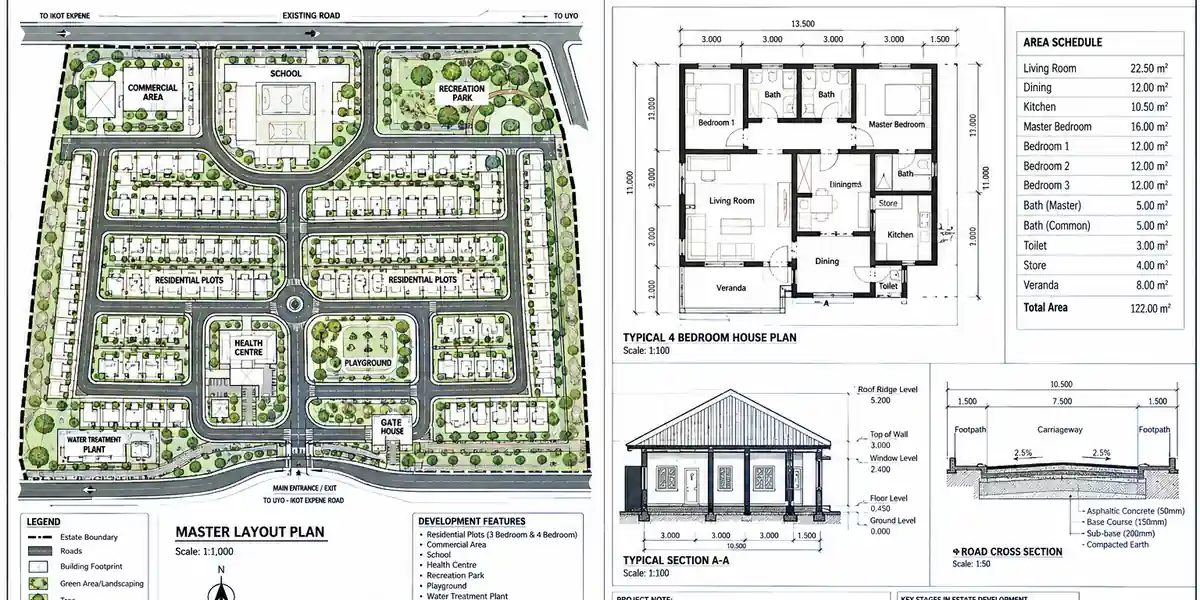
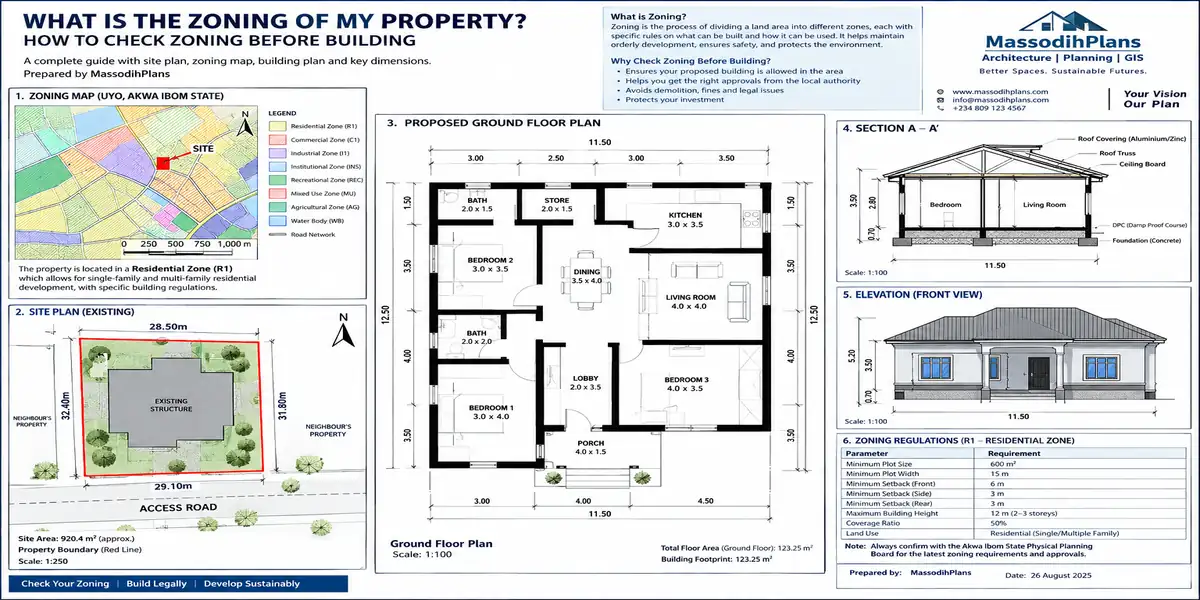
If you need professional support preparing an Environmental Management Plan, a layout plan, or any environmental planning documentation for your project anywhere in Nigeria, MassodihPlans is here to help. We work with developers, individuals, and government agencies across Akwa Ibom, Rivers, Cross River, Lagos, Abuja, and other Nigerian states.
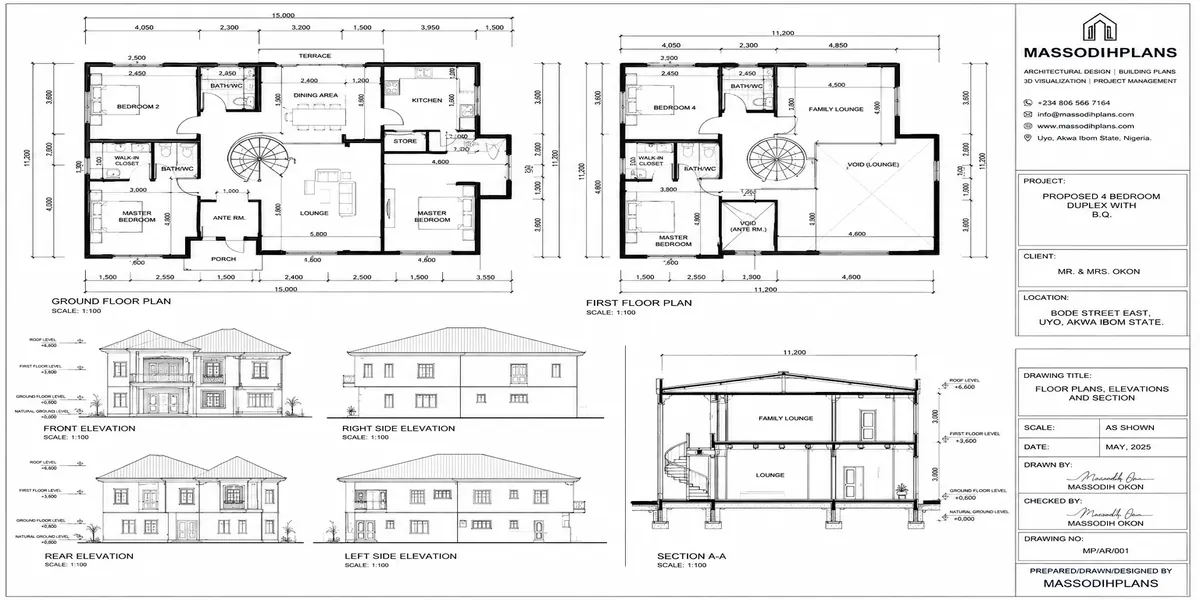
Explore how environmental planning integrates with building and estate design in our Plans Library, and deepen your planning knowledge at Plan School.
The community you want to build deserves a proper environmental foundation. Start there.
Important related articles
- Small Residential Estate Layout Design in Nigeria: Smart Master Plan Ideas for Limited Land
- Current Cost of Building a House in Port Harcourt (Professional Analysis)
- Smart Duplex Design for Narrow Plots in Lekki, Nigeria: Complete Practical Guide
- Layout Plan Cost in Nigeria and Abroad: What Every Landowner Must Budget Before Building
- Smart Ways to Reduce Building Costs in Nigeria Without Reducing Quality
- Cost of Blocks, Cement, Iron Rod and Roofing Sheets in Uyo: Real Prices From the Field Now
- Estate Development Cost Breakdown: What Developers Should Budget For
- Estate Layout Design Services for Property Developers in Nigeria
- What Is a Master Plan and Why Does Every Growing Community Need One?
- How to Design an Estate Layout Plan That Works in Nigeria and Abroad
- How Much Does It Cost to Develop an Estate in Nigeria? A Town Planner’s Honest Breakdown
- Why Local Development Plans Matter for Communities
- What Is a Structure Plan and Why Does It Matter for Nigerian Towns?
Others
- 10 Problems Border Communities Face Without Proper Planning
- What Happens When a City Develops Without a Master Plan
- How to Build Cities That People Actually Want to Live In: The 2050 Urban Growth Blueprint
- Nigerian Estate Master Plan for Small Plots: Modern Residential Layout Strategies That Maximize Space
- Site Development Plan Cost: What Every Property Owner Must Know Before Building
- Why District Planning Is Important for Urban Development
- Commercial Development Planning Costs: What Every Investor Must Know Before Spending a Kobo
- Housing Estate Layout Plan: Why Every Estate Needs One in Nigeria and Beyond
- Master Plan Preparation Process Explained Step by Step
- Cost of Master Plan Preparation for Communities and Institutions
- How Natural Water Flow Can Affect Your Building Site and House Plan Today
- How Drainage Should Influence Your House Site Planning in Nigeria Today
- How Topography Influences Flooding Around Nigerian Homes and Cities Today
- How to Understand Land Use Before Buying Property in Nigeria Safely
- How to Evaluate Land in Lagos Before Choosing a House Plan to Build Safely (15 Best Ways)
- How to Evaluate Land in Lagos Before Choosing a House Plan to Build Safely (15 Best Ways)
Authority Source National Environmental Standards and Regulations Enforcement Agency (NESREA)
About Author
Massodih Okon is a Nigerian built-environment professional with academic and professional experience in urban and regional planning, geography, architectural design, Landscape Design, GIS and land development.
He holds a Master’s degree in Urban and Regional Planning from the University of Uyo and a first degree in Geography and Regional Planning.
Through MassodihPlans, he publishes practical guides on Nigerian house plans, building design, physical planning, site planning, development approval and residential construction. Read the full author profile →