How to Build Your House in Nigeria for Less Without the Regret of Cutting Corners
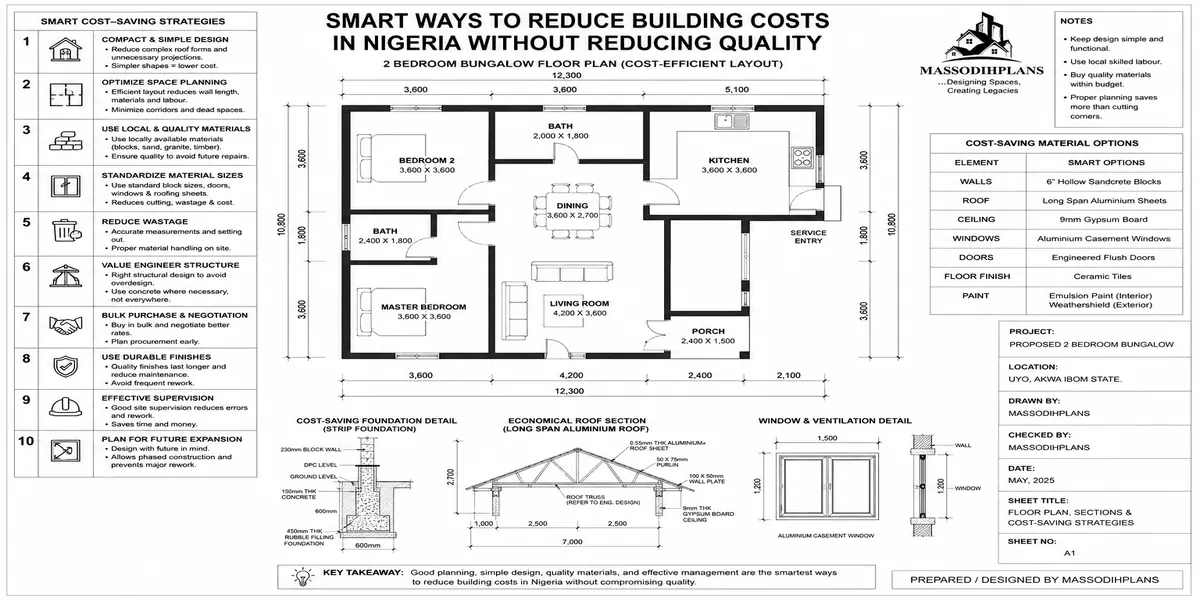
Smart Ways to Reduce Building Costs in Nigeria Without Reducing Quality
If you are planning to build a house in Nigeria, let me tell you something important: reducing your building cost does not mean buying the cheapest cement, using thinner reinforcement, hiring the lowest bidder, or removing everything that makes your home comfortable. The smarter approach is to reduce waste, unnecessary complexity, poor decisions, rework and uncontrolled spending while protecting the parts of the building that determine safety, durability and performance.
This matters even more in today’s Nigerian construction market, where material prices, transportation, labour and exchange-rate pressures can quickly turn an affordable project into an unfinished building. Research on Nigerian construction has consistently identified local sourcing, quality assurance, economic design and material management among important cost-reduction measures.
In this guide, I will show you how to think about your building budget before the first block is laid. We will look at how a simpler floor plan can reduce construction complexity, how to choose materials based on performance rather than appearance alone, how standard dimensions can reduce cutting and wastage, how procurement can prevent unnecessary mark-ups, and why good supervision can save money instead of simply adding to your expenses.
I will also explain where you should never cut costs: structural design, foundations, reinforcement, concrete quality, waterproofing, electrical and plumbing installations, workmanship and professional checks. These are not areas for shortcuts.
Most importantly, you will learn how to separate “cheap” from “cost-effective” and how to make design decisions that give you more value for every naira spent. By the end, you should be able to look at a building plan not simply asking, “How can I spend less?” but “How can I get the best building for the money I have?”
Why Nigerian Building Costs Run Higher Than They Should
Before I give you the solutions, let me explain the problem. Because if you understand why costs spiral, you will take the solutions more seriously.
In my experience, Nigerian building projects run over budget for these main reasons:
No clear design before construction starts. Changes made during construction are the most expensive changes you can make.
Buying materials without a bill of quantities. You buy too much of some things and run short on others.
Using a contractor who also procures materials. This is a conflict of interest that consistently costs clients money.
Starting without a proper structural plan. Structural surprises mid-project wrong foundation depth, wrong column sizes derail budgets completely.
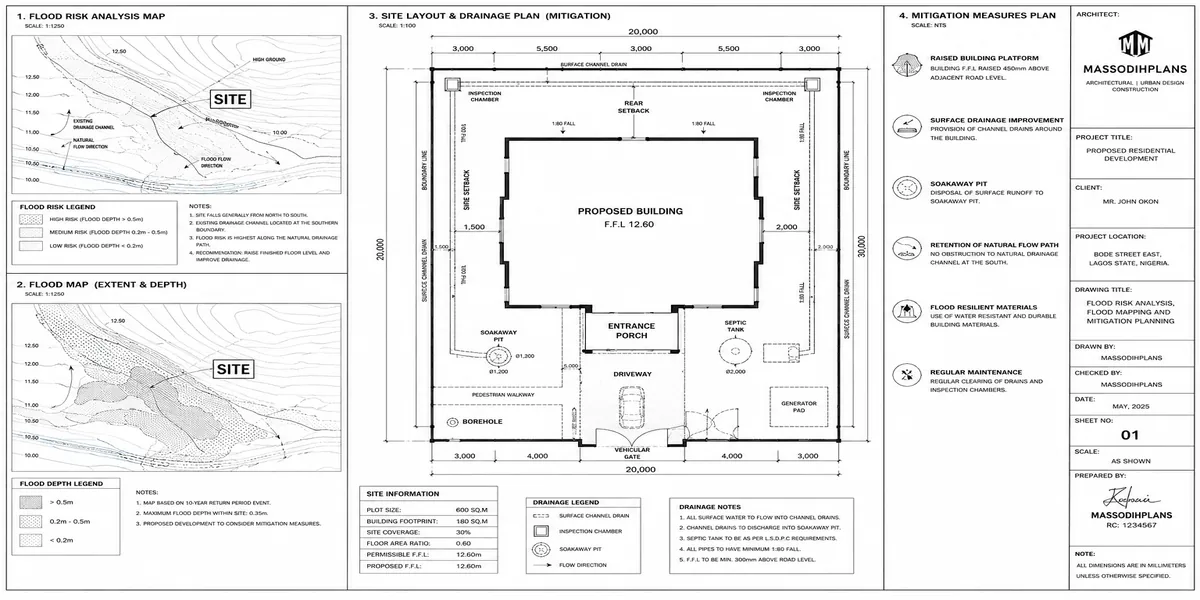
Ignoring site conditions. Waterlogged plots, poor soil, or flood-prone locations require extra foundation work that unprepared budgets cannot handle.
This is not theory. I have seen all five of these issues on real projects, sometimes in the same project. The good news is that every one of them is preventable.
Strategy 1: Fix Your Design Completely Before You Buy Anything
This is the single most powerful cost-reduction strategy available to any Nigerian homebuilder. And it is the one most people skip.
I have worked with clients who came to me midway through construction because their contractor kept asking for more money. In almost every case, the root cause was design changes happening on site. A wall moved here. A room added there. A toilet repositioned because someone changed their mind about the bathroom layout. Every one of those changes costs double what it would have cost at the drawing stage.
During studio exercises at the University of Uyo, one thing our lecturers constantly emphasized was that the cheapest time to make a change is on paper. Once concrete is poured, once blocks are laid, that principle becomes a financial law.
What this means practically:
- Get a fully detailed architectural drawing before you start, not a sketch
- Include all room dimensions, window positions, door swings, and floor levels
- Agree on the final design with your family before site work begins
- Do not start foundation until your drawings are approved by a qualified professional
If I were advising a client today, I would tell them to spend whatever it takes to get a proper set of drawings. The fee for a complete drawing set is nothing compared to the cost of one significant design change mid-construction.
Strategy 2: Use a Simple, Compact Design
Many people assume that a larger, more complex building design shows wealth and ambition. Experience has taught me otherwise.
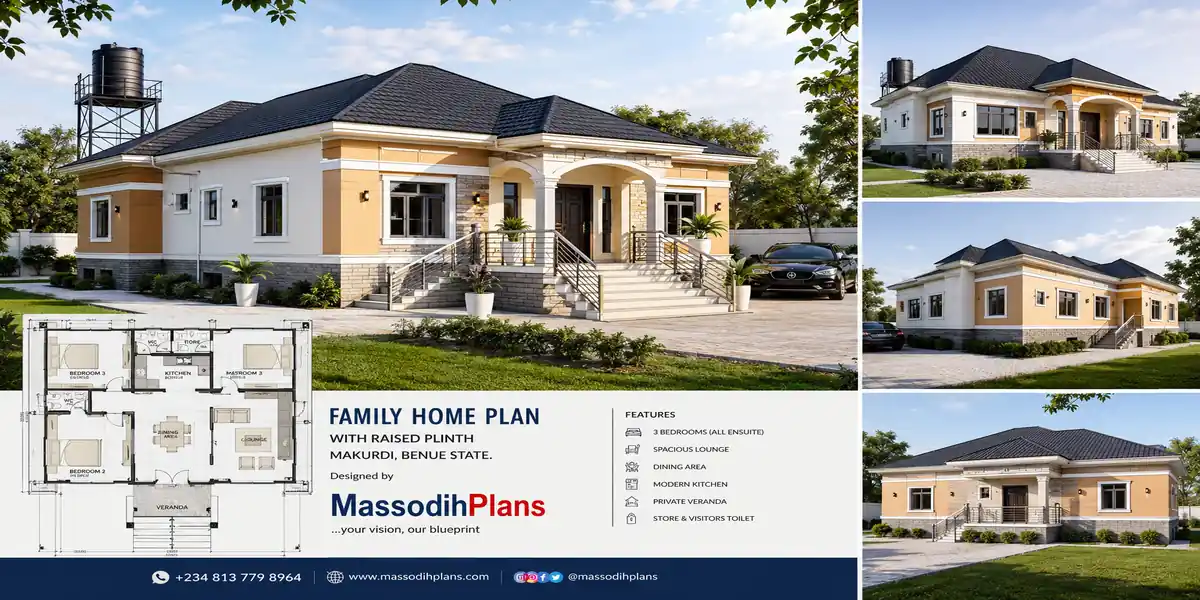
A compact, well-proportioned building is always cheaper to build, cheaper to maintain, and more comfortable to live in than a sprawling, complex design of the same number of rooms.
What adds to cost in a building design:
- Long external wall perimeters (more blocks, more plaster, more paint)
- Re-entrant angles and complex roof shapes (expensive woodwork and roofing)
- Many short walls and partitions (wasteful use of materials and labour)
- Unnecessary corridors and passages (wasted floor area you are paying to build)
What reduces cost without reducing functionality:
- Rectangular or near-rectangular floor plan shapes
- Straight rooflines where possible
- Open-plan living and dining areas
- Double-loaded corridor design (rooms on both sides of a central passage)
On a project I worked on for a client in Uyo, we reduced the estimated block quantity by nearly 800 blocks saving over ₦400,000 simply by rationalizing the external wall perimeter from a complex L-shape to a clean rectangle. The number of rooms stayed the same. The living space stayed the same. Only the shape changed.
Strategy 3: Choose the Right Plot and Know Its Conditions Before You Buy
The cost of building on a bad plot can exceed the cost of the materials themselves. This is not an exaggeration.
In practical terms, what usually happens is this: someone buys a plot cheap because it looks affordable, and then discovers during construction that the water table is high, the soil is expansive clay, or the land is prone to seasonal flooding. Now they have to pay for reinforced foundations, additional DPC layers, site filling with laterite or granite, and sometimes retaining walls all of which were not in the original budget.
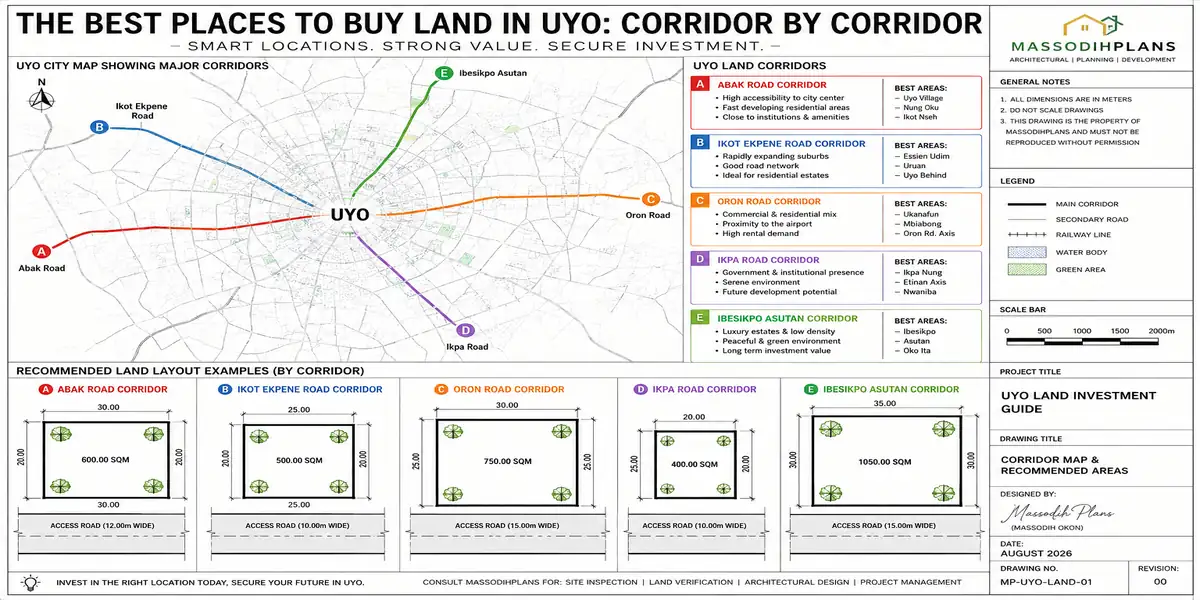
From a planning perspective, I strongly recommend that before you buy any plot in Nigeria, especially in cities like Uyo, Port Harcourt, Lagos, or Warri, you do the following:
Walk the site during or just after heavy rain. See where water pools and where it drains.
Ask neighbours about flooding history. They will tell you the truth faster than any document.
Check the soil visually. Dark, wet, peaty soil means organic content and poor bearing capacity.
Confirm the plot is within approved layout. An unapproved layout can lead to demolition, not just cost overrun.
A cheaper plot that requires ₦500,000 in extra foundation work is not a cheap plot. This observation comes from practical field experience.
Strategy 4: Separate Material Procurement From Labour
This one strategy alone can save you 10 to 20 percent of your material budget. And yet most Nigerian homebuilders hand both responsibilities to the same contractor.
Here is why this is a problem.
When your contractor buys your materials, they earn on the spread. They buy cement at ₦7,500 and charge you ₦8,500. And they buy rods at ₦10,000 per bar and charge you ₦12,000. They buy blocks at ₦500 and charge you ₦650. Multiply this across hundreds of bags of cement, thousands of blocks, and dozens of iron rods and you have gifted your contractor a very significant amount of money from your pocket.
The better structure is this:
Pay your contractor for labour only. Agree a clear labour rate per item per square metre of plastering, per metre of block laying, per cubic metre of concrete.
You or a trusted person buys all materials. You go to the market, you compare prices, you collect receipts.
Store materials on site under your control. Keep a simple inventory. Know what went in and what was used.
One lesson I learned early in my career is that the most expensive part of a Nigerian building project is not the materials it is the trust gap between client and contractor. Close that gap with direct procurement and clear records.
Strategy 5: Build in Stages With a Clear Procurement Schedule
Many people make the mistake of buying all their materials at once. They spend everything at the start, and then have no money left for finishes, fittings, or unexpected requirements.
Building in stages is not a sign of financial weakness. It is a sign of financial intelligence.
A stage-based construction approach means:
Stage 1 Foundation to DPC (Damp Proof Course): Buy and use only foundation materials. Gravel, cement, rods for footing, sand. Confirm foundation is level and DPC is properly laid before moving.
Stage 2 Walling to Lintel level: Buy your blocks, sand, cement for block laying in this tranche only. Do not order roofing sheets or tiles at this stage.
Stage 3 Ring beam and roof: Roof timber, iron rods for ring beam, cement, roofing sheets. Price these at the time of use, not six months earlier.
Stage 4 Ceilings, windows, doors, electrical, plumbing.
Stage 5 Plastering, flooring, painting, finishing.
Why does staging save money? Because material prices in Nigeria move constantly. Buying roofing sheets 12 months before you need them ties up cash and exposes you to storage damage. And if naira appreciates or prices fall in that window, you bought at the wrong time.
From what I have seen in practice, staged procurement also keeps contractors honest because they know you only release material funds when you are on-site and can verify.
Strategy 6: Choose the Right Roofing Option for Your Budget
Roofing is often where Nigerian building budgets hit their hardest surprise. A poor choice here costs you not just at construction, but for decades in repairs and replacements.
The three options most common in Nigeria today are:
Long-span aluminium sheets (0.45mm to 0.7mm): The most cost-effective option for budget-conscious builders. Durable in tropical climates, lightweight (reduces roof timber load), and available in a range of finishes. For quality without excess cost, 0.55mm is the sweet spot. This is what I recommend to most of my clients.
Stone-coated metal tiles: More expensive upfront, but long-lasting and very presentable. Good for estate developments and investment properties where aesthetics affect resale value. The cost per square metre is significantly higher, so this is a quality-upgrade choice when budget permits.
Corrugated iron sheets: The cheapest option, but I personally do not recommend this for permanent residential buildings. In Nigeria’s humid coastal and rainforest zones, corrugated iron rusts within 5 to 8 years. You save money now and spend more later.
Expert Note: The roof timber and purlin work underneath the sheets is just as important as the sheets themselves. Under-sized or poorly treated timber rots or bends within a few years under Nigeria’s heat and humidity. Always use treated or hardwood timber for roof members.
Strategy 7: Right-Size Your Structural Specifications
Many people assume that more iron rod and thicker concrete always means a better building. Experience has taught me that over-specification is just as wasteful as under-specification and it is more common than people think.
I have seen residential bungalows in Nigeria with column sizes and rod schedules that would be appropriate for a four-storey commercial building. The owner paid for that excess steel and concrete in their budget. None of it made the house more comfortable.
The correct approach is to have a qualified structural engineer design your structural elements for your specific building:
- The right foundation depth for your soil type
- The correct column dimensions and reinforcement for your wall loads
- The right ring beam specification for your span
- The correct slab thickness if you are doing a ground floor slab
A structural engineer’s fee for a standard residential project is modest compared to the money saved by not over-specifying. And more importantly, it ensures that you do not under-specify critical elements which is far more dangerous than over-specification.
Both classroom learning and field experience support this conclusion: right-sizing structural elements saves money and ensures safety.
Strategy 8: Maximise Your Plot Efficiency With the Right House Plan
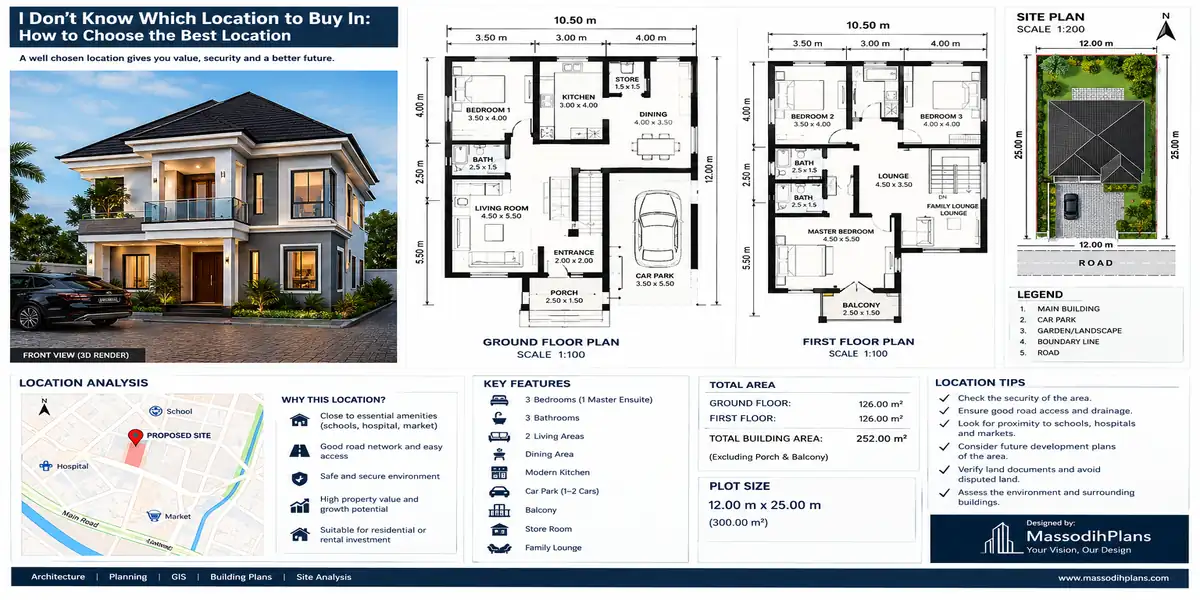
One of the biggest hidden costs in Nigerian housing is building on a plan that does not suit the plot. When a house plan is poorly matched to a plot, you end up with wasted compound space, awkward circulation, or worse — setback violations that require modifications or demolition.
A plot-efficient design means:
- All required setbacks are met without unnecessarily shrinking interior space
- The house footprint uses the buildable area intelligently
- Parking, borehole, septic tank, and generator positions are factored into the compound layout from the start
- Future expansion direction is already considered in the initial design
Over the years, I have noticed that clients who come to me with a pre-drawn plan they found online often lose 15 to 25 percent of their potential living area because the plan was not designed for their specific plot dimensions. A plan designed for a 100 x 100 ft plot behaves very differently on a 60 x 120 ft plot.
If you want a house plan that actually fits your land and saves you money on wasted space, see our Plans Library at MassodihPlans. Plans are designed for real Nigerian plot sizes, with proper setbacks already factored in.
Strategy 9: Manage Ventilation and Orientation to Cut Future Costs
This is a strategy that most Nigerian builders overlook, and it has direct long-term cost implications.
A house with poor ventilation in Nigeria’s climate will rely on mechanical cooling fans running longer, air conditioners running harder, higher electricity bills, more generator fuel. These are not small costs over a 30-year building life.
Smart ventilation design costs nothing extra during construction. It is entirely a design decision:
Orientate living rooms and bedrooms to face the prevailing wind direction. In most southern Nigerian cities, the dominant breeze comes from the south-southwest.
Use cross-ventilation. Place windows on opposite walls of a room so air moves through rather than stagnating.
Keep the roof ventilated. A 50mm ventilation gap at the eaves or ridge releases trapped heat before it enters the ceiling space.
Use extended roof overhangs (600mm to 900mm minimum). These shade the walls and windows from direct afternoon sun, dramatically reducing heat gain.
During my undergraduate studies in Town Planning, one thing our lecturers constantly emphasized was that the best environmental control is passive meaning you design the building to handle the climate, rather than spending money later to fight it.
This principle formed a major part of our coursework, and I have applied it on every project I have worked on since.
Strategy 10: Plan for Drainage and Compound Layout From Day One
Drainage is not a finishing issue. It is a foundation-level decision. And getting it wrong is one of the most expensive mistakes a Nigerian homebuilder can make.
I have reviewed cases where homeowners spent millions replastering, repainting, and repairing wall bases because compound drainage was not considered during construction. Water from rains pooled against the walls, crept under the DPC, and began wicking up into the block walls. The building was only five years old.
Here is what correct drainage planning looks like:
- Raise your finished floor level at least 450mm above compound ground level (600mm in flood-prone areas)
- Slope your compound surface away from the house at a minimum gradient of 1:50
- Provide a perimeter drain around the building footprint to intercept roof runoff
- Locate your septic tank downslope from the house and at least 3 metres from any borehole
- Plan your borehole position before construction begins do not leave it as an afterthought
- Allocate space for your generator on the plan a concrete slab tucked into a ventilated corner of the compound, not placed randomly after the house is complete
These decisions cost almost nothing if made on paper before work starts. They can cost hundreds of thousands to correct after construction.
Strategy 11: Supervision Is Not Optional
If I could give one piece of advice that I wish more Nigerian homebuilders would act on, it is this: supervise your building project continuously or hire someone who will.
In my experience, the gap between what a contractor promises and what they deliver on an unsupervised site is significant. Not necessarily because contractors are dishonest though that sometimes happens but because without oversight, decisions get made on the spot that prioritise speed and convenience over quality.
I have seen this issue firsthand: concrete mixed too wet to save time. Rods placed incorrectly because no one checked the drawing. Plaster applied too thin because the labourer was rushing. Blocks laid without plumb check because the supervisor was on another site. All of these seem minor. None of them are.
Practical supervision means:
- Visit your site at least three times a week during active construction
- Check rods before concrete is poured you cannot check them after
- Confirm block courses are level and plumb at every three to four courses
- Inspect mortar mix ratios by watching the mixing, not just trusting the output
- Do not pay for work you have not physically inspected
If you live far from your site, hire a building services professional or clerk of works. Their fee is far less than the cost of a supervision failure.
The Nigerian Reality Layer: What Generic Articles Never Tell You
Let me address the real-life factors that affect building costs in Nigeria and that most online articles completely ignore.
Unstable Material Prices
Cement, iron rods, and roofing sheets in Nigeria do not have stable prices. They move with exchange rates, fuel costs, and season. Budget a 15 to 20% contingency specifically for price movement. Do not assume the price you see today will be the price when you reach roofing stage.
Power Supply and Generator Planning
Every permanent residential building in Nigeria needs to account for generator space. This means a concrete pad with drainage, a ventilated enclosure if enclosed, and cable routing to your distribution board. If you design this as an afterthought, it ends up awkwardly placed and dangerously installed. Plan it on the drawings from the start.
Borehole Position
In most Nigerian cities, municipal water supply is unreliable. A borehole is not a luxury it is a necessity. But its position matters. It must be upslope from your septic tank, a minimum safe distance from any foundation, and accessible to a drilling rig. Leaving this as a post-construction decision often means drilling through finished compound work at significant extra cost.
Compound Security
In the Nigerian context, a building without a perimeter fence and gate is not a complete building. Budget for your fence and gate from the start not as an afterthought when your main construction funds are spent. Security walls should be integrated into the site plan, not improvised around a finished house.
Flooding and Site Filling
Many Nigerian urban plots especially in cities like Port Harcourt, Warri, and parts of Lagos and Uyo are in low-lying areas. Site filling with laterite before construction can cost anywhere from ₦200,000 to over ₦1,000,000 depending on the volume needed. This must be in your budget before you buy the plot, not discovered after.
Small Plot Optimization: Getting Maximum Value From Minimum Land
Many Nigerian homebuilders are working with plots of 60 x 120 ft or smaller. The principles of space efficiency matter more here than on larger plots.
What works on small plots:
Open-plan ground floor. Combining the living room, dining, and kitchen into one flowing space makes a small plot feel significantly larger.
Eliminating redundant corridors. Every metre of corridor is a metre that could be bedroom, kitchen, or living space. Design circulation routes that double as room access.
Building upward, not outward. A two-storey design on a small plot often gives you more living space than a bungalow while using less ground coverage leaving more compound for parking, drainage, and outdoor movement.
Integrating parking into the ground floor. On very small plots, a ground-floor carport built into the building footprint saves compound area.
Using full-height windows. This makes small rooms feel larger, admits more light, and improves cross-ventilation without adding construction cost.
Working alongside experienced planners during my internship taught me that space is not just a function of size, it is a function of how efficiently that size is used. A well-designed 2-bedroom house on a 50 x 100 ft plot can feel more spacious than a poorly designed 3-bedroom on a 100 x 100 ft plot.
Human Lifestyle Considerations: Building for the People Who Will Live There
A building that does not suit the lifestyle of the family using it is a failed building, regardless of how much it cost.
Children’s movement: Staircase design for duplexes must account for young children. Enclosed staircases with balustrades at 100mm maximum spacing prevent accidents. Open-riser stairs look modern but are dangerous for small children.
Elderly accessibility: If elderly parents will live in the house, ground-floor bedrooms with attached toilets are not optional. Avoid raised thresholds between rooms. Wide doors (minimum 900mm) allow movement with walking aids.
Guest privacy: In the Nigerian home context, guests do not always arrive at planned times. A living room positioned near the entrance, separated from bedroom corridors, gives the household privacy while guests are received.
Work from home: With remote work growing in Nigeria, a dedicated study room or corner office space is no longer a luxury. Even a 9 sqm study nook designed into the plan adds real daily value without significantly increasing construction cost.
Future family growth: Design the building with expansion in mind. If you are building a bungalow now but might add a floor later, specify your columns, ring beam, and foundation to carry the future load. The upfront structural cost is modest. Retrofitting structural capacity later is enormously expensive.
Investment Perspective: Does Cost-Cutting Hurt Resale Value?
This is a question I get from clients who are building for investment, not just personal use.
The answer is: it depends entirely on what you cut.
Structural elements: foundation, columns, ring beam, slab must never be reduced below specification. A building that is structurally compromised sells for less, rents for less, and presents a liability risk.
Finishes and fittings tiles, bathroom fixtures, kitchen cabinets, external cladding are where you can stage investment and upgrade over time without affecting structural integrity or long-term value.
In my experience, the highest-value cost reductions are:
- Smart design that reduces wall perimeter (saves material without reducing space)
- Efficient procurement that removes contractor markup on materials
- Good drainage that prevents future damage costs
- Proper ventilation that reduces long-term energy and maintenance costs
These savings do not show on the finished building. But they show on your budget, and they protect the building’s long-term condition and value.
For estate and rental investment, simple, durable finishes that are easy to maintain and clean are more valuable than expensive finishes that look impressive now but require costly upkeep.
Common Mistakes to Avoid
I have seen these errors repeatedly. Please learn from them:
Mistake 1: Starting construction before planning permission Unapproved buildings can be stopped, fined, or demolished. The cost of obtaining approval after work has begun is always higher than obtaining it first. This is not optional in Nigerian building regulations.
Mistake 2: Hiring a contractor based on the lowest quote The lowest quote usually means the contractor plans to make up the difference through material substitution or future variation claims. Always understand what is and is not included in any quote before agreeing.
Mistake 3: Building without a structural engineer Architectural drawings show what a building looks like. Structural drawings show how it stands up. You need both. I have reviewed architectural plans from contractors who had never engaged a structural engineer and the results ranged from over-specified and wasteful to dangerously under-specified.
Mistake 4: Ignoring the septic tank and drainage in the budget These are not optional items. They are health and structural necessities. I have seen buildings where the septic tank was positioned too close to the foundation and caused long-term soil saturation and wall dampness.
Mistake 5: Buying “the plan” before you have the land A plan designed for a different plot shape, size, or orientation will require modifications that cost money. Always match plan to plot, not the other way around.
FAQs: Reducing Building Costs in Nigeria
Q: Can I reduce building costs without using substandard materials?
A: Absolutely yes. The smartest savings come from design efficiency, direct procurement, staged buying, and supervision none of which require compromising material quality.
Q: How much can I save by handling material procurement myself?
A: Based on field observations, direct procurement typically saves 10 to 20 percent on material costs compared to contractor procurement. On a ₦10,000,000 material budget, that is ₦1,000,000 to ₦2,000,000.
Q: Is a simple rectangular design really cheaper?
A: Yes, significantly. A rectangular building has less external wall length per square metre of internal space than any other shape. Less wall means fewer blocks, less cement, less plaster, and simpler roofing.
Q: Should I build a bungalow or a duplex to save costs?
A: On large plots, a bungalow is often more cost-effective. On small plots, a duplex gives more total floor area for less land coverage and can be more cost-efficient per square metre of living space. The right answer depends on your plot size and family size.
Q: How do I know if my contractor is using the right materials?
A: Visit the site when materials are being used. Check cement bags for production dates and brand authenticity. Observe the sand-cement mixing ratios. Check that rods placed in columns and beams match the structural drawing specifications.
Q: Is it worth hiring an architect and structural engineer for a small bungalow?
A: Yes. For most people, a house is their largest lifetime investment. The combined professional fees typically 3 to 7 percent of construction cost are the cheapest insurance you can buy against costly errors.
Quick Summary: 11 Smart Ways to Reduce Building Costs in Nigeria
| Strategy | Potential Saving |
|---|---|
| Fix design completely before starting | Eliminates costly mid-construction changes |
| Use compact, rectangular design | Reduces wall area and material quantities |
| Choose the right plot with known conditions | Avoids foundation surprise costs |
| Separate labour from material procurement | 10–20% savings on materials |
| Buy materials in construction stages | Reduces waste and cash flow pressure |
| Choose appropriate roofing (0.55mm long-span) | Right balance of cost and durability |
| Right-size structural specifications | Eliminates over-spending on excess steel/concrete |
| Match house plan to actual plot size | Eliminates wasted space and setback violations |
| Design for passive ventilation | Reduces long-term energy and cooling costs |
| Plan drainage from day one | Prevents expensive future repairs |
| Supervise the project continuously | Prevents quality shortcuts and material waste |
Final Advice: Please Read Before You Start
If you are getting ready to build a house in Nigeria, I want to leave you with this:
The most expensive building project is not the one with the biggest house. It is the one that was started without a proper plan, supervised by nobody, and corrected multiple times in the middle of construction.
The strategies I have shared in this article are not expensive. Most of them cost nothing at all. They are decisions made before construction starts that determine whether your budget holds or collapses.
Build with a clear drawing. Buy your own materials. Supervise your site. Design for your actual plot. Plan your drainage before your foundation. These are the habits of people who build successfully in Nigeria, and they will serve you on any project, on any budget.
You do not have to spend more to build better. You just have to plan smarter.
What to Read and Do Next
- Browse Nigerian house plans in our Plans Library find plans designed for actual Nigerian plot sizes, climate, and setback requirements
- Visit Plan School more expert articles on building smarter in Nigeria
- Contact our Services page for design consultations, site reviews, and cost planning guidance
- Return to MassodihPlans Homepage for more from a registered Nigerian town planner with over 15 years of field experience
Related Articles
- Cost of Blocks, Cement, Iron Rod and Roofing Sheets in Uyo
- How Much Does It Cost to Build a 3-Bedroom Bungalow in Nigeria?
- Best House Plans for Small Plots in Nigeria What Actually Works
- Understanding Building Plan Approval in Nigeria What You Need to Know
- Cost of Building a 4 Bedroom Duplex in Lagos (Complete Guide)
- Nigerian Estate Master Plan for Small Plots: Modern Residential Layout Strategies That Maximize Space
- Why Local Development Plans Matter for Communities
- Estate Development Cost Breakdown: What Developers Should Budget For
- Estate Layout Design Services for Property Developers in Nigeria
- What Is a Master Plan and Why Does Every Growing Community Need One?
- 10 Problems Border Communities Face Without Proper Planning
- Survey Plan Cost in Nigeria: Fees, Process and Hidden Expenses
Others
- 2 Bedroom Flat Plan for Narrow Plots in Nigeria: Complete Layout, Dimensions, and Building Guide
- Cost of Building a House in Uyo: Honest Budget Guide for Property Owners
- Architectural Engineering and Architectural Design Courses for House Building Plans
- How to Evaluate Land in Lagos Before Choosing a House Plan to Build Safely (15 Best Ways)
- How to Choose the Right Residential Location in Abuja Before You Build (20 Best Areas Ranked for Buildability)
- How to Choose the Right Residential Location in Lagos Before You Build
- 10 Best House Plans for Small Plots in Nigeria: What Buyers Should Consider
- How to Choose the Right House Plan Based on Your Plot Size in Nigeria Today
- How GIS Can Help You Choose the Right Land for Your Dream House in Nigeria
- How to Identify Flood Risk Before Building a House in Nigeria Today, Safely
- How to Analyse a Building Site Before Choosing a House Plan in Nigeria
- How Much Does It Cost to Build a House in Nigeria? Full Guide to Materials, Labour, Foundation, Roofing and Finishing
- Roofing Quantity Calculator: Calculate Roofing Sheets, Timber, Nails, Ridge Caps and Accessories From Your House Plan
- Labour Cost to Build a House in Nigeria: Complete Mason, Carpenter, Plumber, Electrician and Finishing Cost Guide
Reference: Nigerian Institute of Town Planners (NITP)
Massodih Okon is a Nigerian built-environment professional with academic and professional experience in urban and regional planning, geography, architectural design, Landscape Design, GIS and land development.
He holds a Master’s degree in Urban and Regional Planning from the University of Uyo and a first degree in Geography and Regional Planning.
Through MassodihPlans, he publishes practical guides on Nigerian house plans, building design, physical planning, site planning, development approval and residential construction. Read the full author profile →