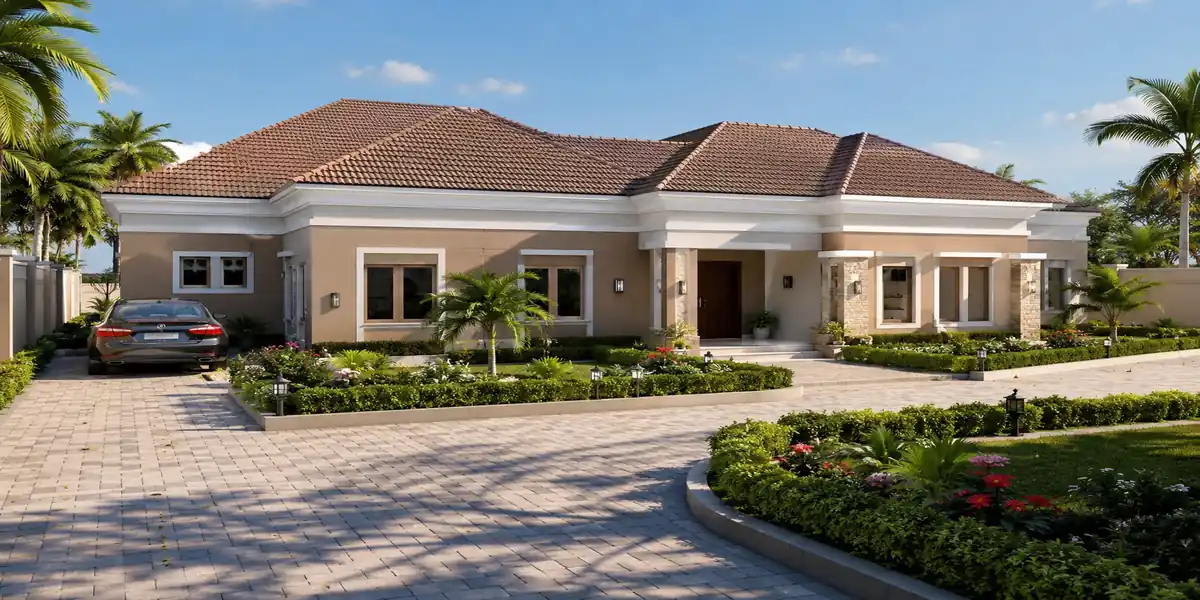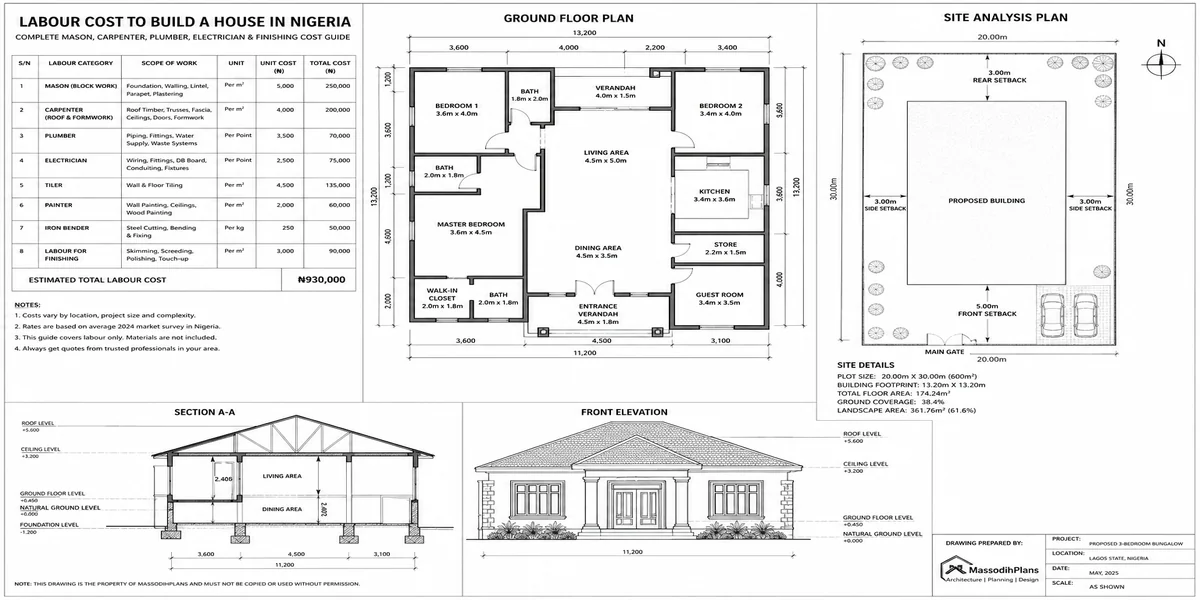
labour cost house nigeria
A client once handed me a Bill of Quantities he had prepared himself, proud of how thoroughly he had priced every bag of cement, every length of iron rod, every roofing sheet. Materials were accounted for down to the last block. Labour was one line at the bottom: “Labour ₦5,000,000.” No trade breakdown, no phase breakdown, no basis for the number at all just a guess sitting under a very precise materials list. Three months into construction, that single line had already cost him ₦9 million, and he had no way to know whether that was normal or whether he was being overcharged, because he had never actually understood what he was paying for.
This is the single most common budgeting mistake I see, and it’s why this guide exists. Materials get all the attention because they’re tangible you can see a bag of cement, price it, and compare suppliers. Labour is treated as an afterthought precisely because it’s harder to picture. But labour typically accounts for 30–40% of your total construction cost, and unlike materials, it varies enormously by trade, skill level, payment structure, and how well you manage it. Treat it as a rounding error at the bottom of your budget, and it will behave like one unpredictably.
Why Labour Deserves Its Own Budget Line, Not a Guess
Materials and labour are fundamentally different expenses, and budgeting them the same way is where most cost overruns start.
Materials have a fixed, checkable price. A bag of cement costs what it costs at the depot that day, and you can verify it. Labour, by contrast, is priced through negotiation, skill level, payment structure, and how the work is scoped which means two houses of identical size can have labour bills that differ by millions of naira, entirely apart from materials.
Labour costs also don’t scale in a straight line the way material costs roughly do. A 20% increase in floor area doesn’t mean a flat 20% increase in labour cost, because some labour costs (site supervision, mobilization, complex detailing) are semi-fixed regardless of size, while others (bricklaying, tiling) scale directly with area. Understanding this difference is what separates a budget you can trust from one that quietly falls apart mid-project.
Ask your quantity surveyor for a trade-by-trade labour schedule, not a lump labour figure, before construction starts. If they can’t break it down by mason, carpenter, electrician, plumber, and finishing trades, the number wasn’t properly costed it was estimated.
How Labour Is Actually Priced in Nigeria: Three Different Systems
Before the trade-by-trade rates, you need to understand that “labour cost” isn’t one pricing system it’s three, and confusing them is where most people get overcharged.
1. Day Rate (Labourer Paid Per Day Worked)
Common for masons, general labourers, and sometimes carpenters and painters. You pay a daily rate regardless of how much work gets done that day. This gives you the most control but requires active site supervision an unsupervised day-rate worker has no incentive to work efficiently.
2. Contract/Lump Sum (Fixed Price for a Defined Scope)
Common for roofing, plumbing installation, electrical wiring, and finishing trades. You agree a fixed price for a clearly defined scope of work (e.g., “wire this 4-bedroom duplex completely” or “tile these three bathrooms”). This shifts efficiency risk onto the tradesperson but only works if the scope is written down precisely vague scopes lead to disputes over what was actually included.
3. Labour-Only Contracting (You Supply Materials, They Supply Labour)
A hybrid common with mason/bricklaying teams and finishing artisans you buy and deliver the materials, they charge purely for the work of installing or applying them. This gives you control over material quality and cost while still paying a defined labour price, and is often the most cost-effective structure for a self-managed build.
Never mix pricing systems without writing down which one applies to which trade. A common dispute I see is a client assuming a “contract price” covers everything, while the tradesperson assumes certain tasks were day-rate extras always confirm in writing what’s included before work begins, not after a disagreement arises.
Mason and Bricklaying Labour Cost
Masons/bricklayers are usually your first major labour cost, starting from foundation and continuing through block work.
- Day rate: ₦8,000 – ₦18,000 per day, depending on city and experience level
- Block-laying by area (common for wall construction): often priced per square metre of walling rather than by day once work is underway at scale
- Foundation labour (as part of a broader excavation/block package): typically bundled into the substructure contract rather than priced purely by mason day rate
What actually drives the cost, beyond the base day rate:
Foundation type a raft or pile foundation (common on waterlogged Lagos soils) demands more skilled mason time than a standard strip foundation
Wall complexity curved walls, feature walls, or non-standard block patterns take longer than straight runs
Site conditions a site with poor access for material delivery slows mason productivity and can push effective daily cost up even at the same quoted rate
Carpenter Labour Cost
Carpentry work splits into two distinct categories that are frequently confused when people ask “how much does a carpenter cost.”
Structural/Site Carpentry
Roof trusses, formwork for concrete, and general site carpentry typically priced by day rate.
- Day rate: ₦7,500 – ₦22,000, varying significantly by city and complexity of roof design
Joinery and Finishing Carpentry
Kitchen cabinetry, wardrobes, door frames, and custom furniture almost always priced per project, not per day, because the scope and material quality vary too much for a day rate to make sense.
Kitchen cabinetry: commonly quoted as a full project price based on linear metres of cabinet run and finish level
Wardrobes: similarly priced per unit/room based on size and finish
For joinery work, always get quotes based on a fixed specification (materials, finish, hardware brand) rather than a vague description like “standard wardrobe.” Two carpenters quoting for “a standard wardrobe” can differ by 300% once you discover one meant laminate board and the other meant solid wood with soft-close hinges.
Plumber Labour Cost
Plumbing labour is scoped in two phases that get budgeted very differently.
Rough-In (Pipework During Construction)
Installing water supply lines, drainage pipes, and preparing points before walls are finished typically priced as part of a broader plumbing contract tied to the number of bathrooms, kitchen, and outdoor points.
Fixture Installation and Finishing
Fitting toilets, sinks, showers, and taps once finishing begins.
- Day rate: ₦9,000 – ₦22,000, depending on city and skill level
- Full bathroom plumbing labour (fixtures and connections): typically ₦150,000 – ₦500,000 per bathroom in labour alone, separate from the cost of the fittings themselves
- Simple fixture replacement/repair labour: ₦15,000 – ₦50,000 per task
The gap between rough-in and finishing labour is where budgets most often go wrong people price the visible fixtures (which look expensive) and forget that the invisible pipework underneath is its own substantial labour cost.
Electrician Labour Cost
Electrical labour, like plumbing, splits into rough-in wiring and finishing/fixture work.
- Day rate: ₦10,000 – ₦30,000, depending on city and experience
- Full house rewiring/first-fix wiring for a standard 3-4 bedroom home: commonly quoted as a project price rather than a day rate, often ₦500,000 – ₦1,500,000+ in labour depending on house size and complexity
- Basic electrical work (socket replacement, lighting points) on smaller scopes: ₦50,000 – ₦200,000
What pushes electrical labour cost up beyond the base rate:
Smart home wiring and automation prep more complex routing and testing than standard wiring
Generator/inverter integration additional panel work and changeover switch installation
Security lighting and CCTV conduiting often quoted separately but frequently forgotten in the initial electrical budget entirely
Finishing Trades: Tilers, Painters, and POP/Ceiling Installers
Finishing labour is where the widest cost variation exists, because skill differences show up directly in the visible result.
Tilers
- Day rate: ₦8,000 – ₦18,000 for standard work; specialist tilers handling large-format tiles, intricate patterns, or natural stone can charge significantly more
- Pricing is sometimes done per square metre once the scope is defined, particularly on larger jobs
Painters
- Typically priced per room or per project based on wall area and number of coats, rather than a flat day rate, since painting productivity varies with surface preparation needs
POP/Ceiling Installers
- Usually priced per project based on ceiling design complexity a flat POP ceiling costs meaningfully less in labour than a multi-level design with cove lighting recesses
The gap between a “regular” finishing tradesperson and a specialist is real, and it shows. A specialist tiler charging noticeably more than a standard quote is often the right choice for feature areas (bathrooms, kitchen splashbacks) where poor workmanship is highly visible and expensive to redo but that premium doesn’t need to apply to every surface in the house. Match specialist-level spending to the areas where quality is most visible.
Unskilled Labour: The Line Item Everyone Forgets
Every skilled trade on a construction site depends on unskilled labour sand carrying, mixing, site cleanup, material offloading and this is almost never budgeted separately, even though it’s a real, ongoing cost throughout the entire build.
- Day rate: ₦4,000 – ₦7,500 per worker
- A typical mid-sized residential site runs 2–4 unskilled labourers continuously through the structural phases, and this cost accumulates over months, not days
Skipping this line in your budget doesn’t make the cost disappear it just means it shows up as an unplanned recurring expense you didn’t account for.
Site Supervision and Foreman Cost
Someone has to coordinate all of the above, and this role has its own real cost that’s frequently left out of labour budgets entirely.
- Foreman/site manager: ₦150,000 – ₦400,000 per month, depending on project complexity and how much authority they hold (materials procurement, worker scheduling, quality checks)
- Architect’s construction supervision (if separate from the foreman): typically built into the architect’s overall fee percentage rather than a separate line
Skipping proper supervision to save this cost is one of the most expensive false economies in Nigerian residential construction poor supervision is where wasted materials, rework, and schedule delays actually come from.
Regional Labour Cost Comparison
Labour rates in Nigeria are not uniform, and this affects your total budget significantly depending on where you’re building.
| Trade (Day Rate) | Lagos | Abuja | Port Harcourt / Smaller Cities |
|---|---|---|---|
| Mason | ₦8,000 – ₦18,000 | ₦7,000 – ₦16,000 | ₦6,000 – ₦13,000 |
| Carpenter | ₦7,500 – ₦22,000 | ₦6,500 – ₦19,000 | ₦5,500 – ₦15,000 |
| Plumber | ₦9,000 – ₦22,000 | ₦8,000 – ₦19,000 | ₦7,000 – ₦15,000 |
| Electrician | ₦10,000 – ₦30,000 | ₦9,000 – ₦25,000 | ₦7,500 – ₦18,000 |
| Unskilled labourer | ₦4,000 – ₦7,500 | ₦3,500 – ₦6,500 | ₦3,000 – ₦5,500 |
Lagos and Abuja generally sit 20–40% above smaller cities across most trades, driven by cost of living and demand rather than a difference in skill quality a well-trained tradesperson in Port Harcourt or Uyo is not necessarily less skilled than one in Lagos charging double.
Worked Example: Labour Cost Breakdown for a Standard 4-Bedroom Duplex
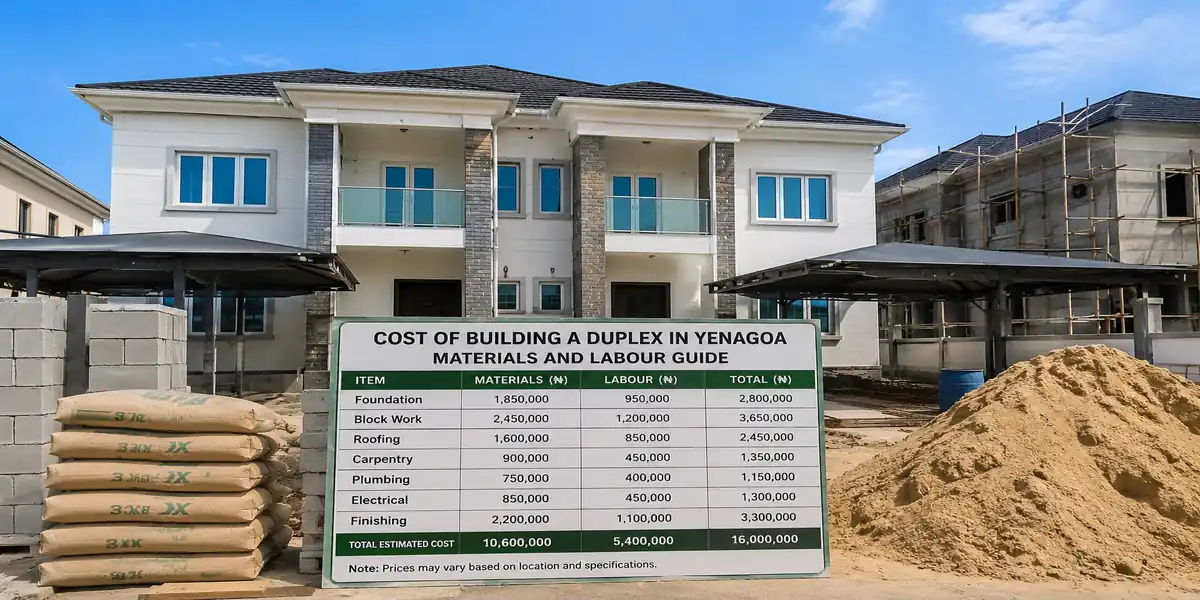
To make this concrete, here is a realistic labour-only breakdown (excluding materials) for a mid-range finished, roughly 280 sqm duplex in Lagos, built over approximately 12 months.
- Mason/bricklaying labour (foundation through block work): ₦8,000,000 – ₦14,000,000
- Carpenter labour (structural/roof + joinery): ₦6,000,000 – ₦11,000,000
- Plumber labour (rough-in + fixture installation): ₦3,000,000 – ₦6,000,000
- Electrician labour (wiring + fixtures + smart-home prep): ₦2,500,000 – ₦5,500,000
- Finishing trades (tiling, painting, POP): ₦4,500,000 – ₦9,000,000
- Unskilled labour (across full build duration): ₦2,000,000 – ₦4,000,000
- Site supervision/foreman (12 months): ₦1,800,000 – ₦4,800,000
Estimated total labour cost: ₦27,800,000 – ₦54,300,000, which typically lands close to the commonly cited 30–40% of total construction cost once materials are added on top.
Once you have your own trade-by-trade estimate, sanity-check it against this rule: if your total labour figure is under 25% of your total construction budget, either your material costs are unusually high or your labour has been underpriced and underpriced labour is one of the most reliable early warning signs of corners being cut somewhere on site.
How Payment Structure Affects Both Cost and Risk
How you pay labour matters almost as much as how much you pay.
Milestone-based payment (a percentage released at defined completion stages foundation complete, roofing complete, etc.) is the safest structure for you, since it ties payment to verified progress rather than time or promises.
Full upfront payment for any trade is the highest-risk structure and should generally be avoided regardless of how trustworthy the tradesperson seems it removes your only real leverage if work quality or pace falls short.
Weekly/bi-weekly day-rate payment works well for masons and general labour under active supervision, but requires you or your site manager to actually track attendance and output, not just sign off on request.
Common Ways People Overpay (or Underpay and Regret It) on Labour
Not writing down scope before agreeing a contract price, leading to disputes over what was included once work is underway
Paying full upfront for finishing trades, removing all leverage if quality disappoints
Skipping site supervision to save cost, which almost always costs more in rework than the supervision would have
Chasing the cheapest quote on every trade, rather than matching spend to where quality is most visible and consequential (structural work and feature finishing areas)
Never renegotiating rates for repeat trades across project phases, even though a mason team you’ve already worked with successfully often has room for a fairer rate on the next phase given the established relationship
Labour typically represents 30–40% of total building cost in Nigeria, with skilled artisan rates varying between Lagos, Abuja, and other cities by as much as 20%. Budgeting against that proportion, rather than an arbitrary lump figure, is the most reliable way to sanity-check any labour estimate you’re given.
Frequently Asked Questions
What percentage of my total building budget should go to labour?
Roughly 30–40% is the typical range in Nigeria, though this shifts depending on finish level highly finished projects often see labour’s share rise because finishing trades are labour-intensive relative to their material cost.
Should I pay tradespeople daily or by contract?
It depends on the trade. Masons and general labour are commonly paid daily under supervision; plumbing, electrical, and finishing work are more reliably priced as a fixed contract for a clearly written scope, since this shifts efficiency risk to the tradesperson.
Why do labour quotes vary so much between tradespeople for the same job?
Skill level, whether materials are included, how precisely the scope was defined, and location all affect quoted price always confirm exactly what a quote includes before comparing it against another.
Is it worth paying more for a specialist tradesperson?
For structurally critical work and highly visible finishing areas (bathrooms, feature walls, kitchen cabinetry), yes poor workmanship in these areas is expensive and disruptive to redo. For less visible or less critical work, a competent standard-rate tradesperson under good supervision is usually sufficient.
How can I avoid being overcharged for labour in Nigeria?
Get a trade-by-trade written scope and price before work begins, use milestone-based payments rather than upfront lump sums, and budget site supervision as its own cost rather than skipping it to save money.
Final
Materials get the spreadsheet attention because they’re easy to price and compare. Labour decides whether that carefully priced material list actually becomes a well-built house or an expensive series of corrections — and it deserves a budget line that’s just as detailed. Price it by trade, structure payment around verified milestones, and never let “labour” sit as one guessed number at the bottom of your Bill of Quantities again.
If you’re preparing to build and want your labour and material costs properly broken down before you start, our Services page outlines how we support clients through Bill of Quantities preparation and site supervision. Browse our Plans Library for house plans you can get accurately costed, or visit Plan School to understand the building process stage by stage. You can also explore more cost guides on our Homepage. see Lagos permit
Related Guides
- Semi-Detached House Plans: Modern Duplex and Bungalow Designs With Shared Walls, Dimensions, Costs and Layout Ideas
- How to Draw a House Layout Plan: 10 Step-by-Step Guide From Plot Dimensions to Rooms, Doors, Windows and Setback
- How to Draw a Neighbourhood Plan (SPAR): Step-by-Step Guide to Roads, Plots, Land Use, Setbacks and Layout Design
- Courtyard House Plans: Beautiful 2–6 Bedroom Designs With Private Outdoor Spaces, Floor Plans and Dimensions
- Contemporary House Plans: Modern 2–6 Bedroom Designs With Open Layouts, Large Windows, Dimensions and Costs
- House Finishing Cost in Nigeria: Complete Breakdown of Tiles, Painting, Ceiling, Doors, Plumbing and Electrical Work
- Foundation Cost Calculator: Estimate House Foundation Cost From Soil Type, Dimensions, Materials and Labour
- Block Quantity Calculator: How to Calculate the Number of Blocks Needed for Any House From Your Floor Plan
- Cement Quantity Calculator for Building: Calculate Bags Needed for Foundation, Blockwork, Slab, Plastering and Screeding
- Self-Contained House Plans: 15 Efficient Designs With Room Dimensions, Floor Plans, Building Costs and Ideas
- 1 Bedroom House Plan: Affordable Self-Contained Floor Plans With Dimensions, Materials, Cost and Space-Saving Ideas
- 6 Bedroom House Plans: Modern Nigerian Floor Plans With Dimensions, Ensuite Rooms, Parking and Cost Estimates