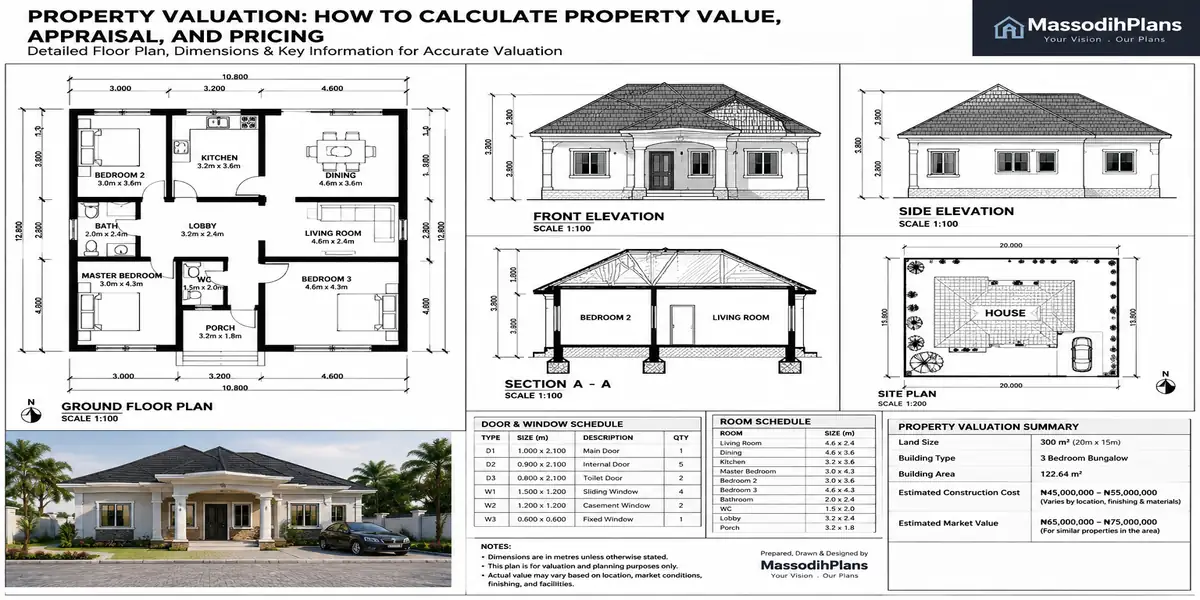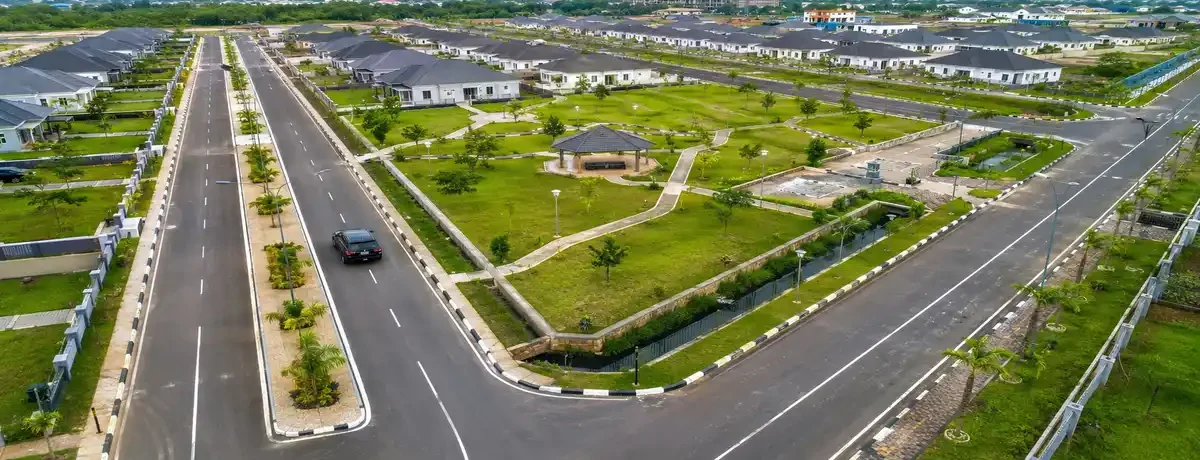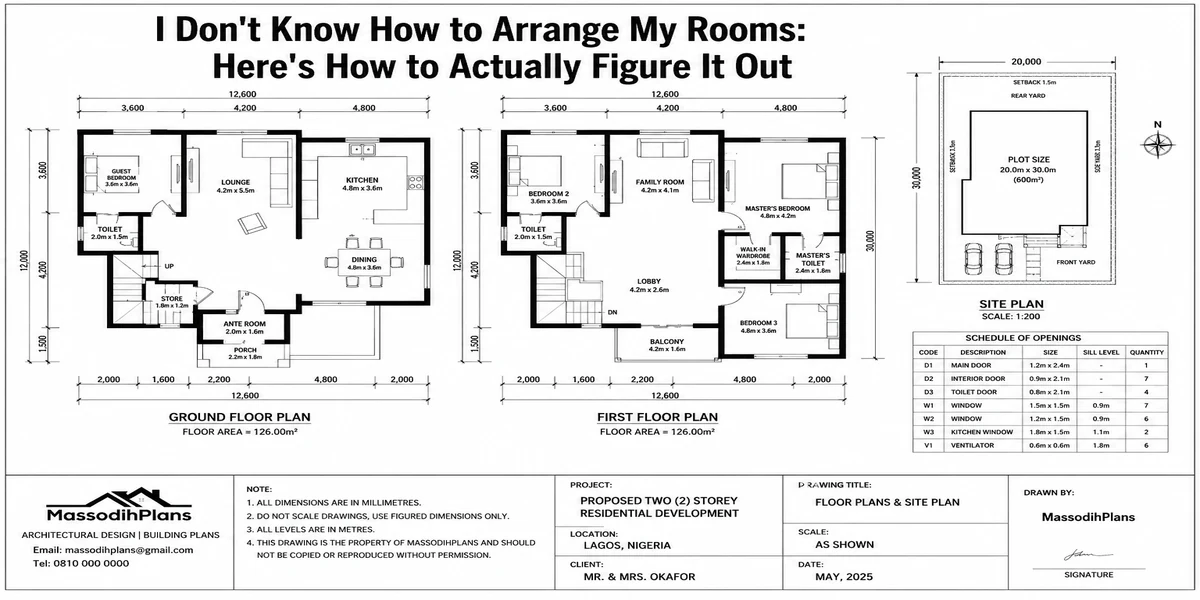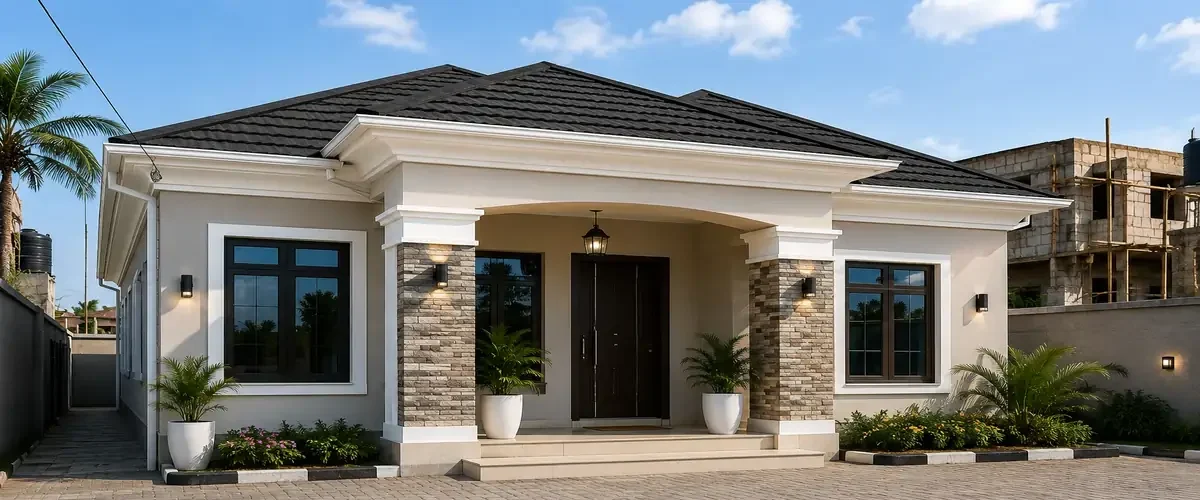
A property developer reviewing approved building plans on a Nigerian construction site before work begins
The Building Regulations That Can Save Your Property from Demolition in Nigeria
Before You Lay a Single Block, Read This
Yes, you must get approved building plans before construction starts in Nigeria. That is the short answer. The full answer is what will save your building from government demolition, protect your investment, and keep you out of serious legal trouble. I have seen what happens when people skip this step. I do not want it to happen to you.
Every week across Nigerian cities, buildings come down. Not because they were badly built. Not because the land was wrong. But because the owner never followed the rules. In Uyo, in Lagos, in Port Harcourt, in Abuja. The story is always the same. Someone bought land, hired a builder, started work, and then one morning the government officials arrived. No prior building approval. No statutory compliance. Demolition notice. Sometimes even arrest.
In my over 15 years of practice as a Registered Town Planner and Architectural Designer here in Akwa Ibom State and across South-South Nigeria, I have worked with clients at every stage of property development. The ones who follow the rules sleep at night. The ones who skip them spend years trying to regularize or reverse damage that should never have happened.
This article is not about theory. It is about what you actually need to know, do, and watch out for when developing any property in Nigeria. I will walk you through everything step by step in the simplest language possible. Let us begin.
What Are Building Regulations in Nigeria?
Building regulations are the rules that govern how buildings are designed, sited, and constructed in Nigeria. They cover everything from how far your building must sit from the road, to how high your fence can go, to how many windows your rooms must have.
At the University of Uyo, one thing our lecturers constantly emphasized was that building regulations exist not to punish developers but to protect them, their occupants, and the public. I agreed then. I agree even more now. Every regulation you see has a reason behind it, usually a disaster that happened somewhere before.
The main legal frameworks guiding building regulations across Nigeria include:
- The Nigerian Building Code (NBC) 2006, which establishes national minimum standards for all construction
- State Urban and Regional Planning Laws (each state has its own version)
- The Land Use Act of 1978, which governs land ownership and Right of Occupancy
- Local Government Development Control Regulations
- Structural, Mechanical, and Electrical Engineering Standards
From a planning perspective, I strongly recommend that before you buy any land or sign any contract with a builder, you visit your state Ministry of Physical Planning or Urban Development. Ask what rules apply to that specific location. This one step can save you millions of naira.
If you are designing a house on a small or irregular plot, our Plan School section has step-by-step guides to help you understand how to work within regulatory setbacks even on tight land.
Building Plan Approval: The Most Important Step You Cannot Skip
Let me tell you something that surprises many first-time developers. It is not enough to just draw a plan. You must submit that plan to the appropriate government authority and wait for an official stamp of approval before you break ground.
This process is called development permit or building plan approval, and it is mandatory in every state in Nigeria. The authority that handles this depends on your location. In Uyo, Akwa Ibom State, you deal with the UCCDA. And in Lagos, it is the Lagos State Building Control Agency. In Abuja, it is the Federal Capital Territory Development Control.
During my internship, I observed that most building approvals in South-South Nigeria take between 30 and 90 days when all documents are correct. Delays almost always happen when documents are missing, the site plan does not match what the surveyor submitted, or the proposed design violates setback rules.
What Documents Do You Need for Building Plan Approval?
- Survey Plan from a licensed surveyor, showing your plot boundaries and coordinates
- Architectural Drawings prepared and signed by a registered professional (architect or town planner as authorized)
- Structural Engineering Drawings signed by a registered structural engineer
- Soil test report in some states and for certain building types
- Certificate of Occupancy (C of O) or Letter of Allocation showing you legally own or occupy the land
- Application letter to the appropriate development control authority
- Completed application forms with prescribed fees
One lesson I learned early is that submitting incomplete documents is one of the costliest mistakes a developer can make. It resets your approval timeline completely. Always compile everything first before submission.
| Expert Note: Unapproved Buildings |
| Building without approval is illegal in every Nigerian state. Even if your structure stands for years, |
| you remain exposed to government demolition at any time. Unapproved buildings cannot be legally sold, |
| used as loan collateral, or transferred without complications. Do not take this risk. |
Understanding Setback Rules and How They Affect Your Plot
Setback is the minimum distance your building must maintain from a boundary. From the road. And from your neighbour. From the back fence. This is one of the most misunderstood aspects of building regulations I encounter, and it catches so many developers off guard.
Over the years, I have noticed that when people buy a plot and excitedly call a builder to ‘plan for them’, the first thing that builder does is push the building to the edges to maximize space. That impulse is understandable. But it creates serious problems.
Most Nigerian building codes prescribe the following typical setbacks for residential buildings. Please note that your state may differ:
| Setback Type | Typical Minimum Distance |
| Front setback (from road/street) | 3 metres to 6 metres depending on road classification |
| Side setback (from neighbour) | 1.5 metres to 3 metres each side |
| Rear setback (from back fence) | 3 metres minimum |
| Building line (major roads) | 9 metres to 15 metres on trunk roads |
| Corner plot extra setback | Additional 1.5 metres on corner side |
I once reviewed a plan where a client had placed the building only 0.5 metres from his front fence on a residential street in Uyo. His builder had told him this was fine. It was not. We had to redraw the entire layout to comply. He lost three weeks and paid for the redesign. Setbacks are not negotiable.
If you are working with a small plot, you want your building positioned correctly from day one. Browse our Plans Library where all our house plans are already designed to respect standard Nigerian setback requirements.
Plot Size, Dimensions, and Minimum Plot Standards
This is Nigeria. Land prices are painful. But the regulations do not care about that. There are minimum plot sizes for different uses and different zones across the country.
During site analysis assignments at the University of Uyo, we were regularly asked to identify plot sizes that did not meet planning standards. This opened my eyes to how common non-conforming plots are in our cities, especially in older and unplanned areas.
Typical Residential Plot Size Standards
| Plot Category | Typical Minimum Size |
| Low-density residential | 600 sqm to 1,200 sqm and above |
| Medium-density residential | 300 sqm to 600 sqm |
| High-density residential | 150 sqm to 300 sqm |
| Commercial plot | Varies by state, usually 300 sqm minimum |
| Mixed-use plot | Usually above 450 sqm depending on state |
If your plot falls below the minimum standard for your zone, you may not be able to develop it for your intended use without a formal rezoning application. This is not a death sentence, but it means more paperwork, more time, and sometimes more money.
From a planning perspective, I strongly recommend that when you see a plot advertised at a suspiciously low price per square meter, you investigate what zone it falls in before you buy. A plot in a flood-prone zone or an already over-developed corridor may carry restrictions that make your intended project impossible.
Room Arrangement, Ventilation, and Minimum Room Standards
One area where building regulations really protect ordinary Nigerians is in the minimum standards for room sizes and ventilation. These rules exist because in the past, developers built rooms so small and airless that they became health hazards.
Minimum Room Dimensions Under the Nigerian Building Code
| Room Type | Minimum Floor Area (NBC Standard) |
| Master bedroom | 12 sqm (approximately 3m x 4m) |
| Other bedrooms | 9 sqm minimum |
| Living room / sitting room | 12 sqm minimum |
| Kitchen | 5.6 sqm minimum |
| Bathroom | 1.5 sqm minimum |
| Toilet (separate) | 1.1 sqm minimum |
| Store / utility room | No minimum but must be accessible |
Beyond size, every habitable room must have windows for natural light and ventilation. The Nigerian Building Code specifies that window area should be at least 10% of the floor area of any habitable room. That means a 12 sqm bedroom needs at least 1.2 sqm of window opening.
In my experience, one of the biggest mistakes builders make in South-South Nigeria is skimping on ventilation because they think a ceiling fan handles it. It does not. In our hot and humid climate, cross-ventilation through properly positioned windows is not a luxury. It is a health necessity.
| Nigerian Climate Reality Check |
| Uyo, Port Harcourt, Calabar and most of South-South Nigeria sit in a tropical rainforest climate. |
| Heat and humidity are your enemies if your building is poorly ventilated. |
| Always orient your main windows to catch the prevailing southwest breeze. |
| Louvers and casement windows work better in our climate than fixed glass panes. |
| Do not allow any builder to block your side setback with extensions – this kills your ventilation. |
We have detailed guides on ventilation and room positioning in our Plan School for Nigerian climate conditions. Check them out.
Height Restrictions and Floor-to-Ceiling Standards
Every floor has a minimum height in Nigeria. This is not optional. The Nigerian Building Code requires that habitable rooms have a minimum floor-to-ceiling height of 2.4 metres. But in practice, experienced builders in our climate will tell you that 2.7 metres or even 3 metres makes the room feel cooler and more comfortable.
In one housing layout project I worked on in Akwa Ibom, we specified 2.7 metre ceiling heights across all floors as a deliberate design choice. The client initially protested because it added cost to plastering. Three years later, he told me his tenants always comment on how cool his apartment feels compared to neighboring buildings. Ceiling height matters more than people think.
For height restrictions above ground, most residential zones in Nigeria restrict buildings to:
- Low density zones: Maximum 2 floors (ground plus one)
- Medium density zones: Maximum 3 to 4 floors (with lift requirements above 3)
- High density / commercial zones: Depends on plot ratio and state policy
- Airport vicinity: Height restrictions enforced by Nigerian Civil Aviation Authority
If you want to build above 2 floors, you must include a structural engineer’s certification, and in most states you need additional approvals. Do not just add floors because you have the blocks. Get clearance first.
Land Use Zoning: Building the Right Thing in the Right Place
Zoning is the system by which government allocates land for different uses. Residential. Commercial. Industrial. Institutional. Mixed use. Agricultural. Every plot in a properly planned area falls under one of these zones, and what you are allowed to build is determined by that zone.
This is something I have encountered many times in my practice. A client comes with plans to build a shopping plaza on land allocated for low-density residential. The design is beautiful. The financing is ready. But the land use does not support commercial activity. Everything must stop until a change of use application is processed and approved. That process can take six months to two years.
Common Zoning Categories and Their Permitted Uses
| Zone | What You Can Build |
| Low Density Residential (LDR) | Detached bungalows, low-rise duplexes, guesthouses |
| Medium Density Residential (MDR) | Semi-detached, terrace houses, small flats |
| High Density Residential (HDR) | Blocks of flats, tenement buildings, high-rise apartments |
| Commercial Zone | Shops, offices, banks, markets, petrol stations |
| Mixed Use Zone | Shops on ground floor, apartments above |
| Industrial Zone | Factories, warehouses, workshops |
Before you buy any land, please check our Services page where we offer professional land use consultation and zoning verification for clients across Akwa Ibom and Rivers States.
Nigerian Reality Layer: What the Regulations Do Not Say But You Must Know
Here is the part most Nigerian architecture and planning websites do not tell you. The regulations are one thing. The on-ground reality is sometimes very different. Let me share what I have seen in practice.
Power Supply and Generator Space
The National Building Code does not specifically mandate generator space in residential buildings. But in Nigeria, with the electricity situation we have, failing to plan for a generator is planning to fail. In my experience, any residential building above 3 bedrooms should allocate a minimum of 4 sqm for a generator house or enclosure, away from sleeping rooms and clearly ventilated.
Borehole and Water Storage Planning
Public water supply in most Nigerian cities is unreliable. Before you finalize your building layout, decide where your borehole will go, where your overhead tank will sit, and how the pipes will run. The borehole should be at least 15 metres away from your septic tank. This is not just a regulation. It is a public health standard. I have seen families fall ill because this distance was not respected.
Flooding and Drainage Regulations
Nigeria has a serious flooding problem, especially in the south. Building regulations require that no building should be constructed within flood-prone areas without specific engineering interventions. Your floor level must be raised above the 1-in-50-year flood level for your area. In practice, this means raising your slab level at least 600mm to 900mm above surrounding ground level in many parts of South-South Nigeria.
During my undergraduate studies in Town Planning, one of the most powerful studio exercises we did was flood risk mapping for sites in Uyo. It showed clearly how much of residential Uyo sits within flood risk corridors. If your plot floods during heavy rain, talk to a professional before you build. Do not ignore it.
Drainage Channelling on Your Plot
Your building regulations require you to channel surface water away from your building and eventually to the nearest drainage channel. You cannot block drainage from neighboring plots. You cannot channel your own runoff into the road without a properly designed culvert. These are enforceable conditions of your building permit.
Compound Security, Fence Height, and Gatehouse Position
Most states allow perimeter fences between 1.8 metres and 2.4 metres in residential areas. Commercial and industrial fences can go higher. Your gatehouse, if any, must be within your setback allowance and cannot project beyond your fence line onto the road reserve. A common mistake I have seen repeatedly is gatehouses built right at the road edge, blocking driver sight lines. This is illegal and dangerous.
| Practical Drainage Advice from the Field |
| Always run a drainage channel around the perimeter of your building slab. |
| Connect it to a soak away or storm drain at the lowest point of your plot. |
| Never fill your compound with concrete without leaving drainage paths. |
| A fully concreted compound with no drainage becomes a swimming pool during heavy rain. |
| This observation comes from practical field experience across multiple projects in Akwa Ibom and Rivers State. |
Roofing Regulations, Roof Type, and Nigerian Climate Considerations
The roof is arguably the most important part of any building in Nigeria. It protects against rain, controls interior temperature, and in many ways determines how long your building will last. Building regulations have specific requirements for roofing.
Approved Roof Types Under Nigerian Standards
- Hip roof: Most stable in high-wind areas; fully compliant in all states
- Gable roof: Common and acceptable; but end walls must be adequately braced
- Flat roof (concrete slab): Acceptable with proper waterproofing and drainage falls
- Mansard roof: Used in high-density developments; structurally complex
- Mono-pitch roof: Acceptable for extensions and service buildings
In South-South Nigeria, the hip roof is the design I personally recommend most often. Our wind speeds during harmattan and rain season can be very aggressive, especially in exposed locations. The hip roof distributes wind load more evenly than a gable roof. Working alongside experienced planners taught me that the traditional gable roof with inadequate bracing is one of the most common causes of roof failure we see after storms.
Roofing materials must comply with fire resistance and wind load standards. This means asbestos roofing sheets are no longer acceptable by regulation. Long-span aluminum and stone-coated steel roofing tiles meet current standards and are widely available in Nigeria.
For guidance on choosing the right roof design for your building type, visit the MassodihPlans Plan School for detailed tutorials specifically written for Nigerian conditions.
Construction Experience Layer: What Builders Usually Get Wrong
I will be very direct here. Some builders in Nigeria know how to construct. Very few understand building regulations. This gap causes problems. Here is what I have seen repeatedly on sites across Akwa Ibom and Rivers States.
Mistake 1: Ignoring Column Placement Regulations
Structural columns must be designed and positioned by a qualified structural engineer. I have seen houses where the builder placed columns based on his own judgment. The result was rooms that could not be used as intended, walls that cracked, and in one case a roof that nearly collapsed because the load path was wrong. Structural engineering is not guesswork.
Mistake 2: Using Wrong-Grade Concrete
The Nigerian Building Code specifies minimum concrete grades for different structural elements. Foundation concrete must meet minimum Grade 20 (1:2:4 mix). Column and beam concrete should be minimum Grade 25 (1:1.5:3). Many local builders still use rough proportions by eye. This is not acceptable. If I were advising a client today, I would insist on using a concrete cube test for any multi-storey building.
Mistake 3: Reducing Rebar Sizes to Save Cost
Material prices in Nigeria fluctuate wildly. When iron rods become expensive, some builders quietly reduce the diameter of reinforcement bars. From Y16 to Y12. From Y12 to Y10. This saves money in the short term. In the long term, it reduces the load capacity of your slabs and beams. I have seen this mistake lead to premature cracking and structural failure. Never let cost savings compromise your reinforcement specification.
Mistake 4: Building Without Regular Supervision
My internship experience reinforced the importance of professional supervision at every stage of construction. Regulations actually require that buildings above a certain size have professional supervision. Even where it is not enforced, please hire someone to supervise your project. Not just to watch. To check materials, verify measurements, review workmanship, and catch errors before they are buried in concrete.
| Supervision Tips from the Field |
| Inspect foundation excavation before any concrete is poured. |
| Check column reinforcement cage placement before casting. |
| Verify slab thickness at multiple points during casting. |
| Never allow concrete to be poured at night – you cannot inspect what you cannot see. |
| Ask your supervisor to take dated photographs at every critical stage. |
| These are not formalities. They are the difference between a building that lasts 50 years and one that does not. |
Parking, Access, and Road Reserve Requirements
Parking standards are part of building regulations in most Nigerian states. Depending on your building type, you are required to provide a minimum number of parking spaces within your plot.
| Building Type | Minimum Parking Requirement |
| 3-bedroom residential house | 1 car space minimum |
| 4 to 5 bedroom house | 2 car spaces minimum |
| Duplex or flats (per unit) | 1 to 2 car spaces per dwelling unit |
| Commercial building | 1 space per 50 sqm of floor area (varies by state) |
| Place of worship / school | Subject to specific traffic impact assessment |
This is not just a regulatory requirement. It is practical. I have worked with clients who maximized their footprint to the point where they could not park even one car on their own property. They parked on the road. Their tenants parked on the road. Neighbors complained. In some states, this can result in a revocation of occupancy permit.
Also remember: the road reserve in front of your plot belongs to the government. You cannot build on it, not even a gate or a step. You cannot fence across it. Your front setback begins from the edge of the road reserve, not the edge of the road itself. Confirm this distance with the relevant authority before designing your fence.
Small Plot Strategy: How to Maximize Your Space Within Regulations
If you have a small plot in Nigeria, which many of us do, building regulations feel like they are working against you. Front setback eats space. Side setbacks eat more. Rear setback eats the rest. What is left? Sometimes very little.
But this is not a reason to panic or to build illegally. It is a reason to design smarter. Based on projects I have worked on with clients who had plots as small as 9 metres x 15 metres, here is what works:
Compact Luxury Concepts That Work
- Go vertical: Where regulations allow two floors, build up rather than out. A two-storey building on a small plot can give you the same habitable area as a sprawling bungalow on a larger one
- Open-plan living: Combining sitting room, dining, and kitchen in one flowing space reduces corridor waste and makes a small house feel significantly larger
- Multifunctional rooms: A study that doubles as a guest bedroom. A landing that doubles as a reading corner. Design rooms that serve more than one purpose
- Eliminate unnecessary corridors: Every unnecessary corridor costs you precious space without adding liveable area
- Exploit ceiling height: Higher ceilings make small rooms feel larger and improve ventilation, both important in our climate
For ready-made designs already optimized for small Nigerian plots, browse our full Plans Library on MassodihPlans. All our plans are drawn to scale and dimensioned in metres.
Designing for Real Nigerian Family Life
Regulations tell you the minimum. Good design goes beyond the minimum to serve your actual life. Here is what I have found matters most to Nigerian families.
Family Layout and Guest Privacy
In Nigerian culture, guests arrive unannounced. Frequently. Your living and guest areas need to be positioned so that visitors do not walk through private family spaces to reach a seat. A well-designed Nigerian home has a clear separation between public and private zones. The entrance leads to the sitting room, not through the bedrooms.
Children and Elderly Accessibility
If you have elderly parents living with you, ground floor bedrooms with adjacent bathrooms are not just convenient. They are essential. Stairs become obstacles for elderly people. If you are building a duplex, ensure at least one bedroom and one bathroom exist on the ground floor. Building regulations in some states now require accessibility features for buildings above a certain size.
Work-from-Home Considerations
Since 2020, work-from-home has become a real part of Nigerian professional life. In my experience, a dedicated study or home office space, even a small one of 6 sqm, adds enormous practical value and resale appeal to any house. You do not need to make it a regulation room. Just plan it properly from the start.
Future Family Growth
I always ask my clients one question: where do you see this house in 10 years? Because families grow. Children arrive. Parents move in. Businesses start. A house designed only for today will be inadequate by tomorrow. If regulations allow it, design your building with future extensions in mind. Leave structural provision for a second floor even if you cannot build it today. Plan your foundation to carry the load.
How Regulatory Compliance Affects Your Property Value
My experience in planning and design has shown me that a compliant building is worth significantly more than a non-compliant one of identical physical quality. Here is why this matters for your investment.
Banks and Mortgage Finance
If you want to use your property as collateral for a bank loan, it must have an approved building plan and ideally a Certificate of Occupancy. Banks will not accept non-compliant buildings as security. Period. If you want access to mortgage finance for your property, compliance is not optional.
Resale Value and Buyer Confidence
A buyer who does their due diligence will ask for your approved plan and C of O. If you cannot produce them, you either lose the buyer or accept a significantly lower price. I have worked with clients who tried to sell non-compliant buildings and spent years trying to regularize approvals retrospectively. It is far easier and cheaper to comply from the start.
Estate and Community Development Value
In planned estates where all buildings comply with regulations, property values are consistently higher than in areas where regulation is ignored. Compliance signals quality. Quality attracts premium buyers. Premium buyers mean better resale values over time. This is not just theory. The evidence from projects I have worked on points to this conclusion consistently.
Rental Profitability
Tenants, especially corporate tenants and expatriates, ask for documentation. A building with proper approvals commands higher rent and attracts more reliable tenants. The compliance cost at the start is an investment that returns multiple times over the life of the property.
If you need professional help navigating building approvals or designing a compliant building for investment purposes, our Services page covers professional plan preparation, regulatory submissions, and project supervision across South-South Nigeria. Building Code
Frequently Asked Questions About Building Regulations in Nigeria
1. Can I start building before my plans are approved?
No. You must receive written approval from the relevant development control authority before breaking ground. Building without approval is an offence under virtually all Nigerian state planning laws and can result in demolition, fines, or both.
2. What happens if I build without a C of O?
You can still build legally with a Right of Occupancy (R of O) or Letter of Allocation while your C of O is being processed. However, building without any form of recognized land title is very risky. Your property can be seized or disputed. Get your land title sorted before you build.
3. How much does building plan approval cost in Nigeria?
Fees vary by state and plot size. In Akwa Ibom State for a standard residential building, approval fees typically range from N80,000 to N500,000 depending on building type and floor area. Lagos, Abuja, and Rivers State fees can be significantly higher. Always get the current schedule from the relevant authority directly.
4. Does my fence need planning approval too?
Yes, in most states. A perimeter fence exceeding 1.8 metres typically requires development approval. Even if your state does not strictly enforce this, ensure your fence sits within your plot and does not encroach on the road reserve or your neighbor’s land.
5. Can I convert my residential building into a commercial one?
Only after you have applied for and received a change of use permit from your state development control authority. Converting without approval is illegal and can result in closure orders.
6. Do I really need a structural engineer if I am just building a bungalow?
The Nigerian Building Code requires structural engineering input for most permanent buildings. Even for a simple bungalow, having a structural engineer verify your foundation design and reinforcement specifications protects your investment. A poorly designed foundation is the single most expensive mistake in construction to fix after the fact.
Quick Summary: Common Mistakes to Avoid
- Building without getting approved plans first
- Ignoring setback requirements to maximize plot coverage
- Not checking land use zoning before buying or developing
- Underestimating drainage and flood risk on your plot
- Using wrong concrete grades or reducing rebar sizes
- Not allocating space for generator, borehole, and septic systems
- Building a gatehouse or fence on government road reserve
- Failing to hire professional supervision for your construction
- Designing without considering future family needs or expansion
- Assuming verbal permission from a government official is the same as written approval
Finally: Build Right, Build Once, Build for Generations
If there is one thing I want you to take away from everything I have written here today, it is this: building regulations in Nigeria are not your enemy. They are your protection.
They protect your building from structural failure. And they protect your investment from demolition. They protect your family from flooding, poor ventilation, and inadequate space. They protect your future ability to sell, mortgage, or expand your property.
I have been doing this work for over 15 years. And I have seen what happens to people who cut corners. I have also seen the quiet confidence of people who built right. Who sleep without fear of government officials. And who sell their properties easily. Who watch their buildings stand strong through decades of Nigerian weather and use.
That is what I want for you.
If you need help navigating these regulations for your project, whether it is preparing building plans for approval, verifying your land use zone, or getting professional supervision for your site, my team and I are available. We have done this across Akwa Ibom, Rivers State, and beyond. We can do it for you too.
Start with our Services page to see how we can help you with regulatory compliance and professional plan preparation.
Browse compliant, dimensioned Nigerian house designs in our Plans Library where all plans already factor in standard setback and room size regulations.
Learn more about building processes, room standards, and design principles in our Plan School section, written specifically for Nigerian builders, homeowners, and developers.
Or return to the MassodihPlans homepage to explore everything we have to offer on Nigerian architecture and town planning.
Share this article with someone who is about to start building. You might just save them from a very costly mistake.
Related Post
- GIS Applications in Urban Planning: Real-World Examples That Work
- How to Read a Survey Plan in Nigeria Without Hiring an Expert
- Why Building Plans Get Rejected in Nigeria and How to Get Approval Fast
- National Building Code of Nigeria Explained for Beginners
- Step-by-Step Tutorial for Drawing a Bungalow Plan
- Luxury 5 Bedroom Duplex Plan With Penthouse in Nigeria
- What Makes a Good Estate Layout Plan? A Practical Guide for Nigeria and Beyond
- Architectural Engineering and Architectural Design Courses for House Building Plans
- Cost of Master Plan Preparation for Communities and Institutions
- Master Plan Preparation Process Explained Step by Step
- Cost of Building a House in Uyo: Honest Budget Guide for Property Owners
- Housing Estate Layout Plan: Why Every Estate Needs One in Nigeria and Beyond
- 2 Bedroom Flat Plan for Narrow Plots in Nigeria: Complete Layout, Dimensions, and Building Guide
- Commercial Development Planning Costs: What Every Investor Must Know Before Spending a Kobo
- Why District Planning Is Important for Urban Development
- Site Development Plan Cost: What Every Property Owner Must Know Before Building
- Environmental Management Plan Cost Guide for Developers in Nigeria and Beyond
- Survey Plan Cost in Nigeria: Fees, Process and Hidden Expenses
- Layout Plan Cost in Nigeria and Abroad: What Every Landowner Must Budget Before Building
- 7 Small Plot Design Mistakes Nigerians Make (And How to Fix Them)