What Architectural Design Courses Really Teach About Your House Plan
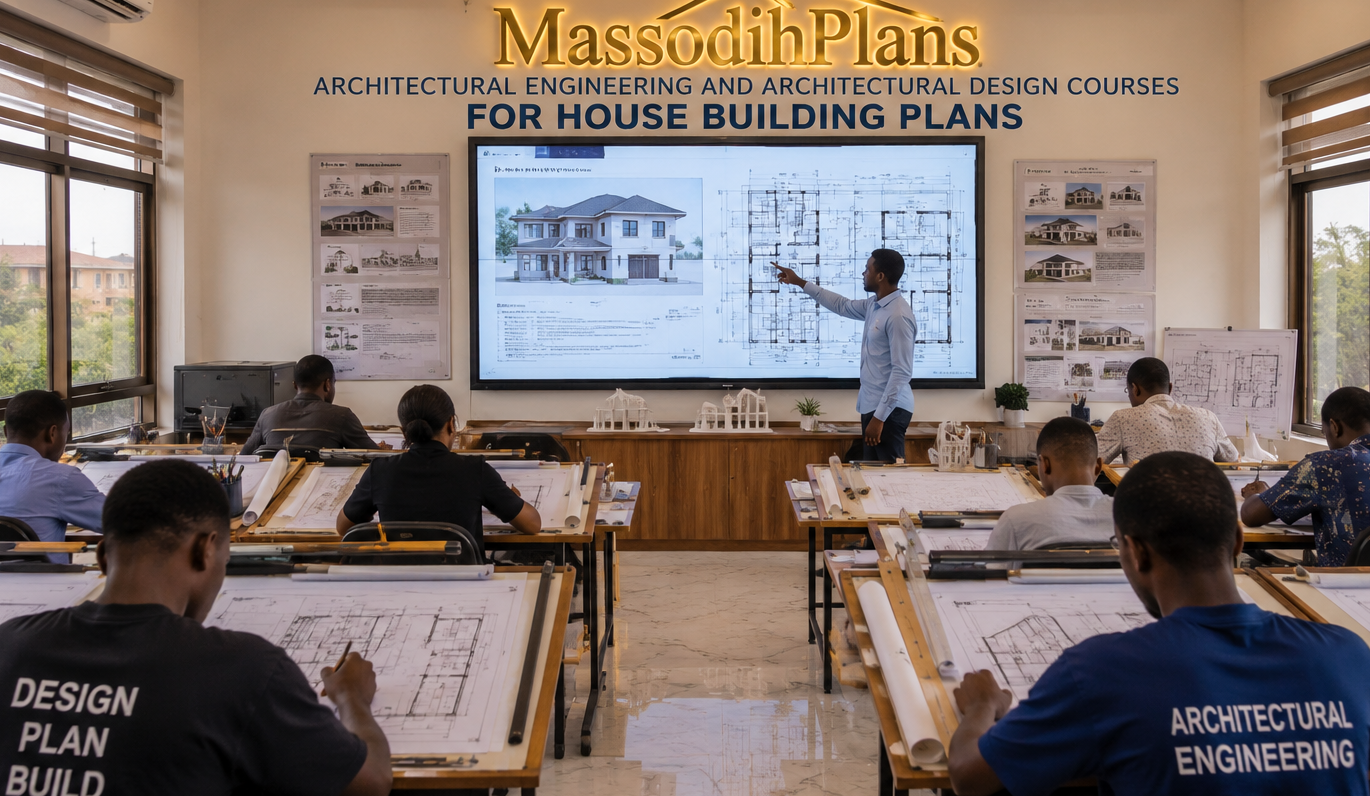
Architectural Engineering and Architectural Design Courses for House Building Plans
If you are about to build a house, whether you are in Uyo, Lagos, Abuja, or any other part of the world, and you keep seeing terms like architectural engineering, architectural design, or town planning courses, here is the answer you came here for. These courses are simply the training that decides whether the house plan you pay for will solve your problems, or create new ones for you and your family. In my over fifteen years of preparing building plans and development plans across South-South Nigeria and beyond, I have seen both outcomes many times, on small urban plots and on large compounds alike.
Here, I will explain, in the simplest language I can manage, what these courses actually teach, why it matters for the plan sitting on your table or in your head right now, and how this knowledge can protect your money, your land, and your peace of mind for years to come. No big grammar here. Just practical talk, from someone who has sat in the lecture hall, walked the site, and sat behind the drawing board.
What Architectural Design Training Actually Covers
Architectural design is the course that teaches a person how to turn an idea, a dream, or a need, into a building that actually works. During my undergraduate studies in Town Planning at the University of Uyo, I shared several courses with architecture students, and I saw closely what their training involves.
In simple terms, architectural design training covers things such as:
- How to study a piece of land and understand what it can carry
- How to arrange rooms so that the house flows well from one space to another
- How to bring in light and fresh air without depending only on air conditioners
- How to choose a roof type, wall finish, and window style that suit the local climate
- How to make a house look attractive while still being practical and affordable to build
One thing our lecturers constantly emphasized was that a beautiful drawing that cannot be built, or that does not answer the client’s real needs, is not good architecture. It is just a nice picture. This is the foundation that architectural design courses lay, and it is the first thing you should expect from anyone preparing a serious house plan for you.
What Architectural Engineering Adds to the Picture
Architectural engineering, often studied as part of building engineering or civil engineering with an architectural bias, focuses more on how the building stands up and performs over time. While architectural design asks how a house should look and feel, architectural engineering asks whether the house will stand, and whether it will last.
From what I have seen in practice, this area of training covers things such as:
- How loads move through columns, beams, and foundations
- How to choose materials that can handle Nigerian weather, from heavy rains to harsh sun
- How services like plumbing, electrical wiring, and drainage fit into the structure
- How to plan for future additions without weakening the existing building
I have worked with clients who assumed that one person, often called the architect, handles everything from the drawing to the structural calculations to the site supervision. In practice, in a properly run professional team, these are different specializations that work together. An architect or architectural designer creates the design and layout, a structural or architectural engineer confirms that the structure can carry the loads safely, and on many of my projects, a town planner like myself ensures the layout respects setbacks, land use regulations, and the surrounding development pattern.
To make this clearer, here is a simple breakdown of who typically does what on a Nigerian house building project:
| Professional | Main Focus on Your Project | Nigerian Regulatory Body |
| Architect | Overall design, space planning, appearance, and coordination of the project | ARCON |
| Architectural or Structural Engineer | Structural safety, foundations, loads, and choice of materials | COREN |
| Town Planner | Land use, plot suitability, setbacks, and development control compliance | TOPREC |
| Architectural Designer or Draughtsman | Producing working drawings based on a design, usually under supervision | Varies, often works under a registered professional |
Why You, as a Future House Owner, Should Care About All This
You may be asking, I am not going to school for architecture, so why does this concern me? Here is why.
Many people assume that any person who can use a drawing software is qualified to design a house plan. Experience has taught me that this assumption is one of the most expensive mistakes a building owner can make. The quality of the training behind your plan affects:
- Whether your rooms will receive enough natural light and cross ventilation
- Whether your drainage will work, or your compound will flood after every heavy rain
- Whether your plan will pass through your state’s physical planning approval process without long delays
- Whether your house will be comfortable to live in for the next twenty, thirty, or forty years
- Whether you can resell or rent out the property easily in future
I have reviewed plans where the drawing looked attractive on paper, but once you study it carefully, you find that the kitchen has no proper ventilation, the toilets are facing the wrong direction for drainage, or the setbacks do not meet the local development control standards. This is one of the most common misconceptions I encounter, that a fine looking plan is automatically a correct plan. They are not always the same thing.
What Proper Training Teaches a Designer to Look at on Your Plot
This is the part most people skip past, but it is the heart of the matter. Below are the areas that solid architectural design and engineering training should prepare a professional to handle on your behalf, with real examples from projects I have worked on.
Plot Suitability and Recommended Land Size
During site analysis assignments at university, we were taught to study a plot before suggesting any design, not after. A well trained designer will ask about your plot size, shape, orientation, soil type, and access road, before recommending a particular house type.
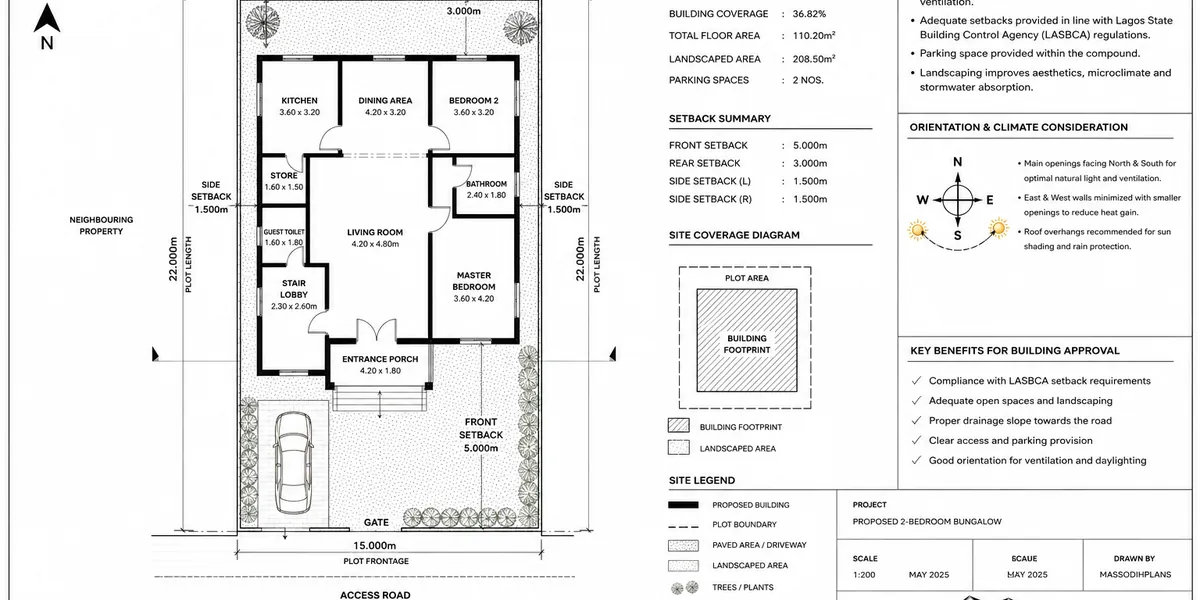
For example, on a plot of about 50 feet by 100 feet, which is common in many Nigerian cities including Uyo, a well planned three bedroom bungalow can fit comfortably with a small compound, parking space, and even room for a gatehouse. Try to force a duplex with a swimming pool on the same plot, and you will end up with a house that touches the fence on all sides, with no breathing space. If I were advising a client today with a plot that size, I would recommend starting with a clear conversation about what the land can realistically support, before falling in love with a particular design picture seen online. You can browse layouts for plots of similar sizes in our Plans Library to get a realistic sense of what fits before you commit to a design.
Floor Arrangement and Room Functionality
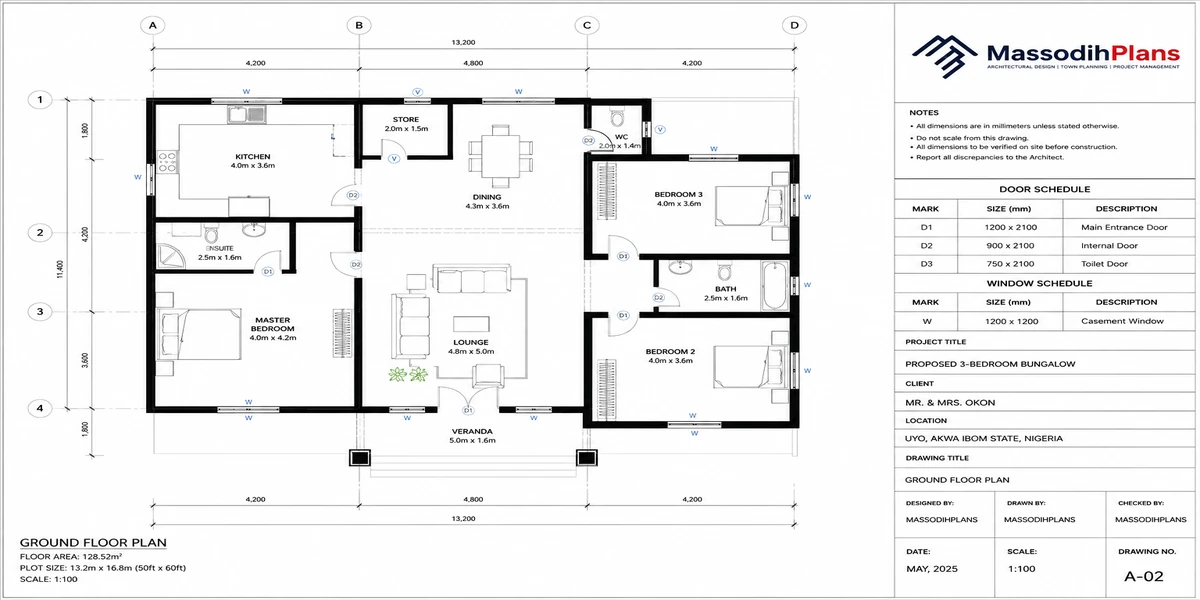
One thing our lecturers constantly emphasized was that every room must justify its position on the plan. Training in architectural design teaches a designer to ask simple but important questions. Should the kitchen be close to the dining area or the back door for deliveries and waste disposal? And should the master bedroom be far from the sitting room for privacy? Should the children’s rooms be close to each other for easy supervision?
I once reviewed a plan where the main bedroom shared a wall directly with the sitting room, with no buffer space at all. The client later complained that every conversation in the sitting room could be heard in the bedroom. This is the kind of issue that proper training in room arrangement is designed to prevent from the very beginning, not patch up after the building is complete.
Ventilation and Natural Lighting
From what I have seen in practice, ventilation and lighting are some of the most underrated aspects of a house plan, yet they affect daily comfort more than almost anything else.
Architectural design training teaches concepts like cross ventilation, where windows are placed on opposite or adjacent walls so that air can move through a room rather than sit stagnant. It also teaches how window sizes and positions affect how much daylight a room receives, which can reduce how much you depend on electric lighting during the day. In a country where power supply is not constant, a bedroom or sitting room that depends fully on air conditioning and electric bulbs because it has only one small window is not a well designed space. This is something I have encountered many times, especially in plans that were copied from foreign magazines without adjusting for our climate.
Roofing Style and Nigerian Climate Suitability
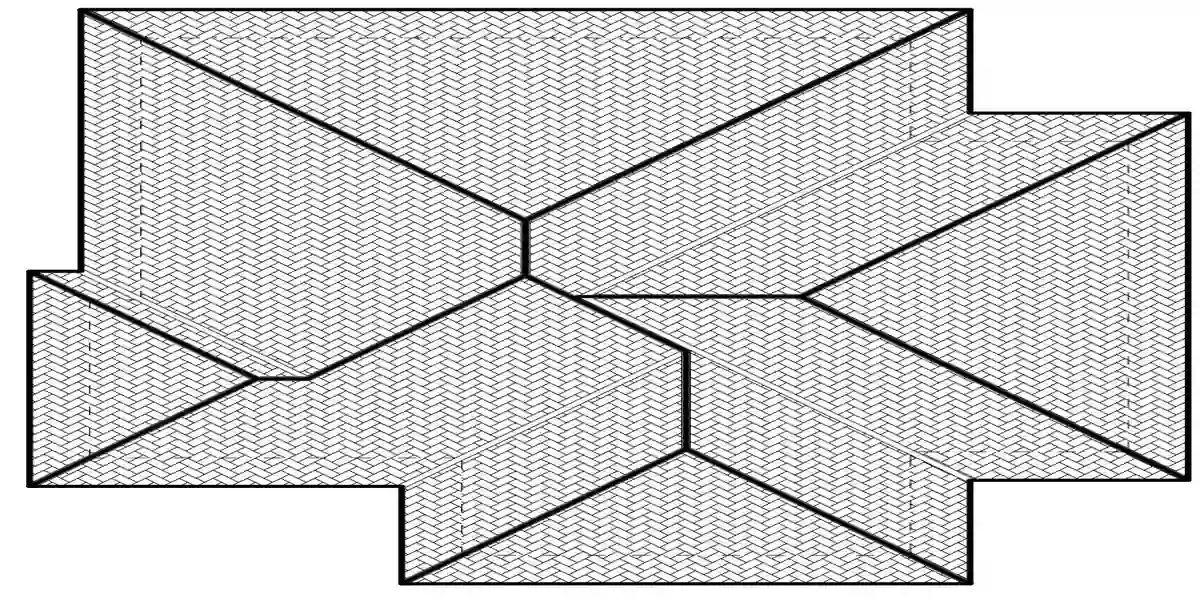
Roofing is another area where training matters a lot. Courses that cover building materials and construction technology teach designers how roof pitch, overhang length, and material choice affect how a building handles heavy rainfall and strong sun.
In practical terms, what usually happens is that a roof design copied from a country with a different climate, for example a very flat roof with little or no overhang, performs poorly here. Rainwater can find its way into walls, and the sun heats up the ceiling space quickly, making upper floors uncomfortably warm. Based on projects I have worked on, roofs with reasonable pitch and generous overhangs, paired with proper ceiling insulation where possible, perform much better for Nigerian conditions, both for comfort and for protecting the building fabric over time.
Drainage, Compound Arrangement, and Parking
This is one of the most common misconceptions I encounter, that drainage is something to think about after the building is complete. In reality, proper training teaches that drainage planning starts at the same time as the layout of the compound. A well planned compound considers:
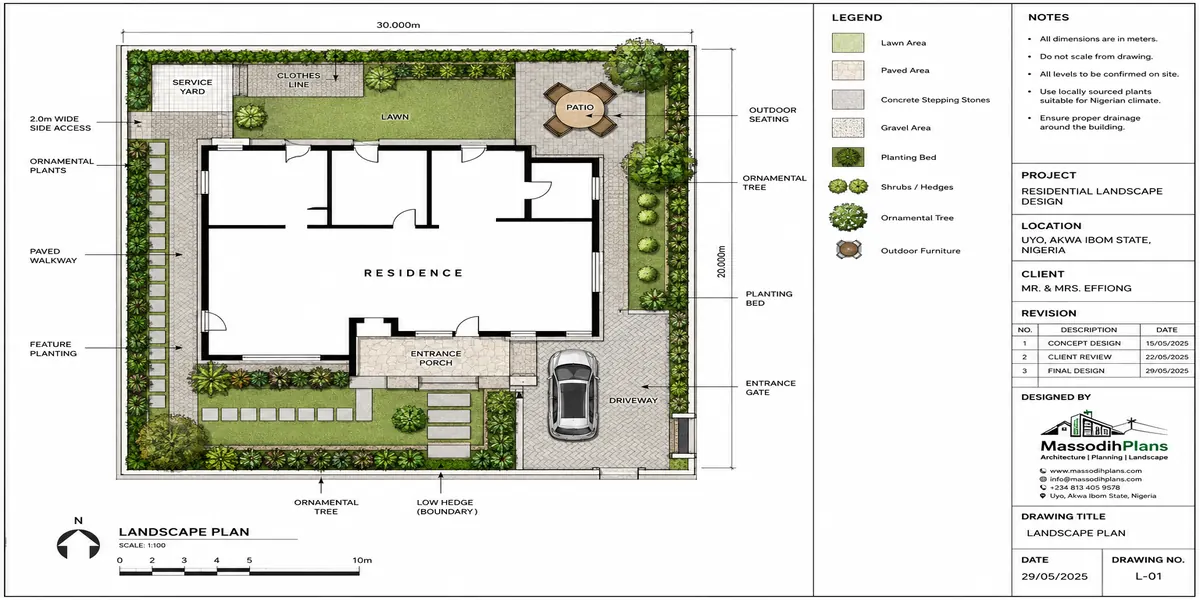
- The natural slope of the land, so that water flows away from the building, not towards it
- Where the parking area sits in relation to the main entrance and the gate
- Where soak away pits or connections to public drains will go
- How much hard surface, such as concrete or paving, versus green area the compound will have
I have seen this mistake repeatedly, compounds that are fully concreted from fence to fence, with no proper drainage channels, leading to water sitting on the surface or finding its way into the building during heavy rains.
Security, Privacy, and Future Expansion
Security and privacy considerations are also part of what proper design training covers, especially in the Nigerian context. This includes things such as:
- Positioning the gatehouse so that whoever is on duty has a clear view of the main gate and approach
- Designing fences and walls with both security and appearance in mind
- Making sure bedroom windows do not directly overlook a neighbour’s compound or a busy walkway
- Leaving room on the plot for future additions, such as an extra room, a boys quarter, or a second floor, without that future construction damaging the existing structure
If there is one thing I would encourage homeowners to do, it is to discuss your five to ten year plans with your designer before the foundation is laid, not after. A staircase position, a column size, or a foundation depth decided today can make future expansion either simple or almost impossible.
Staircase Planning, Balconies, and Interior Flow for Duplexes
For duplex designs, staircase planning is one of those details that separates a well trained designer from someone simply copying pictures. A poorly placed staircase can eat up valuable floor space, create an awkward path through the living areas, or make upper floor rooms feel cut off from the rest of the house.
During my training and in projects I have handled, I have learned to treat the staircase almost like a room of its own, considering its width, the headroom above it, where it lands on the upper floor, and how it connects to the balcony if there is one. Balconies, when properly planned, are not just decorative. They can provide shade to the rooms below, a private outdoor space for residents, and in many Nigerian homes, an additional area for relaxation in the evening. A balcony that is too small, or positioned where it receives full afternoon sun with no shade, often ends up unused.
The Nigerian Reality Layer Every Architectural Course Should Prepare You For
Classroom training gives a strong foundation, but the realities of building in Nigeria add another layer that every serious designer must understand. Working alongside experienced planners during my internship taught me that the gap between the drawing board and the construction site is filled with practical issues such as:
- Unstable material prices, where a plan that assumes a particular finish or roofing sheet may need quick alternatives if prices change suddenly during construction
- Power supply realities, which mean designs should consider generator space, ventilation for the generator house, and sometimes space for solar panel installations
- Flooding and water management, since many Nigerian towns, including parts of Uyo, have areas prone to flooding during the rainy season, and this affects how high a foundation should sit and how the compound is graded
- Heat management, where wall thickness, roof design, and window placement all contribute to how hot or cool a house feels without constant air conditioning
- Borehole and water supply planning, where space for a borehole, overhead tank, and underground tank should be considered early, not squeezed in later
- Compound security and gatehouse positioning, which is both a design matter and a practical safety matter
A practical lesson from my internship was that a design that looks perfect on paper, but ignores these realities, often gets modified on site anyway, sometimes in ways that affect the overall appearance and function of the building. Proper training should prepare a designer to plan for these realities from the start, not as an afterthought.
Small Plot Optimization: What Good Training Teaches About Tight Land
Land scarcity is a real issue, especially in fast growing cities. I have worked with clients on plots as small as 40 feet by 60 feet who still wanted a comfortable family home with modern features. This is where the depth of a designer’s training really shows. Skills that matter here include:
- Circulation efficiency, making sure corridors and movement paths do not waste space, while still connecting rooms logically
- Multifunctional spaces, such as a dining area that can also serve as a small home office, or a guest room that doubles as a study
- Narrow plot strategies, such as designing the building to run along the length of the plot rather than its width, to leave reasonable side spaces for ventilation and future maintenance access
- Compact luxury, achieving a premium feel through good finishing, lighting, and proportions, rather than through sheer size alone
On a project I worked on involving a narrow plot in an urban area, the client initially wanted a wide frontage design copied from a much larger plot online. After studying the actual plot dimensions, we adjusted the layout to run along the length of the land, which gave enough side space for windows on both sides of key rooms, something the original copied design could never have achieved on that plot.
Designing for Real Families: The Human Side of Architectural Training
A house plan is not just lines on paper, it is where a family will live, argue, laugh, host visitors, and grow older. Good architectural design training pays attention to this human side, including:
- Children’s movement, keeping children’s bedrooms within reasonable distance of the parents’ room, especially for young families, while still allowing some independence as children grow
- Guest privacy, arranging guest toilets and guest rooms so that visitors do not need to pass through private family areas
- Elderly accessibility, considering whether an elderly parent might need a room on the ground floor, with a bathroom that does not require navigating stairs
- Work from home considerations, since more people now work or run small businesses from home, a quiet corner or small room that can serve as an office is increasingly important
- Future family growth, designing in a way that allows a family to comfortably add a room or convert a space as the family size changes
This is not just theory, I have seen it happen. I have worked with clients who, two or three years after building, came back to discuss how to convert a store room into a small office, or how to add a room for a new family member. Where the original design left some flexibility, these changes were simple. Where it did not, they became expensive and disruptive.
Construction Experience: What Good Training Should Teach You to Watch For
Classroom training and site experience work together. While preparing site plans and during field inspections, I discovered that some of the most common construction problems are not because the plan was wrong, but because the plan was not properly followed, or the contractor made decisions on site without understanding the design intent.
Common issues I have seen include:
- Builders adjusting room sizes slightly during construction, which can affect furniture placement and door swings later
- Changing window positions without considering how it affects the ventilation pattern shown on the plan
- Skipping or reducing damp proofing details to save cost, which can lead to dampness problems later
- Material waste from poor planning of cutting sizes, especially for blocks, tiles, and roofing sheets
A practical lesson from my internship, and from years of site visits since then, is that a well trained designer does not just hand over a drawing and disappear. Part of proper training, whether from school or from experience, is learning how to communicate the design intent clearly to the builder, and how to supervise or guide construction so that small site decisions do not undo good design work.
| Common Mistake on Site | Why It Happens | Better Practice |
| Builder shifts room sizes during construction | Misreading dimensions or cutting corners on materials | Confirm dimensions with the designer before work goes beyond foundation level |
| Window positions changed without notice | Builder feels a different position looks better | Check with the designer first, since ventilation depends on window placement |
| Damp proofing reduced or skipped | Attempt to save cost | Treat damp proofing as non-negotiable, not optional |
| Roofing material substituted last minute | Price changes or material unavailability | Agree on acceptable alternatives with the designer in advance |
Investment Layer: Why Training Quality Affects Resale and Rental Value
If there is one thing I would encourage every house owner to think about, it is that a well designed house is also a financial asset, not just a place to live.
Based on projects I have worked on and properties I have observed in the rental and resale market, houses that were properly planned, with good room proportions, adequate ventilation, sensible layouts, and compliance with approval standards, tend to:
- Attract better tenants and command more realistic rents
- Sell faster when the owner eventually decides to sell
- Fit more easily into estate development plans, if the owner later decides to subdivide or develop more of the land
- Avoid the costly process of regularizing an unapproved or poorly planned structure later
I have reviewed cases where a property could not be used as collateral for a loan, or could not be sold easily, simply because the building plan was either missing, not approved, or significantly different from what was actually built. The training behind your plan, and the professional conduct that comes with it, including proper documentation and approval, has a direct effect on these outcomes. If you are unsure whether your current plan still fits your goals, a short consultation through our Services page can help you review it before construction goes too far.
How to Check the Background of Whoever Is Preparing Your House Plan
Given everything discussed so far, you may be wondering how to confirm that the person preparing your plan actually has the right training and standing. In Nigeria, professionals in the built environment are regulated by specific bodies, including:
- Architects, through the Architects Registration Council of Nigeria, known as ARCON
- Town Planners, through the Town Planners Registration Council, known as TOPREC
- Engineers, through the Council for the Regulation of Engineering in Nigeria, known as COREN
- Surveyors, through the Surveyors Council of Nigeria, known as SURCON
You can confirm an architect’s registration status through the ARCON website. While not every person who draws a house plan is required to be a fully registered architect for every type of project, working with someone who has gone through recognized architectural design or town planning training, and who can show evidence of that training, gives you a stronger foundation.
If I were advising a client today, I would say, do not be shy to ask your designer about their educational background, their registration status where applicable, and examples of similar projects they have handled. A confident, properly trained professional will not be offended by these questions.
Common Mistakes I See When Plans Skip Proper Architectural Training
Watch Out For These
- Copying foreign designs without adjusting for plot size, climate, or local regulations
- Ignoring drainage and compound layout until construction has already started
- Designing rooms based only on appearance, without checking ventilation or furniture fit
- Leaving no room at all for future expansion
- Skipping the approval process, which causes problems later when selling or transferring the property
- Treating the gatehouse, generator space, and borehole as afterthoughts rather than part of the design
Quick Summary: Key Takeaways
Before You Move Forward, Remember
- Architectural design training focuses on layout, comfort, and appearance, while architectural engineering focuses on structural safety and durability
- A well trained designer studies your plot before suggesting a house type, not after
- Ventilation, lighting, drainage, and roofing must be planned together with the Nigerian climate in mind
- Small plots need extra skill, not extra size, to feel comfortable
- Future expansion, family needs, and security should be discussed at design stage
- Check the background and registration status of whoever is preparing your plan before you commit
Frequently Asked Questions
What is the difference between an architect, an architectural designer, and a town planner?
An architect is registered with ARCON and is trained to handle the overall design, space planning, and appearance of a building, along with coordinating other professionals. An architectural designer or draughtsman often produces working drawings based on a design, sometimes under the supervision of a registered professional. A town planner, regulated by TOPREC, focuses on how a building fits into its plot, the surrounding area, and local development control standards, including setbacks and land use.
Do I need to take an architectural design course myself before I build?
No, you do not need to study architecture yourself. What this article is meant to do is help you understand enough about the training behind a good house plan, so that you can ask better questions, recognize warning signs, and work more confidently with the professionals you hire.
Can someone without formal training produce a usable house plan?
It is possible for someone without formal training to produce a drawing that looks like a house plan. However, based on projects I have reviewed, such plans often miss important details around ventilation, drainage, structural soundness, and approval requirements. The risk is not that the house will not be built at all, the risk is that problems will show up after money has already been spent on construction, when they are far more expensive to correct.
How do I know if my house plan meets approval standards in my state?
The safest approach is to work with a professional who is familiar with your state’s physical planning and development control requirements, and to submit your plan through the appropriate approval process before construction begins. If you already have a plan and are unsure whether it meets local standards, it is worth having it reviewed before you start building, not after.
Is architectural engineering the same as civil engineering?
They overlap but are not identical. Architectural engineering tends to focus on how engineering principles apply specifically within building design, including structures, materials, and building services. Civil engineering is a broader field that also covers roads, bridges, water systems, and other infrastructure beyond individual buildings. On a house project, the aspects that matter most to you are structural safety, foundation design, and material selection, which fall within this shared area.
What should I look for when choosing someone to prepare my house plan?
Look for evidence of relevant training in architectural design, architectural engineering, or town planning, a portfolio of similar projects, willingness to visit and study your actual plot before designing, and where applicable, registration with the relevant professional body such as ARCON, TOPREC, or COREN. A good professional will also be willing to discuss your budget, your family’s needs, and your future plans, not just hand you a generic drawing.
Finally: Your Next Step
Here is the honest truth I want you to walk away with. Architectural engineering and architectural design courses are not just academic titles on someone’s certificate. They represent the thinking, the questions, and the habits that go into a house plan that genuinely works for you, your family, your land, and your pocket, both now and many years from now.
Whatever stage you are at, whether you are still dreaming, already have a plot, or have a drawing in hand that you are unsure about, take a moment to look at it again with the points raised in this article. Ask about ventilation. And ask about drainage. Ask about future expansion. Ask about the training and experience of whoever is involved.
If you would like to see examples of well planned layouts for different plot sizes, you can explore our Plans Library. For more articles like this one, written to help you understand the building process in plain language, visit our Plan School. And if you would like a professional to look at your plot, your sketch, or your existing plan, you can reach out through our Services page, or start from our homepage to see everything we offer.
If this article helped you see your house plan a little differently, feel free to share it with a friend or family member who is also planning to build. The more people understand what should go into a good house plan, the fewer regrets we will all have to deal with later. Thank you for reading, and I wish you a smooth and well planned building journey.
Related Posts
- Cost of Master Plan Preparation for Communities and Institutions
- Master Plan Preparation Process Explained Step by Step
- Cost of Building a House in Uyo: Honest Budget Guide for Property Owners
- Housing Estate Layout Plan: Why Every Estate Needs One in Nigeria and Beyond
- 2 Bedroom Flat Plan for Narrow Plots in Nigeria: Complete Layout, Dimensions, and Building Guide
- Nigerian Estate Master Plan for Small Plots: Modern Residential Layout Strategies That Maximize Space
- 7 Small Plot Design Mistakes Nigerians Make (And How to Fix Them)
- Bungalow vs Duplex: Which is Better to build in Nigeria Today?
- Commercial Development Planning Costs: What Every Investor Must Know Before Spending a Kobo
- What Is a Master Plan and Why Does Every Growing Community Need One?
- What Is a Structure Plan and Why Does It Matter for Nigerian Towns?
- Why Local Development Plans Matter for Communities
- 25 Narrow PLot House Plans That Maximize Every Inch of Your Plot