Building Materials Checklist: 100+ Materials You May Need When Building a House
If you are asking what materials you need to build a house, the answer goes far beyond cement, blocks, sand and roofing sheets. A complete house may require 100 or more materials, fittings and components, covering everything from setting out and foundation work to structural construction, roofing, electrical installation, plumbing, ceilings, doors, windows, finishes and external works. The challenge is not simply knowing these materials exist it is knowing what you need, when you need it, and where each item fits into the construction process.
Many first-time builders discover this the hard way. A material may be forgotten until the work reaches the stage where it is urgently needed, while another may be purchased too early, stored badly and damaged before installation. Some items are obvious; others are easy to overlook until the contractor asks for them.
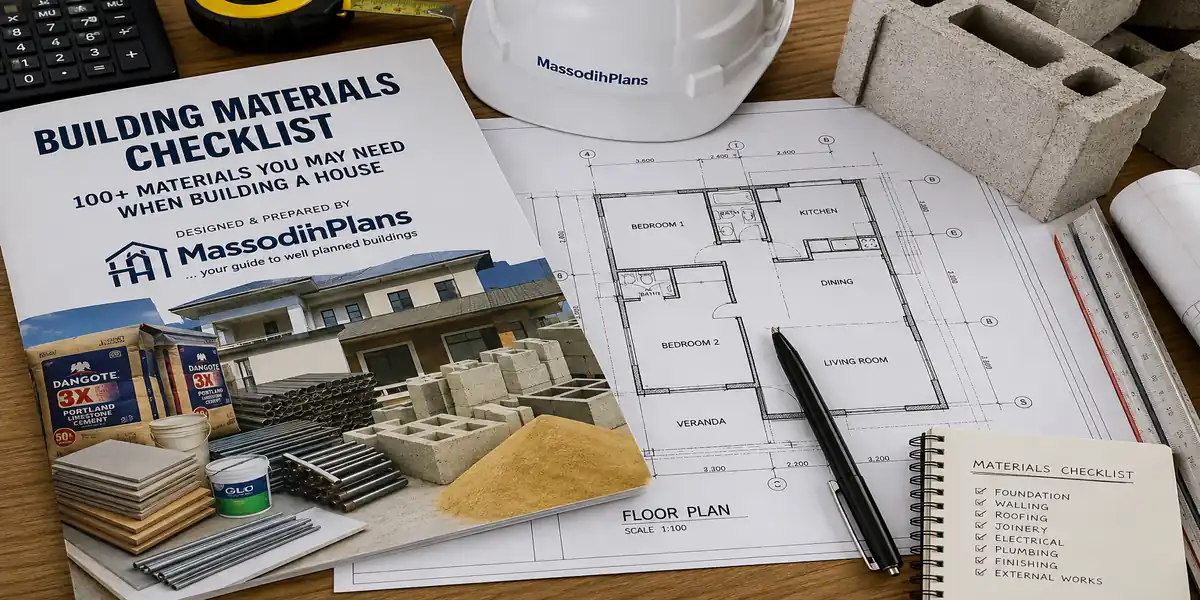
That is why MassodihPlans has organised this 100+ Building Materials Checklist around the major stages of house construction. Instead of giving you a random collection of building products, the checklist helps you see the materials involved from the ground up and understand how different components come together to complete a house.
You will find materials associated with foundations, walls, reinforcement, roofing, joinery, electrical and plumbing works, floor and wall finishes, painting, ceilings, sanitary installations and external development.
However, treat this as a planning reference, not a universal bill of quantities. The exact materials and quantities for your project will depend on your approved architectural and engineering drawings, building size, structural system, specifications, soil conditions, location and construction method.
Where quantities and technical specifications matter, always confirm them with your architect, engineer, quantity surveyor or qualified contractor.
Why You Need a Building Materials Checklist
A building materials checklist can help you:
- Organise materials by construction stage
- Reduce the chance of forgetting important items
- Plan your construction budget
- Compare suppliers
- Track materials purchased
- Monitor materials delivered to site
- Reduce unnecessary emergency purchases
- Improve communication with your contractor
- Keep records of project expenses
Most importantly, it helps you understand that construction materials should be planned before they are urgently needed not sourced in a panic when the mason is already standing idle waiting for blocks.
Important: Don’t Buy Everything at Once
Having a checklist does not mean you should purchase every material for the entire house immediately. This is one of the most common mistakes I see well-meaning clients make they get excited, get some money together, and buy roofing sheets before the foundation is even out of the ground.
Some materials can deteriorate, become damaged, get stolen, or unnecessarily tie up your money if they are stored on site too early. Materials should generally be purchased according to the construction programme and storage conditions.
For example, the materials needed for foundation works are entirely different from those required for painting and final finishes and buying them at the same time only invites theft, weather damage, and wasted capital sitting idle on your site.
Field Note: I always tell clients your money should arrive on site the same way the work does: in stages. Buying everything upfront doesn’t speed up construction; it just gives thieves and the weather more time to help themselves to your investment.
Stage 1: Site Preparation Materials
Before foundation construction begins, the site may require clearing, excavation, filling, levelling or other preparation.
Depending on the project, you may need:
☐ Laterite/fill material
☐ Hardcore
☐ Gravel
☐ Sand
☐ Water
☐ Pegs
☐ Setting-out materials
☐ String line
☐ Marking materials
☐ Timber stakes
☐ Temporary site barriers
☐ Protective materials
☐ Temporary storage materials
☐ Other site-specific materials
The exact requirements depend on the existing condition of the land and the construction method.
Stage 2: Foundation Materials
Foundation requirements vary considerably depending on the building design and ground conditions a fact I repeat to almost every client who tries to copy a neighbour’s foundation specification.
Possible materials may include:
☐ Cement
☐ Sharp sand
☐ Granite/aggregate
☐ Gravel
☐ Hardcore
☐ Reinforcement steel
☐ Binding wire
☐ Blocks where specified
☐ Damp-proof materials
☐ Concrete materials
☐ Timber/formwork materials
☐ Nails
☐ Water
☐ Polythene sheet where specified
☐ Waterproofing materials where required
☐ Foundation drainage materials where required
☐ Other specified materials
Do not choose foundation sizes or reinforcement specifications based on another person’s house. Foundation design should respond to the actual building and site conditions I have seen “borrowed” foundation specs cause serious problems on sites with different soil profiles.
Stage 3: Ground Floor and Floor Slab Materials
Depending on the construction system, materials may include:
☐ Hardcore
☐ Laterite/fill
☐ Sand
☐ Cement
☐ Granite/aggregate
☐ Reinforcement steel
☐ Binding wire
☐ Damp-proof membrane where specified
☐ Concrete
☐ Floor screed materials
☐ Formwork materials where required
☐ Compaction materials/equipment
Stage 4: Blockwork and Wall Construction
Once the foundation and floor-related work is ready, wall construction may begin.
Possible materials include:
☐ Sandcrete blocks
☐ Cement
☐ Sand
☐ Water
☐ Mortar materials
☐ Reinforcement materials where specified
☐ Lintels
☐ Wall ties where applicable
☐ Damp-proof course materials
☐ Nails
☐ Scaffolding materials
☐ Temporary supports
Check the blocks. Before purchasing large quantities, confirm:
☐ Correct block type
☐ Correct dimensions
☐ Adequate quality
☐ Appropriate strength for the intended use
☐ Consistency
Do not assume that every block sold in the market has the same quality I have inspected block-moulding yards where the difference in cement ratio between two “identical” batches was obvious just by tapping them.
Stage 5: Columns, Beams and Structural Concrete
Depending on the building design, reinforced concrete elements may require:
☐ Cement
☐ Fine aggregate/sand
☐ Coarse aggregate
☐ Reinforcement bars
☐ Binding wire
☐ Formwork timber
☐ Plywood where specified
☐ Nails
☐ Spacers/cover blocks
☐ Water
☐ Concrete-related accessories
☐ Scaffolding
Structural reinforcement sizes, spacing and concrete specifications should come from the appropriate structural design not guesswork, and never from a “site engineer” reciting numbers from memory.
Stage 6: Roofing Materials
The roof is one of the most visible components of a house, and one where quality shortcuts show up fastest sometimes within one rainy season.
Depending on the roof design, materials may include:
☐ Roofing sheets
☐ Timber
☐ Steel roof framing/components where specified
☐ Nails
☐ Screws
☐ Ridge caps
☐ Flashings
☐ Fascia boards
☐ Barge boards
☐ Gutters
☐ Downpipes
☐ Roofing accessories
☐ Waterproofing materials where specified
☐ Insulation where required
☐ Ceiling support components
☐ Roofing ventilation components where applicable
Before purchasing roofing materials, confirm:
☐ Roof type
☐ Roof pitch
☐ Roof area
☐ Roofing material specification
☐ Colour/finish
☐ Flashing details
☐ Gutter arrangement
☐ Drainage of roof water
Do not calculate roofing materials simply from the plot size. They should be based on the actual roof design I’ve had to correct more than one order that was based on “the plot is 60×100” rather than the actual roof plan.
Stage 7: Doors and Door Accessories
Doors can have a significant effect on both appearance and budget.
Possible materials include:
☐ External doors
☐ Internal doors
☐ Security doors
☐ Toilet/bathroom doors
☐ Door frames
☐ Hinges
☐ Locks
☐ Handles
☐ Door stops
☐ Door closers where required
☐ Bolts
☐ Thresholds
☐ Other door hardware
Door checklist for every door, confirm:
Location: __________________________
Size: ______________________________
Type: ______________________________
Material: ___________________________
Finish: _____________________________
Hardware: ___________________________
Stage 8: Windows and Glazing
Possible window-related materials include:
☐ Aluminium frames
☐ Steel frames where specified
☐ Glass
☐ Window handles
☐ Locks
☐ Mosquito screens
☐ Security bars where required
☐ Sealants
☐ Flashing
☐ Window sills
☐ Curtain/blind provisions
Before ordering windows, confirm the sizes from the approved drawings not by tape-measuring the rough openings after blockwork, which almost always produces mismatches.
Stage 9: Electrical Materials
Electrical materials should be specified and installed by appropriately qualified professionals. This is not a category to economise on with unlicensed labour.
Depending on the project, materials may include:
☐ Electrical cables
☐ Conduits
☐ Junction boxes
☐ Distribution board
☐ Circuit breakers
☐ Switches
☐ Socket outlets
☐ Light fittings
☐ Outdoor lights
☐ Security lights
☐ Earthing materials
☐ Electrical protection devices
☐ Cable accessories
☐ Ceiling rose/fittings where applicable
☐ Data/network cables
☐ TV cables
☐ Generator/changeover equipment where required
☐ Solar/inverter components where required
Do not choose cable sizes or protective devices simply because someone used them in another house. Electrical specifications should be properly determined for the project.
Stage 10: Plumbing Materials
Plumbing requirements depend on the number of bathrooms, kitchen, laundry areas and other water-consuming spaces.
Possible materials include:
☐ Water supply pipes
☐ Waste pipes
☐ Drainage pipes
☐ Pipe fittings
☐ Elbows
☐ Tees
☐ Valves
☐ Taps
☐ Connectors
☐ Floor drains
☐ Water tanks
☐ Pumps
☐ Water heaters where required
☐ Pipe supports
☐ Pipe insulation where required
☐ Sealants
☐ Plumbing accessories
Always confirm pipe sizes and specifications with the appropriate plumbing professional.
Stage 11: Bathroom Materials and Fittings
Bathrooms contain many individual components:
☐ WC/toilet
☐ Wash-hand basin
☐ Basin tap
☐ Shower
☐ Shower mixer
☐ Shower head
☐ Bathtub where required
☐ Floor drain
☐ Mirrors
☐ Towel rails
☐ Toilet-paper holder
☐ Soap holder/dispenser
☐ Bathroom accessories
☐ Wall tiles
☐ Floor tiles
☐ Tile adhesive
☐ Grout
☐ Waterproofing materials where specified
☐ Bathroom doors
☐ Ventilation provisions
Stage 12: Kitchen Materials and Fittings
A kitchen may require:
☐ Kitchen cabinets
☐ Wall cabinets
☐ Base cabinets
☐ Countertop
☐ Sink
☐ Sink mixer/tap
☐ Splashback
☐ Wall tiles where required
☐ Floor tiles
☐ Storage accessories
☐ Shelving
☐ Drawer hardware
☐ Handles
☐ Cooker/hob
☐ Oven
☐ Extractor hood
☐ Refrigerator
☐ Dishwasher where required
☐ Plumbing connections
☐ Electrical outlets
Not every kitchen requires every item on this list. Your kitchen specification should match your budget and lifestyle.
Stage 13: Plastering and Rendering Materials
Depending on the wall finish, you may need:
☐ Cement
☐ Fine sand
☐ Water
☐ Plaster/render additives where specified
☐ Corner beads where required
☐ Mesh where specified
☐ Other finishing materials
Check that surfaces are properly prepared before applying finishes poor block laying always shows itself through the plaster eventually.
Stage 14: Floor Finishing Materials
Flooring may include:
☐ Ceramic tiles
☐ Porcelain tiles
☐ Terrazzo
☐ Natural stone
☐ Vinyl
☐ Timber flooring
☐ Screed
☐ Tile adhesive
☐ Tile grout
☐ Spacers
☐ Skirting
☐ Floor trims
☐ Sealants
Choose flooring according to budget, durability, maintenance, room function, moisture exposure and appearance.
Stage 15: Wall Finishing Materials
Depending on your preferred finish:
☐ Wall tiles
☐ Tile adhesive
☐ Grout
☐ Paint
☐ Primer
☐ Undercoat
☐ Wall filler
☐ Decorative finishes
☐ Waterproof coating where required
☐ Feature-wall materials
Not every wall needs an expensive finish. Reserve premium finishes for spaces where they’ll actually be noticed and appreciated.
Stage 16: Ceiling Materials
Possible ceiling materials include:
☐ Plasterboard
☐ PVC ceiling panels
☐ Fibre-cement boards
☐ Ceiling boards
☐ Ceiling framing
☐ Screws
☐ Jointing materials
☐ Cornices
☐ Access panels
☐ Ceiling insulation where specified
☐ Ceiling light fittings
The appropriate ceiling system depends on the design, environment and specification.
Stage 17: Painting Materials
Painting normally requires more than paint alone.
☐ Primer
☐ Undercoat where required
☐ Interior paint
☐ Exterior paint
☐ Ceiling paint
☐ Wall filler
☐ Sandpaper
☐ Brushes
☐ Rollers
☐ Paint trays
☐ Masking tape
☐ Drop sheets/protective coverings
☐ Thinners/cleaning materials where applicable
☐ Exterior protective coating where specified
Stage 18: Waterproofing Materials
Waterproofing may be required in specific areas.
☐ Waterproofing membranes
☐ Waterproof coatings
☐ Sealants
☐ Water-resistant additives where specified
☐ Bathroom waterproofing systems
☐ Roof waterproofing products where required
☐ Foundation waterproofing products where specified
Waterproofing should be selected according to the location and the specific problem being addressed not applied as a generic afterthought.
Stage 19: Fencing and Gate Materials
If your project includes perimeter fencing:
☐ Blocks
☐ Cement
☐ Sand
☐ Reinforcement
☐ Gate
☐ Gate posts
☐ Gate hardware
☐ Hinges
☐ Locks
☐ Security fittings
☐ Paint
☐ Coping materials
☐ Electric gate components where required
Stage 20: Drainage Materials
External drainage may require:
☐ Concrete
☐ Cement
☐ Sand
☐ Aggregate
☐ Drainage channels
☐ Pipes
☐ Culverts
☐ Grates
☐ Inspection chambers
☐ Covers
☐ Kerbs
☐ Other drainage components
Drainage should be designed according to site conditions and relevant requirements a topic our site analysis checklist covers in more depth.
Stage 21: Water Storage and Supply
Depending on your water system:
☐ Water tank
☐ Tank stand
☐ Water pump
☐ Pipes
☐ Valves
☐ Connectors
☐ Pressure-control equipment where required
☐ Water filtration equipment where required
☐ Water heater where applicable
☐ Plumbing accessories
Ensure that tank location and structural support are properly considered a full tank is heavier than most homeowners expect, and the supporting structure needs to account for that.
Stage 22: External Works
External works are often forgotten when preparing a building-materials budget and yet they can meaningfully affect your total cost.
☐ Concrete
☐ Paving blocks
☐ Interlocking stones
☐ Kerbs
☐ Sand
☐ Gravel
☐ Drainage materials
☐ Fence materials
☐ Gate
☐ Outdoor lighting
☐ Landscaping materials
☐ Topsoil
☐ Plants
☐ Grass
☐ Walkway materials
☐ Driveway materials
☐ Outdoor seating materials
Stage 23: Landscaping Materials
If landscaping is part of your project:
☐ Topsoil
☐ Grass
☐ Trees
☐ Shrubs
☐ Flowers
☐ Planters
☐ Mulch
☐ Decorative stones
☐ Paving
☐ Edging
☐ Irrigation materials where required
☐ Outdoor lighting
Good landscaping should complement the building and site rather than simply fill every available space with plants.
Stage 24: Safety and Site Protection Materials
Construction sites can contain significant hazards, and I have seen far too many preventable injuries from sites that treated safety as optional.
☐ Safety helmets
☐ Safety boots
☐ Gloves
☐ Protective eyewear
☐ High-visibility clothing
☐ Warning signs
☐ Temporary barriers
☐ First-aid supplies
☐ Fire extinguisher
☐ Safe material-storage arrangements
☐ Temporary lighting
Workers should follow appropriate site-safety requirements throughout the project, not just during inspections.
Stage 25: Construction Tools and Consumables
Some items are not permanent building materials but are still necessary for construction:
☐ Nails
☐ Screws
☐ Binding wire
☐ Cutting discs
☐ Drill bits
☐ Saw blades
☐ Grinding discs
☐ Adhesives
☐ Sealants
☐ Lubricants
☐ Measuring tapes
☐ Marking tools
☐ String lines
☐ Protective sheets
☐ Buckets
☐ Wheelbarrows
☐ Shovels
☐ Other project-specific tools
Master Building Materials Checklist
SITE PREPARATION: ☐ Fill material ☐ Hardcore ☐ Sand ☐ Gravel ☐ Pegs ☐ Setting-out materials
FOUNDATION: ☐ Cement ☐ Sand ☐ Aggregate ☐ Reinforcement ☐ Binding wire ☐ Formwork ☐ Damp-proof materials ☐ Concrete materials
WALLS: ☐ Blocks ☐ Cement ☐ Sand ☐ Lintels ☐ Reinforcement where required ☐ Damp-proof materials ☐ Scaffolding
ROOF: ☐ Roofing sheets ☐ Timber/steel roof components ☐ Screws/nails ☐ Ridge caps ☐ Flashings ☐ Fascia ☐ Gutters ☐ Downpipes ☐ Insulation where required
DOORS: ☐ External doors ☐ Internal doors ☐ Security doors ☐ Frames ☐ Hinges ☐ Locks ☐ Handles
WINDOWS: ☐ Window frames ☐ Glass ☐ Handles ☐ Locks ☐ Screens ☐ Sealants
ELECTRICAL: ☐ Cables ☐ Conduits ☐ Switches ☐ Sockets ☐ Distribution board ☐ Circuit breakers ☐ Light fittings ☐ Earthing materials ☐ Data/TV cables ☐ Backup-power components where required
PLUMBING: ☐ Water pipes ☐ Waste pipes ☐ Drainage pipes ☐ Fittings ☐ Valves ☐ Taps ☐ Water tank ☐ Pump
BATHROOMS: ☐ WC ☐ Basin ☐ Shower ☐ Taps ☐ Bathtub where required ☐ Tiles ☐ Grout ☐ Mirrors ☐ Accessories
KITCHEN: ☐ Cabinets ☐ Countertop ☐ Sink ☐ Tap ☐ Tiles ☐ Appliances ☐ Hardware
FINISHES: ☐ Plaster/render materials ☐ Floor tiles ☐ Wall tiles ☐ Tile adhesive ☐ Grout ☐ Screed ☐ Ceiling materials ☐ Paint ☐ Primer ☐ Filler ☐ Sealants
EXTERNAL WORKS: ☐ Fence materials ☐ Gate ☐ Driveway materials ☐ Paving ☐ Drainage materials ☐ Landscaping materials ☐ Outdoor lighting ☐ Water infrastructure
Building Materials Purchasing Worksheet
| Material | Quantity | Unit | Estimated Price | Actual Price | Supplier | Purchased? |
|---|---|---|---|---|---|---|
| Cement | Bags | ₦ | ₦ | ☐ | ||
| Sand | Loads | ₦ | ₦ | ☐ | ||
| Blocks | Pieces | ₦ | ₦ | ☐ | ||
| Reinforcement | Lengths/Tonnes | ₦ | ₦ | ☐ | ||
| Aggregate | Loads | ₦ | ₦ | ☐ | ||
| Roofing materials | ₦ | ₦ | ☐ | |||
| Doors | Pieces | ₦ | ₦ | ☐ | ||
| Windows | Pieces | ₦ | ₦ | ☐ | ||
| Tiles | Boxes/m² | ₦ | ₦ | ☐ | ||
| Paint | ₦ | ₦ | ☐ | |||
| Electrical materials | ₦ | ₦ | ☐ | |||
| Plumbing materials | ₦ | ₦ | ☐ | |||
| Other | ₦ | ₦ | ☐ |
Material Delivery Checklist
Buying a material is not the same as receiving the correct material a lesson every seasoned site supervisor learns the hard way at least once.
When materials arrive:
☐ Confirm quantity
☐ Confirm type
☐ Confirm size
☐ Confirm specification
☐ Inspect for visible damage
☐ Check quality where appropriate
☐ Compare delivery against the order
☐ Record supplier
☐ Record delivery date
☐ Record amount paid
☐ Keep receipts
☐ Store materials properly
Field Note: Never let a delivery leave the site premises before someone has physically counted and inspected it against the order. I’ve seen “shortages” appear between the truck and the storeroom that had nothing to do with the supplier.
How to Store Building Materials Properly
Good materials can become damaged through poor storage.
Cement: Keep dry, protected from rain, raised above the ground where appropriate, away from direct moisture. Avoid keeping large quantities longer than necessary.
Steel Reinforcement: Store where it can be protected from excessive contamination and organised according to size.
Blocks: Store carefully to reduce unnecessary damage.
Timber: Protect from excessive moisture and organise properly.
Tiles: Keep protected from impact and excessive damage.
Paint: Store according to the manufacturer’s instructions and protect from extreme conditions.
Electrical and Plumbing Materials: Keep sensitive components protected from damage, moisture and unnecessary exposure.
How to Avoid Wasting Building Materials
Material waste can increase your construction cost significantly over the life of a project.
☐ Measure before cutting
☐ Follow the drawings
☐ Order realistic quantities
☐ Store materials properly
☐ Protect materials from rain
☐ Avoid unnecessary breakage
☐ Keep reusable offcuts where appropriate
☐ Monitor material usage
☐ Avoid buying large quantities too early
☐ Record materials delivered and used
☐ Investigate unusual material losses
Good material management is part of good construction management, not a separate concern from it.
Don’t Choose Materials Based Only on Price
The cheapest material is not automatically the most economical. When comparing products, consider quality, durability, performance, maintenance, availability, warranty where applicable, installation requirements, replacement cost, and long-term value.
A cheaper material that fails prematurely may cost more in the long run I have watched clients pay twice for the same roofing job because the first, “cheaper” sheets started leaking within two rainy seasons.
Should You Buy Building Materials Yourself?
There is no universal answer. Some homeowners prefer to purchase materials themselves. Others rely on contractors or suppliers.
If you purchase materials yourself, you need to understand specifications, quantities, quality, delivery, storage, pricing, wastage, and security.
If a contractor is purchasing materials, establish clearly: who is responsible for selecting, purchasing, inspecting and storing each material? Document important agreements verbal understandings tend to become “misunderstandings” the moment something goes missing.
Building Materials and Your House Plan
One of the biggest mistakes is choosing materials independently of the design.
Your house plan should help determine the number of doors, number of windows, floor finishes, roof design, ceiling system, bathroom fixtures, kitchen arrangement, electrical points, plumbing points, and external works.
The materials should support the design not force the design to change unnecessarily during construction, which is one of the most expensive things that can happen mid-project.
Frequently Asked Questions
What are the main materials needed to build a house?
The main categories generally include foundation materials, blocks/wall materials, concrete and reinforcement, roofing materials, doors, windows, electrical materials, plumbing materials, floor and wall finishes, ceiling materials, paint and external-work materials. The exact list depends on the design and construction method.
What materials are needed for the foundation?
Depending on the design and ground conditions, foundation works may require cement, sand, aggregate, reinforcement steel, binding wire, hardcore, formwork materials, damp-proof materials and concrete-related materials. The actual foundation specification should come from the appropriate design and site assessment.
What materials are needed for roofing?
Depending on the roof design, you may need roofing sheets, structural roof components, nails or screws, ridge caps, flashings, fascia, gutters, downpipes, insulation and other roofing accessories.
How do I know how much building material I need?
Material quantities should be calculated from the actual architectural, structural, electrical and plumbing drawings and specifications. For larger projects, a quantity surveyor or other appropriate professional can prepare detailed quantities and cost information. Do not rely on guesses based on another person’s house.
Should I buy all my building materials at once?
Usually, there is no need to buy everything at the beginning. Materials should generally be purchased according to the construction programme, available storage and expected usage. Buying too early can expose materials to damage, theft or unnecessary price risk.
How can I reduce building material costs?
Plan before construction, compare suppliers, buy appropriate quantities, reduce material wastage, store materials correctly, choose durable materials within your budget, avoid unnecessary design complexity, and coordinate construction properly. Do not reduce costs by compromising critical structural or safety requirements.
Final Building Materials Checklist
Before construction begins, ask yourself:
- ☐ Do I have the latest approved/relevant drawings?
☐ Do I understand the materials specified?
☐ Have material quantities been properly estimated?
☐ Do I know which materials are needed at each construction stage?
☐ Have I compared supplier prices?
☐ Have I considered transportation?
☐ Do I have secure storage?
☐ Do I have a material-delivery record? - ☐ Do I keep receipts?
☐ Do I inspect materials when delivered?
☐ Do I monitor material wastage? - ☐ Do I understand who is responsible for purchasing materials?
☐ Have I allowed for material-price changes in my budget?
☐ Have I avoided buying sensitive materials too early? - ☐ Are the selected materials compatible with the design?
Conclusion
Building a house involves hundreds of individual decisions. The more organised you are, the easier it becomes to control the project.
A building materials checklist helps you move from “I want to build a house” to “I understand what materials my project requires, when they are needed, how they should be purchased and how they should be managed.”
But remember that a checklist cannot determine the exact quantity of materials required for your specific building. For accurate quantities, materials should be calculated from the actual project drawings, specifications, measurements and site conditions.
Plan your materials before you need them. Buy according to the construction stage. Check quality before accepting deliveries. Store materials properly. Monitor waste.
And most importantly: do not let the materials dictate your house design after construction has already started.
Good construction begins with good planning.
Need Help Planning Your Building Project?
MassodihPlans provides practical built-environment information and services related to house planning, architectural design, site analysis, town planning, GIS/mapping and landscape design.
If you have land and are preparing to build, proper planning can help you understand the house you need, the site you have, and the materials your project will require.
Browse our Plans Library for house designs with clear material specifications, learn the fundamentals in Plan School, check Services for planning and quantity-estimation support, or return to the Homepage for more practical guides.
MassodihPlans: Plan Better. Build Smarter.