How Do I Know the True Value of a Property? Before You Buy or Sell It
Three months ago, a client called me minutes before signing an agreement on a plot in Uyo. The agent had quoted ₦18 million and told him “that’s the market rate now, everyone is buying at that price.” He wanted my honest take before he transferred the money. Forty minutes on the ground told me what “market rate” actually meant on that street, and the real number was closer to ₦11 million. He kept his ₦7 million. That gap between what someone tells you a property is worth and what it’s actually worth is what this article exists to close.
I’m not going to give you a formula and pretend valuation is that simple, because it isn’t. What I’m going to give you is the actual sequence a trained eye runs through before trusting any number, in the order that matters, plus the layers almost nobody writes about because they’re not glamorous the document checks, the negotiation psychology, the timing traps, and the questions that expose a bad valuation before you’ve committed a naira.
Why “Market Value” Is Not One Number
Here’s something that trips up almost everyone: a single property doesn’t have one true value. It has several, depending on who’s asking and why.
Asking price what the seller or agent wants, which is a negotiating position, not a valuation
Market value what a willing buyer would actually pay a willing seller in the current market, arm’s length, with no pressure on either side
Investment value what the property is worth specifically to you, based on what you plan to do with it (rent it, develop it, hold it)
Distress value what it would fetch if the seller needed to sell fast, which is always lower than market value
Forced/liquidation value what it fetches at auction or under legal compulsion, the lowest of all
When someone asks “what’s the true value of this property,” they’re usually really asking about market value but they’re being shown asking price and told it’s the same thing. It rarely is. Understanding this distinction alone will change how you read every number an agent gives you from this point forward.
Layer One: Read the Asking Price for What It Actually Signals
Before you even start comparing, learn to read the asking price itself. It tells you something if you know how to listen.
A round, clean number (₦20 million exactly) usually means it was picked for negotiation room, not calculated from comparables.
An oddly specific number (₦17.3 million) often signals the seller or agent actually ran a calculation — worth asking what it’s based on.
A price that’s stayed unchanged for months on multiple listing platforms tells you the market has already rejected it at that level, regardless of what the listing claims.
A price that’s dropped once already tells you the seller is testing the market downward, and there’s usually more room to negotiate than the current listing suggests.
Ask directly, “How did you arrive at this price?” A serious seller or agent can answer with comparables or a valuation report. One who says “that’s just what it’s worth” or “that’s what everyone is charging now” hasn’t done the work and that’s your first red flag, before you’ve even seen the property.
Layer Two: Comparable Properties — Doing It Properly, Not Loosely
This is the method every professional valuer starts from, called the Sales Comparison Approach, and it’s the single most reliable tool available to an ordinary buyer or seller. But almost everyone does it badly. Here’s how to do it properly.
Find genuinely comparable properties, not just “nearby” ones. Comparable means matching on:
- Same or adjacent street/neighbourhood, not just the same general area
- Similar land size, not just similar building size
- Similar building age and condition
- Similar title status (more on this below it matters more than people think)
- Sold or seriously negotiated recently, not asking prices sitting unsold for a year
Get at least three to five comparables, not one. A single comparable is an anecdote. Three to five, clustered in a believable range, is a pattern you can trust.
Adjust for differences, don’t just average. If your comparable has one fewer bedroom, or sits on a busier road, or has no fence, adjust the number up or down for that specific difference rather than treating all comparables as identical.
Weight recent data more heavily. A sale from 18 months ago in a fast-appreciating area (or a currency-volatile market like Nigeria’s) is far less reliable than one from the last three months.
Where you can, verify a “comparable sale” independently rather than taking an agent’s word for it. Agents sometimes cite a sale that either didn’t happen at the price claimed, or happened under distress conditions that don’t represent true market value. If you know someone in the area, a quiet second opinion is worth more than the agent’s assurance.
Layer Three: Location — Beyond “Location, Location, Location”
Everyone knows location matters. Almost nobody explains what that actually means in practical terms beyond the cliché. Here’s what to actually check:
Accessibility and road condition a plot on a tarred, motorable road is worth meaningfully more than an identical plot 200 metres down an untarred, flood-prone access road, even within the “same” neighbourhood
Proximity to functioning infrastructure not just “near the express,” but actual walking distance to water, drainage that works, and reliable power supply in that specific pocket of the neighbourhood
Direction of neighbourhood growth is new development moving toward this property or away from it? A location on the path of visible expansion (new roads, new estates being built nearby) tends to appreciate faster than a similarly-priced one that’s already “mature” with nothing new coming
Noise, smell, and nuisance factors proximity to a busy market, a noisy generator-dependent commercial strip, or a waste dumpsite quietly depresses value in ways agents rarely volunteer
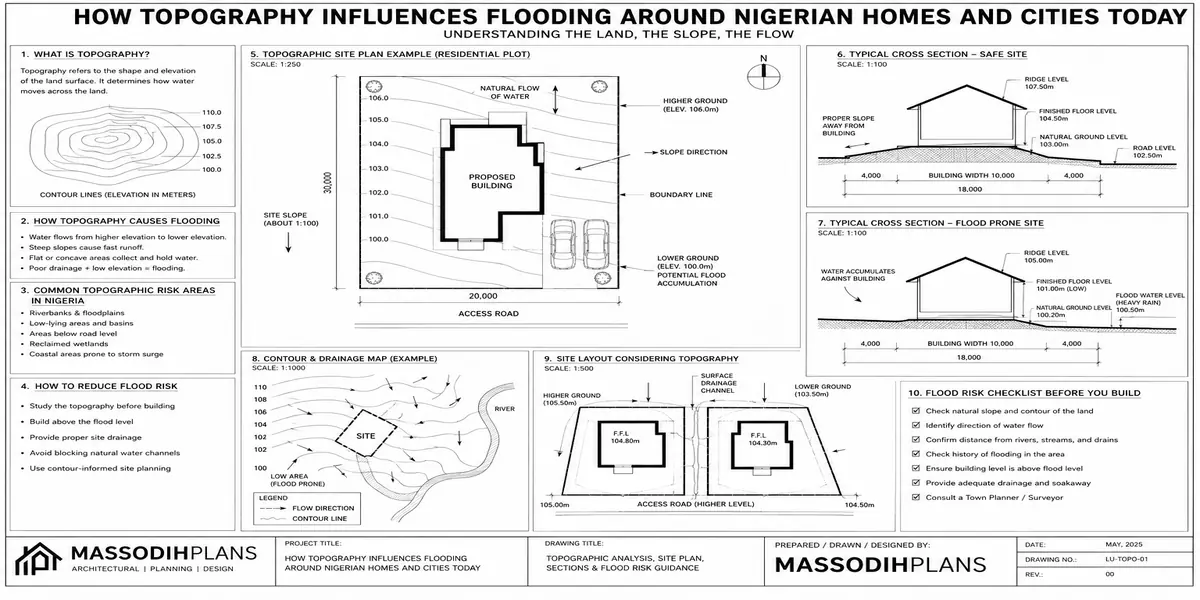
Flood history ask neighbours directly whether the area floods in the rainy season; this is the single most underreported value-killer in Nigerian residential property, and it almost never appears in a listing
Visit the property at least twice once during the day on a weekday, and once in the evening or on a weekend. Traffic noise, flooding after rain, security concerns, and neighbourhood character often look completely different at different times. A property that seems perfect at 11am on a Tuesday can reveal problems at 7pm on a Saturday.
Layer Four: Condition — What You’re Really Paying to Fix
Condition affects value in two ways people usually only think about halfway: what it costs to fix now, and what it will cost to fix later.
Structural condition cracks in walls (and whether they’re cosmetic settling cracks or structural ones), roof leaks, foundation issues. If in doubt, this is worth paying a structural engineer or building surveyor a small fee to inspect before you commit it’s the cheapest insurance you’ll ever buy relative to what a hidden structural problem costs to fix after purchase.
Age of major systems roofing sheets, electrical wiring, plumbing. A house that “looks” fine but has 20-year-old wiring is carrying hidden cost that should be deducted from the asking price, not ignored because the paint looks fresh.
Cosmetic vs. functional issues peeling paint and outdated tiles are cheap to fix and shouldn’t move your valuation much. A failing septic system or a compromised foundation should move it significantly.
Deferred maintenance as a negotiating tool get a rough repair estimate for anything you find, and use that number directly in your offer. “I’m offering ₦2 million less because the roof needs ₦2 million of work” is a much stronger negotiating position than a vague “the price feels high.”
Layer Five: Land Size — Separating Land Value From Building Value
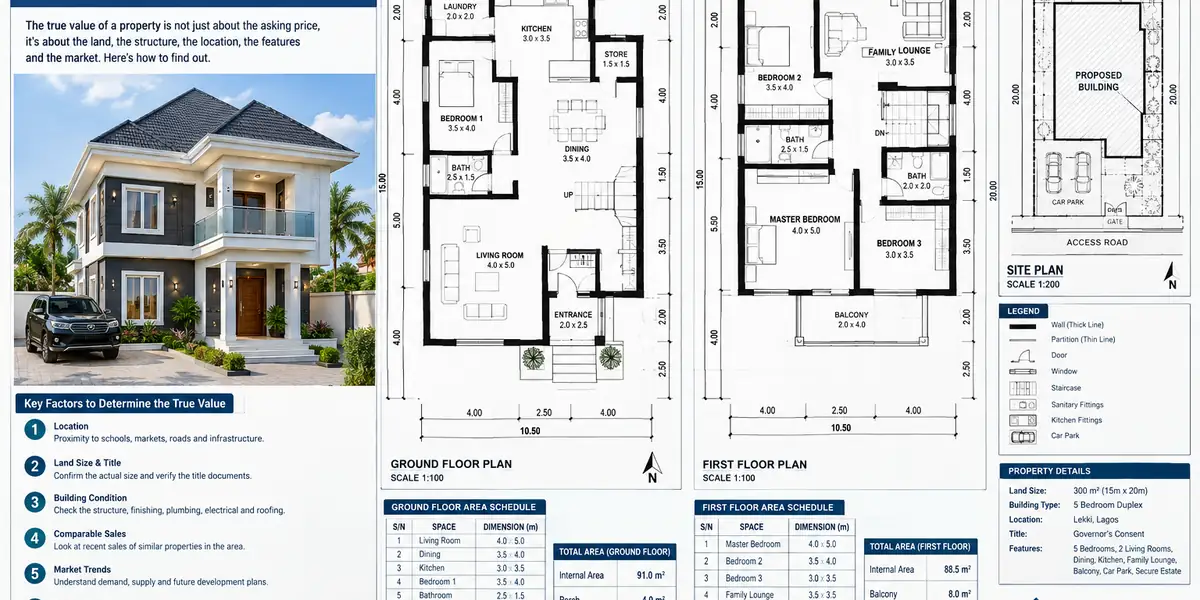
This is a step almost every casual buyer skips, and it’s one of the most important. A property’s total price is really two separate values added together: the land, and whatever is built on it. Treating them as one number hides a lot.
Work out the land value on its own, using comparable vacant plots of similar size in the same area, independent of whatever is built on it.
Then ask what the building is really adding. In many cases, especially with older buildings, the structure adds less value than people assume sometimes a buyer is really paying for land, with the existing building worth only its demolition-avoidance value.
Larger land size doesn’t scale value proportionally. A 1,000 sqm plot is not automatically worth 2x a 500 sqm plot in the same street beyond a certain size, land value per square metre often decreases slightly, because fewer buyers need or can afford that much land at once. Check comparables by size bracket, not by simple multiplication.
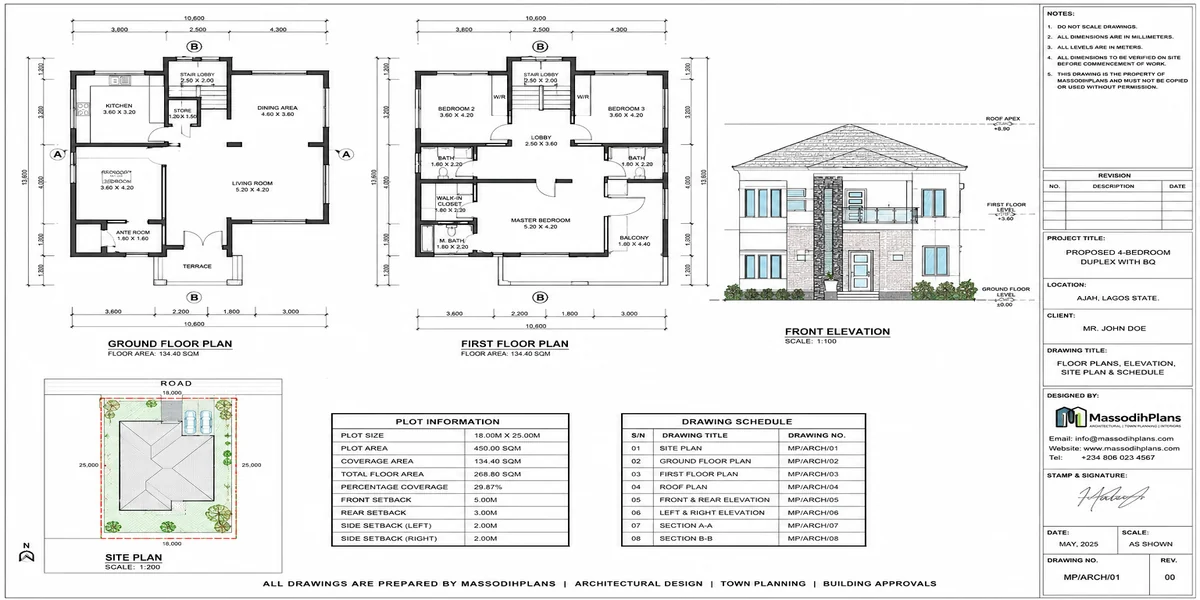
Irregular plot shapes cost you. A triangular or oddly-shaped plot of the same square metreage as a rectangular one is genuinely worth less, because it constrains what can be built and often wastes usable area factor this into your number, don’t just compare total square metres.
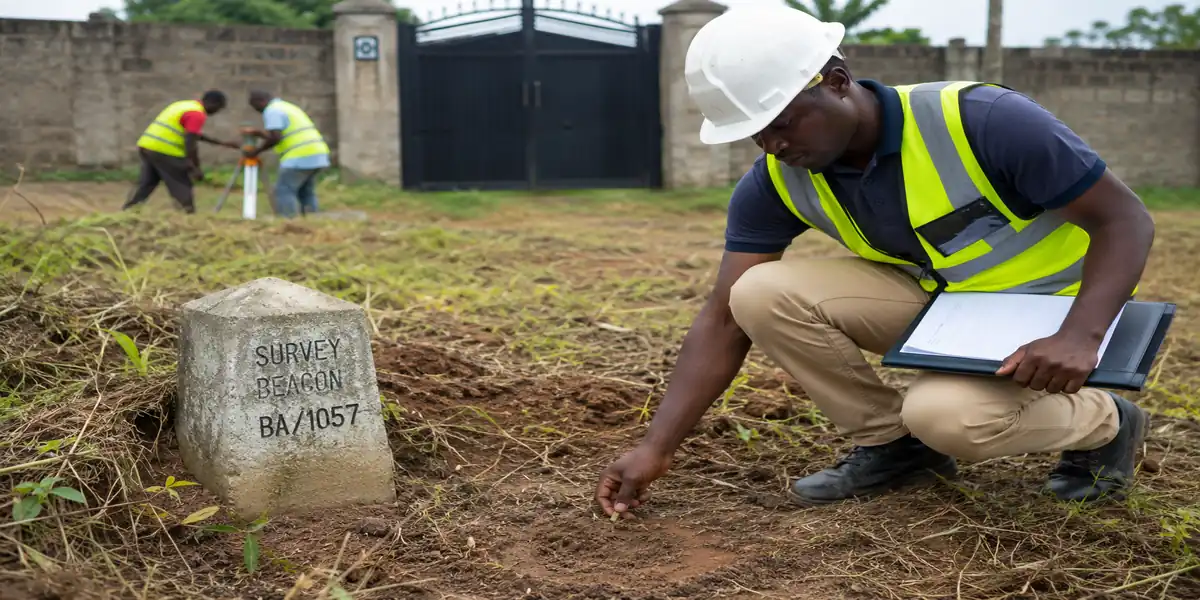
Always confirm the actual land size through the survey plan, not the seller’s verbal claim or the fence line. Fence lines get shifted, and verbal claims get rounded up. A mismatch between claimed size and surveyed size is one of the most common and most quietly damaging discoveries buyers make after purchase, when it’s too late to renegotiate.
Layer Six: Rental Income — Valuing the Property as an Income Asset
If the property generates or could generate rental income, this unlocks a second, completely different valuation method: the Income Approach. It asks a different question entirely not “what would this sell for,” but “what is this worth given what it earns.”
The basic logic: take the property’s realistic annual rental income, subtract realistic annual expenses (maintenance, agent fees, void periods between tenants, property tax where applicable), and divide the result by the capitalization (cap) rate typical for that property type and area. A lower cap rate implies a higher valuation per naira of income because it reflects a market willing to accept lower returns for lower perceived risk.
Why this matters even if you’re not buying to rent: if a property’s asking price is far above what its rental income could justify at a realistic cap rate, that’s a signal the price is being driven by speculation, not income fundamentals useful information whether or not renting is your plan.
Get realistic rent figures, not aspirational ones. Ask what similar units in the immediate area are actually renting for and actually collecting (not what agents are asking new listings for), and factor in realistic vacancy periods rather than assuming 100% occupancy year-round.
If a seller or agent quotes rental income to justify a price, ask for at least one year of actual rent receipts or a tenancy agreement, not a verbal estimate. Projected rent is a sales pitch; documented rent is a fact you can value against.
Layer Seven: Development Potential — Valuing What the Property Could Become
This is the layer most buyers never consider, and it’s where the biggest value gaps hide both upside and risk.
Check the zoning and permitted use with the local planning authority, not just what’s currently built. A residential plot zoned to allow mixed commercial-residential use is worth more than an identical plot restricted to pure residential, because it opens more possible uses to a future buyer.
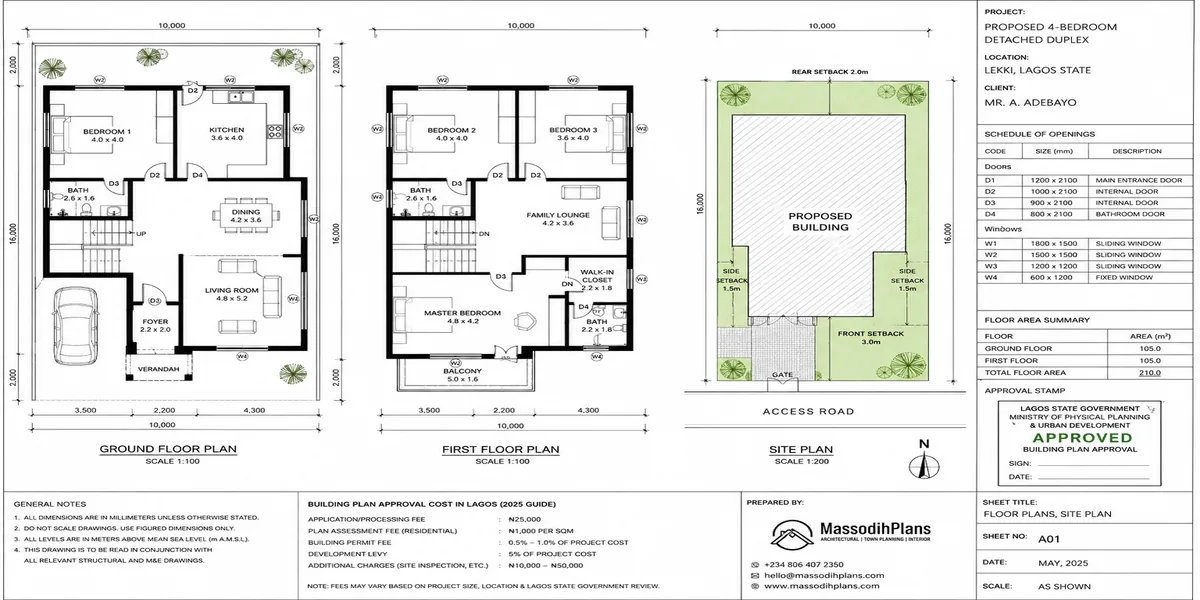
Check permitted density and building height a plot that could legally support a duplex or a small block of flats is worth more to a developer-minded buyer than the same land valued only for a bungalow, even if nothing is currently built beyond that.
Assess the residual value for redevelopment, if that’s your intent: estimate what a finished, redeveloped property would sell for, subtract realistic construction and holding costs plus your required profit margin, and what’s left is the maximum you should pay for the land as-is. This is called the Residual Method, and it’s what serious developers use before ever quoting a land price most ordinary buyers never run this number and end up overpaying for land relative to its actual redevelopment upside.
Consider what’s coming, not just what’s zoned today. A new road, a planned commercial hub, or a state government layout scheme nearby can shift a plot’s development potential well before official rezoning happens this is genuinely researchable through the state’s ministry of physical planning and urban development, not guesswork.
The Layers Almost No Article Covers
Everything above is the comparison chain most serious guides eventually get to. What follows is what actually separates a real valuation from a guess and what I’ve rarely, if ever, seen laid out clearly in one place.
The Document Layer: Title Quality Changes the Number
Two identical houses, side by side, with identical land size and condition, are not worth the same if one has a clean, registered title (C of O, or properly perfected title with governor’s consent where applicable) and the other has an uncertain or unregistered title. A property with title problems should be valued at a real discount sometimes 20-30% or more depending on how severe the issue is because the buyer inherits the cost, time, and risk of regularizing it. Any valuation that ignores title status isn’t a real valuation; it’s a guess based on appearances.
The Distress Signal Layer: Why This Property Is Being Sold Now
Ask directly why the seller is selling. “Relocating abroad” and “urgent need for cash due to a business emergency” are not the same signal. A genuinely distressed seller will often accept meaningfully below market value, and recognizing real distress (versus a manufactured urgency story used to pressure buyers) is a skill that saves serious money. Equally, be honest with yourself about whether you’re being pressured with a fake deadline (“another buyer is coming tomorrow”) designed to stop you from doing exactly the comparison work this article walks through.
The Currency and Inflation Layer
In a market like Nigeria’s, naira-denominated property values can look like they’ve “appreciated” simply because of general inflation and currency depreciation, not because the property itself became more valuable in real terms. Where possible, sanity-check a property’s naira price history against general inflation over the same period a property that’s “doubled” in five years during a period when the naira lost more than half its value against major reserve currencies may not have gained any real value at all.
The Timing and Seasonality Layer
Property prices in many Nigerian markets soften slightly in certain periods (immediately after major tax or school-fee seasons when buyers have less liquid cash) and firm up around others (December, when diaspora buyers with foreign currency to convert are actively shopping). Knowing where you are in that cycle changes both what counts as a fair price and how much negotiating leverage you actually have.
The Agent Incentive Layer
Understand what the person quoting you a value is actually incentivized to say. An agent representing the seller is paid on the sale price their “professional opinion” on value has a built-in upward bias that has nothing to do with dishonesty and everything to do with how they’re paid. This isn’t a reason to distrust every agent; it’s a reason to always get at least one number from someone with no stake in the sale price an independent valuer, or simply your own comparable analysis.
The Independent Valuer Layer
For any significant purchase, a registered Estate Surveyor and Valuer (in Nigeria, ideally one registered with NIESV/ESVARBON) can produce a formal valuation report using the professional combination of sales comparison, cost, income, and residual methods, weighted appropriately for the property type. The fee is small relative to the size of the decision, and it gives you a number nobody involved in the sale has an incentive to inflate. Treat this the same way you’d treat an independent home inspection not a formality, a genuine risk-reduction step.
If you only do one “extra” thing beyond the comparison work in this article, make it this: pay for an independent valuation report before any purchase above whatever amount would genuinely hurt to lose. It is consistently the cheapest insurance in the entire transaction.
Putting It Together: A Practical Sequence
When you’re actually standing in front of a property trying to answer “what is this really worth,” run it in this order:
- Separate the asking price from market value in your head immediately treat the asking price as a starting position, not a fact
- Pull three to five genuine comparables and adjust for real differences, not just averages
- Score the location honestly access, growth direction, flood history, nuisance factors
- Get a real condition assessment, ideally with a professional eye on anything structural
- Confirm actual land size against the survey plan, and value land and building separately
- If income-generating, run the numbers against actual (not aspirational) rent
- Check zoning, density, and redevelopment potential against what’s officially permitted
- Confirm title status and discount accordingly if there’s any uncertainty
- Ask why the property is being sold, and read the answer for real versus manufactured urgency
- Where the stakes justify it, get an independent valuation before you commit
Frequently Asked Questions
Is the asking price ever the true value of a property?
Sometimes, but it’s a coincidence when it is the asking price is a negotiating position set by the seller or agent, not an independent calculation of market value. Always verify it against comparables rather than assuming it reflects true value.
How many comparable properties do I need to trust a valuation?
Three to five recent, genuinely comparable sales in a believable price range is enough to trust the pattern. A single comparable is an anecdote, not evidence.
Does a bigger plot always mean a higher value?
No. Land value per square metre often decreases somewhat as total size increases, and irregular plot shapes reduce value even at an identical total square metreage. Compare within similar size brackets, not by simple multiplication.
Should I trust an agent’s valuation of a property they’re selling?
Treat it as one input, not the answer. An agent representing the seller is paid based on the sale price, which creates a built-in incentive to lean high always cross-check with your own comparables or an independent valuer.
Is it worth paying for a professional valuation report?
For any significant purchase, yes. A registered valuer’s fee is small relative to the cost of overpaying, and it’s the one number in the transaction that nobody involved in the sale has an incentive to inflate.
Finally
Knowing the true value of a property isn’t one calculation it’s a sequence of honest questions, run in order, with the discipline to actually verify the answers instead of accepting the first confident number you’re handed. Asking price tells you what someone wants. Comparables, location, condition, land size, rental income, and development potential tell you what it’s actually worth. Title status, seller motivation, and independent verification tell you whether you can trust any of it. Do all of it, and you’ll rarely be the person who finds out the real number six months too late.
If you’re evaluating land or a property before building on it, our Services page covers how we support clients through site assessment and planning due diligence. Browse our Plans Library if you’re weighing a purchase against building from scratch instead, or visit Plan School to understand the planning and approval layer that affects a plot’s real development potential. You can also explore more property and building guides on our Homepage.
Related Articles to guide you
- Is This Property Actually Worth the Asking Price? What to Check First!
- Is This Neighbourhood a Good Place to Live? What to Check Before Buying
- I Don’t Know Which Location to Buy In: How to Choose the Best Location
- I Don’t Know What Type of Property I Should Buy: Here’s How to Actually Decide
- Can’t Find a Property Within Your Budget? Here’s the Part Nobody’s Telling You
- I Don’t Know Where to Find the Right Property in Nigeria | Buyer Guide
- I Need a Real Estate Agent to Help Me Buy a Property in Nigeria Safely
- Property for Sale in Nigeria: The Buyer’s Guide Nobody Publishes Today
- How Do I Get Natural Ventilation? Best Ways to Improve Airflow at Home
- Where Should My House Face? Best Direction for Sun, Wind and Comfort
- I Can’t Understand or Visualize My Floor Plan — Let’s Fix That Right Now
- My Floor Plan Has Poor Circulation: How to Fix It and Improve Flow
- I Don’t Know How to Arrange My Rooms: Here’s How to Actually Figure It Out
- My Rooms Are Too Small: How Big Should Each Room Be in a House?
- I Don’t Know How Big Each Room Should Be: Standard Room Size Guide
- How Much Building Can I Put on My Plot? Building Coverage and Setbacks
- My House Plan Doesn’t Fit My Land: What to Do Before You Build
- I Need a House Plan That Fits My Plot with Exact Dimensions and Layout
- I Don’t Know What House Plan to Build? Here’s How to Decide
Author
Massodih Okon is a Nigerian built-environment professional with academic and professional experience in urban and regional planning, geography, architectural design, Landscape Design, GIS and land development.
He holds a Master’s degree in Urban and Regional Planning from the University of Uyo and a first degree in Geography and Regional Planning.
Through MassodihPlans, he publishes practical guides on Nigerian house plans, building design, physical planning, site planning, development approval and residential construction. Read the full author profile →