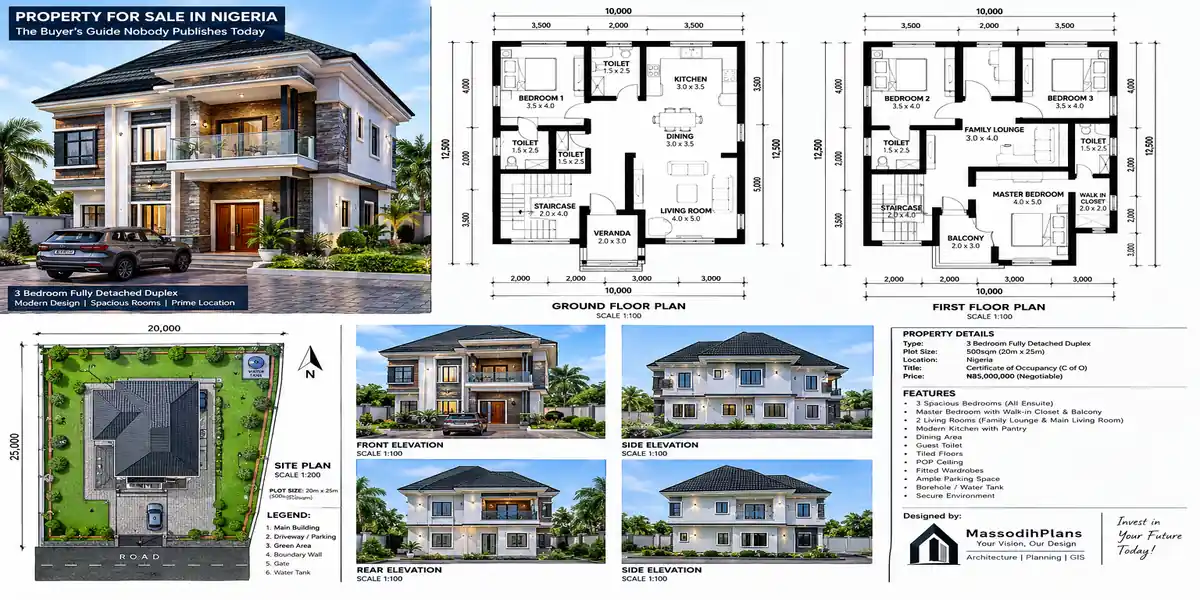
Property for Sale in Nigeria: The Buyer’s Guide Nobody Publishes Today
A young couple sat across from me last year holding a folder of documents for a “duplex for sale” in an estate outside Uyo. They had already paid an initial deposit. Fifteen minutes into looking at the papers, it was clear the survey plan didn’t match the land they’d been shown, and the C of O number on the document didn’t correspond to anything registered. They got their deposit back. Not everyone does.
I’m telling you that story first, before anything else, because if you typed “houses for sale,” “property for sale near me,” or something close to it into Google, this is the conversation you actually need not another site with a search bar and thousands of listings you have no way to verify. I’m a Planner, not an estate agent, and that’s exactly why I can tell you the part of this process most listing sites won’t: finding a property is the easy part. Verifying it, and knowing whether buying is even the right move for you, is where people lose money.
Houses, Homes, Property, Real Estate: These Words Aren’t Interchangeable
Before we go further, a quick distinction that actually matters once you’re negotiating or reading a document, because these terms get thrown around loosely and it causes confusion.
Houses for sale and homes for sale usually mean the same thing in casual use a completed residential building. Technically, “house” refers to the physical structure; “home” implies the lived-in, furnished, personal version of that structure. You’ll see both used for the same listing.
Property for sale is broader. It can mean a house, but it can also mean bare land, a commercial building, or a mixed-use plot. When an agent says “I have property for sale in Ajah,” always ask directly whether they mean land or a built structure this single question saves a wasted site visit.
Real estate for sale is the widest term of all, covering land, residential buildings, commercial buildings, and sometimes entire developments. If you’re searching this term, you’re likely comparing investment-grade options, not just a home to live in worth being honest with yourself about which one you actually are.
The “Near Me” Search Is Where Most People Get Stuck
“Houses for sale near me,” “homes for sale near me,” “property for sale near me” these searches feel like they should return a clean, trustworthy shortlist. In Nigeria, they mostly return a mix of legitimate agents, resellers who don’t actually own the listings they post, and outright fraudulent posts recycled across multiple Facebook groups and classifieds sites.
Here’s what actually works, in the order I’d tell a friend to try it:
Start with people, not platforms.
Ask in your own network first church members, colleagues, family for anyone who has bought or sold in the specific area you’re targeting recently. A referred agent with a real track record beats an anonymous listing every time.
Use registered estate surveyors and valuers
Not just “agents.” In Nigeria, estate surveying and valuation is a regulated profession under ESVARBON ask for a practitioner’s registration status before working with them on anything significant.
Treat online listing platforms as a lead-generation tool, not a verification tool
They can show you what exists; they cannot tell you if the seller actually owns it or if the documents are real.
Narrow “near me” by asking about specific streets, not just an area name
“Property for sale in Lekki” covers a huge range of prices and risk levels. “Property for sale on [specific street/phase]” gets you comparable, useful results.
Visit in person before you get emotionally attached to photos
Photos hide flooding history, sewage smell from a nearby channel, and construction quality issues that are obvious the moment you stand on the actual plot.
When an agent sends you a “near me” match within minutes of your inquiry, that speed is not a good sign by itself it usually means the listing is a generic one sent to everyone who asks, not a filtered match to your specific budget and location. Ask a specific follow-up question about the property immediately and see how detailed the answer is.
The Document Checklist Nobody Hands You Before You Pay
This is the part that separates a safe purchase from a very expensive lesson, and it applies whether you’re buying bare land or a completed house.
Certificate of Occupancy (C of O)
This is the government-issued document granting the right to occupy and use land, and it’s the most commonly forged document in Nigerian property transactions. A genuine C of O carries a unique registration number, the owner’s details, and an official seal but the number on the paper means nothing until you’ve checked it against the actual government record. You can confirm a C of O’s authenticity at the relevant state land registry in Lagos, for instance, buyers can take the C of O number to the Lands Bureau at Alausa to confirm it exists in their database and request a printout to compare against the copy you were given. Do not skip this step because the document “looks official.” Forged C of Os are made to look official.
Deed of Assignment
This document records the actual transfer of ownership from seller to buyer. Check that the name on the Deed matches the name on the C of O exactly, and that the property description (size, location, plot number) is identical across both documents. Mismatches here are one of the most common early warning signs of a problem.
Survey Plan and Beacon Verification
A survey plan without a physical check on the ground is just paper. Engage your own surveyor not the seller’s to confirm the coordinates on the plan actually match the physical boundaries of the land you’re being shown. There are documented cases of survey plans with fabricated coordinates being presented alongside genuine-looking titles, so this independent check is not optional caution it’s basic protection.
Excision and Gazette (for Family or Community Land)
If the land was originally family or community-owned, ask specifically whether it has been excised from the community and gazetted by the state government. Land without proper excision, no matter how confidently the seller speaks, carries a real risk of the community or government reclaiming it later.
Confirm the Seller Actually Owns It
Multiple sales of the same plot to different buyers is a recurring pattern in Nigerian land fraud a seller with genuine ownership sells the same land to several people, and only the first to register the transaction keeps it. Registering your purchase promptly after completion isn’t paperwork bureaucracy; it’s what actually protects your claim.
Governor’s Consent (Where Applicable)
For land already covered by a C of O being resold, the transaction typically requires the Governor’s Consent to be validly transferred to the new owner. A sale completed without this can leave your ownership legally incomplete even if every other document looks fine.
Never rely solely on documents shown to you by the seller’s own lawyer or surveyor. Engage your own independent lawyer and surveyor for verification, paid by you, answerable to you. The cost of independent verification is a rounding error compared to the cost of losing an entire property to fraud.
Physical Inspection: What to Actually Check on Site
Documents can be verified and still not tell you everything. A site visit checklist most buyers skip:
Flood history ask neighbours directly whether the area floods in rainy season; don’t rely only on how dry the land looks on your visit day
Road access and condition check whether the access road is passable in heavy rain, not just on a dry afternoon
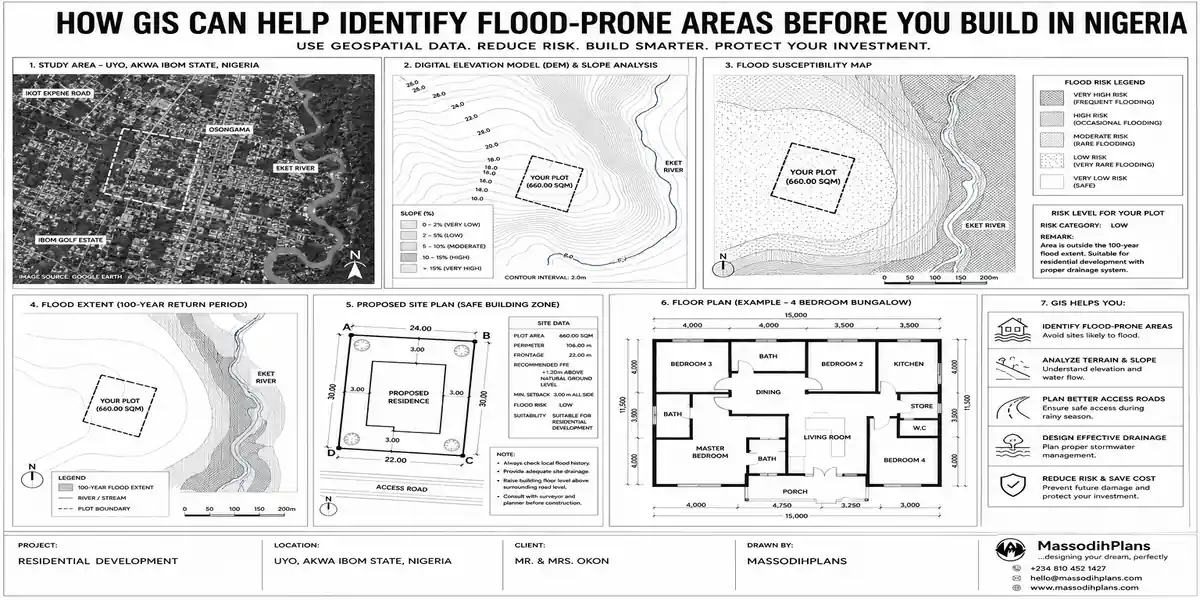
Drainage proximity land right beside a major drainage channel can be prone to erosion or future government reclamation for channel expansion
Structural condition (for existing houses) look for cracks along walls, especially diagonal cracks near windows and doors, which can indicate foundation movement
Roof and ceiling condition water stains on ceilings are one of the most reliable signs of roofing problems, even in a freshly painted house
Electrical wiring age ask when the house was last rewired; old wiring is a fire risk and a renegotiation point on price
Plumbing and water source ask about borehole depth and water quality, and whether the compound has reliable drainage for wastewater
Should You Even Be Buying, or Should You Be Building?
Here’s the honest conversation almost nobody selling you a property wants to have, because it doesn’t benefit them: buying an existing house and building your own are two completely different paths, and the “for sale” search you started with might not be the right path for you at all.
Buying an existing property gets you a finished home faster and gives you a physical structure you can inspect before committing. But you inherit someone else’s design decisions room sizes, layout, orientation, finishing choices and you’re often paying a premium for location and immediate availability rather than for build quality.
Building on land you buy or already own takes longer and demands more hands-on involvement, but it gives you a house genuinely designed around your family, your budget, and your specific plot not a compromise shaped by someone else’s taste.
A simple comparison, because most guides never actually put these side by side honestly:
| Factor | Buying Existing Property | Building New |
|---|---|---|
| Time to move in | Weeks to months | 10–18 months typically |
| Design control | None you accept what exists | Full control over layout and finishes |
| Upfront cost clarity | Fixed asking price, some negotiation room | Variable, phased, budget-controllable |
| Hidden risk | Structural/document issues you didn’t build | Construction delays, contractor reliability |
| Long-term fit for your family | Compromise on rooms and layout | Designed specifically for your needs |
If your honest answer, after reading that table, is “I actually want a house designed around how my family lives, not whatever’s currently for sale” you’ve just talked yourself into a different (and often more satisfying) path than the one you started searching for.
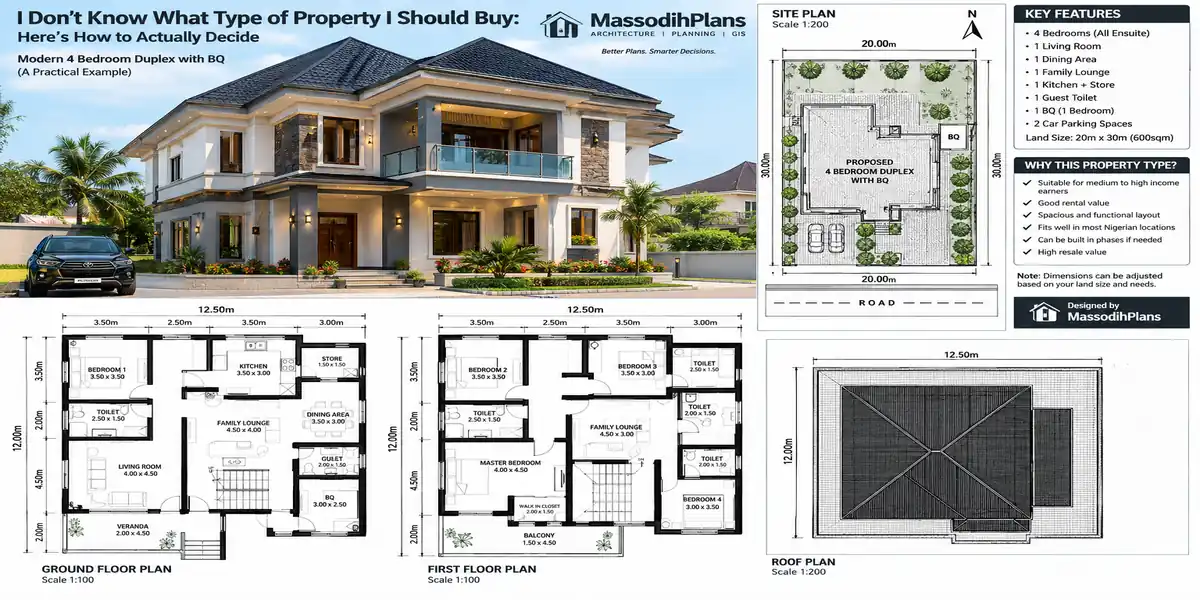
“I Don’t Know What House Plan to Build” Here’s How to Actually Figure It Out
This is the question I get asked more than almost any other, usually from someone who has land, has decided against buying an existing property, and is now staring at hundreds of plan photos online feeling more confused than when they started. Here’s the decision framework I actually walk clients through, in order:
Step 1: Get Honest About Household Size and Stage of Life
Not just how many people live with you today where your family is headed in the next 5-10 years. A young couple planning children needs a different room count and layout than an empty-nester downsizing. This single factor eliminates more wrong plans faster than any style preference.
Step 2: Know Your Actual Plot Size and Shape Before Choosing a Plan
A plan designed for a wide, regular plot often can’t be adapted cleanly to a narrow or irregular one without expensive redesign. Get your plot’s exact dimensions and shape from your survey plan before you fall in love with any plan photo this alone prevents the most common and costly plan-selection mistake I see.
Step 3: Set a Real Budget Range, Not a Wish List
Decide your construction budget range before choosing a plan style, not after. A plan that looks perfect but assumes a finishing level or floor area beyond your realistic budget just sets you up for painful compromises mid-build. Match the plan to the budget, not the other way round.
Step 4: Choose Single-Storey or Storey Building Based on Land, Not Just Preference
If your plot is small or your budget is tight, a bungalow uses your land efficiently without staircase and additional structural cost. If your plot is smaller than you’d like for the room count you need, a duplex or storey building lets you build upward instead of needing more land. This is a practical decision before it’s an aesthetic one.
Step 5: List Your Non-Negotiable Rooms Separately From Your Nice-to-Haves
Separate “must-have” (enough bedrooms, a functional kitchen, adequate parking) from “would be nice” (a home office, a family lounge, a boys’ quarters). This distinction lets you evaluate any plan quickly against what actually matters, instead of being swayed by attractive extras you don’t need.
Step 6: Match the Plan’s Orientation to Your Actual Plot’s Sun Path
A plan drawn without reference to your plot’s specific orientation can place bedrooms directly in the path of harsh afternoon sun, or put your kitchen somewhere ventilation is poor. This is a detail that gets ignored on generic downloaded plans and is exactly why a plan should be reviewed against your actual site before construction, not built exactly as downloaded.
Step 7: Get a Professional to Review Any Plan Before You Commit
Whether you found a plan online, got one from a friend, or are commissioning something custom, have a registered architect review it against your specific plot, budget, and household needs before you finalize it. This single review step catches the layout, orientation, and structural issues that turn a beautiful plan into a frustrating house.
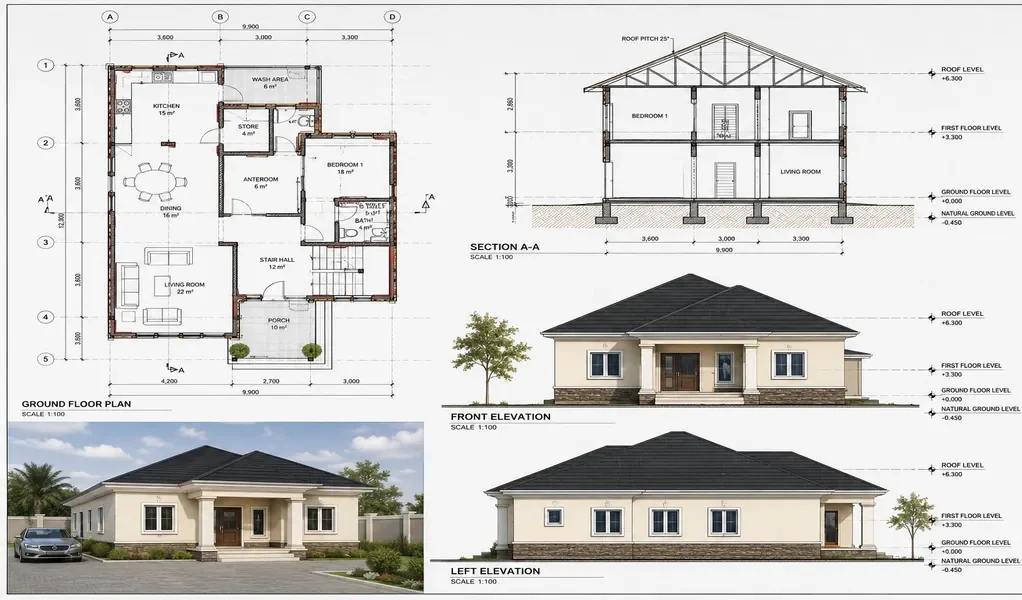
If you’re stuck choosing between two or three plans you genuinely like, don’t decide from the elevation photo. Print the floor plans at actual scale, mark your real furniture dimensions on them, and walk through each one on paper with your family. The plan that survives that exercise is usually the right one.
Red Flags That Should Stop You Mid-Transaction
- The seller or agent pressures you to pay quickly “before someone else takes it”
- Documents are only available as photos or scans, never as originals you can physically examine
- The price is significantly below comparable properties in the same area with no clear explanation
- The seller refuses to allow an independent surveyor or lawyer to verify anything
- The land or property has no visible fence, beacon, or clear boundary markers matching the survey plan
- You’re asked to pay a significant amount in cash with no formal receipt or documentation
If you notice fake or fraudulent documents at any stage, disengage from the transaction immediately and report it to the appropriate authorities rather than trying to “fix” the deal yourself.
Frequently Asked Questions
How do I find genuine houses for sale near me in Nigeria?
Start with referrals from your personal network, use registered estate surveyors and valuers rather than unregistered agents, and treat any online listing as a starting point for investigation, never as proof of ownership.
What documents should I demand before paying for any property?
At minimum: the Certificate of Occupancy or root of title, the Deed of Assignment, the survey plan, and evidence of Governor’s Consent where applicable. Verify every one of these independently before paying anything beyond a small, documented deposit.
Is it cheaper to buy an existing house or build one in Nigeria?
It depends heavily on location and what you actually need. Buying can be faster and gives you a physical structure to inspect immediately; building gives you full design control and can be more cost-efficient per square metre if you manage the process carefully, but takes considerably longer.
How do I know if a property for sale is a scam?
Pressure to pay quickly, documents you’re never allowed to physically examine or independently verify, and a price noticeably below the local market rate are the three most consistent warning signs.
I have land but don’t know what house plan to build where do I start?
Start with your household size and stage of life, then your exact plot dimensions, then a realistic budget range — in that order. Choosing a plan style before those three are settled is the most common reason people end up frustrated with a plan that doesn’t actually fit their situation.
Where This Leaves You
If you came here searching for a property for sale, you now have something most listing sites won’t give you: a real way to protect yourself before you pay, and an honest question to ask yourself about whether buying is even the right move for your situation. If your answer is “I’d rather build something that actually fits my family,” that’s a different journey and it’s one I can help with directly.
Browse our Plans Library for house plans already matched to different plot sizes and budgets, or visit Plan School to learn how to evaluate a floor plan properly before you commit to one. If you already have land and want a plan reviewed or customized specifically for it, our Services page outlines how we work with clients through that process. You can also explore more home-planning guides on our Homepage.
Read these related articles:
- How Do I Get Natural Ventilation? Best Ways to Improve Airflow at Home
- Where Should My House Face? Best Direction for Sun, Wind and Comfort
- I Can’t Understand or Visualize My Floor Plan — Let’s Fix That Right Now
- Estate Layout Design Services for Property Developers in Nigeria
- House Plans: Complete Guide to Floor Plans, Building Drawings, Home Designs & How to Design a House
- What Is a Beacon Number on a Survey Plan in Nigeria? Meaning, Uses and Importance
- 15 Things to Check Around a Plot Before Buying Land in Nigeria Safely Today
- How to Analyse a Property Location Before Buying Land in Nigeria Today
- How Road Access Affects Residential Building and House Planning in Nigeria
- How to Read a Satellite Image Before Buying Land in Nigeria: Full Guide
- How GIS Can Help Identify Flood-Prone Areas Before You Build in Nigeria
Author
Massodih Okon is a Nigerian built-environment professional with academic and professional experience in urban and regional planning, geography, architectural design, Landscape Design, GIS and land development.
He holds a Master’s degree in Urban and Regional Planning from the University of Uyo and a first degree in Geography and Regional Planning.
Through MassodihPlans, he publishes practical guides on Nigerian house plans, building design, physical planning, site planning, development approval and residential construction. Read the full author profile →