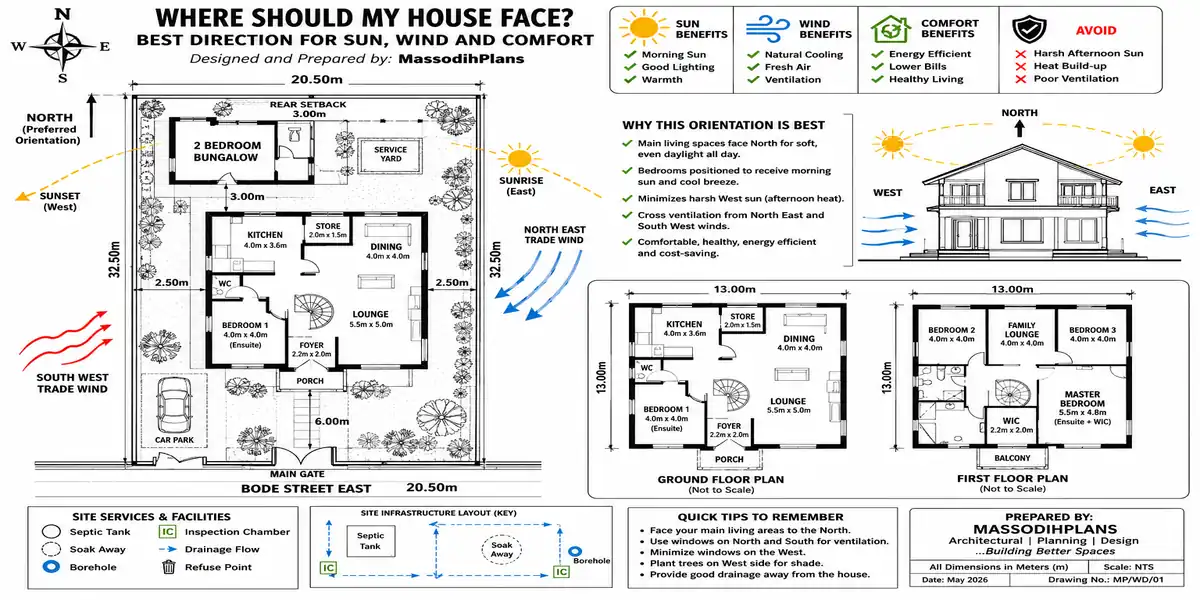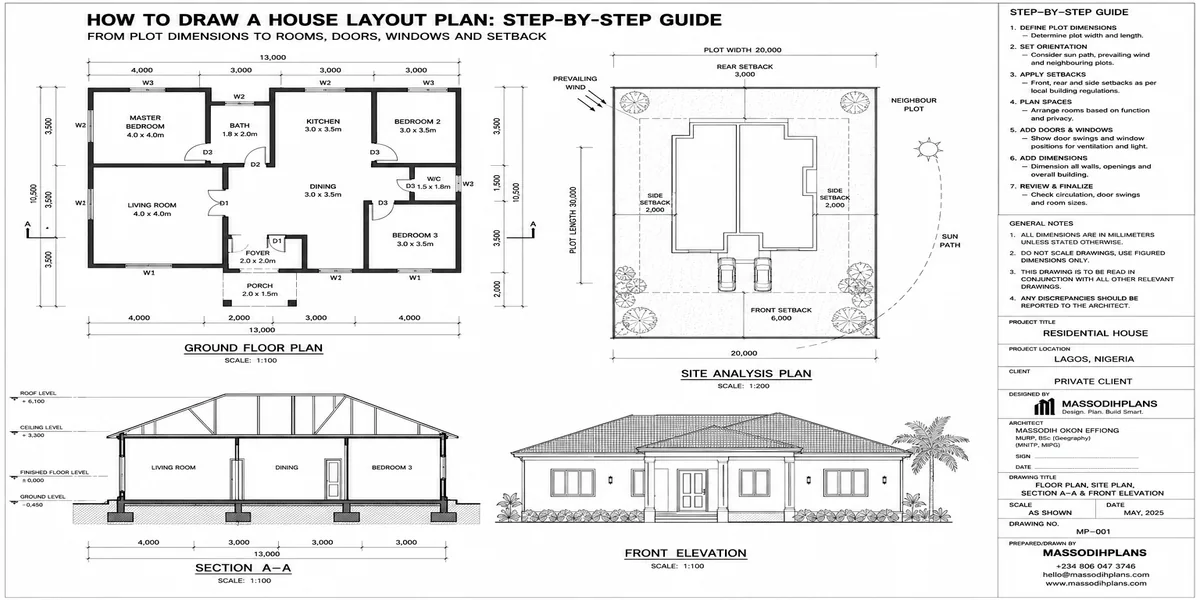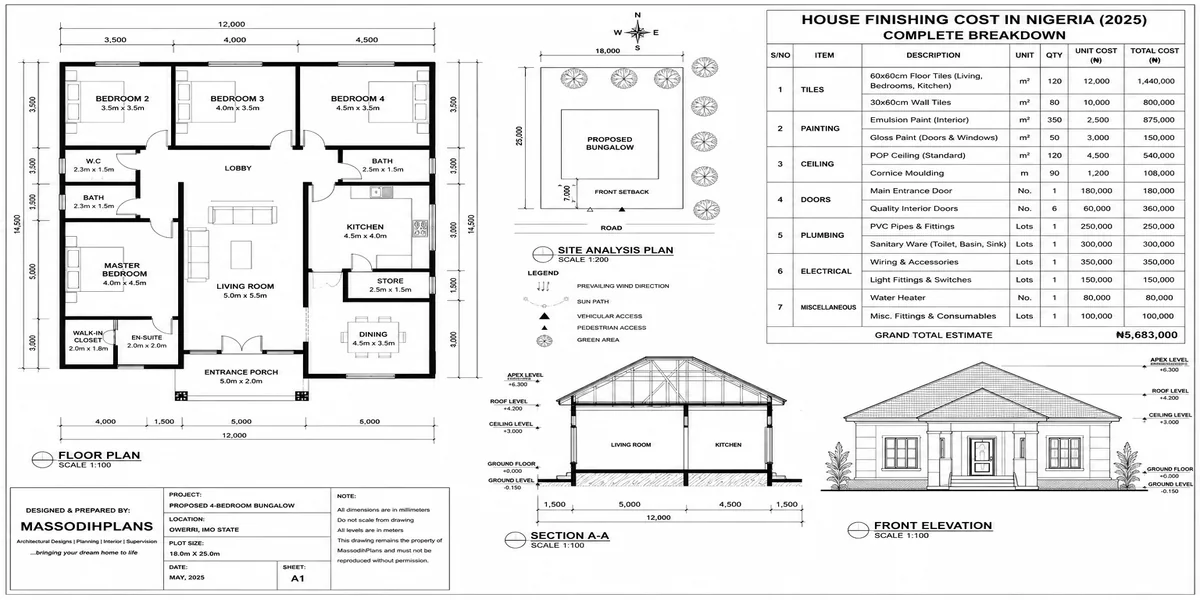
house finishing cost nigeria
Your roof is on. The blockwork is up, the windows are fitted, and for the first time the building actually looks like a house instead of a construction site. This is also, almost without exception, the point where I see clients’ momentum stall because the money that got them from foundation to roof doesn’t automatically stretch through what’s left, and nobody warned them how differently finishing cost behaves compared to structural cost.
Structural stage costs are relatively predictable cement, blocks, and iron rods have fairly stable specifications regardless of who’s supplying them. Finishing cost is not like that at all. The exact same house can finish for ₦15 million or ₦60 million depending entirely on the choices you make from here, and those choices are made trade by trade, decision by decision, not as one lump percentage of your total budget. That’s the gap this guide is built to close not “finishing is 30% of your budget,” which tells you nothing useful at this stage, but what each trade actually costs, in what order, and where the money quietly disappears if you’re not watching.
Why “Finishing Is 30% of Your Budget” Is Useless Advice at This Stage
Almost every cost guide online tells you finishing consumes 25–40% of total building cost. That number is fine for early planning, before you’ve broken ground. It is nearly worthless to you right now, because you’re not budgeting a whole house anymore you’re budgeting what’s left, and that percentage was calculated against a total that already includes land, foundation, and structure you’ve already paid for.
What you actually need at this stage is a trade-by-trade estimate built from where you’re standing today: roofed, block walls up, ready for plastering. That’s what the rest of this guide gives you.
Ask your quantity surveyor for a finishing-stage Bill of Quantities specifically, not a whole-project BoQ recalculated. A finishing-specific BoQ prices exactly what’s left, room by room, and is the single most useful document you can have in hand before you spend another naira.
The Order Finishing Work Actually Happens In (And Why Sequence Affects Cost)
This is the part almost no cost-breakdown article explains, and it matters directly to your budget because getting the sequence wrong causes rework which means paying for the same job twice.
Electrical and plumbing rough-in conduits, pipes, and cable routes are set into the walls and floor before plastering, not after. If plastering happens first, chasing walls open afterward to run wiring or pipes damages finished work and costs more than doing it in the right order.
Plastering and screeding walls and floors are rendered smooth once services are roughed in.
Ceiling structure and fixing POP, PVC, or gypsum ceilings typically go up before final wall finishes, since ceiling work generates dust and debris you don’t want falling on freshly painted walls or tiled floors.
Tiling floors and wet areas are tiled after plastering and ceiling work, before final painting, to avoid paint splatter on finished tile.
Doors and windows fixing frames are usually set earlier (sometimes at lintel level), but door leaves, ironmongery, and window glazing are typically completed around this stage.
Painting done after tiling and ceiling work, but before final electrical and plumbing fittings are installed, to avoid paint splatter on fixtures.
Final electrical and plumbing fittings switches, sockets, light fittings, taps, WCs, and sanitary ware are installed last, once painting is done, to avoid damage or paint contamination.
Kitchen and wardrobe installation, external works cabinetry, fencing, paving, and landscaping typically close out the project.
If your electrician or plumber hasn’t roughed in their work yet and your plasterer is ready to start, stop and sequence this correctly. Paying to chase open finished plaster to run a forgotten pipe or cable is one of the most common and entirely avoidable finishing-stage cost overruns I see.
Trade-by-Trade Finishing Cost Breakdown
The ranges below reflect a standard-to-mid-range finish for a typical 4-bedroom home (250–300 sqm) in a major Nigerian city. Use them as a planning framework, then get current local quotes material prices shift with exchange rates and fuel costs, and labour rates vary meaningfully between Lagos, Abuja, Port Harcourt, and smaller cities.
1. Plastering and Screeding
- Wall plastering (internal and external): ₦2,500 – ₦4,500 per sqm of wall surface, materials and labour combined
- Floor screeding: ₦1,800 – ₦3,500 per sqm
- Typical total for a 280 sqm house: ₦4,000,000 – ₦7,500,000
This stage is easy to underestimate because it covers a large surface area (every internal and external wall, every floor) that people don’t mentally add up the way they do for a single big-ticket item like tiles.
2. Ceiling
- POP (Plaster of Paris) ceiling: ₦3,500 – ₦7,000 per sqm, including simple cove or step design
- PVC ceiling: ₦2,500 – ₦5,000 per sqm cheaper and faster to install than POP, increasingly popular for budget-conscious finishing
- Gypsum board ceiling (flat, minimal design): ₦3,000 – ₦5,500 per sqm
- Typical total for a 280 sqm house: ₦2,500,000 – ₦5,500,000
Decorative POP work (cornices, recessed lighting pockets, multi-level ceiling designs) adds materially to this figure a plain flat ceiling and an elaborately detailed one from the same material can differ by 40–60% in cost for the same floor area.
3. Tiling
- Standard ceramic floor tiles: ₦2,000 – ₦4,500 per sqm supplied, plus ₦2,000 – ₦5,000 per sqm labour
- Mid-range porcelain tiles: ₦4,500 – ₦9,000 per sqm supplied
- Imported/premium porcelain or marble-look tiles: ₦10,000 – ₦25,000+ per sqm supplied
- Wall tiling (kitchen, bathrooms): typically priced similarly per sqm but on a smaller total area
- Typical total for a 280 sqm house (floors plus wet-area walls, mid-range tiles): ₦6,000,000 – ₦13,000,000
Buy 10–15% more tiles than your calculated area, from the same batch/lot number. Tile batches vary slightly in shade between production runs, and running out mid-job means your replacement tiles may not match a mismatch that’s far more visible and costly to fix after grouting than to prevent upfront.
4. Doors and Windows
- Internal flush doors (standard): ₦45,000 – ₦120,000 per door, including frame
- Panelled/solid doors: ₦100,000 – ₦300,000 per door
- External security doors (steel/iron): ₦150,000 – ₦450,000 per door
- Aluminium sliding/casement windows: ₦35,000 – ₦90,000 per sqm of window opening
- Typical total for a 4-bedroom house (8–10 internal doors, 2–3 external doors, full window package): ₦3,000,000 – ₦7,500,000
5. Painting
- Emulsion paint (standard quality): ₦1,500 – ₦3,000 per sqm, materials and labour
- Textured or premium washable paint: ₦3,000 – ₦6,000 per sqm
- Exterior weatherproof paint: ₦2,500 – ₦5,500 per sqm, generally pricier than interior due to weatherproofing additives
- Typical total for a 280 sqm house (interior and exterior combined): ₦2,800,000 – ₦6,500,000
6. Plumbing (Finishing-Stage Fittings)
This is separate from the rough-in pipework, which should already be budgeted and largely installed by this stage.
- Water closets (WCs), mid-range: ₦80,000 – ₦250,000 per unit
- Wash hand basins with fittings: ₦40,000 – ₦150,000 per unit
- Shower systems (mixer, shower head, enclosure hardware): ₦60,000 – ₦300,000 per bathroom
- Kitchen sink and mixer tap: ₦60,000 – ₦200,000
- Overhead tank and plumbing accessories: ₦300,000 – ₦800,000
- Typical total for a 4-bedroom house (4–5 bathrooms plus kitchen): ₦2,500,000 – ₦6,500,000
7. Electrical (Finishing-Stage Fittings)
Again, separate from rough-in wiring and conduiting, which should be largely complete by now.
- Switches and sockets (standard quality): ₦3,500 – ₦12,000 per point
- Distribution board and circuit breakers: ₦250,000 – ₦700,000
- Light fittings (standard to mid-range, whole house): ₦500,000 – ₦2,000,000
- Security/exterior lighting: ₦200,000 – ₦800,000
- Typical total for a 4-bedroom house: ₦2,500,000 – ₦6,000,000
8. Kitchen and Wardrobes
- Fitted kitchen cabinetry (mid-range, laminate finish): ₦800,000 – ₦2,500,000
- Countertops (granite or quartz): ₦25,000 – ₦60,000 per running foot
- Built-in wardrobes (per bedroom, mid-range): ₦250,000 – ₦700,000 each
- Typical total for a 4-bedroom house (kitchen plus 4 wardrobes): ₦2,800,000 – ₦6,500,000
Sample Finishing Budget: 4-Bedroom Duplex (280 sqm, Mid-Range Finish)
| Trade | Low Estimate | High Estimate |
|---|---|---|
| Plastering and screeding | ₦4,000,000 | ₦7,500,000 |
| Ceiling | ₦2,500,000 | ₦5,500,000 |
| Tiling | ₦6,000,000 | ₦13,000,000 |
| Doors and windows | ₦3,000,000 | ₦7,500,000 |
| Painting | ₦2,800,000 | ₦6,500,000 |
| Plumbing fittings | ₦2,500,000 | ₦6,500,000 |
| Electrical fittings | ₦2,500,000 | ₦6,000,000 |
| Kitchen and wardrobes | ₦2,800,000 | ₦6,500,000 |
| Total (excluding external works) | ₦26,100,000 | ₦59,000,000 |
This is a wide range because “mid-range” itself covers a lot of ground the difference between the low and high end of this table is almost entirely material choice (which brand of tile, which grade of paint, laminate versus solid wood cabinetry), not labour cost, which stays relatively stable regardless of finish tier.
External works fencing, gate, compound paving, and landscaping are not included in the table above and commonly add another ₦4,000,000 to ₦12,000,000. This is consistently the line item people forget to budget for at the finishing stage, because it doesn’t feel like “the house” until you’re living in an unfenced, unpaved compound.
How to Estimate Your Own Remaining Budget in 4 Steps
Measure your actual floor area and wall surface area, not the plot size or the number quoted in your original architectural brief. Finishing costs are priced per square metre of actual surface, and small design changes since your original plan can shift this meaningfully.
Decide your finish tier per trade, not for the whole house. It’s common and financially smart to go mid-range on tiling (a large surface area where cost adds up fast) while going a tier higher on kitchen fittings (a smaller area where the upgrade cost is more contained) decide tier by tier, not as one blanket “standard” or “luxury” label.
Price each trade separately using current local quotes, not the ranges in this guide alone. Get at least two independent quotes per trade to sanity-check pricing, since finishing-stage artisan rates vary more by individual contractor than structural rates do.
Add 10–15% contingency specifically for the finishing stage. This is where scope creep happens most an extra light fitting here, a nicer tap there and a dedicated contingency line prevents those small additions from silently draining funds meant for a later trade.
Common Finishing-Stage Overspend Traps
Sequencing errors plastering before electrical/plumbing rough-in is complete, forcing costly rework, as covered above
Underestimating wall and floor surface area people budget tiling and painting by “the size of the house” rather than actual square metres of wall and floor surface, which is always larger than expected
Tile batch mismatches running out mid-job and receiving a different production batch with a visible shade difference
Scope creep on fittings light fixtures, taps, and switches upgraded item by item during shopping trips, each individually small but cumulatively significant
Skipping a written specification telling a contractor “use good tiles” instead of naming the exact brand, size, and finish invites both cost disputes and quality disappointment, since “good” means something different to every supplier
Ignoring external works in the budget fencing, gate, and paving forgotten until the interior is complete and funds are already stretched thin
Paying full amounts upfront per trade releasing full payment before a trade’s work is inspected removes your leverage if the finished work doesn’t match the agreed specification
Structure payments per trade in three parts a mobilization deposit to start, a progress payment at roughly 50% completion, and a final payment only after you’ve personally inspected the completed work against your written specification. This single habit prevents more finishing-stage disputes than any contract clause.
Finishing Cost by Tier: What Actually Changes
Since “economy,” “standard,” and “luxury” get used loosely, here’s what those tiers concretely mean trade by trade, so you can mix and match deliberately rather than picking one label for the whole house:
Economy: local ceramic tiles, PVC ceiling, standard emulsion paint, flush doors, basic sanitary ware, laminate kitchen roughly ₦18,000,000 – ₦28,000,000 for a 280 sqm house
Standard/mid-range: the trade-by-trade figures in the table above roughly ₦26,000,000 – ₦45,000,000
Luxury: porcelain/marble-look imported tiles, detailed POP ceilings, premium washable paints, solid panelled doors, imported sanitary ware, solid wood/quartz-topped kitchen ₦50,000,000 and upward, with imported specialty finishes pushing significantly higher
Vague specifications like simply requesting “good materials” are too imprecise for accurate finishing budgeting the type and quality of tiles, doors, sanitary fittings, paint, and kitchen units should be clearly identified from the start of the finishing stage. That single habit writing down the exact specification per trade is what separates a finishing budget that holds from one that quietly balloons.
Frequently Asked Questions
How much does it cost to finish a house in Nigeria after roofing?
For a standard 4-bedroom house (250–300 sqm) with a mid-range finish, budget roughly ₦26 million to ₦59 million for tiling, ceiling, doors, painting, plumbing, and electrical fittings combined, plus a further ₦4 million to ₦12 million for external works like fencing and paving.
What percentage of my remaining budget should I put toward tiling?
Tiling is typically the single largest finishing trade by cost, often 20–25% of the total finishing budget, because it covers the most surface area of any individual trade.
Can I finish a house in stages if I run low on funds?
Yes, and it’s a common and sensible approach the safest pause points are after ceiling work (before tiling begins) or after tiling (before final electrical and plumbing fittings), since these are natural breaks in the sequence rather than mid-trade stops.
Why did my finishing cost more than my contractor’s original estimate?
Most commonly: incorrect sequencing causing rework, scope creep on fittings and finishes chosen during shopping trips, or an original estimate based on vague specifications rather than named materials and brands.
Should I hire separate artisans per trade or one finishing contractor?
A single finishing contractor coordinating all trades typically costs somewhat more but reduces sequencing errors and gives you one point of accountability hiring separate artisans directly can save money but requires you to manage the sequence and coordination yourself.
Final Thoughts
The house you’re standing in front of right now roofed, walled, waiting will cost you the same in structural terms whether you finish it economy or luxury. Everything that happens from here is a series of trade-by-trade decisions, and the guide above gives you real numbers to make those decisions against, in the order the work actually needs to happen. Get the sequence right, specify each trade precisely, and hold back final payment until you’ve inspected the work that combination controls finishing cost far more effectively than any percentage rule of thumb.
If you’re at this stage and want a proper finishing-specific Bill of Quantities for your project, our Services page outlines how we support clients through exactly this stage. Browse our Plans Library if you’re still finalizing layout decisions that affect finishing quantities, or visit Plan School to understand how finishing specifications should be documented before you brief a contractor. You can also explore more cost and building guides on our Homepage.
Related Lessons:
- Foundation Cost Calculator: Estimate House Foundation Cost From Soil Type, Dimensions, Materials and Labour
- Block Quantity Calculator: How to Calculate the Number of Blocks Needed for Any House From Your Floor Plan
- Cement Quantity Calculator for Building: Calculate Bags Needed for Foundation, Blockwork, Slab, Plastering and Screeding
- 1 Bedroom House Plan: Affordable Self-Contained Floor Plans With Dimensions, Materials, Cost and Space-Saving Ideas
- Self-Contained House Plans: 15 Efficient Designs With Room Dimensions, Floor Plans, Building Costs and Ideas
- 6 Bedroom House Plans: Modern Nigerian Floor Plans With Dimensions, Ensuite Rooms, Parking and Cost Estimates
- 60×100 Plot House Plans: Luxury 4–8 Bedroom Designs, Site Layouts, Dimensions, Setbacks and Cost Estimates
- 40×80 Plot House Plans: Spacious 4–6 Bedroom Designs With Floor Plans, Parking, Setbacks and Cost Guide
- 40×60 Plot House Plans: Best 3–6 Bedroom Layouts, Floor Plans, Dimensions and Estimated Building Cost
- 30×60 Plot House Plans: 15 Smart 2–6 Bedroom Designs, Dimensions, Setbacks and Building Costs
- Modern House Design: Architecture, Building Plans, Architectural Design and Ideas for Beautiful Homes
- Urban Design & Modern Architecture: Principles, Building Design and the Role of Architects
- Smart House Design Ideas for 50×100 Plots in Nigeria
- Modern Duplex House Plan for 50×100 Plot in Lagos
Author
Massodih Okon is a Nigerian built-environment professional with academic and professional experience in urban and regional planning, geography, architectural design, Landscape Design, GIS and land development.
He holds a Master’s degree in Urban and Regional Planning from the University of Uyo and a first degree in Geography and Regional Planning.
Through MassodihPlans, he publishes practical guides on Nigerian house plans, building design, physical planning, site planning, development approval and residential construction. Read the full author profile →