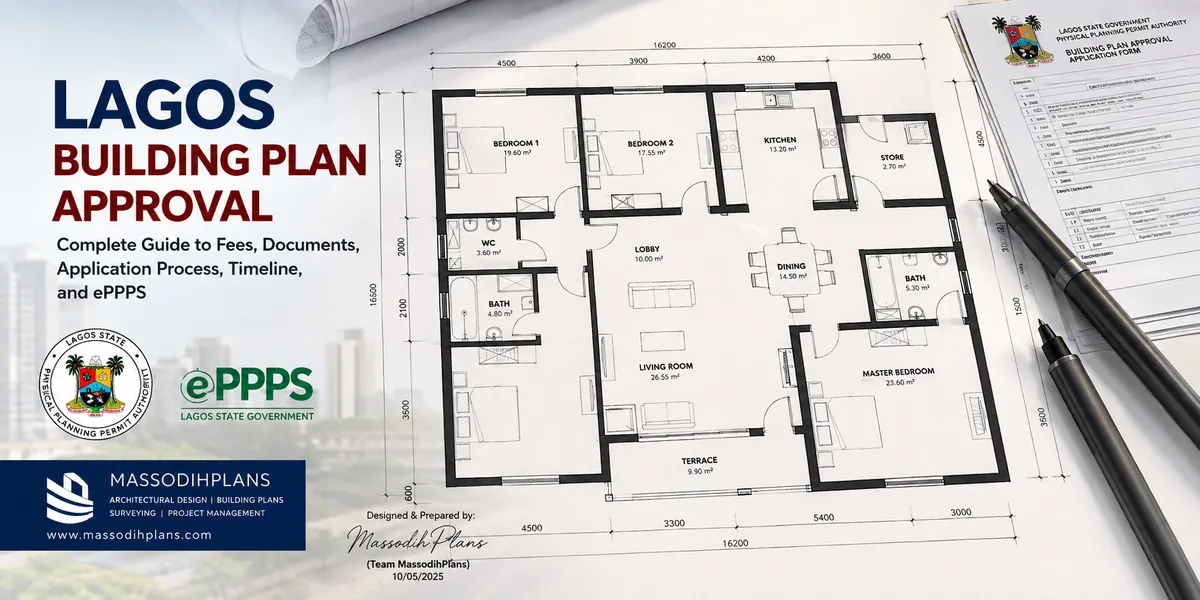
Lagos building plan approval
Building in Lagos without understanding building plan approval can turn a project into an expensive delay. If you are asking how to get Lagos building plan approval, how much it costs, which documents you need, how to apply through ePPPS, or how long approval takes, this guide gives you the process from land and drawings to planning permit and construction authorization.
The important distinction is that planning approval is not simply an “approved drawing.” Your application must fit the planning requirements for the property, be supported by the appropriate title and survey information, contain properly prepared professional drawings, and pass the review process. Lagos provides the Electronic Physical Planning Process System (ePPPS), where applicants can register, request a service, pay applicable fees, complete the required form, submit information, and track applications. The system includes Planning Permit among its available services. After planning approval, building control requirements still matter: LASBCA handles construction-stage control, including authorization to commence construction, inspections, and completion/fitness certification.
This guide goes further than a checklist. You will see the required documents, the approval steps in the correct order, what affects government charges and professional costs, realistic timeline considerations, common reasons applications are queried or delayed, how to prepare your drawings before submission, what happens after approval, and the difference between planning permission and building-control obligations.
Most importantly, you will learn what to check before spending money on drawings or starting construction. That can help you avoid submitting an incomplete application, designing a building that conflicts with planning requirements, paying for unnecessary revisions, or beginning work before authorization is in place.
Whether you are building a bungalow, duplex, apartment, shop, office, or another development in Lagos, use this guide as your roadmap from application preparation to lawful construction.
What Building Plan Approval Actually Is (And Why It’s Not Optional)
Building plan approval in Lagos is the formal, legal process by which the state confirms your proposed building complies with planning regulations, structural safety standards, and land-use rules before you’re permitted to break ground. Two agencies handle this together: LASPPPA (Lagos State Physical Planning Permit Authority), which reviews and grants the actual planning permit, and LASBCA (Lagos State Building Control Agency), which inspects your site during construction and issues stage certifications confirming the work matches what was approved.
Here’s the part people underestimate: approval isn’t a formality you can chase after construction has already started. Building without it, or continuing construction beyond what your permit allows, is treated as illegal development in Lagos and the consequences are real, not theoretical. LASBCA actively enforces compliance, and unapproved structures face fines, stop-work orders, and in serious cases, demolition. Properties without proper approval also become genuinely difficult to sell, mortgage, or insure, since no serious buyer or lender wants to inherit that liability.
Practitioner Truth: I’ve never met a client who regretted paying for approval upfront. I’ve met several who deeply regretted skipping it the cost of “as-built” penal fees and potential demolition dwarfs anything you’d have paid doing it properly from day one.
Approval also protects you in a more constructive way it’s a genuine second layer of technical review. A qualified reviewer checking your structural drawings can catch a real problem before it becomes a building defect, which is exactly the kind of safety net that’s saved lives in a city that has, unfortunately, seen building collapses tied directly to skipped or compromised approval processes.
With the “why” firmly established, let’s move into exactly what LASPPPA and LASBCA require from you before they’ll approve anything.
What Building Plan Approval Actually Is (And Why It’s Not Optional)
Documents You Need Before You Apply
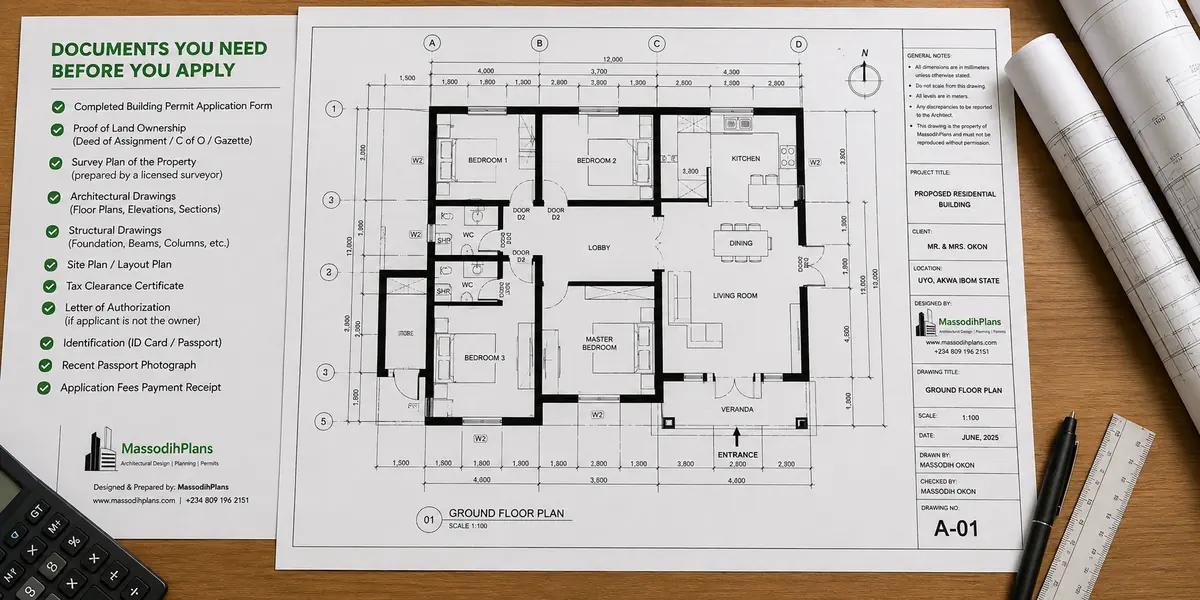
Getting your documentation right the first time saves weeks of back-and-forth. Here’s what a Lagos building plan application genuinely requires.
Land title documents
A valid Certificate of Occupancy (C of O), Governor’s Consent, or other properly perfected title document proving you have legal right to build on the land. This is foundational LASPPPA won’t process an application on land with unclear or disputed title.
Approved survey plan
A registered survey plan of the land, prepared by a licensed surveyor, showing accurate boundaries and coordinates.
Architectural drawings
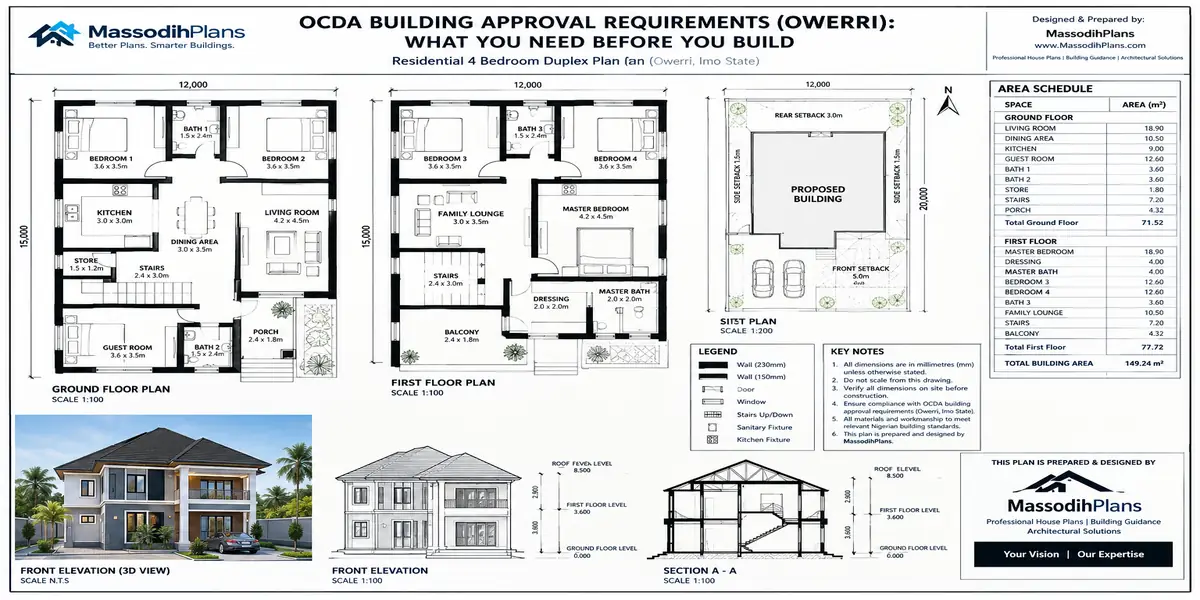
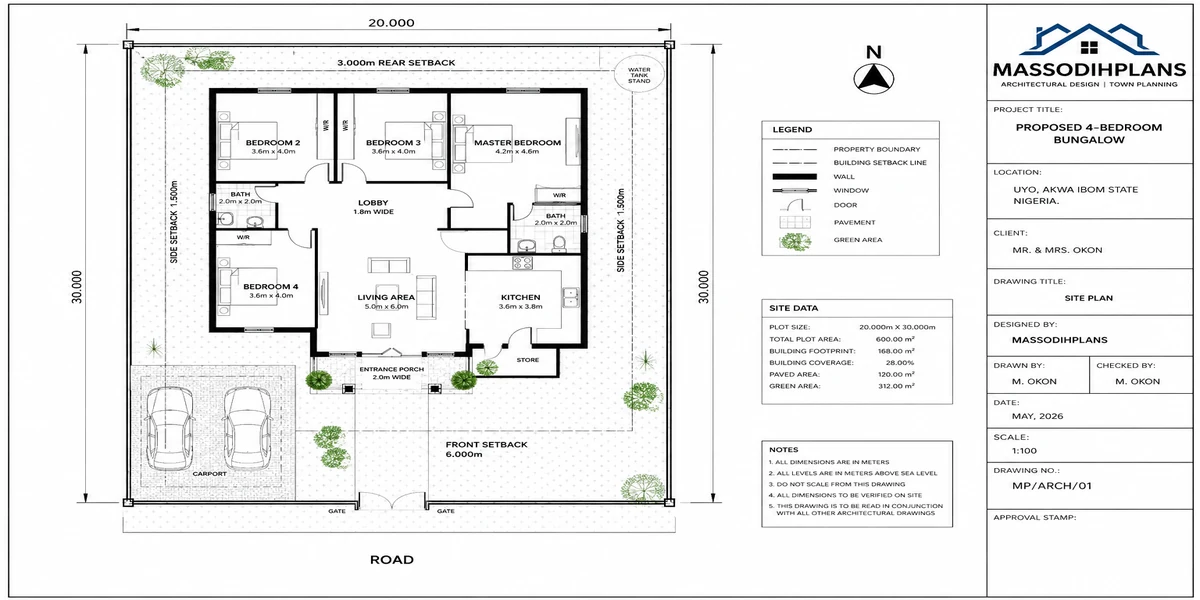
Complete architectural drawings floor plans, elevations, sections prepared by a registered architect, showing exactly what you intend to build.
Neighbourhood Site Plan Analysis Report
A Neighbourhood Site Plan Analysis Report is a professional planning document that examines the proposed development site in relation to its surrounding neighbourhood before building approval is granted. In Lagos, site analysis forms part of the planning submission requirements, with the regulations requiring a block plan showing subject-site analysis and a Physical Planning Technical Report prepared, signed, sealed and stamped by a registered Town Planner.
The analysis typically considers the site’s location, existing land use, surrounding buildings, road network, access, drainage, setbacks, neighbouring developments, plot characteristics, environmental conditions and the relationship between the proposed building and surrounding properties. A Town Planner uses these observations to determine whether the proposed development is compatible with the existing neighbourhood and applicable planning standards.
The report may also identify potential planning concerns such as inadequate road access, incompatible land uses, insufficient setbacks, drainage problems, development within restricted areas or conflicts with existing planning schemes. The findings help demonstrate that the proposed building will fit appropriately into its physical and urban environment.
For building approval in Lagos, engaging a qualified and registered Town Planner is therefore important. While documentation requirements differ between states and development categories across Nigeria, similar site and neighbourhood planning considerations are commonly required by planning authorities.
Required Document Checklist
☐ Valid land title (C of O, Governor’s Consent, or equivalent)
☐ Registered survey plan
☐ Architectural drawings (signed by a registered architect)
☐ Structural drawings and calculations (signed by a registered structural engineer)
☐ Soil investigation report (where applicable)
☐ Mechanical/electrical drawings (where applicable)
☐ Tax clearance certificate
☐ Passport photographs and valid ID of the applicant
- Site Plan Analysis Report
- ☐ Evidence of payment of applicable fees
Structural drawings and calculations
Prepared and signed by a registered structural engineer, confirming the building’s structural design is sound and matches the architectural intent.
Soil investigation report
Particularly important given Lagos’s mix of firm and reclaimed, waterlogged terrain this report informs foundation design and is often required, especially for storey buildings or sites on questionable ground.
Tax clearance certificate
Proof of tax compliance for the applicant, typically for the preceding three years.
Mechanical and electrical drawings, where applicable to the building’s scale and complexity.
Every document must bear the signature and registration details of the relevant professional an unsigned or informally prepared drawing set gets rejected outright, and this is exactly why the “just use a draughtsman, skip the registered professional” shortcut so often backfires. With your documents assembled, let’s walk through the actual application process including the biggest change to hit this system in years.
Lagos Building approval Documents You Need Before You Apply
The Application Process, Step by Step
Here’s the sequence as it genuinely runs, from first submission to collecting your approved permit.
Step one: engage your professionals
Before any submission, your architect and structural engineer finalize and sign the drawings your application depends on. This isn’t a step you can rush incomplete or uncoordinated drawings are the most common reason applications stall at screening.
Step two: compile your document set
Assemble every item from the checklist above, ensuring consistency across documents your survey plan, architectural drawings, and structural drawings must all reference the same plot dimensions and details.
Step three: submit through ePPPS
As of April 1, 2026, all planning permit applications in Lagos must go through the Electronic Physical Planning Process System exclusively manual, paper-based submission has been formally discontinued and is now treated as illegal processing. We’ll cover ePPPS in full detail in the next section.
Timing Tip: Submit your application with every document complete and consistent the first time. Screening bounces incomplete or inconsistent submissions back for correction, and each round-trip adds real weeks to your timeline.
Step four: screening
Your submission is reviewed by LASPPPA (increasingly supported by accredited CAP agents private professionals engaged to expand review capacity) for compliance with zoning, setback, plot coverage, and structural requirements.
Step five: pay applicable fees
Once screening confirms your application is in order, you pay the calculated Building Plan Assessment fee and associated charges through the platform.
Step six: approval and permit collection
Once fees are confirmed and final review is complete, your planning permit is granted. You’ll need physical sets of the final, endorsed drawings for your records and for site display during construction.
Step seven: notify LASBCA before construction
Once you hold your permit, you must give LASBCA seven days’ written notice of your intention to commence construction, and pay their inspection and stage-certification fee before breaking ground.
Understanding this sequence prevents the common mistake of starting construction the moment a permit is granted, skipping the mandatory LASBCA notification step entirely. Now let’s dig into exactly how the fees at step five get calculated, because this is where most guides go vague and I want to give you something concrete.
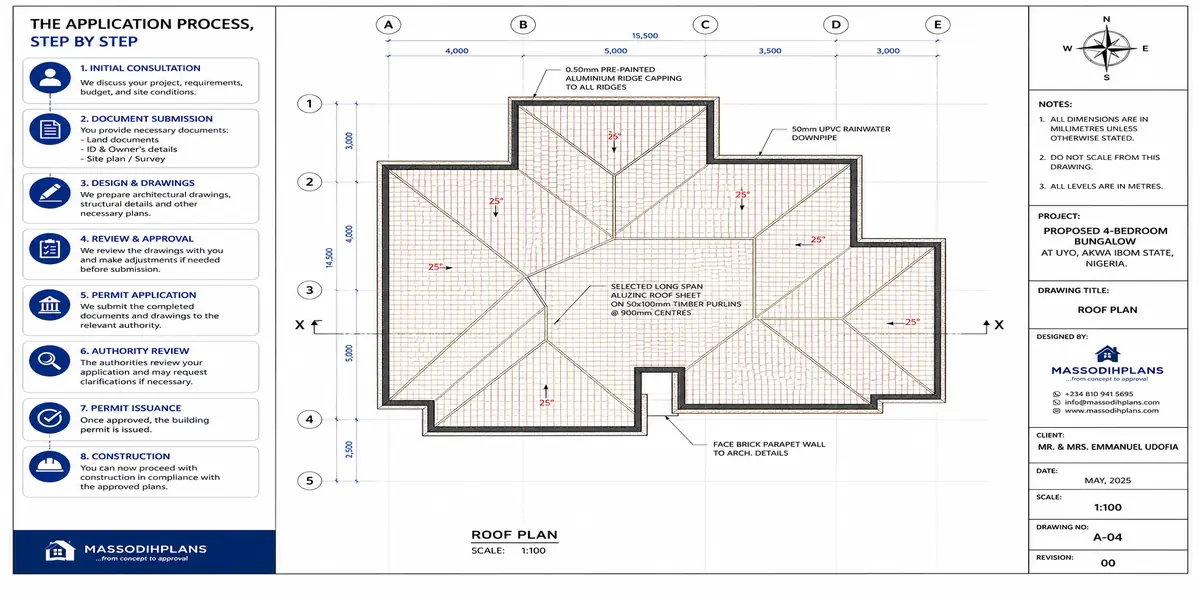
roofing application process
How LASPPPA Fees Are Actually Calculated
The fee isn’t a flat number it’s calculated through a specific formula, and understanding it helps you estimate your own cost realistically rather than guessing.
The core formula is: Building Volume (Length × Breadth × Height) × your zone’s rate, plus a few fixed additions layered on top.
Building volume is calculated directly from your architectural drawings’ dimensions a larger, taller building naturally produces a higher assessment.
Zone rate varies across Lagos State, since LASPPPA divides the state into planning zones with different rates reflecting land value and development density a zone covering Ikoyi, Victoria Island, and Eti-Osa carries different rates than a mainland or outer zone. Always confirm your specific zone’s current rate directly through ePPPS or with LASPPPA, since these rates are periodically reviewed and adjusted.
Full Fee Formula
Building Assessment Fee = (Building Volume × Zone Rate) + Fencing Fee + Layout Fee (≈₦100,000) + Registration Fee (≈₦50,000) + LPO Charge (10% of Building Assessment)
Then add: LASBCA stage-certification fee (≈20% of your LASPPPA Building Assessment fee)
Fencing fees apply where your application includes perimeter fencing, calculated separately from the main building assessment.
Layout and registration fees are fixed administrative charges, roughly ₦100,000 and ₦50,000 respectively, applied regardless of building size.
LPO (Local Planning Office) charge adds approximately 10% on top of your calculated Building Assessment fee.
LASBCA’s fee, applied separately for construction-phase inspection and stage certification, is calculated as roughly 20% of the LASPPPA Building Plan Assessment fee you already paid.
Realistic Total: For a modest residential permit in Lagos, the all-in government fee total LASPPPA plus LASBCA commonly lands between ₦600,000 and ₦2,000,000, before adding your architect’s and structural engineer’s professional fees or any agent facilitation cost.
Knowing this formula means you can request your zone rate and your drawings’ calculated volume from your architect early, and estimate your approval cost before you’re deep into the process. With fees demystified, let’s move fully into the system that now governs every step of this process: ePPPS.
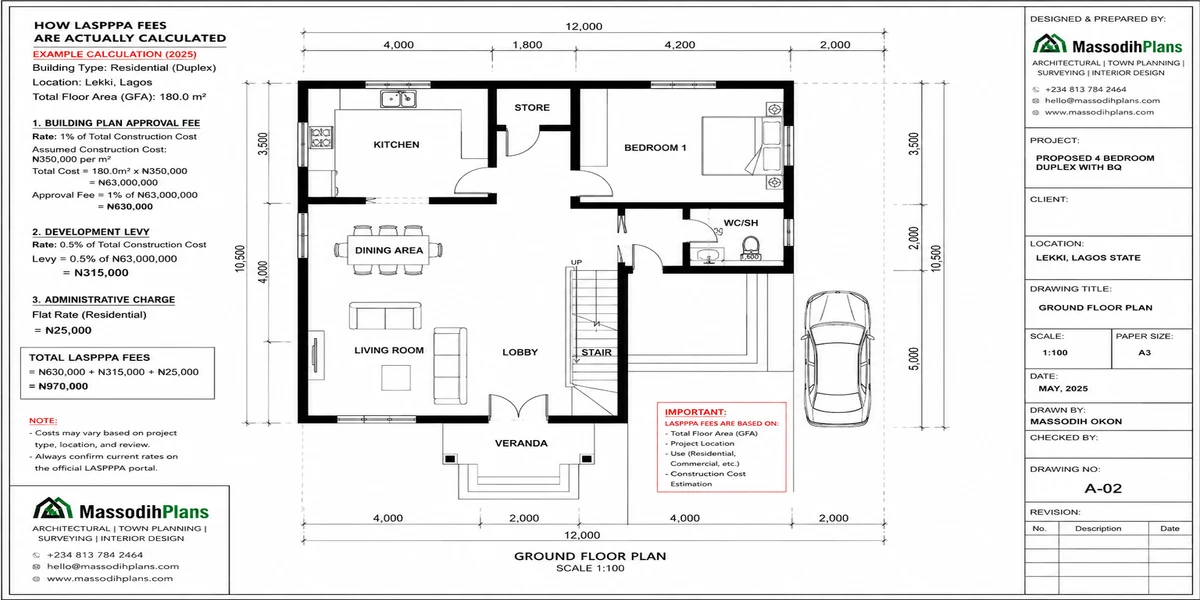
How LASPPPA Fees Are Actually Calculated
ePPPS: How Lagos’s New Digital Approval System Actually Works
This is genuinely the biggest procedural change to hit Lagos building approval in years, and if you’re planning to build now, you need to understand it, not the old manual process most older articles still describe.
The Electronic Physical Planning Process System (ePPPS) became fully operational on April 1, 2026, replacing manual and semi-digital processing entirely across Lagos State. The Lagos State Government has explicitly declared manual processing of planning permits illegal from that date forward every application, from initial submission through to stage certification, must now run through the platform.
What ePPPS actually covers
The system isn’t limited to the initial planning permit it handles the full construction-approval lifecycle: planning permit applications, authorization to commence construction works, and stage certifications, all within one unified digital framework, rather than separate manual processes at different agencies.
What Changed for You
Under the old system, you’d physically visit LASPPPA offices, submit paper drawings, and wait on unpredictable manual review timelines. Under ePPPS, you submit digitally, track your application’s status in real time, and the government’s stated goal get a faster, more transparent process with far less room for discretionary delay.
Fast-track processing
The platform is designed to deliver a permit within 3 working days of submission for applications that pass screening cleanly under the fast-track pathway a dramatic shift from the historically unpredictable manual timelines Lagos was known for.
Why this matters practically
With manual submissions now illegal, any agent, contractor, or “facilitator” offering to process your approval outside the ePPPS platform is not offering you a legitimate shortcut they’re offering you exposure to an illegal process that Lagos State has explicitly stated it will not recognize.
ePPPS Quick Facts
☐ Fully operational since April 1, 2026 mandatory for all applications
☐ Covers planning permits, construction authorization, and stage certification in one platform
☐ Manual/paper submissions are now illegal
☐ Real-time application tracking available to applicants
☐ Fast-track pathway targets permit issuance within 3 working days of a clean submission
☐ Supported by CAP (Certified Accreditors Programme) agents assisting LASBCA with screening and site inspection capacity
CAP agents accredited private-sector professionals working alongside LASBCA have been introduced specifically to expand the government’s screening and inspection capacity, since LASBCA has openly acknowledged it lacks enough personnel to independently cover all of Lagos State’s construction activity.
Understanding ePPPS properly changes how you should plan your timeline which is exactly what we’ll walk through next.
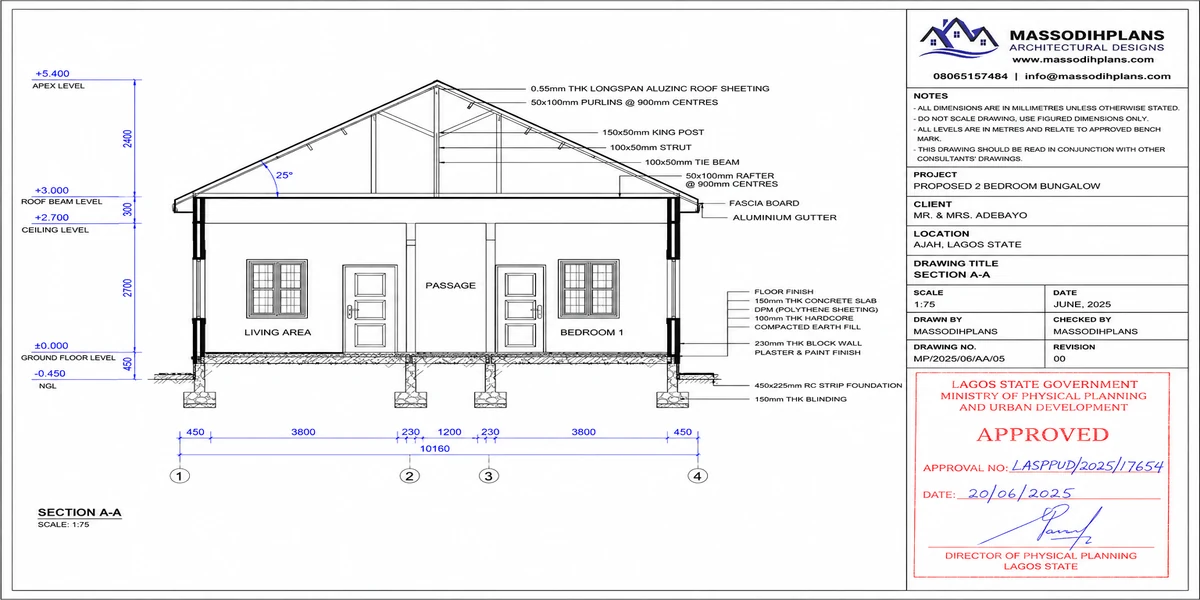
ePPPS: How Lagos’s New Digital Approval System Actually Works
Realistic Timeline: How Long This Actually Takes
Let’s set honest expectations, because timeline is where I see the most client frustration, usually from expecting government processes to move at private-sector speed.
Document preparation getting your architectural and structural drawings, survey, and supporting documents finalized and signed typically takes several weeks on its own, depending on your architect’s and engineer’s workload and how quickly you provide the information they need.
ePPPS submission and screening under the new fast-track pathway, a clean, complete application can see permit issuance within roughly 3 working days of submission. Realistically, though, budget for longer where your application needs corrections, clarifications, or falls outside the fast-track criteria.
Honest Expectation: The 3-day fast-track figure is the government’s target for clean, complete submissions not a guarantee for every application. Incomplete documentation, inconsistencies between drawings, or applications requiring additional review will take longer. Submit thoroughly the first time to have any realistic shot at the fast track.
LASBCA notification and inspection scheduling after receiving your permit, the mandatory 7-day notice period before you can legally commence, plus scheduling your first stage inspection, adds further time before groundbreaking.
Stage certifications during construction as you progress through foundation, structural, and finishing stages, each requires LASBCA inspection and certification before proceeding to the next stage, meaning timeline planning during construction should genuinely factor in inspection scheduling, not just labour and material availability.
Total realistic time from “documents ready” to “permit in hand,” accounting for a normal, non-fast-tracked application, commonly runs several weeks to a couple of months plan your construction start date with that buffer built in, rather than assuming approval will keep pace with your enthusiasm to break ground. With timeline expectations set honestly, let’s close with the questions I get asked most often on this exact topic.
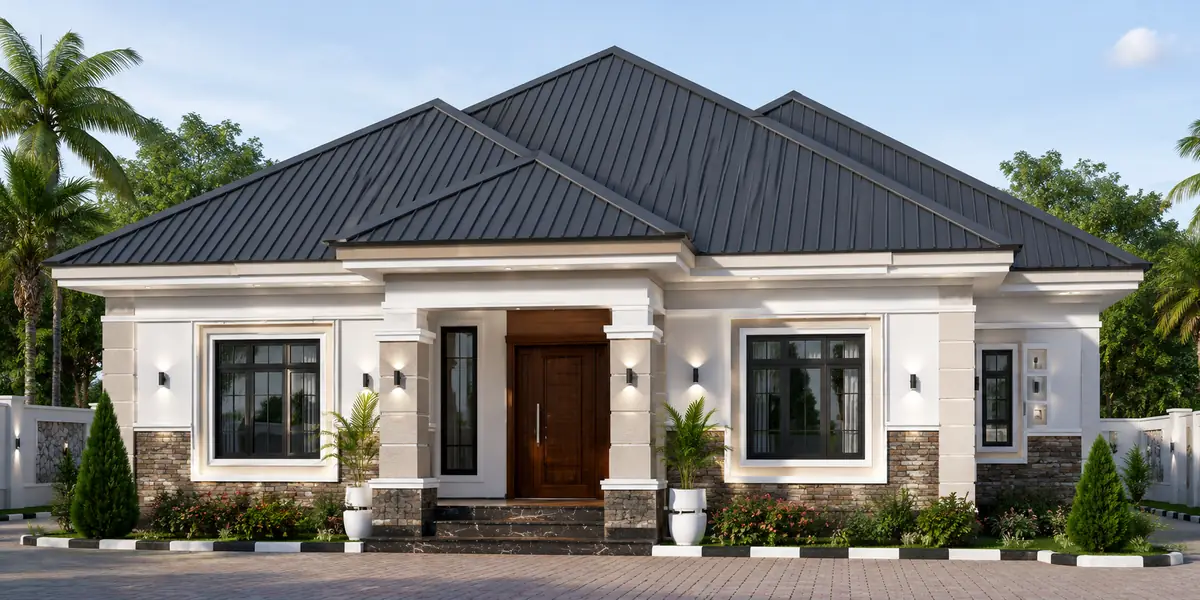
Front view Plans Drawing
Frequently Asked Questions
Do I really need approval for a small residential building, or just for big commercial projects?
Yes, approval is required regardless of building size or type in Lagos State. A small bungalow needs the same fundamental process as a large commercial development, though the fee and complexity scale down with building volume.
Can I start construction while my approval application is still being processed?
No. Legally, you must wait until your planning permit is granted and you’ve given LASBCA the required 7-day notice before commencing. Starting earlier exposes you to as-built penal fees, which typically run 3 to 5 times the standard permit fee, and potential enforcement action.
What happens if I already built without approval can I still regularize it?
Regularization is sometimes possible through LASPPPA’s as-built approval category, but it comes at a significant penalty premium and doesn’t guarantee approval if the structure doesn’t meet setback, safety, or zoning requirements sometimes leading to demolition of non-compliant portions regardless of the penalty paid.
Is the old LASPPPA/LASPPDA manual process still available for older applications submitted before April 2026?
No as of April 1, 2026, manual processing has been fully discontinued and is treated as illegal going forward. Any pending applications and all new submissions must now go through ePPPS exclusively.
Do I need a licensed agent to use ePPPS, or can I apply myself?
You can apply yourself if you have all required documents prepared correctly, though many applicants engage a permit agent or their architect to manage the submission and respond to any screening queries, since experience with the platform and requirements can reduce delays.
How is my LASPPPA zone rate determined, and can I find it before submitting?
Your zone rate depends on where your plot falls within Lagos State’s defined planning zones. Confirm your specific zone and current rate directly through ePPPS or with LASPPPA before finalizing your budget, since rates are periodically reviewed and differ meaningfully between, for instance, Eti-Osa and outer mainland zones.
Does getting LASPPPA approval also cover LASBCA’s construction-stage requirements?
No they’re related but distinct. LASPPPA approval grants your planning permit; LASBCA separately handles your authorization to commence construction and stage certifications throughout the build, each with its own notification requirement and fee.
What’s the difference between a Certificate of Occupancy and a building plan approval?
A Certificate of Occupancy (C of O) establishes your legal right to the land itself. Building plan approval is a separate process confirming your proposed structure on that land complies with planning and safety regulations you need valid land title before you can even apply for building plan approval.
Can building plan approval be transferred if I sell the land before construction is complete?
This generally requires formal notification to and processing by LASPPPA, since the permit is typically tied to the applicant and the specific approved plans consult directly with LASPPPA or a qualified professional before assuming a permit transfers automatically with a land sale.
Getting this process right protects everything else you’ve invested in your build the land, the design, the materials, the years of planning. It’s genuinely worth treating with the same seriousness you’d give the foundation itself, because in a real sense, it is the legal foundation your entire project stands on.
If you’re preparing a building plan application in Lagos and want your drawings and documentation genuinely ready for ePPPS submission, our Services page connects you directly with our team. To understand the design and technical drawing process in more depth, explore our Plan School. For house plans already structured with Lagos approval requirements in mind, browse our Plans Library, and for more guides like this one, return to our Homepage.
External Citation Reference: For official, current information on the Electronic Physical Planning Process System, application procedures, and fee schedules, the Lagos State e-Planning Permit portal is the authoritative source
Read these articles to complete this lesson:
- Cost of Building a House in Lagos: Complete Budget Guide to Materials, Labour, Design, and Approval Costs
- Landscaping Services: Complete Guide to Landscape Design, Hardscaping, Garden Planning and Outdoor Improvements
- Sustainable Landscaping: Complete Guide to Xeriscaping, Landscape Lighting and Water-Efficient Gardens
- Landscape Architect: What They Do, What They Design and When You Need One
- Building Regulations by Country: Permits, Zoning, Codes and Property Development Rules
- Building Regulations and Codes: Complete Guide to Requirements Worldwide
- House Construction Approval Process: Planning, Permits, Inspections and Final Approval
- Land Development Guide: Permits, Planning, Zoning, Costs and Approval Process Explained
- Building Permit Documents: Complete Checklist of Requirements for Building Approval
- How Do I Get Land Survey and Building Approval in Nigeria From Switzerland? A Step-by-Step Guide for Diaspora Property Owners
Others
- How Do I Get Land Survey and Building Approval in Nigeria From the USA?
- Nigerian Building Approval Checklist for Overseas Property Owners
- Building a House in Nigeria While Living Abroad: Complete Approval and Documentation Guide
- Why Building Plans Get Rejected in Nigeria and How to Get Approval Fast
- Building Approval in Nigeria: Costs, Requirements, Process and How to Get Your House Plan Approved Fast
- Building Project Budget Template: Complete House Construction Cost Planner
- Cost of Building a 4 Bedroom Duplex in Lagos (Complete Guide)
- Modern Duplex House Plan for 50×100 Plot in Lagos
- Smart Duplex Design for Narrow Plots in Lekki, Nigeria: Complete Practical Guide
- Best 4 Bedroom House Plan for Small Plots in Abuja
- Cost of Roofing a Bungalow and Duplex in Abuja Small Plot Now
- Cost of Building a House in Uyo: Honest Budget Guide for Property Owners
- Cost of Building a Modern Bungalow in Calabar (Updated Guide)
- House Plans for Sloping Land in Jos, Plateau State, Nigeria: Smart Nigerian Designs
- Best Roofing Options for Houses in Gusau city of Zamfara State, Nigeria: Prices and Durability
- Nigerian House Plans for Family Homes in Makurdi, Benue State, Nigeria