Don’t Roof Your 4 Bedroom Duplex in Abakaliki Until You Read This Cost Guide
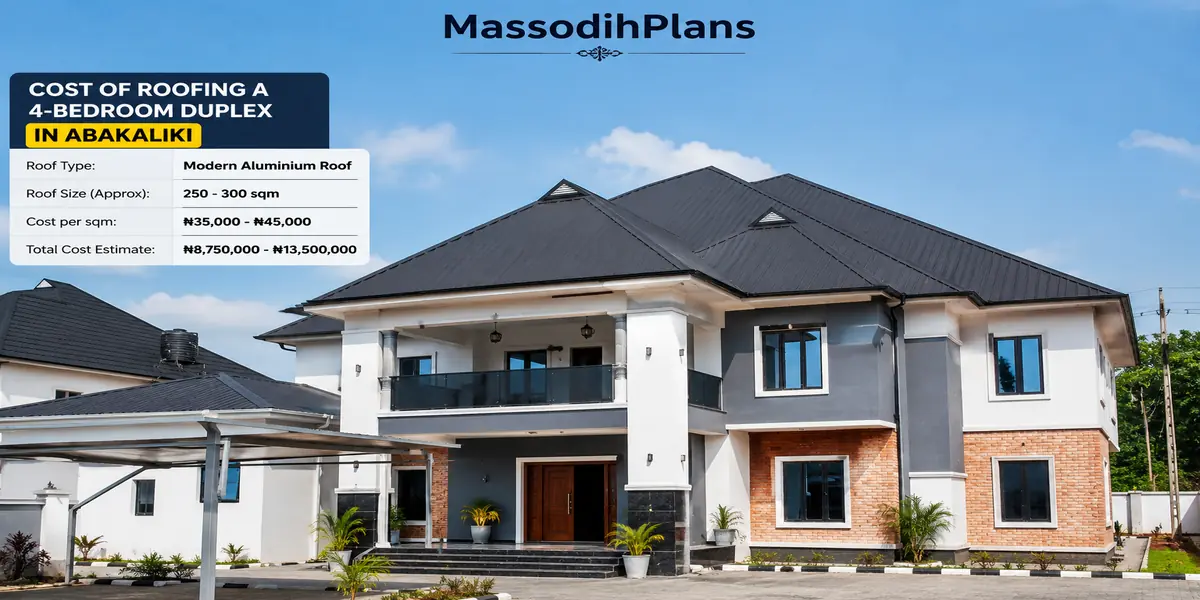
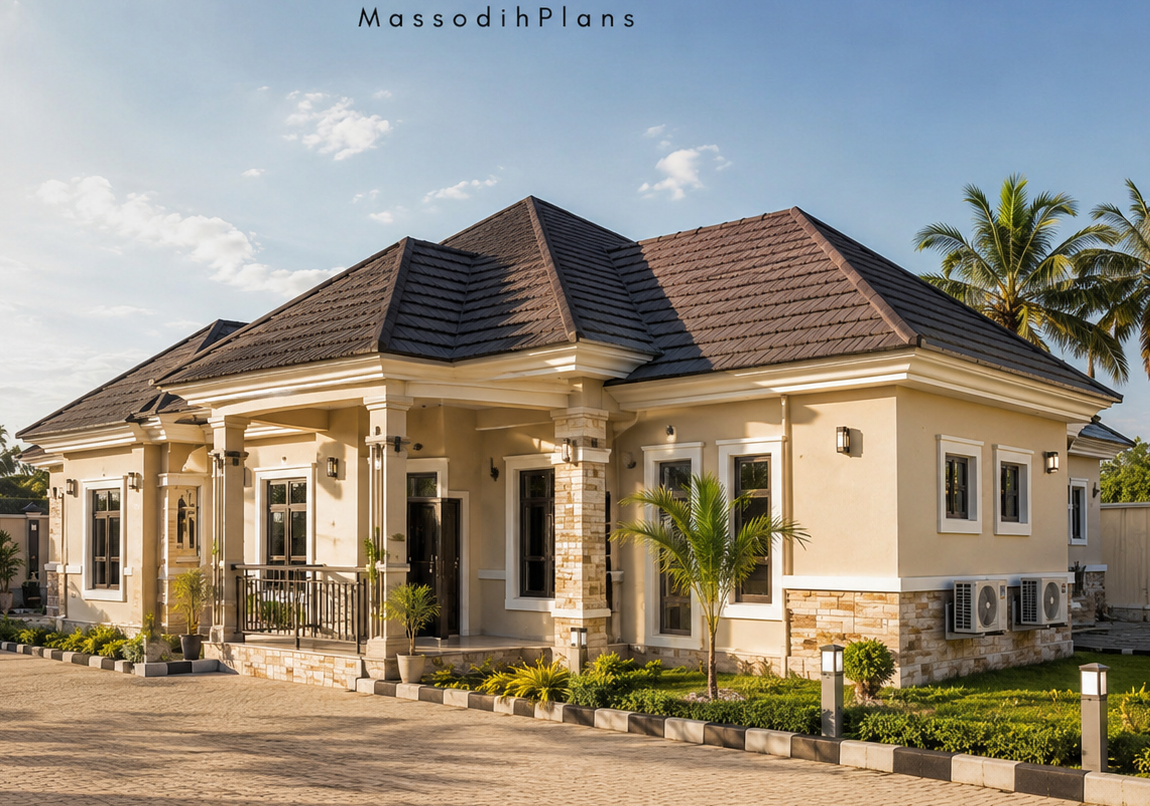
A modern 4-bedroom duplex in Abakaliki showing a professionally installed hip roof suitable for Nigeria’s climate.
If you are budgeting to roof a 4-bedroom duplex in Abakaliki, do not start with a contractor’s lump-sum figure. Start by understanding what actually drives the cost. In today’s Nigerian construction market, roofing a typical 4-bedroom duplex in Abakaliki may require roughly ₦8 million to ₦20 million or more, depending on the roof size, design complexity, pitch, roofing material, timber or steel structure, ceiling requirements, labour, transportation, and material prices.
This guide goes beyond the usual “cost per square metre” estimates. You will see how roof design can increase or reduce your budget, which roofing materials offer better value, how to estimate timber, sheets, nails, accessories and labour, and where hidden expenses can quietly inflate your bill. I will also explain the difference between an expensive roof and one that is simply poorly planned.
My recommendations draw on practical planning knowledge, architectural experience, and construction considerations relevant to Nigerian homes. Whether building in Abakaliki or comparing costs with other Nigerian cities for your project, the objective is the same: build a durable, attractive roof without paying for unnecessary complexity. Before you approve any quotation, use this guide to understand exactly what you are paying for and where your money should go.
Quick Answer
If you want a straightforward answer, here it is. For most modern 4-bedroom duplexes in Abakaliki, you should prepare a roofing budget of approximately:
| Roof Quality | Estimated Cost |
|---|---|
| Economy Roofing | ₦8,000,000 – ₦11,000,000 |
| Standard Roofing | ₦11,000,000 – ₦15,000,000 |
| Premium Roofing | ₦15,000,000 – ₦20,000,000+ |
These figures include major roofing components such as timber, roofing sheets, steel accessories, labour, transportation, and installation. However, they do not include the cost of the building itself. Material prices change frequently across Nigeria, so always obtain updated quotations before making final decisions.
At a Glance
| Item | Details |
|---|---|
| Project | Roofing a 4 Bedroom Duplex |
| Location | Abakaliki, Ebonyi State |
| Estimated Budget | ₦8m – ₦20m+ |
| Best Roof Types | Hip Roof, Dutch Hip Roof |
| Suitable Plot Size | 450–700 sqm |
| Roofing Duration | 3–8 Weeks |
| Best Time to Roof | Dry Season |
| Difficulty Level | High |
| Suitable For | Family Homes, Duplexes, Luxury Residential Buildings |
Who Should Read This Guide?
This article is written especially for:
- People planning to build a duplex in Abakaliki.
- Nigerians living abroad who want to monitor their building projects from overseas.
- First-time homeowners.
- Property investors.
- Architects and builders seeking practical cost references.
- Families comparing different roofing options before construction.
- Anyone who wants to avoid costly roofing mistakes.
Whether you already have your walls up or are still preparing your building budget, this guide will help you make informed decisions.
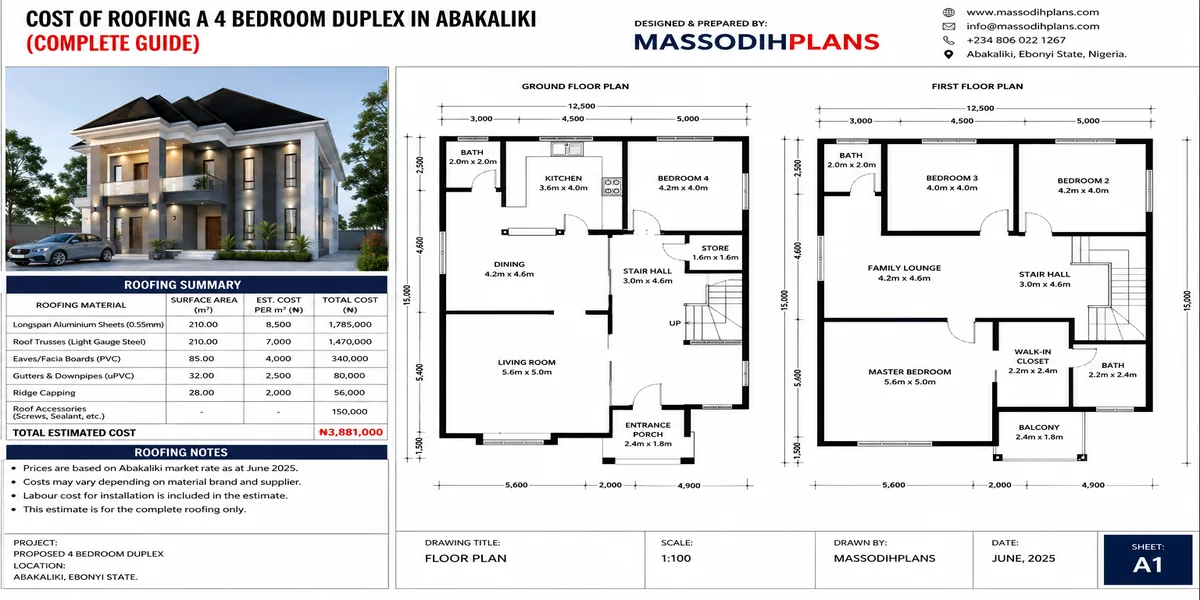
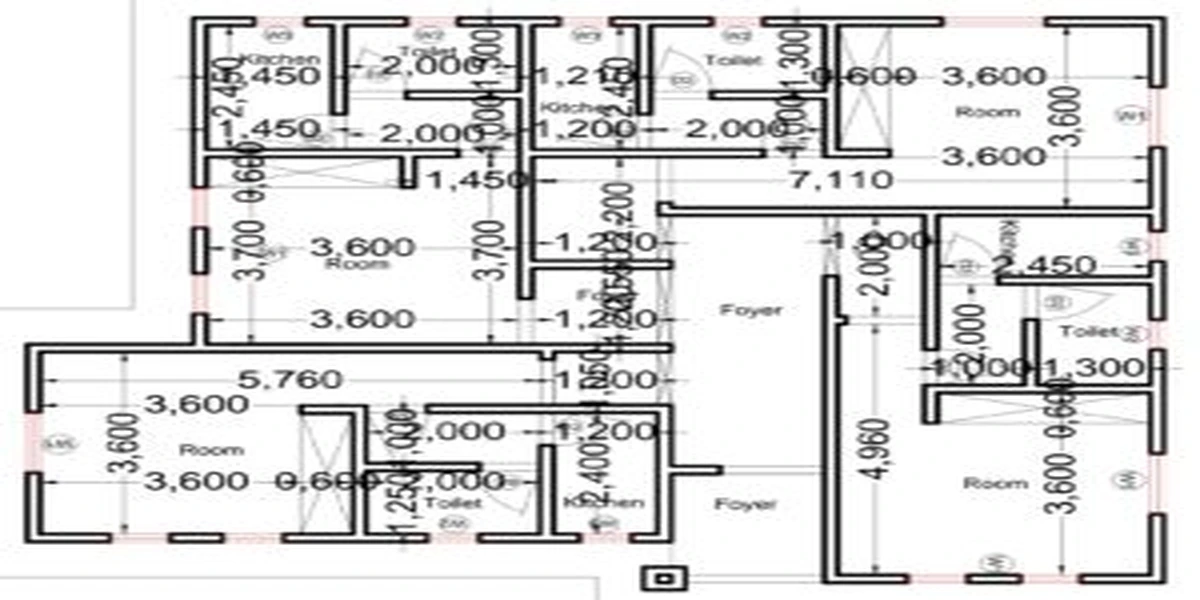
cost of roofing 4 bedroom duplex
Why Roofing Deserves Serious Planning
Many people focus heavily on the foundation, blocks, or concrete work. While those are important, roofing is one of the most expensive stages of residential construction.
Over the years, I have noticed that many homeowners underestimate roofing costs. They assume that once the walls are completed, the remaining work will be relatively affordable. Unfortunately, the opposite is often true.
From what I have seen in practice, many projects experience delays immediately after lintel level because the owner has not adequately planned for the roofing stage.
This is something I have encountered many times. People often celebrate reaching roofing level, only to discover that the roofing budget is almost equal to the cost of constructing the walls. That is why proper planning is extremely important.
Why Roofing Costs in Abakaliki Continue to Increase
One lesson I learned early is that building prices rarely remain stable for long. Several factors influence roofing costs in Abakaliki. These include:
- Rising timber prices.
- Imported roofing sheet costs.
- Exchange rate fluctuations.
- Transportation costs.
- Fuel prices.
- Skilled labour shortages.
- Inflation.
- Seasonal demand.
Because roofing materials are transported from different parts of Nigeria, transportation alone can significantly affect your final budget. For this reason, I usually advise clients to request quotations from multiple suppliers before purchasing materials.
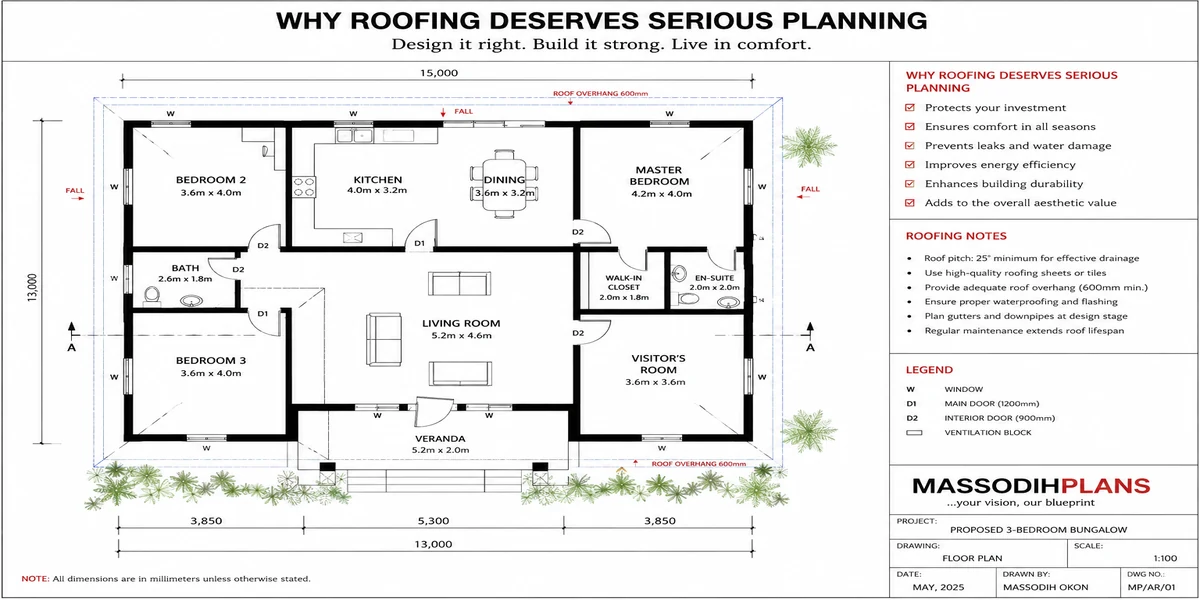
Why roofing deserves serious planning
What Determines the Cost of Roofing a 4 Bedroom Duplex?
One of the biggest misconceptions I encounter is that all 4-bedroom duplexes cost the same to roof. The reality on the ground is completely different. Several important factors determine your final roofing cost.
1. Roof Design
The design of your roof has one of the biggest impacts on your budget. For example:
- Hip roofs generally require more materials than simple gable roofs.
- Complex luxury roof designs require additional timber, valleys, ridges, flashing, and labour.
- Roofs with multiple projections increase wastage.
During one design review, I noticed that a client changed from a simple hip roof to a highly decorative roof after construction had already begun. The new design increased the roofing budget by several million naira. This is why your roof design should be finalized before construction reaches roofing level.
2. Building Size
Not every 4-bedroom duplex has the same floor area. For example: A compact duplex measuring about 250 square metres will require far fewer materials than another measuring over 450 square metres. The larger the roof surface, the higher your cost.
3. Roofing Sheet Type
Your choice of roofing sheet affects both your budget and the long-term performance of your building. Popular options include:
- Long-span aluminium sheets.
- Stone-coated roofing tiles.
- Step tiles.
- Zinc roofing sheets.
- Fibre roofing sheets.
Each comes with different advantages, durability levels, maintenance needs, and prices. Choosing the cheapest option is not always the smartest decision.
4. Timber Quality
During my internship, I observed that poor-quality timber is one of the leading causes of roofing problems. Inferior timber may:
- Bend.
- Crack.
- Warp.
- Become infested by termites.
- Shorten the lifespan of the roof.
Good timber costs more initially but saves money over the life of the building.
5. Labour Charges
Roofing is specialised work. Experienced roof carpenters and installers usually charge more than inexperienced workers. However, from what I have seen in practice, paying for skilled workmanship is often cheaper than correcting poor installation later.
Why Climate Matters in Abakaliki
Ebonyi State experiences heavy rainfall during the wet season together with intense sunshine during the dry months. This means your roofing system should not only look beautiful but also perform well under changing weather conditions.
When selecting roofing materials, always consider:
- Heat reflection.
- Rainwater drainage.
- Wind resistance.
- Corrosion resistance.
- Noise reduction.
- Long-term maintenance.
Many homeowners only focus on colour and appearance. Experience has taught me that performance should always come first. A beautiful roof that leaks after two rainy seasons is never a good investment.
Note
Based on projects I have worked on, I always encourage homeowners to see roofing as a long-term investment rather than a place to cut costs. A quality roof can last several decades with proper installation, while poor materials and workmanship can lead to repeated repairs, leaks, timber replacement, and unnecessary expenses. Spending wisely at this stage usually saves much more money in the future.
Complete Roofing Cost Breakdown for a 4 Bedroom Duplex in Abakaliki
One question clients ask me almost every week is: “Where exactly does all the roofing money go?”
It is a fair question because roofing looks simple from the outside. Once the roofing sheets are installed, many people assume most of the money went into the sheets alone.
The reality is quite different.
From what I have seen in practice, roofing sheets are only one part of the total cost. A complete roofing project involves dozens of materials and several skilled professionals working together.
Understanding these costs before you start helps you prepare a realistic budget and reduces the chances of abandoning your project halfway.
Major Components of Roofing Cost
Your roofing budget is generally divided into the following categories:
- Roof structural timber
- Roofing sheets
- Fascia boards
- Ceiling noggins
- Nails and fasteners
- Roofing accessories
- Labour
- Transportation
- Wood treatment chemicals
- Waste allowance
- Contingency
Each one contributes to the final amount you will spend.
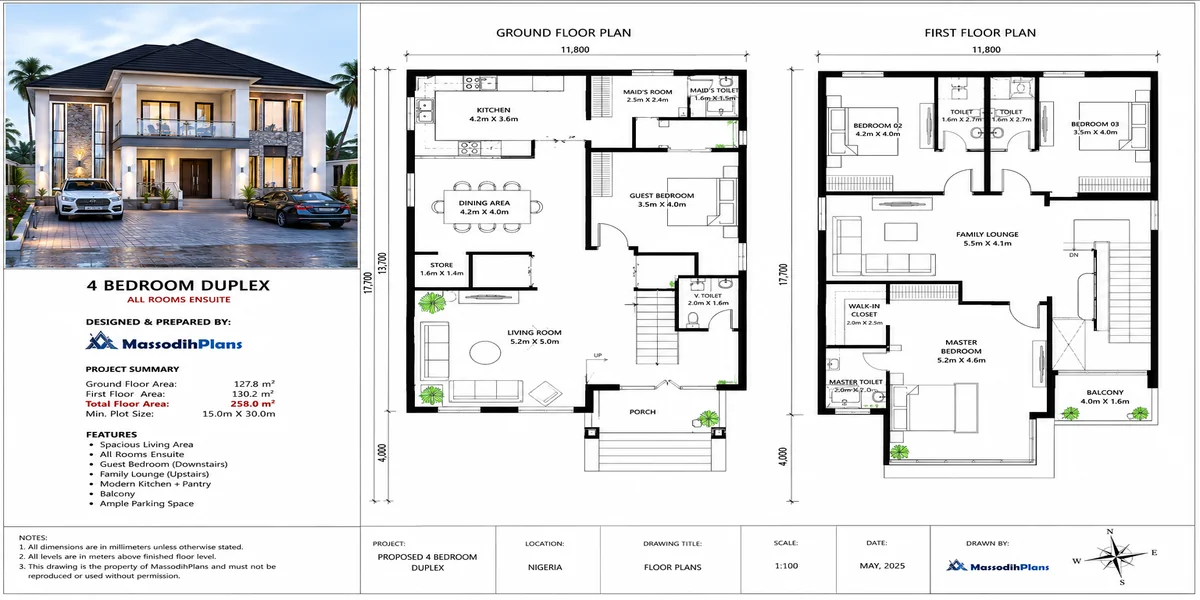
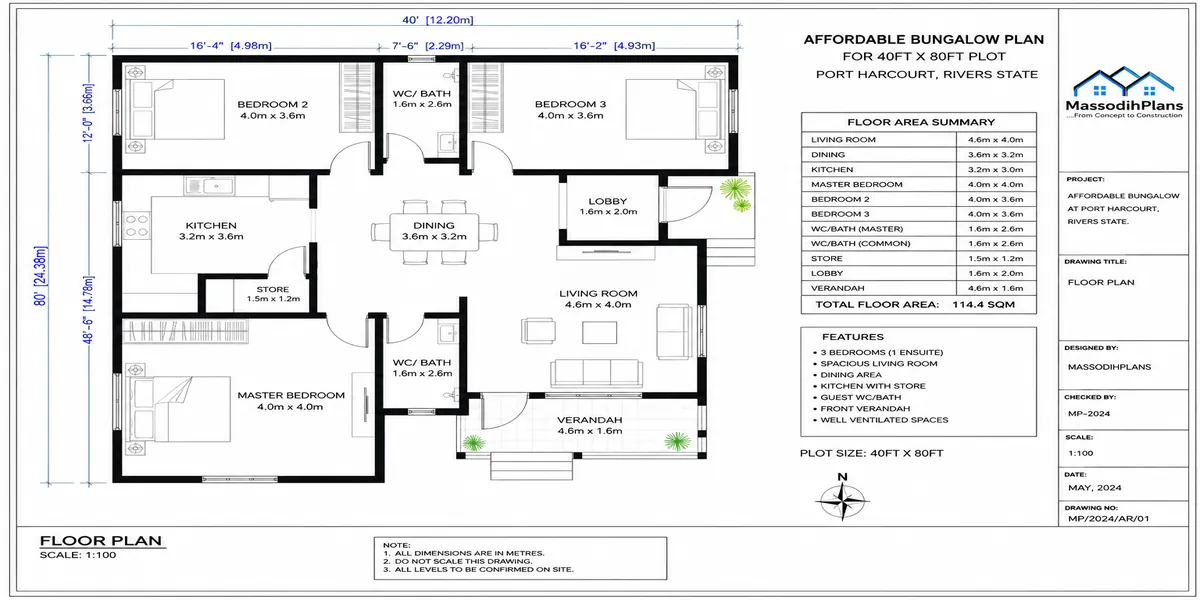
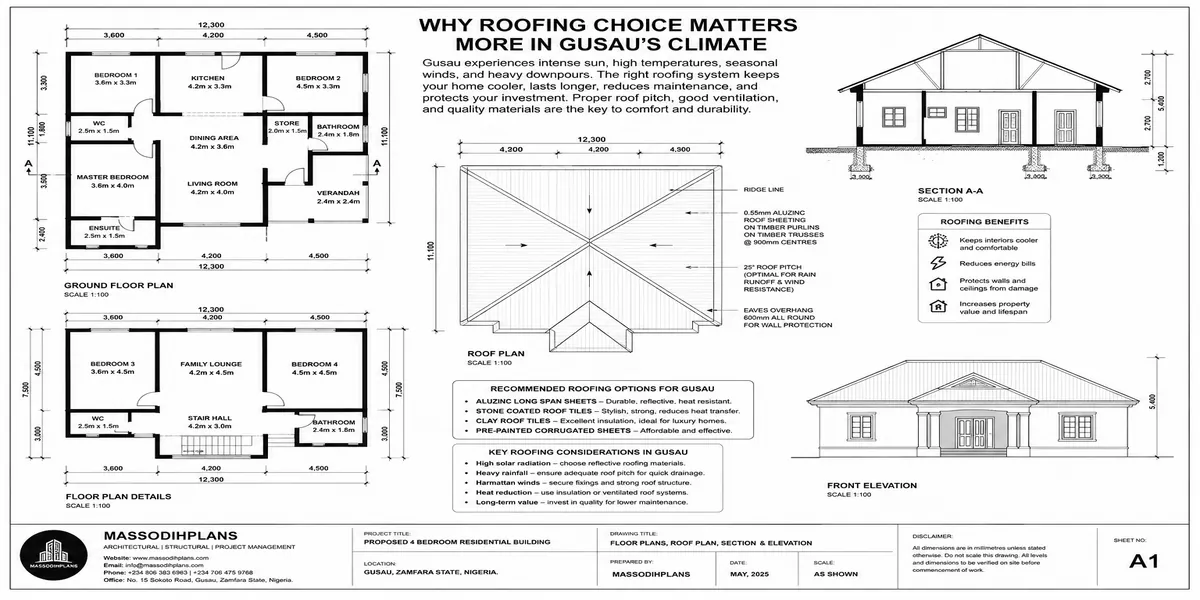
4 bedroom duplex
1. Timber Cost
Timber forms the skeleton of your roof. Without quality timber, even the most expensive roofing sheets cannot perform well.
During my internship, I observed that many homeowners concentrate on buying premium roofing sheets while purchasing inferior timber. Unfortunately, this usually creates structural problems after only a few years.
Good roofing timber should be:
- Properly seasoned
- Straight
- Free from termite attack
- Free from excessive knots
- Properly treated
Common Timber Used
Depending on the roof design, contractors usually purchase:
- 2×2
- 2×3
- 2×4
- 2×6
- 3×4
- 4×4
The exact quantity depends on:
- Roof span
- Pitch
- Complexity
- Number of valleys
- Roof projections
Estimated Timber Budget
For a standard 4-bedroom duplex in Abakaliki:
| Item | Estimated Cost |
|---|---|
| Structural Timber | ₦2,000,000 – ₦3,800,000 |
Large luxury duplexes may require significantly more timber.
Advice
One challenge I repeatedly encountered during my internship was homeowners replacing damaged timber only a few years after roofing.
In many of these cases, the timber had not been properly treated before installation. If there is one thing I would encourage homeowners to do, it is this:
Never skip wood treatment.
It is a relatively small expense that can prevent major structural repairs later.
2. Roofing Sheet Cost
Roofing sheets usually consume the largest portion of the roofing budget. Your choice depends on:
- Budget
- Desired appearance
- Durability
- Heat performance
- Maintenance requirements
Popular Roofing Sheets in Abakaliki
Long Span Aluminium
Advantages
- Affordable
- Lightweight
- Easy to install
- Widely available
- Rust resistant
Suitable for most family homes.
Stone-Coated Roofing Tiles
Advantages
- Premium appearance
- Excellent durability
- Quiet during rainfall
- Long lifespan
Ideal for luxury duplexes.
Step Tiles
Advantages
- Modern appearance
- Better aesthetics
- Strong market demand
- Suitable for executive homes
Zinc Roofing Sheets
Advantages
- Lower purchase cost
Disadvantages
- Shorter lifespan
- Higher maintenance
- More susceptible to corrosion
Estimated Roofing Sheet Budget
| Roofing Type | Estimated Cost |
|---|---|
| Aluminium Long Span | ₦2,800,000 – ₦4,500,000 |
| Step Tiles | ₦4,000,000 – ₦6,000,000 |
| Stone-Coated Tiles | ₦5,500,000 – ₦8,500,000+ |
Prices vary depending on:
- Manufacturer
- Thickness
- Colour
- Accessories
- Market conditions
Which Roofing Sheet Would I Recommend?
Based on my experience, the safest approach for many homeowners in Abakaliki is quality aluminium long-span roofing from a reputable manufacturer. It offers a good balance between:
- Cost
- Durability
- Ease of maintenance
- Weather resistance
If your budget allows and you are building a premium residence, stone-coated roofing remains an excellent long-term option.
3. Fascia Boards
Many people underestimate fascia boards because they seem like decorative elements. In reality, they perform several important functions.
They:
- Protect roof edges
- Improve appearance
- Support gutter installation
- Reduce water damage
Estimated Fascia Budget
Approximately: ₦250,000 – ₦800,000
depending on:
- Material
- Length
- Design
- Finish
4. Roof Accessories
A complete roofing system requires several accessories. These include:
- Ridge caps
- Valley gutters
- Flashings
- Barge caps
- Closures
- Roof screws
- Rubber washers
- Sealants
Although each item appears inexpensive individually, together they represent a substantial part of the roofing budget.
Estimated Accessories Cost
Approximately: ₦350,000 – ₦1,200,000
5. Labour Charges
This is where many homeowners make costly mistakes. I have seen clients negotiate labour costs aggressively, only to spend even more correcting poor workmanship later. Roof installation is highly skilled work.
Experienced roofing carpenters understand:
- Roof alignment
- Pitch accuracy
- Load distribution
- Waterproof detailing
- Proper fastening
- Wind resistance
Paying experienced professionals usually saves money over the life of the roof.
Estimated Labour Cost
For a standard duplex: ₦1,200,000 – ₦2,500,000
Luxury roofs with complex designs will cost more.
6. Transportation
Transportation is often forgotten during budgeting. Yet it can become surprisingly expensive.
Materials may come from:
- Onitsha
- Aba
- Enugu
- Lagos
- Port Harcourt
Fuel prices and road conditions directly affect delivery costs.
Estimated Transportation
Approximately:
₦150,000 – ₦600,000
depending on:
- Distance
- Quantity
- Fuel prices
- Number of trips
7. Wood Treatment Chemicals
Proper treatment protects timber against:
- Termites
- Fungi
- Moisture
- Rot
- Wood-boring insects
Never assume your timber supplier has already treated the wood unless you have verified it.
Estimated Budget
Approximately: ₦80,000 – ₦250,000
8. Waste Allowance
Many homeowners forget that construction always involves some level of waste. Examples include:
- Broken timber
- Off-cuts
- Damaged roofing sheets
- Extra screws
- Measurement adjustments
Professional estimators usually include a reasonable waste allowance instead of pretending every material will be used perfectly.
9. Contingency
Experience has taught me that no construction project goes exactly as planned. Prices may increase unexpectedly. Additional materials may be needed. Transport costs may rise. Rain may delay work. Always keep a contingency budget. I usually recommend keeping 5%–10% of your roofing budget aside for unexpected expenses.
Realistic Sample Roofing Budget
Below is a practical example for a modern 4-bedroom duplex in Abakaliki.
| Item | Estimated Cost |
|---|---|
| Timber | ₦2,800,000 |
| Roofing Sheets | ₦4,200,000 |
| Accessories | ₦700,000 |
| Fascia Boards | ₦500,000 |
| Labour | ₦1,800,000 |
| Transportation | ₦300,000 |
| Wood Treatment | ₦150,000 |
| Contingency | ₦900,000 |
Estimated Total
₦11,350,000
Please note that this is an illustrative estimate rather than a fixed quotation. Actual costs will vary depending on your building’s design, roof complexity, material choices, contractor rates, and current market prices.
How to Reduce Roofing Costs Without Reducing Quality
Over the years, I have noticed that the people who save the most money are not always those who buy the cheapest materials. They are the ones who plan carefully. Here are practical ways to control costs:
- Finalise your roof design before construction reaches roofing level.
- Compare quotations from at least three reputable suppliers.
- Buy quality materials instead of replacing cheap ones later.
- Schedule roofing during the dry season where possible to minimise weather delays.
- Supervise deliveries and installation to reduce material waste.
- Engage experienced roofing professionals rather than choosing solely on price.
- Set aside a contingency fund so unexpected costs do not halt the project.
From a planning perspective, these steps often save far more money than trying to cut corners on essential materials.
Roof Design, Ventilation, Site Planning and Practical Building Advice
One thing our lecturers constantly emphasized during my undergraduate studies in Town Planning was that a good building is not just one that looks beautiful it must also respond to its environment.
That lesson has stayed with me throughout my career. Many homeowners spend millions of naira on attractive roofing, yet they overlook important factors like ventilation, drainage, orientation, and future maintenance. Unfortunately, these are the very things that determine whether a house remains comfortable and durable for decades.
In this section, I will explain how to make your roofing project work not only for today but also for your family’s future.
Choosing the Best Roof Design for a 4 Bedroom Duplex
The roof is often called the crown of a building, and rightly so. It contributes significantly to both the appearance and functionality of your home. Below are some of the most common roof styles used for duplexes in Abakaliki.
1. Hip Roof
This is one of the most popular options in Nigeria.
Advantages
- Excellent resistance to strong winds.
- Good rainwater drainage.
- Modern appearance.
- Suitable for heavy rainfall.
- Long-lasting when properly constructed.
Disadvantages
- Requires more timber.
- More expensive than simple roof designs.
Based on projects I have worked on, this is the roof style I recommend for most family duplexes in Abakaliki because it balances beauty with durability.
2. Gable Roof
This design is simpler and often more affordable.
Advantages
- Lower construction cost.
- Faster installation.
- Less timber required.
- Easier maintenance.
Disadvantages
- More exposed to strong winds.
- Less architectural appeal for luxury homes.
3. Dutch Hip Roof
Many luxury duplexes now use this style. It combines the strength of a hip roof with the elegance of a gable. Although it costs more, it provides excellent aesthetics and improves property value.
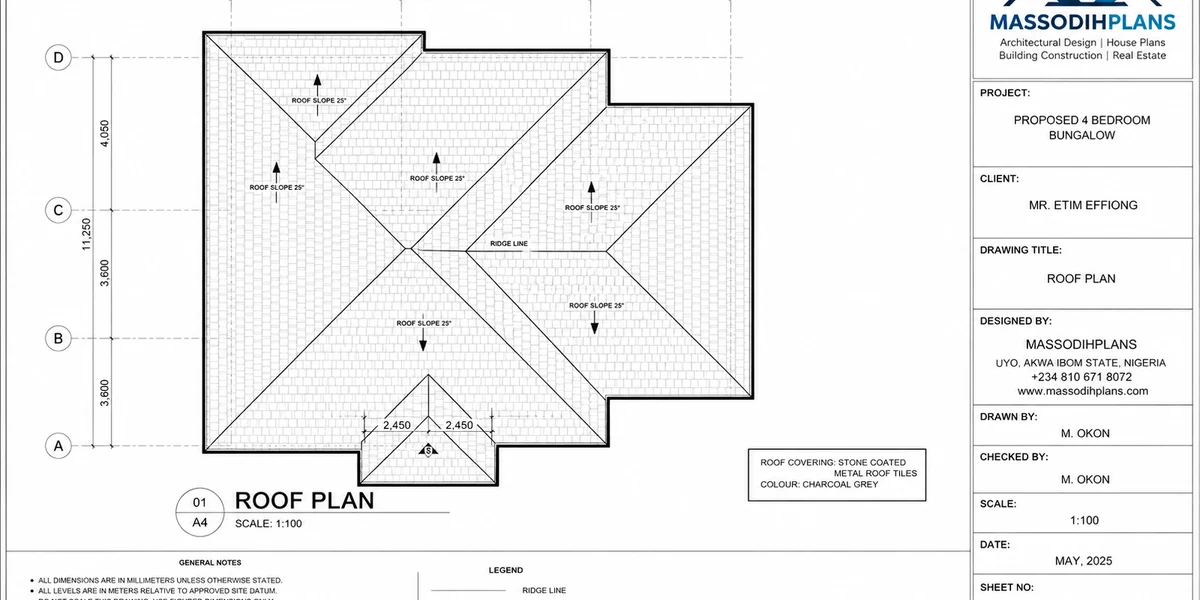
roofing plan for 4 bedrooms
Roof Pitch Matters More Than Most People Think
A common mistake homeowners make is believing that every roof can have the same slope. Experience has taught me that this is not true. Your roof pitch should depend on:
- Local rainfall.
- Roofing sheet type.
- Building design.
- Wind conditions.
- Drainage requirements.
A roof that is too flat may allow water to remain on the surface. A roof that is too steep increases construction costs unnecessarily. Finding the right balance is important.
Planning for Proper Ventilation
One challenge I repeatedly encountered during my internship was poorly ventilated buildings. Many people believe the roofing stage is only about covering the building. In reality, the roof also affects:
- Indoor temperature.
- Air movement.
- Moisture control.
- Energy consumption.
A poorly ventilated roof space traps heat. This makes the rooms below uncomfortable, especially during the dry season.
Simple Ways to Improve Roof Ventilation
I usually recommend:
- Roof vents.
- Ridge ventilation.
- Wide eaves.
- High ceilings.
- Cross ventilation.
- Proper window placement.
These relatively small design decisions can make your house significantly cooler.
Heat Management in Abakaliki
Ebonyi State experiences high temperatures during certain months of the year. If your roof absorbs excessive heat, you may spend more money on:
- Air conditioners.
- Fans.
- Electricity.
- Generator fuel.
From what I have seen in practice, choosing lighter roofing colours often helps reduce heat absorption. Similarly, providing roof insulation where possible can improve indoor comfort.
Roof Orientation
Many homeowners never think about roof orientation. However, it plays an important role. During site analysis assignments at university, we learned that the orientation of a building influences:
- Sunlight.
- Heat gain.
- Wind direction.
- Natural lighting.
- Indoor comfort.
If I were advising a client today, I would recommend discussing roof orientation with the architect before construction begins. Small adjustments at the design stage can improve comfort for decades.
Rainwater Drainage
This is one issue I have seen firsthand. Some beautifully designed duplexes develop serious drainage problems simply because water was not properly directed away from the building.
A good roofing design should include:
- Gutters.
- Downpipes.
- Surface drains.
- Proper site grading.
Rainwater should flow away from the foundation. Allowing water to accumulate around the building can eventually weaken the foundation and damage external finishes.
Planning for Future Solar Panels
Solar energy is becoming increasingly common across Nigeria. Unfortunately, many roofs are designed without considering future solar installation. When planning your roof, think ahead.
Provide enough space for:
- Solar panels.
- Mounting brackets.
- Maintenance access.
Doing this now is far cheaper than modifying the roof later.
Generator Space
The Nigerian reality is that many homes still depend on generators. During one housing layout project, we noticed that generator placement was often ignored until construction had almost finished. This creates unnecessary problems.
Your generator should:
- Be away from bedrooms.
- Have proper ventilation.
- Be protected from rain.
- Allow easy maintenance.
Planning this during the design stage produces a better overall layout.
Water Tank Position
Many duplexes use elevated water tanks.
Your roofing design should work together with the structural engineer to determine:
- Tank location.
- Structural support.
- Pipe routing.
- Maintenance access.
Never assume these decisions can be made after roofing.
Security Considerations
Roof design also contributes to security.
For example:
- Wide roof overhangs help protect windows.
- Proper lighting improves visibility.
- Controlled roof access discourages intruders.
Good architectural planning considers both beauty and safety.
Setbacks Still Matter
While assisting with development control activities during my internship, I witnessed firsthand how some property owners ignored approved setbacks.
The consequences included:
- Demolition notices.
- Delayed approvals.
- Costly alterations.
Roof overhangs should never extend beyond approved building setbacks.
Always comply with your approved building plans.
If you have not yet obtained approval, you can learn more through our guide on Building Approval in Nigeria and explore our professional assistance on the Services page
Planning for Boreholes
Many homeowners focus only on the building itself.
However, your roof should work together with the rest of your compound.
Leave adequate space for:
- Borehole drilling.
- Water treatment.
- Septic systems.
- Soakaway.
- Future maintenance.
These facilities should never conflict with roof drainage.
Compound Drainage
Heavy rainfall is common across many parts of southeastern Nigeria. Your roof should discharge water into properly designed drainage channels. Avoid directing roof water toward:
- Neighbouring properties.
- Building foundations.
- Driveways.
- Septic tanks.
Poor drainage eventually becomes an expensive problem.
Parking Space Planning
One lesson I learned early is that many people underestimate vehicle movement. Before finalising your roof design, ensure your site layout still provides sufficient parking. A typical family duplex should comfortably accommodate:
- Family vehicles.
- Visitors.
- Delivery vehicles.
Avoid allowing roof columns or projections to interfere with parking circulation.
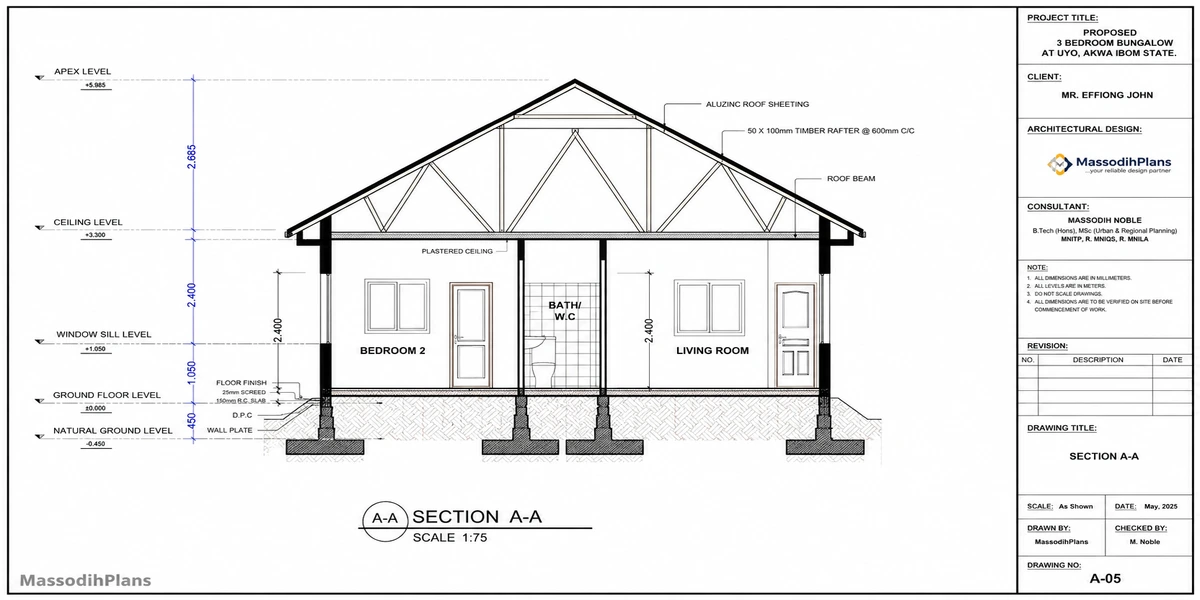
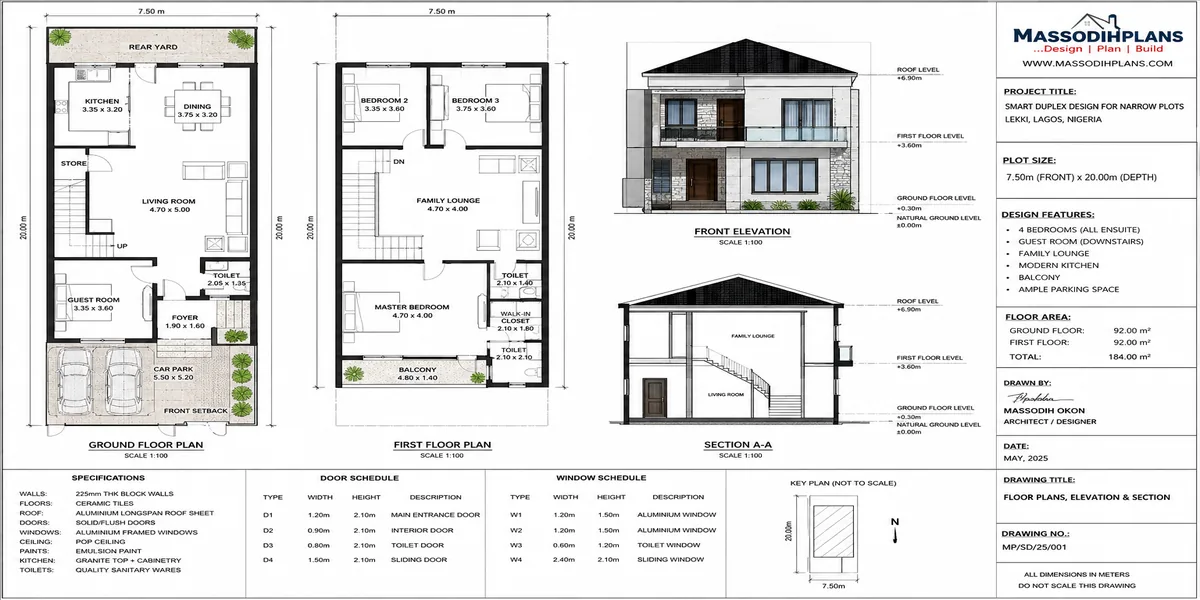
Section-a-a plans Design
Common Contractor Mistakes I Have Seen
This observation comes from practical field experience. Below are some of the most common roofing mistakes.
Buying Materials Too Early
Prices fluctuate. Storage also becomes a problem.
Using Untreated Timber
This increases the risk of termite damage.
Ignoring Manufacturer Instructions
Each roofing sheet has recommended installation methods.
Poor Supervision
Even experienced workers require supervision.
Mixing Low-Quality Accessories with Premium Roofing Sheets
This reduces the lifespan of the entire roof.
Choosing Contractors Based Only on Price
The cheapest quotation is rarely the best value.
A Practical Example
I recently encountered a case where a homeowner insisted on reducing costs by purchasing thinner roofing sheets than originally specified.
At first, the savings looked attractive.
However, after only a few years, sections of the roof began to show signs of wear, and repairs became necessary much sooner than expected.
The amount eventually spent on maintenance exceeded what would have been paid for better-quality sheets at the beginning.
That experience reinforced something I often tell clients:
Quality is usually cheaper in the long run than repeated repairs.
Investment Value of a Good Roof
A professionally constructed roof does more than protect your home. It also:
- Increases resale value.
- Attracts buyers.
- Improves rental demand.
- Enhances neighbourhood appeal.
- Reduces future maintenance costs.
In today’s Nigerian property market, buyers pay close attention to roofing quality because replacing a roof is one of the most expensive renovation projects.
Note
Both classroom learning and field experience support this conclusion: the most successful building projects are not necessarily those with the biggest budgets. They are the ones where every stage from design and approval to roofing and drainage—is carefully planned before construction begins. A well-designed roof protects your investment, improves comfort, reduces maintenance, and adds lasting value to your property.
Quick Summary
Before roofing your 4-bedroom duplex in Abakaliki, remember to:
- Choose a roof design that suits your budget and climate.
- Use quality, treated timber.
- Invest in durable roofing sheets.
- Plan for ventilation and heat control.
- Design proper gutters and drainage.
- Consider future solar panels and water tanks.
- Leave space for generators, boreholes, and parking.
- Work with experienced professionals.
- Follow approved building plans and setbacks.
- Supervise every stage of installation carefully.
FAQs, Expert Advice, Internal Resources and Conclusion
By now, you should have a clear understanding that the cost of roofing a 4-bedroom duplex in Abakaliki is influenced by much more than the price of roofing sheets. Good planning, quality materials, skilled workmanship, and proper supervision all play a significant role in determining whether your roof will protect your home for decades or become a source of constant repairs.
To round off this guide, let us answer some of the questions I hear most often from homeowners and people planning to build in Ebonyi State.
Frequently Asked Questions (FAQs)
How much does it cost to roof a 4-bedroom duplex in Abakaliki?
For most modern duplexes, expect to spend between ₦8 million and ₦20 million or more, depending on the roof size, design, timber, roofing sheets, labour, and prevailing market prices.
Which roofing sheet is best for Abakaliki?
From my experience, quality aluminium long-span roofing sheets offer one of the best combinations of affordability, durability, and weather resistance.
If your budget allows and you are aiming for a premium finish, stone-coated roofing tiles are also an excellent choice because they reduce rain noise, resist corrosion, and enhance the appearance of the building.
How long does roofing a duplex take?
A straightforward duplex can usually be completed in three to six weeks, while larger or more complex roof designs may take six to eight weeks or longer. Weather, labour availability, and material supply can all affect the timeline.
Should I buy all roofing materials at once?
Not always.
Material prices in Nigeria change frequently, but buying too early can also create storage problems and increase the risk of theft or damage.
Based on projects I have worked on, I recommend preparing a detailed material schedule with your contractor so that materials arrive when they are actually needed.
Is the cheapest contractor the best option?
No.
This is one of the most common misconceptions I encounter.
A low quotation may look attractive, but poor workmanship often leads to leaks, uneven roof lines, loose sheets, and expensive repairs.
Always consider:
- Experience
- Previous projects
- References
- Quality of workmanship
- Professionalism
Can I reduce roofing costs without compromising quality?
Yes.
You can save money by:
- Choosing a practical roof design.
- Avoiding unnecessary decorative roof features.
- Comparing quotations from reputable suppliers.
- Preventing material waste through good supervision.
- Buying quality materials that last longer.
Comparison: Which Roofing Option Offers Better Value?
| Feature | Aluminium Long Span | Step Tiles | Stone-Coated Tiles |
|---|---|---|---|
| Initial Cost | Lower | Medium | Higher |
| Appearance | Good | Very Good | Excellent |
| Durability | High | High | Very High |
| Maintenance | Low | Low | Very Low |
| Rain Noise | Moderate | Moderate | Very Low |
| Suitable for Duplex | ✔ | ✔ | ✔✔ |
There is no single “best” roofing material for everyone. The right choice depends on your budget, design goals, and long-term plans.
Common Mistakes to Avoid
Over the years, I have noticed that homeowners often make the same avoidable mistakes. Avoid these if you want a successful roofing project:
- Starting roofing without a complete budget.
- Changing the roof design after construction has begun.
- Buying cheap timber.
- Ignoring wood treatment.
- Choosing contractors based only on price.
- Failing to supervise installation.
- Using poor-quality roofing accessories.
- Neglecting gutters and drainage.
- Forgetting future needs like solar panels or water tanks.
- Ignoring local building approval requirements.
Most of these mistakes cost far more to fix than they would have cost to prevent.
Professional Recommendations
If I were advising a client today, this is the approach I would personally take:
- Finalise the architectural and structural drawings before roofing begins.
- Obtain all necessary building approvals.
- Choose a roof design that matches both your budget and the local climate.
- Invest in treated timber and quality roofing sheets.
- Hire experienced roofing professionals.
- Supervise every stage of the installation.
- Keep a contingency fund for unexpected costs.
- Ensure proper drainage around the building.
- Plan for future additions such as solar panels and water storage.
- Never sacrifice structural quality simply to reduce costs.
From a planning perspective, these steps consistently produce better and more durable buildings.
Related Resources You May Find Helpful
As you continue planning your project, these resources on MassodihPlans can help you make better decisions:
- Browse professionally designed house plans on the Plans Library
- Explore our architectural and planning Services
- View school and institutional plan ideas in the Plan School section:
- Visit the MassodihPlans Homepage for the latest building guides
- Learn about building approval requirements before construction.
- Read our guide on the cost of building a house in Uyo.
- Compare bungalow and duplex designs before making a decision.
- Discover the best Nigerian house plans for different plot sizes.
- Explore estate layout planning for residential developments.
- Learn how to choose the right roofing material for your climate.
- Sustainable Landscaping: Complete Guide to Xeriscaping, Landscape Lighting and Water-Efficient Gardens
- Landscaping Services: Complete Guide to Landscape Design, Hardscaping, Garden Planning and Outdoor Improvements
- Landscape Architect: What They Do, What They Design and When You Need One
- Landscaping: Complete Guide to Design Ideas, Gardens, Yards and Outdoor Spaces
- Landscaping & Landscape Design: Complete Guide to Landscape Architecture
- Urban Planning & Urban Design: Complete Guide to Modern Cities, Development and Renewal
- Real Estate Development & Site Planning: Guide to Planning, Construction, Infrastructure and Stormwater Management
- Urban Planning & Urban Design: Complete Guide to City Planning, Zoning and Land Development
- Building Regulations by Country: Permits, Zoning, Codes and Property Development Rules
- Building Regulations and Codes: Complete Guide to Requirements Worldwide
- House Construction Approval Process: Planning, Permits, Inspections and Final Approval
- Building Setback Requirements: Complete Guide to Front, Side and Rear Setbacks
- Land Development Guide: Permits, Planning, Zoning, Costs and Approval Process Explained
- Building Permit Documents: Complete Checklist of Requirements for Building Approval
- Zoning Laws and Regulations for Property Development: Complete Guide
- Planning Permission and Building Permits for Residential Construction: Complete Guide
- Land-Buying Checklist: 100+ Things to Check Before Buying Land in Nigeria
Note
I did not learn these lessons from textbooks alone. My understanding comes from academic training in Town Planning, practical field observations, and working on planning and design-related projects. One thing has remained consistent: homeowners who plan carefully almost always spend less in the long run than those who rush into construction without proper guidance.
External Reference
For internationally recognised guidance on roof design, structural safety, and building standards, you can consult the International Code Council (ICC)
Finally
Roofing is one of the biggest investments you will make during the construction of your home. It protects your family, your furniture, and the structure you have worked so hard to build. That is why it deserves careful planning and informed decision-making.
If there is one lesson I would like you to take away from this guide, it is this: do not make roofing decisions based solely on price. Think about durability, workmanship, ventilation, drainage, and the future needs of your family. A roof that performs well for the next 30 or 40 years is far more valuable than one that simply looks attractive on the day it is installed.
From what I have seen in practice, homeowners who invest in proper planning rarely regret it. They enjoy fewer repairs, greater comfort, and higher property value over time.
Whether you are building your first home, supervising a family project, or investing in real estate, take the time to get the roofing stage right. It is one of the smartest investments you can make.
If you are still comparing designs or looking for professional guidance, explore our collection of house plans, building resources, and architectural services on MassodihPlans. Our goal is not just to provide drawings it is to help you build a home that is practical, durable, and truly suited to Nigerian conditions.
Thank you for reading, and I wish you success with your building project in Abakaliki.