Investing From Switzerland, Building in Nigeria: The House Plans That Actually Make Sense
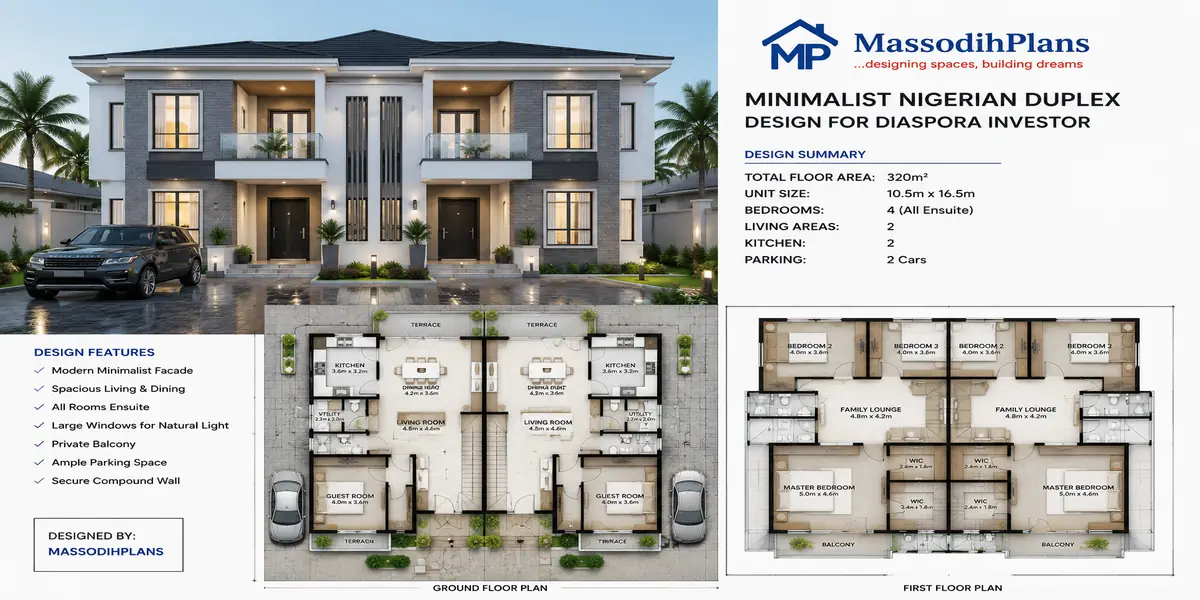
A clean, minimalist duplex suited to Swiss aesthetic preferences
The best Nigerian house plans for Swiss property investors are compact, energy-conscious, well-ventilated designs contemporary bungalows, minimalist duplexes, and courtyard-style homes built in gated estates with verified titles, because these designs match both the Swiss expectation of order and Nigeria’s tropical climate demands, while gated estates solve the security and infrastructure concerns that worry most first-time diaspora investors. That’s the short answer. Now let me walk you through exactly why, and how to get there without losing money to bad planning or bad actors.
I’ve worked with several Nigerians and Nigerian-connected investors based in Switzerland over the years, and the questions are almost always the same: which design suits my budget, which city gives me real returns, and how do I trust anything from this distance? This article answers all three, honestly, based on actual design and planning experience not theory.
Why Swiss Investors Are Looking at Nigerian Real Estate
Over the years, I have noticed a consistent pattern in why Swiss-based investors whether Nigerian-born, dual nationals, or Swiss nationals with Nigerian family ties are drawn to Nigerian property:
Higher rental yields. Swiss residential yields are notoriously thin, often well under 3–4% gross, while well-located Nigerian rentals in cities like Lagos and Abuja can significantly outperform that.
Retirement planning. A growing number of clients are building now, in their 40s and 50s, with retirement in Nigeria as the long-term plan.
Family homes. Many investors want a proper family base back home, even while living permanently in Switzerland.
Diaspora investment culture. Nigeria’s higher-end real estate segment continues to draw steady support from diaspora inflows and demand from high-net-worth individuals, even amid broader affordability pressures in the wider market. The Guardian Nigeria
Currency diversification. Holding an asset outside the Swiss Franc and Nigerian Naira alone gives some investors a hedge they simply don’t get from savings accounts.
Commercial opportunities. Short-let apartments and small commercial-residential mixed units are increasingly attractive to diaspora investors who want active income, not just a family house sitting empty.
Quick Tip: Before choosing a design, decide honestly which of these motivations is yours a retirement home, a rental asset, and a family house are designed completely differently. Confusing the three is one of the most common planning mistakes I see.
Swiss Lifestyle Preferences vs. Nigerian House Designs
This is something our lecturers constantly emphasized during my Town Planning training: good design always starts with understanding who will actually live in the space.
Swiss buyers are typically accustomed to:
- Energy-efficient homes with strong insulation
- Compact, highly functional layouts with no wasted space
- Generous natural lighting
- Minimalist interiors with clean lines
- High building performance standards generally
The good news is that Nigerian house plans can absolutely incorporate these preferences. Compact, functional layouts translate directly Nigerian small-plot design already emphasizes efficient use of space. Natural lighting and minimalism fit naturally into contemporary Nigerian design too. The one area that needs real adaptation is insulation and energy efficiency, since Switzerland’s cold-climate insulation standards don’t transfer directly to a tropical building but the underlying value (a well-sealed, thermally comfortable home) is absolutely achievable here through different means, which brings us to climate.
Climate Adaptation: The Difference That Actually Matters Most
I did not learn this from a textbook alone I learned it from watching beautifully designed homes underperform simply because the climate logic was wrong.
Switzerland’s cold climate calls for thick insulated walls, triple-glazed windows to retain heat, and roof designs that shed snow. Nigeria’s tropical climate demands almost the opposite: designs that release heat, invite airflow, and shed heavy rainfall fast.
Roof design: A steep-pitched, long-span aluminum roof (typically 22.5–30 degrees) sheds tropical rainfall efficiently and resists the kind of leak issues flat concrete roofs develop in high-rainfall zones.
Window placement: Cross-ventilation matters more here than insulation windows on opposing walls let air move through the home rather than sit still.
Heat reduction: Deep roof overhangs, shaded verandas, and light-colored external finishes all reduce indoor heat gain significantly.
Rainfall considerations: Proper perimeter drainage and a raised foundation (even 30–45cm above ground level) protect against flooding during Nigeria’s heavy rainy season.
Based on projects I have worked on, Swiss investors who insist on replicating a “Swiss chalet” aesthetic without adapting these elements almost always regret it once they experience a Nigerian rainy season.
Legal Process for Overseas Swiss Investors
This is one of the most common misconceptions I encounter: people assume foreign nationals cannot own Nigerian land at all. The reality on the ground is more nuanced.
Can Swiss citizens own land directly? Under the Land Use Act, land ownership in Nigeria is more accessible to Nigerian citizens; foreign nationals generally hold land through a Nigerian-registered company or long-lease arrangements rather than direct freehold in the same way citizens do.
Using a Nigerian company. Many Swiss-based investors, especially non-Nigerian-citizen spouses or partners, set up or invest through a Nigerian-registered company (via CAC) to hold property.
Power of Attorney. If you’re relying on a trusted person in Nigeria to sign documents and manage transactions on your behalf, a properly drafted and registered Power of Attorney is essential not a casual family arrangement.
Land verification. Always verify land title at the relevant state land registry before any money changes hands. This is the single step most diaspora buyers skip, and it’s the one responsible for the majority of diaspora property fraud cases reported in Nigeria.
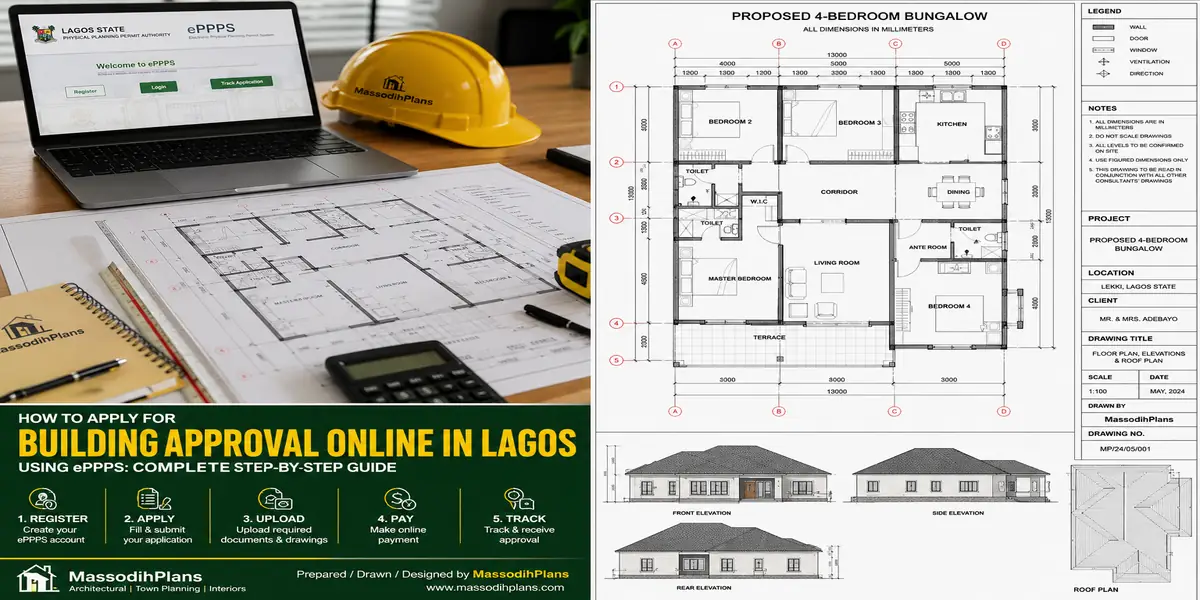
Building approval. Development Control approval is required before construction begins, regardless of your nationality or residence status.
Title documents. A Certificate of Occupancy (C of O), or a properly perfected Deed of Assignment with governor’s consent, are the documents you want to see and verify not just a receipt or a “sale agreement.”
If you’re unfamiliar with reading these documents, our Plan School section explains title documents and approval processes in plain language.
Currency Planning: CHF to Naira, Done Properly
In practical terms, what usually happens is that investors underestimate how much currency movement between CHF and Naira can affect a multi-month or multi-year construction budget.
Budget your construction cost primarily in Naira, since that’s the currency your contractors and suppliers actually transact in, and convert as you go rather than fixing one exchange rate for the entire project.
Stage your payments foundation, block work, roofing, finishing rather than converting and sending a lump sum upfront. This protects you against both currency swings and construction risk.
Keep a simple spreadsheet tracking CHF sent, exchange rate at the time, and Naira received, for your own budgeting clarity and for any documentation your Swiss bank may request.
Build in a contingency of at least 10–15% above your initial Naira budget, specifically to absorb currency and material price movement over the build period.
Estate vs. Private Development: What Swiss Investors Usually Prefer
Swiss investors often value order, predictability, and infrastructure and this is exactly where the estate-versus-private-plot decision matters most.
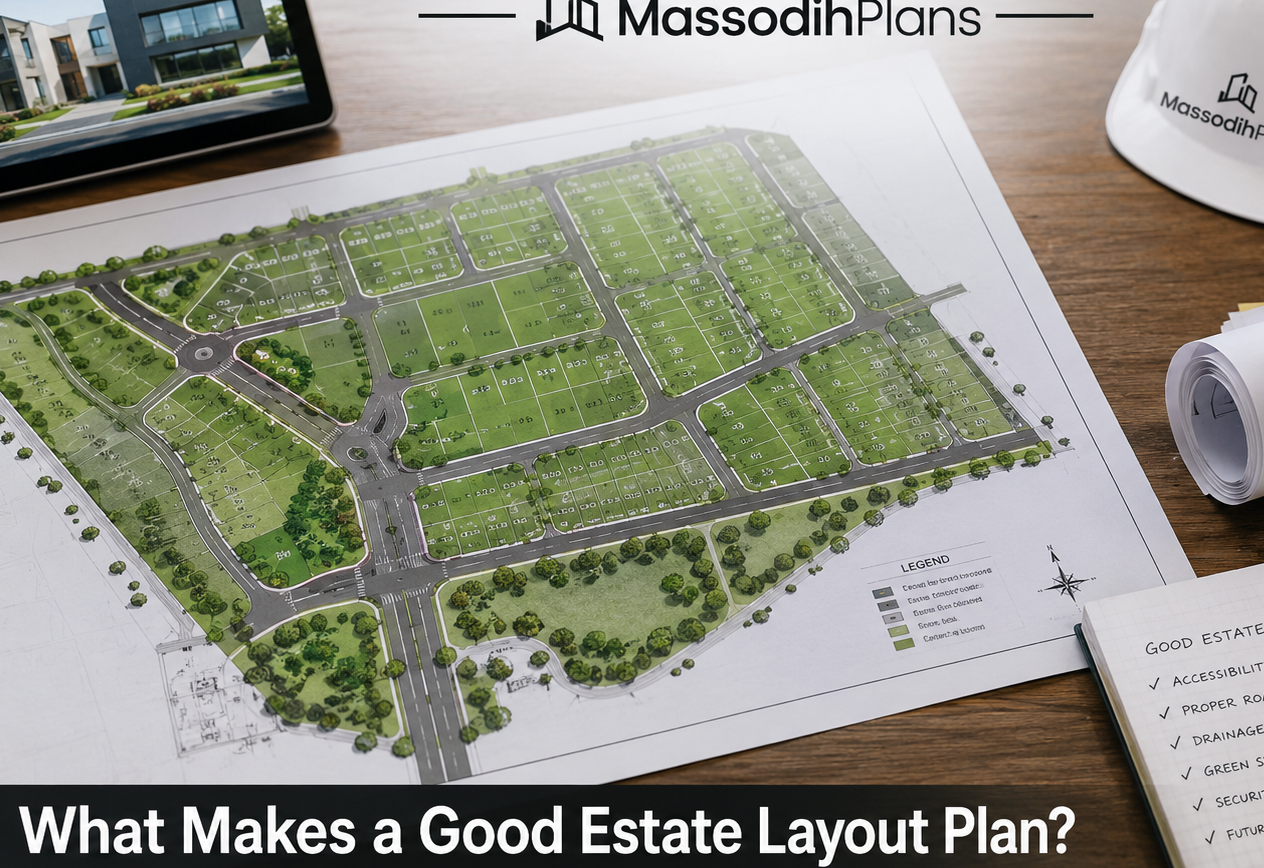
Gated estates typically offer better road infrastructure, organized security, shared power/water solutions, and estate management that handles maintenance all things that align naturally with Swiss expectations of order.
Private plots offer more design freedom and often lower entry cost, but the investor carries full responsibility for security, drainage, road access, and maintenance.
If I were advising a client today with limited time to personally manage a Nigerian property, I would recommend a well-vetted gated estate over a private plot, purely because of the reduced management burden from abroad.
Nigerian Cities Best Suited for Swiss Investors
Rather than generic advice, here’s how I’d actually evaluate the major options:
Lagos: Best for rental investment and commercial-residential opportunities. Highest yields, highest liquidity, but also highest land cost and competition.
Abuja: Best for family residence and long-term capital appreciation. More planned, generally better road infrastructure, strong for a retirement-oriented family home.
Uyo: Best for retirement and family residence at a considerably lower entry cost than Lagos or Abuja, with a calmer pace of life and lower land prices relative to major cities.
Port Harcourt: Suited to family residence and rental investment, particularly for investors with existing South-South ties or business connections.
Enugu: Good for family residence and modest rental investment, with relatively stable land values and a lower-cost entry point.
Ibadan: Increasingly attractive for rental investment and value-focused family residence, benefiting from proximity to Lagos without Lagos-level pricing.
Construction Management From Switzerland
Many investors won’t relocate during construction, and honestly, they don’t need to if the system is right.
Remote project monitoring through scheduled video calls with your site supervisor or architect
Drone updates for a genuine bird’s-eye view of progress increasingly affordable and worth the cost for larger projects
Weekly written reports, not just photos, covering what was done, what’s next, and what was spent
Quantity surveying to independently verify material quantities and costs against what’s actually being used on site
Digital approvals many state Development Control offices now accept digital submissions and provide status updates online, reducing the need for physical presence
Having seen the consequences of poor planning, I advise every remote investor to treat these five practices as non-negotiable, not optional extras.
Architectural Style Preferences That Appeal to Swiss Tastes
Contemporary bungalow clean lines, functional single-level living, ideal for retirement or family use with lower construction complexity.
Minimalist duplex maximizes square meterage on urban plots while keeping the aesthetic clean and uncluttered, appealing to Swiss minimalist sensibility.
Courtyard house an internal courtyard brings natural light and ventilation deep into the home while maintaining privacy from the street, a concept Swiss buyers often appreciate for its quiet, contained feel.
Modern farmhouse works well on larger suburban or semi-rural plots, popular for family homes with a retirement mindset.
Flat-roof contemporary striking and minimalist, though it requires excellent waterproofing detailing to perform well against Nigerian rainfall; I recommend this only with a genuinely qualified contractor.
Hip-roof bungalow a practical, climate-appropriate choice that performs reliably against wind and rain while still reading as clean and modern.
Sustainability: The Layer Most Nigerian Articles Skip
This is genuinely underexplored in most Nigerian building content, and it’s exactly where Swiss-minded investors add real long-term value:
Solar energy given Nigeria’s power supply realities, a solar-inverter hybrid system isn’t a luxury add-on anymore; it’s close to essential for consistent power.
Rainwater harvesting a simple collection system feeding into a storage tank meaningfully reduces dependency on borehole or public water, especially valuable given Nigeria’s heavy rainfall.
Greywater reuse reusing bathroom and laundry water for irrigation or flushing is still rare in Nigeria but genuinely practical for garden and landscape maintenance.
Energy-efficient windows while insulation logic differs from Switzerland, low-E glazing still helps manage heat gain in Nigerian conditions.
Natural ventilation designed properly, this reduces long-term reliance on air conditioning, which matters given Nigeria’s power costs.
Native landscaping indigenous plants require less water and maintenance than imported ornamental species, a detail that pays off over years, not months.
Typical Mistakes Swiss Investors Make
- Buying land before independent title verification
- Ignoring local planning regulations to save time or money upfront
- Choosing an oversized design that doesn’t match the actual plot or realistic budget
- Hiring unqualified or unlicensed designers to save on fees
- Underestimating infrastructure costs road access, drainage, borehole, and power solutions add up fast and are frequently left out of initial budgets
Sample Floor Plans and Who They Suit
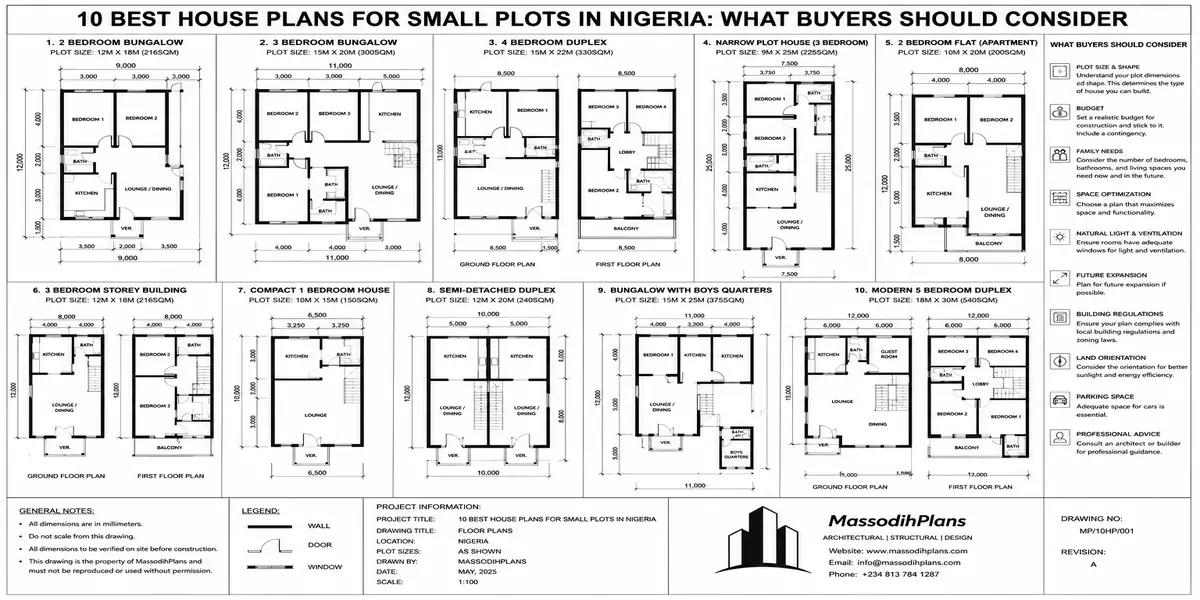
3-bedroom bungalow best for family residence or retirement; simple, single-level living with lower construction complexity and cost.
4-bedroom duplex best for larger family residence or a strong rental asset in urban centers with high housing demand.
5-bedroom luxury villa best suited to high-net-worth investors prioritizing a statement family home or a premium long-term hold rather than quick rental turnover.
Rental apartment layout (1–2 bedroom units) best for investors specifically targeting short-let or long-let rental income in cities like Lagos or Abuja.
You can browse examples of each of these categories in our Plans Library.
Cost Comparison: Switzerland vs. Nigeria (Illustrative)
| Cost Category | Switzerland | Nigeria |
|---|---|---|
| Design fees | Very high relative to build cost | Significantly lower, though quality varies widely by designer |
| Construction cost | Very high, driven by labor cost | Lower overall, but exposed to material price volatility |
| Labour | Expensive, highly regulated | More affordable, but skill level varies — vetting matters |
| Land | Extremely limited supply, very high cost | Wide cost range depending on city and estate vs. private plot |
| Approval fees | Structured, predictable | Variable by state; budget for both official and processing costs |
This is illustrative rather than a precise like-for-like figure, since exact costs shift with location and current material prices on both sides but the relative pattern holds consistently across the projects I’ve observed.
Investment Scenarios: What Different Budgets Can Realistically Support
CHF 100,000 Comfortably supports a well-finished 3-bedroom bungalow on a small-to-mid plot in a secondary city like Uyo or Enugu, or a more modest footprint in Abuja or Lagos outskirts.
And CHF 250,000 Supports a 4-bedroom duplex with good finishing in a gated estate in Abuja, Port Harcourt, or Ibadan, or a strong rental-focused apartment building in a Lagos growth corridor.
CHF 500,000 Supports a 5-bedroom luxury villa in a premium location, or a small multi-unit rental development generating diversified rental income across several tenants.
These figures are illustrative starting points for planning conversations, not fixed quotes always get a project-specific costing before committing funds.
Local Building Regulations to Keep in Mind
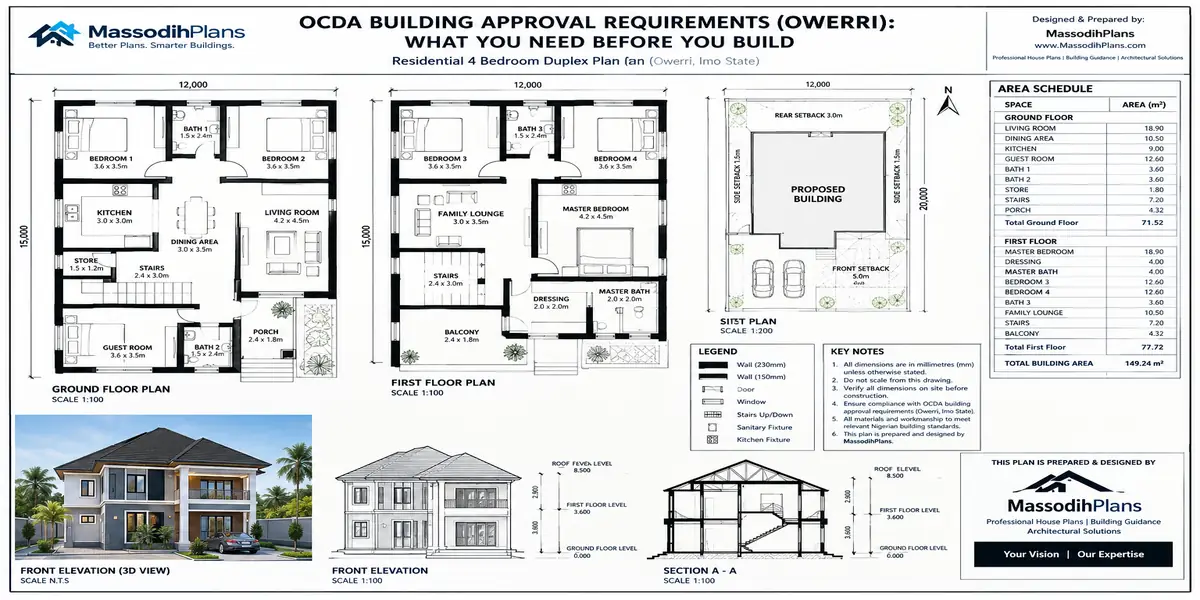
Building setbacks typically around 1.5m sides/rear and 3m front for standard residential plots, though this varies by state and estate rules
Plot coverage most Development Control authorities cap how much of a plot’s footprint a building can occupy, commonly around 50-60% depending on plot size and zoning
Parking requirements estates and some state authorities specify a minimum number of parking spaces per housing unit
Approval timelines realistic timelines vary significantly by state and by how complete your documentation is when submitted
Planning permits always required before construction, regardless of investor nationality or residency status
How MassodihPlans Helps Swiss Property Investors Build in Nigeria
This is exactly the gap I built this platform to close. Based on projects I have worked on, remote investors need more than a pretty floor plan they need a full planning partner. Here’s what we offer:
- Custom house plan design tailored to your specific plot, budget, and climate zone
- Small plot optimization for tighter urban sites
- Site planning and layout for estates or private developments
- Building approval guidance, including document preparation support
- Remote consultation designed specifically for diaspora clients who can’t attend in person
- Landscape design incorporating native, low-maintenance planting
- GIS site analysis for accurate site assessment before design begins
- Construction supervision coordination to protect your investment while you’re abroad
If any of this fits what you’re planning, you can explore our full offering on the Services page.
Frequently Asked Questions
Can a Swiss citizen legally own property in Nigeria?
Nigerian citizens have more direct land ownership rights under the Land Use Act; foreign nationals typically hold property through a Nigerian-registered company or long-lease arrangements rather than direct freehold in the same way.
Which Nigerian city gives the best rental yield for a Swiss-based investor?
Lagos generally offers the strongest rental yields and liquidity, though Abuja and Ibadan are increasingly competitive for value-focused investors.
Is a gated estate really worth the extra cost compared to a private plot?
For investors managing a property from abroad, yes the reduced burden of managing security, drainage, and infrastructure independently is usually worth the premium.
How do I avoid land fraud as a diaspora investor?
Always verify title independently at the state land registry before paying anything, and avoid relying solely on a family member’s assurance, however well-meaning.
My Final Word to You
The truth is, distance and a different climate don’t have to work against you. With the right design one that respects Nigeria’s tropical realities rather than fighting them verified land, staged payments, and genuine remote oversight, a Swiss-based investor can build something in Nigeria that performs financially and feels right to live in. Take the time to plan properly, and the ocean between Switzerland and Nigeria stops being an obstacle and becomes just a distance you manage.
Explore compact, climate-appropriate designs in our Plans Library, get direct project guidance through our Services page, or learn to read the documents that protect your investment in our Plan School. You can also start from our homepage to see everything we offer.
You’re not investing blind. You’re investing with a plan.
- How Can I Build a House in Nigeria From Switzerland on a Small Plot?
- Nigerian House Plans Suitable for Hot Weather in Sokoto
- How Do I Get Land Survey and Building Approval in Nigeria From the USA?
- What Are the Best Nigerian House Plans for Small Plot Property Investment?
- How Can I Build a House in Nigeria From the USA on a Small Plot?
- Cost of Building a House in Damaturu, Yobe State: Materials, Labour and Finishing
- Duplex vs Bungalow in Benin City: Which Should You Build?
- Modern House Design Ideas for Every Budget, Style and Lifestyle
- ArchDaily Inspired Designs for Modern Homes and Contemporary Architecture