 House Interior Design Ideas for Every Room, Style and Budget
If you have ever scrolled through interior design blogs and felt more confused than inspired, I understand why. Most of them give you a list of “styles,” a separate list of “budget hacks,” and a separate list of “rooms” and leave you to figure out how any of it actually fits together in a real Nigerian home, with real humidity, real power supply issues, and a real budget. In my years designing homes across Akwa Ibom and Rivers States, I’ve learned that good interior design isn’t about following a trend. It’s about matching the right style and the right spend to the room you’re actually standing in.
Quick Answer: Great interior design comes down to three decisions working together: the room you’re designing, the style you’re drawn to, and the budget you actually have. This guide will take you through all three at once room by room, style by style, and budget tier by budget tier with a specific layer for tropical climate and Nigerian sourcing that most people skip entirely.
What’s in This Guide
- The design principles behind every good room
- Room-by-room ideas: living room, bedroom, kitchen, dining, bathroom, home office, children’s room, and the veranda/compound
- Popular interior styles, and how they translate to a Nigerian home
- Budget tiers: what to do at a low, mid, and stretch budget
- Designing for tropical climate: humidity, ventilation, and power supply
- A real-life example
- Common mistakes
- FAQs
The Design Principles Behind Every Good Room
Before picking a style or a colour, every well-designed room is quietly built on the same few principles:
Balance: visual weight spread evenly across the room, so it doesn’t feel lopsided
Proportion: furniture and decor sized correctly for the room, not too large or too small
Rhythm: a repeated colour, material, or shape that carries your eye around the space
Focal point: one thing the eye lands on first, whether it’s a feature wall, a piece of art, or a window view
Climate-responsiveness: in a tropical climate, this is the principle most guides never mention: the room also has to breathe, drain heat, and cope with humidity, or none of the above matters once the rains start
Expert Note: Pick your colour scheme before you buy a single item. It becomes the blueprint every other decision follows, from cushion covers to the paint on the ceiling.
Room-by-Room Ideas
Living Room
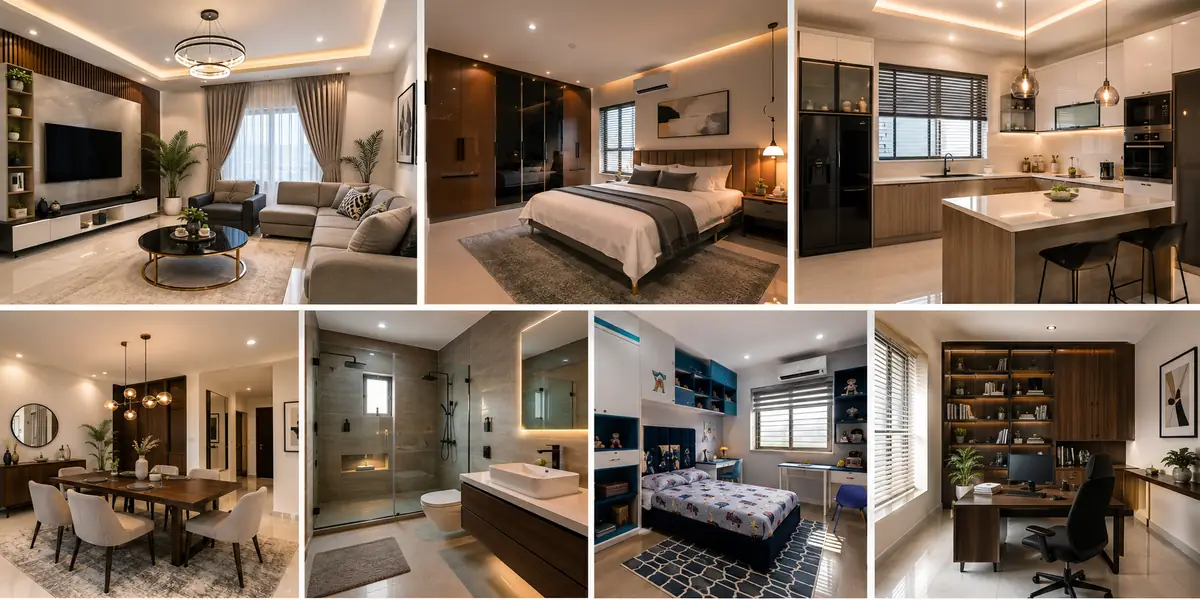
This is the room guests judge first, and usually the most expensive to overhaul, so make changes count. A large, well-placed rug anchors the seating area. Layered lighting a ceiling point, a floor lamp, and a table lamp does more for the mood than any single bright bulb. If natural light is limited, mirrors opposite a window can double the perceived brightness for almost nothing.
Bedroom
A bedroom should feel like a retreat, and that’s driven more by texture and calm than by how much you spend. Soft, breathable bedding suited to heat and humidity matters more here than an expensive headboard. Keep the palette muted, and let one accent a throw, a piece of art, a plant carry the personality.
Kitchen
Kitchens rarely need a full renovation to feel new. Repainting cabinet fronts, replacing worn handles, and swapping a dated tap are some of the highest-impact, lowest-cost changes available in the entire house. Open shelving for a few well-chosen items can make a small kitchen feel more designed without adding storage cost.
Dining Area
Even a modest dining corner benefits from one strong element a statement light fixture above the table, or a single accent wall rather than spreading the budget thin across many small changes.
Bathroom
A spa-like feel comes from texture and light more than fittings. Fresh grout, a new mirror, and good task lighting around it can transform a bathroom before you ever touch the plumbing.
Home Office / Study
With more people working or studying from home, this room deserves real design attention rather than being an afterthought. Prioritise a desk facing natural light, and a chair that supports long hours over one that just looks good.
Children’s Room
Flexibility matters more than theme here furniture and storage that can adapt as the child grows will outlast any trend-driven design choice.
The Veranda / Compound
This is a genuinely Nigerian layer most interior guides never touch, because most homes they’re written for don’t have one. A well-designed veranda comfortable seating, a ceiling fan, potted plants, and good evening lighting often becomes the most-used room in the house, especially where the indoor heat builds up during the day.
Popular Interior Styles, and How They Translate to a Nigerian Home
Scandinavian: light woods, neutral palettes, function over ornamentation. Translates well here if you swap imported pale woods for local light-toned timber, and keep window treatments light enough to still allow airflow.
Minimalist: fewer, better things. Works especially well in smaller urban homes where clutter and heat both build up fast.
Bohemian: layered textiles, plants, warm colour. Nigerian textiles Ankara prints, Aso-oke weaves slot naturally into this style as cushion covers, throws, or wall hangings, giving it a distinctly local character rather than a copied Western look.
Coastal: light, breezy, blue-and-white palettes. A natural fit for homes in Lagos, Port Harcourt, or other coastal cities, both aesthetically and functionally, since the style already assumes heat and humidity.
Eclectic: deliberately mixed styles and eras. The most forgiving style for a limited budget, since it doesn’t require everything to match; it just requires a confident eye.
Contemporary Afro-Modern: earth-toned palettes, locally sourced wood, handwoven textiles, and clean modern lines. Not a “trend” you’ll find on most blogs, but increasingly what clients in Uyo and Port Harcourt actually ask for once they see it: modern without losing local identity.
Budget Tiers: What to Do at Each Level
Low budget. Rearrange furniture before buying anything most households already own enough to test a new layout for free. Repaint one wall. Replace cushion covers instead of the sofa. Buy secondhand (“tokunbo”) furniture with good bones and reupholster it rather than buying new.
Mid budget. Invest in one strong piece per room a rug, a light fixture, an accent chair rather than spreading the same money thinly across many small items. Commission a local carpenter for a custom piece; it’s often cheaper than imported furniture and can be sized exactly for your space.
Stretch budget. This is where structural-adjacent changes make sense built-in storage, a feature wall in natural stone or wood cladding, or a full lighting redesign with dimmable, layered circuits throughout.
Designing for Tropical Climate: Humidity, Ventilation, and Power Supply
This is the layer that separates a good-looking room from a room that actually holds up in a Nigerian home:
Ventilation first. Design furniture layout around your windows and cross-ventilation paths, not just around the television. A room that traps heat will never feel as “designed” as one that breathes, no matter how good the decor is.
Humidity-resistant materials. Avoid finishes and fabrics that trap moisture in high-humidity areas like bathrooms and ground-floor rooms near gardens go for materials and finishes rated for damp conditions rather than purely decorative ones.
Power-outage-friendly lighting. Layer your lighting so it doesn’t fully depend on the grid a mix of ceiling points, rechargeable lamps, and battery-backed fittings means a NEPA outage doesn’t leave the whole room dark.
Sourcing locally. Furniture from local markets and carpenters in Aba, Onitsha, or your own state capital is often better suited to local humidity than imported pieces built for a drier climate, and it supports local trade at the same time.
A Real-Life Example
A client in Uyo once insisted on an imported upholstered sofa she’d seen online, done in a heavy fabric more suited to a temperate climate. Within a year, humidity had visibly affected the fabric. On the replacement piece, we specified a locally upholstered frame in a breathable, humidity-appropriate fabric instead same style, same silhouette, built for the actual climate it would live in. It has held up far better since.
Common Mistakes
Buying furniture at the wrong scale for the room either too large, cramming the space, or too small, leaving it feeling empty.
Choosing a style purely from photos online without checking how it performs in heat and humidity.
Spending the whole budget on one big-ticket item and leaving nothing for lighting or textiles, which do more to finish a room than people expect.
Ignoring the veranda or outdoor sitting area entirely, when it often becomes the most lived-in space in the house.
Designing lighting around the grid being constantly available, then being left in the dark during outages.
Frequently Asked Questions
Q: What’s the cheapest way to make a room feel newly designed?
Rearranging existing furniture and swapping textiles cushion covers, throws, curtains costs the least and changes a room’s feel the most immediately.
Q: Which interior style works best for a small Nigerian apartment?
Minimalist and eclectic styles both work well, since minimalist keeps clutter down in a small footprint, and eclectic doesn’t demand an expensive, fully matched furniture set.
Q: How do I design a room that still looks good during power outages?
Layer your lighting across multiple fittings ceiling points, table lamps, and at least one rechargeable or battery-backed light instead of relying on a single central bulb.
Q: Should I buy imported furniture or commission local carpenters?
Locally made furniture is often better suited to Nigerian humidity and can be custom-sized for your space, usually at a lower cost than importing.
Q: What’s the one thing every room needs regardless of style or budget?
Good lighting. It affects mood and perceived quality more than almost any other single design decision.
Finally
Good interior design isn’t a fixed formula you copy from a photo it’s a set of decisions that respond to the room you have, the money you’re working with, and the climate your home actually sits in. Get those three things talking to each other, and the style takes care of itself.
If you are currently planning or renovating a home and want interior layouts designed alongside your building plan from the start, you can explore our full plans library for ready designs, or check our design services if you need something custom-drawn for your space. If you’re new to reading plans or want to understand how interior layout connects to the architectural drawing itself, our Plan School section breaks it down for beginners. And if this is your first time here, feel free to look around the homepage for more practical guides like this one.
Drop your questions in the comments if you’re stuck on a room, a style, or a budget decision I read every one, and I’d genuinely love to help you get it right. Apartment Therapy
Read the following articles to complete this lesson:
- Architectural Drawings Guide: Types, Symbols, Standards, Dimensions and Examples
- Building Drawings Explained: Types, Symbols and Real Construction Examples
- Cost of Building a Modern Bungalow in Calabar (Updated Guide)
- House Plans for Sloping Land in Jos, Plateau State, Nigeria: Smart Nigerian Designs
- Best Roofing Options for Houses in Gusau city of Zamfara State, Nigeria: Prices and Durability
- Master Plan vs Site Plan: Key Differences Every Property Owner Must Know
- Estate Layout Plan Explained for Property Developers and Landowners: Complete Guide
- AutoCAD House Plan Tutorial for Beginners: Learn to Draw Plans Step by Step
- Cost of Building a 4 Bedroom Duplex in Lagos (Complete Guide)
- Best Roofing Sheets for Nigerian Weather: Complete Guide
- How to Practically Draw and Design a Duplex for Small Plots