The Roofing Sheet Mistake That Costs Nigerians Millions in Repairs
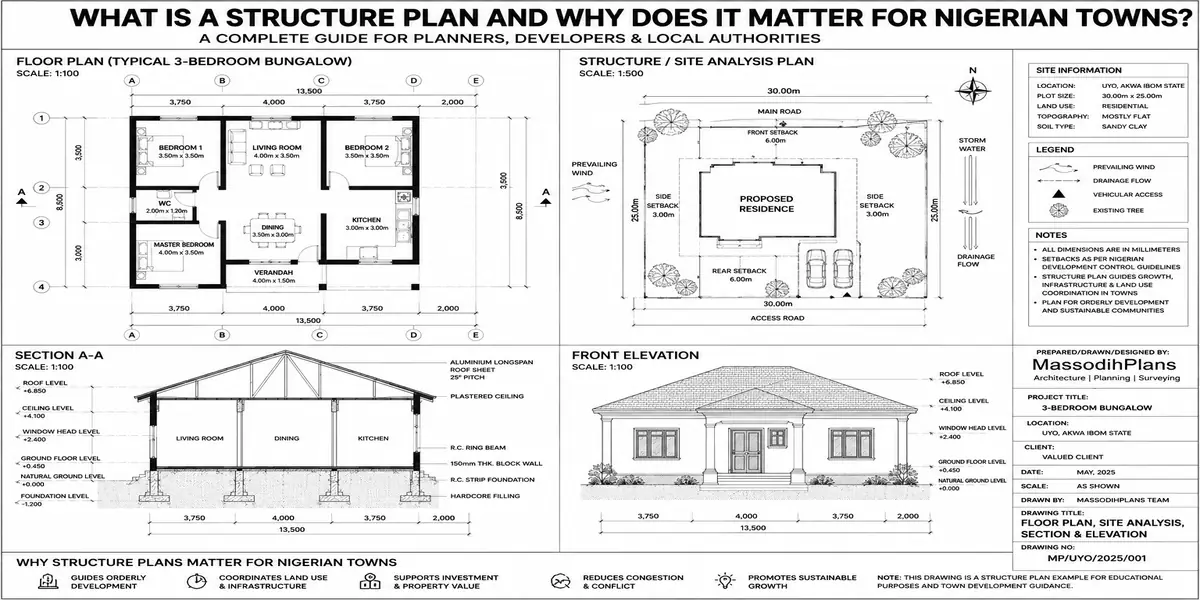
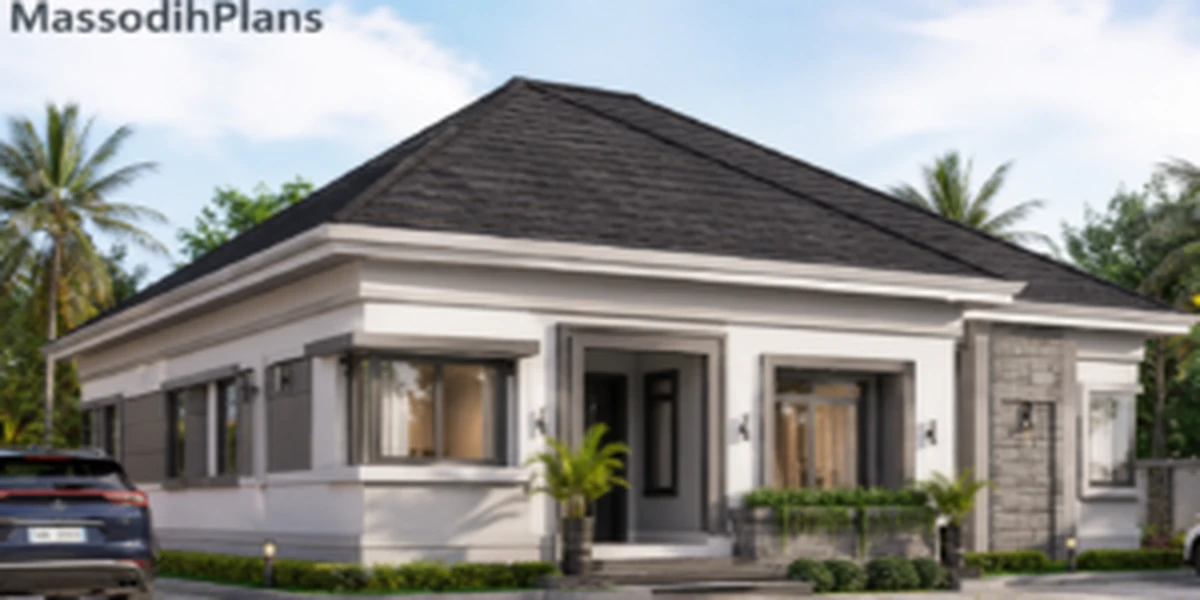
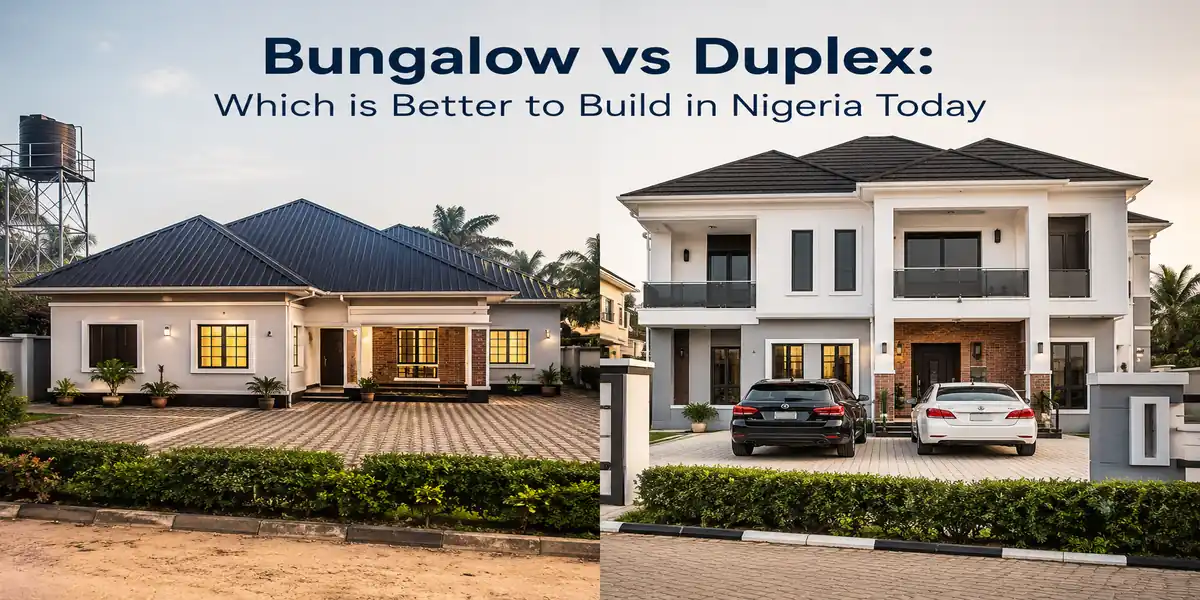
A hip roof design with adequate overhang, suited to most roofing sheet types available in Nigeria, shown on a 3-bedroom bungalow floor plan
If you are trying to decide which roofing sheet actually performs best under Nigeria’s heavy rains, intense sun, and coastal humidity, here is the direct answer: locally manufactured long span aluminium sheets in 0.45mm to 0.55mm gauge remain the most practical choice for most Nigerian homes, offering the best balance of cost, durability, and availability. Imported stone-coated tiles like Gerard, and premium international brands, offer real advantages in appearance and longevity, but only if your budget and roof structure can support them properly. Choosing the wrong roofing sheet, or the wrong gauge of the right sheet, is one of the most common and expensive mistakes I see in Nigerian construction.
I have designed and supervised residential buildings across Akwa Ibom and Rivers States, a region where heavy rainfall and coastal humidity make roofing decisions especially critical. I have watched clients spend more on flashy roofing than the rest of the house combined, and I have also watched clients save money on roofing only to be replacing sheets within five years. This article will help you avoid both mistakes.
Why Roofing Choice Matters More in Nigeria Than Many People Realize
In my experience, roofing gets less attention than flooring or paint during the planning stage, yet it is the single building component most exposed to Nigeria’s harshest weather conditions. Long span aluminium roofing sheet prices in Nigeria actually rose by roughly 62 to 75 percent between January 2024 and April 2026, driven mainly by naira depreciation and rising global aluminium coil costs. This means the cost gap between budget and premium roofing choices has widened significantly, making the right decision even more important than it was a few years ago.
Quick Truth Box:
The most expensive roofing sheet is not always the best one for your specific roof design, and the cheapest is almost never the best long-term value. The right choice depends on your roof pitch, your structural frame, your local climate exposure, and your realistic budget.
Understanding Your Roof Design Before Choosing Materials
During my undergraduate studies in Town Planning, one thing our lecturers constantly emphasized was that roofing material selection must follow roof design, not the other way around. Before comparing sheet types, confirm your roof design basics.
A Realistic Roof Design Example
Here is a hip roof design I commonly use on a 3-bedroom bungalow, on a standard 50ft by 100ft plot, that works well with most roofing sheet options discussed in this article.
Roof Element Recommendation Why It Matters
Roof Pitch, 25 – 35 degrees, Steeper pitch sheds heavy rain faster, reducing leak risk
Overhang, Minimum 600mm, Protects walls from rain damage during Nigeria’s rainy season
Roof Type: Hip roof (four sloped sides). More stable in high wind areas than gable roofs
You can explore more roof design options suited to different Nigerian plot sizes in our Plans Library
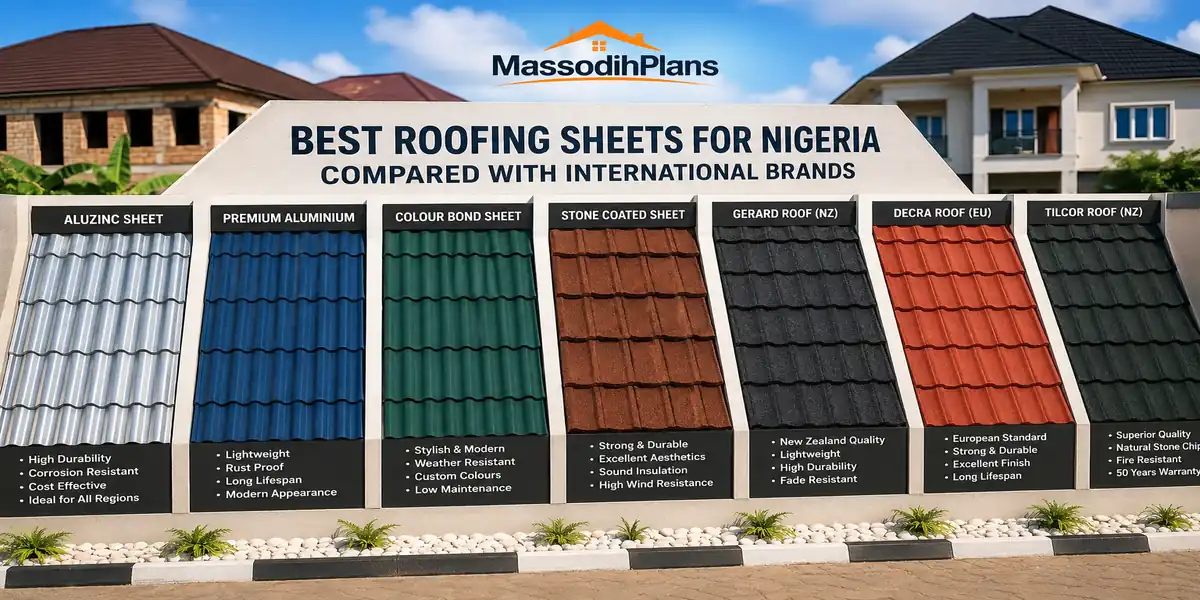
Comparing Roofing Sheet Options: Local Nigerian Choices
1. Long Span Aluminium Roofing Sheets
This is what most Nigerian homeowners use, and from what I have seen in practice, it remains the most practical choice for standard residential buildings.
Price range: approximately ₦5,300 – ₦14,800 per square meter, depending on gauge and grade
Recommended gauge for homes: 0.45mm – 0.55mm, since thicker gauges above 0.55mm can add excessive weight to standard wooden roof frames
Durability: can last 30-50 years with proper maintenance
Advantages: lightweight, corrosion-resistant, widely available, easy to source replacement sheets
2. Stone Coated Roofing Sheets (Including Gerard)
Stone coated sheets have become increasingly popular for their premium, tile-like appearance combined with a steel core.
Price range: approximately ₦4,700 – ₦7,200 per square meter, depending on design and thickness
Profiles available: Shingles, Milano, Classic, Bond, and Roman tiles, each with a distinct visual style
Advantages: excellent appearance, good performance against heat and heavy rainfall, wide color selection
Considerations: requires skilled installation and a properly designed roof structure to support the additional weight compared to standard aluminium.
3. Metcoppo and Step Tiles Aluminium
These interlocking aluminium profiles offer a stylish, tile-like appearance at a moderate premium over standard longspan sheets, typically ₦200-₦500 more per square meter, while still keeping the lightweight advantage of aluminium.
4. Alu-Zinc Roofing Sheets
Alu-zinc sheets, typically sold in bundles of about 15 sheets ranging from ₦55,000 to ₦90,000 per bundle, offer a middle-ground option between standard galvanized sheets and full aluminium, combining reasonable corrosion resistance with a lower cost than premium aluminium grades.
Comparing With International Roofing Brands
Many people assume imported roofing brands are automatically superior, but my experience suggests otherwise. International brands like Decra, Ondulin, and premium European steel roofing systems do offer strong engineering and finish quality, often with longer manufacturer warranties. However, three practical realities matter for Nigerian homeowners:
Import cost: international brands typically cost significantly more once shipping, duties, and currency conversion are factored in, often 30-60% above equivalent local aluminium options.
Replacement availability: if a section of imported roofing is damaged years later, sourcing an exact matching replacement can be slow and expensive compared to widely available local aluminium sheets.
Local climate suitability: reputable local manufacturers now produce aluminium and stone-coated sheets specifically engineered for Nigeria’s heat, humidity, and rainfall intensity, often performing comparably to imported alternatives at a fraction of the cost.
I did not learn this from a textbook alone. I have worked with clients who imported roofing tiles at considerable expense, only to struggle finding matching replacement pieces years later after minor storm damage. If there is one thing I would encourage homeowners to do, it is to weigh long-term replacement practicality alongside upfront appearance when choosing between local and imported options.
Cost Estimate: Roofing a Standard 3-Bedroom Bungalow
Based on projects I have worked on, here is a realistic roofing cost comparison for a standard 3-bedroom bungalow roof area of approximately 150 square meters:
Roofing Option Estimated Material Cost (₦) Installation Estimate (₦)
Longspan Aluminium (0.45mm) 795,000 – 1,110,000, 150,000 – 225,000
Longspan Aluminium (0.55mm) 1,200,000 – 1,650,000, 150,000 – 225,000
Stone Coated (Standard) 705,000 – 780,000, 225,000 – 300,000
Stone Coated (Premium/Gerard), 780,000 – 1,080,000, 225,000 – 300,000
Imported International Brand 1,200,000 – 1,900,000+ 300,000 – 450,000
Always request a written quote valid for a specific period before committing, since roofing material prices in Nigeria can shift meaningfully within weeks due to naira fluctuations and global aluminium coil costs.
Nigerian Reality Layer: What to Consider Beyond the Sheet Itself
Unstable Material Prices
This is something I have encountered many times: clients who priced roofing materials months before construction, only to find prices had increased significantly by the time they were ready to buy. Where possible, purchase your full roofing requirement in one order rather than in stages, to avoid a mid-project price increase affecting the balance.
Heat Management
Aluminium roofing reflects heat reasonably well, but pairing any roofing choice with proper ceiling insulation and adequate roof overhang significantly improves indoor comfort during Nigeria’s hottest months.
Flooding and Drainage From the Roof
The reality on the ground is often different from what a roof design looks like on paper. Ensure your roofing design includes properly sized gutters and downpipes directing water away from the foundation, not just an attractive roof shape. I once reviewed a plan where gutters were considered optional to save cost, and the resulting water runoff eroded the foundation edge within two rainy seasons.
Ventilation Beneath the Roof
Proper ceiling ventilation, whether through ridge vents or gable vents, prevents heat buildup in the roof cavity regardless of which sheet type you choose.
Small Plot Optimization: Roofing Choices for Compact Homes
If I were advising a client today with a smaller plot and a more compact roof area, I would recommend:
Longspan aluminium for cost efficiency, since smaller roof areas do not always justify the premium of stone-coated or imported options.
Simple hip roof designs over complex multi-level roof shapes, which reduce both material waste and installation complexity on compact plots.
Standard gauge (0.45mm-0.50mm) for lighter wooden frame structures common in compact bungalow designs.
Human Lifestyle Layer: Roofing Choices That Affect Daily Comfort
Based on projects I have worked on, roofing decisions affect far more than appearance:
Noise during rainfall: stone-coated sheets tend to reduce rain noise compared to standard aluminium, worth considering for bedrooms directly beneath the roof.
Balcony protection: adequate roof overhang over balconies keeps them usable during light rain, adding genuine everyday value.
Family comfort in hot weather: proper ceiling height combined with reflective roofing reduces indoor heat buildup, particularly important for children’s rooms.
Construction Experience Layer: Common Roofing Mistakes to Avoid
During my internship, I observed several recurring roofing mistakes on real construction sites:
Using gauge thinner than recommended to cut costs, leading to sheets that dent or deform under heavy rain impact
Skipping proper roof frame calculation before selecting heavier materials like stone-coated tiles, risking structural strain
Poor overlap during installation, a leading cause of leaks that only become obvious during the next heavy rainstorm
Mixing incompatible materials (for example, wrong fasteners for aluminium sheets) that accelerate corrosion at contact points
Having seen the consequences of poor supervision, I advise every client to confirm gauge and grade before payment, request a written quote with a validity period, and ideally source directly from a manufacturer rather than through multiple middlemen, since each layer typically adds 8-15% to the final price.
Expert Note:
Always compare gauge to gauge, 0.45mm against 0.45mm, not a generic “roofing sheet” quote. Vague price comparisons across different gauges are one of the most common sources of budget confusion on Nigerian construction sites. Our design and construction supervision services can help you specify the right roofing choice for your specific building.
Investment Layer: How Roofing Choice Affects Long-Term Value
Many people assume roofing is a cosmetic decision with little investment impact, but experience has taught me otherwise. Roofing significantly affects resale value, maintenance cost, and tenant satisfaction over the life of a building.
Resale potential: a well-installed, appropriately specified roof reassures buyers that the building has been properly maintained.
Rental profitability: leak-free, well-insulated roofing reduces tenant complaints and costly emergency repairs during your rental period.
Long-term practicality: choosing a widely available local roofing option simplifies future repairs, an underrated factor in long-term property value, especially for landlords managing multiple properties.
Material Considerations for Your Specific Climate Zone
My experience in planning and design has shown me that coastal areas like Port Harcourt and parts of Uyo, with higher humidity and salt exposure, benefit from aluminium’s natural corrosion resistance over standard galvanized options. Drier northern regions have more flexibility to consider a wider range of roofing materials without the same corrosion concerns.
If you are exploring house designs that already account for optimal roof pitch and material compatibility, browse our Plans Library for realistic, dimensioned options.
Frequently Asked Questions
What is the best roofing sheet for Nigeria’s rainy season?
Long span aluminium in 0.45mm-0.55mm gauge remains the most practical, widely available option for standard residential roofs, offering good rain performance and durability at a reasonable cost.</p>
Are imported roofing brands worth the extra cost?
Sometimes, particularly for premium finishes and longer warranties, but factor in higher import costs, potential replacement difficulty, and confirm the product is genuinely suited to Nigeria’s climate rather than assuming imported automatically means better.
What gauge of aluminium roofing sheet should I use for my house?
For most residential wooden roof frames, 0.45mm to 0.55mm gauge offers the best balance of durability and weight. Gauges above 0.55mm are generally reserved for industrial structures with steel frames.
Is stone coated roofing heavier than aluminium?
Yes, stone coated sheets are heavier due to their steel core and stone chip coating, so your roof frame must be properly designed to support this additional weight.
How can I avoid overpaying for roofing sheets in Nigeria?
Always compare like-for-like gauge and grade, request a written quote with a validity period, and where possible, buy directly from a manufacturer to avoid multiple middleman markups.
Final Word From Me to You
Your roof is the part of your house that works hardest against Nigeria’s weather, and it deserves more thought than a quick decision at the tail end of your budget. What has worked consistently for my clients over 15 years is simple: match your roofing material to your actual roof design and structural frame, confirm gauge and grade honestly, and weigh long-term replacement practicality alongside upfront appearance.
Take the next step by exploring house designs with roof plans already matched to practical material choices in our house plans library, or visit our Plan School to understand roof design principles in more depth. If you need direct guidance choosing the right roofing solution for your specific project, our services page outlines how we can help. You can also start from our homepage to see everything we offer.
A good roof protects everything you have built underneath it. Take the time to choose it properly, and reach out before a costly roofing mistake becomes a leaking problem years down the line.
Related posts
- Best Roofing Sheets for Nigerian Weather: Complete Guide
- Cost of Roofing a 4 Bedroom Duplex in Abakaliki (Complete Guide)
- How to Choose Roofing Materials for Nigeria’s Climate: Advice for Overseas Homeowners
- Cost of Blocks, Cement, Iron Rod and Roofing Sheets in Uyo: Real Prices From the Field Now
- Cost of Roofing a House in Uyo: Current Prices Explained
- Cost of Roofing a 4 Bedroom Duplex in Abakaliki (Complete Guide)
- Nigerian duplex plans with modern roofing
- Cost of Roofing a Bungalow and Duplex in Abuja Small Plot Now
- Cost of Building a House in Nigeria: A Complete Guide for Nigerians Living Abroad
- Cost of Building a House in Uyo: Honest Budget Guide for Property Owners
- Cost of Master Plan Preparation for Communities and Institutions
- Current Cost of Building a House in Port Harcourt (Professional Analysis)
- Cost of Building a 4 Bedroom Duplex in Lagos (Complete Guide)
- Cost of Roofing a Bungalow and Duplex in Abuja Small Plot Now
- Estate Layout Planning Standards in Nigeria: Roads, Drainage, Open Spaces and Plot Sizes