Housing Affordability: How to Find Affordable Homes and Low-Cost Housing
A woman I worked with in Uyo once told me she’d rather keep paying rent for another three years than build the “affordable” house her contractor was quoting her. When I asked why, she said, “I’ve seen what affordable becomes after two rainy seasons.” She wasn’t wrong. In Nigeria, “affordable” has quietly become one of the most misused words in real estate slapped onto anything from a genuinely well-planned N9 million starter home to a poorly built block that will need N4 million in repairs before its fifth birthday.
So let’s actually deal with this properly. Not the version of “affordable housing” you see in a government press release, and not the version a developer uses to sell you a smaller room at the same price. The real version what it costs, where it comes from, how to tell a genuine bargain from a trap, and what your actual options are whether you’re renting, building, buying into a scheme, or trying to figure out why houses in your city keep getting more expensive every year.
What “Affordable Housing” Actually Means (And What It Doesn’t)
Here’s the definition that actually matters, and it has nothing to do with the sticker price: affordable housing is housing that costs no more than roughly 30% of a household’s income to rent or service as a mortgage, without forcing that household to cut corners on food, transport, healthcare, or savings to make it work.
By that measure, a huge amount of what gets marketed as “affordable” in Nigeria isn’t affordable at all it’s just cheap in absolute terms while still swallowing 50-60% of a household’s take-home pay. A N9 million “affordable” unit is meaningless to a family earning N80,000 a month if there’s no realistic mortgage path to it. This is the gap almost every affordable housing conversation in Nigeria skips: affordability isn’t a price tag, it’s a relationship between price and income, and the second half of that relationship is where the real problem lives.
Before you chase any “affordable” listing, do this one calculation first take your monthly income, multiply by 0.3, and that’s your realistic monthly housing budget, whether rent or mortgage. Any offer that requires more than that isn’t affordable for you, no matter what the marketing says.
Affordable Homes vs. Affordable Houses vs. Cheap Houses: Know the Difference Before You Buy
People use these terms as if they mean the same thing, and that confusion costs Nigerians money every single week. Let me separate them properly.
Affordable homes are homes designed and priced to match a specific income bracket from the start smaller footprints, efficient layouts, standardized materials bought in bulk to cut cost while still meeting structural and safety standards. The affordability is engineered into the design.
Cheap houses, on the other hand, are usually houses where cost was cut after the fact weaker cement mix ratios, undersized reinforcement, substandard roofing sheets, corners cut on foundation depth for the soil type. They look similar to affordable homes in photographs. They behave very differently after two or three rainy seasons.
Cheap homes carry the same risk as cheap houses but extend it to finishing and services wiring done without proper certification, plumbing using substandard pipes that degrade water quality, electrical loads that weren’t calculated for the appliances a family will actually use.
The test I give every client who asks me to help them tell the difference: ask for the Bill of Quantities and the structural drawing, not just the price. A genuinely affordable home has a BOQ that shows where the savings came from smaller floor area, simpler roof design, standardized window sizes. A cheap house usually has no BOQ at all, just a price, because showing the numbers would expose exactly what was skipped.
Never accept “we made it affordable by using local materials” as an explanation on its own. Ask specifically which materials, at what specification, and whether a structural engineer signed off on the design. “Local” and “substandard” are not the same thing, but sellers rely on you not knowing the difference.
Low-Cost Housing: What It Really Involves
Low-cost housing, done properly, is a design discipline, not a shortcut. The genuine cost-reduction levers are:
Compact, efficient floor plans that eliminate wasted circulation space and oversized rooms without touching structural quality
Standardized components repeated window sizes, door sizes, and room dimensions across units, which reduces material waste and speeds up construction
Simple roof geometry a straightforward gable or hip roof instead of a complex multi-level roof with numerous valleys and junctions, which are expensive to build and the most common source of leaks later
Phased construction, where a family builds a smaller “core” unit first and expands later as funds allow, rather than borrowing heavily to build everything at once
Bulk material procurement, common in estate-scale developments where dozens of units are built together and materials are bought at volume discounts
None of these levers involve reducing cement quality, skipping soil tests, or under-sizing reinforcement. That distinction is the entire difference between low-cost housing and low-quality housing, and it’s the one thing every genuinely useful conversation about affordability has to hold onto.
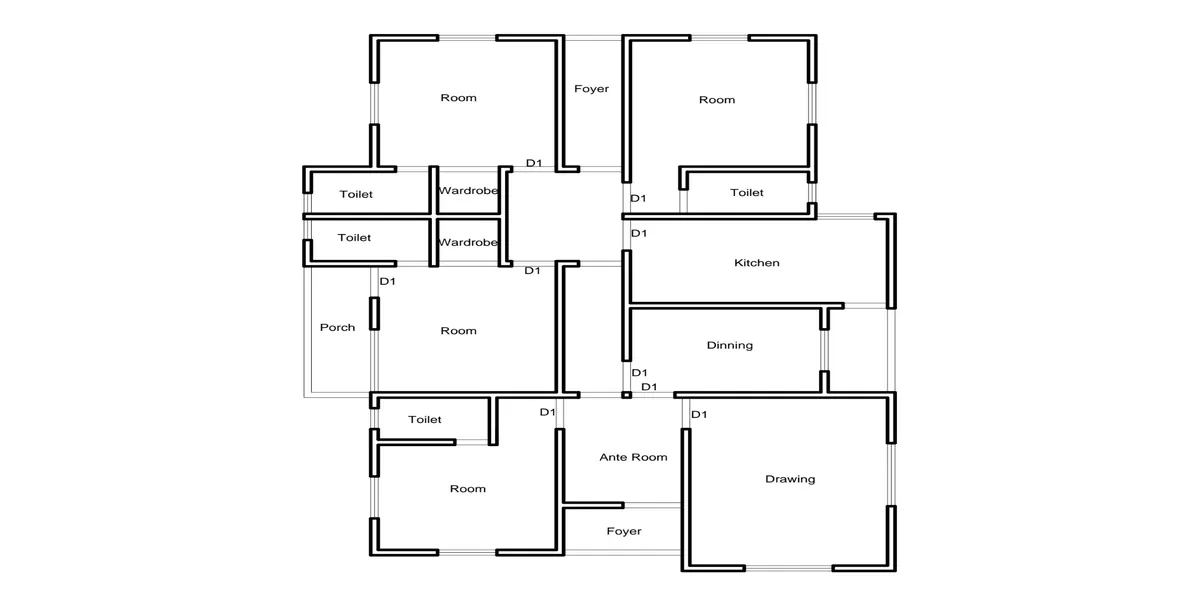
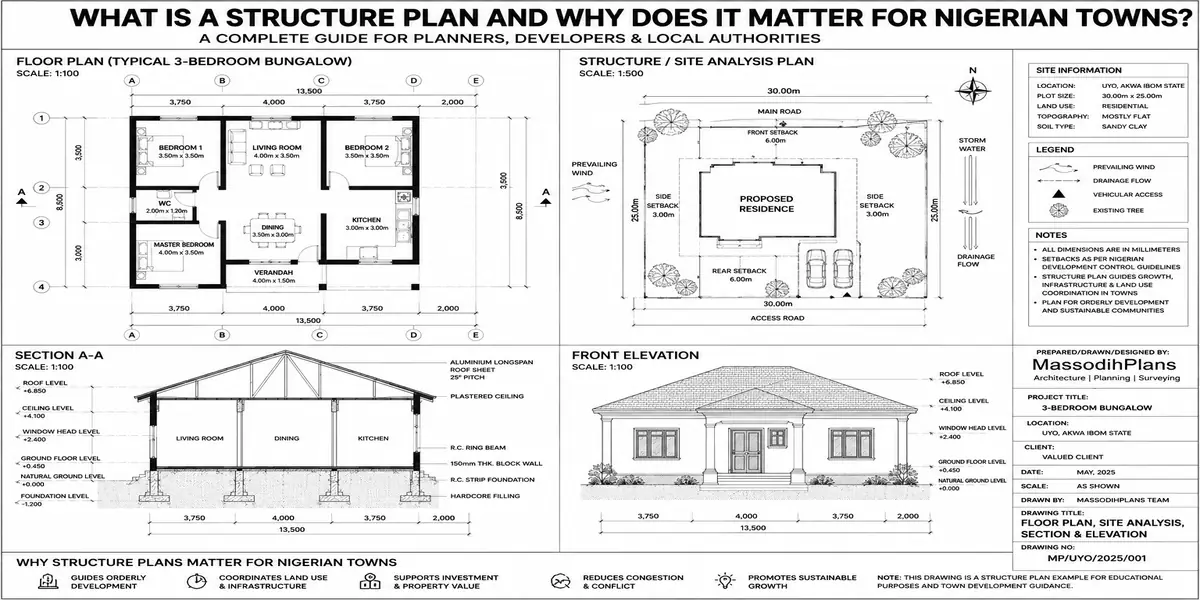
Affordable House Plans and Low-Cost House Plans: What to Actually Look For
If you’re shopping for a plan rather than a finished unit, here’s what separates a genuinely well-designed affordable house plan from one that just looks smaller on paper:
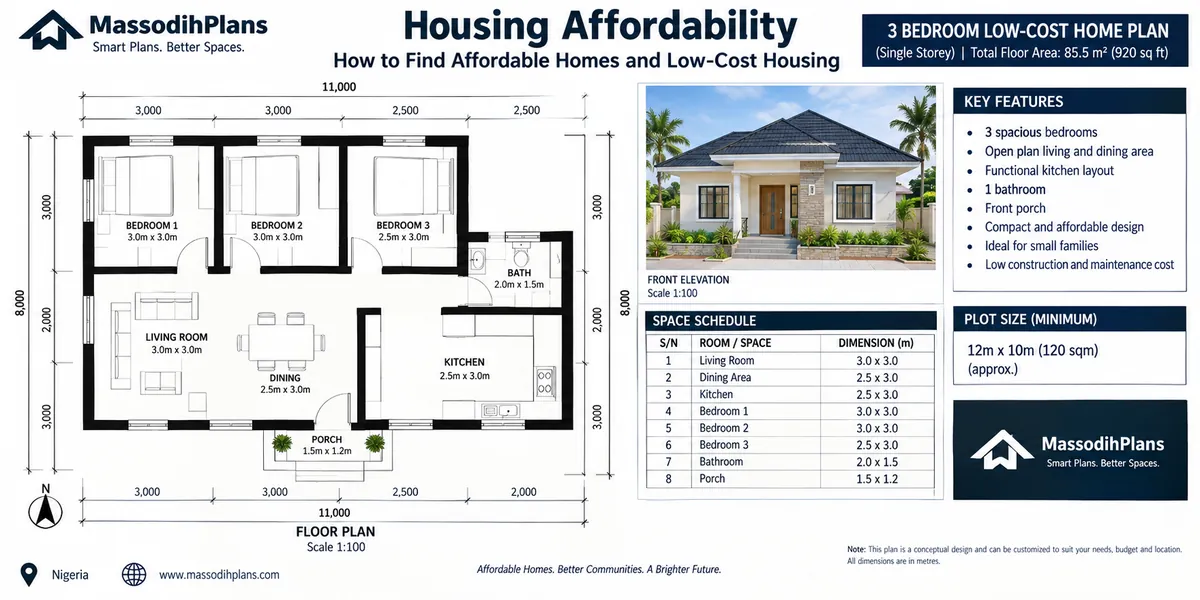
Total floor area matched honestly to bedroom count a “3 bedroom affordable plan” at 90 sqm with three properly sized bedrooms is a legitimate affordable design; the same label on a 65 sqm plan usually means bedrooms too small to hold a bed and wardrobe with walking space
A single, simple roof form rather than a complex design dressed up to look premium
Rooms grouped to minimize corridor space, since every metre of hallway is a metre you’re paying to build and finish without gaining usable space
A foundation design that matches your actual soil, not a generic strip foundation assumed regardless of site condition this is the single most dangerous place to cut corners, because foundation problems don’t show up until years later and cost far more to fix than they would have cost to do right initially
A clear phasing option, where the plan is designed so a smaller version can be built first and rooms added later without demolishing or compromising what’s already built
A well-designed low-cost house plan should come with a phasing option a “core” version you can build now and expand later without tearing anything down. If a plan doesn’t offer that, ask your designer to build it in; it’s one of the highest-value things a good architect can add to an affordable design.
Affordable Housing Design: The Principles That Actually Save Money
Affordable housing design is a specific discipline, and here’s what real cost-saving design looks like when it’s done by someone who understands both architecture and the budget constraints their client is under.
Orientation and passive cooling first. Positioning a house to reduce heat gain and rely on cross-ventilation cuts the need for air conditioning, which lowers both the electrical installation cost and the ongoing running cost for the life of the building. This is a design decision that costs nothing extra at the drawing stage but saves money every single month afterward.
Modular and repeatable elements. Using the same window size, door size, and room module repeatedly across a design reduces material waste and simplifies construction, which lowers both material and labour cost without lowering quality.
Right-sizing, not down-sizing. There’s a difference between designing a room at the size a family actually needs and just shrinking every room to hit a budget number. Good affordable design studies how the space will actually be used and removes waste, not function.
Local, climate-appropriate materials used correctly. Sandcrete blocks, locally fired bricks, and compressed earth blocks can all be genuinely cost-effective and durable when specified and built to proper standard — the affordability comes from sourcing and construction efficiency, not from ignoring standards.
Vertical and horizontal expansion built into the design. A well-designed affordable home anticipates that the family may want to add a room, a floor, or a boys’ quarters later, and the foundation and structure are designed to accommodate that from day one, rather than requiring expensive retrofitting.
Housing Affordability: The Real Math Nobody Shows You
This is the layer almost nothing online actually walks through with real numbers, and it’s the one that matters most if you’re trying to decide whether to keep renting, start building, or buy into a scheme.
Take a household earning N250,000 a month. At the 30% affordability threshold, their realistic housing budget is N75,000 a month. In most Nigerian cities, that rules out renting a reasonably sized apartment in a developed neighbourhood, but it’s roughly in range for servicing a mortgage on a N8-9 million entry-level unit under current government-backed pricing, if the mortgage terms and interest rate are structured for that income bracket.
Honest Complication
The honest complication is that mortgage access at that scale barely exists for most Nigerians. Nigeria’s mortgage-to-GDP ratio remains one of the lowest in Africa, and formal mortgage financing through institutions like the Federal Mortgage Bank of Nigeria depends heavily on National Housing Fund contributions that many informally employed Nigerians never make. This is why so much “affordable housing” supply sits unsold or unlet even in a country with a massive housing deficit the units exist, but the financing bridge between income and ownership mostly doesn’t.
This is also why phased self-build remains, for a huge number of Nigerian families, more realistic than any scheme: build the foundation and shell this year with savings, roof and secure it next year, finish it the year after. It’s slower, but it doesn’t require a mortgage product that may not exist for your income bracket.
Before comparing “affordable” scheme prices to your rent, calculate what your rent actually costs you over 10 years, including annual increases. Most people are shocked to discover they’ll pay more in a decade of rent than a modest phased self-build would have cost them the barrier usually isn’t the total cost, it’s that rent is paid in small pieces and building demands larger pieces at once.
Affordable Housing Development and Housing Projects: Who’s Actually Building, and How to Vet Them
Affordable housing development in Nigeria currently comes from three main directions, and knowing which one you’re dealing with changes what questions you should ask.
Federal and state government schemes. Nigeria’s housing deficit has been officially put at approximately 14.925 million units, based on the National Housing Data Technical Committee’s figures presented in early 2026 a number the government itself now treats as the settled baseline for planning. In response, federal programmes under the Renewed Hope Housing Agenda have set uniform pricing for entry-level units in specific locations, alongside a broader push to complete previously abandoned public housing projects rather than starting entirely new ones.
Private developers under public-private partnership arrangements. Here, government typically provides land or infrastructure subsidy, and private developers handle construction and sales, often with a cross-subsidy model where some units sell at commercial rates to fund others sold at concessionary rates to lower-income buyers.
Cooperative and thrift-based housing schemes. These are less visible online but hugely important on the ground workplace cooperatives, professional association housing schemes, and community thrift groups (the same trust networks behind ajo, esusu, and adashe savings) that pool member contributions to acquire land and build in phases for members. For a lot of working-class Nigerian families, this route is more accessible than either a government scheme or a bank mortgage, because it’s built on relationships and gradual contribution rather than a lump-sum qualification test.
Whichever type you’re considering, vet a housing project the same way, using these non-negotiables:
- Confirm the developer or scheme has genuine title to the land not just a promise, an actual Certificate of Occupancy or governor’s consent, verified independently, not just shown to you as a photocopy
- Ask for the project’s approval status with the relevant state planning authority, not just a sales brochure
- Visit the actual site, not a show unit alone a show unit tells you nothing about drainage, access road condition, or how far the “almost complete” phase two units actually are
- Get the payment schedule and any exit or refund clause in writing before paying anything
- Ask other buyers or occupants directly about their experience, not just the developer’s references
Nigeria has a long history of housing schemes announced with fanfare and then stalled for years, government and private alike. A groundbreaking ceremony is not evidence of a completed project. Track a scheme’s actual delivery record units handed over, not units announced before committing your savings to it.
Social Housing, Public Housing, and Low-Income Housing: The Terms Nigerians Actually Need to Understand
These three terms get used almost interchangeably, but they mean different things, and knowing the difference helps you understand what you’re actually being offered.
Public housing is housing built and typically owned or subsidized directly by government, historically through bodies like state housing corporations and, more recently, through federal Renewed Hope Housing projects. Social housing is a broader term covering housing provided specifically to support lower-income or vulnerable households, which can be delivered by government, non-profits, or regulated private schemes with an affordability mandate attached. Low-income housing simply describes housing priced and designed for households in the lower income brackets, regardless of who built it it can be public, private, or cooperative.
The practical reason this matters: a “public housing” unit typically comes with government-set pricing and eligibility rules (sometimes tied to specific unions or associations, as seen in some current cross-subsidy schemes), while a privately built “low-income housing” unit is priced by the developer’s own cost structure and may have far less regulatory protection if something goes wrong. Ask which category you’re actually dealing with before you assume the protections or pricing rules of one apply to the other.
Housing Shortage, Housing Crisis, and Housing Demand: What’s Actually Happening and Why
These three terms describe different layers of the same problem, and separating them helps you understand why prices keep rising even as more housing gets built.
Housing shortage is the raw supply gap simply not enough housing units for the population that needs them. Nigeria’s officially recognized shortage now sits at close to 14.9 million units, and various independent estimates over the past decade have put it considerably higher, driven by rapid urbanisation outpacing construction.
Housing crisis describes what happens when that shortage combines with affordability failure when even the housing that does exist is priced beyond what most of the population earning median incomes can access. Nigeria’s situation qualifies as a genuine crisis by this definition, not just a shortage, because the core problem isn’t only “not enough units,” it’s “not enough units at prices matched to incomes.”
Housing demand is the economic pressure created by population growth, urban migration, and household formation (young people leaving family homes to start their own households) outpacing the rate at which new, affordable supply comes online. Rising housing demand without matching affordable supply is exactly what pushes rents and prices upward year after year in cities like Lagos, Abuja, and increasingly Uyo and Port Harcourt.
Understanding this distinction matters practically: solving a housing shortage (building more units) doesn’t automatically solve a housing crisis (units priced for the population that needs them), which is why simply announcing more housing projects, without addressing financing access, hasn’t historically closed the gap.
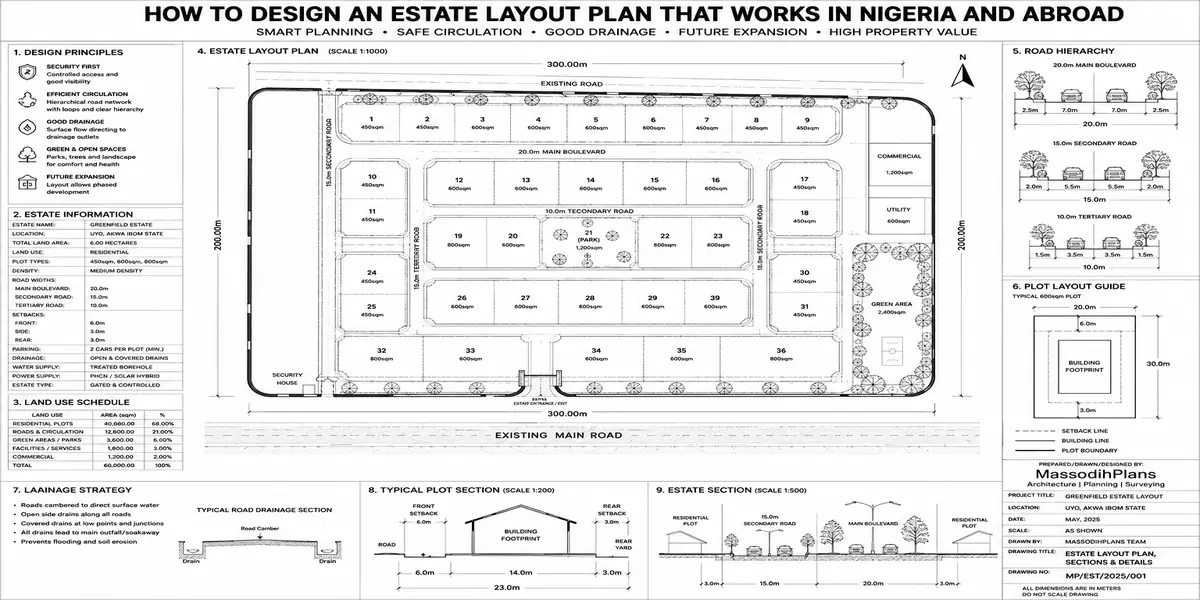
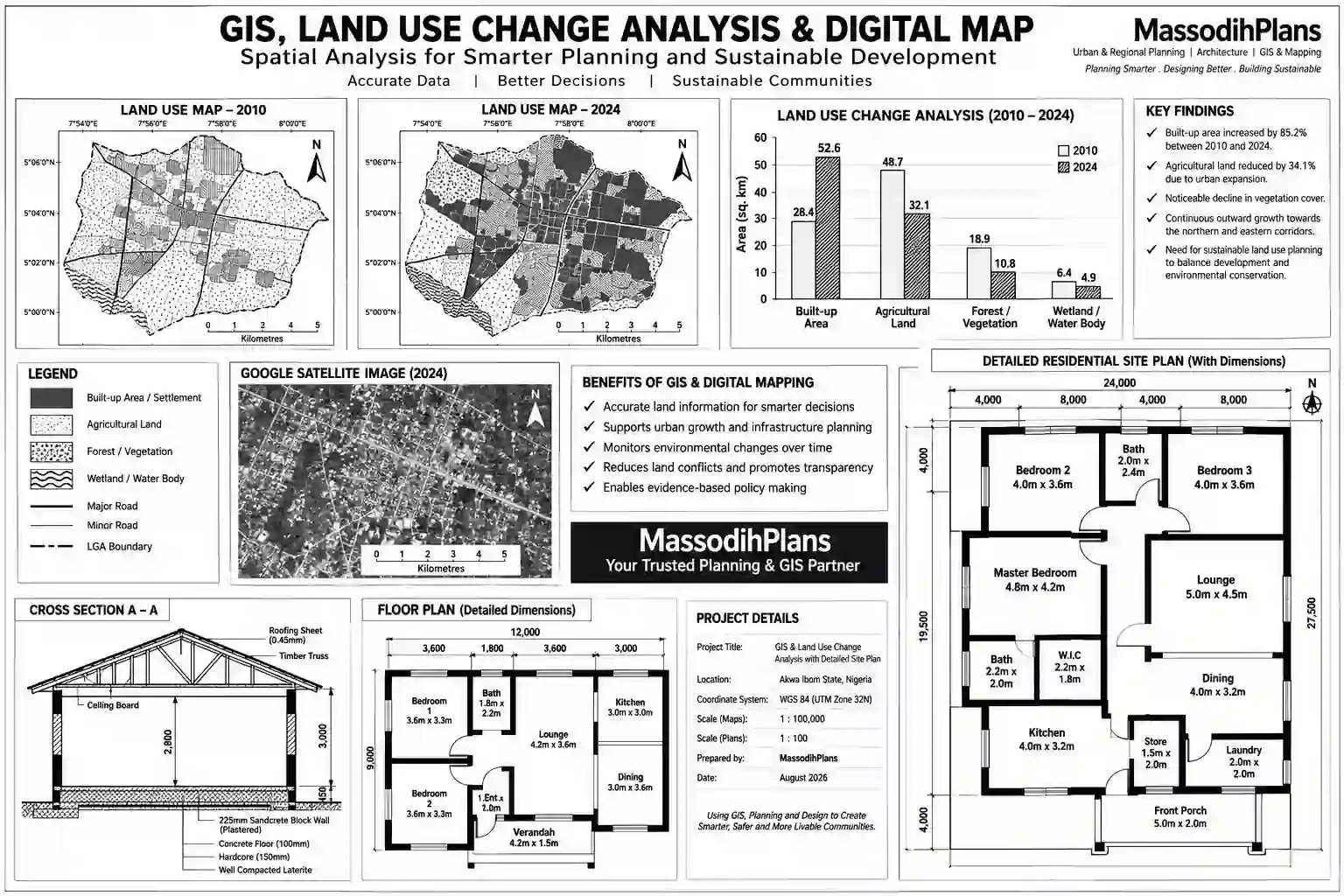
Why Land Is the Real Affordability Problem Almost Nobody Names Directly
Here’s a layer most housing affordability content skips entirely, and it’s arguably the single biggest driver of unaffordability in urban Nigeria: land cost, not construction cost, is usually the larger half of the total bill, and it is the component least affected by any construction-side “affordable design” strategy.
You can design the most efficient, well-planned low-cost house imaginable, but if the land beneath it costs N40 million because of its location, no amount of design efficiency makes the total package affordable to a median-income family. This is exactly why genuine affordable housing schemes almost always depend on cheap or subsidized land free land from state governments, land in emerging peri-urban axes, or land acquired years earlier by a cooperative before prices rose rather than construction efficiency alone. If you’re serious about affordability, the land search deserves as much strategy as the building design, and often more.
Practical Paths to Actually Affordable Housing (The Menu Most Articles Never Give You)
Depending on your situation, here are the realistic paths, not just the theoretical ones:
Phased self-build.
Buy land in a lower-cost, well-drained axis, design a phased plan with a professional, and build the foundation and shell with savings, completing it in stages as funds allow. Slower, but avoids mortgage dependency entirely.
Cooperative or thrift-based group building.
Join or form a savings and building cooperative through your workplace, professional association, or trusted community group to pool resources for land acquisition and phased construction for members. This has quietly delivered more housing to working-class Nigerians than most people realize, precisely because it doesn’t require bank-grade documentation.
Government scheme application.
Where genuinely eligible (union membership, specific income bracket, specific location), apply directly through the relevant federal or state housing programme, but go in with the vetting checklist above, not blind trust in the announcement.
Rent-to-own arrangements.
where available through a credible developer, allow a portion of rent to accrue toward eventual ownership genuinely useful where the terms are transparent, but request the full contract in writing and have it reviewed before signing, since poorly structured rent-to-own terms can trap a tenant in payments that never actually convert to ownership.
Incremental core-house strategy.
Even without a full self-build budget, constructing a small, structurally sound “core” one or two rooms with a proper foundation designed to support future expansion and living in it while expanding gradually is a legitimate, dignified path used successfully across much of urban Africa, not a compromise to be ashamed of.
Whichever path you choose, get a professional to design for expansion from day one, even if you can only afford to build the first phase now. A foundation and structure designed to carry a second floor or additional rooms later costs a little more upfront and saves a great deal more when you’re finally ready to expand.
Frequently Asked Questions
What is considered affordable housing in Nigeria today?
Under current federal pricing frameworks, entry-level units have been set at roughly N8.5 million for a one-bedroom and N11.5 million for a two-bedroom unit in specific government-backed locations, though true affordability still depends on whether a realistic financing path exists for the buyer’s actual income.
Why is there a housing shortage in Nigeria despite ongoing construction?
Because construction has consistently failed to keep pace with urban population growth and household formation, and Nigeria’s officially recognized shortage now stands at close to 14.9 million units.
Is cheap housing the same as affordable housing?
No. Affordable housing is deliberately designed to reduce cost without compromising structural safety or quality. Cheap housing usually reduces cost by cutting corners on materials, reinforcement, or workmanship, which shows up as costly problems later.
How can I tell if a housing project is legitimate before investing?
Verify the land title independently, confirm the project’s planning approval status, visit the physical site rather than relying on a show unit, get the payment schedule in writing, and speak directly with existing buyers or occupants.
Is self-building cheaper than buying into an affordable housing scheme?
It depends heavily on land cost and financing access. Self-build avoids mortgage dependency but requires patience and phased funding; scheme purchase can be faster if you genuinely qualify for the pricing and financing on offer, but availability is limited relative to demand.
Finally
Affordable housing isn’t a price tag, and it isn’t a government slogan it’s the honest relationship between what a home costs and what a family can actually sustain paying for it, built without cutting the corners that turn a bargain into a five-year regret. Whether your path is phased self-build, a cooperative, a vetted government scheme, or a well-negotiated rent-to-own arrangement, the principle underneath all of it stays the same: design and land strategy do the real work of affordability, not a discount sticker.
If you’re weighing your own path toward a home, browse our Plans Library for phased, expansion-ready house plans designed with this exact affordability strategy in mind, or visit Plan School to understand how to read a plan and a BOQ before you commit to either. If you want direct support working through your specific budget and land situation, our Services page outlines how we help clients build the right way, in the right stages. You can also explore more building and housing guides on our Homepage.
- How Do I Get Enough Natural Light? Smart Ways to Brighten Any Room
- Rental Property and Landlord Guide: How to Manage Rent, Tenants and Leases
- How Much Does a House Plan Cost in Uyo? Architectural Fees & Approval Guide
- UCCDA Building Approval Requirements in Uyo: Documents, Plans & Fees
- Commercial Property: How to Choose the Right Space for Your Business Needs
- How Much Will This Building Plan Cost? Nigeria Building Plan Cost Guide
Author
Massodih Okon is a Nigerian built-environment professional with academic and professional experience in urban and regional planning, geography, architectural design, Landscape Design, GIS and land development.
He holds a Master’s degree in Urban and Regional Planning from the University of Uyo and a first degree in Geography and Regional Planning.
Through MassodihPlans, he publishes practical guides on Nigerian house plans, building design, physical planning, site planning, development approval and residential construction. Read the full author profile →