Rental Property and Landlord Guide: How to Manage Rent, Tenants and Leases
Let me guess why you’re reading this. Either you just finished building or bought a property and someone told you “just rent it out, easy money,” and you’re now realizing it’s not that simple. Or you’ve been a landlord for a while and something a tenant who won’t pay, a lease you signed without reading, a dispute you didn’t see coming just taught you that owning a rental property and managing one are two completely different skills. I’ve sat across the table from both kinds of people more times than I can count, usually right after something has already gone wrong, when it would have been far cheaper to get this right from the start.
I’m writing this the way I’d actually talk to a client sitting in front of me, or a student asking me to explain tenancy law without the legal jargon. No fluff, no recycled “top 10 tips” filler you’ve already read on five other sites. Just the real questions people ask me about rent, tenants, leases, insurance, and the numbers answered properly, once.
What a Rental Property Actually Is (And Why the Definition Matters)
A rental property is any real estate a house, a flat, a room, a commercial unit that its owner makes available to another party in exchange for periodic payment, without transferring ownership. That sounds obvious, but the definition matters because it determines your legal relationship with whoever lives there, and that relationship is what everything else in this guide sits on top of.
Here’s the part people miss: the moment you accept rent from someone, you have entered a legally regulated relationship, whether or not you ever wrote anything down. Nigerian tenancy law doesn’t require a signed document to create tenant rights it requires possession and payment. This is exactly why so many landlord-tenant disputes in Nigeria end up in court over informal arrangements that “everybody just understood.”
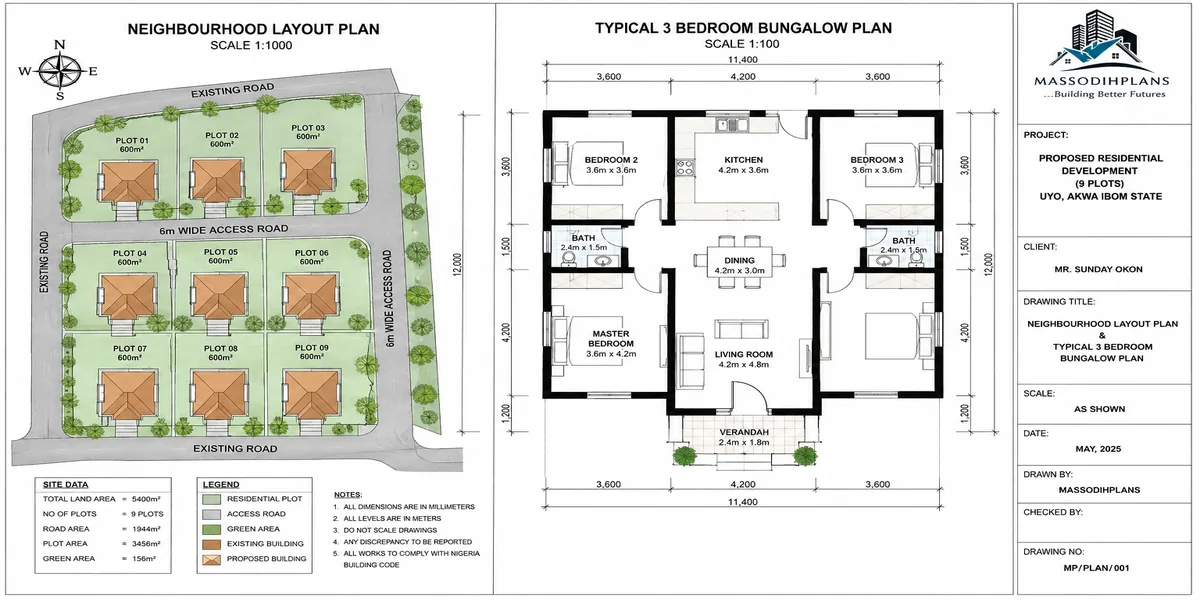
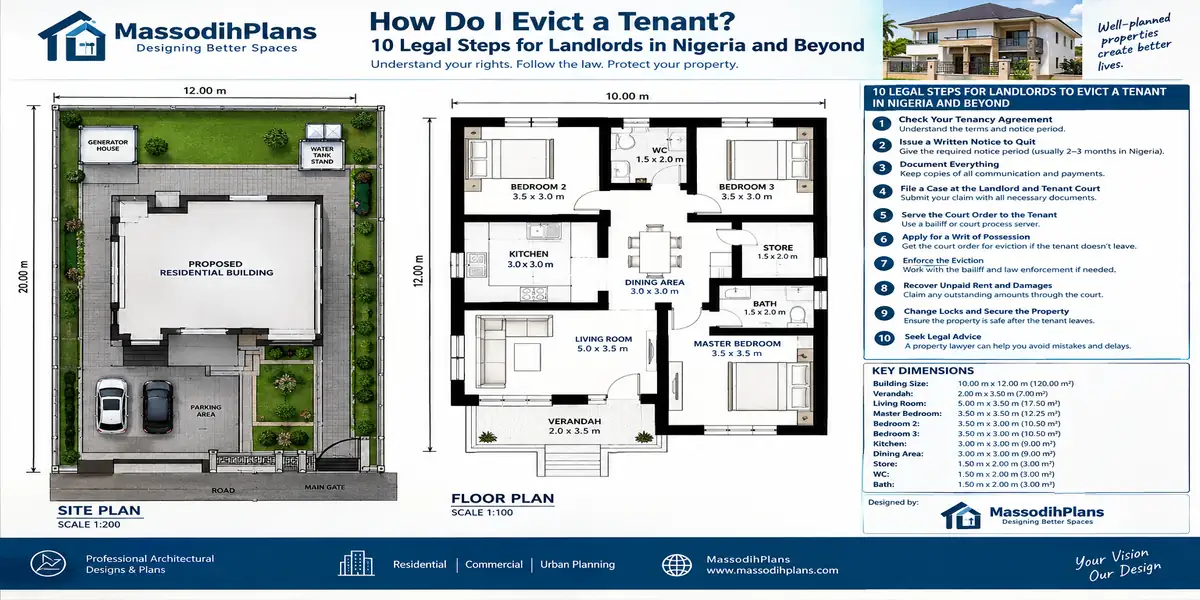
Since I design and plan buildings for a living, I’ll add something most rental guides never mention: how a property was designed directly affects how rentable, how manageable, and how profitable it becomes later. A poorly laid-out house with awkward room sizes, no proper ventilation, or a shared water source between units will always attract more tenant complaints and higher vacancy than a well-planned one which is why this guide connects back to design decisions at several points, not just legal and financial ones.
If you’re still at the building stage and already planning to rent the property out eventually, design for it now separate meters, independent water access per unit, and clearly zoned private/shared spaces save you years of tenant disputes later. Retrofitting these after tenants move in is far more expensive and disruptive.
Property for Rent, Houses for Rent, Apartments for Rent: Getting the Category Right
People searching “property for rent,” “houses for rent,” and “apartments for rent” are often looking for different things, and landlords who don’t understand the distinction end up marketing to the wrong tenant pool entirely.
Property for rent is the broadest category it covers residential, commercial, and mixed-use space. If you’re advertising, being this vague actually hurts you; a specific listing performs better than a generic one.
Houses for rent typically means a standalone or semi-detached unit with its own compound, often preferred by families who want privacy, space for children, and sometimes room for extended family or domestic staff. This tenant pool cares about compound size, security, and proximity to schools more than interior finishing.
Apartments for rent usually means a self-contained unit within a larger building or estate flats, mini-flats, self-contained rooms. This tenant pool (often young professionals, smaller households, or singles) prioritizes location, security, shared facility upkeep, and proximity to work over compound space.
Knowing which category your property actually fits and marketing to the tenant type that genuinely wants it is the difference between a two-week vacancy and a two-month one.
House Rental vs. Apartment Rental: What Changes for You as a Landlord
This distinction isn’t just about the tenant it changes your responsibilities too.
With house rental, you’re typically dealing with one tenant or household responsible for the whole compound, which simplifies accountability but means the entire maintenance burden (compound upkeep, fencing, external plumbing) sits on that one relationship.
With apartment rental, especially in a multi-unit building, you’re managing several tenant relationships simultaneously, shared facilities (generator, water tank, compound security), and the friction that comes from strangers sharing space. This is where most first-time landlords underestimate the actual time cost of “just collecting rent” because you’re not just collecting rent, you’re mediating a small community.
Who Is a Landlord, Really? (Beyond “The Person Who Owns the House”)
A landlord is the legal owner (or authorized agent of the owner) who grants a tenant the right to occupy a property in exchange for rent, under agreed terms. That’s the textbook definition. In practice, being a landlord is a role with genuine obligations attached not just a title that comes with a set of keys and a rent account.
Landlord Responsibilities You’re Legally and Practically On the Hook For
Habitability:
Providing a property that is structurally safe, has functioning water and sanitation, and meets basic living standards before a tenant moves in
Repairs:
Maintaining the structural elements of the property (roof, plumbing, electrical) the specific split between what the landlord fixes and what the tenant fixes should be written into the lease, because “who fixes what” is one of the most common landlord-tenant flashpoints in Nigeria
Proper notice before eviction
Nigerian tenancy law requires specific notice periods before a landlord can recover possession, and skipping this step even when the tenant is genuinely in default can get an otherwise valid case thrown out or delayed in court
Rent receipts: issuing proper receipts for every payment received, which protects both parties in the event of a dispute
Respecting quiet enjoyment:
Not entering the property without reasonable notice, and not using self-help measures (changing locks, disconnecting utilities, removing property) to force a tenant out this is illegal regardless of how justified you feel, and it’s the single fastest way to turn a winnable case into a losing one in court
Transparency on charges
Disclosing service charges, agency fees, and any other costs clearly before the tenancy begins, not introducing them later
I want to be blunt about something most landlord guides won’t say directly: a lot of Nigerian landlords lose tenancy disputes not because the tenant was right, but because the landlord skipped a legal step out of frustration. Knowing your responsibilities isn’t just ethical it’s your actual legal protection.
Never attempt to forcibly evict a tenant yourself locking them out, seizing their property, or disconnecting power and water to force them to leave. Nigerian courts have consistently penalized landlords for this, even in cases where the tenant was clearly owing rent. Always go through the proper notice and, where necessary, court process.
Landlord Insurance: The Layer Almost Every Nigerian Landlord Skips
This is one of the least understood topics in Nigerian property ownership, largely because landlord insurance isn’t yet a mainstream product the way it is in more developed rental markets but that’s changing, and ignoring it is a real financial risk.
Landlord insurance (sometimes bundled as “property owner’s insurance” or offered as a rider on a standard building insurance policy) typically covers:
- Structural damage to the building from fire, flood, or storm
- Loss of rental income if the property becomes uninhabitable due to an insured event
- Liability coverage if a tenant or visitor is injured on the property due to a structural fault
- In some policies, limited cover against malicious damage by tenants
Standard homeowner’s insurance often does not automatically cover a property once it’s being rented out this is a distinction many Nigerian landlords don’t realize until they file a claim and discover their policy excluded rental use. If you’re renting out a property, specifically ask your insurer whether your cover applies to a tenanted property, not an owner-occupied one.
Building insurance is far more affordable at the point of construction some insurers offer better terms on properties built to documented, approved structural drawings, because it demonstrates the building meets a verifiable safety standard. This is one more reason proper architectural and structural documentation isn’t just a legal requirement it can genuinely reduce your long-term insurance cost.
Rental Agreement, Tenancy Agreement, Lease Agreement, Property Lease: Untangling the Terms
I get asked this constantly, and the honest answer is that these terms are used inconsistently even by professionals, which is exactly why confusion happens.
Rental agreement and tenancy agreement are generally used interchangeably in Nigeria to describe a short-to-medium term arrangement (commonly annual, renewed yearly), which is the dominant residential letting pattern here.
Lease agreement technically implies a longer, more formal, fixed-term arrangement often used for commercial property or longer residential terms (multiple years) with more rigid terms around renewal, subletting, and early termination.
Property lease is often used as a broader or more formal-sounding term for the same concept, particularly in commercial or investment contexts.
In practice, for most Nigerian residential renting, you’ll be working with what’s commonly called a tenancy agreement a document that should, at minimum, include:
- Full names and contact details of landlord and tenant
- Property address and description
- Rent amount, payment frequency, and accepted payment method
- Duration of tenancy and renewal terms
- Amount and conditions for refund of any caution/security deposit
- Responsibilities for repairs and maintenance, clearly split
- Notice period required before either party ends the tenancy
- Rules on subletting, pets, and property alterations
- Signatures of both parties, ideally witnessed
A verbal agreement or a vague one-page “I collect rent, you pay rent” note is not real protection. Under Lagos State’s tenancy framework, landlords are barred from demanding more than 12 months’ advance rent for residential tenancies, and specific notice periods apply before recovery of premises can even begin a proper written agreement is what lets you actually enforce your rights if things go wrong, and what protects you from tenants misrepresenting what was agreed.
Rental Management, Tenant Management, Rental Property Management: What Each One Actually Involves
These three phrases get thrown around as if they mean the same thing, but breaking them apart makes you a sharper landlord.
Rental management is the overall administrative side collecting rent, tracking payment dates, issuing receipts, handling renewals, and keeping financial records for tax and personal purposes.
Tenant management is the relationship side screening new tenants, handling complaints, mediating disputes between co-tenants, and managing the eventual move-out process, including inspection and deposit refund.
Rental property management is the full package combining both of the above with the physical maintenance of the building itself: scheduled repairs, compound upkeep, generator and water system servicing, and coordinating artisans when something breaks.
If you own one property, you can likely handle all three yourself with discipline and a simple record-keeping system. If you own several, or you live far from the property (a very common situation for diaspora landlords), a professional property manager or a trusted agent handling this on commission usually pays for itself in reduced vacancy and fewer missed maintenance issues that quietly become expensive.
A Tenant Screening Process That Actually Protects You
Most Nigerian landlords screen tenants on vibes and referral alone, which is how chronic rent defaulters keep finding new houses. A better process includes:
- Verifiable employment or income information, not just a claim
- Contact with the previous landlord, specifically asking about payment history and how the tenancy ended
- A guarantor who is employed, reachable, and ideally known personally to you or your agent, not just a name on a form
- A face-to-face meeting before handover this alone filters out a surprising number of problem tenants who avoid it
Rent Calculator, Rental Income Calculator, Rental Yield Calculator, Rental Property Calculator: The Numbers Nobody Explains Properly
This is where most rental guides just embed a generic calculator widget and move on without explaining what the numbers actually mean. Let’s fix that, because understanding these calculations is what separates a landlord who’s guessing from one who’s actually managing an investment.
Rent Calculator Working Out What to Charge
A simple rent calculation starts from comparable rents in your immediate area for similar property type, size, and finishing not from what you personally think the property is worth. Adjust that baseline for:
- Location and security within the neighbourhood
- Size and number of rooms relative to comparable listings
- Finishing quality and age of fittings
- Included utilities (borehole, generator access, security)
- Proximity to major roads, markets, and schools
A property significantly overpriced against genuine local comparables sits vacant far longer than the “extra” rent is worth vacancy is one of the most underestimated costs in Nigerian rental ownership.
Rental Income Calculator What You’re Actually Earning
Gross rental income is simply your annual rent received. But your real income is:
Net Rental Income = Gross Annual Rent − (Maintenance Costs + Agency/Management Fees + Insurance + Applicable Taxes + Void Period Losses)
Most landlords track only the gross figure and are then surprised when the “profitable” property barely breaks even once repairs, agency commission (commonly around 5-10% of annual rent where a managing agent is used), and periods of vacancy are accounted for honestly.
Rental Yield Calculator Whether It’s Actually a Good Investment
Rental yield tells you how a property’s rent compares to what it cost you, which is the number that actually tells you if you made a smart investment decision, not just whether it’s generating some income.
Gross Rental Yield (%) = (Annual Rent ÷ Property Value or Purchase Price) × 100
Net Rental Yield (%) = (Annual Rent − Annual Operating Costs) ÷ Property Value × 100
Worked example: a property valued at ₦40,000,000 renting for ₦2,400,000 per year gives a gross yield of 6%. If annual operating costs (maintenance, agency fees, insurance) total ₦480,000, net yield drops to roughly 4.8%. Comparing this figure across different properties or against alternative investments is far more useful than comparing raw rent amounts, because it accounts for what you actually paid to get that income.
Rental Property Calculator Putting It All Together
A complete rental property calculation combines acquisition or building cost, expected rent, operating costs, and financing costs (if you borrowed to build or buy) into a single return-on-investment picture over time. This is the calculation diaspora clients specifically ask me for before committing funds to build-to-rent projects, because it’s the only version of the numbers that tells you whether the project actually makes financial sense versus simply feeling like a good idea.
Run your yield calculation before you finalize a building design, not after construction. Room count, finishing tier, and even roof type affect both your build cost and your achievable rent meaning the design stage is actually where your rental yield gets decided, long before your first tenant moves in.
The Layer Most Rental Guides Never Cover: How Design Decisions Affect Landlord Headaches
Since this sits alongside our architecture and planning content rather than replacing it, here’s the connection worth making explicit: a huge share of landlord-tenant friction traces directly back to design and construction choices made years earlier.
Shared vs. separate metering disputes over “who used more power” are constant in properties with shared meters; separate metering per unit eliminates this entirely
Water access design a single borehole and tank feeding multiple units without proper distribution planning creates recurring “my tap has no water” complaints that a landlord ends up mediating weekly
Ventilation and moisture control poorly ventilated bathrooms and kitchens lead to mould and damp complaints, which become maintenance costs and tenant disputes that better original design would have prevented
Room proportions undersized rooms marketed as “self-contained” or “mini-flat” attract higher tenant turnover because occupants outgrow the space quickly, increasing your vacancy and re-letting costs over time
If you’re currently in the design or building stage of a property you intend to rent out, this is the point where a conversation with your architect about long-term rental management, not just initial construction cost, can save you years of tenant complaints.
Common Rental Disputes in Nigeria (and How to Actually Prevent Them)
Rent default: preventable largely through the screening process above; when it happens anyway, follow the legal notice process precisely rather than resorting to self-help
Disputes over deposit refunds: prevented by a documented move-in inspection (photos, written condition report) compared against a similar move-out inspection
Disagreement over who repairs what: prevented by writing specific repair responsibilities into the tenancy agreement rather than leaving it as an assumption
Unauthorized subletting: prevented by an explicit no-subletting clause and periodic, reasonably-notified property visits
Advance rent disputes: prevented by clearly stating rent amount, frequency, and any advance payment terms in writing from day one, and staying within your state’s legal advance-rent limits where they apply
Frequently Asked Questions
How much notice does a landlord have to give a tenant in Nigeria before eviction?
This varies by state and by the type of tenancy, but Nigerian tenancy law generally requires a formal written notice before a landlord can proceed to recover possession, with specific timeframes set out in the relevant state law self-help eviction without following this process is illegal regardless of the tenant’s default.
Is a verbal rental agreement legally binding in Nigeria?
A tenancy can exist even without a written agreement once rent is paid and possession is given, but proving specific terms in a dispute becomes far harder without documentation a written tenancy agreement is strongly advised for every rental, however informal it feels at the start.
What is a good rental yield in Nigeria?
This depends heavily on location and property type, but comparing gross and net yield across similar properties in the same area, rather than relying on a single national benchmark, gives a more accurate sense of whether a specific property is performing well.
Do I need a managing agent, or can I manage my rental property myself?
If you own one or two properties and live nearby, self-management with a disciplined record-keeping system is entirely workable. If you own multiple properties, live far away (common for diaspora landlords), or simply don’t have the time for tenant relationship management, a professional agent’s commission is usually worth the reduced vacancy and maintenance oversight.
What happens if a tenant refuses to leave after their tenancy ends?
The landlord must follow the legal notice and, if necessary, court recovery process specific to their state never resorting to forcibly removing the tenant or their property, which can expose the landlord to legal liability regardless of how valid the underlying complaint is.
Bringing It Back Together
Managing a rental property well isn’t one skill it’s several stacked on top of each other: knowing what you’re legally responsible for as a landlord, having a proper agreement in place, running the numbers honestly instead of guessing, and something most guides never connect understanding how the original design of the property shapes almost every headache you’ll deal with later. Get those layers right from the start, and rental property stops being “hopefully easy money” and starts being what it actually should be: a manageable, calculable investment.
If you’re building a property with rental income in mind, our Services page covers how we help clients design with long-term rental management in mind from day one, not as an afterthought. Browse our Plans Library for house and apartment designs already suited to rental use, or visit Plan School to understand the planning and documentation that protects both your investment and your future tenants. You can also explore more property and building guides on our Homepage.
- How Much Does a House Plan Cost in Uyo? Architectural Fees & Approval Guide
- UCCDA Building Approval Requirements in Uyo: Documents, Plans & Fees
- Commercial Property: How to Choose the Right Space for Your Business Needs
- How to Fix Traffic Problems With Smarter Urban Transport Infrastructure
- Property Valuation: How to Calculate Property Value, Appraisal, and Pricing
Author
Massodih Okon is a Nigerian built-environment professional with academic and professional experience in urban and regional planning, geography, architectural design, Landscape Design, GIS and land development.
He holds a Master’s degree in Urban and Regional Planning from the University of Uyo and a first degree in Geography and Regional Planning.
Through MassodihPlans, he publishes practical guides on Nigerian house plans, building design, physical planning, site planning, development approval and residential construction. Read the full author profile →