Roofing Cost Explained
Let me be direct with you from the start.
If you are building a house in Uyo right now and someone has told you that roofing will cost you a fixed amount, please do not believe it without reading this first. Roofing in Uyo is not a one-size-fits-all cost, and I have seen too many people get into serious trouble because they budgeted based on guesswork or outdated numbers.
I want to walk you through everything you need to know, the real way.
Why Roofing Costs Are Not the Same for Everyone
Before I give you any numbers, I want you to understand something first. Two houses on the same street in Uyo, with the same size of roof, can cost completely different amounts to roof. Why?
Because roofing cost is not just about the iron sheets on top of your head. It is about the timber or steel that holds those sheets. It is about the labour, and whether your carpenter is from Uyo town or brought from somewhere else. And it is about the distance your materials have to travel. It is about whether you are using long span aluminium, step tiles, metcoppo, or ordinary gauge 0.55 corrugated iron. And it is about when you are building, because prices in Akwa Ibom change almost every quarter.
The same applies across other cities. If you are curious how roofing and construction costs compare in other parts of the country, the complete cost guide for building in Port Harcourt shows how a city just a few hours away handles the same problems differently.
I am not saying this to confuse you. I am saying it so that when you sit down with your contractor or your carpenter, you know what questions to ask and what answers to push back on.
The Main Parts of a Roof and What Each One Costs
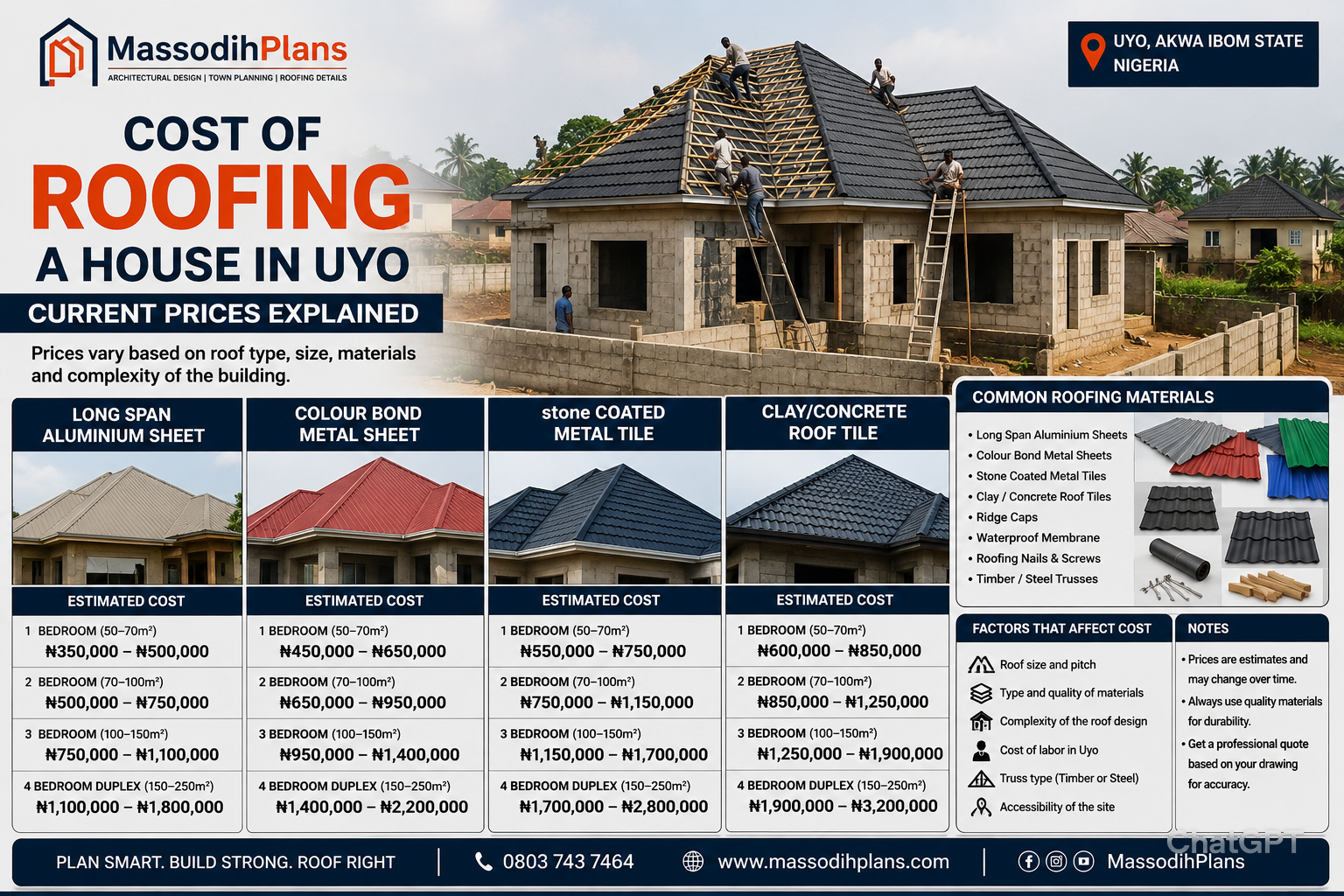
Let me break it down practically. Every roof in Uyo has three main cost areas: the roofing sheet itself, the timber or steel frame underneath it, and the labour to put it all together. Let us go one by one.
1. Roofing Sheets
The most common roofing sheets you will find in Uyo building materials markets, especially around Itam, Eket Road, and the markets near Ring Road, are corrugated iron sheets and long span aluminium sheets.
Corrugated iron sheets (the ordinary ones most people call “ordinary zinc”) are measured by gauge. Gauge 0.55 is the minimum anyone should use for a permanent building. Anything thinner than that will rust fast in Uyo’s weather, especially if your house is in a low area or close to water. As of early to mid 2025, a bundle of gauge 0.55 corrugated iron was selling between N85,000 and N100,000 depending on the supplier and your negotiation. A bundle typically covers about 10 to 12 sheets.
Long span aluminium is the better option if your budget allows. It does not rust the way iron does, the colour options are wider, and it lasts longer in our climate. In Uyo markets, long span aluminium in 0.55mm thickness was ranging between N1,800 and N2,400 per metre run as of mid 2025, depending on colour and the brand. For a standard 3-bedroom bungalow roof, you could be looking at 250 to 350 metres of long span, so do the maths from there.
I have written in much more detail about how to choose the right material for our tropical conditions in the guide to the best roofing sheets for Nigerian weather. If you are about to spend money on sheets, please read that too before you go to the market.
Metcoppo tiles and Marseille step tiles are more expensive and honestly not very common on ordinary residential buildings in Uyo. I will not go deep on those here because if you are using them, your architect or project manager should be handling the pricing for you.
2. Roof Frame (Timber or Steel)
This is the part most people underbudget for, and it is where I have seen projects stall.
In Uyo, most roofs are still framed with tropical hardwood timber, which we call iroko or mixed hardwood locally. For a 3-bedroom bungalow, the timber frame alone, including the ridge board, rafters, purlins, and wall plate, will cost you between N400,000 and N700,000 depending on the roof design and current timber prices. Hip roofs cost more timber than gable roofs, simply because hip roofs have more angles and cuts.
Steel frame (using angle iron or C-purlin) is becoming more common now, especially for larger buildings. Steel does not rot, does not get eaten by termites, and handles the weight of the roof better. But steel roofing frame in Uyo will cost you more upfront than timber. A steel frame for a 3-bedroom bungalow could run from N600,000 to well above N1 million depending on the structural engineer’s design. However, it saves you from the headache of termite treatment and rot in the long run.
For anyone planning a duplex, the roofing frame cost is significantly higher because you are working at a greater height and spanning a larger footprint. Our detailed breakdown on building a 4-bedroom duplex in Lagos shows how the cost of framing increases as building height goes up, even though the Lagos context is different from Uyo.
3. Labour
This is where things get personal and local.
A good carpenter in Uyo who knows how to frame and fix a roof properly will typically charge between N150,000 and N350,000 for a standard 3-bedroom bungalow, but this varies widely. I have seen carpenters charge more for complex designs, and I have seen some charge less only to disappear halfway through or deliver poor work that had to be redone.
My honest advice: do not let price be your only reason for choosing a roofer. Ask to see a previous job they have done. Call the person they built for. A roof that is poorly fixed in Uyo will leak at the first serious rainfall, and repairing a leaking roof is always more expensive than doing it right the first time.
Putting It All Together: What Roofing a Full House in Uyo Costs
Let me give you real ranges for complete roofing, not just material costs.
| Building Type | Roofing Sheet Type | Estimated Total Cost (Materials + Labour) |
|---|---|---|
| 3-bedroom bungalow | Gauge 0.55 corrugated iron | N900,000 to N1,400,000 |
| 3-bedroom bungalow | Long span aluminium 0.55mm | N1,200,000 to N2,000,000 |
| 3-bedroom bungalow | Long span aluminium 0.7mm | N1,500,000 to N2,500,000 |
| 4-bedroom duplex | Long span aluminium 0.55mm | N2,000,000 to N3,500,000 |
| 4-bedroom duplex | Long span aluminium 0.7mm | N2,500,000 to N4,500,000 |
These are real ranges from real projects in Uyo, not numbers copied from Lagos or Abuja. Your actual cost will land within these ranges depending on the complexity of your roof design, the carpenter you hire, and what timber or steel prices are doing at the time you buy.
If you want to see how these numbers connect to the full cost of building a house from foundation to finishing in Uyo and other Nigerian cities, the building materials price guide for Nigeria breaks down what each stage costs so you can plan your entire budget, not just the roof.
Things That Will Push Your Cost Up in Uyo Specifically
There are a few local factors that I want you to watch for, because they are specific to building in Akwa Ibom.
The first is termite pressure. Uyo’s soil and climate make termite activity very high. If you are using timber frame, budget for termite treatment, both on the timber before installation and on the building perimeter after. A contractor who does not mention this is either inexperienced or cutting corners.
The second is rainfall and wind load. Uyo receives very heavy rainfall and occasional strong winds, especially from July to September. Your roof must be properly anchored. I have personally seen roofs torn off in Uyo during heavy winds because the carpenter used too few nails or the timber was undersized. The cost of fixing a windblown roof is not something you want to experience.
The third is distance from Itam market. If your building site is far from the main markets in Uyo, transport costs add up. Some building material suppliers on the outskirts charge delivery separately, and it can add N10,000 to N30,000 to your materials cost depending on how far.
The fourth is roof design complexity. A simple gable roof over a rectangular house is the cheapest roof to build. Once you start adding hips, valleys, dormers, or unusual angles, the timber or steel consumption increases and the carpenter’s labour time increases too. If you are still in the design stage, this is actually one of the easiest places to save money: choosing a simpler roof design without compromising the look of the building. If you are not yet sure what design works best for your plot, looking through examples in the Plans Library will show you what practical roof configurations look like on actual Nigerian residential buildings.
How to Avoid Being Overcharged
I want to be honest with you here. Contractors will sometimes inflate estimates for roofing because most clients do not know the details. Here is how to protect yourself.
Ask for a bill of quantities. Any serious carpenter or contractor should be able to tell you exactly how many sheets you need, how many pieces of timber, and the total running metres. If they cannot give you this breakdown, that is a warning sign.
Get at least two quotations. In Uyo, prices vary enough between suppliers and contractors that getting two or three quotes can save you N200,000 to N400,000 on a single job.
Buy your own materials if you can. Many experienced builders in Uyo prefer to buy materials themselves and pay labour separately. This way you see exactly what you bought and what is going on the roof.
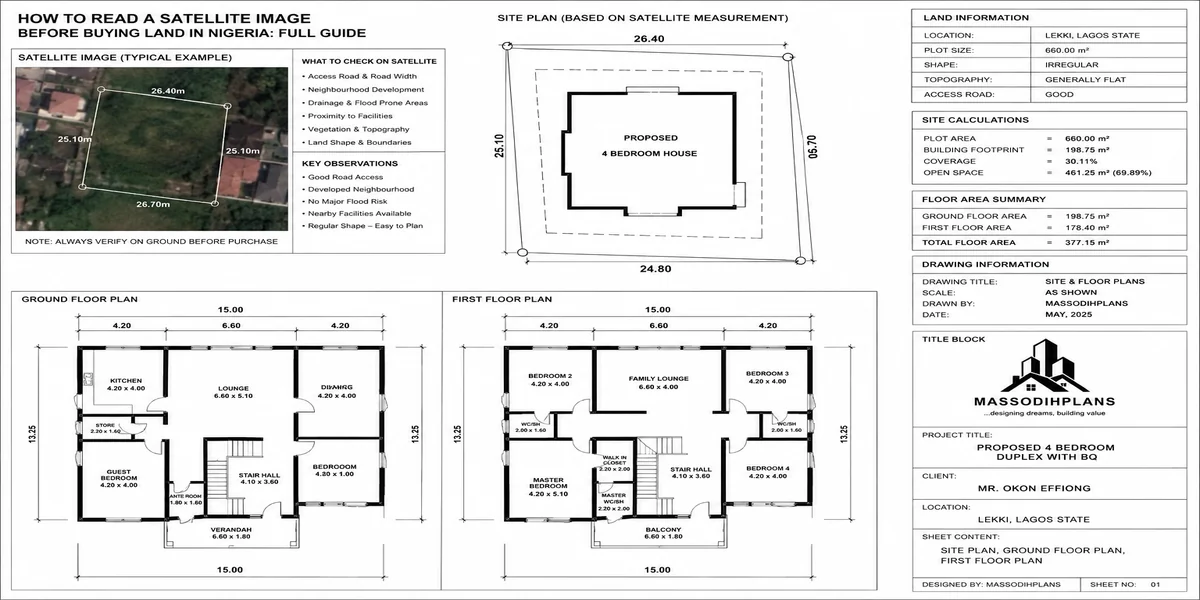
Know your roof area before you go to the market. The simplest way to estimate is to measure the length and width of your building at roof level and add your eaves overhang (usually 600mm on each side). Multiply length by width, then add 15 to 20 percent for slope and waste. If your 3-bedroom bungalow footprint is 12m by 9m and you have 0.6m overhangs on all sides, your roof rectangle is roughly 13.2m by 10.2m, which is about 135 square metres before slope correction. Ask your carpenter to verify this calculation before you buy a single sheet.
For anyone building a duplex, understanding the roof design from the start is even more important because duplex roofs sit higher and are harder to modify cheaply once the frame is up. The guide on smart duplex design for narrow plots explains how roof decisions at the design stage affect both aesthetics and cost on upper-floor buildings.
Roof Design and Your House Plan
Before finalizing your building plan, ensure the roof and floor plan are designed together. Many homeowners approve a floor plan and later leave roofing decisions entirely to a carpenter. While the roof may be structurally sound, it can clash with the design and perform poorly during heavy rainfall.
A proper roof plan is an essential part of your architectural drawings. It should clearly show ridge lines, hip lines, rafter arrangements, and eaves details. Without these specifications, the carpenter is forced to make assumptions. Roofing mistakes are often costly and difficult to correct after construction begins.
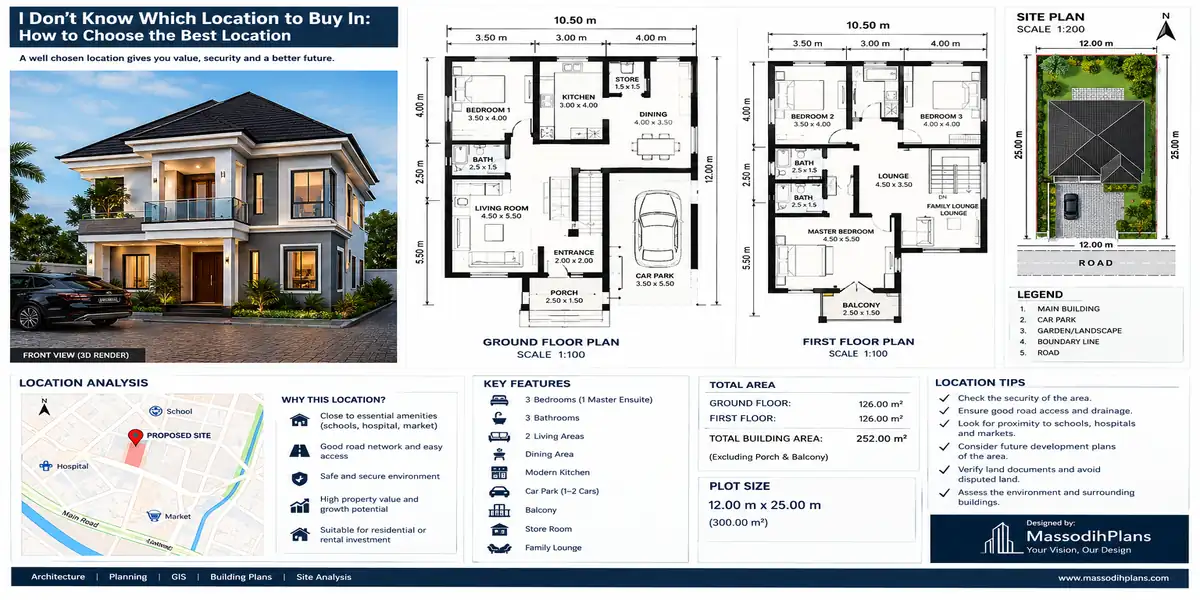
If you are in the process of deciding between a bungalow and a duplex for your plot, the article on bungalow versus duplex for Nigerian builders explains how each choice affects your roofing cost, your structural requirements, and your overall building budget. It is a decision that affects your roof more than most people realise.
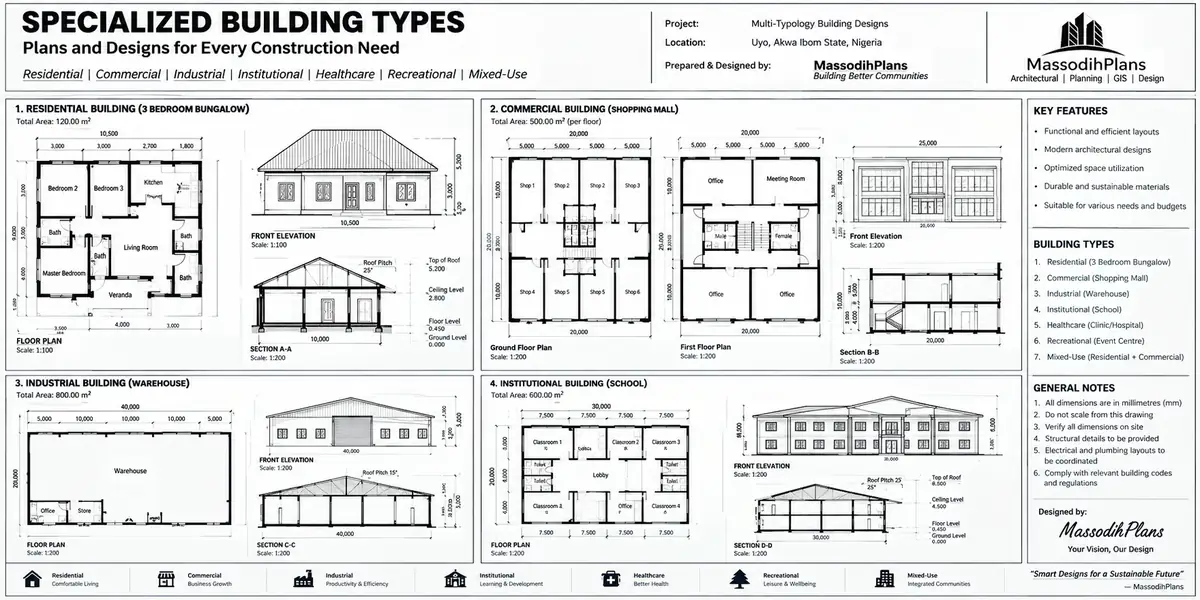
For those working with a 50 by 100 foot plot specifically, which is a very common plot size in Uyo’s newer residential layouts, the guide on smart house design for 50 by 100 plots includes practical examples of how the building footprint and roof shape interact on a standard Nigerian plot. Getting this right at the design stage saves you money at the roofing stage.
And if you are planning something larger, maybe an estate development or a compound layout with multiple structures, the decision gets more complex because each building’s roof must also work with the overall site drainage plan. The guide on small residential estate layout design in Nigeria covers how roof drainage and compound drainage connect on multi-building sites.
A Note on Roofing for Flats and Storey Buildings
If you are roofing a storey building or a flat in Uyo, the same principles apply but the logistics are harder and the cost is higher.
Working at height means your carpenter needs scaffolding or a sturdy platform. That costs extra. It also means errors are more dangerous and more expensive to fix. For a duplex or storey building, I recommend involving a structural engineer in the roof frame design, not just an architect. The engineer will specify whether timber or steel is safer at that height and will size the members correctly. This service typically costs between N30,000 and N100,000 in Uyo depending on the engineer and scope, and it is money well spent.
For anyone building a 4-bedroom house on a smaller Abuja-style compact plot and wondering how the design affects the roofing, the 4-bedroom house plan guide for small Abuja plots walks through how to get the most out of a compact footprint while keeping the roof manageable, and many of those principles apply equally to Uyo builds.
Frequently Asked Questions
How much does it cost to roof a 3-bedroom bungalow in Uyo?
For a standard 3-bedroom bungalow using long span aluminium sheets in 0.55mm thickness, expect to spend between N1.2 million and N2 million including materials and labour in 2025. Using gauge 0.55 corrugated iron brings the cost down to between N900,000 and N1.4 million. These figures include the roof frame, sheets, nails, and installation labour but not fascia board or ceiling work.
Which roofing sheet is best for Uyo’s weather?
Long span aluminium in 0.55mm minimum thickness is the recommended choice for Uyo. The city receives heavy rainfall and the humidity is consistently high. Ordinary corrugated iron will rust faster in this climate. If your budget allows, go for 0.7mm long span. It is more expensive upfront but lasts significantly longer. I explain the full comparison of roofing sheet types and what each one handles in our guide on the best roofing sheets for Nigerian weather.
Can I use timber frame for roofing in Uyo or should I use steel?
You can use timber, but you must treat it against termites before installation. Uyo’s soil has a high termite population and untreated timber in a roof frame will typically show visible damage within three to five years. Steel frame is more expensive upfront but requires no termite treatment and does not rot. For a permanent family home, I prefer steel especially if the roof has a complex design with many joints and connections.
How long does roofing a bungalow take in Uyo?
A standard 3-bedroom bungalow roof can be framed and sheeted in five to ten working days by an experienced carpenter with two to three labourers. Complex hip roofs or designs with multiple ridges take longer. If your carpenter is telling you it will take three weeks for a simple bungalow, either the design is genuinely complex or the crew is undersized.
Do I need a structural engineer for my roof?
For a single-storey bungalow with a simple design, an experienced architect or draughtsman can handle the roof specification. For a duplex, storey building, or any roof with a span greater than 6 metres, I strongly recommend involving a structural engineer. The engineer will size your rafters, purlins, and fixings correctly so your roof can handle Uyo’s wind loads. This is not an optional expense on a storey building.
What is the difference between a hip roof and a gable roof in terms of cost?
A gable roof is the simpler triangular shape you see on most churches and small bungalows. A hip roof slopes on all four sides. Hip roofs are more expensive because they use more timber, have more complex cuts, and take longer to frame. In Uyo, a hip roof on a 3-bedroom bungalow will typically cost 15 to 25 percent more in materials and labour compared to a gable roof on the same building. However, hip roofs perform better in high-wind areas because there is no exposed gable end for wind to push against.
Why do roofing prices in Uyo keep changing?
The main reason is that roofing sheets, especially long span aluminium, are manufactured from imported aluminium coil. When the naira weakens against the dollar, the cost of manufacturing rises and dealers adjust their prices within weeks. Timber prices also move with fuel costs because timber is transported from Calabar, Cross River State, and other sources. This is why I always recommend getting fresh market quotes before budgeting rather than relying on prices from six months ago.
Can I roof my house in phases?
Technically yes, but I do not recommend it for the main roof. A building with an incomplete roof is exposed to rain, and in Uyo the rains are not gentle. Once you start roofing, you should complete it as quickly as possible. Where phasing makes more sense is in other parts of the building, such as starting with a smaller footprint and planning an extension later. If you are thinking along those lines, the Plan School category has practical guidance on designing buildings that can expand without structural problems.
One Last Thing
Roofing is not where you save money by using the cheapest option. Everything else in your house is protected by that roof. Your walls, your floors, your ceiling, your electrical work, your family. A roof that fails costs you everything inside the house plus the cost of repairing the roof itself.
I would rather you take longer to save up and do the roof properly than rush it and spend the next five years patching leaks and replacing rotting timber.
According to the Nigerian Institute of Building’s guidance on residential construction standards, a properly designed and installed roof on a Nigerian residential building can last at least 25 to 30 years before requiring major maintenance. You can achieve this lifespan only when builders use the right materials, size the frame correctly, and install the roof with the necessary skill and expertise.
If you have a specific roofing question about your own building project in Uyo or anywhere in Akwa Ibom, drop it in the comments and I will do my best to help. That is exactly what this page is here for.
Massodih Okon is a built environment professional based in Uyo, Akwa Ibom, with training in Urban and Regional Planning from the University of Uyo and published research in the Journal of Environmental Design.