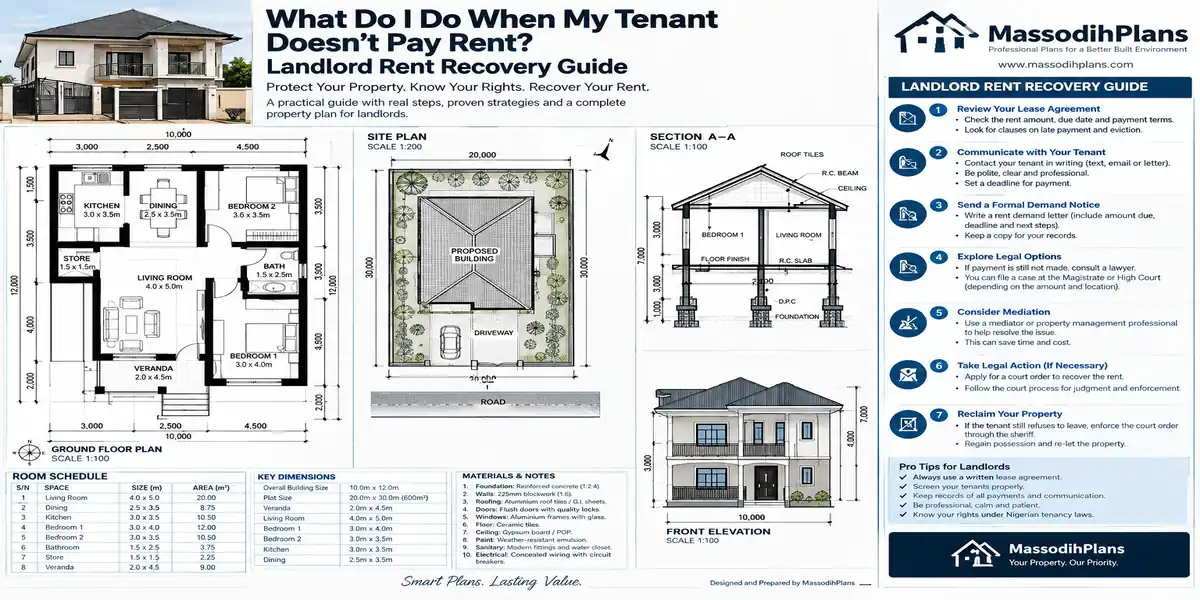
What Do I Do When My Tenant Doesn’t Pay Rent?
Let me tell you about a call I got from a client a few months back. Rent was three weeks late. No message, no apology, nothing. He was already talking about changing the locks that weekend “to teach the man a lesson.” I had to stop him mid-sentence and say please don’t. Not because the tenant deserved protection, but because what he was about to do would have turned him from the person in the right into the person in trouble, legally and financially, in one afternoon.
That’s really the heart of this whole topic. Most landlords lose more from how they react to unpaid rent than from the unpaid rent itself. This isn’t going to be a generic “serve a quit notice” post. I want to walk you through this the way I’d talk you through it if you called me what’s actually happening when a tenant stops paying, how to tell the difference between someone struggling and someone playing you, what the law actually allows you to do (and the things it absolutely does not, no matter how angry you are), and how to get your money or your property back without burning a year of your life in the process.
First, Let’s Separate the Four Situations You Might Actually Be In
People search this topic with different words, but they’re rarely all describing the same problem. Getting this distinction right changes everything about how you should respond.
Your tenant stopped paying rent they were paying fine, then just… stopped. No warning, no communication. This is the most alarming version because it usually means something changed on their end that they haven’t told you about.
Your tenant is behind on rent partial payments, promises, a pattern of “next week, I promise.” This is different from a full stop, and honestly it’s the version with the most room to fix things without conflict.
Your tenant owes rent arrears have built up over weeks or months, possibly across a rent renewal date, and now there’s a specific number that needs settling, not just a going-forward payment problem.
Your tenant refuses to pay rent they’ve been asked, directly, and they’ve said no, or they’re avoiding the conversation entirely, or worse, they’re disputing that they owe anything at all. This is the version that most often ends up needing legal process.
Notice something: three of these four are still recoverable through conversation and firm process. Only the last one is a genuine standoff. Most landlords treat every late payment like it’s already a standoff, and that’s exactly the mistake that turns a fixable situation into an expensive one.
The very first thing to figure out isn’t “how do I get my money” it’s “which of these four situations am I actually in.” Your entire strategy should change based on the answer, and rushing straight to threats before you know skips the step that usually solves the problem fastest.
Why Tenants Actually Stop Paying (It’s Rarely What You Assume)
I’ve sat across the table from a lot of landlords and, separately, a lot of tenants over 15 years, and the honest pattern is this: genuine “I just don’t want to pay” tenants exist, but they’re a smaller share than most landlords assume in the heat of the moment. Here’s what’s usually actually going on:
A genuine income shock job loss, a business setback, an unexpected medical cost that ate the rent money. This tenant usually still communicates, even if late and embarrassed.
A dispute they haven’t told you about a maintenance issue they feel you’ve ignored, and they’re withholding rent as leverage instead of raising it properly. This is a communication failure on both sides, not pure dishonesty.
A cash flow timing mismatch genuinely has the money, but it’s tied up (business receivables, a delayed salary), and rent slips a week or two as a result. Usually resolves itself with a short, honest conversation.
Deliberate non-payment the tenant has decided, for whatever reason, not to pay and is running out the clock, betting that eviction is slow and expensive enough that you’ll eventually give up or accept a discount. This is the smallest group, but it’s the one that actually needs the legal process described later in this guide.
Why does this matter? Because your opening move should match the actual cause, not your worst assumption. A tenant who’s had a genuine shock responds to a firm-but-human conversation. A tenant who’s deliberately stalling responds to nothing except a properly documented, legally correct process. Treating the first type like the second poisons a relationship you might otherwise have salvaged. Treating the second type like the first just buys them more free time.
Late Rent vs. Rent Arrears: Why the Words You Use Matter
And “Late rent” and “rent arrears” get used interchangeably, but they’re not the same stage, and your response shouldn’t be either.
Late rent is a payment that’s overdue but recent days, maybe a week or two past the due date, usually a single payment cycle. At this stage, a phone call, not a letter, is almost always the right first move. Something as simple as “hey, I noticed rent didn’t come in on the 5th like usual everything okay?” does more work than any formal notice could at this point, because it signals you’re paying attention without escalating.
Rent arrears is what late rent becomes when it accumulates multiple missed cycles, a specific outstanding balance, sometimes stretching across a rent renewal date so the tenant now owes for a period they’ve technically overstayed. This is where documentation starts to matter in a legal sense, not just a bookkeeping sense, because arrears are what a court will eventually look at if this goes that far.
The mistake I see constantly: landlords let a late payment slide into arrears without ever formally acknowledging the shift no written reminder, no updated ledger, nothing beyond verbal complaints. Then, three months later, they want to take legal action and have no clean paper trail showing exactly when the pattern started, how much is owed, and what was communicated along the way. Courts and mediators care about paper trails far more than they care about how frustrated you are.
Keep a Rent Ledger Seriously, This Is the Layer Almost Nobody Tells You About
I want to spend real time on this because it’s the single most underrated tool in this entire situation, and it costs nothing.
From the day a tenant moves in, keep a simple running record: due date, amount due, amount paid, date paid, and running balance. Not a mental note. Not “I remember he paid something in March.” An actual written or spreadsheet record, updated every single month, whether rent came in on time or not.
Here’s why this matters more than people think:
If the situation ever reaches mediation or court, this ledger is your evidence. A tenant’s claim of “I paid, he’s lying” collapses fast against a dated, consistent record and conversely, if you’ve been sloppy with your own records, your claim of non-payment is weaker than it should be.
It catches the pattern early. A ledger shows you a tenant sliding from “always pays by the 5th” to “now pays by the 10th” to “now pays by the 20th” months before you’d otherwise notice consciously.
It removes emotion from the conversation. Instead of “you never pay on time,” you can say “you’ve paid an average of 12 days late for the last four months I need us to fix that.” One is an accusation. The other is a fact you’re both looking at.
Start a rent ledger today, even if you’ve never kept one and even if your current tenant has been perfect for three years. The habit costs five minutes a month. The absence of it costs you credibility the one time you actually need it.
What To Do the Moment You Notice a Problem — In Order
Step 1: Reach Out Personally, Before Anything Formal
A short, direct, non-accusatory message or call. Not a warning. Not a threat. A check-in. “Rent for this month hasn’t come through wanted to check if everything’s okay and when I should expect it.” This single step resolves a huge share of late-payment situations without any further steps being necessary, because it gives a tenant who’s struggling an easy, low-shame way to communicate what’s going on.
Step 2: Get a Real Commitment, Not a Vague One
“I’ll pay soon” is not a commitment it’s a delay tactic, even from an honest tenant who genuinely means it. Push, kindly but firmly, for a specific date and a specific amount. “Okay, so you’re saying the 15th, for the full amount?” Write that answer down in your ledger with the date you were told it.
Step 3: If the Commitment Is Missed, Put It in Writing
This is the point where a verbal conversation becomes a written one not a legal notice yet, just a clear, dated message stating the outstanding amount, the missed commitment, and a new deadline. This written record is what starts building your paper trail if things escalate further, and it also often jolts a tenant who’s been avoiding the issue into taking it seriously.
Step 4: If There’s Still No Payment or Response, Move to a Formal Demand
A formal written demand for the outstanding rent, clearly stating the amount owed, the period it covers, and a firm deadline to settle. This is a different document from an eviction notice, and it’s worth sending it before jumping straight to threatening the tenancy, because it gives a genuinely struggling tenant one more clear, serious chance to resolve things without you having to start a formal recovery process.
Step 5: If That Deadline Passes Too, You’re Now in Legal Recovery Territory
This is where notice-to-quit and recovery-of-premises procedures come in, covered in detail below and it’s also the point where I’d genuinely tell you to loop in a lawyer, not just follow a blog post.
Every one of these steps should be dated and, where possible, in writing (text, email, or a signed note) even the “friendly check-in” call should be followed by a one-line message summarizing what was said. This isn’t paranoia. It’s the exact record that protects you if this situation ever needs to go before a mediator or a court.
How to Recover Unpaid Rent the Legal Way (What the Law Actually Allows)
This is the part where I have to be very direct with you: I am not a lawyer, and Nigerian tenancy law varies by state, so nothing here replaces getting proper legal advice for your specific situation, especially once real money or a contested eviction is on the table. But understanding the general shape of the process instead of relying on WhatsApp-forwarded “law” will save you from the single most common and costly landlord mistake.
The Process Generally Follows This Shape (Confirm Specifics for Your State)
Notice to quit a formal written notice giving the tenant a specific date to vacate, with the required notice length depending on how rent is paid (weekly, monthly, yearly) and your state’s specific tenancy law. This is not the same as a rent demand it’s a notice that the tenancy itself is being brought to an end.
A second statutory notice, where required in states like Lagos, after the quit notice period expires and the tenant hasn’t left, landlords typically need to serve a further notice of intention to apply to court to recover possession, giving a short additional window (commonly seven days) before court action actually begins.
Court action only a court can actually order a tenant out. There is no legally valid shortcut around this step, no matter how clearly the tenant is in the wrong.
Enforcement by a court officer even after judgment, only an authorized court officer can physically enforce the eviction. A landlord doing this personally, even with a court judgment in hand, can still find themselves on the wrong side of the process if it’s not done through the proper officer.
Under Lagos State’s tenancy law specifically, one legally recognized remedy for unpaid rent is distress for rent seizing and selling a tenant’s movable property to recover the arrears but this can only be carried out under a court order, executed by licensed bailiffs, and a landlord cannot do this independently, however deep the arrears are.
The Mistakes That Destroy a Landlord’s Legal Position
Changing the locks or cutting power/water to force a tenant out. This is self-help eviction, and it’s illegal in Nigeria regardless of how much rent is owed. It can flip you from claimant to defendant in a heartbeat, and it’s one of the fastest ways to lose a case you’d otherwise have won cleanly.
Removing the tenant’s belongings without a court order. Same problem even with clear arrears, this step requires judicial authorization.
Serving a notice with the wrong length or wrong wording for your tenancy type. A defective notice can get an entire case thrown out, forcing you to restart the whole timeline from zero. This is far more common than landlords expect, and it’s exactly why getting the notice reviewed before serving it is worth the small cost.
Continuing to demand or accept rent after serving a notice to quit. In many cases, accepting rent after a quit notice has been served can be treated as renewing the tenancy and invalidating the notice you just spent time and money serving.
Notice periods and procedures genuinely differ by state and by tenancy type in Nigeria, and they change over time as tenancy laws are updated. Always confirm the current specific requirement for your state and situation with a qualified lawyer before serving any formal notice a notice that’s technically wrong can cost you months, not save them.
Mediation: The Layer Most Landlord Guides Skip Entirely
Court is slow, and slow costs you rent-free months even when you eventually win. This is why mediation deserves far more attention than it usually gets in this conversation.
In Lagos specifically, the Lagos Multi-Door Courthouse actively promotes amicable resolution of landlord-tenant disputes through mediation, and settlement agreements reached this way are legally binding and enforceable in court under current legislation meaning mediation isn’t a soft, unenforceable alternative to “real” legal action, it’s a genuinely enforceable route that’s usually faster and cheaper than full litigation.
Beyond formal mediation bodies, don’t underestimate the traditional Nigerian route either a respected family member, a community or religious leader both parties trust, or even a property agent both sides have dealt with fairly can often broker a repayment plan or exit agreement faster than any formal process, especially where the relationship isn’t fully broken and the tenant genuinely wants to resolve things rather than dodge them.
Negotiating a Repayment Plan (When It Actually Makes Sense)
Not every arrears situation should end in eviction, and honestly, eviction should usually be your last resort, not your first instinct, because a vacant unit while you find a new tenant often costs you more in lost rent than a structured repayment plan would.
A workable repayment approach usually includes:
A written agreement even a simple one-page document both parties sign stating the exact arrears amount, a payment schedule to clear it, and what happens if a scheduled payment is missed again
Going-forward rent kept completely separate from the arrears repayment, so the tenant isn’t tempted to let current rent slip while “catching up” on the old balance
A firm, stated consequence for a second missed commitment typically that the notice-to-quit process begins immediately without further warning
This only works, of course, with a tenant who’s communicating and clearly trying, not one who’s avoiding you or disputing the debt outright. Don’t offer a repayment plan to someone who’s actively refusing to engage save it for the tenants in genuine, honest difficulty.
When a Tenant Flat-Out Refuses to Pay or Disputes the Debt
This is the version that needs the least patience and the most documentation. If a tenant has been directly asked, has acknowledged the request, and has still refused or worse, is disputing that they owe anything despite your ledger clearly showing otherwise stop negotiating and start the formal process.
At this point:
- Stop informal reminders. You’ve already given the informal route a fair chance.
- Get your ledger, written communications, and tenancy agreement organized and dated, ready to hand to a lawyer.
- Have a lawyer review your specific tenancy agreement and state’s requirements before serving any formal notice this is not the moment to guess based on something you read online, including this article.
- Keep every future interaction in writing from this point forward. Verbal conversations stop being useful evidence the moment a tenant is disputing facts.
Preventing This Before It Ever Starts
The best rent recovery strategy is the one that means you never need this article again for the next tenant.
Screen properly verify employment or income source, speak to a previous landlord if at all possible, and don’t skip this step just because a prospective tenant seems pleasant or comes with a referral you trust blindly.
Use a guarantor with real, verifiable means not just a name on a form, but someone whose ability to actually cover a shortfall you’ve genuinely confirmed.
Put late-payment consequences in the tenancy agreement itself, in plain language, so there’s no ambiguity later about what happens if rent is late, and so you’re not introducing a new rule mid-tenancy that feels arbitrary to the tenant.
Start the rent ledger from day one, as covered above, for every tenant, every time not just the ones who seem risky.
Do a light check-in around the third and sixth month of any new tenancy, even when payments are perfect, just to keep the relationship warm and communicative tenants who feel comfortable talking to their landlord are far more likely to raise a problem early instead of disappearing when one arises.
Frequently Asked Questions
My tenant hasn’t paid in two months and won’t respond to calls or messages what’s my first real step?
Send a formal written demand for the outstanding rent by a method you can prove was delivered (a dated letter with acknowledgement, or a process server), stating the exact amount and a firm deadline. If that’s ignored too, this is the point to bring in a lawyer for the notice-to-quit process rather than continuing to wait.
Can I lock a tenant out or remove their belongings if they owe me rent?
No. This is self-help eviction and it’s illegal regardless of how much is owed. It can seriously damage your legal position even in a case where you were otherwise clearly in the right, and it can expose you to a claim from the tenant.
How long does it actually take to legally recover a property from a non-paying tenant in Nigeria?
It varies significantly by state, notice type required, and whether the tenant contests the process, but it is rarely fast often several months from the first formal notice to actual enforcement, which is exactly why early, well-documented communication and, where appropriate, mediation are worth pursuing before defaulting to full legal action.
Should I accept a partial payment from a tenant who’s behind on rent?
Generally yes, if it comes with a clear written commitment for the remaining balance but be cautious about accepting any rent after you’ve formally served a notice to quit, since in many cases this can be treated as renewing the tenancy and undoing the notice you served.
Is mediation actually worth it, or should I just go straight to court?
For most situations short of a tenant flatly refusing to engage at all, mediation is worth trying first in Lagos specifically, agreements reached through the Multi-Door Courthouse are legally enforceable, and it’s typically faster and cheaper than full litigation, while still giving you a real, binding outcome if the tenant cooperates.
Finally
Almost every landlord I’ve talked to through this exact situation has, at some low point, wanted to just handle it themselves change the locks, throw out the belongings, make it their problem to figure out where to sleep tonight. I understand the anger completely. But the tenants who deliberately don’t pay are counting on exactly that reaction, because it’s the one move that turns your airtight case into a legal headache. Keep your ledger, communicate early and in writing, know which of the four situations you’re actually dealing with, and treat the legal process as a real process with real steps not a formality to skip past when you’re frustrated. That discipline is what actually gets your money, or your property, back.
If you’re building or managing rental property and want it structured in a way that protects you from these situations from day one proper documentation habits, tenancy terms, and layout decisions that support easier management our Services page covers how we support landlords through this. Browse our Plans Library if you’re planning a rental property build from scratch, or visit Plan School to understand the planning side of getting a rental property right before tenants ever move in. You can also explore more property and landlord guides on our Homepage. Also the read the following guides:
- How Do I Collect Rent From Tenants? Complete Guide for Property Owners
- How Much Does a Property Manager Charge? Property Management Fees Explained
- How Do I Find a Good Property Manager? Guide for Rental Properties
- How Do I Manage My Property? Complete Property Management Guide for Owners
- House and Home: Types of Houses, Homes, House Styles, Home Designs, and Modern House Designs
Author
Massodih Okon is a Nigerian built-environment professional with academic and professional experience in urban and regional planning, geography, architectural design, Landscape Design, GIS and land development.
He holds a Master’s degree in Urban and Regional Planning from the University of Uyo and a first degree in Geography and Regional Planning.
Through MassodihPlans, he publishes practical guides on Nigerian house plans, building design, physical planning, site planning, development approval and residential construction. Read the full author profile →