Modern Small Plot, Big Comfort: House Plans for Small Plots in Yola (Modern Nigerian Designs)
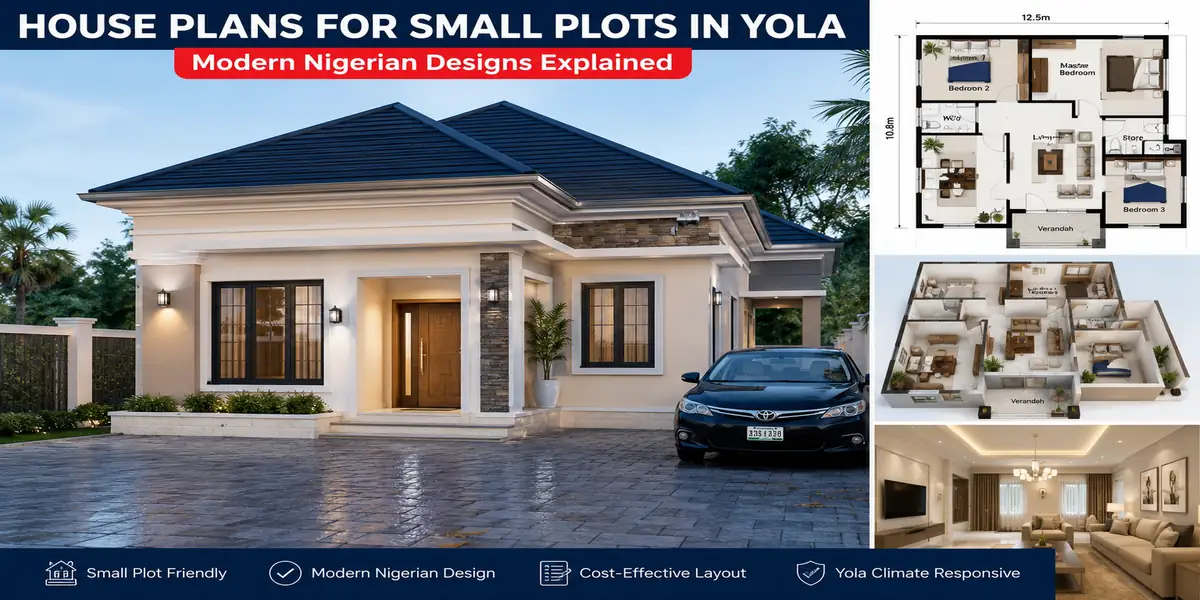
House Plans for Small Plots in Yola: Modern Nigerian Designs Explained
A modern small-plot bungalow design suited to Yola’s hot, dry climate and compact urban plots.
If you’re asking “what house plan works best for a small plot in Yola,” here’s the direct answer: for Yola’s typical 300 to 500 square metre plots, a well-oriented single-storey bungalow with 2 to 3 bedrooms, cross-ventilation built into the design, and a compact self-contain option for rental income, gives you the most livable, heat-manageable, and financially sensible outcome. Trying to force a large duplex design onto a small Yola plot almost always backfires either on comfort, on budget, or on both.
I have reviewed plans where clients, excited by designs they saw online for cooler, coastal cities, tried to replicate them on small plots in Yola without adjusting for the heat and dust realities here. The result is always the same: a beautiful drawing that becomes an uncomfortable, expensive-to-cool house in practice. This guide gives you real, workable small-plot designs suited specifically to Yola’s climate, land sizes, and lifestyle.
Why Small Plot Design in Yola Needs Its Own Approach
Yola sits in a hot, semi-arid climate zone with long dry seasons, intense daytime heat, dusty harmattan winds, and a shorter but sometimes heavy rainy season, particularly around low-lying areas near the Benue River. That combination changes what “good design” means here:
- Ventilation and shading matter more than in cooler, humid cities
- Roof orientation and overhangs need to actively fight heat gain
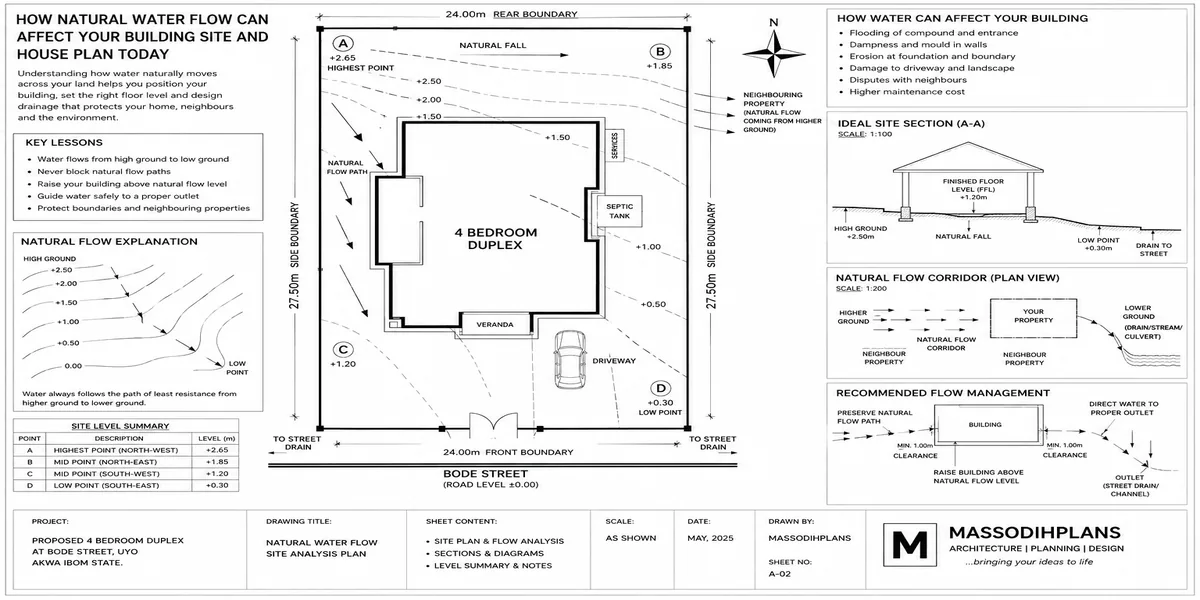
- Drainage design must account for Yola’s specific flood-prone pockets
- Compact designs need cross-ventilation built in from the start, not added later as a fix
From what I have seen in practice, a design that ignores these factors ends up needing constant generator-powered cooling, which defeats the purpose of thoughtful architecture in the first place.
Understanding Your Plot Size Before You Design
Most residential plots in Yola fall between 300 and 500 square metres, especially in the more accessible parts of the city. Before choosing a design, you need to understand your buildable footprint after setbacks.
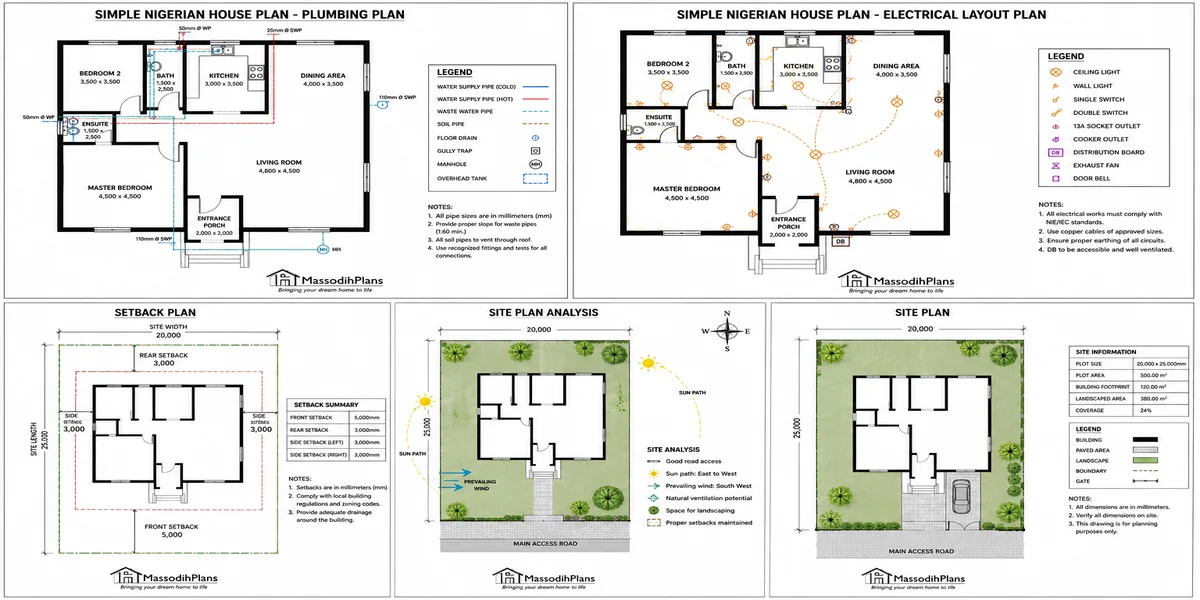
On a standard 450 square metre plot in Yola, with typical setback requirements applied (front setback around 3 metres, side setbacks around 1.5 metres, rear setback around 3 metres), you’re typically left with a buildable footprint of approximately 175 to 210 square metres.
This is enough for:
- A two to three-bedroom bungalow with a small boys’ quarter and parking space
- A compact semi-detached design with two one-bedroom units
- Four self-contained studio units in a 2-over-2 or single-row configuration
- A two-bedroom bungalow with a clearly defined provision for future expansion
Modern House Plan Options for Small Plots in Yola
Option 1: The 2-Bedroom Compact Bungalow
Suitable plot size: 300–350 sqm
Approximate building size: 70–90 sqm
Estimated construction cost: N13 million to N19 million (mid-range finish)
This design suits young families or couples starting out. Two bedrooms, a shared bathroom plus an en-suite for the master, an open-plan living and dining area, and a compact kitchen. In my experience, this layout works best in Yola when the living area is positioned to catch prevailing wind, with windows placed on opposite walls to encourage cross-ventilation rather than relying on a single window per room.
Option 2: The 3-Bedroom Family Bungalow
Suitable plot size: 400–450 sqm
Approximate building size: 100–125 sqm
Estimated construction cost: N19 million to N28 million (mid-range finish)
This is the most requested design I work on for Yola clients. Three bedrooms (one en-suite), a family bathroom, open living and dining space, a functional kitchen with good cross-ventilation, and a small covered veranda for evening relaxation once the day’s heat settles. A veranda facing away from direct afternoon sun becomes one of the most-used spaces in a Yola home.
Option 3: The 2-Bed Semi-Detached (Rental-Ready)
Suitable plot size: 400–500 sqm
Approximate building size: 130–150 sqm total (two units)
Estimated construction cost: N24 million to N34 million (mid-range finish)
For clients thinking about rental income from day one, this design splits the plot into two mirror-image, two-bedroom units, each with independent access, its own parking space, and shared perimeter security. Based on projects I have worked on, this configuration performs well in Yola’s growing rental market, particularly near commercial and institutional areas.
Option 4: Four Self-Contained Studio Units
Suitable plot size: 400–500 sqm
Approximate building size: 30 sqm per unit, 120 sqm total
Estimated construction cost: N19 million to N26 million (mid-range finish)
This design maximizes rental unit count on a small plot, arranged either in a single row or a 2-over-2 configuration. Each unit gets a bedroom, a small sitting area, kitchenette, and bathroom. In Yola’s climate, orienting the row so units don’t directly face the harshest afternoon sun makes a measurable difference in tenant comfort and long-term satisfaction.
Comparison at a Glance
| Design | Plot Size Needed | Building Size | Estimated Cost | Best For |
|---|---|---|---|---|
| 2-Bed Compact Bungalow | 300-350 sqm | 70-90 sqm | N13M – N19M | Couples, young families |
| 3-Bed Family Bungalow | 400-450 sqm | 100-125 sqm | N19M – N28M | Growing families |
| 2-Bed Semi-Detached | 400-500 sqm | 130-150 sqm | N24M – N34M | Rental income + family use |
| 4-Unit Studio Apartments | 400-500 sqm | 120 sqm total | N19M – N26M | Pure rental investment |
Room Arrangement, Ventilation, and Orientation
These three factors matter more together than any one alone.
- Room arrangement: Position bedrooms away from the harshest west-facing sun where possible; place living spaces to benefit from prevailing breeze direction
- Ventilation: Cross-ventilation, with openings on opposite or adjacent walls in each room, dramatically reduces indoor heat compared to single-window rooms
- Orientation: Orient the building’s longer facade away from direct east-west sun exposure, and use roof overhangs generously to shade walls and windows during peak afternoon heat
During studio exercises at university, we were taught that orientation decisions made at the drawing stage often matter more for comfort than any cooling system added afterward. I have seen this proven true repeatedly in hot-climate projects.
Setbacks, Drainage, and Roofing Considerations
Whatever design you choose, these three technical factors protect your investment:
Setbacks: Confirm your design fits within approved setback requirements before finalizing drawings — this is one of the most common causes of approval delays I encounter
Drainage: Yola’s rainy season, though shorter than in southern Nigeria, can bring intense downpours. Roof water must be directed into a proper drainage channel, away from the foundation
Roofing: For Yola’s heat and dust, aluminum long-span roofing with proper ceiling insulation offers the best balance of cost and heat performance for most small-plot designs; stone-coated tiles suit those wanting a premium, longer-lasting finish
Nigerian Reality Layer
From what I have seen in practice, small plot design decisions in Yola are shaped by more than the drawing board:
Unstable material prices mean your budget needs a realistic contingency, since prices can shift meaningfully between design approval and construction start
Power supply realities make generator space and, increasingly, solar panel provision, essential design considerations from day one, not afterthoughts
Heat management is arguably the single biggest comfort factor in Yola housing, more so than in cooler Nigerian cities
Flooding issues affect specific low-lying pockets near the Benue River, making site-specific drainage assessment important before finalizing any design
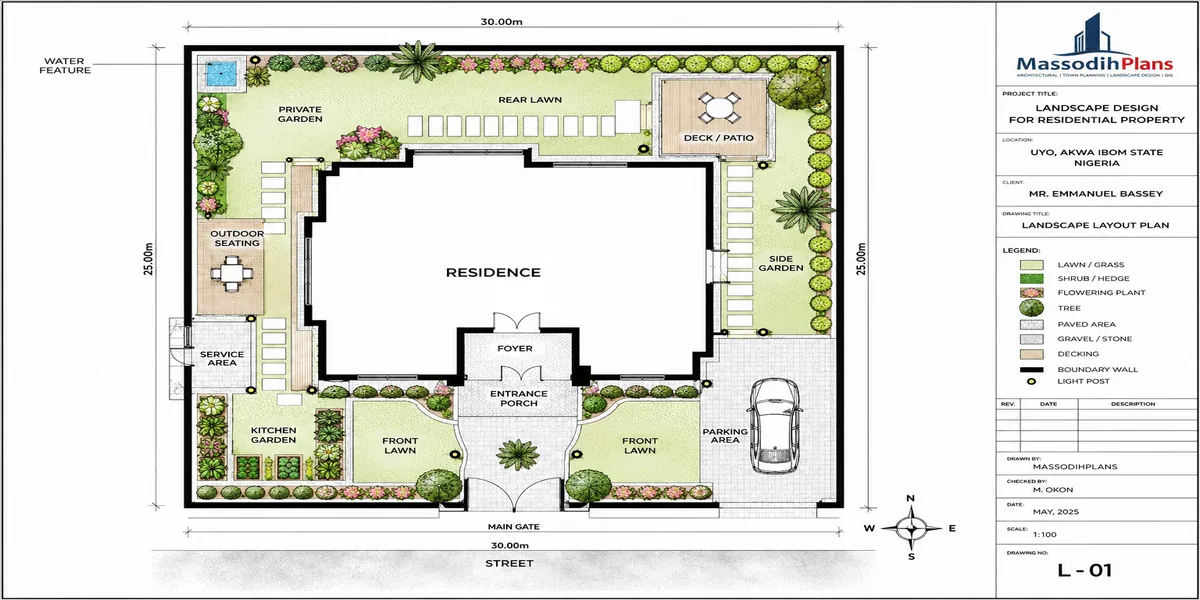
Compound security and gatehouse positioning matter even on small plots — a simple, well-placed gate structure protects the household without eating into your limited buildable area
Borehole and water storage planning should be built into the site layout from the start, since reliable piped water remains inconsistent in many parts of the city
Small Plot Optimization Layer
On a compact Yola plot, every square metre needs to earn its place:
Favor a single, simple roof plane over complex, multi-angled roof geometry it costs less and performs better against heat
Combine dining and living areas into one open-plan space rather than separating them, freeing up room for an extra bedroom or better circulation
Design multifunctional spaces a veranda that works as an outdoor sitting area in the evening and an overflow guest space during visits
Keep circulation paths (hallways) short and direct; long corridors waste buildable area without adding livable value
Human Lifestyle Layer
A house plan should fit how your family actually lives, not just how it looks on paper:
Children’s movement: Keep bedrooms grouped together with a shared, easily supervised play or living space nearby
Guest privacy: Position a guest bedroom or toilet away from the family’s private wing, especially important in a compact layout where privacy is harder to achieve
Elderly accessibility: Ground-floor-only designs (the natural choice for small-plot bungalows) already suit elderly family members well; add wider door openings and minimal level changes for extra comfort
Work-from-home considerations: A small, quiet corner separated from the main living area supports remote work without requiring a full extra room
Future family growth: Design your foundation and roof structure with a clear, planned expansion path in mind, even if you’re only building 2 bedrooms today
Construction Experience Layer
What builders usually get wrong on small-plot projects in Yola, based on projects I’ve supervised or reviewed:
- Ignoring cross-ventilation in the drawing stage, then trying to fix indoor heat with cooling appliances after construction
- Under-sizing gutters and drainage for Yola’s short but sometimes intense rain bursts
- Poor supervision allowing contractors to substitute lower-gauge roofing material than specified
- Building right up to setback lines to “maximize space,” risking demolition orders during development control inspections
A practical lesson from my internship was learning to physically verify room dimensions on-site against the approved drawing before block work proceeds past lintel level small discrepancies are far cheaper to correct early than after walls are up.
Investment Layer
For anyone considering resale or rental value in Yola:
- Semi-detached and self-contain designs offer the strongest rental income potential on small plots
- A well-ventilated, properly oriented bungalow holds resale value better than a poorly cooled design, since comfort is increasingly a buyer consideration
- Avoid cutting corners on roofing and ventilation for any property you intend to rent out tenant complaints about heat are one of the most common causes of vacancy in hot-climate cities
The Cost of Owning Your House After Construction Ends
Most house plan guides stop at construction. In my experience, that’s exactly where a second, quieter phase of spending begins.
Annual repainting: Yola’s dust and heat mean exterior paint typically needs attention every 2 to 3 years, costing N140,000 to N380,000 depending on house size
Generator servicing and fuel: A recurring cost given the realities of grid power in the region, with servicing at N15,000 to N30,000 every few months
Borehole pump maintenance: Every 3 to 5 years, costing N75,000 to N240,000 depending on capacity
Gutter clearing before rainy season: A small but essential cost that prevents roof leaks and foundation dampness
Continued security arrangements: Most families retain a nightwatchman or security arrangement well beyond construction completion
Families who budget for these from year one keep their small-plot homes looking sharp for decades. Those who don’t often find their beautiful new build looking tired within five years.
Warning Signs: How to Avoid Land and Design Mistakes in Yola
Read this section slowly before committing money to any plot or design.
Watch for these red flags when buying a small plot:
- No original survey plan, only a photocopy or a promise of one “later”
- On family land, inability to produce written consent from all co-owners
- A price noticeably below the going rate with no clear explanation
- Pressure to pay quickly before verifying title
Watch for these red flags when commissioning a design or contractor:
- A designer who copies a plan from another climate zone without adjusting for Yola’s heat and drainage needs
- Refusal to provide a written contract with a detailed bill of quantities
- Mobilisation demands above 30 percent of the total contract sum
- Inability to show two completed local projects
I have seen this issue firsthand more than once: excitement about a beautiful plan, followed by a slow realization that it was never designed for Yola’s conditions in the first place. Slow down, verify, and insist on climate-appropriate design from the start.
Building From Abroad: What Diaspora Clients Must Get Right
For clients managing a small-plot build in Yola from abroad, distance is manageable with the right structure:
- Formalise a Power of Attorney for any transactions you cannot handle in person
- Set up regular remote site monitoring weekly video walkthroughs and timestamped photos
- Never wire the full contract sum upfront; pay strictly against verified milestones
- Appoint an independent supervisor separate from your contractor, even one visiting just twice a week
- Watch for unexplained gaps in updates or requests for advance payment before prior work is verified
I have encountered this situation multiple times a diaspora client who trusted informal family oversight, only to discover months later that construction had quietly stalled. A little structure at the start prevents a lot of heartbreak later.
Why You’re Really Building This House
Before the technical details, it’s worth pausing on something more important.
Nobody builds a house on a small plot purely for the square metres. In my years of practice, clients are really talking about something deeper an end to renting, a home to hand down to their children, a marker of everything they’ve worked for. A small plot doesn’t mean a smaller version of that dream. It means designing more intelligently to achieve the same feeling of home, comfort, and pride.
A Real Yola Build, Start to Finish
Let me walk you through one project, names withheld, because it captures much of what this guide has tried to teach you.
A client came to us wanting a three-bedroom bungalow on a 400 square metre plot. Budgeted at N21 million, mid-range finish, six-month timeline. Land was already owned, title clean.
Foundation and block work proceeded smoothly for the first two months. Then a regional spike in cement and roofing prices added nearly 15 percent to the remaining budget. Rather than abandon the project, we applied the Phase 1 strategy completing the roof, plastering, and two of the three bedrooms fully, leaving the third bedroom and external finishing for a second phase.
Final outcome: total cost came in at N24.8 million against the original N21 million estimate, about 18 percent over. Timeline stretched to nine months instead of six. But the client moved into a fully liveable, well-ventilated two-bedroom home with a clear budget already set for completing the third bedroom.
The lesson: a realistic contingency and willingness to phase construction, rather than abandon it, is what separates a stalled shell from a family actually living comfortably in their home.
What Else You’re Really Buying: Amenities by Area
Beyond plot price and soil conditions, consider what surrounds your plot daily:
Areas near the commercial center and Jimeta: Strong access to markets, banks, and commercial conveniences, supporting slightly higher land costs
Residential areas further from the center: More affordable land, but confirm specific distance to a functioning school and reliable clinic before committing
Areas near the Benue River low-lying zones: Scenic appeal, but require careful drainage assessment before any design commitment
Don’t just ask what the land costs ask what your daily life will actually look like living there.
Mistakes to Avoid
- Copying a house plan designed for a cooler, humid city without adjusting for Yola’s heat and dust
- Skipping cross-ventilation in the design stage, then trying to fix indoor heat afterward
- Ignoring setbacks to squeeze in extra room, risking demolition orders
- Underbudgeting for roofing and drainage on a small plot where every cost matters more proportionally
- Choosing a design purely on appearance without checking suitability for your specific plot orientation
Quick Summary
Small plots in Yola, typically 300 to 500 square metres, comfortably support well-designed 2 to 3-bedroom bungalows, semi-detached units, or self-contain apartments provided the design prioritizes cross-ventilation, heat-conscious orientation, and proper drainage from the start. A smaller plot doesn’t mean compromising comfort; it means designing with more discipline.
Frequently Asked Questions
What size plot do I need for a 3-bedroom bungalow in Yola?
A plot of 400 to 450 square metres comfortably accommodates a 3-bedroom bungalow with parking and a small boys’ quarter, after standard setbacks are applied.
Is a duplex a good idea for a small plot in Yola?
Generally, no. A single-storey design suits small plots better in Yola’s climate and keeps construction and cooling costs more manageable; a duplex is usually better reserved for larger plots.
How much does a small-plot house plan cost to build in Yola?
Depending on design and finish level, expect N13 million to N34 million for the house plan options covered in this guide, excluding land and professional fees.
Can I get good rental income from a small plot in Yola?
Yes, semi-detached and self-contain designs on small plots perform well in Yola’s rental market, particularly in areas near commercial and institutional activity.
Conclusion
A small plot in Yola is not a limitation it’s a design challenge that, handled properly, gives you a comfortable, heat-appropriate, and financially sound home. Prioritize ventilation, orientation, and drainage over simply copying a plan you saw online, and confirm your design fits your approved setbacks before construction begins.
If you’re ready to move forward, browse the MassodihPlans Plans Library for designs already suited to hot, dry climates like Yola’s, or explore MassodihPlans Services if you need a custom plan built around your specific plot. MassodihPlans Plan School has more lessons on climate-responsive design, including our guides on roofing options for hot climates, small plot optimization, and building approval processes. Visit the Homepage to see everything else MassodihPlans offers.
- Architectural Design Principles Every Architect and Homeowner Should Know
- Building Design Guide for Safety, Functional, and Cost-Effective Buildings
- House Interior Design Ideas for Every Room, Style and Budget
- Architectural Drawings Guide: Types, Symbols, Standards, Dimensions and Examples
- Building Drawings Explained: Types, Symbols and Real Construction Examples
- Cost of Building a Modern Bungalow in Calabar (Updated Guide)
- House Plans for Sloping Land in Jos, Plateau State, Nigeria: Smart Nigerian Designs
- Best Roofing Options for Houses in Gusau city of Zamfara State, Nigeria: Prices and Durability
- Master Plan vs Site Plan: Key Differences Every Property Owner Must Know
- AutoCAD House Plan Tutorial for Beginners: Learn to Draw Plans Step by Step
- How to Draw a Roofing Plan Step by Step (Manually and in AutoCAD): Complete Guide with Practical Examples