What Nobody Ever Sat You Down to Explain About Nigeria’s Building Code

Walking a first-time homeowner through what the Building Code means for their project
Let me settle the question first: the National Building Code of Nigeria is simply the official rulebook that tells every architect, engineer, builder, and homeowner the minimum standard a building must meet to be safe, from foundation to roof. It is not punishment paperwork. It is the document standing between your family and the kind of building collapse stories we keep hearing about on the news.
I want to talk to you about this the same way I would talk to a friend who just bought a small plot and is confused about why the Ministry keeps asking for one document or another. No big grammar. No long legal definitions copied from a government PDF. Just plain talk about what this Code actually is, why it exists, and what it means for your own building project, especially if you are working with a small plot and a tight budget.
In my experience, most Nigerians only hear about the Building Code when something has already gone wrong a stop-work order, a rejected plan, or worse, a collapsed building in the news. By the time you finish this article, you will understand the Code well enough that it stops being a mystery and starts being a tool that protects you.
What Exactly Is the National Building Code of Nigeria?
The National Building Code, often shortened to NBC, serves as Nigeria’s single reference document for minimum technical standards in building design, construction, and maintenance. The Federal Ministry of Works and Housing developed the Code in collaboration with professional bodies such as the Nigerian Institute of Architects, the Nigerian Society of Engineers, and the Council for the Regulation of Engineering in Nigeria.
Before the Code came into existence, states and local governments applied different standards. This situation created confusion for professionals who worked across multiple jurisdictions and exposed homeowners to unnecessary risks because they lacked a single, reliable standard.
During my undergraduate studies in Town Planning, our lecturers repeatedly stressed the link between the lack of a unified building standard and the disorderly growth pattern visible in many Nigerian cities today. As a result, buildings with vastly different quality and safety standards often stand side by side on the same street.
Why the Code Was Created in the First Place
The Code exists mainly because of three recurring problems in Nigeria’s building history:
- Frequent building collapses caused by poor design, weak materials, or skipped structural checks.
- Disorganized town development, with no shared standard guiding how cities and plots should grow.
- A shortage of clear, written technical standards that architects, engineers, and builders could all refer to.
In short, the Code was Nigeria’s attempt to say, in one unified voice: this is the minimum a building must meet, no matter which state you are building in.
What the National Building Code Actually Covers
This is usually where people get intimidated, because the full Code is a thick technical document. But broken down simply, it covers these main areas.
1. Building Classification
The Code groups buildings into categories based on use residential, commercial, institutional, industrial, and so on. This matters because a three-bedroom family bungalow is not held to the exact same technical requirements as a busy shopping complex, even though both must still meet safety minimums.
2. Structural Design Standards
This covers foundation depth, column and beam sizing, the quality of concrete and reinforcement, and how a building is expected to carry its own weight plus the people and furniture inside it, safely, for decades.
3. Fire Safety Requirements
Things like fire exit spacing, fire-resistant materials in certain building types, and safe distances between buildings to prevent fire from spreading quickly from one structure to the next.
4. Electrical and Mechanical Systems
Standards guiding how electrical wiring, plumbing, and mechanical systems like lifts or ventilation equipment should be installed safely within a building.
5. Site Planning and Setbacks
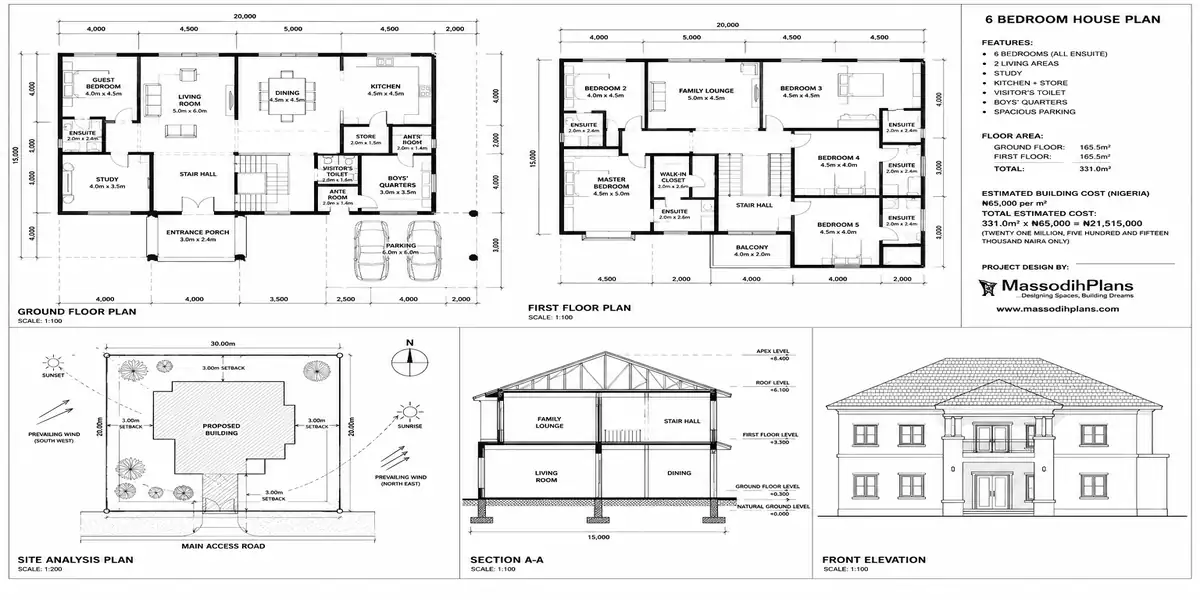
This is the part that affects small-plot owners the most directly how far a building must sit from the front, back, and side boundaries of its plot, to allow proper light, air, access, and safety margins.
6. Accessibility
Provisions for ensuring buildings, especially public ones, can be reasonably accessed by everyone, including elderly people and persons with disabilities.
7. Professional Responsibilities
My academic training exposed me to the part of the Code that many homeowners never read the section spelling out exactly which professional is responsible for which stage of a project. This is precisely why an architect, a structural engineer, and a builder each have a distinct, non-overlapping role on a serious project, and why skipping any one of them is a quiet but real risk.
Expert Note: The National Building Code was first introduced in 2006 and has gone through review processes since then as professional bodies worked to update it to current realities. If you ever need the exact technical clauses for a specific project, always confirm you are working from the current edition through your registered architect or engineer, since copies circulating online are not always the latest version.
Why This Code Should Matter to You, Not Just to Professionals
A lot of Nigerians assume the Building Code is something only architects and engineers need to worry about. From what I have seen in practice, that assumption is exactly what gets ordinary families into trouble.
- It protects your investment, a building designed and constructed against Code standards is far less likely to develop structural problems that cost you money to fix later.
- It protects your approval process, plans that ignore Code requirements are the ones that keep bouncing back from the Ministry of Physical Planning.
- It protects your family’s safety, this is the most important one, and the one people remember last, usually after something has already gone wrong.
- It protects your resale and rental value, a Code-compliant building with proper approval documents is easier to sell or rent, because serious buyers and tenants increasingly ask questions.
I have seen this issue firsthand: a family skipped professional structural input to save money on fees, only to find cracks in their walls within three years because the foundation could not support the soil conditions on their plot. The Code exists to prevent this kind of problem, but it can only do so when professionals apply its requirements from the design stage.
How the Code Affects Small Plot and Narrow Plot Building
Since so many Nigerians, especially in cities like Lagos, Port Harcourt, and Uyo, are working with small or narrow plots, this is where the Building Code becomes very practical and very personal.
Setbacks on Small Plots
The Code’s setback principles are the same whether your plot is large or small, which is exactly why small plot design takes more skill. On a small plot, you cannot simply spread the building wide, you must work within the required setback margins and still create a comfortable home.
Maximizing Space Within the Rules
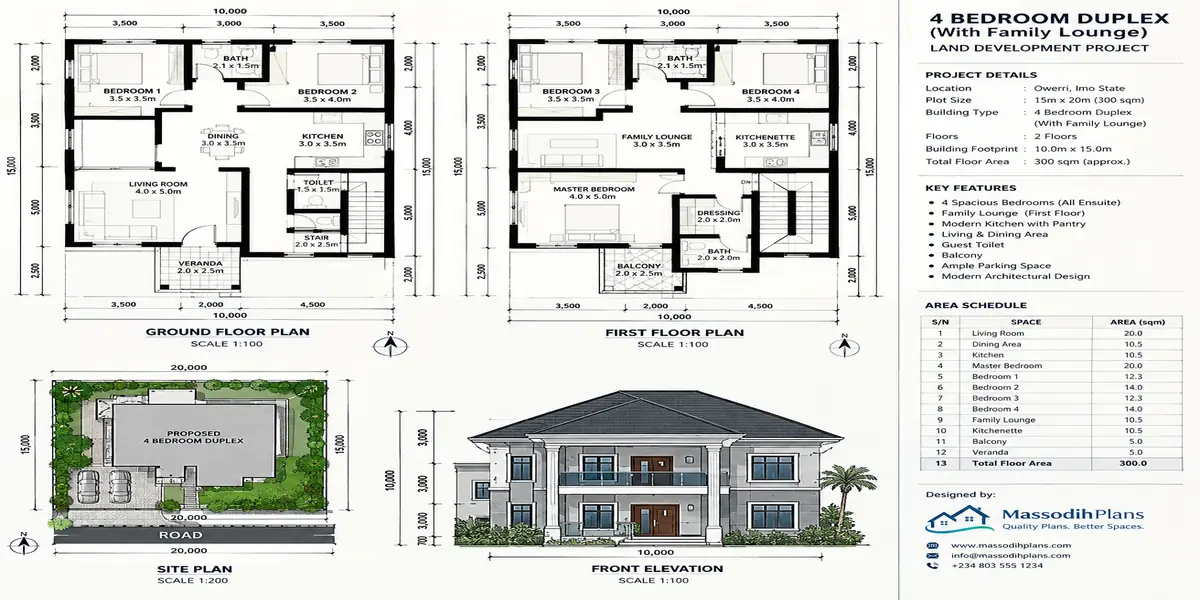
- Building upward rather than outward, using duplex or storey designs to gain space without violating setbacks.
- Open-plan interior layouts that reduce wasted corridor and partition space.
- Efficient circulation, so hallways and passages do not eat into usable room space.
- Multifunctional rooms that serve more than one purpose, common in well-designed small Nigerian homes.
During studio exercises at university, we were taught that a small plot is not actually a limitation, it is a design discipline. Some of the most efficient, comfortable home designs I have worked on came from plots that clients initially worried were too small to build anything decent on, simply because the Code’s spacing principles forced more thoughtful planning from the very first sketch.
Small Plot Optimization Layer: I once reviewed a plan where the original design ignored side setbacks completely, squeezing the building wall to wall across a narrow 50ft plot. Once we redesigned within proper Code-compliant setbacks, the home actually felt more spacious, because there was now room for natural cross-ventilation and a small side walkway for maintenance access. Following the rules did not shrink the house, it improved it.
Putting the Code Into Practice: A Realistic Small Plot Example
To make this concrete rather than theoretical, let us look at how Code principles apply to a typical 50ft by 100ft plot (about 465 square metres), common in many Nigerian cities.
| Code Principle | Practical Application on a Small Plot |
| Front setback | Minimum 4.5m clearance, kept free for access and visual openness |
| Side setbacks | Minimum 1.5m each side, allowing maintenance access and ventilation |
| Back setback | Minimum 3m, often used for service areas, drainage, or generator space |
| Room ventilation standard | Every habitable room should have window openings sized appropriately to the floor area for natural air movement |
| Staircase design (duplex) | Comfortable tread width and rise, generally avoiding overly steep or narrow stairs that become a safety hazard |
| Parking provision | At least one car space within the front setback area, sized around 2.5m x 5m |
Ventilation and Nigerian Climate
Based on projects I have worked on, the Code’s ventilation principles matter even more in Nigeria’s climate than people realize. Cross-ventilation, where windows are placed on opposite walls of a room, keeps homes naturally cooler and reduces dependence on air conditioning, which is a real cost consideration given the country’s power supply realities.
Roofing Within Code Standards
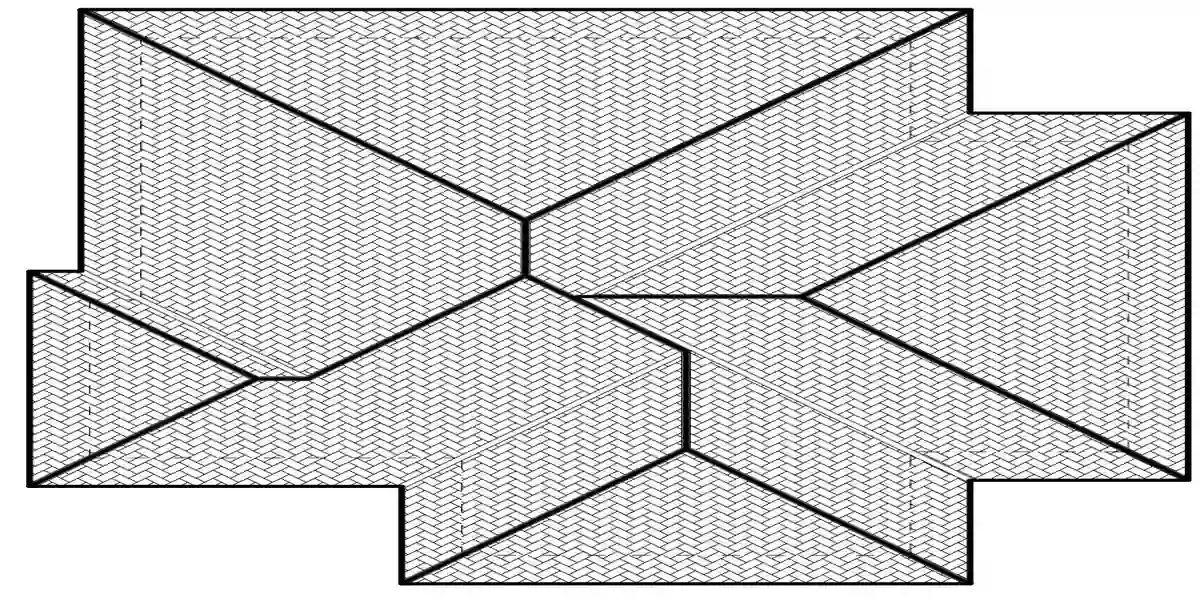
Roof design must consider proper drainage of rainwater away from the building, adequate overhangs to protect walls from driving rain, and structural sizing appropriate to the roofing material chosen, whether long-span aluminium sheets or interlocking tiles.
Balcony Usefulness
On duplex designs, a well-placed balcony is not just decoration. Properly sized and positioned according to Code safety standards (with adequate railing height and load consideration), it adds genuine living value, extra airflow, and natural light to upper floor rooms.
Does Following the Code Still Leave Room for Real Family Life?
Yes, and honestly, a Code-compliant design tends to serve family life better, not worse, when it is handled by someone who understands both the technical rules and the human side of a home.
- Children’s movement: proper room spacing and corridor width (a Code consideration) make it easier for parents to monitor children moving through the house.
- Guest privacy: setback-respecting designs leave enough room to separate a visitor’s toilet from the family’s private sleeping areas.
- Elderly accessibility: the Code’s accessibility principles support placing at least one ground floor bedroom and toilet, helpful for ageing parents living with the family.
- Work-from-home needs: adequate room sizing standards leave space for a small functional study area without compromising bedroom comfort.
- Future family growth: Code-compliant structural design often allows for a future upper floor addition to be added safely later, if planned for from the start.
I have worked with clients who initially saw Code compliance as a frustrating extra cost, until they realized the same standards that satisfied the Ministry also made daily life in the finished home noticeably more comfortable for everyone in the family.
Nigerian Realities the Code Has to Work Around
Following the Code on paper is one thing. Applying it honestly against everyday Nigerian conditions is another, and this is the part most explanations skip entirely.
Material Price Instability
Over the years, I have noticed that Code-recommended material specifications sometimes get quietly substituted on site when prices rise suddenly between approval and construction. This is exactly why consistent supervision matters, a Code-compliant plan can still be compromised by Code-violating material choices on site.
Power Supply Realities
Generator space needs deliberate planning within the building layout, positioned away from bedroom windows and with proper ventilation, rather than squeezed in as an afterthought once construction is complete.
Flooding and Drainage
The Code’s drainage principles matter enormously in low-lying parts of cities like Port Harcourt, Lagos, and parts of Uyo near waterways, where buildings constructed without a clear water exit plan are often the first to suffer when heavy rains arrive.
Heat Management
Code-aligned ventilation and roof overhang principles directly reduce indoor heat, an important consideration given how warm most of Nigeria stays through the year.
Compound Security
Consider gatehouse positioning and perimeter planning alongside the main building design from the start instead of treating them as disconnected afterthoughts.
Borehole and Water Planning
During field inspections, I discovered that many developers ignore the borehole positioning requirements the Code sets for soakaway and septic tank locations. This oversight increases contamination risk and creates expensive correction costs later.
Nigerian Reality Layer
A Code that looks good on paper still has to survive Nigerian realities: unstable material prices, unreliable power supply, heavy seasonal rainfall, and everyday security concerns. I test every project against both the written standard and these practical realities because true compliance requires a building to perform well after people move in.
Where Builders Usually Go Wrong With Code Compliance
Even a properly approved, Code-compliant plan can be quietly violated on site if nobody is supervising closely. This is one of the most common and most avoidable sources of long-term building problems in Nigeria.
- Reducing foundation depth or reinforcement quietly to save cost, especially on soft or waterlogged soil.
- Substituting specified materials for cheaper alternatives without informing the owner or supervising professional.
- Ignoring drainage details shown on the approved drawing during actual construction.
- Ignoring setback markings on site, especially where neighbouring beacons are unclear.
This is not just theory. I have seen it happen: a contractor who poured a shallower foundation than specified because the soil “looked fine” on the surface, on a plot with visibly soft ground beneath. Cracks appeared within two years. A single site visit at foundation stage by someone who understood the structural drawing would have caught this before it became expensive.
Practical Supervision Tips
- Keep the approved drawing physically on site and compare it against actual work regularly.
- Visit personally, or send a qualified representative, at minimum during foundation, lintel, and roofing stages.
- Ask for a proper bill of quantities before bulk material purchase, to reduce both waste and quiet substitution.
- Query any difference between the drawing and what you see on ground immediately, before more work is built on top of it.
How Code Compliance Affects Resale and Rental Value
Beyond safety, Code compliance is also a financial decision, whether you plan to live in the home forever or eventually sell or rent it.
- Code-compliant buildings with proper approval documentation sell and rent faster, since serious buyers and tenants increasingly ask for these documents before committing.
- Estate suitability: homes designed within Code-recognized setback and safety standards integrate more smoothly into organized estate developments.
- Urban investment value: well-ventilated, properly spaced small homes attract stronger long-term rental interest than poorly planned alternatives.
- Long-term practicality: a Code-compliant structure avoids the costly retrofits and emergency repairs that eat into rental profit over time.
Having seen the consequences of poor planning, I advise every client to treat Code compliance as part of the investment strategy itself, not as a separate government requirement sitting outside the design conversation.
Cost Considerations: Does Following the Code Cost More?
This is one of the most common misconceptions I encounter. Many people assume that Code compliance automatically means a more expensive building, but my experience suggests otherwise.
- Proper professional design fees upfront are often smaller than the cost of correcting a rejected plan, a failed structure, or a demolition order later.
- Code-compliant material specifications protect you from the much larger cost of structural repairs down the line.
- What genuinely affects cost more than Code compliance itself is finishing level, roof complexity, and soil condition.
If I were advising a client today, I would tell them plainly that Code compliance is one of the cheapest forms of insurance available in Nigerian construction, because the alternative cutting corners almost always costs more once the bill for fixing things later arrives.
Quick Summary: What You Need to Remember
- The National Building Code sets the minimum safety and design standard for every building in Nigeria
- It covers structural design, fire safety, electrical and mechanical systems, setbacks, and professional responsibilities
- Small plots are not exempt, the same setback and safety principles apply, just within tighter space
- Code compliance protects your safety, your approval process, and your long-term investment value
- On-site supervision is what turns a Code-compliant drawing into a genuinely Code-compliant building
- Following the Code typically costs less in the long run than ignoring it
Common Mistakes to Avoid
- Assuming the Building Code is only the architect’s or engineer’s responsibility to worry about
- Treating Code compliance as optional on small plots to “save space”
- Hiring unregistered professionals who are not familiar with current Code standards
- Skipping site supervision after the plan has been approved
- Allowing material substitution on site without informing your supervising professional
- Relying on outdated or unofficial copies of the Code instead of confirming current standards through a registered professional
Frequently Asked Questions
Is the National Building Code a law, or just a guideline?
Many of its provisions have been adopted into enforceable state building regulations, which is why state Ministries of Physical Planning reference it during plan approval. In practice, treating it as a guideline you can ignore is a risky assumption, since enforcement happens at the state and local level.
Does the Building Code apply to small residential buildings, or only big commercial projects?
It applies to all building categories, including small residential homes, though the specific technical requirements vary depending on the building’s classification and size. A small bungalow still has minimum standards it must meet.
Can I build without following the Code if I am only building for myself, not to sell?
The Code’s safety standards exist regardless of whether you plan to sell the building. A structural problem caused by ignoring the Code does not become less dangerous simply because the home was built for personal use rather than resale.
Who is responsible for ensuring a building project follows the Code?
The registered architect, structural engineer, and builder share responsibility for the project, but you, as the property owner, face the long-term consequences when anyone ignores compliance. That is why you must stay informed and involved throughout the process.
Final Word: Knowledge That Protects Your Family
If there is one thing I want you to walk away with, it is this: the National Building Code of Nigeria is not bureaucratic paperwork standing between you and your dream home. It is the accumulated lesson of every building failure this country has learned from, written down so your own project does not have to repeat those same mistakes.
You do not need to memorize the entire technical document to build safely. You need to understand its purpose, work with properly registered professionals who know it well, and stay involved enough to ask the right questions at every stage of your project.
If you are starting a building project, especially on a small or narrow plot, and want a design that genuinely respects Code standards while still feeling like home, MassodihPlans can walk through it with you from the very first sketch.
Keep Exploring on MassodihPlans
If setbacks are still confusing, our guide on site development plans and setback compliance breaks this down with real examples.
Already dealing with a rejected plan? Read why building plans get rejected in Nigeria and how to get approval fast next.
Not sure your land documents are in order? Start with how to read a survey plan in Nigeria before commissioning any design.
Working with a small or narrow plot? Browse our duplex plans for narrow plots in the Plans Library.
Curious what construction actually costs in your city? Our Nigerian construction cost guides give realistic figures, not guesswork.
Planning multiple units or a full estate? Our estate layout design resources apply many of the same Code principles at scale.
For larger developments, our site and master plan preparation content explains how planning standards scale up.
Building something commercial? Our commercial development planning guide explains how requirements differ from residential projects.
For structured, beginner-friendly lessons on the building process from start to finish, visit Plan School.
If you want professional support applying these standards to your own project, our Services page explains exactly how we can help, from design through approval.
Explore the full Plans Library for more layouts and design guidance, or visit the MassodihPlans homepage anytime to see everything we offer.
For the broader professional context behind these standards, the Nigerian Institute of Architects (NIA) publishes guidance relevant to architectural practice and building standards in Nigeria.