How Do I Find Good Tenants?
Let me tell you about a landlord I know personally in Uyo. Nice man, built a decent 3-bedroom flat, rented it out to a young civil servant who “seemed responsible” well dressed, spoke well, paid the first year’s rent without haggling. Eighteen months later, that landlord was in my office asking how to evict a tenant who hadn’t paid a kobo in nine months, had sublet two of the rooms to strangers without telling him, and had somehow gotten the electricity disconnected over an unpaid bill he never mentioned.
The tenant hadn’t lied about anything specific. My friend just never asked the right questions, never checked anything he was told, and never had a document that would let him act quickly once things went wrong. That’s not bad luck. That’s what happens when “finding tenants” and “screening tenants” get treated as the same thing, when they are actually two completely different jobs.
This article is my attempt to fix that gap properly not with the usual copy-pasted “run a background check” advice that assumes you’re operating in a country with a functioning credit bureau, but with what actually works for a landlord or property manager operating in Nigeria, where most of what you need to know about a tenant, you have to dig for yourself.
Why “Finding” a Tenant and “Screening” a Tenant Are Not the Same Job
Most landlords conflate these two things, and it’s the single biggest reason bad tenants slip through. Finding a tenant is a marketing problem getting enough interested, qualified people looking at your property. Screening a tenant is a risk-management problem figuring out, from that pool of interested people, who is actually going to pay consistently, take care of the property, and leave without drama when the time comes.
You can have a fantastic marketing process that fills your inbox with fifteen interested prospects in three days, and still end up with a nightmare tenant if your screening process is just “vibes and a handshake.” Equally, you can have the world’s most rigorous screening checklist and still sit on an empty property for six months if nobody with the right profile even sees your listing.
This guide covers both, deliberately kept separate, because the fixes for each are different.
How to Find Good Tenants: The Real Framework
Forget the idea that a “good tenant” walks in looking a certain way. A good tenant is defined by four things, in this order of importance: they can afford the rent comfortably, they have a track record of paying on time somewhere else, they treat property with basic respect, and they’re not going to disappear or cause you legal headaches when a dispute comes up.
Everything in “finding” a good tenant is about designing your search so people who fit that profile actually see your property and want to apply and people who don’t fit quietly self-select out before you waste time on them.
Set the Filter Before You Advertise, Not After
Decide your minimum requirements before you post the listing: minimum monthly income relative to rent, number of occupants allowed, whether pets are permitted, whether you require a guarantor, and your caution fee/agency fee structure. State these clearly in the listing itself. This does two things it discourages people who can’t meet the bar from wasting your time, and it protects you from later accusations of unfair treatment, because your standard was public and consistent for everyone.
Write your minimum requirements down as a one-page checklist before you advertise, and score every applicant against the same checklist. This single habit stops you from unconsciously favoring the first “nice” person you meet over someone less charming but far more reliable on paper.
Where to Find Tenants: Channels That Actually Work in Nigeria
Different channels attract different quality of applicant, and this is something most generic advice gets wrong because it’s written for markets with formal rental platforms and credit systems we don’t fully have here.
Existing Tenant Referrals
If you already have decent tenants in a compound or a similar property, ask them first. People rarely refer someone they know will embarrass them, so a referral from a tenant who has paid you consistently for two years carries real weight. This is, in my experience, the single highest-quality channel and the most underused one.
Registered Estate Agents
A competent local agent already has a pipeline of prospects and, more importantly, usually has informal knowledge of who’s “known” as a problem tenant in that neighborhood. The tradeoff is the agency fee, typically a percentage of the annual rent, but a good agent’s pre-filtering can save you far more than that fee in avoided losses.
Online Property Platforms
Nigeria Property Centre, PropertyPro.ng, and Jiji’s property section put your listing in front of the widest active pool of serious renters searching by location and budget. The quality of leads here is mixed you’ll get tyre-kickers but volume gives you more people to filter through, which matters if you need to fill a vacancy fast.
Community and Church Networks
Church congregations, professional associations, and community/estate WhatsApp groups often produce applicants who are already somewhat known within a social structure, which adds a layer of informal accountability that a total stranger from an anonymous online listing doesn’t have. This channel is slower but tends to produce more stable, longer-term tenants.
Corporate and HR Partnerships
If your property is near a hospital, bank cluster, university, or industrial estate, reach out directly to HR departments of nearby organizations. Staff being relocated or newly employed are often looking for housing urgently, come with verifiable employment, and are frequently company-guaranteed or have predictable salary payment dates a genuinely underused channel most individual landlords never think to try.
Physical Signage
A simple, clear “TO LET” board with a phone number still works, especially for walk-by traffic in the immediate neighborhood. Local applicants are easier to verify you can literally ask around about them than someone from three states away who found you online.
How to Get Tenants Quickly Without Lowering Your Standards
Vacancy is expensive, so the pressure to fill a property fast is real. But “quickly” and “carelessly” don’t have to mean the same thing.
Price It Correctly From Day One
The most common reason a property sits empty for months isn’t a lack of interested people it’s a rent figure that’s 15-20% above the neighborhood’s actual going rate. Check three or four comparable listings in your immediate area before you set your price. A correctly priced property gets serious inquiries within days; an overpriced one just accumulates window-shoppers who never convert.
Make Viewing Effortless
Have the property genuinely presentable clean, functional taps and switches, no lingering smell before the first viewing, and be flexible on viewing times, including weekends and early evenings. A prospect who has to reschedule twice to see your property will often just move on to the next listing that was easier to access.
Respond Within Hours, Not Days
Serious tenants are usually looking at multiple properties simultaneously. If you or your agent take three days to respond to an inquiry, you’ve likely already lost that prospect to a competing landlord who called back the same day.
Have Your Documentation Ready Before You Advertise
Tenancy agreement template, list of required documents, and your caution/agency fee breakdown should all be ready before the first viewing. A landlord who says “let me sort out the agreement, call me next week” loses momentum with a genuinely interested, qualified prospect and momentum, once lost, rarely comes back at the same intensity.
Speed should never mean skipping verification steps. A property filled in one week with an unscreened tenant almost always costs more in the long run than a property that took three extra weeks to fill properly. The eviction and cleanup cost from one bad tenant regularly exceeds a full year of “lost” rent from a slightly longer vacancy.
How to Attract Tenants: Making Your Property the Obvious Choice
Attraction is about positioning your property so the tenants you actually want are the ones drawn to it.
Fix the Small Things Before Listing
Dripping taps, weak door locks, non-functional switches, and a poorly maintained compound signal to a good tenant the kind who will take care of your property that you don’t maintain your own property either. Reliable tenants tend to gravitate toward well-kept units because it tells them what kind of landlord they’re dealing with.
Photograph It Honestly and Well
Bright, well-lit photos taken during the day, showing every room including the bathroom and kitchen, build more trust than heavily filtered or suspiciously vague photos. Serious prospects skip listings that feel like they’re hiding something.
Be Transparent About All Costs Upfront
State the rent, agency fee, caution fee, and any service charge clearly in your listing rather than revealing extra costs only after a prospect has fallen in love with the property. This transparency filters for tenants who plan carefully and can genuinely afford the total cost which are exactly the tenants you want.
Offer Small, Low-Cost Amenities That Signal Care
A functional water storage system, decent security (gate, fencing, a night guard arrangement for compounds with multiple units), and reliable power backup options where feasible make a property noticeably more attractive without huge capital cost, and they specifically attract tenants who value stability over just chasing the cheapest rent in the area.
How to Find Reliable Tenants: Reading Beyond the Interview
This is where most landlord advice online stops at “check their ID,” and where the real work of finding reliability actually begins.
Ask for a Consistent Payment History, Not Just a Promise
Ask directly: where have you lived for the last two years, and can I speak with that landlord? A tenant who hesitates, gives a vague answer, or “can’t remember the landlord’s number” for a place they lived just months ago is telling you something important without saying a word.
Verify Employment the Right Way
Don’t just accept a printed employment letter call the organization’s official line (not a number written on the letter itself) and confirm the person actually works there, in the role stated. Letters can be fabricated; a phone call to a verifiable official number is much harder to fake.
Match Income to Rent Realistically
A commonly used guideline is that monthly rent shouldn’t exceed roughly a third of a tenant’s verifiable monthly income, though in the Nigerian context where annual rent payment is standard, it’s more useful to check whether the tenant can comfortably produce the full year’s rent from savings or verifiable income without financial strain that will show up as late payment on renewal.
Pay Attention to How They Negotiate
A prospect who aggressively haggles on every single term rent, caution fee, agreement conditions, even minor repair responsibilities before ever moving in is often giving you a preview of how every future interaction with them will go. This doesn’t mean refuse all negotiation, but notice the pattern.
Use a Guarantor Who Actually Has Something to Lose
A guarantor should be someone with a stable, verifiable job or business, ideally a homeowner themselves, who understands they’re financially responsible if the tenant defaults. A guarantor who is a struggling relative with no real standing offers you no real protection it’s a formality, not a safeguard.
Meet the guarantor in person, or at minimum on a video call, before finalizing the agreement not just their signed letter. Some of the most common tenant frauds I’ve heard about in this line of work involve a fabricated “guarantor” who doesn’t actually exist or has no idea they’ve been named.
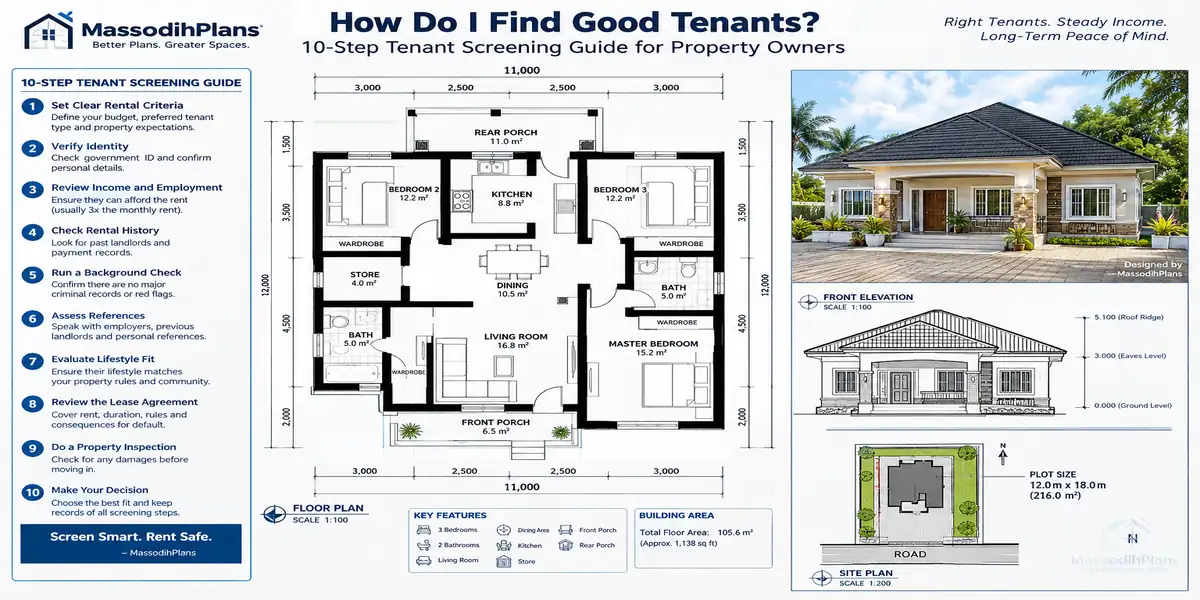
Tenant Selection: A Complete Step-by-Step Process
This is the checklist version of everything above, laid out as an actual process you can follow from first inquiry to signed agreement.
Pre-qualify by phone before a viewing.
Ask budget, occupation, number of intended occupants, and move-in timeline. This filters out clearly unsuitable prospects before you spend time on a physical viewing.
Conduct the viewing and observe, don’t just show.
Notice punctuality, how they treat the property during the visit, and the quality of questions they ask someone asking about drainage, security, and neighbors is thinking long-term; someone only asking “can I move in tomorrow” may not be.
Collect a complete application: full name, valid ID (National ID/NIN, voter’s card, or international passport), current address, employer details, monthly/annual income evidence, previous landlord’s contact, and guarantor details.
Verify the ID. Confirm the photo matches the person and the details are consistent across every document they’ve provided.
Call the previous landlord directly, not a number the applicant hands you on paper without you confirming it independently where possible. Ask specifically: did they pay on time, did they give proper notice before leaving, was the property returned in good condition, and would you rent to them again.
Verify employment through an independent, officially listed contact, not a number printed only on the employment letter itself.
Confirm the guarantor in person or by video call, and confirm their stated occupation and standing.
Score the applicant against your pre-set checklist from the “How to Find Good Tenants” section above, applying the same standard to every applicant.
Communicate your decision promptly, whether accepted or declined, and collect caution fee, agency fee, and first payment only after both parties have signed a proper tenancy agreement.
Document the property’s condition at handover with dated photos, shared with the tenant, to avoid disputes over damage at the end of the tenancy.
Red Flags Almost Nobody Talks About
Urgency without documentation a prospect insisting they must move in “today or tomorrow” but conveniently unable to produce ID, employment proof, or a previous landlord contact in that same timeframe
Cash-only insistence with no receipt trail a tenant who resists any form of documented payment, even a simple bank transfer with a clear reference, is often setting up a later dispute about what was actually paid
A previous landlord who answers vaguely phrases like “he’s okay” or “no serious problem” delivered without any specific positive detail are frequently a landlord being diplomatically evasive about a tenant they were relieved to see leave
Refusal to allow a guarantor verification call any resistance to you speaking directly with the named guarantor is a serious warning sign, not a minor inconvenience to smooth over
Inconsistent personal details across documents a name, date of birth, or address that doesn’t match cleanly between the ID, employment letter, and application form deserves a direct question, not an assumption of clerical error
None of these red flags alone is automatic proof of a bad tenant people have genuine reasons for urgency or a difficult previous landlord relationship. But two or more of these appearing together in the same applicant is a pattern worth taking seriously rather than explaining away because you like the person or need the vacancy filled.
The Documentation Layer Most Landlords Skip
Screening protects you before the tenancy starts. Documentation protects you for the entire time the tenant is in your property, and it’s the layer that determines how fast and cleanly you can act if things go wrong later.
A written tenancy agreement, not a verbal understanding, covering rent amount and payment schedule, notice period for both parties, responsibility for repairs, and grounds for termination
Awareness of your specific state’s tenancy law, since notice periods and eviction procedures differ Lagos State, for instance, operates under its own Tenancy Law with specific notice requirements that differ from what applies in other states, so what’s legally required in one part of Nigeria isn’t automatically the rule everywhere else
A signed inventory/condition report at move-in, ideally with photos, so there’s no argument later about pre-existing damage versus tenant-caused damage
Receipts for every payment, issued consistently, so there’s a clean paper trail if a dispute over what was paid and when ever arises
Keep a simple physical or digital folder per tenant ID copy, signed agreement, guarantor details, move-in inventory with photos, and every payment receipt. When a dispute happens (and eventually, with enough tenants, one will), the landlord with organized documentation resolves it in days; the one without spends months arguing over what was agreed.
What to Do After a Tenant Moves In (The Part Everyone Forgets)
Screening doesn’t end at signing. A few habits keep a good tenant good and catch a problem tenant early, before it becomes expensive.
Do a light check-in within the first month not intrusive, just a courtesy call or visit to confirm everything is functioning and the tenant is settling in, which also signals you’re an attentive landlord, not an absent one
Track payment punctuality from day one, even by a simple note in your phone a pattern of lateness starting in month two or three is far easier to address early than after a full year of accumulated arrears
Address maintenance requests promptly tenants who feel ignored on legitimate repair requests are far more likely to become difficult about rent, access, or eventual move-out, because the relationship has already soured
Renew or decline deliberately, not by default before automatic renewal, briefly review the past year: was rent consistently on time, was the property well kept, were there complaints from neighbors. Use the same standard you applied at selection.
Frequently Asked Questions
What is the fastest way to find a tenant in Nigeria without lowering my standards?
Price the property correctly against comparable listings in your area, use existing tenant referrals and a competent local agent simultaneously rather than one channel at a time, and have your documentation and viewing schedule ready before you advertise most delays come from landlord-side unpreparedness, not a lack of interested tenants.
How do I verify a tenant’s employment if I can’t run a formal background check?
Call the organization through an officially listed phone number, not one written only on the employment letter, and confirm the person’s role directly with HR or a supervisor rather than relying solely on the printed document.
Is a guarantor really necessary if the tenant seems trustworthy?
Yes. A guarantor isn’t about distrust it’s a financial safety net if circumstances change after move-in, and verifying the guarantor properly (in person or by video call) is as important as verifying the tenant.
How many months of rent default should I tolerate before acting?
There’s no universal number, but the earlier you act on a missed payment a direct conversation within the first two weeks of a missed due date the more manageable the situation stays. Waiting months to address it, hoping it resolves itself, is how small arrears become large disputes.
Should I accept a higher rent offer from a tenant who failed my screening checks?
Generally no. A tenant who fails verification on employment, previous landlord reference, or guarantor standing represents a risk that a higher rent offer rarely offsets, since the potential cost of eviction, unpaid rent, and property damage typically exceeds any premium they’re offering upfront.
Conclusion
Finding a tenant is a numbers game enough of the right people need to see your property. Screening a tenant is a discipline the same checklist, applied consistently, to every single applicant, regardless of how much you like them personally or how badly you need the vacancy filled. Landlords who get into trouble are almost never the ones who screened too strictly; they’re the ones who made an exception “just this once” for someone who seemed nice.
If you’re planning a rental property from the ground up and want it designed with tenant management in mind from day one separate metering, clear compound access, practical layouts for multi-tenant buildings our Plans Library has designs built with that in mind. Visit Plan School if you’re still learning how building layout affects long-term rental management, or check our Services page if you want direct support on a project. You can also browse more property and building guides on our Homepage.
- What Do I Do When My Tenant Doesn’t Pay Rent? Landlord Rent Recovery Tips
- How Do I Collect Rent From Tenants? Complete Guide for Property Owners
- How Much Does a Property Manager Charge? Property Management Fees Explained
- How Do I Find a Good Property Manager? Guide for Rental Properties
- How Do I Manage My Property? Complete Property Management Guide for Owners
- House and Home: Types of Houses, Homes, House Styles, Home Designs, and Modern House Designs
- Real Estate: How to Invest in Real Estate, Develop Property, and Build a Profitable Property Business
Author
Massodih Okon is a Nigerian built-environment professional with academic and professional experience in urban and regional planning, geography, architectural design, Landscape Design, GIS and land development.
He holds a Master’s degree in Urban and Regional Planning from the University of Uyo and a first degree in Geography and Regional Planning.
Through MassodihPlans, he publishes practical guides on Nigerian house plans, building design, physical planning, site planning, development approval and residential construction. Read the full author profile →