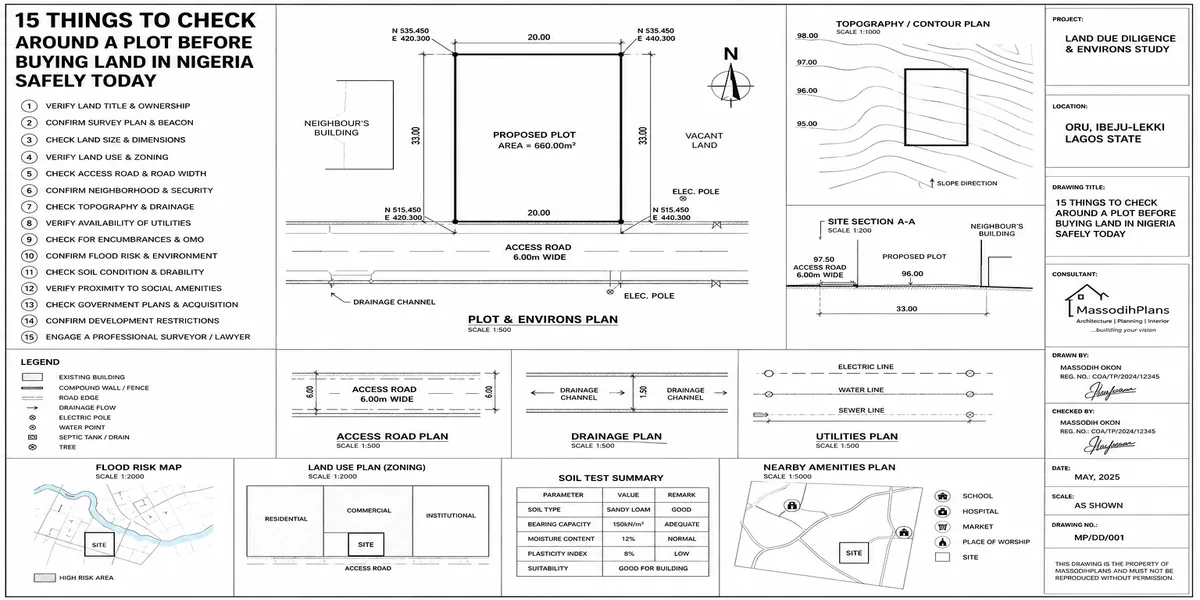
land due diligence analysis
Let’s talk plainly, the way I would if you sent me your location and asked me to go look at a plot for you before you paid anything. I’m not going to open with a horror story about someone who lost their land to bulldozers, because you’ve read that story ten times already on ten different websites, and it doesn’t actually teach you how to inspect a plot with your own eyes. I want to teach you that instead.
I’ve walked more plots than I can count over the past years, mostly across Akwa Ibom and Rivers States, sometimes for a client abroad who couldn’t be there, sometimes for a young couple buying their first plot with money they saved for a decade. What I’ve noticed is that almost everything written online about “buying land in Nigeria” focuses on paperwork C of O, survey plan, governor’s consent, all genuinely important and almost nothing walks you through what to actually look at physically when you’re standing on the land. Paper can be forged or misread. What your eyes and feet tell you on site is much harder to fake.
So this is that walkthrough. Fifteen things, in the order I’d actually check them if I was there with you.
1. Go and Stand on the Land Yourself
Not a video call. And Not photos your agent sent. Not a drone clip. If you can physically be there, be there. If you genuinely cannot because you’re abroad or in another state send someone you trust completely, and ideally pair them with a professional (a surveyor, an architect, a planner) rather than relying only on family goodwill.
Here’s why this matters more than people admit: photos are taken on the one good day of the year when the land looks dry and firm. I have seen plots that look perfectly fine in a photo turn into a shallow lake three months later in the rainy season. You cannot know that from a picture. You can often tell from being there vegetation type, soil texture, whether the ground still feels soft or spongy days after the last rain.
If you can time your visit for a day or two after rainfall rather than in the middle of dry season, do it. Land tells you the truth about itself right after it rains that’s when waterlogging, poor drainage, and soft soil actually show themselves.
2. Match the Survey Plan Against the Actual Beacons on Ground
Every plot should have survey beacons small concrete pillars marking the exact corners of the land, matching the coordinates on the survey plan. Most buyers never actually check that these pillars exist and sit where the paper says they should.
Ask the seller or agent to physically show you each beacon. Count them. If a plot is supposed to be a rectangle, there should be four beacons, and they should roughly form that shape when you walk between them. Missing beacons, beacons that have clearly been moved, or a shape on the ground that doesn’t match the shape on the survey plan are all reasons to pause and bring in an independent licensed surveyor before you pay anything.
3. Check the Land’s Elevation Against the Road and Its Neighbours
This is one of the most overlooked checks, and it’s the one I insist on most with clients. Stand at the road and look at the plot. Is it noticeably lower than the road level? Is it lower than the plots directly beside it?
Land that sits in a natural low point becomes the collection point for rainwater running off higher surrounding land, whether or not it ever technically “floods” in the dramatic sense people imagine. This shows up later as a compound that never fully dries, a foundation constantly sitting in damp soil, or water finding its way toward your house instead of away from it. You can often see the evidence already darker soil staining low points, moss on lower walls nearby, or drainage marks running toward the plot rather than away from it.
4. Read the Soil, Don’t Just Look at the Land
You don’t need a full geotechnical report to do a basic soil read on site, though for a serious investment, a proper soil test before you build is still worth commissioning separately.
On the spot, though: dig a little with your foot or a stick. Sandy, loose soil drains well but may need deeper foundations in some areas. Dark, clayey soil that sticks to your shoes and stays wet long after rain is a signal of poor drainage and higher water table both things that raise your eventual foundation cost. Notice the vegetation too certain water-loving plants and grasses cluster naturally in perpetually damp or swampy ground, and that’s often a more honest indicator than anything the seller will tell you verbally.
A plot with difficult soil isn’t automatically a plot to avoid it’s a plot to price differently. Difficult soil usually means a more expensive foundation later, so factor that into your negotiation, not just into your regret after you’ve already paid.
5. Confirm the Zoning and Permitted Use at the Planning Office
Before you fall in love with a plot for your dream house, confirm at the relevant state or local planning authority that the land is actually zoned for residential use, not commercial, industrial, or agricultural. This single phone call or office visit can save you from buying land you legally cannot build a house on, or can only build on after a costly rezoning process that isn’t guaranteed to succeed.
This is a step people skip because it feels bureaucratic and slow. It’s also the step that protects you the most, because a beautiful plot in the wrong zoning category is not a beautiful investment it’s a frozen one.
6. Check for Drainage Channels, Canals, or Rights of Way Crossing the Plot
Walk the full perimeter and interior of the plot, not just the part facing the road. Look for evidence of a drainage channel, culvert, or natural water course running through or along the edge of the land sometimes dry for most of the year but very active in peak rainy season.
Also ask directly, and check with the planning authority, whether any part of the plot falls within a designated drainage easement or road reserve. Land that overlaps these isn’t necessarily worthless, but you may not be permitted to build across the full plot, and any structure already extending into that space could be marked for removal later regardless of how long it’s stood.
7. Measure Your Distance From High-Tension Power Lines and Transformers
If there are overhead high-tension power lines anywhere near the plot, don’t estimate the distance by eye ask the local power distribution company or a professional for the actual required safe setback distance, since this varies by the voltage of the line. Building too close to a high-tension corridor can mean your structure gets flagged during approval, or worse, sits in a genuinely unsafe zone that nobody warned you about at the point of sale.
A transformer close to the plot is generally less of a legal issue but worth noting for noise and, in some cases, future expansion plans by the utility company that could affect access.
8. Test the Access Road, Don’t Just Look at It
A road can look fine on a dry Tuesday afternoon during your one visit and become impassable during the rainy season. Ask around not just the seller, but people already living or working nearby what the road is genuinely like in August or September, the peak of the rains.
Also check the actual width of the road against what the layout plan says it should be. Some developing areas have roads on paper that are wider than what currently exists on the ground, because encroachment or incomplete development has narrowed the real access. A narrow, poorly maintained access road affects your ability to bring in building materials later, not just your daily comfort.
9. Study Your Neighbours: Land Use Around You Matters As Much As the Land Itself
Walk beyond the boundary of the plot itself and look at what’s happening on the surrounding land. A mechanic workshop, a block-moulding industry, a sawmill, an active quarry, or a waste dump nearby will affect your daily life and your land’s value far more than most buyers anticipate at the point of purchase noise, dust, traffic, and in some cases genuine health considerations.
This isn’t only about nuisance. It also tells you something about the trajectory of the area a neighbourhood transitioning toward light industrial use, whether officially zoned that way or not, behaves very differently over the next decade than one that’s staying purely residential.
10. Confirm the Land Is Not Under Government Acquisition
Government acquisition land officially marked for future public projects, sometimes for decades before anything visibly happens on it remains one of the most common and painful land disputes in Nigeria, particularly around certain fast-growing corridors of Lagos and other major cities. Nigeria’s Land Use Act vests all land within a state in the Governor, who holds it in trust for the people, which is precisely why acquisition status has to be confirmed through the appropriate state ministry of lands and physical planning, not assumed from the seller’s word alone. Chaman Law Firm
Confirming this properly usually means a direct search or inquiry at the relevant government office, not just checking whether the seller has a survey plan or receipt. A survey plan alone does not prove land is free of government acquisition.
11. Ask About the Water Table Before You Assume You’ll Get a Borehole
Many people buy land assuming a borehole is a simple afterthought they’ll sort out once they start building. In reality, water table depth varies significantly even between plots a few streets apart, and in some coastal or low-lying areas, water can be shallow but heavily saline or iron-contaminated, making it unsuitable for domestic use without treatment.
Ask neighbours directly how deep their boreholes are and what the water quality is like. This is genuinely practical information that costs nothing to gather and can materially change your building budget later.
12. Check for Encroachment From Existing Neighbouring Fences or Structures
Look carefully at where neighbouring fences, buildings, or planted boundaries currently sit relative to the beacons you confirmed in point two. It’s more common than people expect for a neighbour’s fence to have quietly shifted a metre or two onto the plot you’re about to buy sometimes through genuine confusion, sometimes deliberately, banking on a future buyer not checking closely.
Raising this before you pay, and getting it resolved or clearly documented, is far easier than discovering it after you’ve built your own fence and a boundary dispute erupts with someone who’s already lived beside that line for years.
13. Look for Signs of Disputed or Existing Possession
Before you buy, look for anything suggesting someone else currently has a claim or presence on the land an existing structure, a farmer actively cultivating crops on it, evidence of temporary habitation, or “keep off” and “not for sale” signage anywhere on or near the plot. Any of these are reasons to stop and investigate further rather than proceed on the assumption that the seller’s paperwork settles the matter.
In areas with communal or family land history, it’s also worth asking directly whether the extended family or community members have all consented to the sale a title that looks clean on paper can still trigger a dispute later if that consent was incomplete.
14. Verify the Actual Size of the Plot Yourself
Don’t take the stated size “a full plot,” “600 square metres” purely on faith. Where possible, have an independent surveyor confirm the actual dimensions against the survey plan, or at minimum, pace or measure the boundaries yourself using the beacons as reference points.
Discrepancies between the stated size and the actual measured size are more common than they should be, and they directly affect what you can legally and practically build once you account for required setbacks on all sides.
15. Think Ahead to Setbacks Will Your Actual Building Plan Fit?
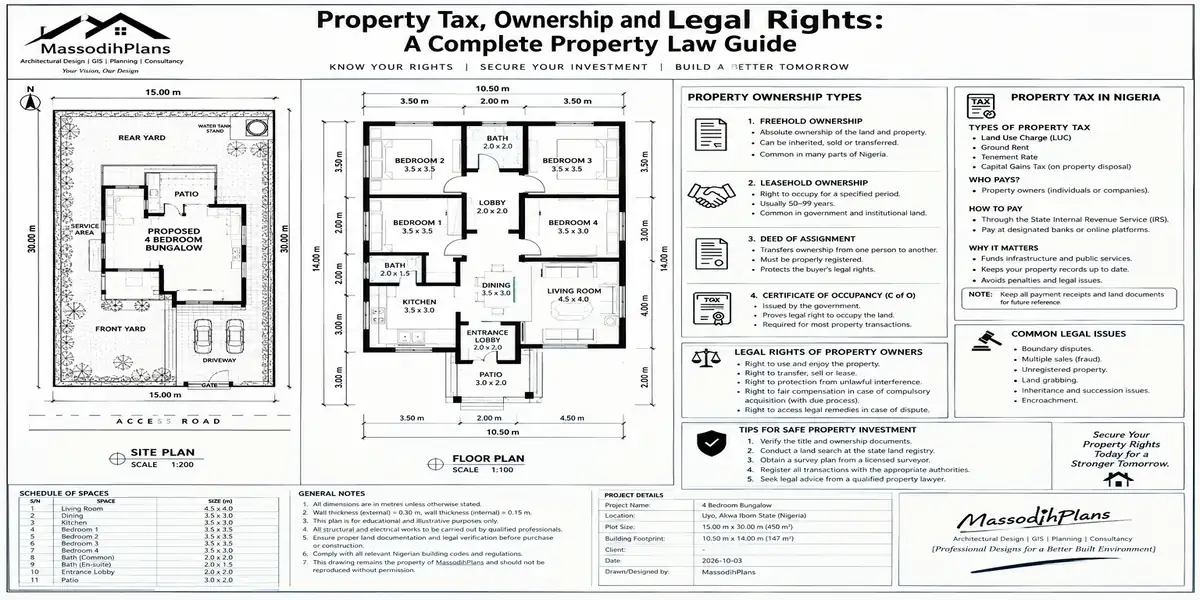
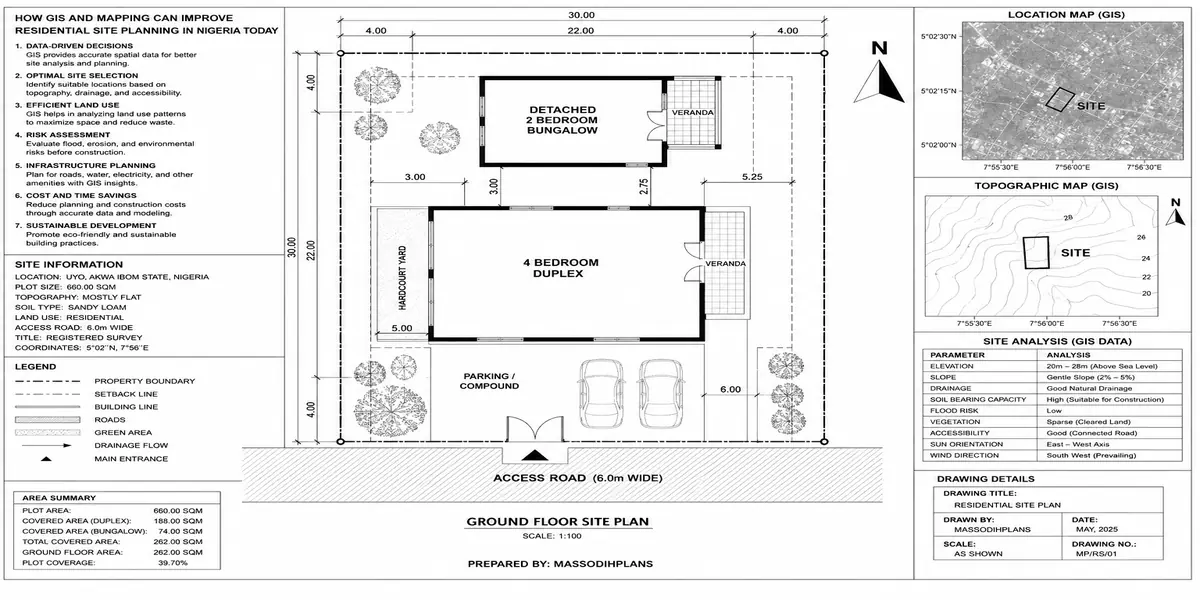
This is the check almost nobody thinks to do before buying, and it’s arguably the most important one if you already have a house design in mind. Every plot has mandatory setback distances from its boundaries, determined by its zoning and size. Before you commit to a plot, do a rough check ideally with an architect of whether your intended house design will actually fit within the buildable area left after those setbacks are applied.
I’ve had clients arrive with a beautiful plan for a spacious 4-bedroom duplex, only for us to work out together that the plot they’d already paid for could only legally accommodate a smaller footprint once setbacks were applied. Buying the land first and figuring this out afterward is how people end up needing to redesign a home they’d already mentally moved into.
If you already have a house plan in mind, bring the rough dimensions with you when you go to inspect a plot or better, have an architect review the plot’s size and shape against your plan before you finalize payment. It takes one conversation and can save you a very expensive redesign later.
Frequently Asked Questions
What is the single most important thing to check before buying land in Nigeria?
There isn’t one single check that replaces the others title verification, physical site inspection, and zoning/acquisition confirmation all protect against different risks, and skipping any one of them leaves a real gap.
Can I trust an agent’s word about the land’s history and safety?
Treat an agent’s word as a starting point, not a conclusion. Verify independently at the relevant government office and through your own physical inspection wherever possible, especially for anything relating to title, acquisition status, or zoning.
Do I need a professional with me when inspecting land, or can I do it alone?
You can do the basic physical checks yourself, but for survey verification, soil assessment, and setback planning, involving a licensed surveyor or architect is worth the modest cost relative to the size of the investment you’re protecting.
What should I do if I find a problem after I’ve already started the checks but before paying?
Pause the transaction and get clarity through the seller, the relevant government office, or an independent professional before any money changes hands. Most land disputes trace back to a warning sign that was noticed but not acted on before payment.
Is land in a developing, less built-up area automatically riskier?
Not automatically but it usually requires more of the physical checks in this guide, since infrastructure, drainage, and zoning enforcement are often less established in newer areas than in long-settled ones.
A Final Word, Friend to Friend
None of this is meant to frighten you out of buying land it’s meant to slow you down just long enough to look properly. Most of the people I’ve seen get into serious trouble with land in Nigeria didn’t skip due diligence because they were careless; they skipped it because they were excited, or trusted the wrong person, or didn’t know these were even things to check. Now you do.
If you’re at the stage of turning a plot you’re confident about into an actual house, our Services page outlines how we support clients from site assessment through to a buildable design. Browse our Plans Library for house plans already designed with Nigerian plot realities in mind, or visit Plan School to understand the planning and approval process once your land is secured. You can also explore more land, building, and planning guides on our Homepage.
- How to Analyse a Property Location Before Buying Land in Nigeria Today
- How Road Access Affects Residential Building and House Planning in Nigeria
- How to Read a Satellite Image Before Buying Land in Nigeria: Full Guide
- How GIS and Mapping Can Improve Residential Site Planning in Nigeria Today
- How GIS Can Help Identify Flood-Prone Areas Before You Build in Nigeria
- How to Analyse Your Plot Using Satellite Imagery Before Building a House
Author
Massodih Okon is a Nigerian built-environment professional with academic and professional experience in urban and regional planning, geography, architectural design, Landscape Design, GIS and land development.
He holds a Master’s degree in Urban and Regional Planning from the University of Uyo and a first degree in Geography and Regional Planning.
Through MassodihPlans, he publishes practical guides on Nigerian house plans, building design, physical planning, site planning, development approval and residential construction. Read the full author profile →