How to Choose the Right Residential Location in Lagos Before You Build
If you are planning to build a house in Lagos, choosing the right plot is not simply about finding a beautiful neighbourhood or buying land you can afford. The location you choose can determine your building cost, commute, flood exposure, security, access to infrastructure, resale value, and even whether your dream house remains practical years after construction.
So, how do you choose the right residential location in Lagos before you build? Start by looking beyond the price and asking a more important question: “Will this location still work for my family, finances and future plans?”
In this guide, I will walk you through the exact things I would want you to investigate before paying for residential land anywhere in Lagos from road accessibility, traffic and neighbourhood character to drainage, topography, flooding, electricity, water supply, security and proximity to schools, hospitals, markets and your workplace. I will also show you why two plots in the same neighbourhood can have completely different development risks.
Most importantly, we will go beyond the usual “best areas to live in Lagos” lists. A popular location is not automatically right for you. A cheaper emerging area is not automatically a bargain. You need to understand the site itself, its surrounding development pattern, planning implications, land title, future infrastructure and the type of house you intend to build.
By the end, you will have a practical location-selection framework you can use before committing your money. And if you are already holding a survey plan or considering a specific Lagos neighbourhood, the later sections will help you connect location decisions to your actual site planning and house design so you make fewer expensive mistakes before the first block is laid.
Why “Good Neighborhood” and “Good Building Site” Are Not the Same Question
Every Lagos real estate list will tell you Lekki is desirable, Ikeja GRA is calm, and Magodo is comfortable for middle-income families. All true, and all beside the point if the specific plot you’re eyeing inside that desirable area has poor soil, unresolved title, or sits in a flood-prone pocket that the neighbourhood’s general reputation doesn’t reveal.
Location quality operates at two levels that people constantly conflate:
Area-level desirability security, amenities, schools, commute, general property value trajectory
Plot-level buildability the specific soil, drainage, title status, zoning, and infrastructure access of the exact plot you’re considering
You can find a fantastic plot in a mediocre-reputation area, and a genuinely bad building site in the most sought-after estate in Lagos. This guide is entirely about the second level, because it’s the one almost nobody explains properly, and it’s the one that determines your actual construction cost and timeline.
Never let a neighbourhood’s general reputation substitute for checking the specific plot. “Everyone says Ajah is good now” is not due diligence it’s a starting point for due diligence.
Step 1: Verify Title and Land Documentation First
Before you evaluate a single physical characteristic of the land, confirm you can actually build on it legally.
Governor’s Consent / Certificate of Occupancy (C of O): confirms the land’s title is properly registered with the state
Land use designation: verify at the Lagos State Ministry of Physical Planning and Urban Development that the plot is zoned residential, not commercial, industrial, or a restricted-use designation that would block or complicate a residential building permit
Search at the Lagos State Land Registry: confirms there’s no competing claim, prior sale, or government acquisition notice on the specific plot
Physical boundary verification against survey plan: confirms the plot’s actual boundaries match what’s documented encroachment and boundary disputes are extremely common in fast-growing Lagos suburbs
Excision status, where relevant: in areas that were formerly family or communal land, confirm the land has been properly excised from the original family holding and the seller’s title traces back cleanly
Skipping any of these doesn’t just risk fraud it risks a technically “clean” purchase that still can’t get a building permit approved because the land use designation doesn’t match your intended residential build.
A seller showing you a survey plan and a receipt is not proof of clean title. Insist on an official search at the Land Registry and verification of the land use designation before any money changes hands, ideally through a lawyer or licensed surveyor independent of the seller.
Step 2: Assess Soil Condition and Flood Risk Before You Fall in Love With the Plot
This is the step my client above skipped, and it’s the single most expensive location mistake in Lagos residential building.
Why Lagos Soil Is Not Uniform
Lagos sits across a genuinely varied terrain firm sandy ground in parts of the mainland, reclaimed and low-lying land across much of the Lekki-Ajah-Ibeju axis, and waterlogged or swampy conditions in pockets throughout both the Island and Mainland. A plot’s soil condition determines your foundation type, and foundation type alone can shift construction cost by tens of millions of naira.
What to Actually Check
Visit during rainy season if at all possible, or ask neighbours and long-term residents directly whether the specific street or plot floods and how long water sits after heavy rain
Commission a soil test (geotechnical investigation) before you commit funds, not after this tells you definitively whether the land needs a standard strip foundation or a more expensive raft/pile foundation
Check the plot’s elevation relative to the surrounding street and drainage channels a plot sitting noticeably lower than the road or neighbouring plots is a strong warning sign regardless of what the soil test eventually shows
Ask about the land’s history reclaimed land (common across much of the Lekki-Ajah corridor) generally needs more foundation investment than naturally firm ground, and sellers rarely volunteer this information unprompted
Reading the Warning Signs Yourself
Standing water in nearby compounds days after rain, visibly cracked or heaving fencing on neighbouring plots, sand-filled low areas that look recently “topped up,” and drainage channels that are clearly undersized or blocked near the site are all signs worth investigating further before you buy, even before a formal soil test.
Budget for a soil test as a non-negotiable line item before land purchase, not after it typically costs a fraction of what a wrongly chosen foundation type costs you later, and it’s the cheapest insurance you can buy against the single biggest hidden cost in Lagos construction.
Step 3: Confirm the Zoning and Density Match Your Plans
Even land that’s legally residential can carry restrictions that shape what you’re actually allowed to build.
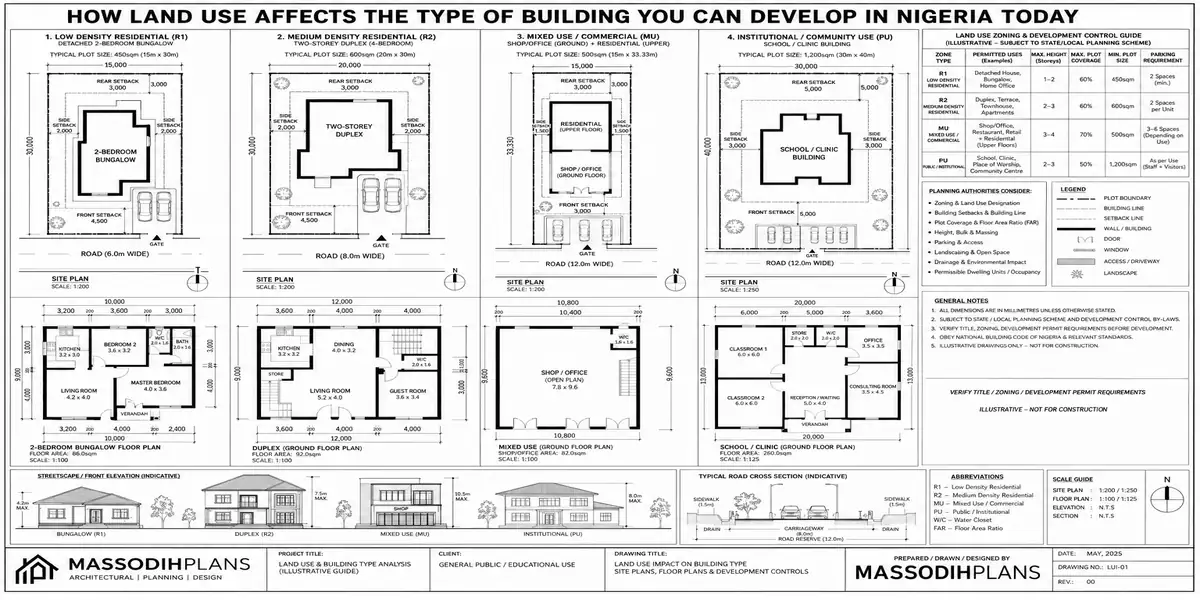
Density classification: some areas are zoned low-density (larger plots, stricter setbacks, height limits), others medium or high-density this affects how much of your plot you can actually build on and how tall you can go
Setback requirements: confirm the mandatory distances from your building to each boundary; these vary by zone and directly affect how much usable floor area your plot can support
Estate-specific covenants: if the plot sits within a private estate, get the estate’s design guidelines in writing before purchase roofing style, fence height, and even facade material can be restricted separately from state zoning rules, and these restrictions are just as binding
Maximum plot coverage: the percentage of your plot that can legally be built on; a beautiful house design that assumes 60% coverage is unbuildable on a plot zoned for 40%
Buying land first and discovering the zoning constraints afterward is one of the most common reasons a client’s dream design has to be redrawn sometimes significantly smaller after purchase.
Step 4: Evaluate Infrastructure Capacity, Not Just Infrastructure Presence
Almost every Lagos land listing will mention “good road network” or “constant power.” What matters more is capacity relative to the density being built around it.
Road width and condition relative to expected traffic: a narrow, unpaved access road serving an area undergoing rapid new construction will only get more congested as neighbouring plots develop
Drainage infrastructure sizing: check whether the area’s drainage channels look adequate for the current level of development, or already show signs of strain (standing water, overflow marks, informal extensions) this is a strong predictor of future flooding risk as the area densifies further
Power supply reliability: ask multiple current residents, not just the seller or agent, about actual outage frequency and duration advertised “estate power” arrangements vary enormously in real reliability
Water supply source: confirm whether the area relies on borehole, estate-supplied water, or state mains, and what the water table and quality are like locally, since this affects both your building’s services design and ongoing cost
Growth trajectory: areas with announced infrastructure projects (road expansions, new interchange access) often see land values rise, but also see faster densification that can strain the very infrastructure making the area attractive in the first place
“Good infrastructure” as advertised today doesn’t guarantee good infrastructure in five years if the surrounding area is developing faster than its roads and drainage were designed for. Ask specifically about planned or ongoing developments nearby, not just the current state of things.
Step 5: Assess Site-Specific Building Conditions
Beyond the neighbourhood and the legal status, the physical plot itself has characteristics that directly affect your design and cost.
Plot Shape and Orientation
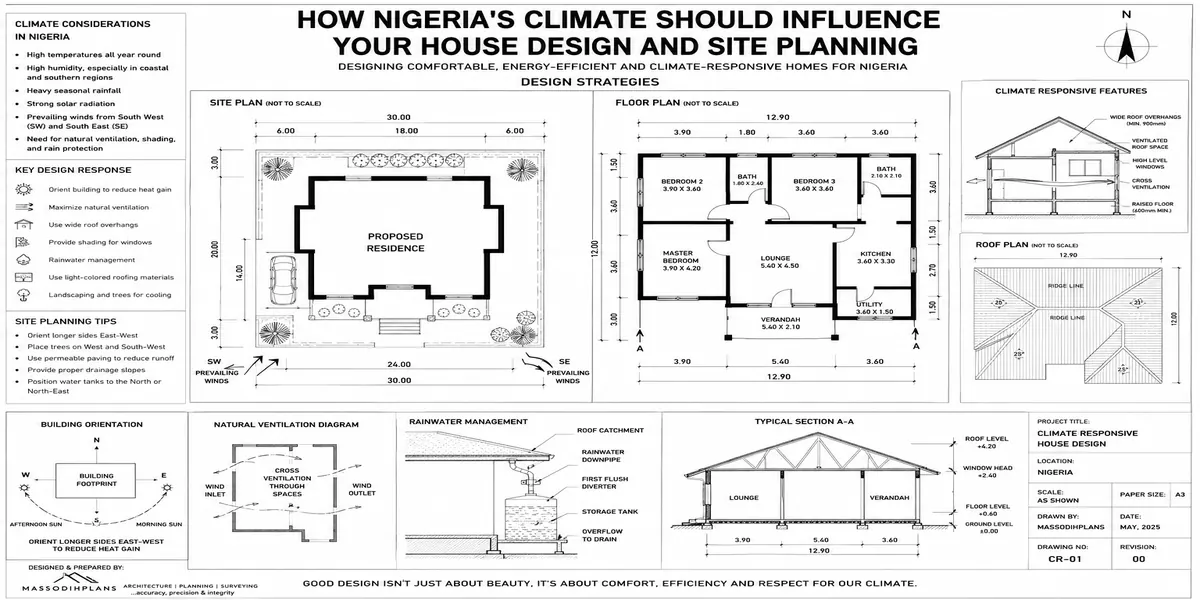
An irregular or narrow plot constrains your floor plan options and can increase design and construction cost compared to a regular rectangular plot of the same area. Orientation relative to the sun path also affects how comfortably a house can be naturally cooled a plot where the long axis runs east-west limits your options for shading the harshest sun exposure.
Access for Construction
Confirm the access road can accommodate delivery trucks and construction equipment. Plots reachable only by narrow footpaths or informal tracks add real cost and delay to every stage of construction, from foundation material delivery to final fittings.
Neighbouring Land Use and Future Development Risk
Check what’s zoned and being built immediately around your plot a currently quiet residential plot next to land zoned for future commercial or high-density development may face very different noise, traffic, and privacy conditions within a few years.
Existing Vegetation and Site Clearing Cost
Heavily vegetated or previously built-on land (with structures to demolish, or extensive clearing needed) adds cost before construction even begins factor this into your comparison between plots, not just the purchase price.
A Practical Site Visit Checklist
Before making an offer on any plot, walk the site (ideally more than once, at different times) and confirm:
Have you obtained an independent Land Registry search and confirmed the land use designation matches your residential plans?
And have you spoken to at least two long-term residents or neighbours about flooding, power reliability, and security separate from what the seller or agent tells you?
Have you commissioned or scheduled a soil test before finalizing purchase?
Also have you confirmed the plot’s setback, plot coverage, and density classification with the relevant planning authority?
Have you checked whether the plot sits within an estate with its own design covenants?
Does the access road realistically support construction vehicle delivery?
Have you visited during or shortly after rainfall, or asked specifically about the site’s condition during rainy season?
Bring your architect or a qualified site consultant with you on at least one site visit before purchase, not just after. A trained eye reading elevation, soil surface condition, and drainage patterns on-site catches things a lifestyle-focused viewing never will.
Frequently Asked Questions
What’s the biggest location mistake people make when building in Lagos?
Choosing land based on price and neighbourhood reputation alone, without verifying soil condition and flood risk this is the single most common cause of dramatic budget overruns once construction begins.
How do I know if land in Lagos is prone to flooding before I buy?
Visit during or shortly after rainfall if possible, ask long-term residents directly, check the plot’s elevation relative to the surrounding road and drainage channels, and commission a soil test before committing funds.
Is a Certificate of Occupancy enough to guarantee I can build on a plot?
No. You also need to confirm the land use designation permits residential building, that there’s no competing claim on the specific plot, and that the plot complies with the zoning, setback, and density rules for that area.
Should I buy land in an emerging area or an established one?
Emerging areas (Ibeju-Lekki, outer Ajah, parts of Ikorodu) generally offer lower entry cost and growth potential but often carry more uncertain soil conditions and less mature infrastructure. Established areas cost more upfront but generally carry lower buildability risk. Neither is universally better it depends on your budget, timeline, and risk tolerance.
Do I need a soil test even if the land looks fine on the surface?
Yes. Soil conditions that require a more expensive foundation are frequently invisible from a casual site visit and only become clear through a proper geotechnical investigation.
Conclusion
Choosing where to build in Lagos is not the same exercise as choosing where to buy a finished home, and treating it that way is how good land purchases turn into expensive construction surprises. Verify title and zoning first, treat soil and flood risk as non-negotiable due diligence rather than an optional extra, and assess the specific plot’s buildability not just the neighbourhood’s reputation before any money changes hands. Get this sequence right, and the rest of your build has a genuinely solid foundation to work from, in every sense of the word.
If you’re evaluating land and want a second opinion before you commit, our Services page outlines how we support clients with site assessment alongside design. Browse our Plans Library for house plans that work well across different Lagos soil and plot conditions, or visit Plan School to understand how site conditions shape design and cost before you build. You can also explore more land and building guides on our Homepage.
Related Guides
- 10 Best House Plans for Small Plots in Nigeria: What Buyers Should Consider
- How to Choose the Right House Plan Based on Your Plot Size in Nigeria Today
- How GIS Can Help You Choose the Right Land for Your Dream House in Nigeria
- How to Identify Flood Risk Before Building a House in Nigeria Today, Safely
- How to Analyse a Building Site Before Choosing a House Plan in Nigeria
- How to Check a Plot of Land Before Buying It in Nigeria: Complete Guide
- How to Choose the Right Land for Building a House in Nigeria Safely Today
- How Much Does It Cost to Build a House in Nigeria? Full Guide to Materials, Labour, Foundation, Roofing and Finishing
- Roofing Quantity Calculator: Calculate Roofing Sheets, Timber, Nails, Ridge Caps and Accessories From Your House Plan
- Labour Cost to Build a House in Nigeria: Complete Mason, Carpenter, Plumber, Electrician and Finishing Cost Guide
Author
Massodih Okon is a Nigerian built-environment professional with academic and professional experience in urban and regional planning, geography, architectural design, Landscape Design, GIS and land development.
He holds a Master’s degree in Urban and Regional Planning from the University of Uyo and a first degree in Geography and Regional Planning.
Through MassodihPlans, he publishes practical guides on Nigerian house plans, building design, physical planning, site planning, development approval and residential construction. Read the full author profile →