Sustainable Landscaping, A Practical Guide From Climate to Performance Checklist: Sustainable Landscaping: Complete Guide to Xeriscaping, Landscape Lighting and Water-Efficient Gardens
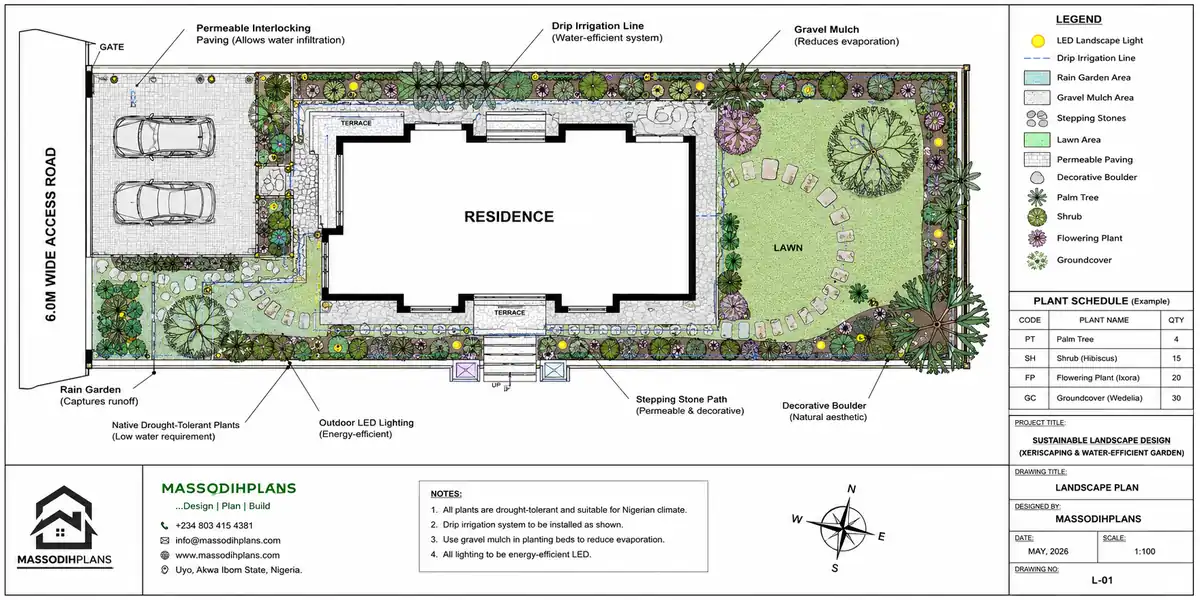
Sustainable Landscape Plan Design
Introduction
Sustainable landscaping is the design, construction, and maintenance of an outdoor space that uses less water, energy, materials, and chemicals while improving soil health, biodiversity, comfort, and long-term performance. It can include xeriscaping, water-efficient planting, rainwater harvesting, permeable surfaces, efficient irrigation, shade trees, responsible materials, and low-energy landscape lighting but the real goal is not simply to make a garden look “green.” It is to make the entire landscape work more efficiently.
That distinction matters. A garden can contain native plants and still waste water. A beautiful lawn can increase maintenance demand. Even efficient lighting can become unsustainable when fixtures are poorly positioned, left on unnecessarily, or powered inefficiently. Sustainable design therefore begins with performance, not decoration.
This guide takes a practical, site-based approach to sustainable landscaping. You will learn how to assess sunlight, rainfall, soil, drainage, slope, existing vegetation, water demand, and outdoor use before choosing plants or materials. You will also see how xeriscaping can reduce irrigation demand without creating a barren-looking yard, how to design water-efficient gardens around plant water zones, and how rainwater can be captured and directed instead of becoming runoff. Xeriscaping is fundamentally about reducing irrigation through appropriate planning, plants, soil practices, and efficient watering not simply replacing vegetation with gravel.
Most importantly, this is a performance guide: you will learn what to measure, what to monitor, what commonly fails, and how to turn a landscape plan into a system that saves resources while remaining attractive, functional, comfortable, and resilient.
Sustainable Landscaping by Climate: Designing for Arid, Tropical, Temperate and Cold Regions
Here’s something I tell every student early: there is no universal “sustainable landscape.” What’s sustainable in Lagos is often the opposite of sustainable in Phoenix. Sustainability means designing in genuine harmony with your specific climate, not applying a generic template borrowed from wherever the inspiration photo came from.
Arid regions
Deal with low rainfall, high evaporation, and intense heat. Sustainable design here leans heavily on drought-tolerant, often succulent or deep-rooted plants, minimal lawn area, efficient drip irrigation, and heavy mulching to slow moisture loss from soil. Soil in arid zones is often sandy and fast-draining, sometimes mineral-poor, requiring organic matter amendment just to hold what little water falls.
Tropical regions
Like ours here in the South-South, face the opposite challenge: heavy rainfall, high humidity, and intense but consistent heat. Sustainable design here prioritizes drainage capacity, erosion control on any slope, and plants that tolerate both saturated soil during rains and humidity-driven fungal pressure. Evaporation is less of a daily concern than managing excess water without it damaging structures or washing away topsoil.
Climate Reality Check
A rain garden is essential infrastructure in a tropical climate and a rare luxury feature in an arid one. The same landscape element serves completely different purposes depending on where you’re standing.
Temperate regions
Experience more balanced rainfall and pronounced seasonal change genuine hot summers and cold winters. Sustainable design here works with that seasonality: deciduous trees that shade in summer and let light through in winter, plant selection tolerant of both extremes, and soil that generally handles moderate moisture without the drainage urgency of a tropical site.
Cold regions
Introduce frost and freeze-thaw cycles as the dominant design constraint. Sustainable landscaping here means selecting frost-hardy species, protecting root zones with mulch through winter, using hardscape materials that resist frost heave and cracking, and designing drainage that accounts for snowmelt as a distinct seasonal event separate from rainfall.
Climate-Adapted Design Snapshot
Arid → water conservation, deep-rooted drought-tolerant plants, minimal lawn
Tropical → drainage capacity, erosion control, humidity- and rain-tolerant species
Temperate → seasonal plant strategy, moderate drainage, balanced water use
Cold → frost-hardy species, freeze-resistant materials, snowmelt drainage planning
Wind deserves a mention across every climate zone exposed, windy sites in any region accelerate moisture loss from both soil and plants, meaning windbreak planting is a genuinely sustainable strategy almost everywhere, just executed with climate-appropriate species.
The real lesson here: sustainable landscaping starts with an honest read of your actual climate, not an aspirational one borrowed from a photo taken somewhere else entirely. Once you understand your climate’s demands, one of the most powerful sustainable strategies especially in water-scarce regions is xeriscaping, which we’ll unpack properly next, because it’s far more sophisticated than most people assume.
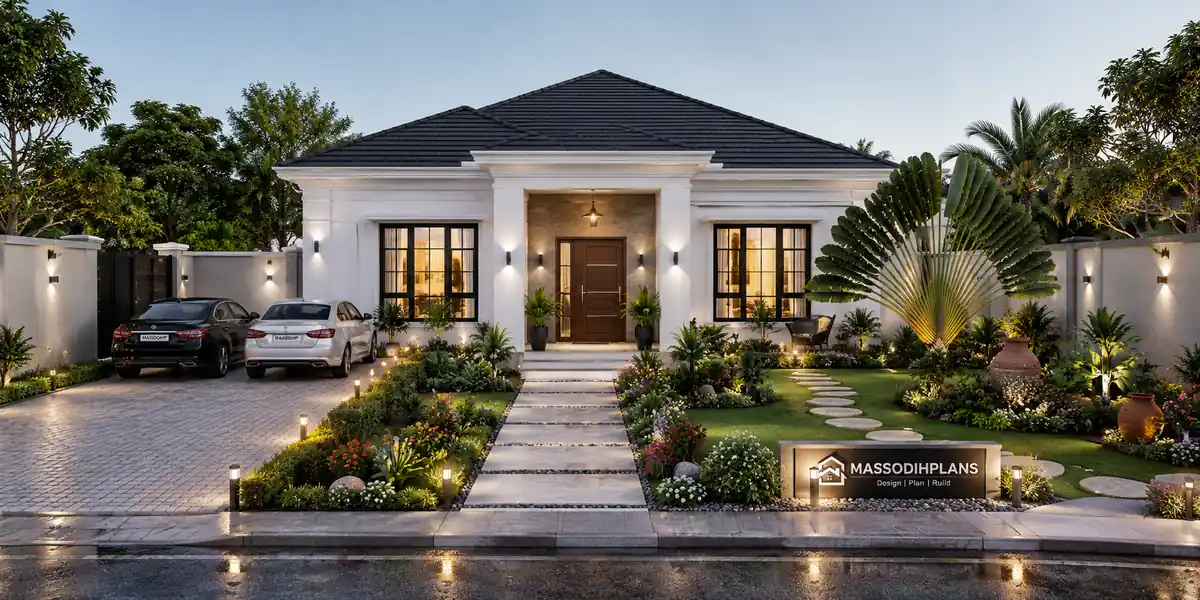
Sustainable Landscaping by Climate: Designing for Arid, Tropical, Temperate and Cold Regions
Xeriscaping Without the Desert Look: How to Create Lush, Water-Efficient Landscapes
Let’s clear up a misconception first: xeriscaping does not mean gravel and cacti. That’s a lazy, incomplete version of the concept. Proper xeriscaping is a water-efficient design system that can look genuinely lush, layered, and green the water efficiency comes from smart engineering, not from stripping away all the beauty.
Hydrozoning
Is the foundational technique, and honestly, the piece most people skip. It means grouping plants by water need into distinct zones, rather than mixing thirsty and drought-tolerant species together and watering everything at the highest common demand. A hydrozoned garden might have a small, higher-water zone near a seating area with lush, water-loving ornamentals, transitioning to moderate-water zones further out, and low-water zones at the periphery.
Hydrozone Logic
Never plant a thirsty species next to a drought-tolerant one expecting shared irrigation to work for both. One will be overwatered or the other underwatered group by water need first, aesthetics second.
Soil improvement
Is just as central to xeriscaping as plant selection. Amending soil with organic matter dramatically improves its water-holding capacity, meaning the same rainfall or irrigation goes further before the ground dries out this is often a bigger lever for water efficiency than plant choice alone.
Irrigation efficiency
Replaces wasteful overhead spraying (which loses significant water to evaporation and wind drift) with targeted drip irrigation delivering water directly to root zones. Smart timers and moisture sensors reduce further waste by watering only when actually needed, not on a rigid, wasteful schedule.
Mulch is arguably the single cheapest, most effective xeriscaping tool available. A proper mulch layer dramatically reduces evaporation from soil surface, suppresses competing weeds that would otherwise steal available moisture, and moderates soil temperature all of which reduce overall water demand.
Plant density, counterintuitively, matters for water efficiency too. Well-chosen, appropriately spaced planting shades soil and reduces evaporation compared to bare, exposed ground between widely scattered plants density done thoughtfully actually conserves water rather than increasing demand.
Lush Xeriscape Composition
Layer drought-tolerant plants by height and texture just as you would in any garden tall structural species, mid-height flowering or foliage plants, and ground-hugging cover to create visual richness without abandoning water efficiency.
Attractive composition in xeriscaping relies on the same design principles covered throughout our earlier guides color palette, texture variation, focal points simply applied to a plant palette selected for water efficiency rather than assuming water efficiency and beauty are mutually exclusive.
Done properly, a xeriscaped garden can look every bit as full and inviting as a conventional one, while using a fraction of the water. And since we’ve now talked extensively about reducing water demand, it makes sense to get quantitative about it which brings us to actually calculating your landscape’s water budget.
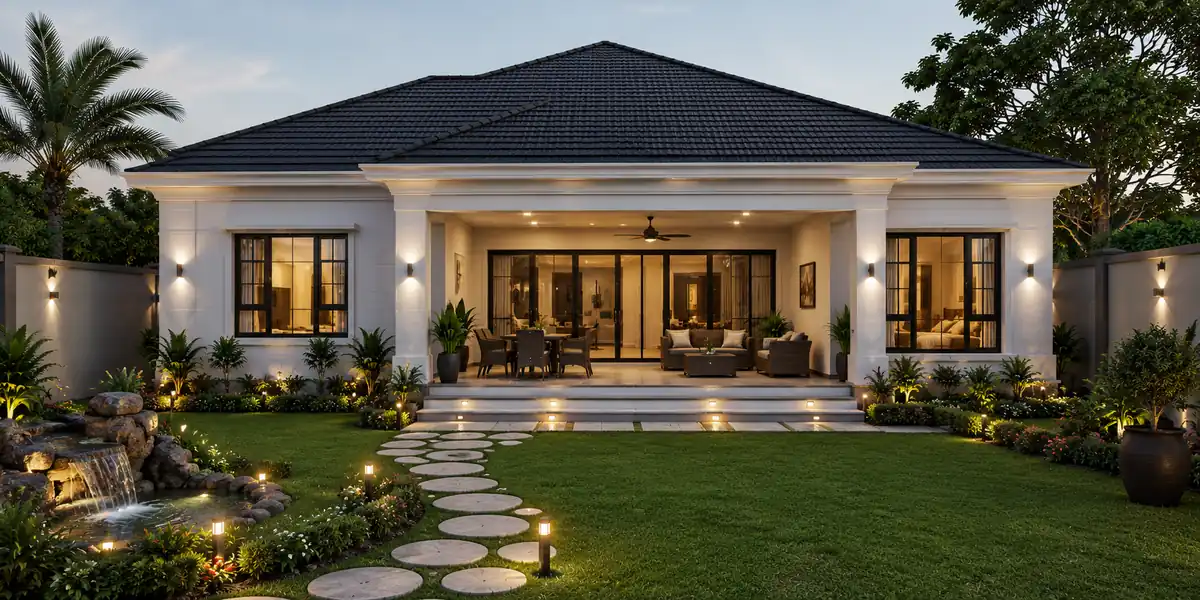
Xeriscaping Without the Desert Look: How to Create Lush, Water-Efficient Landscapes
Landscape Water Budget: How to Calculate, Reduce and Reuse Outdoor Water
Most people manage their landscape’s water use intuitively water when it looks dry, more during hot spells. That works, sort of, but it’s not sustainable management; it’s reactive guessing. A water budget turns that guesswork into something you can actually measure and improve.
Calculating water demand
Starts with understanding your plant palette’s collective water needs across your total planted area, adjusted for your climate’s rainfall pattern and evapotranspiration rate (the combined water loss from soil evaporation and plant transpiration). This sounds technical, but practically, it means estimating: how much water does this garden actually need per week during dry periods, versus how much rainfall typically supplies?
Simple Starting Point
Track your irrigation system’s output for a month (many timers display this, or you can measure a sprinkler’s flow into a container over a minute and calculate) alongside rainfall for the same period. That comparison alone reveals whether you’re over- or under-watering relative to actual need.
Rainfall capture
Reduces your irrigation demand directly. Roof runoff, collected via gutters into storage tanks, provides a genuinely free water source that can supply a meaningful share of your irrigation needs, particularly if sized to capture water during your rainy season for use during drier stretches.
Irrigation demand
Should be recalculated seasonally, not left on a fixed year-round schedule a system watering at a constant rate regardless of season wastes significant water during naturally wetter periods and potentially under-waters during genuinely dry stretches.
Runoff
Represents water leaving your property without benefiting your landscape at all a water budget approach treats excessive runoff as a loss to minimize, through permeable surfaces, swales, and rain gardens discussed elsewhere in this guide, effectively keeping more water working within your own site.
Greywater
Gently used household water from sinks, showers, or laundry can, with appropriate simple filtration and safe plumbing modification, supplement irrigation for non-edible planting areas, meaningfully reducing dependence on borehole or municipal water for landscape use.
Basic Water Budget Framework
- Estimate total planted area and rough water need by hydrozone
- Track average rainfall for your region across seasons
- Calculate the irrigation gap (need minus rainfall) by season
- Size rainwater harvesting capacity against that gap
- Adjust irrigation scheduling seasonally, not on a fixed year-round setting
- Monitor actual usage against your estimate and refine over time
Water-use monitoring closes the loop a simple water meter dedicated to irrigation, or periodic manual tracking, lets you see whether your budget assumptions match reality, and adjust accordingly rather than operating on permanent guesswork.
Treating water as a budgeted, measured resource rather than an unlimited convenience is genuinely one of the most impactful sustainability shifts available to any landscape, in any climate. And since so much of that budget concerns managing rainfall rather than irrigation, let’s go deeper into the drainage side of the equation designing landscapes that actually capture and use stormwater intelligently.
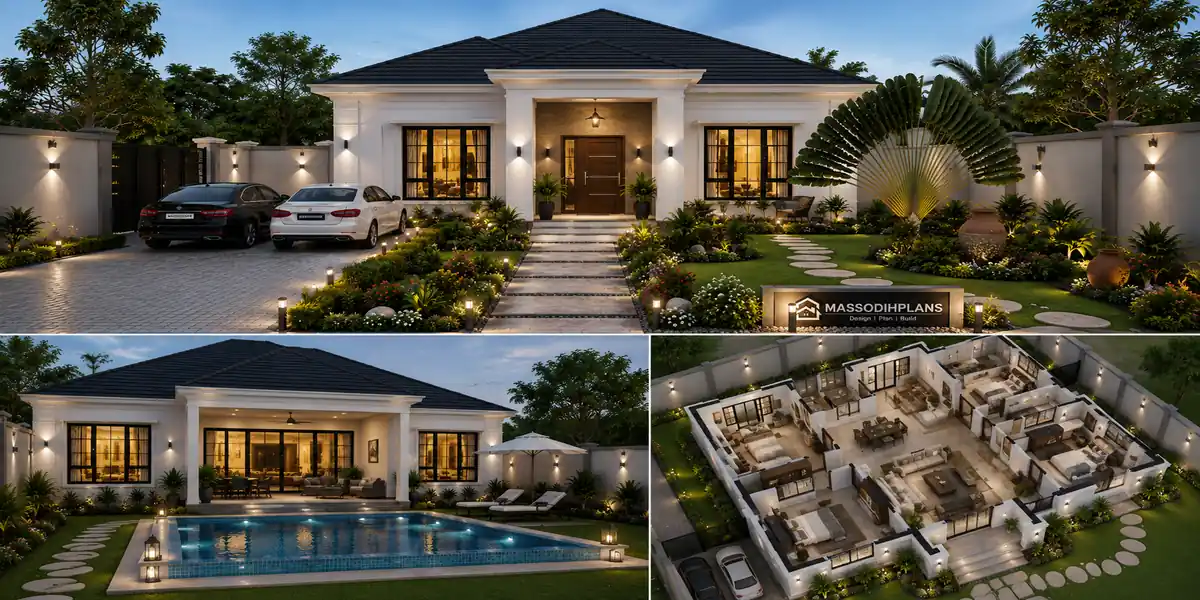
Landscape Water Budget: How to Calculate, Reduce and Reuse Outdoor Water
Smart Landscape Drainage: Capture, Slow, Store and Reuse Stormwater
We’ve discussed drainage extensively across our earlier guides as a protective, damage-prevention measure. Here, I want to reframe it: smart drainage isn’t just about getting rid of water safely it’s about capturing, slowing, and reusing water as a genuine resource, rather than treating it purely as a problem to expel from your property.
Bioswales
Are engineered, vegetated channels that do double duty they move water along a controlled path like a standard swale, but the planting within them also filters pollutants and slows the water’s velocity, reducing erosion and allowing more infiltration into the ground as it travels rather than rushing straight to an exit point.
Rain gardens
As covered previously, capture and hold runoff in a shallow planted depression, allowing it to soak slowly into the ground rather than becoming fast, erosive surface flow essentially turning a drainage necessity into an attractive, functional planted feature.
Design Shift
Instead of asking “how do I get water off my property as fast as possible,” ask “how do I slow this water down and let my own site benefit from it before it leaves.” That single reframe changes almost every drainage decision for the better.
Permeable surfaces
Gravel, permeable pavers, porous concrete allow rainfall to infiltrate directly through paved areas rather than shedding entirely as runoff, meaningfully reducing the volume your formal drainage infrastructure needs to handle during heavy storms.
Infiltration zones
Are areas deliberately designed and planted to encourage water to soak into the ground rather than run off often overlapping with rain gardens, but sometimes simply a well-planted, slightly depressed planting bed positioned to catch and hold nearby runoff.
Swales
Beyond their basic drainage function covered earlier, become genuinely smart infrastructure when designed with infiltration and slow release in mind, rather than purely as fast conveyance channels.
Detention
Refers to temporarily holding stormwater on-site in a dedicated basin or depression before releasing it slowly into the drainage system, reducing the peak flow burden during intense rainfall events, which matters both for your own property and for shared public drainage capacity downstream.
Retention
Goes further, holding water on-site more permanently a retention pond or storage system that keeps captured water available for later use, such as irrigation, rather than simply releasing it eventually.
Smart Drainage Toolkit
☐ Bioswales route and filter surface water along planted channels
☐ Rain gardens capture and slowly absorb concentrated runoff
☐ Permeable paving reduces total runoff volume from hardscape
☐ Infiltration zones encourage on-site groundwater recharge
☐ Detention features reduce peak stormwater flow during heavy rain
☐ Retention/storage captures water for later irrigation reuse
Runoff reduction, achieved through this combined toolkit, benefits not just your own property’s resilience but reduces pressure on shared public drainage systems and downstream erosion genuinely responsible design that serves both your site and your wider neighborhood. With water thoroughly addressed from both budgeting and drainage angles, let’s turn to the built, non-living surfaces of your landscape and how they factor into sustainability too.
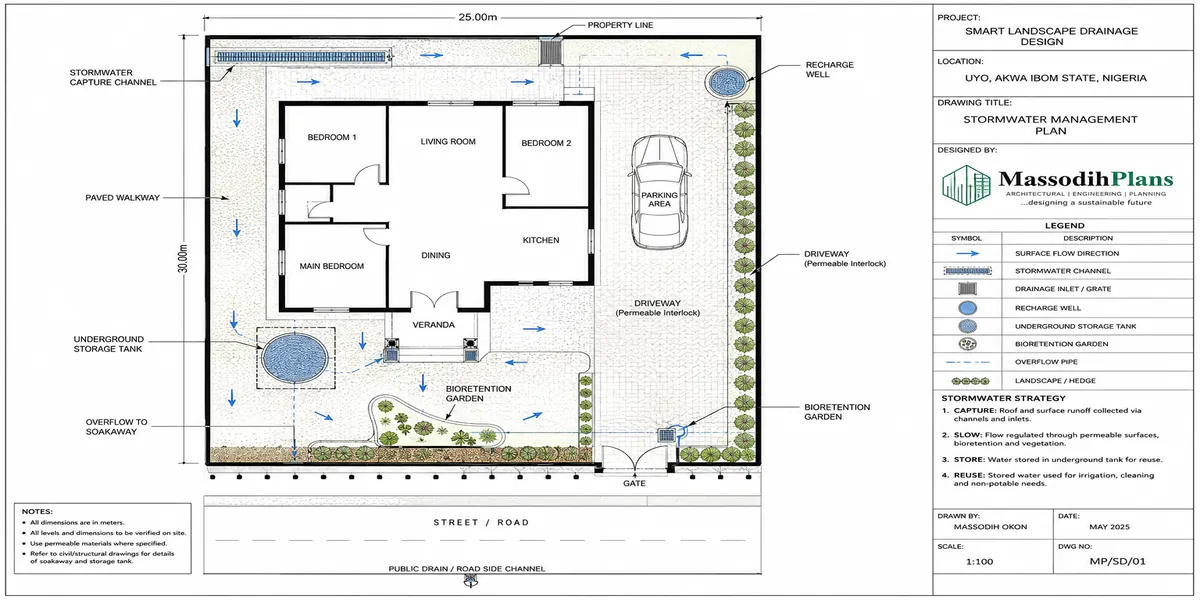
Smart Landscape Drainage Capture, Slow, Store and Reuse Stormwater
Sustainable Hardscaping: Permeable Paving, Recycled Materials and Low-Impact Outdoor Surfaces
Hardscape doesn’t grow, doesn’t photosynthesize, and doesn’t obviously scream “sustainability” the way planting does but the materials and methods you choose for paths, patios, and walls carry genuine environmental weight, and it’s a layer too often ignored in sustainability conversations.
Conventional paving
Standard poured concrete or non-permeable pavers laid over compacted, sealed sub-bases sheds nearly all rainfall as fast runoff, contributes to urban heat through heat absorption and radiation, and, in the case of concrete specifically, carries a genuinely significant embodied carbon footprint from cement production.
Permeable paving
By contrast, allows water to pass through into the ground below rather than running off entirely reducing runoff volume, supporting local groundwater recharge, and reducing strain on drainage infrastructure, all while remaining visually similar to conventional paving in many cases.
Practical Comparison
Standard interlocking pavers with tight, sealed joints behave almost like solid concrete for drainage purposes. The same pavers with sand-filled, slightly open joints allow meaningful water infiltration a small installation detail with a real environmental difference.
Recycled materials
Reclaimed brick, crushed concrete aggregate, repurposed timber reduce the demand for newly manufactured materials and often carry genuine character and texture that new, uniform materials lack, giving sustainable choices an aesthetic advantage rather than a compromise.
Locally sourced materials
Reduce transportation-related carbon footprint significantly compared to imported stone or specialty materials shipped long distances, while also generally costing less and better reflecting the visual character of your regional landscape.
Embodied impacts
Refer to the total environmental cost of a material before it even reaches your site extraction, manufacturing, and transportation. Concrete and quarried natural stone typically carry higher embodied impact than local, minimally processed materials like compacted laterite or gravel, common and genuinely attractive options here.
Heat retention
Varies significantly by material and color dark, dense paving absorbs and radiates substantial heat, meaningfully raising the immediate temperature of outdoor spaces in already hot climates, while lighter-colored, more porous, or planted-adjacent surfaces stay notably cooler.
Sustainable Hardscape Checklist
☐ Permeable option considered for paths, patios, and driveways
☐ Recycled or reclaimed materials evaluated as an alternative to new
☐ Locally sourced materials prioritized over imported options
☐ Lighter-colored surfaces considered to reduce heat retention
☐ Sub-base properly compacted to extend material lifespan and reduce replacement frequency
Maintenance connects directly to sustainability too durable, well-installed hardscape that lasts decades without needing replacement is inherently more sustainable than a cheaper material requiring frequent repair or replacement, regardless of the material’s individual environmental profile.
Choosing hardscape thoughtfully is a genuinely underrated sustainability lever, precisely because it’s a decision made once, with consequences that last for decades. From the ground beneath your feet, let’s move upward to another layer with real energy implications: how you light your landscape after dark, sustainably.
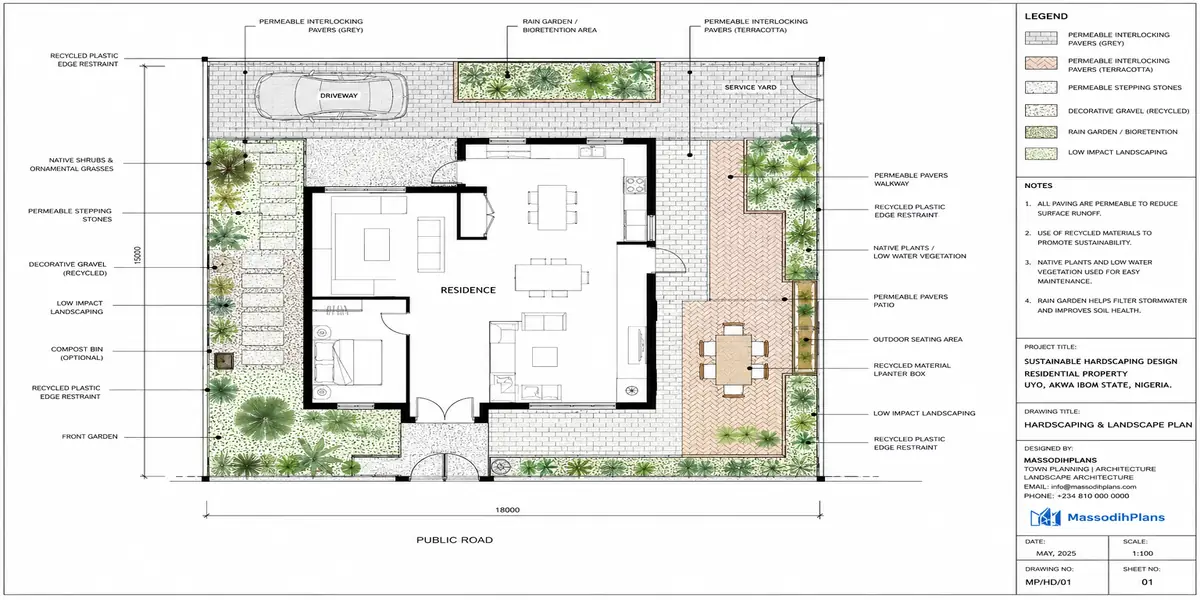
Sustainable Hardscaping Permeable Paving, Recycled Materials and Low-Impact Outdoor Surfaces
Landscape Lighting Without Waste: Energy-Efficient, Wildlife-Friendly Outdoor Lighting
We covered landscape lighting’s design purpose extensively in earlier guides safety, security, ambiance. Here, let’s focus specifically on doing it efficiently, without unnecessary energy waste or unintended environmental harm.
LED systems
Should be your default choice over older lighting technology they consume dramatically less electricity for equivalent brightness and last far longer before needing replacement, meaningfully reducing both running cost and the waste generated by frequent bulb replacement.
Timers
Ensure lighting only operates during actually needed hours, rather than running continuously regardless of whether anyone’s using or benefiting from illumination a simple, inexpensive addition that meaningfully reduces total energy consumption over a landscape’s lifetime.
Sensors
Particularly motion sensors for security-focused fixtures, ensure brighter lighting activates only when actually needed, rather than burning energy continuously at full brightness for a security function that’s only occasionally relevant.
Efficiency Combo
Pair timers for general ambiance and path lighting with motion sensors specifically for security fixtures you get consistent evening ambiance without waste, and full security brightness only when genuinely triggered.
Solar lighting
As mentioned in earlier guides, remains genuinely practical for path and accent lighting, drawing zero grid or generator electricity and reducing both cost and environmental footprint, particularly valuable given inconsistent power supply in many areas.
Light pollution
Is worth genuine consideration, even at a residential scale excessive, poorly aimed lighting spilling beyond your property or upward into the sky wastes energy illuminating nothing useful, while also disrupting the natural darkness that nocturnal wildlife, including beneficial pollinating insects, depend on.
Glare, as covered previously, undermines both function and comfort properly shielded fixtures that direct light downward or onto specific surfaces, rather than spraying light outward unshielded, reduce both wasted light and visual discomfort for people using the space.
Wildlife impacts deserve specific mention because it’s genuinely overlooked excessive or poorly timed lighting can disrupt nocturnal pollinators, disorient birds, and disturb natural animal behavior patterns. Using warmer color temperatures, shielded fixtures, and limiting lighting duration where full-night illumination isn’t genuinely necessary all reduce this impact.
Wildlife-Friendly Lighting Guidelines
☐ Use warm color temperature (below roughly 3000K) rather than harsh blue-white light
☐ Shield fixtures to direct light downward, not outward or upward
☐ Use timers or sensors rather than continuous all-night illumination where not essential
☐ Minimize lighting directly adjacent to dense planting that supports pollinators or nesting birds
Color temperature affects both ambiance and ecological impact warmer tones feel more inviting for human use and are generally less disruptive to nocturnal wildlife than harsh, cool-toned white light.
Strategic illumination lighting only what genuinely needs it, rather than uniformly flooding an entire compound is ultimately the most sustainable lighting philosophy of all: purposeful, not excessive. With lighting addressed sustainably, let’s return to the living heart of your landscape and go deeper than simple native-plant advice into genuinely regenerative ecological design.
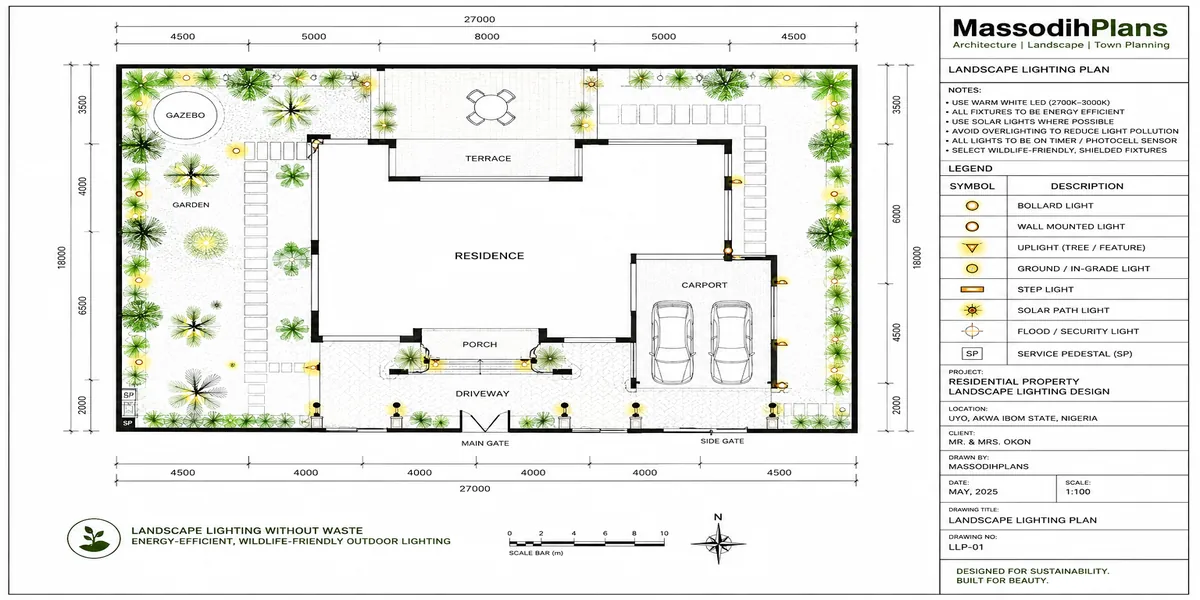
Landscape Lighting Without Waste Energy-Efficient, Wildlife-Friendly Outdoor Lighting
Regenerative Planting: Building Healthy Soil, Biodiversity and Resilient Landscapes
“Use native plants” has become such a common piece of sustainability advice that it’s almost lost its meaning. Let’s go deeper, because genuinely regenerative planting is about actively building ecological health over time, not just avoiding foreign species.
Soil biology
Sits at the foundation of regenerative planting. Healthy soil is alive teeming with beneficial microorganisms, fungi, and earthworms that break down organic matter, cycle nutrients, and improve soil structure naturally. Regenerative planting practices actively nurture this biology rather than depleting it through excessive chemical fertilizer and pesticide use.
Compost
Is one of the most powerful, accessible tools for building soil biology incorporating composted organic matter feeds soil microorganisms directly, improves water retention, and reduces dependence on synthetic fertilizers over time, closing a genuinely sustainable nutrient loop using your own household or garden waste.
Start Small
Even a basic compost bin using kitchen scraps and garden trimmings can meaningfully supplement soil health for a residential landscape, reducing both fertilizer cost and organic waste sent elsewhere.
Pollinators
Bees, butterflies, and other beneficial insects depend on flowering plant diversity, particularly native and adapted species that co-evolved with local pollinator populations. A landscape genuinely supporting pollinators contributes to the broader ecological health of your neighborhood, not just your own compound’s appearance.
Habitat layers
Canopy trees, understory shrubs, ground cover, and even leaf litter left in place rather than obsessively cleared provide the varied structural niches different wildlife species need, from nesting birds to beneficial ground-dwelling insects.
Plant diversity
Builds resilience directly a landscape relying on a single dominant species is vulnerable to a single pest or disease wiping out most of the planting at once, while a genuinely diverse palette spreads that risk and generally supports a wider, healthier range of beneficial insects and organisms.
Carbon
Considerations matter too trees and woody perennial plants sequester meaningful carbon over their lifetime, meaning a landscape with substantial tree canopy contributes positively to carbon capture, adding another genuine sustainability dimension beyond water and material choices.
Regenerative Planting Principles
☐ Feed soil biology through compost and organic matter, not just chemical fertilizer
☐ Prioritize flowering native/adapted species that support local pollinators
☐ Layer plant heights to create varied wildlife habitat structure
☐ Diversify species to build resilience against pest and disease pressure
☐ Retain some tree canopy for genuine long-term carbon sequestration
Microorganisms in soil, though invisible, are genuinely foundational to this entire approach practices like minimizing soil compaction, reducing chemical input, and maintaining organic mulch cover all protect and encourage the microbial life that makes soil genuinely fertile and self-sustaining over time.
Ecological resilience, the outcome of all of this, means a landscape that increasingly takes care of itself healthier soil needing less fertilizer, diverse planting needing less pest intervention, established root systems needing less irrigation genuinely working with natural systems rather than constantly fighting against them. Understanding this ecological depth naturally raises an important question: what’s the actual environmental cost of landscaping choices that ignore all of this? Let’s examine that honestly next.
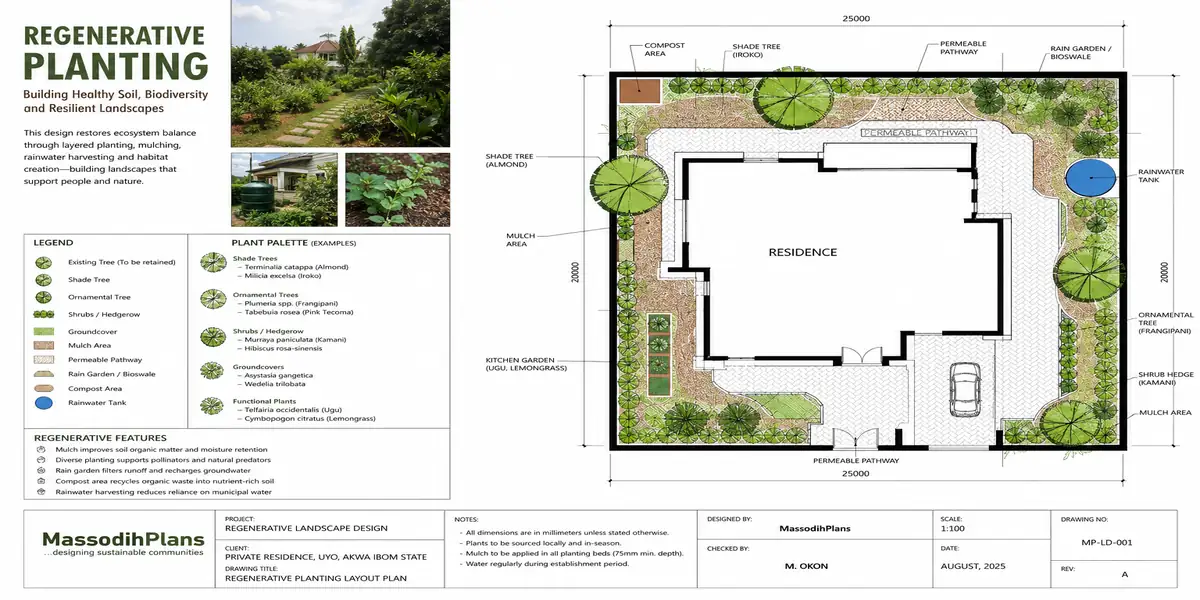
Regenerative Planting Plan Building Healthy Soil, Biodiversity and Resilient Landscapes
The Hidden Environmental Cost of Landscaping: Water, Materials, Maintenance and Carbon
I think it’s important to be honest here: landscaping, done conventionally, carries a genuine environmental footprint that rarely gets discussed openly. Understanding this cost is exactly what motivates every sustainable principle covered throughout this guide.
Irrigation
Represents one of the largest ongoing environmental costs, particularly water drawn from increasingly strained municipal or groundwater sources. Inefficient overhead irrigation systems, watering on fixed schedules regardless of actual need, waste enormous volumes over a landscape’s lifetime compared to the budgeted, efficient approaches covered earlier in this guide.
Fertilizers
Particularly synthetic chemical fertilizers used excessively, carry hidden costs beyond their direct expense runoff from over-fertilized landscapes contributes to nutrient pollution in local waterways, and heavy reliance on synthetic input can degrade the soil biology discussed in our previous section over time.
Honest Reflection
A landscape that “looks” sustainable lots of green, lots of plants can still carry a significant hidden environmental cost if it depends on excessive water, chemical fertilizer, and frequent replacement to maintain that appearance.
Mowing
Particularly of large conventional lawns using fuel-powered equipment, contributes measurable emissions and noise pollution over a landscape’s lifetime a cost that scales directly with lawn area, which is one more reason to genuinely reconsider how much lawn a landscape actually needs versus more diverse, lower-maintenance planting.
Transportation
Of materials and plants carries embodied carbon cost that’s easy to overlook imported stone, distantly sourced plants, or materials trucked long distances all carry a transportation footprint that locally sourced alternatives largely avoid.
Concrete
As mentioned in our hardscape section, carries a genuinely significant embodied carbon footprint from cement production a landscape relying heavily on extensive poured concrete surfaces carries meaningfully more embodied impact than one using permeable, locally sourced, or recycled hardscape alternatives.
Lighting
Run inefficiently on grid or generator power without timers, sensors, or LED technology, represents an ongoing energy cost that compounds over years of continuous, unmanaged operation.
Replacement plants
The ongoing cost of species that die due to poor site matching, inadequate care, or simply being poorly suited to the climate in the first place represent both a direct financial cost and an environmental one, since each replacement plant carries its own cultivation and transportation footprint.
Hidden Cost Awareness Checklist
☐ Irrigation efficiency assessed against actual water budget, not assumption
☐ Fertilizer use minimized in favor of compost and soil biology
☐ Lawn area genuinely evaluated against realistic mowing footprint
☐ Material sourcing considered for transportation distance
☐ Concrete use limited where permeable or recycled alternatives are viable
☐ Lighting run efficiently, not continuously without cause
☐ Plant selection matched carefully to reduce replacement frequency
Maintenance overall the cumulative water, fuel, chemical, and labor input required to sustain a landscape over its lifetime is genuinely the biggest hidden environmental variable, and it’s directly shaped by every design decision covered throughout this guide, which is exactly why sustainable design upfront matters so much more than trying to “green up” maintenance practices after the fact. Understanding these hidden costs sets up our next section perfectly: how sustainable maintenance practices, applied consistently after installation, meaningfully reduce this footprint over time.
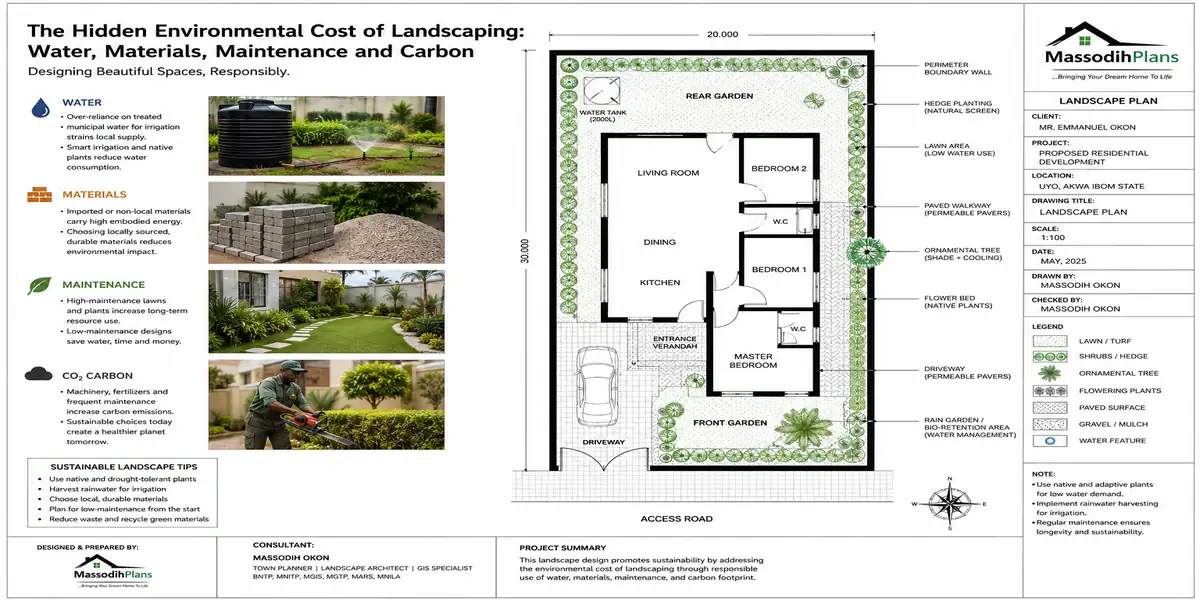
The Hidden Environmental Cost of Landscaping Water, Materials, Maintenance and Carbon
Sustainable Landscape Maintenance: How to Reduce Mowing, Irrigation, Fertilizer and Waste
Sustainability doesn’t end at installation in many ways, it’s just beginning, because maintenance choices made consistently over years determine whether a well-designed sustainable landscape actually delivers on its potential, or slowly reverts to wasteful, conventional habits.
Mowing schedules
Can be reduced meaningfully by reconsidering lawn area itself (as discussed in our hardscape-softscape balance guide), and by allowing slightly longer grass height, which research consistently shows reduces water stress and root vulnerability compared to very short, frequently mowed lawns.
Smart irrigation
Timers responsive to actual weather conditions, moisture sensors preventing unnecessary watering after rainfall, and drip systems targeting root zones directly dramatically reduces water waste compared to fixed-schedule overhead sprinkler systems running regardless of actual soil moisture.
Simple Upgrade
Even without a full smart irrigation system, a basic rain sensor that pauses scheduled watering after rainfall is an inexpensive addition that prevents a genuinely common and wasteful practice watering an already-saturated garden on a fixed timer.
Pruning
Done correctly and at appropriate seasonal timing, keeps plants healthy without unnecessary intervention over-pruning wastes labor and stresses plants, while well-timed, minimal pruning supports genuine plant health and reduces the need for corrective intervention later.
Organic waste
Grass clippings, pruned material, fallen leaves can be composted on-site or used directly as mulch rather than bagged and removed, closing a genuinely sustainable nutrient loop and reducing both waste transportation and the need for purchased mulch or fertilizer.
Equipment emissions
From fuel-powered mowers, trimmers, and blowers accumulate meaningfully over years of regular use reducing lawn area, or transitioning to electric or manual equipment where feasible, directly reduces this ongoing emissions footprint.
Fertilizer reduction
Follows naturally from the healthy soil biology discussed earlier a landscape with genuinely healthy, compost-enriched soil requires meaningfully less synthetic fertilizer input to maintain plant health compared to a landscape dependent on chemical fertilizer to compensate for degraded soil.
Sustainable Maintenance Habits
☐ Reduce lawn area where feasible; mow remaining lawn slightly longer
☐ Use smart irrigation timing responsive to actual weather and soil moisture
☐ Prune at appropriate seasonal timing, minimally rather than excessively
☐ Compost organic waste on-site instead of removing and replacing with purchased inputs
☐ Choose electric or manual equipment where feasible to reduce emissions
☐ Reduce fertilizer dependence as soil health genuinely improves over time
Seasonal adjustment of your entire maintenance schedule as covered in our fundamentals guide matters here too: rainy season maintenance should genuinely differ from dry season maintenance, with irrigation, fertilizing, and even mowing frequency adjusted rather than running on an identical year-round routine regardless of actual seasonal need.
Sustainable maintenance, done consistently, is what actually delivers the long-term environmental benefit that sustainable design promises on paper. And with design, water, materials, ecology, and maintenance all covered, let’s close this guide with something genuinely practical: a way to actually measure whether your landscape is living up to all of this.
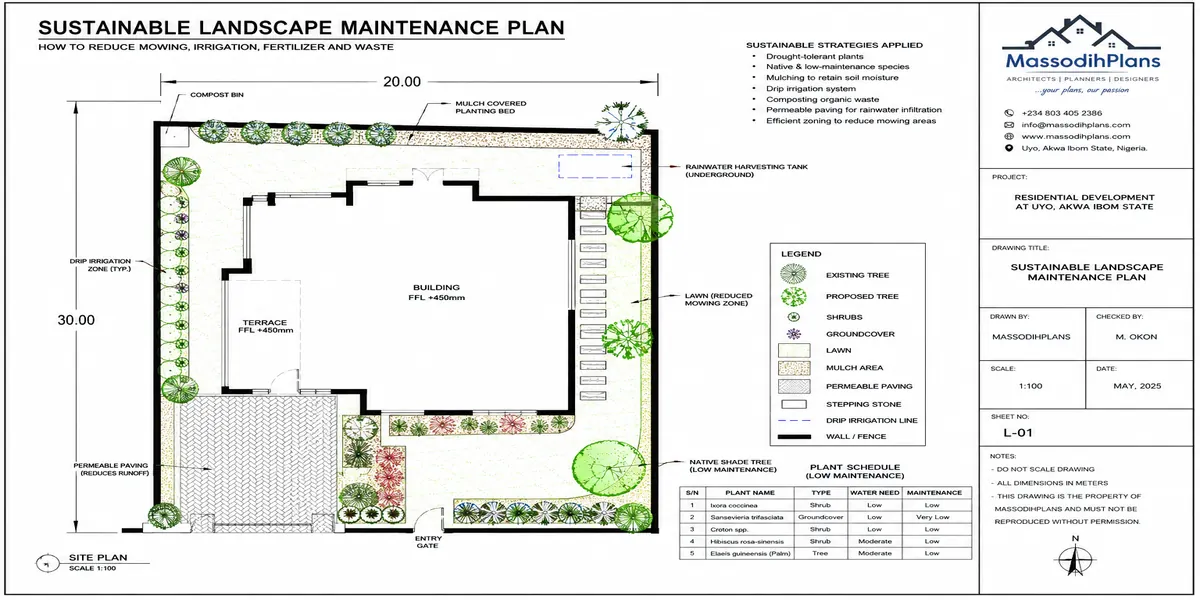
Sustainable Landscape Maintenance How to Reduce Mowing, Irrigation, Fertilizer and Waste
How to Measure a Sustainable Landscape: A Practical Performance Checklist
We’ve covered a huge amount of ground across this guide, and I want to close by giving you something you can actually use a practical framework for evaluating your own landscape, or one you’re planning, across every dimension of sustainability we’ve discussed.
Water efficiency
Does your landscape operate within a calculated water budget, using efficient drip irrigation and hydrozoning rather than uniform, wasteful watering? Is rainfall capture meaningfully reducing your dependence on external water sources?
Stormwater management
Does your site capture, slow, and infiltrate rainfall through swales, rain gardens, and permeable surfaces, rather than shedding it entirely as fast, erosive runoff?
Soil health
Is your soil actively improving through compost and organic matter input, supporting genuine microbial life, rather than depending increasingly on synthetic fertilizer to compensate for degraded structure?
Quick Soil Check
Dig a small hole and look for earthworms and dark, crumbly soil texture. Their presence is a genuinely good, simple sign of healthy soil biology; their absence suggests compaction or chemical dependence worth addressing.
Biodiversity
Does your planting palette support pollinators and beneficial wildlife through genuine species diversity and layered habitat structure, rather than a narrow, purely ornamental selection?
Energy consumption
Is your landscape lighting efficient LED, timed, sensor-controlled, solar where feasible rather than running wastefully on continuous, unmanaged grid power?
Material sustainability
Were your hardscape materials chosen with consideration for permeability, recycled content, and local sourcing, rather than defaulting purely to conventional, high-embodied-impact options?
Heat reduction
Does your landscape’s material and planting mix genuinely reduce ambient heat around your property through shade trees, lighter-colored surfaces, and reduced expanses of heat-absorbing hardscape compared to a purely paved, unshaded alternative?
Maintenance intensity
Has your maintenance demand genuinely decreased over time as your landscape has matured, or does it still require the same intensive mowing, watering, and chemical input as installation day?
Sustainable Landscape Performance Checklist
☐ Water use tracked against a genuine budget, with efficient irrigation in place
☐ Stormwater captured and slowed on-site, not simply shed as runoff
☐ Soil biology actively supported through compost and reduced chemical input
☐ Planting diversity genuinely supports pollinators and wildlife habitat
☐ Lighting is efficient, timed, and minimally light-polluting
☐ Hardscape materials chosen for permeability and lower embodied impact
☐ Heat reduction achieved through shade and thoughtful material choice
☐ Maintenance demand has decreased, not remained static, as the landscape matured
☐ Waste is composted or reused on-site rather than discarded
☐ Overall landscape shows increasing resilience with less external input over time
Waste reduction
Is organic waste from your landscape composted or reused on-site, closing the nutrient loop, rather than bagged and removed while fresh mulch and fertilizer are purchased separately?
Long-term resilience
Perhaps the ultimate test does your landscape genuinely need less external input (water, fertilizer, replacement plants, intensive labor) each year as it matures, or does it remain permanently dependent on the same intensive care it needed on day one?
That final question is really the heart of everything we’ve covered across this guide. A genuinely sustainable landscape isn’t one that simply uses the “right” plants or materials on installation day it’s one that becomes progressively more self-sufficient, resilient, and low-impact as it matures, precisely because every layer we’ve discussed climate-appropriate design, water budgeting, smart drainage, sustainable materials, regenerative planting, efficient lighting, and thoughtful maintenance was genuinely built in from the start, not bolted on afterward as an afterthought.
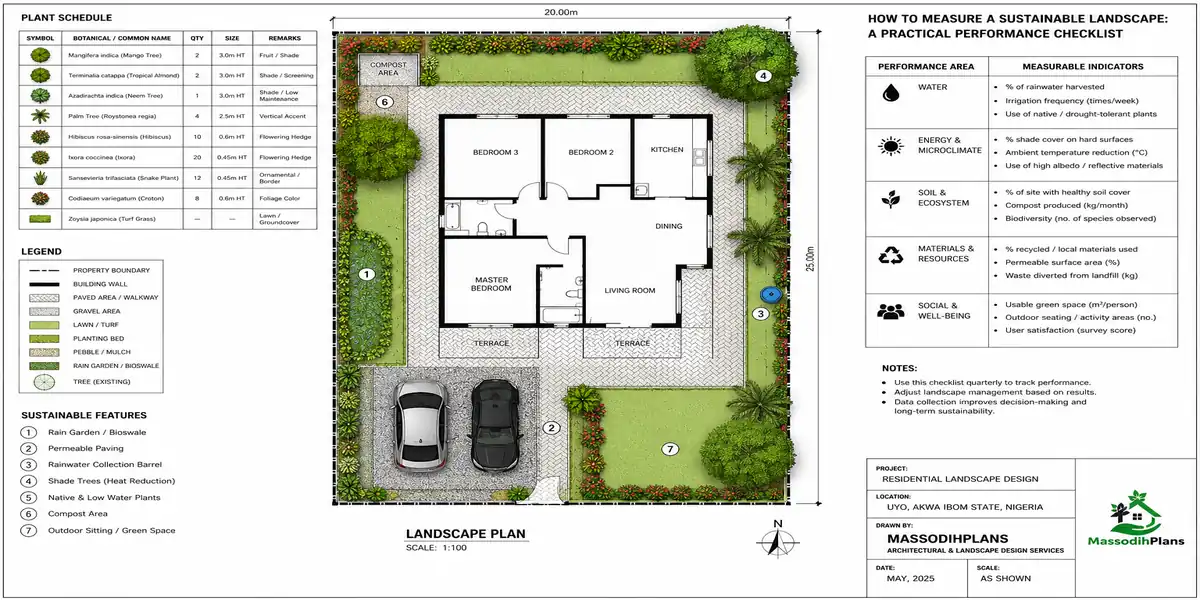
How to Measure a Sustainable Landscape A Practical Performance Checklist
If you’re planning a landscape and want to build genuine sustainability into it from the very first site analysis, our Services page connects you directly with our team for that conversation. To build a deeper technical understanding of the principles covered throughout this guide, explore our Plan School. For house plans already designed with sustainable site integration in mind, browse our Plans Library, and for more guides like this one, return to our Homepage.
- Landscaping: Complete Guide to Design Ideas, Gardens, Yards and Outdoor Spaces
- Landscaping & Landscape Design: Complete Guide to Landscape Architecture
- Urban Planning & Urban Design: Complete Guide to Modern Cities, Development and Renewal
- Real Estate Development & Site Planning: Guide to Planning, Construction, Infrastructure and Stormwater Management
- Urban Planning & Urban Design: Complete Guide to City Planning, Zoning and Land Development
- Building Regulations by Country: Permits, Zoning, Codes and Property Development Rules
- Landscaping Services: Complete Guide to Landscape Design, Hardscaping, Garden Planning and Outdoor Improvements
- Landscape Architect: What They Do, What They Design and When You Need One
- House Plans: Complete Guide to Floor Plans, Building Drawings, Home Designs & How to Design a House
- How Do I Get Land Survey and Building Approval in Nigeria From Switzerland? A Step-by-Step Guide for Diaspora Property Owners
- Land-Buying Checklist: 100+ Things to Check Before Buying Land in Nigeria