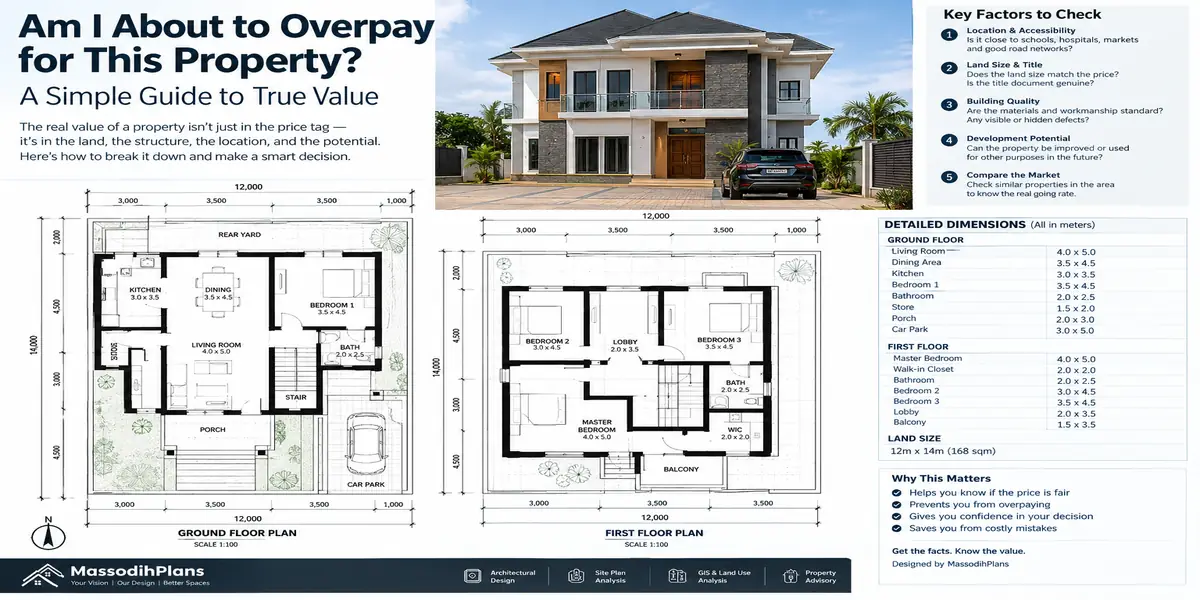
Building approval fees in Maiduguri, Borno State, start with a base application processing fee of ₦5,000 for individuals and ₦10,000 for companies, according to the fee information discussed in this guide. However, these amounts are not the total cost of obtaining building approval. Your final bill may include additional statutory charges calculated according to your building’s size, intended use, and applicable location category under the Borno State Gazette 2022. To budget accurately, you need to establish the charges that apply to your particular property before submitting your application, rather than assuming the initial processing fee covers everything.
Let me explain the costs in practical terms, including the charges to investigate, the documents you may need, how the approval process works, and the steps to take before paying. Whether you own a plot in Maiduguri, are a Borno indigene living abroad and planning to approve a family house remotely, or simply want to understand how building control works in Nigeria, you’ll learn what to check so you can prepare your budget, avoid preventable delays, and approach the approval process with greater confidence.
Why This Topic Matters More in Maiduguri Than Almost Anywhere Else
Let’s be honest about something most articles won’t tell you: Maiduguri’s building approval system has been rebuilding itself at the same time the city has been rebuilding itself. Years of insurgency disrupted land records, displaced documentation, and left a lot of informal construction in its wake. What’s happening now through the Borno State Geographic Information Service (BOGIS) and the Borno State Urban Planning and Development Board (BSUPDB) is a genuine attempt to restore order to land administration and building control, including a digitized land allocation system for the New Maiduguri Layout along the Ring Road.
That context matters for your fees, because it means two things working simultaneously in your favour and against you. In your favour: the process is becoming faster, more digital, and less dependent on who you know at the ministry. Against you: enforcement is tightening as the state rebuilds its revenue base, which means the informal “I’ll just build and regularize later” approach that used to work in many Nigerian cities is a genuinely riskier bet in Maiduguri today than it was five years ago.
That’s the thread running through everything below not just what you’ll pay, but why paying it properly, now, protects you more in Maiduguri specifically than it might elsewhere.
Who Actually Approves Your Building Plan in Maiduguri?
Before any fee makes sense, you need to know who you’re paying and why. In Borno State, two agencies matter, and conflating them is where a lot of confusion starts.
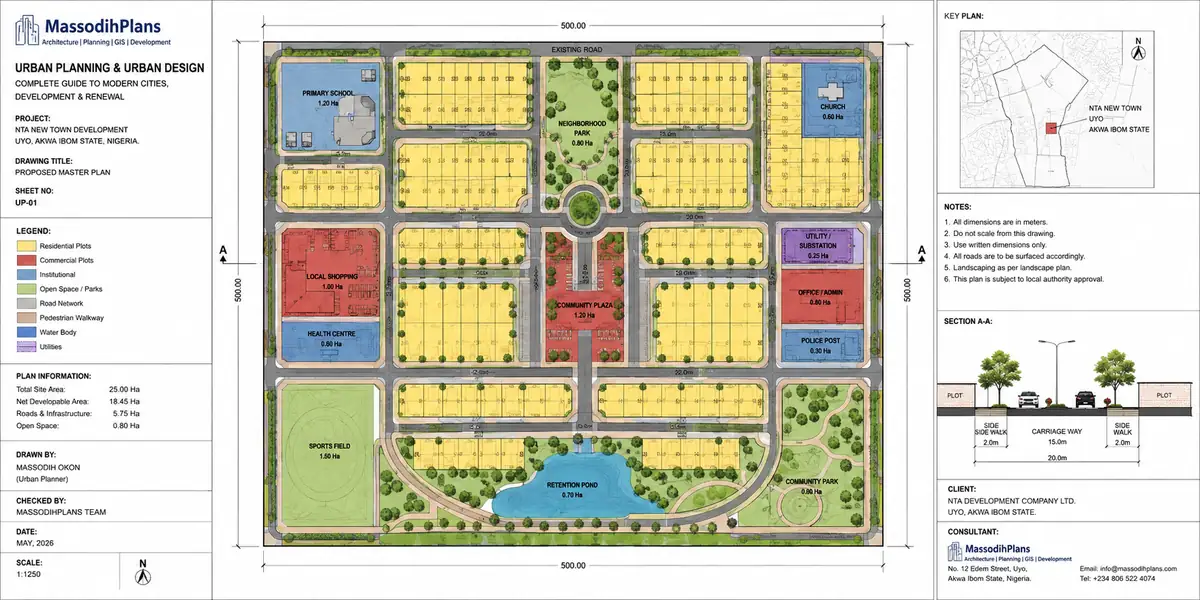
BSUPDB (Borno State Urban Planning and Development Board) is the agency that reviews and approves your actual building plan the drawings, the structural adequacy, the compliance with planning law. This is who issues your Development/Building Permit under the Borno State Urban and Regional Planning Law 2001.
BOGIS (Borno State Geographic Information Service) handles land administration titles, Certificates of Occupancy, layout allocation, and the digitized New Maiduguri Layout plots currently being sold along the Ring Road corridor. If you’re buying raw land rather than developing land you already hold title to, BOGIS is where that transaction happens before BSUPDB ever sees your building plan.
Moving from land to building, then, the sequence runs: secure and document your land through BOGIS first, then submit your building plan to BSUPDB. Skipping straight to BSUPDB without clean land documentation is one of the most common reasons applications stall.
The Complete Fee Breakdown: What You’re Actually Paying For
Now to the part you came for. Here is every fee component in the Maiduguri building approval process, broken into what’s fixed, what’s variable, and what’s easy to forget.
1. The Processing Fee (Fixed)
- Individual applicant: ₦5,000
- Company/organization applicant: ₦10,000
This is captured under Schedule 2 of the Borno State Internal Revenue Law, 2020, and it’s paid before your application even gets reviewed. Think of it as the fee for the application to exist in the system, not for the approval itself.
2. The Building Plan Processing / Development Permit Fee (Variable)
This is the fee most people underestimate, because it isn’t a flat number it’s calculated based on your building’s floor area, its use classification (residential, commercial, industrial), and its density zone, as set out in the Borno State Gazette 2022. BSUPDB issues this as a Demand Notice after reviewing your application, and you pay it through the same Remita platform.
Because Gazette rates are revised periodically and vary by exact zone classification, I’m not going to hand you a fabricated flat number and pretend it’s gospel that would do you more harm than good. What I can give you is the structure for working it out, and a worked example below using realistic Nigerian small-residential-building figures, so you walk into BSUPDB knowing roughly what range to expect rather than being quoted a number with no way to sanity-check it.
3. Feasibility and Viability Report (Variable, Consultant-Dependent)
Before BSUPDB will process your application, you need a Feasibility/Viability Report prepared by a consultant registered with the Board. For a small residential plot, this typically runs anywhere from ₦50,000 to ₦250,000 depending on the consultant and the complexity of your site, and this is a professional service fee, not a government charge so it’s worth getting more than one quote.
4. Fire Service Report (Small Fixed/Variable Fee)
A fire safety assessment from the nearest fire service department is required as part of your documentation. For a standard residential building, this is typically a modest fee, but confirm the current figure directly with the fire station handling your zone, since this isn’t centrally published.
5. Police Report (Small Fixed/Variable Fee)
Similarly, a police report from your nearest police division is part of the required documentation set. Again, confirm the current fee locally it’s a modest administrative charge, not a major budget item, but it’s one people forget to plan a visit for.
6. Consultant/Professional Service Fees (Variable)
Separate from the feasibility report, if you engage an architect, town planner, or structural engineer to prepare your actual building drawings and manage your submission, that’s a professional fee on top of everything above typically a percentage of construction cost or a negotiated flat fee, and this is genuinely the one place where paying a little more for someone who knows BSUPDB’s actual requirements saves you far more in rejected submissions and repeated trips.
Every fee above except the ₦5,000/₦10,000 processing fee can change without much public notice. Before you budget your project, call or visit BSUPDB directly, or check the Remita biller page for Borno State Internal Revenue Service, to confirm the current Demand Notice structure for your specific building category. Treat every number in this article as a planning guide, not a final invoice.
Working Out Your Likely Permit Fee: A Practical Formula
Let’s move from listing fees to actually calculating one, because this is the part no other article attempts.
Although BSUPDB’s exact Gazette rate table isn’t publicly itemized online, Nigerian state planning authorities generally structure development permit fees around the same underlying logic, which gives us a usable framework:
Estimated Development Permit Fee ≈ (Floor Area in m² × Base Rate per m²) × Use Multiplier × Density Multiplier
Where, as a planning-logic illustration (not an official published rate):
- Base Rate per m²: varies by current Gazette, commonly in the low hundreds to low thousands of naira per square metre for standard residential construction
- Use Multiplier: residential ≈ 1.0, commercial ≈ 1.5–2.0, industrial ≈ 2.0–3.0 (commercial and industrial uses are consistently charged at a premium over residential across Nigerian state schedules)
- Density Multiplier: low-density zone ≈ 1.0, medium-density ≈ 1.2–1.5, high-density ≈ 1.5–2.0
Worked example: Take a small 3-bedroom bungalow with a total floor area of 120 m², built as a residential property in a medium-density zone.
Estimated Permit Fee ≈ 120 m² × Base Rate × 1.0 (residential) × 1.35 (medium density)
If BSUPDB’s current base rate for your category comes back at, say, ₦500/m² on your Demand Notice, your estimated fee would be:
120 × 500 × 1.0 × 1.35 = ₦81,000
If the base rate comes back at ₦1,000/m², the same building becomes:
120 × 1,000 × 1.0 × 1.35 = ₦162,000
This is exactly why I keep steering clients on small plots toward compact, efficient floor plans instead of oversized layouts “just in case.” Every extra square metre in your design doesn’t just cost more to build in Maiduguri, under this multiplier structure, it increases your permit fee too. A well-planned 120 m² home and a sprawling 200 m² home on the same plot, same zone, same use, can carry a permit fee difference wide enough to fund your fence and gate.
Full Sample Cost Table: Small Residential Building in Maiduguri
| Fee Component | Low Estimate | High Estimate |
|---|---|---|
| Processing fee (individual) | ₦5,000 | ₦5,000 |
| Development/permit fee (120 m², residential, medium-density — illustrative) | ₦60,000 | ₦180,000 |
| Feasibility/viability report | ₦50,000 | ₦250,000 |
| Fire service report | ₦5,000 | ₦20,000 |
| Police report | ₦2,000 | ₦10,000 |
| Total estimated government + report fees | ₦122,000 | ₦465,000 |
This table excludes architectural/engineering design fees and construction cost itself it is strictly the approval pathway cost, which is the actual subject of this article.
What Happens If You Skip Approval in Maiduguri
This is the section I want you to actually sit with, friend to friend, because it’s where I see people make the costliest mistakes.
Borno State’s enforcement environment is not what it was during the peak insecurity years. As the state rebuilds revenue systems and formalizes land administration through BOGIS and BSUPDB, unapproved structures are increasingly a liability, not a quiet workaround. The risks run in a fairly predictable sequence: a stop-work order if discovered during construction, fines and back-payment of fees (often at a penalty rate higher than the original fee would have been), demolition risk in the most serious cases, and the one that bites hardest years later major complications when you try to sell, mortgage, or transfer a property with no valid building permit or Certificate of Occupancy behind it.
Here’s the transition worth sitting with: every fee in the table above is small compared to what regularizing an unapproved structure after the fact typically costs, once penalty rates, re-documentation, and consultant fees for retroactive approval are added together. Paying properly the first time is, almost without exception, the cheaper path.
For the Diaspora: Getting Approval Done From Abroad
I get this question constantly from Borno indigenes building for family while based in the US, UK, Germany, UAE, Canada, Australia, Qatar, and beyond, so let’s address it directly rather than treating it as an afterthought.
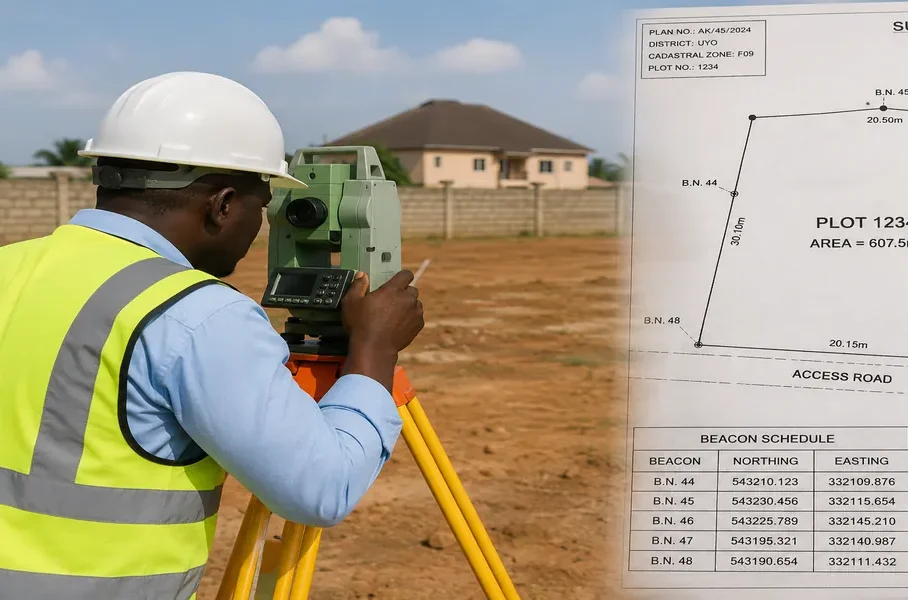
You do not need to be physically present in Maiduguri for most of this process. The practical path: appoint a registered consultant (architect, town planner, or surveyor registered with BSUPDB) through a clear written brief and a Power of Attorney where land transactions are involved, have them handle the feasibility report, drawing submission, and Demand Notice collection on your behalf, and handle all fee payments yourself directly through Remita using your own card or bank transfer never through a third party’s personal account, no matter how trusted. This last point matters more in a rebuilding administrative environment like Borno’s than almost anywhere else in Nigeria right now: digital payment platforms like Remita exist precisely to create a traceable, verifiable paper trail that protects you from exactly the kind of “I paid someone but have no receipt” disputes that plague diaspora-led building projects generally.
Ask your consultant to send you a photo of every Demand Notice and every Remita payment receipt as it’s generated, not a summary at the end. A real-time paper trail is the single best protection you have when you can’t be on the ground to verify things yourself.
Connecting This to Your Actual Building Plan
Here’s where this fee conversation circles back to something I care about more than the fees themselves: the design decisions you make before you ever submit to BSUPDB directly shape what you pay.
A small plot in Maiduguri doesn’t need and under the fee structure above, actively shouldn’t carry an oversized, poorly space-planned building just because the plot technically allows it. A well-designed compact house on a small plot gives you everything a family needs: proper room proportions, good cross-ventilation for Maiduguri’s climate, and a floor area that keeps your permit fee calculation in the lower band of that multiplier table above. This is precisely the kind of small-plot design thinking I built the Plans Library around plans sized and laid out specifically so that Nigerian property owners on modest plots aren’t paying premium approval fees for square metres they never actually needed.
A Note for Readers Outside Nigeria Reading This for Context
If you’re reading this from the US, UK, Germany, Iceland, Luxembourg, Switzerland, Qatar, Canada, Australia, or Singapore whether out of academic interest in how building control works in a post-conflict administrative environment, or because you’re personally connected to Borno State the broader lesson here travels well beyond Maiduguri: approval fee structures almost everywhere in the world combine a fixed administrative charge with a variable charge tied to the size and use of what you’re building. The specific naira figures are local, but the logic pay more to open the file, pay more again based on how big and what kind of building you’re putting up is close to universal, from a UK local authority’s planning fee schedule to a Dubai municipality’s building permit calculation. Understanding that structure helps you ask sharper questions of any planning authority, anywhere.
Frequently Asked Questions
How much does it cost to get building approval in Maiduguri?
The fixed processing fee is ₦5,000 for individuals and ₦10,000 for companies. On top of that, the variable development permit fee, feasibility report, and fire/police reports typically bring total approval-pathway costs for a small residential building to roughly ₦120,000–₦470,000, depending on building size, use, and zone.
Who approves building plans in Maiduguri — BOGIS or BSUPDB?
BSUPDB (Borno State Urban Planning and Development Board) approves building plans and issues the Development/Building Permit. BOGIS handles land titles and allocation, which typically needs to be settled first.
Can I build without approval in Maiduguri if I plan to regularize later?
You can, but it’s a genuinely riskier strategy in Borno’s current enforcement environment than it may have been in the past, and regularizing after the fact almost always costs more than the original approval fees would have.
How do I pay building approval fees in Borno State?
Through the Remita platform, searching for Borno State Internal Revenue Service as the biller, following the Demand Notice issued by BSUPDB after your application review.
Can I get building approval in Maiduguri without being physically present?
Yes. A registered consultant can handle your submission on your written brief and, where needed, a Power of Attorney with all fee payments made directly by you through Remita to keep a verifiable paper trail.
Before You Go
If there’s one thing to take from everything above, it’s this: the ₦5,000 or ₦10,000 you pay to open your application is the smallest number in this entire process, and treating it as the whole fee is how people end up blindsided by a Demand Notice three times larger than they expected. Know your building’s floor area, know its use and density classification, and ask BSUPDB for the actual current rate before you finalize your budget not after.
If you’re at the design stage and want a small-plot house plan built with exactly this kind of fee-efficiency in mind, browse our Plans Library for layouts sized sensibly for Nigerian plots. Visit Plan School to understand how floor area and density classification actually work before you commission drawings. For direct, hands-on help with your Maiduguri approval or design process, our Services page outlines how we work with clients from concept through submission. And you’ll find more city-specific and state-specific building guides on our Homepage.
- Cost of Building a House in Enugu: Complete Budget Guide, Prices & Real Costs
- How Much Does It Cost to Build a 4 Bedroom Duplex in Minna?
- Cost of Building a Bungalow in Osogbo: Full Construction Guide
- Jalingo Building Approval Process: Steps, Documents and Fees
- Nigerian House Plans for Narrow Plots in Ado-Ekiti: The Complete Design Guide
Author
Massodih Okon is a Nigerian built-environment professional with academic and professional experience in urban and regional planning, geography, architectural design, Landscape Design, GIS and land development.
He holds a Master’s degree in Urban and Regional Planning from the University of Uyo and a first degree in Geography and Regional Planning.
Through MassodihPlans, he publishes practical guides on Nigerian house plans, building design, physical planning, site planning, development approval and residential construction. Read the full author profile →