Here’s a conversation I have at least once a month, usually over a shaky WhatsApp video call at 9 p.m. my time in Uyo, which is 2 p.m. or 3 p.m. for whoever’s calling me from Mississauga, Calgary, or Halifax. The question always arrives the same way: “Massodih, I have some money saved up here in Canada. I want to build back home. What plan should I use?”
And my honest answer is always the same too: that question, as asked, doesn’t have one answer. “What plan should I use” depends on what your Canadian dollars are actually trying to do for you generate rent, hold value, or give you a house to retire into in twelve years. So before we get into floor plans, let’s build the actual decision framework, with real numbers, that I’d walk you through if you were sitting across from me instead of on a screen.
Why This Question Needs a Canada-Specific Answer (Not a Generic Diaspora One)
Most “diaspora house plan” content online is written for an undifferentiated “Nigerians abroad” audience as if someone earning in US dollars in Houston and someone earning in Canadian dollars in Brampton face identical math. They don’t. Three things make the Canadian investor’s situation specifically different, and each one changes what plan actually makes sense:
The CAD/NGN exchange rate moves independently of the USD/NGN rate, and is currently weaker CAD-for-CAD than most Canadian investors assume, which changes your real build budget in naira.
The Canada Revenue Agency has a specific reporting rule Form T1135 that applies the moment your Nigerian property crosses a certain cost threshold, and almost nobody writing about Nigerian house plans mentions it.
Canada’s time zones sit 5 to 8 hours behind Nigeria (depending on whether you’re in Newfoundland, Toronto, or Vancouver), which affects how realistically you can supervise construction remotely a detail that should influence which plan complexity you choose.
We’ll work through all three, with actual numbers, as we go. Let’s start with the part most people ask about first: which plan.
The Five Nigerian House Plan Types Canadian Investors Actually Ask For
Strip away the marketing language, and almost every Canadian-based client I’ve worked with is really choosing between five plan categories. Here’s how they compare, ranked by how often they genuinely fit a Canada-based investor’s goals rather than how often they’re marketed:
| Plan Type | Typical Plot Size Needed | Best Investment Goal | Remote-Build Difficulty |
|---|---|---|---|
| Self-contained mini-flats (4–6 units) | 350–450 sqm | Rental income, multiple tenants | Medium |
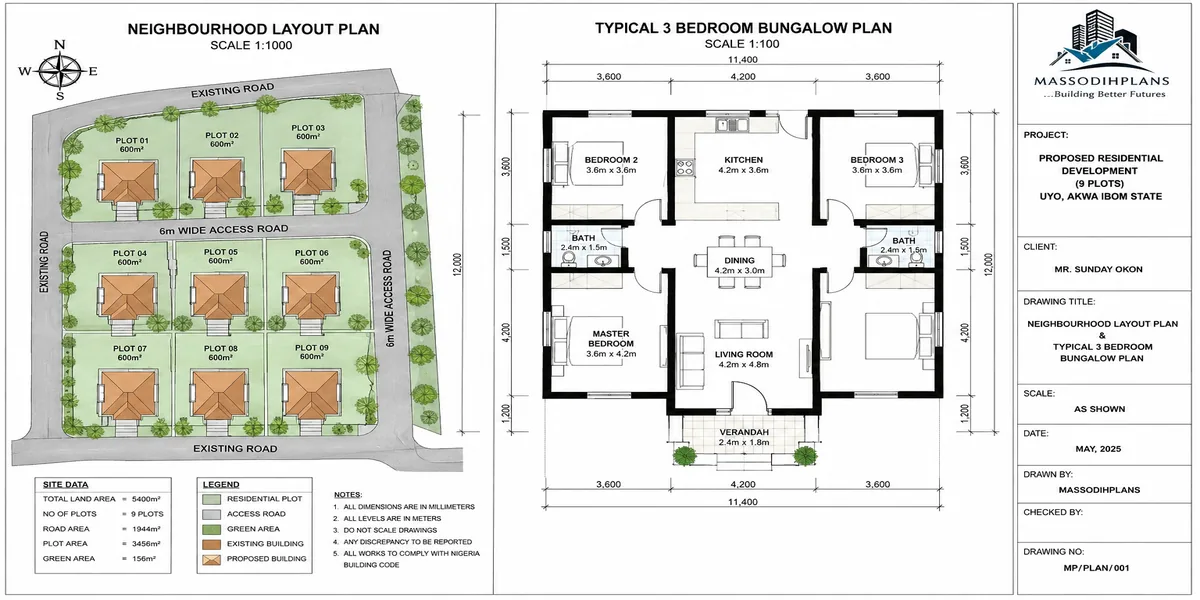
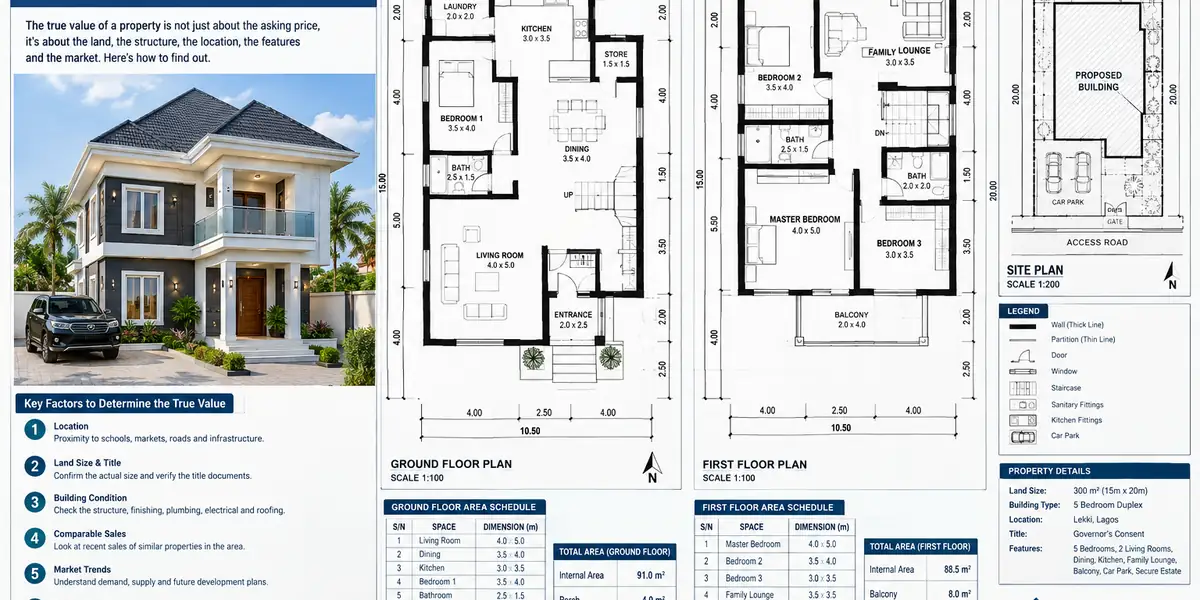
| 3-bedroom bungalow + BQ | 450–600 sqm | Family use / future relocation | Low |
| Twin duplex (semi-detached, 2 units) | 500–650 sqm | Rental income + personal unit | Medium-High |
| Compact 4-bedroom terrace duplex | 300–400 sqm | Resale value, urban appreciation | Medium |
| Small block of flats (6–8 units) | 600–800 sqm | Pure income generation, scale | High |
Notice something about that table: three of the five options sit comfortably on plots under 500 square metres. That’s not an accident, and it’s the most important thing I want you to take from this entire guide.
The Small-Plot Advantage: Why Your Best Plan Might Be Smaller Than You Think
Here’s where I’ll push back on the instinct almost every Canadian-based investor arrives with the assumption that a bigger plot and a bigger house automatically mean a better investment. For someone building from abroad, the opposite is often true, and the math explains why.
A small plot (300–500 sqm) gives you three things a large plot doesn’t: a lower total land cost (meaning your CAD savings stretch to cover construction instead of being absorbed by land), a design that’s structurally simpler to supervise remotely, and critically for rental income the ability to fit self-contained units that generate rent from day one instead of a single large family house that sits empty until you relocate.
This is the exact design problem MassodihPlans.com exists to solve: how to get a genuinely good, income-ready house onto a small Nigerian plot without the design feeling cramped or the construction becoming a remote-supervision nightmare. If your instinct is “I need a big compound to feel like I’ve built something substantial,” I’d gently ask you to run the numbers below before committing to that instinct.
To size this properly, there are two ratios worth knowing:
Plot Coverage Ratio (PCR) = (Building Footprint Area ÷ Total Plot Area) × 100
Most Nigerian urban planning authorities cap PCR at 50–60% for residential plots, meaning on a 400 sqm plot, your building footprint is realistically capped around 200–240 sqm per floor which is more than enough for a comfortable twin duplex or 4–6 mini-flats.
Floor Area Ratio (FAR) = Total Built-Up Floor Area (all floors) ÷ Total Plot Area
A 400 sqm plot with a FAR of 1.0 gives you 400 sqm of total usable floor area across all floors split, for example, into two 200 sqm duplex units, each comfortably a 3-bedroom home.
Before you buy a plot from Canada based on photos and a WhatsApp video walk-through, ask your agent or lawyer for the plot’s approved PCR and FAR from the local planning authority. This single number tells you, before you spend a naira on design, exactly how much house your plot can legally hold and prevents the common and expensive mistake of designing a plan that your plot’s approval won’t actually permit.
The Currency Math Nobody Shows You
This is the section I think should exist on every diaspora building guide and almost never does: what your Canadian dollars are actually worth in naira terms, and why that number is a moving target you need to plan around, not ignore.
As of mid-October 2026, the CAD/NGN mid-market rate sits close to ₦935–₦940 per Canadian dollar at official channels, though parallel (“black”) market rates have recently run lower, closer to ₦970–₦1,000 per CAD a spread that matters because it changes what the same CAD amount buys depending on which legal channel you use to move money. For planning purposes, always use the official/bank-verified rate from a licensed International Money Transfer Operator (IMTO), not a parallel-market quote, both for compliance and because parallel rates can swing without warning.
Here’s the formula, and why the exchange rate is a variable you should stress-test rather than assume fixed:
Build Budget in NGN = Build Budget in CAD × Exchange Rate (NGN per CAD)
Let’s say your construction quote for a twin duplex comes in at ₦85,000,000. Here’s what that actually costs you in CAD at different exchange rate scenarios:
| Exchange Rate (NGN per CAD) | CAD Cost for ₦85,000,000 Build |
|---|---|
| ₦900 | $94,444 |
| ₦935 (current, Oct 2026) | $90,909 |
| ₦975 | $87,179 |
| ₦1,050 | $80,952 |
Notice the direction: as the naira weakens further against the dollar (a higher NGN-per-CAD number), your fixed naira construction quote actually gets cheaper in CAD terms. This is exactly why diaspora buyers have increasingly found Nigerian property more accessible in real dollar/CAD terms over the past several years, even as naira-denominated prices have risen the exchange rate movement has outpaced local price inflation for anyone earning and saving in a stronger currency.
Don’t lock your total budget plan around today’s exchange rate alone. Material costs (cement, steel, roofing) are priced and often paid for in naira but influenced by import costs and exchange rates too, so get your Bill of Quantities revalidated close to your actual funds-transfer date, not months in advance, since both the exchange rate and local material prices can move meaningfully in that window.
Gross and Net Rental Yield: The Formula to Judge Any Plan Before You Build It
If your goal is income and for most Canadian-based investors I work with, it is don’t choose a plan based on how it looks in a render. Choose it based on what it will actually yield, calculated before construction starts, not after.
Gross Rental Yield (%) = (Total Annual Rental Income ÷ Total Investment Cost) × 100
Net Rental Yield (%) = [(Total Annual Rental Income − Annual Operating Expenses) ÷ Total Investment Cost] × 100
Let’s run this on two of the plan types from our table, using a hypothetical but realistic example on a 450 sqm plot in a mid-tier Nigerian city:
Option A Single 4-bedroom duplex (owner-occupied-style, rented as one unit):
- Total investment cost (land + construction): ₦95,000,000
- Achievable annual rent: ₦6,000,000
- Gross yield: (6,000,000 ÷ 95,000,000) × 100 = 6.3%
Option B Same plot, built as a twin duplex (2 rentable units):
- Total investment cost: ₦110,000,000
- Achievable combined annual rent: ₦9,600,000 (₦4,800,000 per unit)
- Gross yield: (9,600,000 ÷ 110,000,000) × 100 = 8.7%
Same plot. Roughly 16% more construction cost for the twin duplex, but a gross yield that’s nearly 2.5 percentage points higher because you’ve doubled your rentable units without doubling your land cost. This is precisely why I ranked the twin duplex and mini-flats formats near the top of our earlier table for income-focused Canadian investors: the math favours splitting a small plot into multiple income streams over building one larger single-income house.
Subtract a realistic 15–20% for property management, maintenance, and vacancy to get your net yield, and always calculate both before, not after, committing to a plan.
The Remote Build Risk Score: Scoring Any Plan or Contractor From Abroad
This is a tool I don’t think exists anywhere else in this specific form, built from patterns I’ve seen repeat across years of remote-supervised projects. Score your proposed plan and contractor arrangement out of 10 across these five factors before you commit funds:
Design complexity (0–2 points): 2 points if the plan is a simple rectangular or twin-block form; 0 points if it involves curves, cantilevers, or complex roof geometry that’s hard to verify from photos alone.
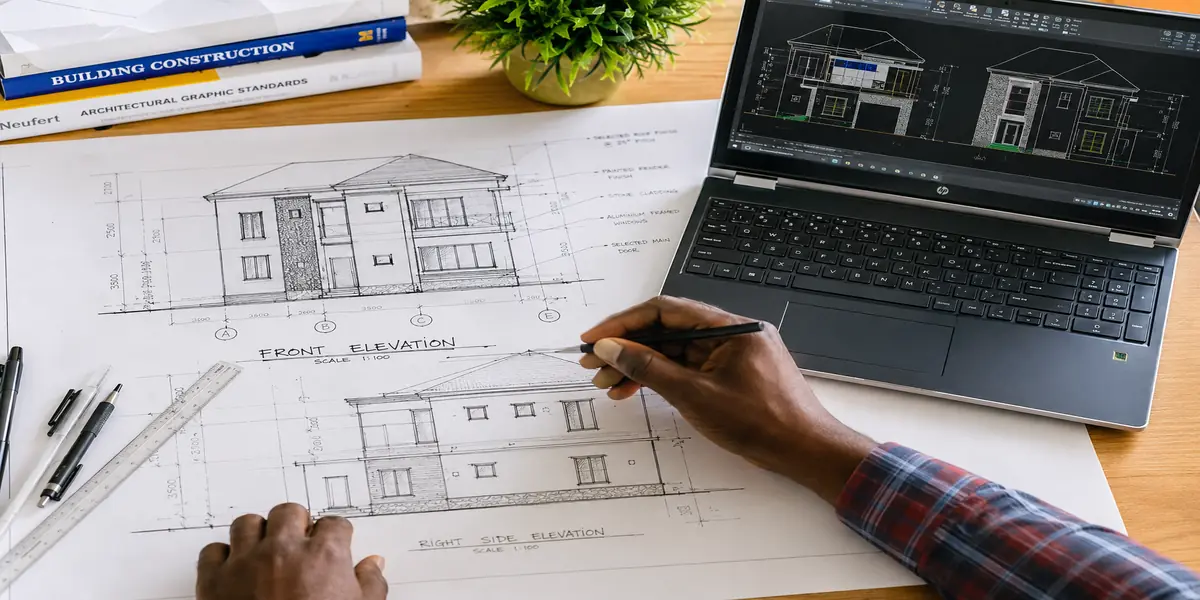
Documentation completeness (0–2 points): 2 points if you have full structural, electrical, and plumbing drawings, not just a floor plan sketch; 0 if you only have a facade render.
Milestone-based payment structure (0–2 points): 2 points if payment is tied to verified construction stages (foundation complete, roofing complete, etc.) rather than a lump sum upfront; 0 if the contractor wants most of the funds before groundbreaking.
Independent supervision (0–2 points): 2 points if you have a separate, independently hired supervising professional (not the same person as the contractor) doing site visits and reporting to you; 0 if the contractor self-reports with no independent check.
Communication rhythm (0–2 points): 2 points if there’s a scheduled, recurring update format (see the next section); 0 if updates are sporadic and reactive.
A score of 8–10 means your project is genuinely well set up for remote building. A score below 5 means stop and restructure the arrangement before you send another transfer.
Insist on a Bill of Quantities and a milestone payment schedule in writing before your first transfer, however good the contractor’s verbal reputation is. This single document is the difference between a project you can actually verify progress on from Canada and one where “we’re almost done with the roofing” could mean anything.
Documentation and Legal Layer: What Your Plan Must Be Paired With
A beautiful plan built on weak paperwork is not an investment it’s a liability waiting to surface. For a Canadian-based investor specifically, a few documentation points matter more than they do for a Nigeria-resident buyer, because you’re not physically present to react quickly if something goes wrong:
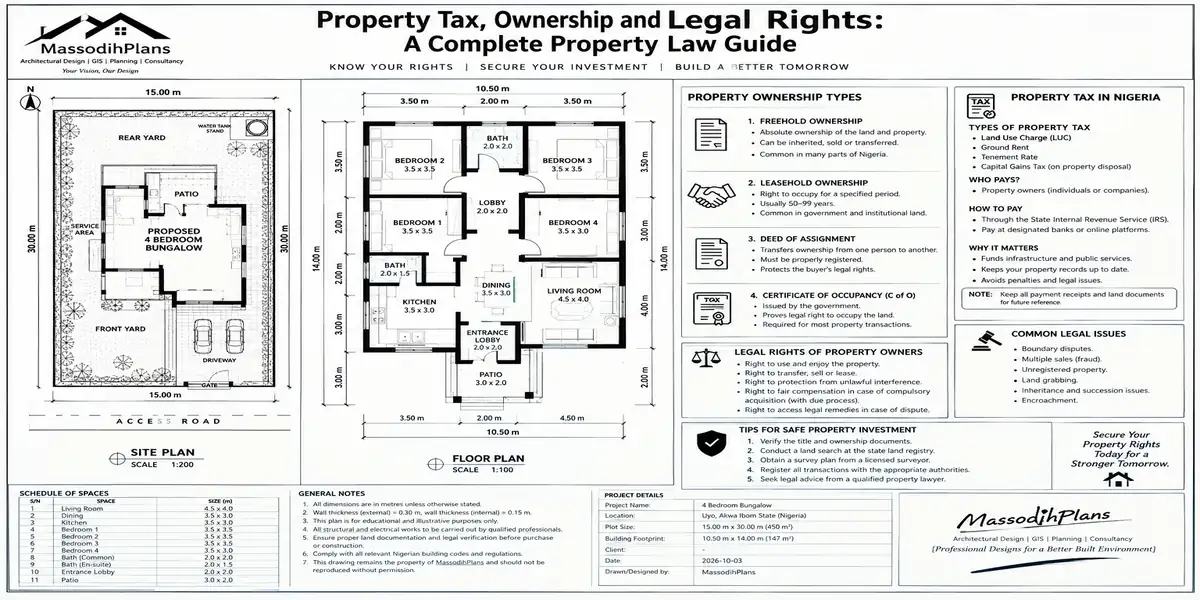
Certificate of Occupancy (C of O) or a clear, verifiable title, confirmed by a lawyer you’ve engaged independently of the seller or developer never rely solely on the seller’s or agent’s documentation claims.
A registered Power of Attorney, giving a trusted representative (often a family member or your retained lawyer) the legal authority to act on your behalf for approvals, inspections, and urgent decisions while you’re in Canada.
Building plan approval from the relevant state planning authority before construction begins this is both a legal requirement and your proof, if a dispute ever arises, that what’s being built matches what was approved.
A written, signed contract with your builder or contractor, specifying the plan, materials, timeline, and payment milestones not a verbal agreement based on trust alone, however long you’ve known the person.
The Tax Layer Almost Nobody Talks About
This is the piece I think is most genuinely missing from every other article answering this exact question, and it matters specifically because you’re a Canadian tax resident, not because of anything Nigeria-specific.
If you’re a Canadian resident and your Nigerian property is investment or rental property (not purely personal-use, such as a vacation home you and your family use and never rent out), the Canada Revenue Agency requires you to file Form T1135 (Foreign Income Verification Statement) once the total cost of your specified foreign property exceeds CAD $100,000 at any point during the tax year. The threshold is based on the property’s cost what you paid, converted to CAD at the exchange rate on the purchase date not its current market value, and it applies even if the property generates no income in a given year.
This is genuinely easy to miss, because the instinct is to think of this as “money I sent home,” not “foreign property I now need to report.” A few practical implications:
personal-use property
A personal-use property a house you and your family use and don’t rent out is generally exempt from T1135 reporting.
A rental property, even one rented to family at a modest rate, is specified foreign property and is reportable once your cost basis crosses CAD $100,000.
If your total specified foreign property cost is between CAD $100,000 and $250,000, a simplified reporting method applies; above $250,000, detailed reporting is required.
Penalties for failing to file, or filing inaccurately, can be significant and apply regardless of whether the property made money.
This is general information, not tax or legal advice, and I am not a Canadian tax professional. If your planned investment is likely to cross the CAD $100,000 threshold which most of the plan types in this guide will, once land and construction are combined speak with a cross-border tax accountant familiar with Canada-Nigeria reporting requirements before you commit funds, so your reporting obligations are built into your plan from day one rather than discovered at tax time.
Timezone and Project Rhythm: Supervising a Build From Canada Without Losing Your Mind
Nigeria sits on West Africa Time (UTC+1) year-round. Canada spans multiple zones, and because Canada observes daylight saving time while Nigeria does not, the gap actually shifts twice a year:
| Canadian Region | Time Zone | Gap From Nigeria (WAT) |
|---|---|---|
| Newfoundland | NST/NDT | 3.5–4.5 hours behind |
| Atlantic (Halifax) | AST/ADT | 3–4 hours behind |
| Eastern (Toronto, Ottawa) | EST/EDT | 5–6 hours behind |
| Central (Winnipeg) | CST/CDT | 6–7 hours behind |
| Mountain (Calgary, Edmonton) | MST/MDT | 7–8 hours behind |
| Pacific (Vancouver) | PST/PDT | 8–9 hours behind |
What this means practically: if you’re in Vancouver, a site visit happening at 9 a.m. Nigerian time is roughly midnight to 1 a.m. your time meaning live video walk-throughs need deliberate scheduling, not spontaneous calls. The practical fix I recommend to every client, regardless of which Canadian province they’re in: set a fixed weekly update slot (for example, every Saturday at a time that’s reasonable on both sides), require photo and video documentation at each construction milestone regardless of whether a live call happens, and treat your independent supervisor’s written report as the primary record the video call as a supplement, not the main source of truth.
Material and Design Specs for an Absentee Owner
Because you won’t be on-site to catch small maintenance issues early, your plan’s material specification matters more than it would for a locally resident owner. A few adjustments worth discussing with your architect specifically because you’re building from abroad:
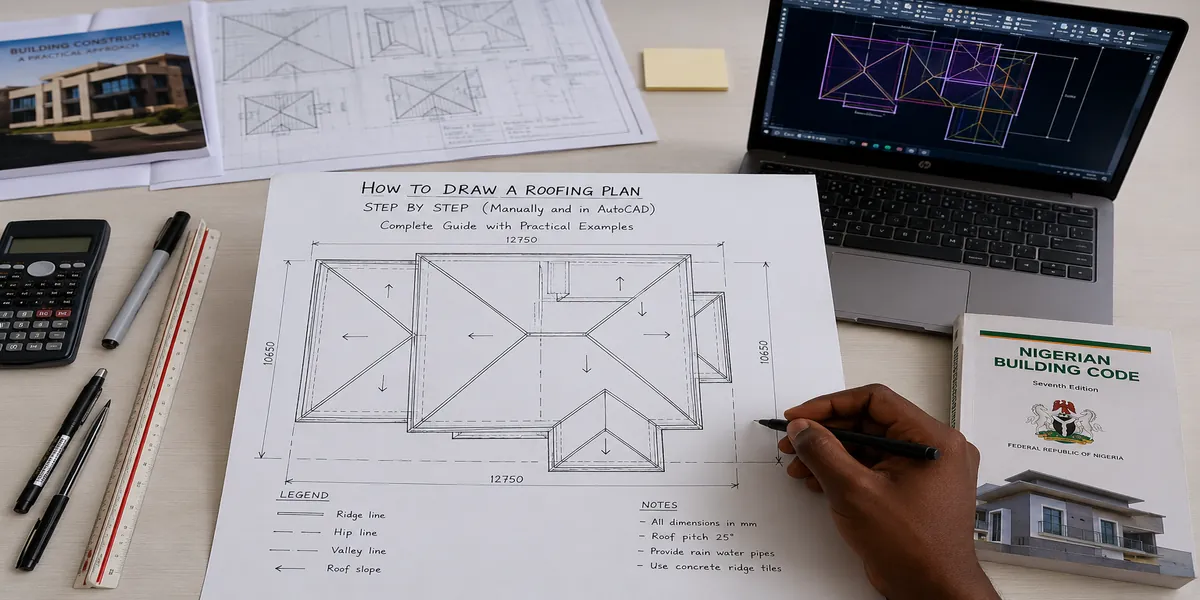
Low-pitch roofs with concealed gutters over true flat roofs flat roofs need more vigilant, regular maintenance that an absentee owner can’t easily provide.
Treated timber or composite materials over untreated solid wood for any exterior-facing elements, since humidity-related wood damage can go unnoticed for months without a resident owner checking.
Tiled or hardscaped compounds over bare landscaping that needs regular upkeep, reducing the maintenance burden on whoever is managing the property locally in your absence.
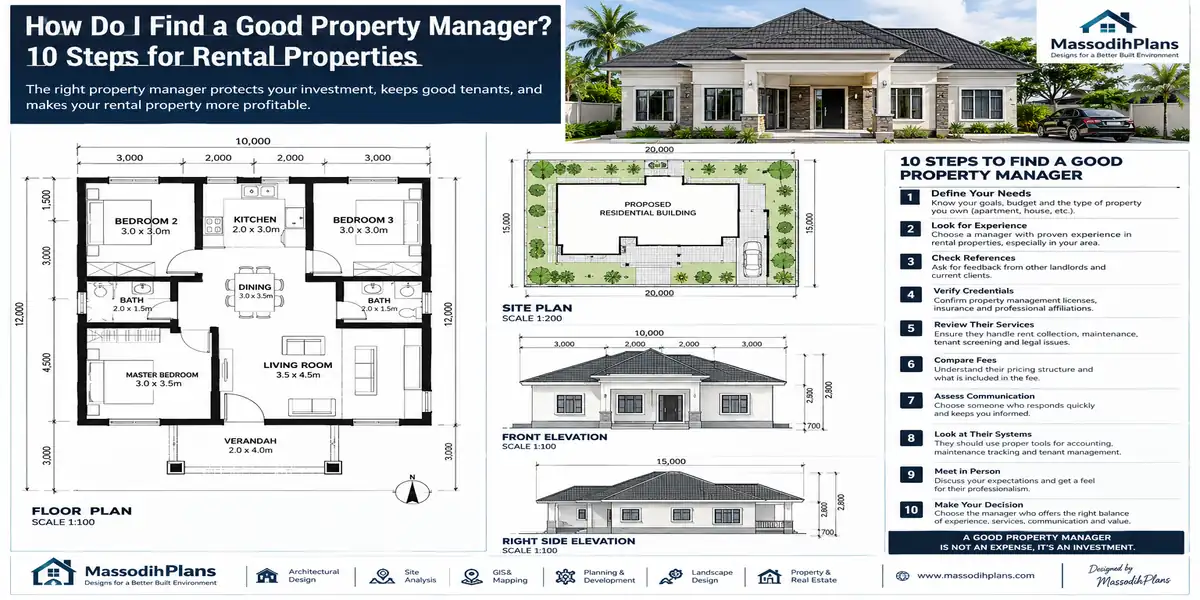
A dedicated property manager or trusted on-ground contact, built into your plan and budget from the start, not added as an afterthought once tenants move in.
Beyond Canada: Applying This Framework If You’re Investing From Elsewhere
While this guide is written specifically for Canadian-based investors, the underlying framework matching plan type to investment goal, checking plot coverage before design, calculating yield before committing funds, and scoring your remote-build risk applies with only the currency and tax specifics changing if you’re reading this from the US, UK, Germany, UAE, Qatar, Switzerland, Luxembourg, Iceland, Australia, or Singapore. The exchange rate pair changes (USD/NGN, GBP/NGN, EUR/NGN, AED/NGN, and so on), and your home country’s foreign-asset reporting rules will differ from Canada’s T1135 the US, for instance, has its own foreign asset reporting thresholds under FBAR and FATCA rules, and the UK, Germany, and other jurisdictions have their own frameworks entirely. The plot coverage math, the yield formulas, and the remote build risk score, however, stay exactly the same regardless of which passport or currency you’re building with.
Common Mistakes Canadian-Based Investors Make With Nigerian House Plans
Choosing plan size based on emotional ambition rather than plot coverage math resulting in a design that can’t actually be approved on the plot bought
Ignoring the T1135 reporting obligation until a tax professional flags it years later, often alongside penalties
Treating today’s exchange rate as fixed when budgeting, rather than stress-testing the build cost across a realistic range
Sending full payment upfront without a milestone structure, removing all leverage to address problems as they arise
Building a single large family house for “someday” when a twin duplex or mini-flats layout on the same plot would generate income starting immediately
Frequently Asked Questions
Is a duplex or a bungalow better for a Canadian investor building for rental income?
For pure rental income on a small-to-medium plot, a twin duplex or self-contained mini-flats format generally outperforms a single bungalow, because it creates multiple rentable units on the same land cost the yield math above shows why this usually matters more than the format’s individual aesthetic appeal.
How much naira should I budget per square metre in 2026?
This varies significantly by city and finishing level, and is best confirmed with a current Bill of Quantities rather than a general figure but once you have that naira figure, use the exchange rate table above to understand what it actually costs you in CAD.
Do I need to report my Nigerian house to the CRA?
If it’s a rental or investment property and its total cost exceeds CAD $100,000 at any point in the year, yes — Form T1135 applies. A personal-use property you and your family use without renting it out is generally exempt. Confirm your specific situation with a cross-border tax professional.
Can I supervise construction entirely through video calls from Canada?
You can supplement supervision with video calls, but given the time zone gap and the risk of relying on a single, unverified source of information, an independently hired local supervising professional with a written, milestone-based reporting structure is a far more reliable primary system.
What plot size do I actually need for a 4-bedroom duplex?
Using a typical Floor Area Ratio of around 1.0, a 4-bedroom duplex with roughly 250–300 sqm of total floor area comfortably fits on a 300–400 sqm plot, though your specific plot’s approved Plot Coverage Ratio should always be confirmed with the local planning authority before finalizing a design.
Finally
The best Nigerian house plan for a Canadian property investor isn’t the most impressive-looking one it’s the one that’s been matched, with actual numbers, to your investment goal, your plot’s real legal capacity, your currency reality, and your ability to supervise it from several time zones away. Run the plot coverage math, run the yield formula, score your remote-build risk honestly, and get your tax reporting obligation confirmed early do that, and the plan choice itself becomes a far more straightforward decision than it feels like at the start of this conversation.
If you’re ready to match a plan to your specific plot and budget, browse our Plans Library for designs built around small-to-medium Nigerian plots with income-generating layouts in mind, or visit Plan School to understand plot coverage, floor area ratio, and approval requirements before you commission a design. For direct, one-on-one support structuring a remote build including milestone-based contractor arrangements our Services page outlines how we work with diaspora clients specifically. You can also explore more diaspora investment and planning guides on our Homepage.
- How Do I Get Land Survey and Building Approval in Nigeria From Canada?
- How Can I Build a House in Nigeria From the UK on a Small Plot?
- How Can I Build a House in Nigeria From Australia on a Small Plot?
- How Should Drainage Be Planned? Avoid Flooding in Nigerian Homes
- Where Should a Borehole Go? Safe Water Source Placement in Nigeria
Author
Massodih Okon is a Nigerian built-environment professional with academic and professional experience in urban and regional planning, geography, architectural design, Landscape Design, GIS and land development.
He holds a Master’s degree in Urban and Regional Planning from the University of Uyo and a first degree in Geography and Regional Planning.
Through MassodihPlans, he publishes practical guides on Nigerian house plans, building design, physical planning, site planning, development approval and residential construction. Read the full author profile →