Before You Start Building in Port Harcourt, Read This Cost Guide First
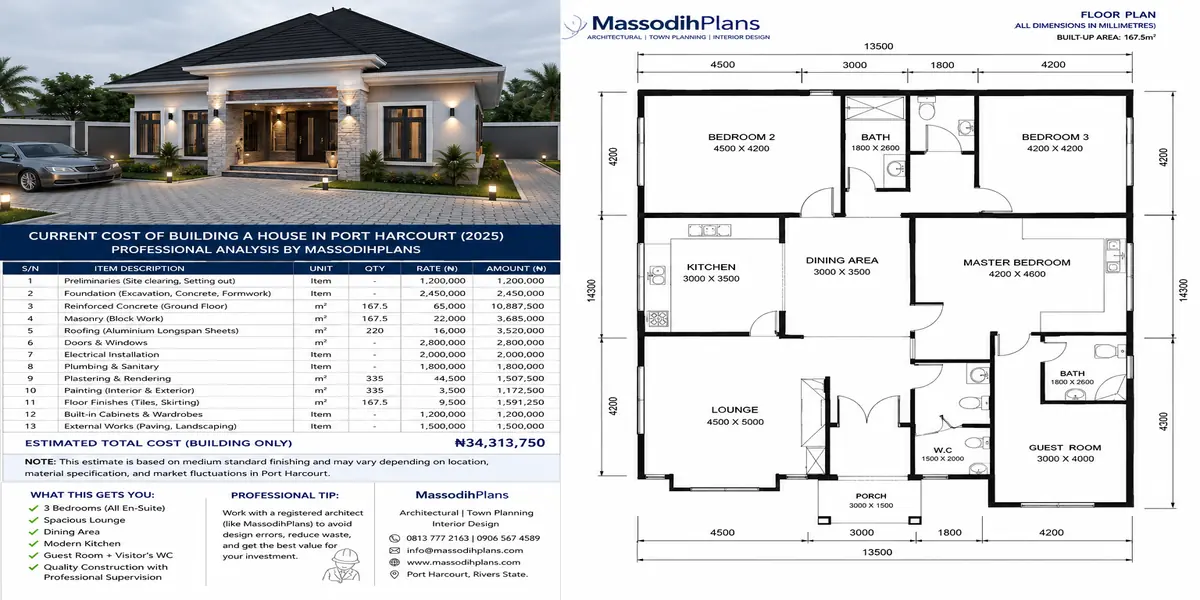
Current Cost of Building a House in Port Harcourt
A 3-bedroom bungalow in Port Harcourt can cost roughly ₦30 million–₦65 million to complete in 2026, while a duplex can range from about ₦65 million to well over ₦150 million, depending on location, soil conditions, building size, materials and finishing quality. But these figures are only the starting point: the real cost is determined by what happens beneath the building, how the structure is designed, and the standard of finishes you choose. This guide breaks down those costs so you can estimate your project before spending heavily.
Building in Port Harcourt requires a different approach from building in cities such as Abuja or Enugu. Heavy rainfall, high groundwater, soft or problematic soils in some locations, humidity and drainage requirements can significantly increase construction costs. Foundation work, filling, damp-proofing, drainage and suitable roofing are not areas to underestimate.
That is why a contractor’s attractive quotation can quickly become an expensive surprise once construction begins.
In this guide, I will take you stage by stage from foundation and blockwork to roofing, electrical installation, plumbing, finishes and external works to show what you may actually spend and where your money goes.
More importantly, you will learn which costs are worth paying for, where homeowners commonly overspend, and where you can reduce expenses without compromising structural safety or long-term durability.
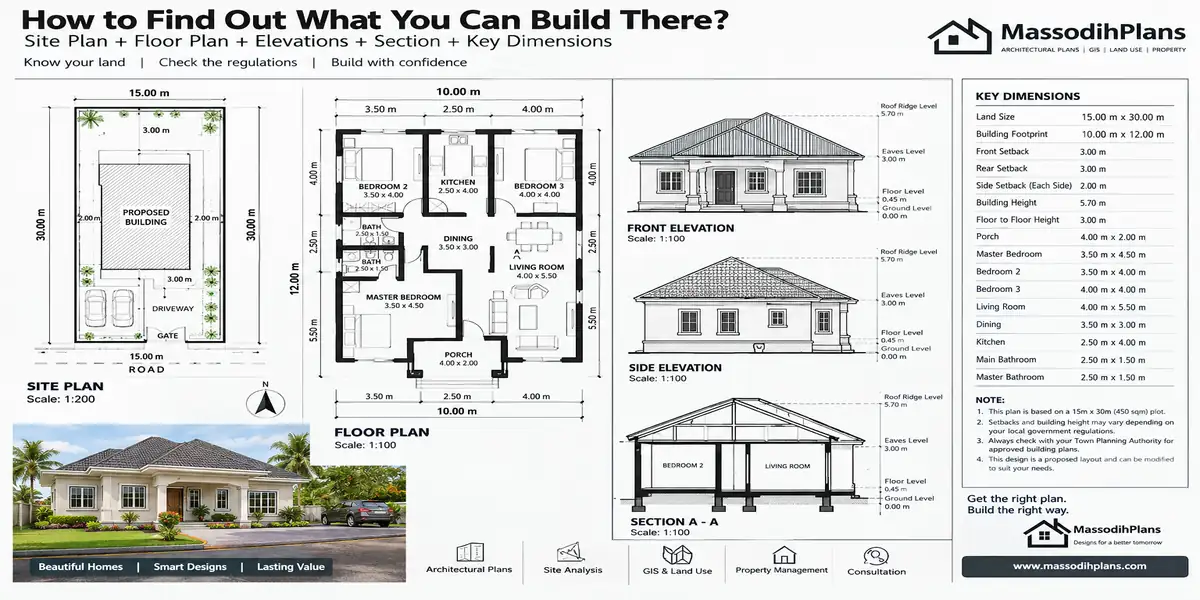
Before you request quotations, however, there is one decision that can save you millions: getting the right house plans, floor plans and building design for your plot and budget.
Keep reading, because the cheapest construction estimate is not always the cheapest house to build.
Why Building in Port Harcourt Costs More Than People Expect
Before I get into the stage-by-stage cost breakdown, you need to understand why Port Harcourt consistently comes out more expensive than many other Nigerian cities. This is not a rumour. It is the physical and economic reality of building in a coastal, rain-heavy city.
Heavy Rainfall and Waterlogged Soil
Port Harcourt receives between 2,300 and 2,800 millimetres of rain annually. Many parts of the city sit on soil that holds water close to the surface even in the dry season. When I have supervised site investigations in areas like Rumuola, Eliozu, and Rumuigbo, you can dig less than one metre in some locations and already find saturated soil.
This matters because it directly controls how deep your foundation must go, how much concrete goes into your footing, how much filling your site needs before construction begins, and whether you need a raft foundation instead of the simpler strip foundation that works in drier cities.
A client I worked with bought a plot in a lowland area of Port Harcourt that looked like a bargain at the price. By the time we finished the soil filling alone to get the floor level above potential flood height, he had spent more on filling than he originally planned for the entire foundation. The land was cheap for a reason nobody told him.
Humidity Attacks Materials Faster
The combination of coastal proximity and heavy rain means humidity in Port Harcourt is consistently high. This affects roofing materials in particular. Standard galvanised iron sheets that might last eight to ten years in Kano or Kaduna will show visible corrosion within four years in Port Harcourt without proper treatment. This is why I consistently recommend Aluzinc or Galvalume sheets for any Port Harcourt build, and why I have written more about this in our complete guide to the best roofing sheets for Nigerian weather.
Transportation and Diesel Add Costs
Most building materials that reach Port Harcourt travel long distances. Granite comes from Lokoja. Cement is manufactured elsewhere and transported through highways where diesel costs add to the final price. With diesel above 1,200 naira per litre in 2026, transport can add between 8 and 20 percent on top of the base price of major materials for Port Harcourt sites. This is why our building materials price guide for Nigeria always shows Port Harcourt prices tracking higher than cities closer to production centres.
Security Planning Is Now a Standard Cost
Modern Port Harcourt construction no longer treats perimeter fencing and security infrastructure as a luxury afterthought. A gatehouse, perimeter fence, security lighting, and conduit provisions for CCTV are now standard budgeting items. Skipping them during planning means paying more to retrofit them after occupation.
Full Cost of Building a 3 Bedroom Bungalow in Port Harcourt
This is what most people are searching for, so let me give it fully before anything else.
The figures below are based on moderate modern finishing. Not luxury. Not basic economy. The kind of finishing that a working Nigerian family would be comfortable in and would not need to redo within five years.
| Construction Stage | Estimated Cost (2026) |
|---|---|
| Foundation and soil preparation | 5,000,000 to 9,000,000 |
| Block work and structural walls | 4,000,000 to 7,000,000 |
| Roofing (long span aluminium or Galvalume) | 4,500,000 to 9,000,000 |
| Windows and external doors | 3,000,000 to 8,000,000 |
| Plumbing and drainage | 2,500,000 to 5,000,000 |
| Electrical installation | 2,500,000 to 5,000,000 |
| Internal finishing (tiles, paint, POP, wardrobes, kitchen) | 8,000,000 to 18,000,000 |
| Compound works (fence, gate, interlocks, drainage) | 3,000,000 to 10,000,000 |
| Total Estimate | 32,500,000 to 71,000,000 |
The wide range between the low and high figures reflects three things: your soil condition, your finishing choices, and how accessible your site is for material delivery. A plot in a tight urban area of Mile 1 or Diobu will cost more to supply than a site in a newer residential estate with proper road access.
Full Cost of Building a Duplex in Port Harcourt
| Construction Stage | Estimated Cost (2026) |
|---|---|
| Foundation and soil preparation | 8,000,000 to 18,000,000 |
| Structural frame and decking (ground to first floor) | 12,000,000 to 25,000,000 |
| Block work both floors | 7,000,000 to 14,000,000 |
| Roofing | 8,000,000 to 18,000,000 |
| Windows and doors | 5,000,000 to 12,000,000 |
| Plumbing and drainage | 4,000,000 to 8,000,000 |
| Electrical installation | 4,000,000 to 8,000,000 |
| Internal finishing | 18,000,000 to 40,000,000 |
| Compound development | 5,000,000 to 15,000,000 |
| Total Estimate | 71,000,000 to 158,000,000 |
Luxury finishing, stone coated tiles on the roof, imported kitchen fittings, and high-end tiles push this above 200 million naira without difficulty.
Summary by Finishing Standard
| Finishing Level | 3 Bedroom Bungalow | Duplex |
|---|---|---|
| Basic economy | 25,000,000 to 38,000,000 | 55,000,000 to 80,000,000 |
| Moderate modern | 38,000,000 to 65,000,000 | 80,000,000 to 130,000,000 |
| Premium luxury | 65,000,000 to 100,000,000 | 130,000,000 to 200,000,000 and above |
Stage-by-Stage Cost Breakdown with Real Explanations
Stage 1: Foundation
The foundation is where Port Harcourt will demand more money than other Nigerian cities, and you must not fight this. The money you spend here is the money that saves your building from cracks, settlement, flooding damage, and eventual demolition.
What controls your foundation cost in Port Harcourt:
Soil condition is the master variable. High water table areas require raft foundations instead of the simpler strip foundation. Raft foundations use significantly more concrete and reinforcement, which pushes cost upward immediately.
Plot elevation matters at least as much as soil. A low-lying plot needs substantial filling before any structural work begins. The fill material, usually sand, granite dust, or laterite depending on availability, must itself be compacted properly. Poorly compacted fill creates settlement problems that crack your building from below years after you move in.
I have seen plots in Port Harcourt where the owner spent 3.5 million naira on filling alone before a single block was laid. That cost was not in their original estimate because they trusted a neighbour’s advice about the land without a soil test.
Typical foundation work elements:
| Foundation Component | Notes |
|---|---|
| Site clearing and setting out | Removes vegetation, stakes out the building footprint |
| Excavation | Depth depends on soil bearing capacity test |
| Reinforcement (iron rods and binding wire) | Column starter bars, footing reinforcement |
| Concrete for footing and columns | Grade depends on load calculation |
| Foundation block work | Builds walls from footing level to ground floor level |
| Hardcore filling | Fills the floor area within the building footprint |
| Damp proof membrane (DPM) | Prevents rising moisture from entering the floor slab |
| Oversite concrete (floor slab) | The ground floor concrete you will eventually tile |
Never skip soil testing. A professional soil test in Port Harcourt costs between 100,000 and 250,000 naira for a standard residential plot. That is a small amount against the cost of redesigning your foundation after construction has started.
Stage 2: Block Work and Structural Walls
After the foundation, block work builds your walls from floor level to roof level. This stage includes the sandcrete blocks, the reinforced concrete pillars and columns between wall sections, the lintels over door and window openings, and the ring beam at the top of the wall that ties everything together before roofing.
Block prices in Port Harcourt (2026):
| Block Type | Approximate Price Per Block |
|---|---|
| 9-inch sandcrete block (standard) | 450 to 600 naira |
| 6-inch sandcrete block | 350 to 450 naira |
| 5-inch sandcrete block | 280 to 380 naira |
For a 3 bedroom bungalow, you will typically need between 2,500 and 3,500 blocks depending on the number of internal walls, window openings, and ceiling height. Do not buy blocks without physically testing samples. A block that crumbles when you press it firmly by hand has too much sand and not enough cement in the mixture. That block will not hold its portion of your roof.
Block work labor in Port Harcourt runs at roughly 50 to 80 naira per block laid, excluding the cost of mortar mixing.
Stage 3: Roofing
Roofing is a major cost stage and in Port Harcourt, the wrong roofing choice becomes a maintenance nightmare within a few years.
Why your roofing choice matters so much in Port Harcourt:
Port Harcourt’s rainfall is intense and relentless. During peak season, it is not uncommon to have 80 to 100 millimetres of rain in a single hour. That volume of water hitting your roof and finding even a small overlap gap or a loose screw will produce a leak that ruins your ceiling, your walls, and eventually your electrical wiring.
Additionally, the coastal humidity in Port Harcourt is aggressive. Standard galvanised sheets that might perform reasonably in Abuja will show rust lines and paint failure within three to four years. I covered this in full in our guide on the best roofing sheets for Nigerian weather, and the recommendation is consistent: Aluzinc or Galvalume sheets in a minimum of 0.55mm thickness, ideally with PVDF paint coating.
Roofing cost comparison for Port Harcourt:
| Roofing Type | Approximate Cost for a 3-Bedroom Bungalow |
|---|---|
| Long span aluminium (standard quality) | 4,500,000 to 7,000,000 |
| Aluzinc or Galvalume (recommended) | 5,500,000 to 9,000,000 |
| Stone coated steel tiles | 9,000,000 to 18,000,000 |
These figures include the roofing sheets, the timber roof frame (commonly called the wood or joists), fascia boards, gutters, and installation labor.
Roof design affects cost more than material:
A simple hip or gable roof costs less than a complex decorative roof with multiple ridges, valleys, and angle changes. Every valley point on a roof is a potential leak point in Port Harcourt’s rainfall conditions. Keep the roof shape as clean as possible unless you have a very large budget and an experienced roofer with a proven track record on complex roofs.
Stage 4: Windows and External Doors
This stage is where many Port Harcourt homeowners either get it right from the start or spend money later correcting mistakes.
Window choices and ventilation in Port Harcourt:
Port Harcourt is humid. A house with poor ventilation becomes uncomfortable within minutes of a power outage in the rainy season. The moisture just sits inside the rooms. Casement windows perform significantly better than sliding windows for natural air movement. Casement windows open outward and catch prevailing breeze. Sliding windows, which are common in modern urban designs because they look sleek, only partially open and restrict airflow considerably.
I have designed houses for clients in GRA Port Harcourt who specifically asked for full sliding windows for aesthetics. By the third month after occupation, at least two of them had called to ask about adding louvres or casements in the bedrooms because the heat was unbearable during load shedding periods.
Window and door cost estimates:
| Item | Estimated Cost Range |
|---|---|
| Aluminium casement windows per opening | 45,000 to 90,000 |
| Aluminium sliding windows per opening | 40,000 to 80,000 |
| Security steel entrance door | 120,000 to 250,000 |
| Solid flush interior door per leaf | 35,000 to 70,000 |
| Sliding glass entrance door | 200,000 to 450,000 |
A 3 bedroom bungalow typically has between 12 and 18 window openings and 7 to 10 door openings, depending on the design.
Stage 5: Plumbing
Plumbing cost has risen consistently in Nigeria because most quality fittings and pipes depend on imported materials or domestically manufactured products that use imported inputs.
What plumbing covers:
Water supply piping from the borehole to the overhead tank and through the building to every point of use. Drainage piping from every toilet, bathroom, kitchen, and floor drain to the septic system outside. Septic tank construction (must be sized correctly for the number of users). Borehole drilling and pump installation.
Borehole placement in Port Harcourt:
This is something I need to stress specifically for Port Harcourt builds. In many parts of the city, the groundwater table is shallow. You need your borehole positioned at the maximum practical distance from your septic tank, and both should sit at different levels if your site has any gradient. The minimum horizontal separation I recommend is 15 metres, and your civil or sanitary engineer should confirm this based on your specific soil permeability test results.
I have visited a house in Rumuola where the borehole was drilled approximately 6 metres from the soakaway pit. The family reported recurring stomach issues for years before someone finally investigated the water quality. Do not let cost pressure make you compromise on this. Position these two elements correctly from the beginning.
Plumbing cost estimate:
| Plumbing Component | Estimated Cost |
|---|---|
| Water supply piping (UPVC or PPR throughout) | 350,000 to 650,000 |
| Drainage piping | 400,000 to 750,000 |
| Septic tank construction (2,500 to 5,000 litre capacity) | 350,000 to 800,000 |
| Borehole drilling (60 to 90 metres depth typical in PH) | 600,000 to 1,200,000 |
| Overhead water storage tank (5,000 to 10,000 litres) | 150,000 to 350,000 |
| Pump installation and control fittings | 180,000 to 350,000 |
| Sanitary fittings (toilets, basins, bath tubs, kitchen sink) | 400,000 to 1,500,000 |
Stage 6: Electrical Installation
Electrical installation in a modern Nigerian home carries more load than it did ten years ago. Air conditioners, inverter systems, solar charging setups, CCTV, smart devices, and electric water heaters all demand more circuits, larger cable sizes, and more planning than a basic wiring job.
Generator placement is a real design decision:
One of the most overlooked details on Port Harcourt building sites is where the generator will sit permanently. It needs to be close enough to the distribution board that cable runs are not excessively long. And it needs to be far enough from bedroom windows that exhaust fumes and engine noise do not disturb sleeping family members. It needs a concrete pad that is above flood level. And it needs a small roof or canopy to protect it from the heavy rainfall.
I have visited finished Port Harcourt homes where the generator was placed as an afterthought directly beside the master bedroom window. The noise, the fumes, and the heat that comes off a running generator made that bedroom genuinely uncomfortable. Plan the generator position on paper at the design stage.
Electrical cost estimate:
| Electrical Component | Estimated Cost |
|---|---|
| Full wiring (cables, conduits, junction boxes) | 800,000 to 1,500,000 |
| Distribution board and circuit breakers | 150,000 to 350,000 |
| Sockets, switches, and light fittings | 300,000 to 700,000 |
| Inverter and battery installation point | 200,000 to 500,000 |
| Solar preparation conduits and panel mounting provision | 150,000 to 350,000 |
| CCTV conduit provisions | 80,000 to 180,000 |
| Generator changeover switch and armoured cable | 120,000 to 280,000 |
Stage 7: Finishing
Finishing is the stage where budgets collapse most dramatically. It is also the stage where people make decisions based on what looks good in showrooms without thinking about what performs well in Port Harcourt’s climate.
Tiles and flooring:
Porcelain tiles are the standard choice for internal floors and walls in modern Nigerian homes. They are durable, available in a wide range of sizes and finishes, and perform well in humid conditions. The tile cost depends heavily on brand and origin.
For outdoor areas including the verandah, compound paths, and steps, anti-slip tiles are not optional in Port Harcourt. The rain arrives without warning and any smooth outdoor tile surface becomes a serious hazard. I have seen children and elderly occupants fall on smooth outdoor tiles during light rain. Choose textured, matt-finish outdoor tiles every single time.
Shiny tiles in living rooms:
This is worth addressing directly. Glossy large-format tiles look impressive in showroom lighting. In actual homes, they show every footprint, every dust mark, and every splash from the rainy season’s muddied compound. Matt-finish or satin-finish tiles require far less maintenance in everyday Nigerian living.
Finishing cost breakdown:
| Finishing Item | Estimated Cost |
|---|---|
| Floor tiles (standard porcelain, moderate quality) | 2,500,000 to 5,000,000 |
| Wall tiles (bathrooms, kitchen) | 800,000 to 2,000,000 |
| POP ceiling (basic modern pattern) | 600,000 to 1,500,000 |
| Interior painting (quality paint, 2 coats) | 500,000 to 1,200,000 |
| Kitchen cabinets and countertop | 600,000 to 2,500,000 |
| Built-in wardrobes per room | 150,000 to 400,000 per room |
| Sanitary fittings (WC sets, wash basins, shower) | 500,000 to 2,000,000 |
| Interior doors (flush, fitted with handles and hinges) | 900,000 to 2,500,000 |
| Lighting fixtures | 350,000 to 1,200,000 |
A word on POP ceilings: simple modern POP is fine and ages well. Heavily decorated POP with excessive patterns and layers becomes a dust trap and an aesthetic problem as trends change. What looks fashionable in 2026 can look dated by 2030. Keep ceiling designs clean.
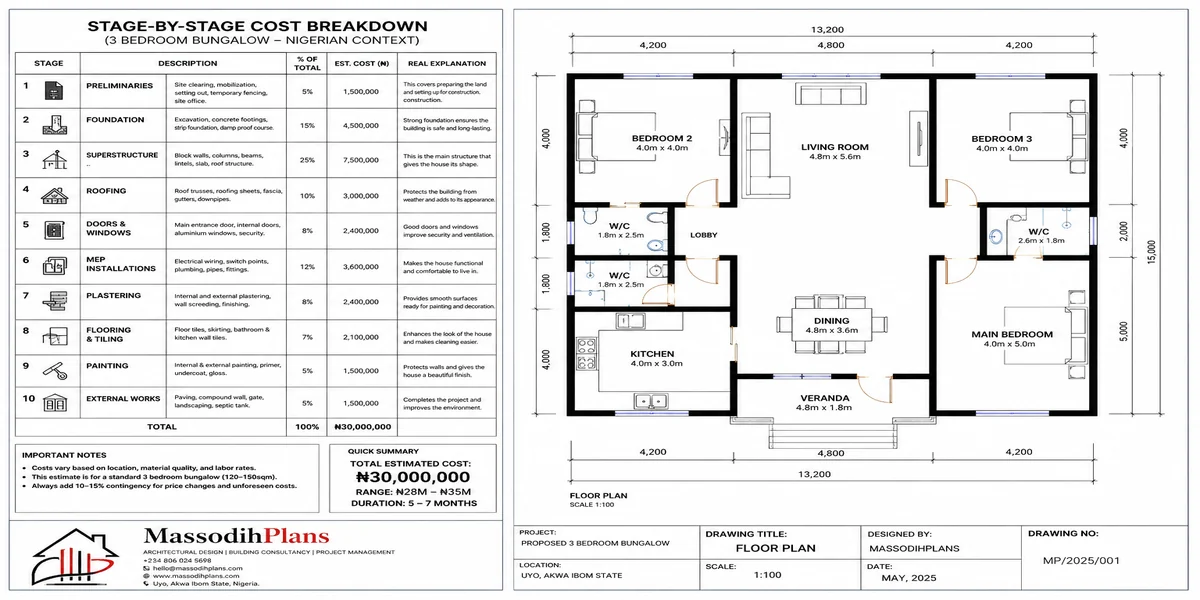
Stage-by-Stage Cost Breakdown with Real Explanations
Compound Development: The Stage Most Cost Guides Ignore
Almost every Port Harcourt building cost guide online skips compound development. This is a serious omission because compound works can add 3 million to 15 million naira to your project depending on the size of your plot and how comprehensively you want to develop it.
Why compound works matter specifically in Port Harcourt:
Drainage from your compound must flow out of the property cleanly. If it does not, rainwater pools against your foundation, accelerates wall damage, and creates a mosquito habitat within your home environment. Port Harcourt’s rainfall intensity means your drainage channels must be properly sized, properly graded, and properly connected to the street drain.
Interlocking stones or concrete paving for the compound prevents the compound from becoming a mud field during the rainy season, which then gets tracked into the house. On a 50 by 100 plot, you typically have a significant area of compound to pave.
Compound development cost estimate:
| Compound Item | Estimated Cost |
|---|---|
| Perimeter fence (9-inch block, plastered, painted) | 1,200,000 to 3,500,000 |
| Gate (heavy fabricated steel, sliding or swing) | 350,000 to 900,000 |
| Gatehouse (small, functional) | 500,000 to 1,500,000 |
| Compound interlocking paving | 600,000 to 2,500,000 |
| Drainage channels in compound | 300,000 to 800,000 |
| Security lighting (poles, floodlights, wiring) | 250,000 to 600,000 |
| Landscaping (basic soft landscaping) | 200,000 to 500,000 |
If you want to see how a well-coordinated site fits all these elements on a standard Nigerian plot without any element compromising another, the detailed layout explanations in our smart house design ideas for 50 by 100 plots in Nigeria will show you exactly how it works.
Hidden Costs Most Port Harcourt Homeowners Do Not Budget For
These costs are not hidden in the sense of being secret. They are hidden in the sense that most people simply forget to include them when they calculate their building budget.
Professional drawings and approvals:
Before you place a block on Port Harcourt soil, you need approved architectural drawings. In Rivers State, building approval is processed through the Rivers State Urban and Regional Planning Board. The fees vary based on the type and size of building. Beyond the approval fees, you need:
| Professional Cost Item | Approximate Cost |
|---|---|
| Architectural drawings set (plans, elevations, sections) | 150,000 to 500,000 |
| Structural engineering drawings | 100,000 to 350,000 |
| Soil investigation report | 100,000 to 250,000 |
| Building permit fees (Rivers State) | 150,000 to 600,000 depending on building type |
| Survey plan (if not already done) | 100,000 to 300,000 |
Site supervision:
If you are not on-site every day, which most people building in Port Harcourt are not because they have jobs or live elsewhere, you need a site supervisor. An unattended site loses material to theft, cement to careless mixing, blocks to poor stacking, and days to workers who simply do not show up. A reliable site supervisor charges between 50,000 and 150,000 naira per month in Port Harcourt.
Scaffolding rental:
Most Nigerian builders either own basic scaffolding equipment or rent it by the week. For a two-storey build, scaffolding rental over the construction period can add 150,000 to 400,000 naira.
Security and community levies:
In many Port Harcourt neighbourhoods, there are community association fees, security levies, and sometimes informal levies that are charged to active construction sites. Budget 100,000 to 400,000 naira for these depending on your location.
Building on Small Plots in Port Harcourt
Land prices in Port Harcourt continue to rise, and many people are working with plots smaller than the traditional 50 by 100 feet. Common smaller plot sizes include 30 by 60 and 40 by 80. These plots can still produce functional, comfortable homes when the design is intelligent.
The key discipline on a small Port Harcourt plot is eliminating every square metre of wasted space. Corridors that are wider than they need to be. Rooms that are slightly larger than furniture requires. Circulation paths that double back unnecessarily. These are the design failures that make a small plot feel impossible to build on.
Smart strategies for small Port Harcourt plots:
Combine the dining and living areas into a single open plan space rather than separating them with a wall that consumes floor area. This gives the impression of a larger living zone and improves cross ventilation by removing the wall barrier to airflow.
Design for future vertical expansion from the beginning. If your ground floor building footprint reaches the setback limits, your only growth option is upward. Designing the structure to support a future upper floor from day one, with the right column reinforcement and beam sizing, costs far less than redesigning later.
Plan parking before you plan rooms. I have reviewed Port Harcourt small plot designs where the architect placed the building so that only one car can enter the compound. The owner then has to block their own gate with one car to get the second vehicle in. Parking logic should be the first item settled on the site plan, not an afterthought.
If you want practical examples of how design decisions work on compact Nigerian plots, I keep a regularly updated collection in our Plans Library where you can see actual floor plans with dimensions, site layouts, and building notes.
Port Harcourt Climate Realities That Must Shape Your Design
A house in Port Harcourt that ignores the climate will make its occupants uncomfortable every single day. I want to say this plainly because many people choose house designs from foreign websites or Instagram pages without asking whether that design will work in a hot, humid, high-rainfall city.
Cross Ventilation Is Not Optional
In a Port Harcourt home, you want air to enter from one side and exit from the other. This means windows must be positioned on opposite walls in the same room, not on the same wall. The prevailing breeze direction in Port Harcourt is predominantly south-westerly. Bedrooms with windows only on the south face and blank walls to the north will not ventilate effectively even when all windows are open.
Roof Overhangs Protect Your Walls
A roof without proper overhangs in Port Harcourt means that every rainfall runs directly down your external walls. In the first few years this is not visible. After three to five years, the dampness darkens the wall finish, biological growth begins on the plaster, and the wall paint peels consistently. Overhangs of at least 600 to 900mm on the eaves of a Port Harcourt house protect the walls significantly and reduce long-term maintenance cost.
Orientation Reduces Cooling Cost
A house facing south in Port Harcourt, meaning the main facade and primary windows face south, benefits from better daylight and more consistent breeze access than one facing directly east or west. Western-facing rooms receive the full force of the afternoon sun from around 2pm until sunset, which heats them significantly. If you want to learn the full thinking behind orientation, circulation, and how professional designers plan buildings for Nigerian climatic conditions, the Plan School section on MassodihPlans covers this in depth with practical examples.
Construction Mistakes That Increase Your Final Cost
These are real mistakes I have observed on real Port Harcourt construction sites. Each one added money to the project in ways the homeowner did not anticipate when they made the original decision.
Starting Construction Without Complete Drawings
I have been called to advise on Port Harcourt projects that started with only a sketch drawing on a writing pad. The contractor “knew what to do.” Three months in, there were conflicts between what the owner wanted and what the contractor had built. A room was in the wrong position. The staircase width in the duplex was too narrow. A bathroom ended up sharing a wall with the dining area with no acoustic separation.
Changing those things after the block work is up means breaking down walls, re-routing drainage, and paying for rework that should never have been necessary. Complete architectural and structural drawings before ground breaks are not a luxury expense. They are the cheapest investment on your entire project.
If you want to understand what a complete drawing set actually includes and how professional architects put one together for Nigerian plots and conditions, the step by step guide on how to practically draw and design a duplex for small plots explains the full process in accessible language.
Hiring the Cheapest Contractor Available
A contractor who charges significantly less than the going rate in Port Harcourt is saving money somewhere. It is either in the cement-to-sand ratio of the mortar and concrete mix, the quality of iron rods used, the thickness of the concrete poured, the number of days actually worked, or the experience of the workers on site. Sometimes it is all of these simultaneously.
I reviewed a building in Eliozu where the owner had saved approximately 1.8 million naira on the structural work by using a contractor who came recommended but was not independently verified. When I visited two years after completion, the columns had visible hairline cracks running vertically from the foundation level upward. The remediation cost exceeded what the original saving had been.
Extending the Construction Timeline
Many homeowners build in phases, which is understandable given financial realities. However, a building left in shell state for six months or more in Port Harcourt suffers. The exposed concrete absorbs moisture from rain and humidity. The iron rods in exposed columns begin to rust. The block work becomes colonised by algae and biological growth. When construction resumes, the new work bonds less effectively with the weathered older work.
If you must build in phases, cover every exposed structural element carefully between phases. Do not leave open column tops or exposed ring beam reinforcement to the elements for extended periods.
Cost Saving Strategies That Do Not Compromise Quality
Every naira counts in a Port Harcourt build. Here are strategies I recommend to clients that reduce cost without touching the structural or functional quality of the building.
Simplify the Roof Shape
A straightforward hip roof or a clean gable roof uses less timber, generates less material waste, requires fewer complex cutting joints from the carpenter, and has fewer vulnerability points for leakage. Complex roofs with multiple intersecting ridges cost more in material, more in labor, and more in long-term maintenance. Simplify the roof shape and redirect the saving toward better roofing sheet quality.
Use Local Materials Where Quality Is Equal
Not every item on a Port Harcourt site needs to be imported. Granite and sharp sand sourced locally, standard UPVC pipes from domestic manufacturers, locally made aluminium windows from reputable fabricators, and locally mixed concrete all perform adequately for their roles. The savings on these allow you to upgrade where it actually matters: the roofing material, the structural steel, the external doors, and the tile quality in high-traffic areas.
Buy Materials in Bulk Where Storage Is Available
Cement is best bought in bulk when prices dip, particularly after the rainy season when construction activity slows and dealers reduce prices to move inventory. However, cement has a shelf life of approximately three months in proper storage and less if humidity gets to the bags. Do not bulk-buy more than you can use within that window.
Roofing sheets, iron rods, and window frames have no shelf life problem and can be purchased early when prices are favourable and stored on-site without quality loss.
Get Multiple Quotes on Labor
Labor in Port Harcourt is not regulated at a fixed rate. Different contractors and tradesmen will quote very different figures for the same scope of work. Getting three independent quotes for each trade, tiling, carpentry, electrical, and plumbing, and comparing them before committing gives you a realistic baseline. The goal is not always the cheapest quote. It is the quote that reflects competitive market rate from someone whose work you have verified on a previous project.
Investment Value of Building in Port Harcourt
Despite the construction challenges, Port Harcourt remains one of Nigeria’s most active property markets. The oil and gas industry anchors a large population of working professionals who rent consistently. Expatriate communities prefer well-finished homes in secure neighbourhoods. And the urban expansion of the city continues to push residential demand into new areas.
Rental yields in Port Harcourt:
A well-finished 3 bedroom bungalow in a good Port Harcourt neighbourhood (GRA, Rumuola, Rumuibekwe, Peter Odili Road area) can command between 1.5 million and 3.5 million naira per year in rent. A duplex in the same areas starts from around 3 million naira per year and can exceed 8 million naira annually for premium finishing near GRA.
Compact rental apartments:
Investors who build compact but well-planned self-contained studio or one-bedroom apartments find strong and consistent rental demand in Port Harcourt from young professionals and entry-level oil industry workers. A building containing four self-contained units on a single plot can generate more rental income than a single large house on the same land, especially when the individual units are properly planned and finished.
If you want to explore designs built around rental income potential on small and medium plots, the Plans Library on MassodihPlans has ready-to-study residential layouts built around exactly this investment strategy.
The Role of Good Design in Reducing Your Total Building Cost
This is the part most cost guides never discuss, and it is the most important connection I want you to take from this entire article.
Good architectural design saves money. Not in the abstract. In the specific, measurable, naira-counted sense.
A well-designed floor plan uses the same 140 square metres of floor area with fewer structural columns, shorter plumbing runs, less electrical cable, fewer internal doors, and more efficient room shapes than a poorly designed plan that covers the same 140 square metres. The cost difference between those two plans, using identical materials and the same contractor, can run into millions of naira.
This is why I created MassodihPlans professional design services to serve Nigerian homeowners who want the design thinking applied to their specific plot before they commit to construction. A good design review before construction begins is far cheaper than reworking a building that was built from a sketch.
For an independent and authoritative reference on how Nigerian building regulations affect construction planning, the National Building Code of Nigeria, which is administered by the Federal Ministry of Works, sets the baseline standards that professional designers across the country work within.
Practical Advice Before You Begin Building
Conduct a soil test before you buy the land if possible. In Port Harcourt especially, the cost difference between building on good soil and building on soft waterlogged soil is enormous. If you can commission even a basic soil investigation before purchase, the information it gives you is worth far more than the fee.
Secure your complete drawing set before any ground is broken. A complete set includes floor plans for every level, all four elevations, at least two sections through the building, a roof plan, a site plan, and a structural drawing set. If your designer or contractor tells you they do not need drawings to start, find a different designer or contractor.
Think about future expansion now. If you plan to add a second floor in five years, your ground floor columns must be designed for that load from the beginning. Retrofitting structural capacity into an existing building is costly, disruptive, and sometimes impossible without partial demolition.
Plan your services before your finishes. Every plumbing pipe and electrical conduit must be chased into walls before plastering and tiling begins. Deciding later that you want a power point in a different location means breaking already-finished walls. Finalise your electrical layout and plumbing positions on paper before the first tile touches the floor.
Frequently Asked Questions
How much does it cost to build a 3 bedroom bungalow in Port Harcourt in 2026?
A moderate modern 3 bedroom bungalow in Port Harcourt costs between 32 million and 71 million naira depending on location, soil condition, finishing standard, and whether compound development is included.
What is the most expensive building stage in Port Harcourt?
Finishing typically consumes the largest budget share in a Port Harcourt build. Foundation can also be disproportionately expensive in waterlogged areas, sometimes exceeding the finishing cost if major soil filling and raft foundation work is required.
What type of roofing is best for Port Harcourt?
Aluzinc or Galvalume sheets in 0.55mm thickness minimum are the recommended choice for Port Harcourt. The city’s high humidity and heavy rainfall rule out standard galvanised sheets for any build intended to last more than five years without maintenance problems.
Is Port Harcourt soil safe for building?
Some areas have stable soil. Others require deep excavation, extensive filling, and raft foundations. The only reliable answer is a soil investigation report for your specific plot. Never trust a neighbour’s experience on their plot as a guide for yours.
Can I build comfortably on a 50 by 100 plot in Port Harcourt?
Yes. A properly designed 3 bedroom bungalow with parking for two cars, a functional compound, perimeter fence, drainage, borehole, and generator space fits on a 50 by 100 plot in Port Harcourt when the design is planned competently from the beginning.
What hidden costs do most Port Harcourt homeowners miss?
Soil testing, professional drawings, building permits, site supervision fees, security and community levies, scaffolding rental, and compound development are the most commonly missed items in Port Harcourt building budgets.
Should I build a bungalow or duplex in Port Harcourt?
If your plot is 50 by 100 or smaller and you want to maximise floor space without occupying the entire ground, a compact duplex is the smarter choice. And if family structure includes elderly parents or young children and ground floor access is important, a bungalow remains the more practical option. If you want side-by-side floor plan comparisons to inform this decision, the Plans Library has both types with dimensions and building notes.
Finally
A house in Port Harcourt that works is not just a house that looks good when the sun is out. It is a house that drains properly when 80 millimetres of rain falls in one hour. And it is a house that stays cool enough to sleep in during a power outage. It is a house whose roof does not develop rust streaks by year four. It is a house whose occupants can move through the compound in the rainy season without wading through standing water.
Getting there requires good design, realistic budgeting, and a clear understanding of what Port Harcourt’s environment actually demands from a building.
If you want to build in Port Harcourt and you want to do it right, start with the design. Everything else, the materials, the contractors, the finishing choices, becomes easier and more cost-effective when the design is solid from day one.
Related Articles to complete this lesson
- House Plan Selection Guide: How to Choose the Right House Plan for Your Land, Budget and Lifestyle
- Land-Buying Checklist: 100+ Things to Check Before Buying Land in Nigeria
- Building Project Budget Template: Complete House Construction Cost Planner
- Homeowner’s Construction Checklist: 150+ Things to Check Before and During Building
- Building Materials Checklist: 100+ Materials You May Need When Building a House
- Site Analysis Checklist: 50+ Things to Check Before Building on Your Land
- House Planning Checklist: 50+ Essential Things to Check Before Building a House (Complete Guide)
- Building Cost Calculator Nigeria: Estimate Your House Cost in 60 Seconds
- What Principles Guide the Design of an Air Force Base Master Plan?
- How Do You Design Army Barracks for Security and Daily Operations?
- Nigerian House Plans for Family Homes in Makurdi, Benue State, Nigeria
- Duplex Construction Cost in Awka, Anambra State: Complete Budget Breakdown
- Cost of Building a 3 Bedroom Bungalow in Umuahia, Abia State (Current Price Guide)
- How Do I Get Land Survey and Building Approval in Nigeria From Switzerland? A Step-by-Step Guide for Diaspora Property Owners
- What Nigerian House Plans Are Best for Swiss Property Investors?
- ArchDaily Inspired Designs for Modern Homes and Contemporary Architecture
- How Do I Get Land Survey and Building Approval in Nigeria From the USA?
- House Plans for Small Plots in Yola: Modern Nigerian Designs Explained
About Author
Massodih Okon Effiong is a Built Environment Expert and Senior Researcher based in Nigeria. He has a Master’s degree in Urban and Regional Planning, a first degree in Geography and Environmental Management, and professional certificates in Architectural Design, Landscape Design, and GIS. With over 15 years of hands‑on experience in architecture, town planning, GIS, and building economics across Nigerian residential and institutional projects, he understands the real challenges Nigerians face when planning and building homes.
At MassodihPlans, Massodih shares practical Nigerian building guides, modern bungalow and duplex house plans, and built environment resources created specifically for Nigerian homeowners, developers, and property investors. His work is based on real‑life conditions in Nigeria, climate‑responsive design, and cost‑effective planning, aimed at helping everyday Nigerians make smarter, more confident building decisions.