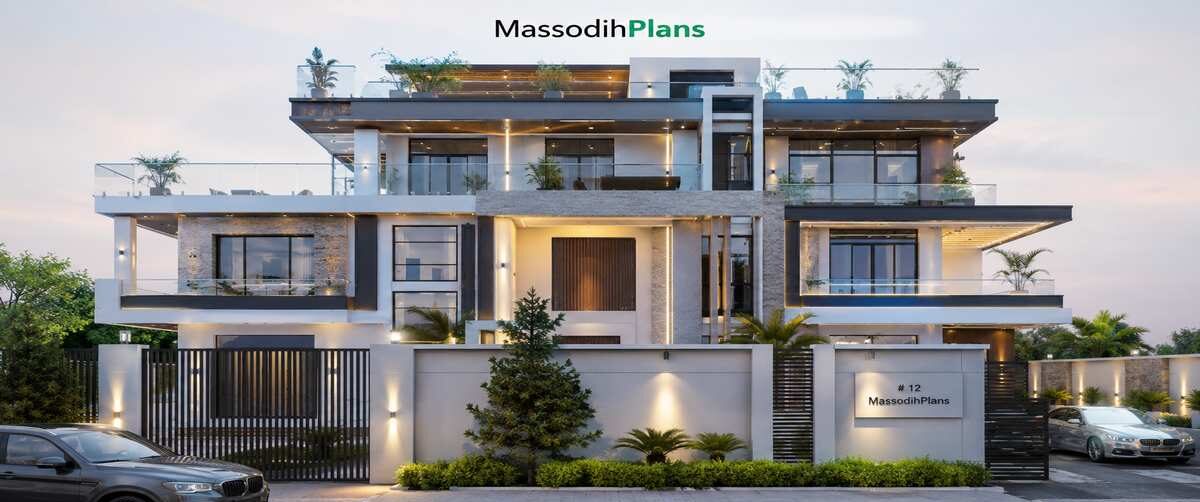
A complete practical guide for families building on 450sqm to 600sqm plots
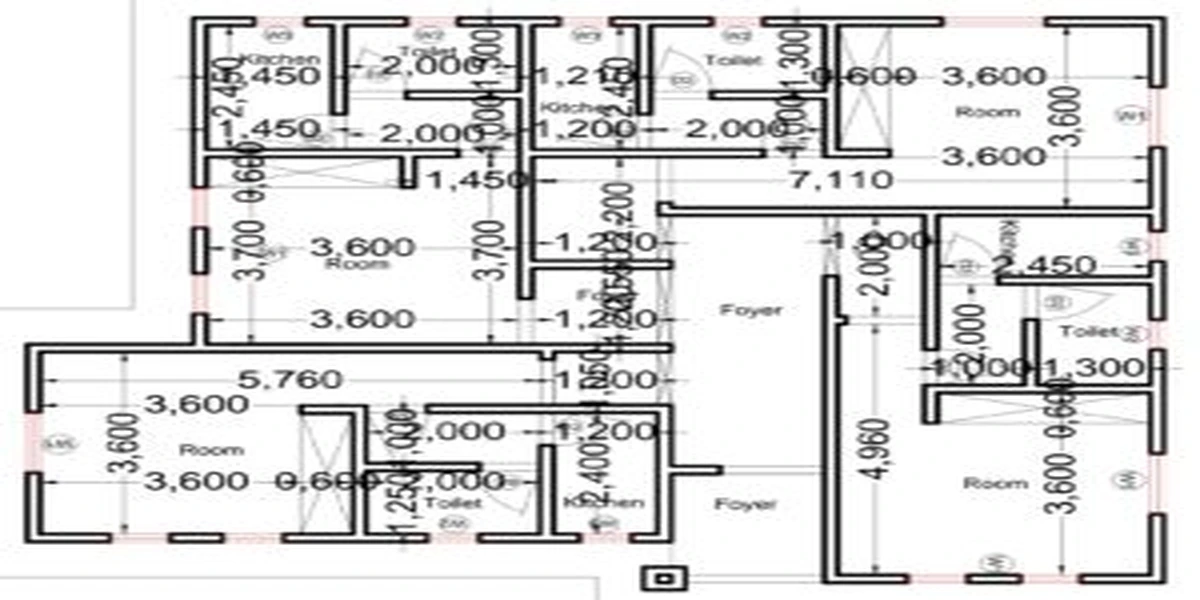
Best 4 Bedroom House Plan for Small Plots in Abuja
Yes, a well-designed 4-bedroom duplex can comfortably fit on a 450–500 sqm plot in Abuja, provided the house is planned around the actual plot dimensions, required setbacks, parking, ventilation, circulation, and outdoor space. This is why families building in areas such as Lugbe, Kubwa, Lokogoma, Dawaki, and Galadimawa do not necessarily have to sacrifice four bedrooms simply because their land is smaller than a standard plot.
The real question is not “Can 4 bedrooms fit on 450 sqm?” but “How can 4 bedrooms fit without making the house cramped?” That distinction changes everything.
A successful design begins with the house plan, floor plan and building design not with randomly placing rooms until the available space is exhausted. Room sizes, staircase position, parking arrangement, setbacks, kitchen layout, natural lighting, ventilation, and future expansion must work together from the beginning.
In this guide, you will see practical 4-bedroom duplex layouts for 450–500 sqm plots, including how much space you can realistically allocate to bedrooms, living areas, parking, setbacks, and outdoor space. We will also examine common design mistakes that make seemingly adequate plots feel too small and the smarter planning strategies that help you avoid them.
By the end, you will know exactly what is possible on your plot, what should be avoided, and how to choose a layout that gives you a spacious-looking 4-bedroom duplex without wasting valuable land.
The Real Problem Abuja Families Face on Small Plots
Land in Abuja keeps getting smaller and more expensive.
A few years ago, people in developing areas like Gwarinpa extension and Kuje satellite districts could comfortably build sprawling bungalows on larger plots. Today that option is shrinking fast. Many families acquiring plots now are working with compact land sizes that require a completely different approach to planning.
The mistake most people make is they copy house plans designed for bigger land. They see a beautiful 4 bedroom design on Pinterest or in an architecture magazine and they try to shrink it onto their plot. The building ends up crowding the entire land. There is no room for proper parking. The compound has no breathing space. Windows face walls on all sides.
That is not a space problem. That is a planning problem.
A good 4 bedroom home on a small Abuja plot is absolutely possible. Thousands of families are living in them comfortably right now. The difference is in how the plan was conceived from the beginning.
This guide is not about impressing you with architectural jargon. I want to walk you through everything practically. Dimensions, costs, ventilation, drainage, orientation, roofing, compound arrangement, common mistakes, site supervision, and approval requirements. By the time you finish reading, you will understand exactly what makes a 4 bedroom plan work on a small Abuja plot and what to watch out for before you break ground.
Understanding What “Small Plot” Actually Means in Abuja
Before choosing any house plan, you must first understand the realities of plot development in Abuja.
Most smaller residential plots in Abuja today fall within these categories:
• Compact plots around 450sqm, commonly about 15m by 30m
• Standard small plots around 500sqm, often 50ft by 100ft
• Moderate plots around 600sqm with more flexibility for landscaping and setbacks
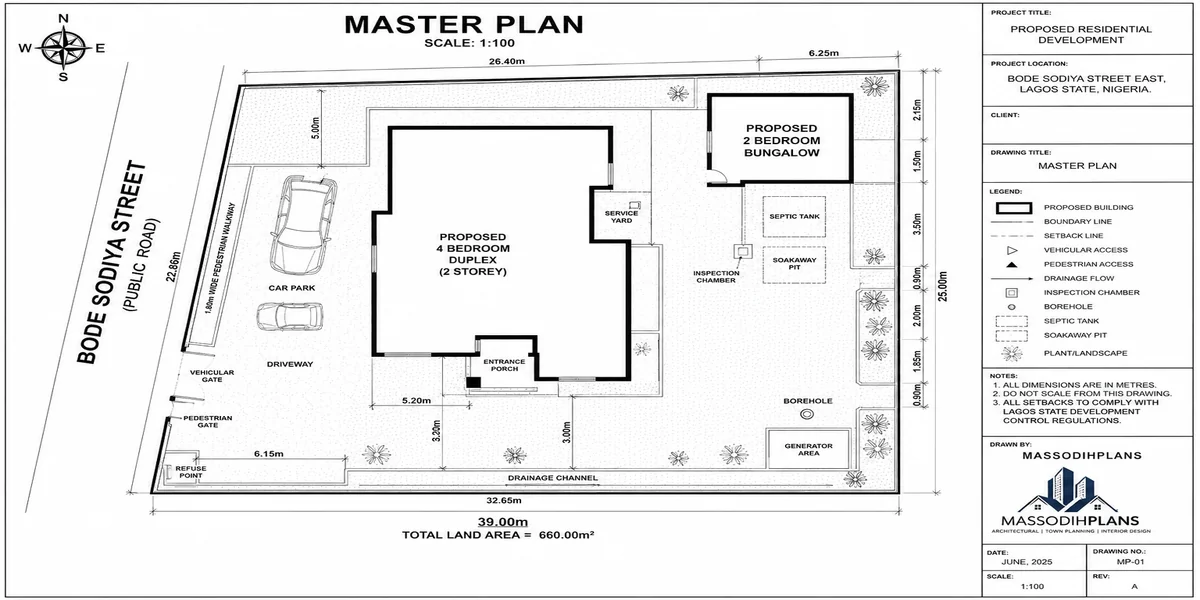
One mistake many people make is assuming the entire plot can carry the building. In reality, the usable building area becomes smaller after setbacks are deducted.
In Abuja, development is regulated by the Development Control Department under the Federal Capital Development Authority. Your building cannot touch the plot boundaries. You must leave approved setback spaces at the front, rear, and sides of the property.
The exact setback requirements depend on the district and plot category, so it is important to confirm them before designing your house.
Why does this matter?
Because a 500sqm plot may look large on paper, but after setbacks are applied, the actual building footprint can reduce significantly. This is why a compact 4 bedroom duplex with around 200sqm ground coverage works very well on small Abuja plots. Trying to force an oversized building onto the same land often leads to poor ventilation, limited parking, approval problems, and uncomfortable circulation.
This is one reason smart architectural planning matters more than simply building bigger.
At MassodihPlans, I always advise homeowners to confirm their plot dimensions and development regulations before choosing a floor plan. Understanding this early helps you avoid redesign costs, approval delays, and expensive construction mistakes later.
Why a Compact Duplex is the Best Solution for Small Abuja Plots
A duplex is a two storey house. Ground floor and first floor. Both covered by one roof.
For small plots in Abuja, the duplex is almost always the right answer over a bungalow for four bedrooms. Here is why.
A 4 bedroom bungalow requires all four bedrooms on a single ground level. That means your building footprint has to accommodate bedrooms, living room, kitchen, toilets, circulation corridors, and everything else on one flat spread of land. On a 500sqm plot after setbacks, this becomes very tight. The building eats almost the entire usable compound.
A 4 bedroom duplex, on the other hand, places two floors of space on roughly half the ground area. You can comfortably accommodate all your spaces, keep proper setbacks, maintain functional parking for two to three vehicles, and still have a clean compound layout that feels spacious.
Vertical development is the principle at work here. Instead of spreading horizontally across the land, the house rises upward. The land saved on the ground becomes parking, drainage, landscaping, generator space, and the outdoor circulation that makes daily living comfortable.
There is also a cost advantage people do not always consider. A well designed duplex on a smaller footprint often has a lower substructure cost than an oversized bungalow that sprawls across the same plot. Less foundation area means less excavation, less concrete for foundation work, and less subfloor mass.
You can explore various duplex layouts suited to Nigerian plots in our Plans Library, where I have organized options by plot size, bedroom count, and building type.
The Recommended Plot Dimensions for This Design
This 4 bedroom duplex concept works best on:
A plot measuring 15m by 30m which is approximately 450sqm to 500sqm. This is the 50ft by 100ft plot that many Abuja families are currently acquiring in developing districts.
It also works very well on a 600sqm plot, where the extra space allows for wider setbacks, more generous landscaping, and possibly a small rear service yard.
Building Footprint Target
For this design, the recommended building footprint is approximately 13m by 16m, which gives a ground coverage of around 208sqm.
On a 15m by 30m plot this leaves:
About 2m clearance on the side boundaries combined, depending on how you position the building. On the rear, approximately 6m to 7m remains after building footprint and front setback. The front setback gives you your parking apron and entrance approach.
This is tight but workable when the design is intelligent. Every metre counts on a compact plot and the arrangement of spaces must be thought through carefully.
Full Ground Floor Breakdown
The ground floor is the public and shared zone of the house. It handles everything that involves visitors, daily family activity, food preparation, and entry control.
Entrance Porch
Start with a proper covered porch at the entrance. In Abuja’s climate you need shelter from both rain and sun immediately at the door. A porch of around 2m by 3m is sufficient. It does not need to be dramatic but it must be sheltered properly with a roof overhang that actually reaches over the entry path.
A common mistake is designing a shallow decorative porch that provides no real weather protection. When it rains heavily in Abuja during the wet season, a shallow overhang is useless.
Main Living Room
The living room should measure approximately 5m by 6m for a family of four to six. This size comfortably handles a large sectional sofa arrangement, a TV wall with display cabinet, clear circulation space for people moving between areas, and comfortable breathing room for visitors.
Do not try to make the living room bigger than this to impress. A 6m by 7m living room on a small plot footprint steals space from every other room. The compact home performs better when every room is right sized rather than one room oversized and everything else cramped.
Large windows in the living room should face directions that receive good airflow and not direct western afternoon sun. In most Abuja plot orientations, you want your main living room windows oriented toward the north or east where possible.
Dining Area
Modern Nigerian homes are increasingly moving away from the isolated formal dining room that sits empty for most of the week.
For a compact duplex, integrate the dining space directly with the living area in a connected open arrangement. The dining table area needs approximately 3.5m by 4m. When this flows visually with the living room it creates a combined open plan space that feels generous even on a small footprint.
The key is to define the zones through furniture arrangement and ceiling design rather than solid walls. You get the spaciousness without sacrificing privacy.
Guest Bedroom
Every serious Nigerian family house needs a functional guest room on the ground floor. If you have elderly parents visiting, they should not have to climb stairs. If a guest visits overnight, they should have proper privacy without going upstairs into the family zone.
Dimension the guest bedroom at approximately 3.6m by 4m. It should have its own attached toilet and bathroom, a built in wardrobe niche or alcove, a proper window for cross ventilation, and a door that does not open directly into the main living space.
Position this room so that a visitor using it does not pass through your private areas to access it. Ideally, it should be accessible from a short corridor near the entrance.
Kitchen
The kitchen is one of the most important and most neglected spaces in Nigerian residential design.
A proper kitchen for this plan measures approximately 4m by 4.5m. This is not large by Western standards but it works very well for Nigerian cooking when properly arranged.
Key features to include:
A dry kitchen section for food preparation with counter space on at least two sides. Nigerians cook heavily and need generous counter space. A storage pantry or deep cabinet section for food storage, pots, and kitchen equipment. A rear exit from the kitchen so that rubbish, gas cylinders, and kitchen deliveries do not have to come through the main house. Proper cooking ventilation through rear windows or a ventilation fan opening. Natural light access through a side window or top light.
The kitchen should never be a dark box at the back of the house. Poor kitchen ventilation is one of the biggest comfort failures in Nigerian residential buildings.
Visitor Toilet
Position a separate toilet for visitors near the living area but not opening directly into the living room. A short corridor approach prevents uncomfortable situations when guests use the toilet during social gatherings.
Staircase
The staircase position on a small plot duplex is critical. Many designs waste enormous space by placing an imposing central staircase that dominates the living room.
For a compact duplex, position the staircase to the side, either behind the living room or along one wall of the entrance corridor. A straight flight or L shaped flight works best. A spiral staircase is sometimes considered to save space but it creates challenges for moving furniture upstairs and becomes difficult for elderly family members.
The staircase area can double as a vertical ventilation shaft when properly designed with a high level opening or landing window. Heat rises and escapes through this shaft, which genuinely reduces indoor temperature on the ground floor.
Full First Floor Breakdown
The first floor is the private family zone. No visitors should need to come up here. Everything upstairs is for the household members only.
Master Bedroom
The master bedroom in this design is approximately 5m by 5.5m. This accommodates a king size bed with bedside tables on both sides, a full wardrobe arrangement, and comfortable movement around the bed.
The master bedroom must have:
An attached bathroom with shower, toilet, and washbasin. A walk in wardrobe or large built in wardrobe recess. Access to a balcony or at minimum a large window with outward opening for ventilation and light. Cross ventilation through windows on at least two walls or one wall with two differently positioned openings.
Bedroom Two
Approximately 3.8m by 4m. This size comfortably handles a double bed or two single beds with side tables, a wardrobe, and decent circulation space. Children can share this room. A teenager can use it comfortably. Position this bedroom away from the master for acoustic privacy.
Bedroom Three
Also approximately 3.8m by 4m. Same principle as bedroom two. Keep bedroom two and three close to a shared bathroom if you want to avoid giving each bedroom an attached toilet, which saves cost.
However, if budget allows, I recommend at least one additional toilet shared between bedrooms two and three, positioned in a short corridor between them. This prevents early morning queuing that becomes a genuine problem in busy family homes.
Family Lounge
This is the feature that separates thoughtful modern Nigerian home design from older layouts that just stacked bedrooms upstairs with no connective space.
A family lounge of approximately 4m by 4m at the top of the staircase creates a transitional zone that the whole family uses privately. It can serve as a children’s play area, a movie space on weekends, a study area during exam periods, a reading corner, or a remote work space during the day.
It makes the upstairs floor feel like a complete home within the home rather than just a corridor with bedroom doors.
Bathrooms
Plan at minimum two full bathrooms upstairs. The master ensuite and one shared bathroom for bedrooms two and three. If a fourth bedroom exists in this layout, it should be positioned with its own toilet or share access with an adjacent bathroom without creating a long corridor walk.
Balcony
Include at least one functional balcony accessed from the master bedroom or from the family lounge. Minimum 1.5m deep by 3m wide.
A balcony does several things for this design. It provides outdoor relaxation space for family members. And it dramatically improves the facade appearance making the house look taller and more articulated. It creates shade for the ground floor area below if positioned over an entrance or porch. And it assists heat escape from the upper floor.
Ventilation: The Most Important Comfort Feature Nobody Plans Properly
Nigeria is hot. Abuja specifically experiences intense dry season heat from November through March with temperatures that regularly exceed 36 degrees Celsius. During the rainy season you get relief, but the harmattan period from December to February brings dry dusty air that penetrates everywhere.
Most Nigerian houses look beautiful in photographs but feel like ovens inside. This is entirely an architectural planning failure. Good ventilation is not expensive. It just requires thought at the design stage.
Cross Ventilation
The fundamental principle is simple. Air enters on one side of a room and exits on the opposite side. This creates movement. Moving air feels cooler than still air even at the same temperature.
To achieve cross ventilation in every room, position windows on opposite walls wherever possible. A bedroom with a window on one wall and a louvred ventilation opening on the opposite wall will always be cooler than one with windows only on one side.
For the ground floor living areas, the integrated open plan of living and dining helps enormously. Air can travel from the front windows through the open living area into the kitchen windows at the rear without hitting a solid wall.
Reducing Western Heat Gain
In Nigeria, the western side of any building receives the most intense afternoon sun. From about 2pm to 6pm, the western facade of your house is being baked by direct solar radiation.
Avoid placing large windows or glass openings on the western wall. If your plot orientation puts the western face toward the road, you may need to reconsider the building position or use deep overhangs and recessed windows to shade the glass from direct sun.
This is something I cover in detail in our Plan School guide on Nigerian climate responsive design.
Roof Space Ventilation
One critical ventilation principle many Nigerian builders ignore is the roof space. A sealed roof void with no ventilation becomes a heat store. Temperatures in an unventilated roof space on a Nigerian afternoon can exceed 60 degrees Celsius. This heat radiates down into the rooms below through the ceiling.
Proper roof ventilation through gable end openings, ridge vents, or eave gap ventilation significantly reduces the temperature inside the living spaces. This is cheap to include at construction stage and enormously expensive to fix afterward.
Natural Lighting: Reducing Generator Dependence During the Day
Nigeria’s power supply situation means that maximizing natural daylight in your home is not just about comfort. It directly reduces how much your generator runs during working hours.
A well lit 4 bedroom duplex with properly positioned windows needs artificial lighting only after sunset. This translates to real money saved over the years.
Design for natural light by:
Keeping windows clear of obstruction from neighboring walls or fences. Using clerestory windows high on walls to bring light deep into rooms without compromising wall space for furniture. Incorporating a staircase landing window that brings natural light into the central circulation area which would otherwise be dark.
Using lighter interior finishes, especially for ceilings and upper walls, which reflect daylight further into rooms.
Parking and Compound Arrangement
Parking is one of the most common disaster areas on small plot projects in Abuja.
I have seen houses on 500sqm plots where the building covers so much ground that only one vehicle can park and it cannot turn around without reversing through the gate. This makes daily living genuinely frustrating.
For this design, the target is comfortable parking for two vehicles with maneuvering space. Three vehicles is achievable if the parking apron is well organized.
Position parking across the front setback zone from the entrance gate to the building face. Use interlocking stone paving rather than full concrete surfacing. Interlocking allows drainage through the gaps and prevents the heat island effect of solid concrete. It also looks better and is easier to repair selectively if settlement occurs.
Keep the driveway clear of raised decorative elements that cars can clip during tight maneuvers. A central planted strip in the parking area looks attractive in photographs but creates headaches for daily use.
Compound Zones
Think of your compound in four zones:
The front zone handles parking and entrance landscaping. Keep it simple and functional.
The side zones handle walkway access, drainage channels, and utility runs. Keep these clear and unobstructed.
The rear zone handles service functions. Generator enclosure, outdoor washing area, refuse holding point, borehole head, and laundry drying area all belong here.
The building perimeter needs a continuous drainage channel that catches roof runoff from downpipes and carries it to the road drainage system or a soakaway at the rear.
Generator Space Planning
This section is almost always left out of general architectural guides. In Nigeria it is absolutely critical.
Your generator enclosure must be planned as part of the house design, not left as an afterthought.
Position the generator at minimum 8 to 10 metres from any bedroom window. Generator noise is the biggest source of sleep disruption in Nigerian residential compounds. Families who position generators directly outside a bedroom window often realize the problem only after construction is complete when nothing can easily be done about it.
The enclosure should be ventilated properly so the generator does not overheat. It should be secure against theft. It needs a concrete slab base with anti vibration pads. The fuel storage space should comply with fire safety clearances.
Cable routing from the generator to the main distribution board should be planned during the early stages so conduit runs can be embedded properly during construction rather than surface mounted as an afterthought.
Borehole and Septic Tank Positioning
Two positioning rules that Abuja builders regularly ignore with expensive consequences:
Your borehole must be positioned as far from your septic tank as the plot allows. Ideally at least 15m of horizontal separation. In Nigeria’s ground conditions this separation genuinely matters for preventing contamination of your water supply.
Abuja’s soil profile varies significantly across different districts. In some areas you hit rock at shallow depths which affects both borehole drilling cost and septic tank installation. If you are building in areas like Lugbe or Dawaki, always get a ground investigation before finalizing your septic tank location.
The septic tank should be positioned where a honeysuckle truck can easily access it for periodic emptying. A septic tank buried deep in a rear corner with no vehicle access creates a serious maintenance problem down the line.
Drainage Planning for Abuja’s Rainy Season
Abuja receives significant rainfall between May and October. Flash flooding during heavy storms is a genuine problem in many developing districts where drainage infrastructure is still being completed.
Your compound drainage planning must handle two things. First, roof water from all downpipes must be directed to channels that carry it to the street or to a properly designed soakaway. Second, compound surface water from rainfall must drain away from the building foundation and not pool against the walls.
Achieve this by:
Grading the entire compound surface to slope away from the building on all sides. Constructing perimeter drainage channels around the building that connect to the main compound drainage system. Installing proper subsoil drainage around the foundation if your area has high groundwater or poor draining soils.
Water damage to foundations and ground floors is one of the most expensive problems Nigerian homeowners face. It is almost entirely preventable with proper drainage planning at construction stage.
Roofing Options: What Works in Abuja
Roofing is one of the most visible and expensive components of your house. Getting it wrong creates years of maintenance headaches.
Concealed Parapet Roof
This is the modern flat top appearance with a parapet wall hiding the roof structure. It gives a clean contemporary look that photographs beautifully and suits the modern duplex aesthetic.
The challenge in Nigeria is drainage. A flat or low pitch roof accumulates water during heavy rainfall. If the waterproofing membrane fails or the drainage outlet blocks, water backs up and finds its way through the concrete deck into the rooms below.
Concealed roofs in Nigeria require:
High quality waterproofing membrane properly installed by experienced applicators. Multiple drainage outlets so a single blocked outlet does not cause overflow. Regular maintenance and inspection especially before and after the rainy season. Properly designed drainage slopes so water does not sit stagnant in any area of the roof deck.
Done properly, a concealed roof looks excellent and performs well. Done poorly, it is a long term liability.
Modern Hip Roof
For many Nigerian homeowners, a properly designed hip roof is still the most reliable option. It sheds water efficiently on all four sides, it performs well in high wind conditions, and it is understood by most competent roofing contractors in Nigeria.
A hip roof does not have to look outdated. Combined with wide overhangs, fascia detailing, and good exterior finishes, a modern hip roof design can look very contemporary while remaining practical.
Stone Coated Roofing Sheets
For the roofing material itself, stone coated sheets offer a premium appearance with a quieter rain sound. They are more expensive than standard aluminium sheets but the acoustic comfort during Abuja’s heavy rainy season is worth serious consideration.
If budget is tighter, quality longspan aluminium roofing is perfectly suitable. The important thing is to use reputable brands and avoid the cheapest thin gauge sheets that indent easily and develop leaks quickly.
Never compromise on roofing thickness or quality. The cost of reroofing a house after a few years of cheap sheet failure always exceeds what was saved originally.
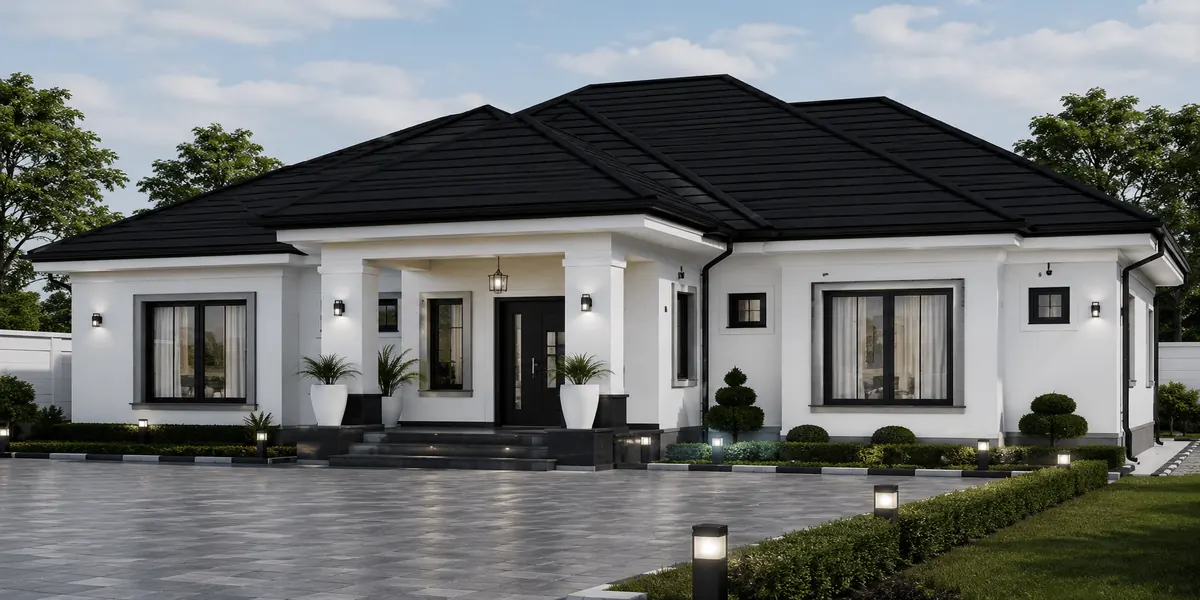
Roofing Options: What Works in Abuja
Realistic Cost Breakdown for Building in Abuja
Construction costs in Nigeria are volatile. Inflation affects material prices regularly. The figures below represent realistic estimates at current market conditions but you should always verify against current supplier quotes before finalizing your budget.
Substructure (foundation and ground floor base)
This covers excavation, concrete foundation work, DPC, subfloor fill, and ground beam or raft slab depending on soil conditions. Budget approximately N10 million to N16 million.
In some Abuja districts with difficult soil conditions, substructure costs can go higher. Always get a soil investigation report before designing your foundation type.
Ground Floor Decking (hollow pot slab or ribbed slab)
This is the concrete deck that forms the ceiling of the ground floor and the floor of the first floor. Budget approximately N8 million to N12 million for this stage.
Blockwork and Structural Frame
All columns, beams, walls, and structural work from ground floor level upward to roof level. Budget approximately N12 million to N18 million.
Roofing
Including timber or steel frame, roofing sheets, fascia, gutters, and all roofing accessories. Budget approximately N8 million to N15 million depending on roof type and material quality.
Electrical and Plumbing
Full electrical installation including consumer unit, wiring, sockets, switches, and fittings. Full plumbing including water supply, soil waste, and all sanitary fittings. Budget approximately N6 million to N10 million. This range varies enormously depending on fitting quality. Imported sanitary ware can push this significantly higher.
Finishing
This includes all internal and external plastering, tiling, painting, doors, windows, kitchen cabinetry, wardrobes, ceilings, and compound works. Budget approximately N15 million to N30 million.
This is the widest ranging stage because finishing quality is where most personal choices happen. A homeowner choosing imported Italian tiles versus locally produced tiles can double this stage cost alone.
Total Estimated Project Cost: approximately N60 million to N110 million
Always include a contingency reserve of at least 10 to 15 percent above your estimated total. Nigerian construction projects almost universally encounter some unexpected cost variation. The contingency is not pessimism. It is responsible planning.
FCDA Building Approval Process
Before you pour a single bag of concrete, you need building plan approval from the relevant authority for your plot.
Even in FCDA-approved estates, individual building designs must be reviewed and approved before construction begins. This oversight protects buyers from structural and legal issues that may arise from unapproved construction. Moontech Group
The design documents required for submission include architectural drawings, structural drawings and calculations, mechanical and electrical plans, site analysis, and soil test reports. allAfrica.com
The architectural drawings must be signed by an architect registered with ARCON, the Architects Registration Council of Nigeria. The structural drawings must be signed by a registered civil or structural engineer. Both professionals must be licensed to practice in Nigeria.
Fees apply at each stage of the approval process. Processing time can vary. Beginning the approval process early, before you need to start construction, saves enormous stress.
If your plot is in an area without FCDA jurisdiction, confirm which authority controls development in your specific location and obtain the correct approval from them.
Material Recommendations for Abuja Climate
Walling
Standard sandcrete blocks in the 225mm thick option (nine inch blocks) remain the most widely used and economical choice for load bearing walls in Nigeria. When properly constructed with appropriate reinforcement and mortar mix, they perform well.
Hollow blocks should not be used for structural walls. Many contractors cut cost by using hollow blocks in structural positions. This is dangerous and will fail structural approval if your plan reviewer inspects properly.
Floor Finishes
Porcelain tiles between 60x60cm and 80x80cm are practical and durable for Nigerian homes. Choose matte or slightly textured finishes over polished surfaces. Polished tiles look impressive in showrooms and become a slipping hazard in everyday Nigerian family life, especially in wet season when outdoor footwear brings moisture inside.
Lighter colored tiles in living areas and bedrooms keep rooms feeling cooler by reflecting heat rather than absorbing it.
Ceilings
POP (plaster of Paris) suspended ceilings give a refined finish and allow for concealed lighting. They require perfectly waterproofed roofing above because any roof leak will eventually show as ceiling staining or collapse.
PVC panel ceilings are more economical and genuinely resist moisture better. They are easier to repair and replace if damage occurs. For budget conscious projects, PVC ceilings are a very sensible choice.
Windows
Aluminum framed casement windows with mosquito mesh are standard and practical. Specify the thicker section aluminum profiles rather than the cheapest thin options which warp over time and eventually cannot close properly.
For the master bedroom and family lounge, consider including one or two larger fixed glass panels with smaller openable casements alongside them. This gives a sense of openness and light while maintaining proper ventilation.
Security Planning
Security is not an optional extra in Nigerian residential planning. It is a fundamental design requirement.
Design for security by:
Controlling visibility. Reduce corners and hidden zones around the exterior of the building where intruders could position themselves unobserved from the street or from interior windows.
Positioning your gatehouse close to the entrance where the gatekeeper has clear sight of the vehicle entrance and the building facade. A gatehouse buried deep in a corner with no sight line to the gate defeats its purpose.
Keeping compound walls at a height that provides privacy without creating a completely screened environment that conceals intruder activity.
Leaving provision for CCTV cameras at the building design stage. Running conduit for camera cables during construction costs almost nothing. Installing CCTV years later with surface mounted cables is messy and expensive.
Common Mistakes Nigerian Homeowners Make on Small Plots
Oversizing the Living Room
The living room does not need to be 7m by 8m. That scale belongs on a 900sqm plot. On a 500sqm plot, a 5m by 6m living room is appropriately sized and leaves space for everything else. Resist the temptation to make one room impressive at the expense of the whole house layout.
Ignoring Setbacks During Design
Some clients come to us with a floor plan already designed by a draftsman who never asked about their plot dimensions or setback requirements. The plan looks good on paper. On the actual plot, it violates setbacks on two sides and will never get approval. Starting over after that stage is an enormous waste of money.
Copying Foreign House Plans
Social media is full of beautiful house designs from the United States, Europe, and South Africa. These designs are created for different climates, different construction systems, and different daily living habits. A Nigerian family cooking heavy pots of egusi soup daily needs a different kitchen relationship to the house than an American design was planned for. The ventilation strategy for Texas does not work in Abuja. Always work with plans designed for Nigerian conditions.
Skipping Drainage
Drainage is invisible after construction but its absence becomes catastrophically visible every rainy season. Compound flooding, rising damp in ground floor walls, and damaged floor finishes are all consequences of inadequate drainage planning. Spend the money on proper drainage channels, proper site grading, and soakaway design.
Too Many External Projections
Every bay window projection, decorative corner column, and complex external geometry increases construction cost. On a small plot duplex, clean simple building geometry reduces cost and actually looks more modern and sophisticated than an over-decorated exterior with twenty different projections.
Practical Site Supervision Advice
You cannot build a good house without supervising the contractor. This is the reality in Nigerian construction.
What to Check Regularly
Column alignment: Every column must be positioned exactly on the structural drawing. A misaligned column creates problems through every floor above it.
Reinforcement: Before concrete is poured into any column, beam, or slab, the steel reinforcement bars must be checked for correct size, spacing, and lapping length. This is non-negotiable. Once concrete is poured, nobody can see what is inside.
Block quality: Check that blocks being used on site are solid in structural positions. Reject hollow blocks in load bearing walls.
Plumbing routing: Ensure all soil pipes, water supply lines, and conduit runs are positioned and embedded before concrete work covers them.
Roofing timber: Ensure all timber used in roof construction is treated against termite attack. Untreated roof timber in Nigeria can have a very short lifespan in humid conditions.
If you cannot supervise yourself, engage a professional site clerk of works or pay your architect for regular site inspection visits. The cost of professional supervision is always less than the cost of fixing mistakes discovered after completion.
Our Services page lists the professional support options available for clients who need proper design, documentation, and supervision on their projects.
Who This Design Is Right For
This 4 bedroom compact duplex concept suits:
Families of four to six people who want proper bedroom privacy and a separate family living zone upstairs.
Civil servants and professionals buying in Abuja’s developing districts where 500sqm plots are the current standard.
Investors developing for family rental income in medium density areas where good 4 bedroom duplexes command strong rents.
Remote workers who need a dedicated workspace within the home. The family lounge or ground floor guest room converts easily to a home office during working hours.
Multi generational families where grandparents or elderly relatives live in the house. The ground floor guest bedroom handles this without any stairs required.
Future Flexibility of This Design
A well built duplex has genuine long term flexibility that many homeowners do not think about at the design stage.
The family lounge upstairs can be converted to a fifth bedroom if the family grows. The guest room downstairs can become a small self contained unit with minimal modification if the household configuration changes over time. The rear service area can accommodate a small Boys Quarters addition on a 600sqm plot without affecting the main building.
Good house design anticipates change without being held hostage to it. Flexibility is built in through appropriate spatial proportions and sensible structural placement rather than through complicated conversion work later.
You can see how this concept works across different plan variations in our Plans Library where I have documented several layouts across different plot sizes.
Investment Value of a Well Designed Compact Duplex in Abuja
If you are thinking about this as an investment, the numbers work well for a compact modern duplex in Abuja.
Family rentals in well located areas of Lugbe, Lokogoma, Dawaki, and similar developing districts remain in strong demand. A fully finished 4 bedroom duplex in these areas commands rental income that provides reasonable annual yield on a long term investment basis.
Resale value also holds well. Modern compact duplexes are easier to sell than oversized buildings with poor layouts because the buyer pool for functional homes is much larger than the pool for prestige buildings that cost a fortune to maintain and run.
The key is quality of construction and thoughtfulness of design. A well executed compact duplex holds value better than a large poorly constructed house with an inefficient layout.
Orientation: Getting Your Building Position Right on the Plot
Where your building sits on the plot and which direction it faces has genuine impact on comfort for the lifetime of the house.
The general principle for Abuja is to minimize direct western sun exposure on large window openings. The western side of any building in Nigeria receives intense afternoon heat. Rooms that face west and have large windows will be hot every afternoon for the entire life of the house.
Where plot boundaries allow, position your main living spaces and larger windows to face north or east. These orientations receive good light without the intense heat gain of the western face.
If your plot forces a western road frontage, compensate through deep overhangs, recessed windows, or sun shading elements on the western facade.
The entrance and parking are typically placed facing the road regardless of orientation. What you can control is where your primary living spaces and bedroom windows sit in relation to the cardinal directions.
Quick Summary: Why This 4 Bedroom Plan Works for Small Abuja Plots
The duplex concept on a 13m by 16m footprint fits comfortably on 450sqm to 600sqm plots in Abuja with proper setbacks maintained.
Vertical development saves outdoor land for parking, drainage, landscaping, and service functions that make daily living comfortable.
Zoning the ground floor as public and guest space and the upper floor as private family space creates privacy and functionality that cannot be achieved with a single level plan.
Climate responsive design through cross ventilation, reduced western openings, roof space venting, and proper shading keeps the house comfortable without permanent air conditioning dependence.
Proper drainage, generator placement, borehole positioning, and septic tank location planning prevents the expensive problems that haunt poorly planned Nigerian compounds for decades.
FCDA approval compliance from the design stage saves legal problems, construction delays, and financial losses that come from unapproved building.
The total construction budget of approximately N60 million to N110 million is realistic for the current Abuja market and represents genuine value when the design is executed properly.
For those who want to go deeper on any specific aspect of this design process, our Plan School has detailed practical articles on Nigerian building regulations, structural systems, roofing types, finishing costs, and site supervision guidance.
FAQs
What is the minimum plot size for a 4 bedroom duplex in Abuja?
A well planned 4 bedroom duplex can sit comfortably on a 450sqm to 500sqm plot. This assumes the design is genuinely compact and intelligent, not just a large plan forced onto a small plot. Setback compliance must be maintained from the beginning.
How much does it cost to build a 4 bedroom duplex in Abuja currently?
Expect to budget between N60 million and N110 million for a complete project depending on your finishing quality, location accessibility, and current material prices. Always add a 10 to 15 percent contingency above your base estimate.
Is a flat roof or concealed roof design safe for Nigerian climate?
Yes, when properly designed and waterproofed. The risk with flat roofs in Nigeria is poor waterproofing and blocked drainage outlets during heavy rain. Proper membrane waterproofing, multiple drainage points, and regular maintenance make them reliable.
Can I build this design on a narrow plot?
Yes. The compact duplex with a 13m building width is specifically suited to plots that are narrow in one direction. The vertical arrangement means you are not spreading across the narrow dimension.
Which roofing material is best for Abuja?
Stone coated roofing sheets offer the best combination of durability, aesthetics, and acoustic comfort for Abuja’s climate. Quality longspan aluminium roofing is a reliable and more economical alternative. Avoid very thin low cost sheets regardless of what the contractor recommends.
Do I need FCDA approval before starting construction?
Yes, absolutely. Building without approval in Abuja risks demolition notices and legal complications. In Abuja, ownership and permission are not the same thing. You need both your land title and your building plan approval before a single block is laid. Moontech Group
What is the family lounge and why does it matter?
The family lounge is a shared living space on the upper floor of the duplex, distinct from the individual bedrooms. It creates a zone where household members can relax, study, watch television, or work without disturbing each other in bedrooms. It is one of the most appreciated features in modern Nigerian duplexes.
How do I avoid ventilation problems in my Nigerian home?
Position windows on opposite walls in every room to create cross ventilation. Minimize large glass openings on western walls. Ensure the roof space is ventilated through gable or ridge openings. Use ceiling fans as standard in every room for air movement assistance.
External Reference
For a detailed understanding of building plan approval requirements in Abuja and how the FCDA Development Control process works, the Federal Housing Authority’s published architectural plan guidelines at fha.gov.ng/architectural-plan provide useful reference on submission requirements and design standards that apply to Nigerian residential projects.
About the Author
Massodih Okon Effiong is a Built Environment Expert and Senior Researcher based in Nigeria. He has a Master’s degree in Urban and Regional Planning, a first degree in Geography and Environmental Management, and professional certificates in Architectural Design, Landscape Design, and GIS. With over 15 years of hands‑on experience in architecture, town planning, GIS, and building economics across Nigerian residential and institutional projects, he understands the real challenges Nigerians face when planning and building homes.
At MassodihPlans, Massodih shares practical Nigerian building guides, modern bungalow and duplex house plans, and built environment resources created specifically for Nigerian homeowners, developers, and property investors. His work is based on real‑life conditions in Nigeria, climate‑responsive design, and cost‑effective planning, aimed at helping everyday Nigerians make smarter, more confident building decisions.
Related Posts
- Cost of Roofing a Bungalow and Duplex in Abuja Small Plot Now
- Smart House Design Ideas for 50×100 Plots in Nigeria
- Building Materials Price Guide in Nigeria (Full Cost Guide)
- Best Roofing Sheets for Nigerian Weather: Complete Guide
- Cost of Building a 4 Bedroom Duplex in Lagos (Complete Guide)
- How to Practically Draw and Design a Duplex for Small Plots
- Bungalow vs Duplex: Which is Better to build in Nigeria Today?
- Modern Duplex House Plan for 50×100 Plot in Lagos
- 7 Small Plot Design Mistakes Nigerians Make (And How to Fix Them)
- House Plan Selection Guide: How to Choose the Right House Plan for Your Land, Budget and Lifestyle
- Land-Buying Checklist: 100+ Things to Check Before Buying Land in Nigeria
- Building Project Budget Template: Complete House Construction Cost Planner
- Homeowner’s Construction Checklist: 150+ Things to Check Before and During Building
- Building Materials Checklist: 100+ Materials You May Need When Building a House
- Site Analysis Checklist: 50+ Things to Check Before Building on Your Land
- House Planning Checklist: 50+ Essential Things to Check Before Building a House (Complete Guide)
- Building Cost Calculator Nigeria: Estimate Your House Cost in 60 Seconds
- What Principles Guide the Design of an Air Force Base Master Plan?
- How Do You Design Army Barracks for Security and Daily Operations?
- Nigerian House Plans for Family Homes in Makurdi, Benue State, Nigeria
- Duplex Construction Cost in Awka, Anambra State: Complete Budget Breakdown