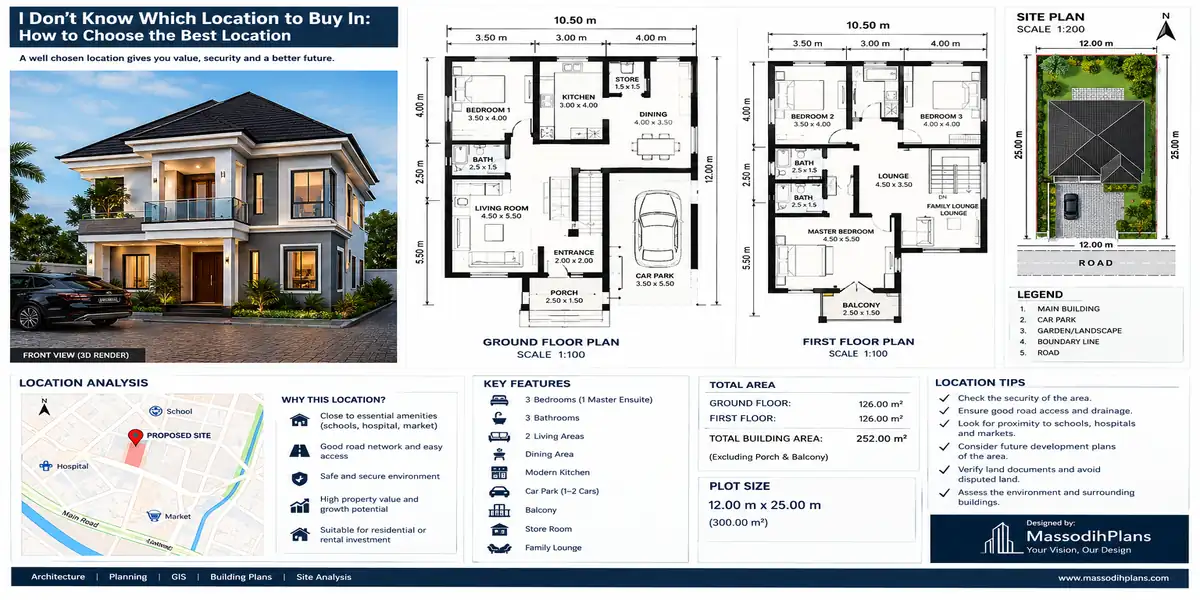
I Don’t Know Which Location to Buy In: How to Choose the Best Location
You’ve probably had this exact conversation in your head more times than you’d admit. Your cousin says buy in Sangotedo because “it’s the future.” Your colleague swears by Ikorodu because he got a plot for almost nothing five years ago and it’s tripled since. Someone on Facebook is selling land in a place you’ve never heard of, with a flyer showing a dual carriageway that doesn’t exist yet. And you’re sitting there with money saved, genuinely ready to buy, completely unable to pick a direction not because you’re indecisive, but because nobody has actually given you a way to think about the decision. Every article just gives you a list of “top 10 areas to buy in Lagos” as if the same ten places are right for every single person reading it.
I’m going to do something different here. I’m not going to hand you a ranked list of neighbourhoods, because I don’t know your budget, your reason for buying, or your risk tolerance and any article that hands you a list without knowing those things is guessing on your behalf. What I’m going to give you instead is the actual decision process I walk clients through, as a Town Planner who has spent over 15 years reading land, layouts, and growth patterns across South-South Nigeria. By the end of this, you won’t need a list. You’ll have a method you can apply to any location, anywhere, for the rest of your life.
Why “Best Area” Is the Wrong Question to Start With
Here’s the first thing that trips people up, and it’s not their fault every article trains them into it. “Best area to buy property,” “best neighbourhood to buy,” “safest area to buy property” these all sound like they’re asking the same question, but they’re not. They’re four different questions with four different right answers, and the location that wins one of them can lose badly on another.
A location can be excellent for rental investment and terrible to actually live in. A location can be extremely safe and have almost no appreciation potential because nothing is developing there. A location can be the “best neighbourhood” by every lifestyle measure and be sitting on land you legally can’t get a clean title for. Before you can find the right location, you have to be honest about which of these questions you’re actually asking, because the answer changes completely depending on which one it is.
So the real starting point isn’t “where should I buy.” It’s “what am I actually buying this for.” Everything below is organized around that, because that’s the only way a location decision actually holds up once you’ve committed real money to it.
If you take nothing else from this article, take this write down, in one sentence, why you’re buying. “I’m buying to live in with my family for the next 20 years” and “I’m buying to flip in 3-5 years” are different missions that lead to different locations. Most buyer regret I’ve seen traces back to skipping this one sentence.
The Four Reasons People Buy, and Why Each One Points Somewhere Different
Reason 1: You Want the Best Place to Buy a House to Actually Live In
If this is you, your priorities are livability first, appreciation second. You’re weighing school access, commute, security, drainage, power reliability, and whether the neighbourhood actually feels like somewhere you want to come home to for the next couple of decades. A location can be a mediocre investment on paper and still be the right buy for you, because you’re not planning to sell it you’re planning to raise a family in it.
Reason 2: You Want the Best Area for Property Investment
If this is you, livability matters less than growth trajectory and rental demand. You are not trying to live there. You are trying to buy where value is about to move, or where tenants are reliably available. This is a completely different research process from Reason 1, and it usually means buying in a less “finished” area precisely because the finished areas have already had their major appreciation.
Reason 3: You Want the Best Location to Buy Land, Not a Finished House
Buying raw land is its own category, because your biggest risks aren’t lifestyle or investment growth they’re legal and physical. Title authenticity, boundary disputes, and whether the land is even buildable (soil, flood risk, government reserve status) dominate this decision in a way they don’t for a finished property.
Reason 4: You Just Want the Safest Area to Buy Property, Full Stop
If security is your overriding concern and for many families it genuinely is the deciding factor you’re weighing crime patterns, estate security infrastructure, and community stability over almost everything else, sometimes even over price and even over growth potential.
Notice that these four reasons can point to four completely different locations, sometimes in the same city. That’s why “best area” as a single universal answer doesn’t exist. What exists is “best area for your specific reason,” and the rest of this guide gives you a way to test any location against whichever reason is actually yours.
The Location Scorecard: A Way to Actually Compare Places Instead of Guessing
This is the tool I want you to walk away with. Instead of collecting opinions from friends and social media, score every location you’re considering against these seven factors, honestly, using the same scale for each. It turns a vague feeling (“I like Area A better”) into something you can actually defend and compare.
1. Title Security
Is the land under a genuine Certificate of Occupancy, governor’s consent, or a title your lawyer can actually verify at the land registry? Or is it “omo-onile” family land with disputed or informal documentation? This single factor has ended more Nigerian property dreams than bad location choices ever have.
2. Physical Buildability
What is the actual soil and drainage condition? Is it low-lying and prone to flooding in the rains, or built on reclaimed swampland without proper sand-filling? A cheap plot that costs another few million in sand-filling and a raft foundation isn’t actually cheap.
3. Infrastructure Reality vs. Infrastructure Promise
Is the road that’s “coming soon” actually under construction, or has it been “coming soon” on the same flyer for six years? Check for physical evidence graders on site, drainage channels being dug, transformer poles going up not marketing language.
4. Access and Commute
What does the actual drive time look like at 7am and 5pm on a normal weekday, not a Sunday afternoon when the roads are empty? This is one of the most consistently underestimated factors in Nigerian home buying.
5. Security Pattern
Not just “is it safe” as a vibe, but specifically: does the area have organized estate security, community policing, or visible neglect? Ask people who actually live there, not the agent selling you the plot.
6. Rental and Resale Demand
If you needed to sell or rent this property in three years, is there an active, documented market of people actually buying and renting in this specific area or is it a location where “everyone says it’s coming up” but nobody’s actually transacting yet?
7. Governing Layout and Zoning
Is the area under an approved layout with defined roads, drainage, and setbacks, or is it an unplanned, organically grown settlement where today’s access road could legally become tomorrow’s drainage easement? This is a planning-specific risk almost no property blog outside this one will explain to you, and it directly affects both your resale value and your legal exposure.
Score each location 1-5 on all seven factors, write the numbers down, and add them up. Do this for every location you’re seriously considering before you visit for the third or fourth time not after you’ve already fallen in love with one of them. Numbers written down before emotional attachment sets in are far more honest than numbers written down after.
Best Area for Property Investment: What Actually Moves Value
If you’re buying purely as an investment, here is what I actually look for, learned from watching which areas genuinely appreciated versus which ones stayed flat despite the hype.
Follow government infrastructure spending, not developer marketing.
A new government-funded road, bridge, or rail line moving through an area is one of the most reliable predictors of future value growth, because it’s backed by budget allocation and construction activity you can physically verify, not a private developer’s projection.
Look for the area just behind the currently “hot” area, not the hot area itself.
By the time an area is widely known as “the next big thing,” a meaningful chunk of its appreciation has already happened, and you’re buying at a price that reflects the hype, not the ground floor. The genuinely early money moves into the next axis over, before it has a name yet.
Check whether commercial activity is following residential growth.
An area with only residential buildings going up, and no shops, banks, or small commercial activity following, is growing slower than one where both are happening together commercial follow-through is a strong signal of sustained, not speculative, demand.
Rental yield beats capital appreciation speculation for most ordinary investors.
A location where you can reliably rent out a property at a decent yield right now is a safer bet than one where you’re purely betting on a price jump that “should” happen in five years. One is cash flow you can verify today; the other is a story about the future.
Best Neighbourhood to Buy: What Actually Determines Livability
If you’re buying to live in it, here’s what genuinely matters more than the things people obsess over in listings.
Test the commute at the actual time you’d be doing it.
Visit the neighbourhood on a weekday morning and evening, not just during a relaxed weekend viewing. The version of the area you experience on a Saturday afternoon is not the version you’ll live with every single working day.
Talk to at least three people who already live there
Not the agent or the developer. Ask them what they’d change about the area if they could. Every neighbourhood has a downside the people already living there will tell you what it actually is, if you ask directly instead of just asking “is it good here.”
Check power and water reality, not promise.
“There’s a borehole” and “the borehole works reliably in the dry season” are different claims. Ask specifically about dry-season water pressure and how often the area experiences extended power outages, not just whether infrastructure technically exists.
Walk the neighbourhood at night, briefly and safely, if you can.
How a street feels after dark lighting, activity, whether it feels watched-over or abandoned tells you something a daytime viewing never will.
Consider the neighbourhood’s trajectory, not just its current state.
A neighbourhood that’s improving (new roads, new schools, growing commercial activity) is a different bet from one that’s declining, even if they look similarly pleasant on the day you visit.
Best Location to Buy Land: The Legal and Physical Layer Most Guides Skip
Buying raw, undeveloped land carries risks that a finished house doesn’t, and this is the part almost no property blog explains properly because it requires planning-specific knowledge, not just real estate sales experience.
Verify the title chain yourself, through a lawyer, at the land registry not through the seller’s documents alone.
Ask specifically whether the land has a genuine Certificate of Occupancy or governor’s consent, whether it’s free of any government acquisition or reserved status, and whether the person selling it actually has documented authority to sell.
Get a proper site survey and soil assessment before you commit, not after.
Land that looks fine to the eye can sit on reclaimed swamp, have a high water table, or require extensive sand-filling before it’s genuinely buildable costs that can meaningfully change whether the “cheap” plot was actually cheap.
Confirm the land sits within an approved layout, with defined roads, drainage, and setbacks
Not on an informal, organically subdivided plot where access roads and drainage paths were never properly designated. Land inside a properly approved layout is dramatically less likely to have future boundary disputes or access problems than land that isn’t.
Check for any existing encroachment onto drainage easements or road reserves
On the specific plot you’re buying, and on the plots directly around it. Land that looks like a normal plot on the ground can, on paper, actually sit partly within a reserved drainage channel a problem that surfaces years later when the authority enforces it, often at the buyer’s expense.
Physically visit at different times, in different weather, if you possibly can.
A dry-season visit can hide a flooding problem that becomes obvious the first time it rains hard. If you can’t visit in the rains yourself, ask neighbours directly whether the area floods, and look for water marks or drainage stress on nearby structures.
Safest Area to Buy Property: Reading Security Honestly
Security is often the single deciding factor for families, and it deserves a more honest treatment than “check the crime rate,” because reliable, localized crime data is genuinely hard to get in most Nigerian cities.
Organized estate security is a real, checkable signal.
A gated estate with active resident association dues funding patrols and access control is a different security proposition from an open-access neighbourhood with no organized structure, regardless of what either one “feels like” on a daytime visit.
Ask about incidents directly, not generally.
“Is it safe here” invites a polite, vague answer. “Has there been any break-in or incident on this street in the last year that you know of” invites a specific, honest one.
Look at how residents themselves have invested in security
Fencing height and quality, visible CCTV, functioning street lighting installed by residents rather than the government. People who’ve lived somewhere long enough to invest their own money in security are telling you something about their real assessment of the area.
Consider proximity to a functioning police presence and how the community actually responds when something happens
Not just distance on a map. A police post that exists on paper but has no fuel for patrol vehicles offers a different level of real security than an actively responsive one.
The Decision-Paralysis Problem, and How to Actually Get Unstuck
If you’ve read this far and you’re still stuck, I want to address the actual thing keeping you stuck, because it’s usually not a lack of information anymore it’s fear of an irreversible decision. Here’s how I’d get you moving.
Shortlist three locations, not one.
Trying to decide between “this location or nothing” creates paralysis. Comparing three real, scored options against each other creates an actual decision.
Set yourself a deadline for the decision, separate from the deadline to close the purchase.
Give yourself two weeks to score, visit, and compare your three shortlisted locations, and commit to choosing from among them at the end of that window rather than continuing to research indefinitely. Endless research past a certain point isn’t due diligence anymore it’s a way of avoiding the decision.
Accept that no location will score perfectly on all seven scorecard factors.
Every location trades off something. The right decision isn’t the one with zero downsides it’s the one whose specific downsides you can actually live with, given your reason for buying.
Get a second, independent opinion from a professional with no financial stake in which location you choose
A town planner or independent surveyor, rather than the agent selling you a specific plot. An agent’s incentive is to close a sale on their listing; a planning professional’s job is to tell you honestly what the land and layout actually support.
I tell every client the same thing at this stage the goal was never to find a location with no risk. It doesn’t exist. The goal is to find the location whose risks you fully understand and have priced into your decision, instead of discovering them after you’ve already paid.
Frequently Asked Questions
How do I know if a location is a good investment or just hype?
Check whether government infrastructure spending (roads, bridges, rail) is actually under physical construction there, not just promised, and whether commercial activity is growing alongside residential development. Hype talks about the future; verifiable construction activity and active rental demand show the present.
Is it better to buy in an established area or an up-and-coming one?
It depends entirely on your reason for buying. Established areas offer security and immediate livability at a higher price with less appreciation room left. Up-and-coming areas offer more growth potential at higher risk and often weaker infrastructure today. Neither is universally “better.”
What’s the biggest mistake people make when choosing a location?
Buying based on a single factor usually price or a friend’s recommendation without checking title security, drainage/flood risk, and whether the area is under an approved layout. Most serious regret traces back to one of these three being skipped.
Should I buy land now or wait for prices to drop?
In most genuinely growing Nigerian locations, land values have historically trended upward over the medium to long term as infrastructure and demand develop, though this varies by specific area and is not guaranteed. Waiting indefinitely for a price drop in an area that’s actively developing usually costs more than it saves.
How do I check if land is genuinely safe from government acquisition or reserved land status?
Through a proper search at the state land registry, conducted by a lawyer or licensed surveyor, cross-checked against the area’s approved layout plan not by taking the seller’s word or documents at face value.
Final Thoughts
You don’t need a list of “top ten places to buy” handed to you by someone who has never asked what you’re actually buying for. You need a way to test any location, anywhere, against the reason you’re buying and the risks that matter most for that reason. That’s what the scorecard above gives you something you can use for this decision and every property decision after it, instead of a list that expires the moment the market shifts.
If you’re at the stage of figuring out what to actually build once you’ve settled on land, our Plans Library has house plans suited to different plot sizes and budgets, and Plan School walks you through reading a plan properly before you commit to one. If you’d like direct, independent guidance on evaluating a specific location or plot before you buy, our Services page outlines how we support clients through exactly this process. You can also explore more land, planning, and building guides on our Homepage.
- I Don’t Know What Type of Property I Should Buy: Here’s How to Actually Decide
- Can’t Find a Property Within Your Budget? Here’s the Part Nobody’s Telling You
- I Don’t Know Where to Find the Right Property in Nigeria | Buyer Guide
- I Need a Real Estate Agent to Help Me Buy a Property in Nigeria Safely
- Property for Sale in Nigeria: The Buyer’s Guide Nobody Publishes Today
Author
Massodih Okon is a Nigerian built-environment professional with academic and professional experience in urban and regional planning, geography, architectural design, Landscape Design, GIS and land development.
He holds a Master’s degree in Urban and Regional Planning from the University of Uyo and a first degree in Geography and Regional Planning.
Through MassodihPlans, he publishes practical guides on Nigerian house plans, building design, physical planning, site planning, development approval and residential construction. Read the full author profile →