How to Build a Stylish Modern Home on a 30×60 Plot in Ibadan
Modern Nigerian House Plan for a 30×60 Plot in Ibadan
People searching for house plans on small Nigerian plots usually have one fear in common: that their land is too small to build something decent. If you are sitting on a 30×60 plot in Ibadan right now, you may have already heard discouraging comments from family members or well-meaning neighbours. Someone probably told you to sell the land, buy a bigger one, and build later. Someone else may have handed you a 5-bedroom plan that clearly belongs on a 60×120 plot and told you to “manage it.”
Both pieces of advice are wrong.
A 30×60 plot in Ibadan is absolutely enough to build a comfortable, functional, and genuinely attractive modern home. I know this because I have seen it done well and I have also seen it done badly. The difference is never the land. The difference is always the planning.
In this guide, I will take you through everything a realistic modern Nigerian house plan for a 30×60 plot in Ibadan requires. Not theory. Not generic advice lifted from a foreign building website. I mean the actual dimensions, the honest cost estimates, the real ventilation strategies that work in the Ibadan heat, the mistakes that cost homeowners millions after construction has already started, and the practical site decisions that separate a comfortable home from a frustrating one.
By the time you finish reading, you will know exactly what is possible on your plot and how to approach it intelligently.
Understanding What a 30×60 Plot Actually Means in Ibadan
Before you draw a single line, you need to understand what you are working with. A 30×60 plot measures 1,800 square feet, which is approximately 167 square meters. In Ibadan and across most Nigerian urban and semi-urban areas, this is considered a compact residential plot. It is not tiny. It is compact, and there is an important difference.
Tiny means there is not enough room. Compact means every decision carries more weight than it would on a larger plot. When you design smart on a compact plot, the house can feel generous, airy, and well organized. When you design without discipline, the same plot produces something that feels suffocating from the first year of occupancy.
What Ibadan’s Planning Requirements Mean for Your Plot
Oyo State town planning regulations, administered through the Oyo State Urban and Regional Planning Authority, require residential buildings in urban areas to observe setbacks before the buildable area is determined. These setbacks are not optional and are not negotiable regardless of what a contractor tells you.
The recommended working setbacks for a 30×60 plot in an Ibadan urban residential area are:
| Setback Position | Minimum Distance | Purpose |
|---|---|---|
| Front setback | 12 to 15 feet (3.6 to 4.5 m) | Parking, pedestrian access, security visibility |
| Rear setback | 5 feet minimum (1.5 m) | Utility access, plumbing, drainage |
| Side setbacks | 3 feet on each side (0.9 m) | Ventilation, drainage, maintenance access |
Why These Setbacks Matter More in Ibadan Than You Might Think
I want to back this up with more than my own field experience. A peer-reviewed compliance study conducted in Oyo State found that setback stipulations and plot coverage are among the most frequently violated aspects of building regulations in Ibadan, alongside room size and utility provision. The same research found that awareness of planning regulations among households did not reliably translate into actual compliance.
What that tells you practically: the setback violations that create the drainage problems, ventilation failures, and approval headaches I’ve described throughout this guide are not rare mistakes. They are the norm on poorly planned Ibadan sites. Respecting your setbacks fully isn’t excessive caution it’s the exception that protects you, not the rule everyone already follows.
After these setbacks are applied, your actual buildable footprint is approximately 22 feet wide and 42 feet deep. That is 924 square feet of buildable footprint, which is entirely sufficient for a well-organized 3-bedroom bungalow with functional outdoor spaces.
I want to be clear about something. Many people see those setbacks and feel frustration because the building feels smaller on paper. Resist that reaction. Those setbacks are doing something important. They are giving your rooms breathing room, they are giving your compound drainage space, and they are giving your family parking and circulation. The homeowners I have seen squeeze their buildings right to the boundary end up with chronic drainage problems, overheating rooms, and compounds that feel like corridors. Setbacks are design allies, not penalties.
Why a 3-Bedroom Bungalow is the Right Choice for This Plot
For a 30×60 plot in Ibadan, the most practical and most buildable option is a compact modern 3-bedroom bungalow. I have worked through other options and I keep arriving at the same conclusion for this specific plot size.
You could attempt a duplex. Some people do it. But on a 30×60 plot, a duplex typically produces one of two problems: either the footprint is squeezed so tightly that parking becomes impossible and the compound feels claustrophobic, or the rooms inside become so small to accommodate the staircase that you end up with spaces nobody actually wants to live in. If you are genuinely interested in exploring whether a duplex would work better for your situation, the breakdown on bungalow versus duplex in Nigeria will help you make that comparison clearly.
For most families and investors working with a 30×60 plot in Ibadan, the 3-bedroom bungalow delivers:
- Proper parking for at least two vehicles
- Functional outdoor space for a generator, water tank, and laundry area
- Comfortable room sizes without squeezing
- Cross ventilation that actually works
- Easier construction supervision and cost control
- Lower maintenance costs over time
- Strong rental and resale appeal
This is the configuration we will work through in detail.
Recommended Building Dimensions and Why They Work
Based on the setback calculations above, the recommended building dimensions for this plan are:
Building width: 22 feet Building depth: 42 feet Total building footprint: 924 square feet
This leaves a 12-to-15-foot front zone for parking and approach, a 5-foot rear service strip, and 3-foot side margins on both sides.
I want to explain why this specific proportion works. A building that is too wide relative to its depth on a narrow plot creates side setback violations or eliminates ventilation gaps entirely. A building that is too deep relative to its width produces rooms at the back of the house that receive very poor natural light and have no meaningful cross ventilation path. The 22×42 proportion balances both risks well and allows a practical internal layout without compromise.
Detailed Floor Layout: Room by Room
This is where most house plan articles give you a list of rooms and call it a day. I am going to take you through each space the way a planning professional would think about it, because the decisions in each room connect to every other decision in the house.
Entrance Porch
Your entrance porch should sit at the front of the building under the roof overhang. A depth of about 4 to 5 feet is sufficient. Use anti-slip tiles, install a weather light above the door, and create a cable pathway for a security camera from the design stage. Do not make the porch elaborate. A simple concrete canopy with clean lines reads as modern without adding unnecessary cost. What matters most here is that the porch is generous enough to allow two people to stand and interact without being rained on during Ibadan’s heavy afternoon storms.
Living Room
Recommended size: 14 feet by 16 feet
Position the living room immediately off the entrance so that visitors are received without passing through the private sleeping wing of the house. This is a fundamental Nigerian privacy strategy and it genuinely improves daily family life.
The living room should have its primary window on the front wall and a corresponding window or door on the back or side to create a direct airflow path across the room. Ibadan afternoons get genuinely hot between February and April. A living room with no opposing openings turns into an oven by 2pm regardless of how many ceiling fans you install. Cross ventilation is not a luxury on this type of plot. It is a survival strategy.
Use a ceiling height of 10 to 11 feet. This single design decision reduces heat buildup more than almost anything else you can do architecturally. The additional cost of slightly taller walls is recovered within months through reduced electricity spent on fans and air conditioning.
Dining Area
The dining space should flow naturally from the living room in an open plan arrangement. Avoid building a separate walled dining room on this plot size. On a 30×60 footprint, a separated dining room wastes at least 80 to 100 square feet and creates a space that typically ends up feeling dark and underused.
An open-plan dining area linked to the living room creates better perception of space, improves natural light distribution across both areas, allows family interaction to happen more easily, and makes entertaining feel more generous even when the footprint is compact. Reserve a 10×10 foot zone for the dining table and ensure it connects easily to the kitchen serving side.
Kitchen
Recommended size: 10 feet by 12 feet
Position the kitchen toward the rear of the house. This keeps cooking smells and heat away from the living and reception areas. An L-shaped cabinet arrangement is the most practical configuration for this size, giving you counter space on two walls, a double sink at the corner, refrigerator space against one wall, and a pantry corner for food storage.
I want to flag something most articles skip entirely. In Nigerian homes, generator positioning relative to the kitchen matters significantly. A generator placed directly behind or beside a kitchen window creates two long-term problems: noise that penetrates the kitchen and rear bedroom walls during power cuts, and heat that competes with cooking heat in the space where your family prepares food. Position your generator space at least 8 to 10 feet from any kitchen or bedroom window and plan this from the design stage, not as an afterthought when the building is complete.
Also, include a proper ventilation window above the cooking area and plan a ceiling-mounted heat extractor point in the kitchen. These two provisions make the kitchen genuinely comfortable to work in during the hot season.
Master Bedroom
Recommended size: 12 feet by 14 feet
The master bedroom should sit at the rear of the sleeping wing, away from direct visibility from the living room and entrance porch. Privacy for the master bedroom is not a trivial concern in Nigerian family life. It affects rest quality, reduces noise intrusion from guests in the living area, and simply makes the home feel more dignified as a living environment.
Incorporate an ensuite toilet and bathroom directly off the master bedroom. On a plot this size, the ensuite does not need to be large. 5 feet by 7 feet is adequate for a toilet, a shower, and a small vanity counter. Include a cross ventilation window in both the bedroom and the ensuite.
Position the wardrobe against the internal wall rather than against an external wall. Wardrobes placed against external walls in tropical climates can develop moisture problems over time as wall surfaces condense during temperature changes between night and day. It is a small decision that makes a real difference over years of use.
Second and Third Bedrooms
Recommended size: 10 feet by 11 feet each
Both secondary bedrooms should comfortably fit a standard double bed, a wardrobe, and a study table. That combination covers children’s bedrooms, guest rooms, and work-from-home office configurations. Ensure each room has a window on the external wall. If possible, position the windows of opposite rooms so that air can travel through the corridor and into each room. This approach, sometimes called secondary cross ventilation, reduces heat buildup in the sleeping wing significantly.
These rooms share the main family bathroom. Position the bathroom centrally in the sleeping wing so that neither bedroom has to travel further than the other to reach it.
Family Bathroom
A shared bathroom of 5 feet by 7 feet to 6 feet by 8 feet is adequate when well designed. The priorities here are not size. They are waterproofing, non-slip tiles, proper floor slope toward the drain, a ventilation window or louver block, and quality plumbing fittings. Never compromise on plumbing quality in a Nigerian home. Poor joints and substandard pipes create water damage that travels through walls, tiles, and ceilings over years, producing repair costs that far exceed the savings made during construction.
Ventilation Strategy for the Ibadan Climate
Ibadan’s climate presents a specific challenge that every house plan for this city must address honestly. The city sits in a transition zone between the humid south and the drier north, which means it experiences both periods of high humidity and periods of intense dry heat. Buildings that are not designed with this reality in mind become uncomfortable during both extremes.
Here is a practical ventilation strategy for a 30×60 plot bungalow in Ibadan:
Cross Ventilation Through Room Arrangement
Position all habitable rooms so that at least one window faces the prevailing south-southwest breeze direction. Ensure every major room has a second opening on the opposite or perpendicular wall. This creates a natural airflow path that pushes hot air out and draws cooler air in without requiring electricity.
Window Type and Sizing
Use wider casement windows rather than narrow sliding types wherever possible. Casement windows open to 90 degrees and allow full airflow across the opening. Sliding windows, which are cheaper and commonly used, only open 50 percent of their width. That means a 4-foot sliding window provides the same effective ventilation as a 2-foot opening. On a compact plan where every square foot of wall matters, use casement windows and get full value from every opening you create.
Where walls are long and windows are restricted by setback proximity to neighbouring buildings, use vent blocks or ventilation bricks in upper wall positions. These are inexpensive and allow heat to escape from the upper air layer of a room even when windows cannot be opened.
Ceiling Height
Never drop below 10 feet ceiling height on a tropical Nigerian home intended for year-round comfort. The cost difference between a 9-foot and an 11-foot wall is not substantial in the overall construction budget. The comfort difference is enormous. Hot air rises. A higher ceiling keeps the occupant zone cooler naturally and makes every room feel larger and more generous.
Roof Ventilation
Include a small vent gap at the ridge of your hip roof. This allows hot air that accumulates in the roof space to escape continuously. Without this provision, a metal-roofed building in the Ibadan heat creates a giant heat radiator directly over your ceiling, pushing warmth downward into living spaces all through the afternoon and evening.
Roofing Recommendation for Ibadan Weather
The recommended roof type for this plan is a modern hip roof.
Why Hip Roof Works Better Than Other Options
| Roof Type | Rainfall Performance | Wind Resistance | Heat Management | Visual Appeal |
|---|---|---|---|---|
| Hip roof | Excellent | Very good | Good with ridge vent | Modern, clean |
| Gable roof | Good | Moderate | Similar to hip | Traditional |
| Flat roof | Poor for Nigeria | Good | Hot without insulation | Modern but risky |
| Mono-pitch | Fair | Fair | Moderate | Contemporary |
The hip roof handles Ibadan’s heavy rainfall effectively because all four slopes direct water away from the walls and into the compound drainage channels. It performs well in strong harmattan winds because there are no exposed gable ends to create uplift pressure. It also presents well aesthetically, giving the building a clean, finished appearance from every angle rather than showing raw gable ends to side-approaching views.
For roofing material, use long-span aluminum roofing sheets with a thickness of at least 0.55mm. The difference in cost between 0.45mm and 0.55mm sheets is relatively small per sheet. The difference in noise during heavy rain and durability over years of Ibadan weather is significant. Do not allow a contractor to substitute thinner sheets to reduce cost. This is one of the most common material substitutions that happens on poorly supervised Nigerian building sites.
Parking, Compound Planning, and Outdoor Space
Getting parking right on a 30×60 plot requires deliberate planning. The front setback of 12 to 15 feet needs to accommodate vehicle access, turning space, and pedestrian movement simultaneously.
Parking Arrangement
The 12-to-15-foot front zone can comfortably accommodate two vehicles parked side by side when the plot width is 30 feet. To verify this: two standard Nigerian vehicles parked side by side require approximately 16 to 18 feet of combined width with a small gap between them. With a 30-foot plot width and 3-foot side setbacks on both sides, your compound width is 24 feet. That is workable for two vehicles if the compound paving is properly laid and gates are positioned at the full compound width.
Use interlocking paving stones rather than plain concrete for the compound surface. Interlocking pavers allow rainwater to percolate through the gaps, reducing the surface water runoff that causes flooding in compound areas. They are also easier to repair if a utility pipe needs to be accessed below the surface. A fully concreted compound on a small plot creates water collection problems during heavy rain that become progressively worse over years.
Borehole, Septic Tank, Generator, and Water Tank Positioning
These four elements must be planned before foundation work begins. Their positions affect the foundation design, the drainage layout, the plumbing configuration, and the livability of the compound. Here is how to think about each:
Borehole: Position toward the front of the compound or along one side, at least 15 metres from the septic tank. Mark this position before excavation begins so the foundation trench does not cut through your future borehole location.
Septic tank: Position at the rear of the plot, away from the borehole, the building foundation, and the main drainage channel. A minimum of 3 metres from the foundation and 15 metres from the borehole is the standard recommendation.
Generator: Position in a side enclosure with ventilation openings, a lockable metal door, and acoustic blockwork where possible. Never allow the contractor to position the generator directly under a bedroom window or kitchen wall. The noise and fumes create cumulative health and comfort problems that no amount of ceiling fans can compensate for.
Water tank stand: Build the stand at the rear of the building. Ensure the structural base is reinforced properly. A full 5,000-litre overhead tank exerts significant weight on its support structure. This is not the place to save money on reinforcement.
Drainage Planning in Ibadan: This Cannot Be an Afterthought
Flooding has become a serious and growing problem across many Ibadan neighbourhoods. Climate change has intensified rainfall patterns and many older drainage systems cannot handle the increased volume. A well-designed house on a 30×60 plot that ignores drainage can suffer foundation undermining, wall dampness, septic tank contamination, and compound flooding within the first few rainy seasons.
Site Slope Assessment
Before your foundation is excavated, understand which direction water naturally flows across your plot. Water will always find its lowest point. Your compound grading must direct surface water toward the street drainage channel or an approved discharge point. If your contractor levels the compound without understanding the natural fall direction, you can end up with water pooling against your building walls every time it rains heavily.
Raising the Foundation Level
If your plot sits in an area of Ibadan with known flooding history, raise your finished floor level above the general ground level by at least 300mm to 600mm. Yes, this adds a few steps at the entrance. But those steps are the cheapest insurance policy you will ever buy for a building in a flood-prone Nigerian neighborhood. Foundation dampness is extraordinarily expensive to remediate after construction. Prevention costs almost nothing.
Roof Water Discharge
Install proper concrete-lined gutter channels at the roof eave level and connect them to downpipes that discharge into compound drainage channels at ground level. A 30×60 plot roof in heavy Ibadan rain is collecting a very large volume of water per minute. Without controlled discharge, that water scatters across the compound, erodes the paving edges, saturates the soil near your foundation, and contributes to structural dampness over years.
Modern Design Features That Work Without Overspending
A small house should not look cheap. Some of the most impressive modern Nigerian homes I have seen were on compact plots where the architect concentrated design effort on the surfaces and details that deliver the most visual impact per naira spent.
Exterior Finishes
Combine two or three materials on the facade rather than using one uniform finish across the entire external wall. A common approach that works well in Ibadan is plastered and painted render on the main wall surfaces combined with a stone-texture ceramic tile strip on the lower external wall between zero and 1.2 metres height. This tile strip also protects the lower wall from the splash-back and erosion that heavy rain creates on ground-level wall surfaces.
Color Strategy
Neutral and warm light colors work best for the Nigerian exterior. White, ash gray, off-white, warm sand, and muted terracotta all reflect heat rather than absorbing it. Darker exterior colors absorb heat and push it into the building. This is not purely an aesthetic choice. It has a direct impact on indoor temperature, especially in a compact building with external walls close to boundary setbacks.
Gate and Perimeter Fence
Your perimeter fence and gate are the first things visitors see. Do not treat them as secondary. A compound with a well-detailed gate, a clean fence wall, and a properly maintained entrance already communicates quality and intent before the building facade is even in full view.
Honest Construction Cost Estimate for Ibadan (2025 to 2026)
Nigerian construction costs are genuinely volatile. Exchange rate movements, cement price changes, and steel rod fluctuations can shift estimates significantly within months. The numbers below are based on current Ibadan market conditions as of mid-2026 and should be used for planning direction rather than final budgeting. For current material prices, the Nigerian building materials price guide provides detailed market data by city that is regularly updated.
| Finish Level | Description | Estimated Cost Range |
|---|---|---|
| Basic finish | Sandcrete blocks, local tiles, standard roofing sheets, simple POP ceiling, basic fittings | N28 million to N38 million |
| Standard modern finish | Quality tiles, aluminum windows, modern POP ceiling, better plumbing and electrical fittings | N40 million to N55 million |
| Premium finish | Porcelain tiles, aluminum and glass features, full kitchen cabinet fit-out, security system, landscaping | N60 million and above |
These estimates cover labor and materials for a standard 3-bedroom bungalow of approximately 924 square feet on a 30×60 plot. They exclude land cost, building approval fees, borehole, and perimeter fencing, which should be planned as separate line items.
What Your Land Will Actually Cost (Because Build Cost Is Only Half the Picture)
Every cost guide talks about construction cost. Almost none of them talk honestly about what the land itself costs in Ibadan right now, and that gap leaves people badly underprepared for their true total investment.
Developing estate layouts (Moniya-Iseyin Road corridor and similar newer, less established areas): roughly ₦3 million to ₦5 million for plot sizes in the 300–500sqm range
Established residential areas with full infrastructure: expect a meaningfully higher band, often ₦15 million to ₦35 million depending on access road quality and title documentation
Prime GRA-type layouts (Iyaganku GRA, Ikolaba GRA and similar): commonly ₦60 million to ₦140 million for larger corner or serviced plots
A 30×60 plot specifically tends to sit at the smaller, more affordable end within any of these bands one reason it’s such a popular entry point for first-time builders. Add your realistic land cost to the ₦40 million–₦55 million standard construction estimate above to get your genuine total investment picture before you commit to a specific location.
If You’re Building Inside an Estate, State Law Isn’t the Only Rulebook
Beyond Oyo State’s own setback and approval requirements, most private estates in and around Ibadan the kind of developing layouts where many 30×60 plots are sold today impose their own design covenants on top of state law. These commonly restrict:
- Exterior finish materials or colour palettes, to maintain visual consistency across the estate
- Fence height and design, sometimes requiring see-through or low-perimeter fencing rather than solid walls
- Minimum floor-to-ceiling requirements or a minimum number of bedrooms
- Timelines for completing construction after purchase
Before finalizing your design, get your estate’s building guidelines in writing, not just verbally from the sales agent. I have seen homeowners complete a design that fully satisfied Oyo State planning requirements only to be told by the estate’s developer that their fence design or exterior finish violated an estate covenant they were never given in writing. Resolving that after construction is far more expensive than checking beforehand.
Smart Cost Reduction Without Cutting Quality
There are several ways to reduce cost on this project without compromising the finished quality of your home.
Keep the building shape simple. A rectangular footprint is significantly cheaper to build than an L-shape, a T-shape, or any plan with projections and recesses. Complex shapes increase roofing cost, foundation cost, and labor time without adding livable space.
Choose local materials strategically. Well-laid, polished concrete floors with a good surface hardener cost a fraction of imported Italian tiles and last just as long when properly maintained. Many successful Nigerian homes use local materials executed with care and produce results that compete favorably with expensive imported finishes.
Supervise material delivery personally. Material substitution and quantity diversion are among the most common forms of financial loss on Nigerian building sites. If you cannot supervise daily, hire a reliable site supervisor who photographs material deliveries and reports concrete mix ratios to you. The cost of a supervisor is recovered many times over.
Plan the design completely before breaking ground. Every design change made after foundation work has started costs between three and five times what the same change would have cost at the drawing stage. Resolve every room, every opening, every toilet position, and every external feature in the drawings before any block is laid.
The 7 Most Expensive Mistakes Nigerians Make on 30×60 Plots
I want to be direct about these because each one represents money that is genuinely very hard to recover.
1. Building too large a footprint and eliminating setbacks
Homeowners who push their buildings to within a foot of the plot boundary in search of extra room gain almost nothing and lose a great deal. The rooms added by eliminating setbacks are usually dark, unventilated, and difficult to furnish usefully. The compound becomes a corridor. Drainage channels have nowhere to go. The building heats up significantly more during the dry season.
2. Building without understanding Ibadan’s drainage
Water damage to a Nigerian building is quiet and progressive. It starts with a slightly damp wall during the rainy season. By year three it is visible efflorescence on the internal plaster. By year five it is tile adhesive failure, paint peeling, and structural dampness that nobody can agree how to fix.
3. Positioning windows without considering prevailing wind or solar path
A bedroom with all its windows facing west receives brutal afternoon sun from February through April. The occupant is either spending money on air conditioning or enduring serious discomfort. Position bedrooms with primary windows on the south or north walls and use smaller, protected windows on west-facing walls.
4. Ignoring the septic tank position until the building is nearly complete
I have seen septic tanks positioned so close to building foundations that the soil disturbance from installation caused visible cracking in newly plastered internal walls. This happened because nobody thought about the septic tank at the design stage. It is a trivial decision to make on paper and a very expensive one to correct in concrete.
5. Using thin roofing sheets to reduce cost
The difference between a good roofing sheet and a poor one is not dramatic during the first year. By year three, thin sheets are showing corrosion at fixing points and heat transfer through the roof has increased noticeably. By year seven, the entire roof may need replacement. Thicker sheets cost more upfront and last significantly longer.
6. Skipping professional plan drawings and building from a sketch
A sketch is not a building plan. A building plan contains dimensions, structural information, plumbing positions, electrical provisions, material specifications, and approval-ready drawings. Contractors who work from sketches make constant decisions that should have been made by a professional at the planning stage. Those decisions accumulate into buildings that look different from what the homeowner imagined and perform differently from what they need. Our professional services are specifically designed to prevent this kind of outcome.
7. Not thinking about expansion from day one
A family that builds a 3-bedroom bungalow today may need a fourth bedroom in five years. If the original foundation was not extended and the structural walls were not designed with future expansion in mind, adding that room later can be significantly more complex and costly than it would have been during the original construction. Decide during the design phase whether you want to make provision for a future extension at the rear of the building and communicate this to your structural engineer.
A Real 30×60 Project, and Where the Budget Actually Went
Let me ground all of this in one real project I supervised on a 30×60 plot in a developing Ibadan layout.
The client budgeted ₦45 million for a standard-finish 3-bedroom bungalow, based on an early verbal estimate from a contractor. Here’s what actually happened:
The initial contractor underestimated the septic tank and borehole separation requirement, positioning both too close together in the first site sketch. Correcting this after our design review, before excavation, cost nothing beyond a short delay. Had it been caught after installation, relocating a septic tank is a five-to-seven-figure naira mistake.
The client initially wanted to push the building closer to the boundary to gain a slightly larger living room, a conversation that came up more than once. We held the line on setbacks, and today that decision is the reason the compound comfortably fits two vehicles and a working drainage channel something the neighbouring property, built without a professional plan, does not have.
Roofing sheet thickness became a real negotiation point. The initial quote used 0.45mm sheets; upgrading to 0.55mm added roughly ₦280,000 to the roofing line item. Three years later, that property’s roof still performs well through heavy rains, while comparable homes with thinner sheets in the same layout are already showing corrosion at the fixing points.
Final cost landed at approximately ₦48 million, close to the original estimate specifically because the plan was resolved completely before construction began. That’s the entire argument of this guide in one real outcome: the money you spend getting the plan right on paper is the money you don’t lose to corrections in concrete.
Who This Plan Works Best For
This house plan configuration is well suited to several different categories of Nigerian homeowner:
Young families and couples who are building their first home in Ibadan and want a practical, comfortable modern house within a realistic budget.
Retirees and older homeowners who want a single-storey home that is easy to navigate, low in maintenance cost, and comfortable in the Ibadan climate.
Working professionals who want a modern home in an Ibadan estate or developing neighborhood with potential for future resale at a competitive price.
Property investors who want to build a rental property on a compact plot. A well-finished 3-bedroom bungalow in a good Ibadan neighborhood rents reliably and attracts long-term tenants.
Nigerians in the diaspora who own a plot in Ibadan and want to build a home or investment property with clear guidance they can trust without being present on site every day.
If you are at the stage where you want to compare this configuration against other plot-based options before making a final decision, browsing the MassodihPlans library of Nigerian house plans will show you how different plot sizes and building types compare in real layouts and dimensions.
Material Recommendations for Nigerian Conditions
| Element | Recommended Material | Why |
|---|---|---|
| External walls | 6-inch sandcrete blocks, plastered and painted | Durable, cost-effective, suitable for Ibadan climate |
| Flooring | Porcelain matte tiles, 600x600mm | Durable, easy to clean, heat-neutral underfoot |
| Ceiling | PVC ceiling panels or POP finish | PVC resists moisture, POP looks premium and insulates slightly |
| Roofing | Long-span aluminum sheets, 0.55mm minimum | Lightweight, durable, effective in tropical rainfall conditions |
| Windows | Aluminum frame casement or sliding | Rust-resistant, durable, cost-effective in Nigerian conditions |
| External paint | Weather-resistant acrylic masonry paint | Withstands tropical UV and heavy rainfall without peeling |
For a full breakdown of current prices for all these materials by Nigerian city, the building materials price guide is the most reliable reference available.
Building Orientation: Small Decision, Big Impact
In Ibadan and most of southwest Nigeria, the dominant prevailing wind direction is from the south and southwest. Buildings oriented so that the main living areas face south can benefit from natural breeze movement through properly positioned windows.
Equally important is solar exposure management. The western sun in Nigeria is the most intense between 1pm and 5pm. Any room with large unshaded windows on the west elevation will overheat during these hours. Reduce west-facing window sizes and protect them with roof overhangs or external shading devices where possible.
The practical guidance for a 30×60 plot in Ibadan is this: wherever your plot allows it, orient the main living areas and sleeping bedrooms toward the south or southeast and minimise large window openings on the north and west walls. Even on a street-facing constraint where you cannot choose your orientation freely, you can still apply internal zoning to keep bedrooms on the less sun-exposed sides.
Site Supervision: The Part Most Homeowners Underestimate
I want to be direct here because this is where Nigerian homeowners lose money most silently.
Construction quality in Nigeria is highly variable. The same contractor who produces excellent work on a supervised site will produce significantly lower quality work on a site where the owner appears only on weekends. This is not a moral statement. It is a practical observation about how construction economics work when supervision pressure is absent.
The most important things to supervise personally or through a trusted representative are:
Concrete mixing ratios at the foundation and ring beam stages. Weakened concrete at these structural points creates problems that may not become visible until years after occupancy.
Roofing sheet thickness at the point of delivery. Check the manufacturer specification on the packaging against what you ordered. Substitution happens at delivery.
Plumbing slope toward drains at the floor screed stage. Once the floor tiles are laid, a plumbing slope error is essentially permanent.
Reinforcement bar spacing in all concrete elements before the pour. Photograph these before concrete is placed.
General dimensions of all rooms against the approved drawing before walls are raised above window sill height.
For homeowners who cannot supervise daily and want to understand what architectural drawings should contain so they can work more confidently with their architect, the Plan School category has practical guides that explain floor plans, structural drawings, and construction documentation in plain language.
Is a Duplex Possible on a 30×60 Plot in Ibadan?
Yes, a duplex can be built on a 30×60 plot in Ibadan. Whether it should be is a different question.
A duplex on this plot size will produce a more limited compound than a bungalow, reduced parking space, and significantly higher construction cost for what is essentially the same floor area distributed vertically rather than horizontally. The staircase alone consumes between 50 and 70 square feet on each floor, which is meaningful on a compact plan.
However, if you need more bedrooms than three, if you want to separate owner accommodation from rental accommodation, or if you have specific family arrangement needs that require two distinct residential levels, a carefully designed duplex on a 30×60 plot can work. It requires a smaller ground floor footprint, careful staircase positioning, and deliberate ventilation design on both levels. The designs in our plans library include duplex configurations that address exactly these constraints.
The honest answer for most families and investors is this: if your goal is comfort, cost efficiency, and long-term livability on a 30×60 plot, the 3-bedroom bungalow will serve you better. If your goal is maximum density or vertical separation, the duplex is worth exploring with proper professional guidance.
Investment and Resale Potential of This Design
Modern compact homes are increasingly attractive in Ibadan’s growing property market. Several trends support the investment logic of a well-built bungalow on a 30×60 plot in developing Ibadan neighborhoods:
Urban land scarcity is pushing more development onto smaller plots, making compact homes normalized rather than compromised. A well-designed compact home sells faster in this environment than an oversized, under-ventilated building on the same plot.
Estate-compatible design increases the number of potential buyers and tenants. Most Ibadan estate developers now specify plot sizes in the 30×60 to 50×100 range. A home designed to work properly within those constraints has a larger addressable market.
Lower maintenance costs attract quality tenants. A well-ventilated, properly drained bungalow with durable finishes costs a tenant less in electricity, water handling, and repairs than a poorly designed one. Quality tenants favor the former and stay longer.
To compare how this plot investment performs against larger plot options, the smart house design guide for 50×100 plots in Nigeria offers useful context. For investors specifically interested in how estate layout affects individual plot value, the Nigerian estate master plan guide is worth reading.
Building on Your Ibadan Plot While Living Abroad
Your existing “Who This Plan Works Best For” section already mentions diaspora homeowners briefly here’s the fuller guidance that group specifically needs.
If you own a 30×60 plot in Ibadan but live abroad, the biggest risk isn’t the design, it’s supervision you cannot personally provide. Practical steps that make a real difference:
Engage an independent site supervisor whose only role is verification separate from the contractor doing the building and have them report on a fixed schedule, not only when you ask
Request dated photographs of concrete mixing ratios, reinforcement spacing before pours, and roofing sheet thickness at delivery the exact items this guide flags as things to personally supervise
Tie every payment release to a verified, photographed stage completion, never to a phone call or a verbal assurance alone
Where possible, build a relationship with a professional (architect, engineer, or planner) who visits independently of the contractor and reports directly to you this single relationship does more to protect a remote build than any contract clause
A complete set of approved drawings, the kind this guide has walked you through, is what makes remote verification possible at all. Without them, you have nothing concrete to check photos and reports against.
Quick Reference Summary
| Parameter | Recommendation |
|---|---|
| Plot size | 30×60 feet (1,800 sq ft, approximately 167 sqm) |
| Recommended building type | Modern 3-bedroom bungalow |
| Building footprint | 22×42 feet (924 sq ft) |
| Front setback | 12 to 15 feet |
| Rear setback | 5 feet minimum |
| Side setbacks | 3 feet each side |
| Parking capacity | 2 vehicles |
| Ceiling height | 10 to 11 feet |
| Recommended roof type | Modern hip roof |
| Roofing material | Long-span aluminum 0.55mm minimum |
| Estimated cost (standard finish) | N40 million to N55 million |
| Best orientation | Living areas facing south or southeast |
| Ventilation strategy | Cross ventilation with opposing windows |
Frequently Asked Questions
Is a 30×60 plot in Ibadan too small to build a comfortable home?
No. A 30×60 plot is compact but entirely adequate for a well-designed 3-bedroom bungalow with parking, proper ventilation, drainage channels, and a functional compound. The key is disciplined planning that respects setbacks and avoids overbuilding the footprint.
What is the actual buildable area on a 30×60 plot after setbacks?
After the recommended setbacks of 12 to 15 feet at the front, 5 feet at the rear, and 3 feet on each side, the buildable building footprint is approximately 22 feet by 42 feet, which is 924 square feet.
How many cars can park on a 30×60 compound?
Two standard Nigerian vehicles can park comfortably side by side in a properly planned front compound on this plot. The compound width after side setbacks is approximately 24 feet, which accommodates two vehicles with proper interlocking paving and full-width gates.
Which roof type is best for a 30×60 plot house in Ibadan?
A modern hip roof is the most practical and appropriate choice. It handles Ibadan’s intense seasonal rainfall on all four sides, performs well in harmattan wind conditions, and presents a clean, finished visual appearance from every angle.
What is the estimated cost of building on a 30×60 plot in Ibadan today?
At standard modern finish level, the cost ranges from approximately N40 million to N55 million for a 3-bedroom bungalow, excluding land, fencing, borehole, and building approval fees. Premium finishes push costs to N60 million and above.
Do I need a building permit for a 30×60 plot in Ibadan?
Yes. Oyo State planning law requires planning approval before construction begins. Building without approval exposes you to stop-work orders, fines, and potential demolition of non-compliant structures. The professional services available on MassodihPlans include guidance on navigating the approval process.
Can I add a room later if I start with three bedrooms?
Yes, if you plan for future expansion at the design stage. The most practical approach on a 30×60 plot is to extend toward the rear setback zone in a later building phase. Discuss this with your structural engineer and architect during the initial design so foundations and structural walls are positioned to accommodate future addition without expensive modification.
Why is cross ventilation so important in this house plan?
Ibadan experiences genuine heat during the dry season and high humidity during the rains. A home without cross ventilation traps heat in rooms and makes occupancy uncomfortable without continuous fan and air conditioning use. Electricity costs in Nigeria make passive ventilation a serious economic issue, not just a comfort preference. Good cross ventilation reduces electricity dependence meaningfully over the life of the building.
How do I get a professional plan for my 30×60 plot in Ibadan?
You can explore our professional design services for customized plan preparation or browse the plans library for design concepts that match your brief. For a more detailed understanding of what house plans contain and how to brief an architect effectively, the Plan School resources will prepare you to work more confidently with any design professional.
Conclusion
Building on a 30×60 plot in Ibadan is not a compromise. It is an opportunity that requires serious, disciplined planning applied with knowledge of how Nigerian sites, climates, and construction realities actually work. The architects and planners who produce the best results on compact Nigerian plots are not the ones with the most impressive portfolios. They are the ones who understand that every setback, every window position, every ceiling height, and every drainage decision connects to the family that will actually live in the building.
If you approach this project with that mindset, a 30×60 plot in Ibadan will give you everything you need.
Explore more practical Nigerian house plans, building guides, and design insights across the MassodihPlans plans library, deepen your building knowledge through Plan School, or reach out through professional services for customized design support on your specific project.
Related Articles
- Best Small Plot House Designs for Modern Urban Living
- How to Draw a 3 Bedroom Floor Plan in a Small Plot Step by Step
- Best Places to Buy Land in Uyo for Fast Development and High Property Value
- 7 Cheapest Areas to Buy Affordable Land in Uyo Before Prices Increase
- 4 Bedroom Duplex Plan for 100×150 Plot in Nigeria
- Affordable Architectural Drawing Services in Nigeria
- 25 Narrow PLot House Plans That Maximize Every Inch of Your Plot
- House Plan Design Services in Nigeria: What They Cover, Who Needs Them, and How to Choose Right
- Nigerian House Plans for Family Homes in Makurdi, Benue State, Nigeria
- Duplex Construction Cost in Awka, Anambra State: Complete Budget Breakdown
- Cost of Building a 3 Bedroom Bungalow in Umuahia, Abia State (Current Price Guide)
- Nigerian House Plans Suitable for Hot Weather in Sokoto
- Cost of Building a House in Damaturu, Yobe State: Materials, Labour and Finishing
- Duplex vs Bungalow in Benin City: Which Should You Build?
- Cost of Building a Duplex in Yenagoa: Materials and Labour Guide
- House Plans for Small Plots in Yola: Modern Nigerian Designs Explained
- Cost of Building a Modern Bungalow in Calabar (Updated Guide)
- House Plans for Sloping Land in Jos, Plateau State, Nigeria: Smart Nigerian Designs
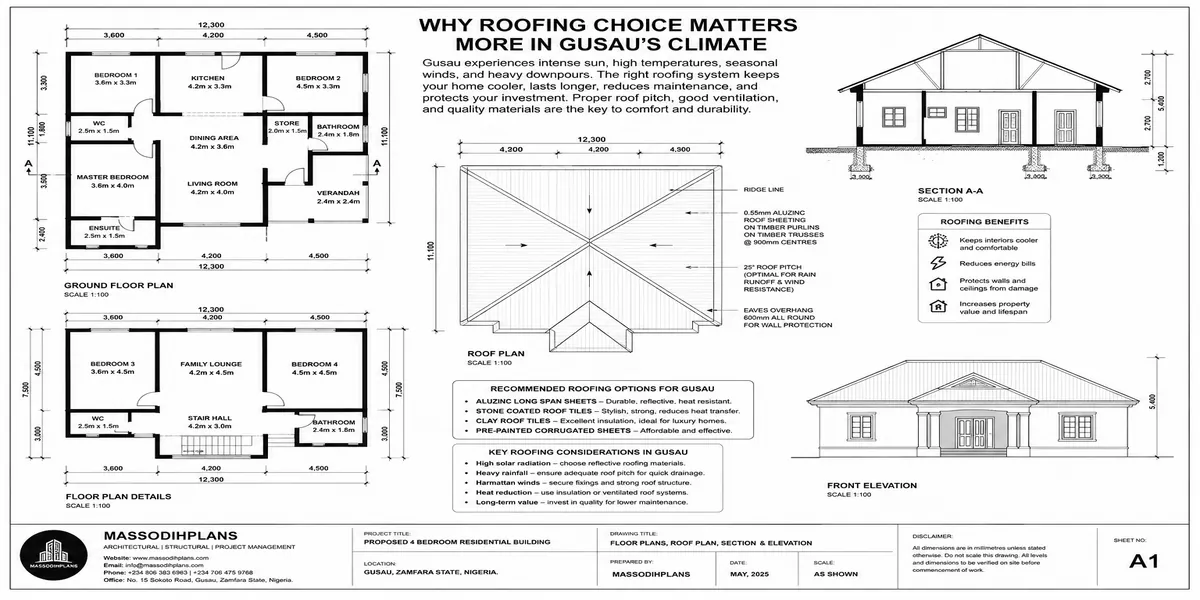
- Best Roofing Options for Houses in Gusau city of Zamfara State, Nigeria: Prices and Durability
- Best Real Estate Investment Opportunities in Uyo Right Now
- Architectural Engineering and Architectural Design Courses for House Building Plans
About Author
Massodih Okon is a built environment professional with a background in architecture and urban planning. He specializes in practical Nigerian house design guidance through MassodihPlans.com.. He has a Master’s degree in Urban and Regional Planning, a first degree in Geography and Environmental Management, and professional certificates in Architectural Design, Landscape Design, and GIS. With over 15 years of hands‑on experience in architecture, town planning, GIS, and building economics across Nigerian residential and institutional projects, he understands the real challenges Nigerians face when planning and building homes.
At MassodihPlans, Massodih shares practical Nigerian building guides, modern bungalow and duplex house plans, and built environment resources created specifically for Nigerian homeowners, developers, and property investors. His work is based on real‑life conditions in Nigeria, climate‑responsive design, and cost‑effective planning, aimed at helping everyday Nigerians make smarter, more confident building decisions.
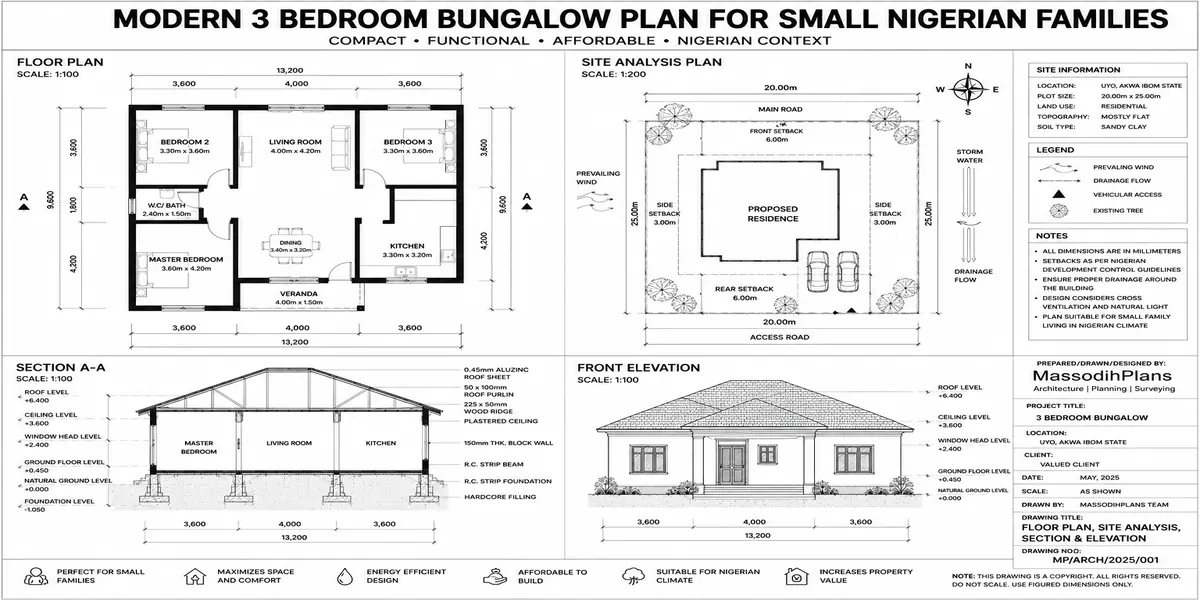
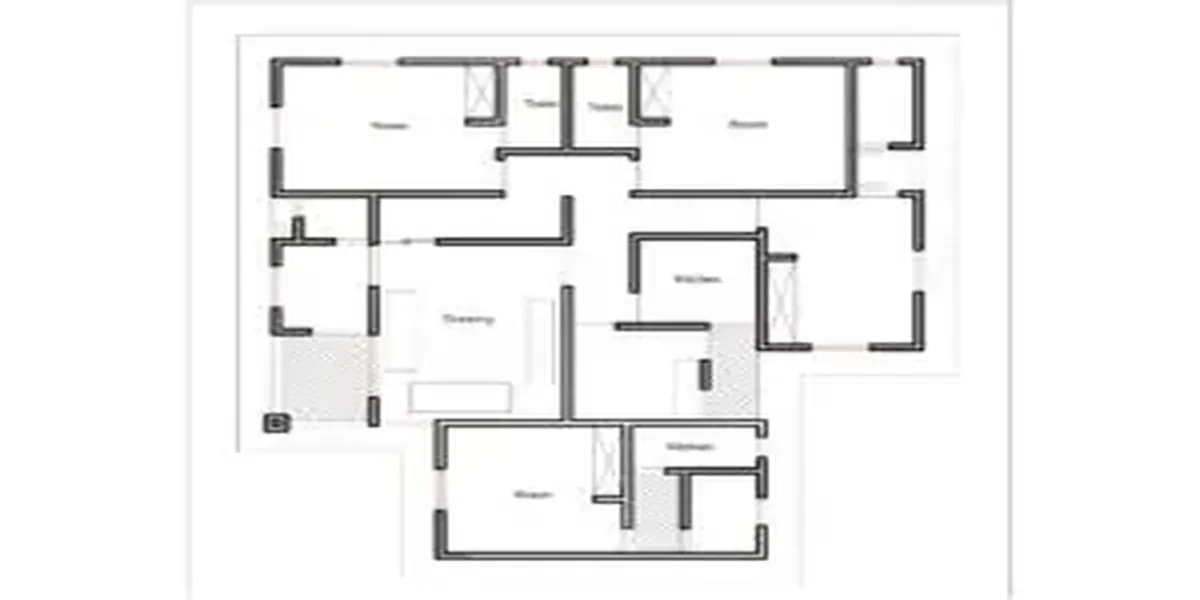
Alt text: Modern 3-bedroom Nigerian bungalow house plan for a 30×60 plot in Ibadan with parking, hip roof, and cross ventilation design