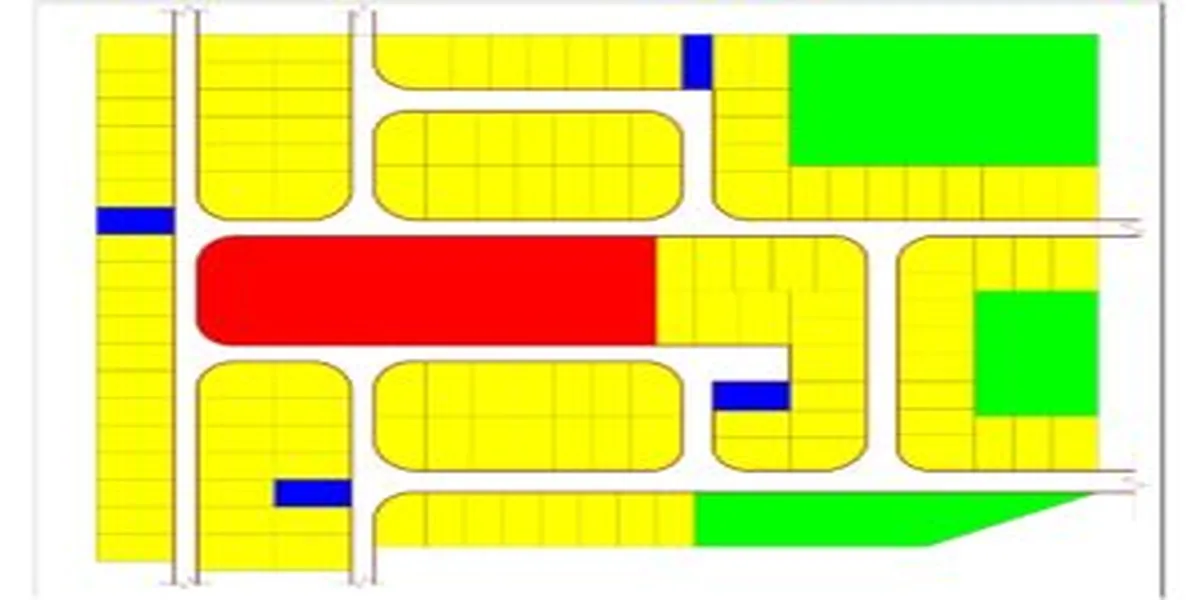
Nigerian Estate Master Plan for Small Plots: Modern Residential Layout Strategies That Maximize Space
Introduction to Nigerian Estate Master Plan for Small Plots: Modern Residential Layout Strategies That Maximize Space
How do you design a residential estate layout on a small plot? Start with a carefully coordinated master plan that balances roads, plot arrangement, development density, drainage, natural ventilation, parking, green spaces, utilities, security, and future expansion within the available land. The objective is not simply to fit more buildings onto a small site, but to use every square meter intelligently so the estate remains comfortable, accessible, attractive, profitable, and resilient against flooding, congestion, poor ventilation, inadequate parking, and rising maintenance costs.
You have land and want to develop an estate, but the site is limited and land prices are rising. Every planning decision can determine whether your development becomes a premium residential community or a poorly planned neighborhood that buyers avoid.
This is where many estate projects fail. Developers in Lagos, Port Harcourt, Uyo, Benin, and other Nigerian cities can invest heavily in land and construction while losing value through poor layout decisions. Narrow roads, inadequate drainage, overcrowded plots, insufficient parking, poor ventilation, disappearing green spaces, and badly positioned generators can create expensive problems long after construction begins.
These mistakes are rarely caused by insufficient investment. They often result from overlooking master planning at the earliest stage.
This guide provides practical principles for developers, landowners, architects, surveyors, town planners, and real estate investors. You will learn how to optimize plot sizes, road hierarchy, density, drainage, parking, ventilation, security, utilities, green spaces, and climate-responsive design.
The goal is simple: create a compact Nigerian estate that maximizes land value without sacrificing comfort, safety, functionality, or long-term property value.
What a Nigerian Estate Master Plan Actually Is
A residential estate master plan is not just a drawing. It is the physical decision-making framework that determines how every square metre of your land gets used, organized, and connected.
Specifically, it governs:
- How vehicles enter, circulate, and park
- How pedestrians move safely through the estate
- How surface water is collected and discharged
- How plots are arranged, sized, and oriented
- How buildings relate to each other for privacy and ventilation
- How utilities including electricity, water, and waste systems are integrated
- How security is structured from the gate inward
- How the estate grows or changes over time without falling apart
Many Nigerian developers treat the master plan as something an architect produces quickly after the land is acquired, almost as a formality before construction begins. That approach is exactly why so many Nigerian estates underperform on comfort, value, and long-term liveability.
The master plan is the most strategic document in any estate development. Getting it right before construction is infinitely cheaper than fixing it after.
Why Small Plot Estates Demand Stronger Planning Discipline
Here is something most developers do not appreciate until it is too late: large estates can absorb planning mistakes. Small estates cannot.
On a 20-acre site, a poorly positioned road can be compensated for. And on a 3-acre site, one badly placed access route can make the entire development dysfunctional. On a compact estate, every element is load-bearing in the planning sense. Nothing is redundant. There is no room to spare.
This is the fundamental reason why small plot estate design requires more intelligence, more care, and more professional rigour than large estate development. The constraints are tighter. The tolerances are smaller. The consequences of errors are more immediate and more expensive to reverse.
When you are working with limited land:
- Every metre of road width either enables good circulation or creates conflict
- Every setback either allows ventilation or blocks it permanently
- Every drainage decision either protects investment or destroys it
- Every plot arrangement either maximizes comfort or minimizes it
- Every parking provision either accommodates growth or creates future chaos
Plan correctly from the start and your small estate becomes a premium address. Plan poorly and you create a property problem that devalues everything within it.
How Much Land Is Practical for a Small Nigerian Estate?
Before you can plan efficiently, you need to be realistic about what different land sizes can actually accommodate.
| Estate Category | Approximate Land Size | Typical Unit Count |
|---|---|---|
| Mini residential estate | 1 to 3 acres | 6 to 20 units |
| Compact urban estate | 3 to 6 acres | 20 to 50 units |
| Medium small estate | 6 to 10 acres | 50 to 100 units |
| Premium compact estate | 10 to 15 acres | 80 to 150 units |
These are approximate ranges. Actual unit counts depend heavily on plot sizes, road widths, setbacks, green spaces, and the density standards you are working toward.
In practice, the most financially interesting range for Nigerian urban developers right now is between 2 and 6 acres. This is large enough to justify estate infrastructure but manageable enough for a developer without massive capital reserves to complete in phases without the project collapsing financially.
Ideal Plot Sizes for Small Nigerian Residential Estates
Your plot mix is a market decision as much as a planning decision. The size of the individual residential plots you offer determines who buys, what they can build, and how the estate feels to live in.
| Plot Dimension | Ideal For | Common Housing Type |
|---|---|---|
| 30 x 60 feet | Entry-level urban buyers | Terrace houses, compact duplexes |
| 40 x 80 feet | Middle-income buyers | Semi-detached duplexes |
| 50 x 100 feet | Standard family buyers | Detached duplexes, bungalows |
| 60 x 120 feet | Premium buyers | Luxury homes, corner plots |
The most successful small estates in Nigerian cities tend to offer a mix of two or three plot sizes rather than a single standard. A well-planned estate that combines 30 x 60 terrace plots with a limited number of 50 x 100 premium plots at key corners attracts a wider buyer range, creates internal market stratification, and prevents the estate from feeling monotonous.
Corner plots, in particular, should be treated as premium assets in your layout. They offer more frontage, better orientation options, and additional prestige. Price them accordingly.
Road Hierarchy: The System That Makes or Breaks Estate Circulation
Poor road planning is one of the top three reasons Nigerian estates fail to function well over time. I have seen estates where the primary access road is so narrow that emergency vehicles cannot enter. And I have seen secondary roads that dead-end without turning space. I have seen drainage channels that run along roads but have no connection to any outfall point.
Road hierarchy is the solution. It gives your estate a logical movement system with clear roles for each road type.
Primary Access Roads
These are the main circulation arteries of the estate, connecting the entrance gate to the internal road network. Recommended width in Nigerian urban estates: 9 to 12 metres
This width should accommodate:
- Two lanes of moving traffic
- A drainage channel on at least one side
- Emergency vehicle access
- Visitor drop-off movement
Anything narrower than 9 metres on a primary estate road creates congestion problems as the estate matures and vehicle ownership increases.
Secondary Residential Roads
These serve individual residential clusters and connect to the primary road. Recommended width: 6 to 8 metres Secondary roads carry lighter traffic loads but still need to allow two vehicles to pass safely, particularly near estate entrances and around school run periods.
Cul-de-Sacs and Turning Courts
Small estates benefit enormously from cul-de-sac arrangements because they:
- Reduce unnecessary through traffic and speeding
- Improve privacy for homes at the end of each arm
- Create semi-private residential clusters
- Reduce the total road area needed without reducing access
However, cul-de-sacs require properly designed turning courts at their ends. A 12 to 14-metre diameter turning circle is the recommended minimum for a residential cul-de-sac in Nigeria. Do not make the mistake of designing cul-de-sac ends without drainage flow paths. Standing water collects quickly in poorly drained dead ends.
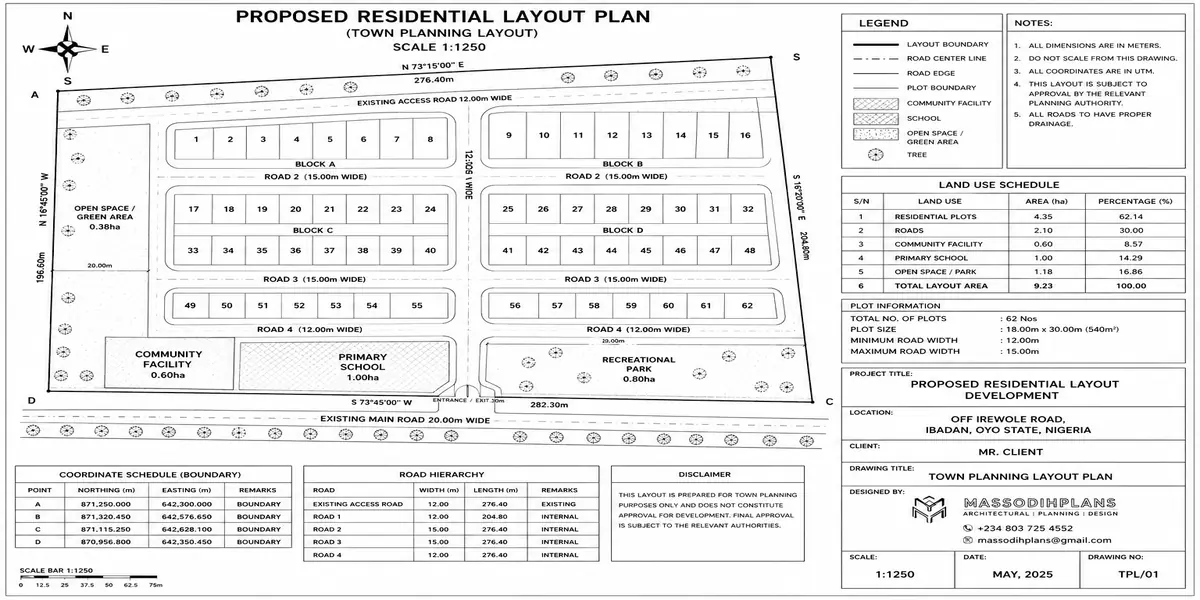
Plot Arrangement Strategies That Maximize Comfort on Small Sites
How you arrange plots determines ventilation, privacy, sunlight penetration, infrastructure efficiency, and ultimately how good the estate feels to walk through and live in.
Linear Arrangement
Plots line up uniformly along straight roads. This is the simplest arrangement to infrastructure and the fastest to construct.
Best for: Entry-level developments, tight urban infill sites, terrace housing estates
Advantages: Straightforward drainage design, easy construction phasing, simplified utility runs
Disadvantages: Can feel monotonous, offers limited green space, reduces opportunities for interesting streetscape
Cluster Arrangement
Homes are grouped in defined clusters of 4 to 8 units, often around a shared court or green area.
Best for: Medium-density family estates, premium compact developments
Advantages: Better community interaction, reduced hard road surface area, more opportunity for green breathing spaces
Disadvantages: More complex road geometry, slightly higher infrastructure cost, requires stronger design coordination
Mixed Linear and Cluster
This combines the efficiency of linear arrangement along primary roads with cluster groupings in deeper portions of the site.
Best for: Most practical small Nigerian estates
Advantages: Balances infrastructure cost efficiency with environmental quality, appeals to a wide market, creates variety in the streetscape
This is the arrangement strategy I recommend for most Nigerian small estate developments between 2 and 8 acres.
Density: The Number That Determines Whether Your Estate Breathes or Suffocates
Density in residential estate planning refers to the number of dwelling units per unit of land area. Getting this number wrong in either direction is costly.
Too high a density creates:
- Chronic parking shortages
- Dangerous heat buildup between close buildings
- Reduced privacy
- Overloaded drainage systems
- Poor resale values as the estate reputation suffers
Too low a density reduces profitability, makes infrastructure provision per unit more expensive, and can make the estate feel poorly utilized.
| Density Level | Units per Hectare | Suitable For |
|---|---|---|
| Low density | 10 to 15 units | Premium estates, large plot developments |
| Medium density | 20 to 35 units | Standard urban estates, duplexes |
| High density | 40 plus units | Terrace housing, urban infill |
For most small plot residential estates in Nigerian cities, medium density between 20 and 30 units per hectare produces the best long-term combination of profitability, comfort, and market appeal.
If you are seeing estates packed at 40 to 60 units per hectare with no green space, no functional parking, and buildings nearly touching each other, that is not a market opportunity to copy. That is a warning about what to avoid.
To put Nigerian density standards in context, international planning references generally classify two-storey residential development at 30 to 40 dwellings per hectare as a comfortable, well-serviced density range, with anything approaching 50 units per hectare requiring significantly more careful infrastructure and open space provision to remain liveable. Nigerian medium-density estates sitting at 20 to 30 units per hectare are, if anything, being appropriately conservative by global standards, not under-optimizing the land. This is worth knowing if a co-investor or partner ever pushes you toward a higher unit count “because other countries do it.” They do, but only with infrastructure most Nigerian developers are not budgeting for.
Nigerian Planning Standards: Setbacks You Cannot Afford to Ignore
Setbacks are the mandatory minimum distances between a building and the boundary lines of its plot. Nigerian town planning regulations specify setback requirements, though these vary by state and local government area. Beyond regulatory compliance, setbacks directly determine the ventilation quality, fire safety margins, maintenance access, and long-term comfort of every building in your estate.
| Setback Type | Recommended Minimum | Purpose |
|---|---|---|
| Front setback | 3 to 6 metres | Parking, landscaping, ventilation distance |
| Side setback | 1.5 to 3 metres | Cross ventilation, window spacing, service access |
| Rear setback | 3 metres minimum | Utility areas, drainage clearance, expansion |
Developers who compress setbacks to add one or two extra plots into their estate create problems that compound over time. Buildings built with inadequate side setbacks cannot ventilate properly. They trap heat. Windows cannot face outward without looking directly into a neighbour’s wall. Maintenance access disappears.
The three-metre rear setback, in particular, is critical in Nigeria. It provides space for water tanks, septic system access, service lanes, and future rear extensions without creating conflict.
If you want a deeper understanding of how setbacks interact with space planning at the individual plot level, the resources in the Plan School section on this site cover setback calculations, room arrangement logic, and building design principles specifically for Nigerian conditions.
How an Estate Layout Actually Gets Approved in Nigeria
This is the part most developers assume will “sort itself out” once construction starts, and it is exactly the assumption that stalls projects for months, sometimes years.
Before a single plot in your estate can be legally sold or transferred to an individual buyer, your master plan itself needs formal approval and registration with the relevant state authority, typically the Ministry of Lands, Physical Planning and Urban Development, or its state-specific equivalent.
In practical terms, what usually happens is this sequence:
First, your registered surveyor produces a survey plan of the parent land, confirming the total area and boundaries. Second, your town planner or architect prepares the layout plan itself, showing road networks, plot subdivisions, green spaces, and infrastructure corridors, based on the planning principles covered throughout this guide. Third, this layout plan is submitted to the state planning authority for approval, along with the survey plan, evidence of title to the parent land, and the required application forms and fees.
Once the layout is approved, the state authority typically issues an approved layout plan document, which becomes the reference document against which individual plots within the estate can subsequently be allocated titles, often as sub-leases or individual Certificates of Occupancy carved out of the parent title, depending on the state’s specific administrative process.
Based on projects I have worked on, the developers who run into the most serious delays are the ones who start selling plots or allowing construction before this layout approval is secured. Buyers who purchase into an unapproved layout can find themselves unable to obtain individual title documents later, which damages the credibility of the entire estate and can trigger regulatory sanctions against the developer.
Having seen the consequences of skipping this step, I always advise developers to treat layout approval as a precondition for sales activity, not a parallel process that can catch up later. It typically adds weeks to months to your development timeline depending on the state, but it protects the legal foundation of everything you are building on top of it.
Climate-Responsive Estate Planning: Nigeria’s Heat, Rain, and Humidity Are Not Optional Variables
Every estate design decision in Nigeria must account for the climate. This is not a suggestion. The Nigerian climate is one of the most demanding residential building environments in the world. Intense equatorial heat, high humidity across the south, seasonal heavy rainfall, and inconsistent electrical power supply are not background conditions. They are design constraints that must actively shape your master plan.
Building Orientation Strategy
The angle at which buildings face the sun determines how hot they become without air conditioning. Afternoon western sun is the most damaging heat source in most Nigerian locations.
Practical orientation guidance:
- Where possible, orient the longer face of buildings toward the north or south rather than the east or west
- Minimize large windows and glass walls on western-facing elevations
- Use roof overhangs, sunshading devices, and recessed openings on eastern and western faces
This is not theoretical. A poorly oriented building in Port Harcourt or Lagos becomes significantly hotter in the afternoon than one that was thoughtfully positioned. The long-term cost in generator fuel and air conditioning electricity can be substantial.
Cross Ventilation as a Non-Negotiable Design Standard
Natural ventilation is free. It is also increasingly ignored as developers focus on maximizing units and buyers focus on tiles and finishes. Then everyone moves in, the ceiling fans run constantly, and the generators come on every evening because the air conditioning cannot stop.
Cross ventilation requires that air enters a building on one side and exits on the opposite or adjacent side, creating airflow through habitable rooms.
For this to work at the estate level:
- Buildings must have enough separation between them for air to circulate
- Plot arrangement must not create wind shadow effects where dense groupings block airflow for units behind them
- Individual building designs must include window openings on at least two sides of each room
If your master plan places buildings so close together that adjacent walls are essentially touching, you have eliminated natural ventilation as a practical option for the residents. They will be entirely dependent on mechanical cooling, which in Nigeria means generators.
Rainwater and Flooding Management
Nigeria’s rainfall intensity is high, particularly in the south and southwest. Flood risk is the single most damaging thing that can happen to an estate’s reputation and property values.
Flooding happens in estates for three main reasons:
- Drainage channels were not designed with sufficient capacity
- The estate has no connection to a functional external outfall
- Surfaces are too heavily paved, reducing absorption and increasing runoff
Practical responses include:
- Using permeable paving for parking areas and pedestrian paths where possible
- Incorporating soakaways into plot designs
- Designing estate roads with a slight cross-fall toward drainage channels, not away from them
- Connecting all internal drainage to a clearly identified external discharge point before any construction begins
Parking: The Problem Nigerian Developers Most Consistently Underestimate
Vehicle ownership in Nigerian cities is growing faster than many estates were designed to accommodate. An estate planned in 2020 for households with one car may have two or three vehicles per household by 2030.
| Housing Type | Minimum Parking Provision | Recommended Provision |
|---|---|---|
| One-bedroom flat | 1 space | 1 space plus shared visitor bay |
| Two-bedroom flat | 1 to 2 spaces | 2 spaces |
| Three-bedroom duplex | 2 spaces | 2 spaces plus tandem option |
| Four-bedroom duplex | 2 spaces | 2 to 3 spaces |
Beyond individual plot provision, estate-level visitor parking bays reduce the problem of vehicles blocking access roads. Even three or four designated visitor bays near the gatehouse make a measurable difference to daily circulation.
Space-saving parking strategies for small plots:
- Tandem parking, where two vehicles park in line behind each other on an extended driveway, works well for families and saves lateral plot space
- Shared visitor parking courts located at cul-de-sac heads serve multiple plots without each plot needing dedicated visitor space
- Permeable paving on driveways and parking areas doubles as drainage management
Generator Planning: The Nigerian Reality Layer Most Master Plans Miss
Power supply remains unreliable across Nigerian cities. Any estate master plan that does not explicitly plan for generator infrastructure is planning for problems that will arrive with the first residents.
Generator placement mistakes I see repeatedly:
- Generators positioned directly under bedroom windows where exhaust fumes and noise enter sleeping spaces
- No structural provisions for generator houses, leaving occupants to improvise metal sheds that deteriorate quickly
- Generators placed in enclosed spaces without adequate exhaust ventilation, creating carbon monoxide risks
- Shared generator locations with no clear fuel storage safety separation from the main building
What good generator planning looks like at the estate level:
Each plot should have a designated generator pad or generator house location shown on the plot layout, positioned at least 3 metres from the main building, away from bedroom windows, with exhaust direction indicated away from living spaces. The estate infrastructure plan should also consider whether a shared estate generator for common areas, street lighting, and gate systems is part of the development offer.
Coordinating With the Electricity Distribution Company
Beyond individual generator planning, any estate above a modest size, generally beyond 20 to 30 units, will need to engage directly with the local electricity distribution company regarding transformer and substation provision, and this needs to happen at the master plan stage, not after roads and plots are already fixed.
A distribution transformer requires a dedicated site with safe clearance from residential buildings, typically positioned near the estate entrance or along a primary road for easy utility company access and maintenance. Retrofitting a transformer location into an estate where plots have already been sold and built on is far more difficult and expensive than reserving the space from the outset.
Practical planning steps include: engaging the distribution company early to understand their specific siting and clearance requirements for your estate’s projected load, reserving a clearly marked utility plot or easement on your master plan before any residential plots are allocated in that area, and confirming cable routing corridors alongside your road network so that underground or overhead distribution lines do not conflict with drainage channels or landscaping.
One challenge I repeatedly encountered during my internship was seeing utility considerations treated as an afterthought that engineers were expected to “figure out” once construction was already underway. Reserve the space and start the conversation with the distribution company early. It is a five-minute addition to your master plan that prevents a genuinely difficult retrofit later.
Planning for Fiber Internet From Day One
This is a layer that almost no Nigerian estate master plan addresses yet, and it is becoming a genuine differentiator for buyers, particularly the growing number of remote-working professionals discussed earlier in this guide.
Retrofitting fiber internet cabling into a completed estate means digging up finished roads and paved surfaces, which is expensive and disruptive to residents who have already moved in. The far more practical approach is including underground telecom ducting alongside your electrical and water infrastructure corridors while roads are still under construction.
A simple empty conduit run, typically 50mm diameter PVC duct, laid alongside your primary and secondary road infrastructure during the initial civil works, costs relatively little at construction stage and gives you or future telecom partners a ready pathway to pull fiber cable to each plot boundary whenever service becomes available or in demand.
If I were advising a developer today building anything above a basic entry-level estate, I would recommend this single addition without hesitation. It costs a small fraction of your total infrastructure budget, and it lets you market the estate as fiber-ready from day one, which is a genuine point of distinction in a market where almost no competing developments mention it at all.
Water Infrastructure Planning: Boreholes, Tanks, and Separation
Water infrastructure is as critical as electrical provision in most Nigerian estate developments. Municipal water supply cannot be relied upon in most cities.
Key planning principles:
- Boreholes must be sited away from septic systems, with a minimum separation of 30 metres recommended
- Overhead tank positions should be shown on each plot layout to prevent structural retrofitting problems later
- Estate-level water infrastructure should distinguish between potable water supply, grey water drainage, and stormwater discharge. These three systems must never intersect
If the estate infrastructure budget allows for a central borehole with distribution to all units, this significantly increases market appeal. It also requires proper pump room planning, pipe sizing, and pressure management, all of which should be addressed at the master plan stage.
Security Planning: Gatehouse Design and Access Control
The estate entrance is the first experience every resident, visitor, and potential buyer has of your development. It also determines how securely the estate can be managed over its lifetime.
What a well-planned estate entrance should include:
- A gatehouse with an internal waiting area and toilet
- Separate vehicle and pedestrian entry points
- A security booth positioned to give maximum visibility along the entry road in both directions
- A barrier system that allows single-vehicle access at a time
- An intercom or remote access system for resident convenience
- Covered waiting area for visitors pending clearance
Small estates in particular benefit from a single controlled access point. Multiple entry points increase the security management burden without proportionally increasing convenience for residents.
Internal estate security provisions:
- Perimeter fence with defined maintenance access
- Street lighting at all road junctions and along primary circulation routes
- Designated refuse collection bays at an accessible location that does not require collection vehicles to navigate deep into the estate
Green Spaces: Why They Are Not a Luxury Even on Small Estates
I have had developers tell me they cannot afford green space on their compact estates. What they actually cannot afford is the absence of green space.
Green areas in small estates serve multiple practical functions:
- They reduce ambient temperature by providing shade and evapotranspiration cooling
- They absorb rainfall and reduce surface runoff
- They create visual relief that makes the estate feel larger and less compressed
- They provide safe informal play space for children
- They increase property values, particularly for units adjacent to the green space
You do not need a park. Even a 400 to 600 square metre green node at the centre of a cul-de-sac cluster, planted with medium-sized trees and a basic paved sitting area, produces measurable environmental and market benefits.
In your master plan, protect a minimum of 5 to 10 percent of total estate area for green space. Treat it as infrastructure, not decoration.
Roofing Strategies That Work for Nigerian Estate Housing
Roofing decisions made at the master plan stage affect drainage, heat load, maintenance costs, and the visual coherence of the estate.
| Roof Type | Climate Performance | Maintenance Level | Market Appeal |
|---|---|---|---|
| Hip roof | Excellent wind resistance, good drainage | Moderate | Strong across all markets |
| Mono-pitch / shed roof | Good for solar, contemporary look | Low | Rising among younger buyers |
| Parapet/flat roof | Modern urban aesthetic | High (waterproofing critical) | Strong in premium markets |
| Gable roof | Simple construction | Low | Functional, less distinctive |
For Nigerian estate housing on small plots, hip roofs remain the most reliable overall performer. They handle high rainfall, provide better wind resistance than gable roofs, and look finished from all angles in a dense estate setting.
Parapet roofs are increasingly popular in modern Nigerian estate developments but require excellent waterproofing detailing. A parapet roof that was not waterproofed properly becomes a maintenance nightmare within three to five years. If you are going to use parapet roofs in an estate, budget properly for quality membrane waterproofing from day one.
Material Recommendations for Nigerian Estate Construction
| Material | Application | Key Advantage |
|---|---|---|
| Sandcrete blocks | Structural walls | Widely available, cost-effective |
| Interlocking paving stones | Roads, parking, walkways | Better drainage, lower maintenance |
| Aluminum roofing sheets | Roofing | Lightweight, corrosion-resistant |
| Reinforced concrete | Drainage channels, slabs | Durable, low long-term maintenance |
| Ceramic or porcelain tiles | Floors, facades | Local availability, visual appeal |
One observation from practical Nigerian construction: the most common material waste on estate projects occurs at the drainage construction stage, where contractors are given ambiguous specifications and produce channels with inconsistent slopes and sizes. Standardize your drainage channel cross-sections and slopes in your engineering drawings before construction begins.
Realistic Cost Considerations for Nigerian Estate Development
Construction costs in Nigeria are highly dynamic. This guide does not attempt to provide fixed figures that will be outdated within months of publication. However, understanding the major cost drivers helps developers plan budgets and phasing strategies more intelligently.
The four biggest cost categories in Nigerian small estate development:
Infrastructure provision: Roads, drainage, fencing, gate structures, and utility connections routinely consume 30 to 45 percent of total development budget on small estates. Developers who underestimate this consistently run out of money before the estate is complete.
Imported materials: Foreign exchange fluctuations directly affect the cost of tiles, sanitary ware, aluminum products, electrical fittings, and roofing accessories. Where possible, specify locally available alternatives during design to reduce exposure to currency risk.
Security installations: Perimeter fencing, CCTV systems, gate automation, and security lighting add significant costs that are not always included in initial developer estimates.
Professional services: Planning approval, architectural drawings, structural engineering, and site supervision are frequently underbudgeted. Cutting these costs creates the conditions for the construction mistakes that end up costing ten times more to fix.
Where small estate developers save costs without losing quality:
- Simplifying road geometry reduces earthworks and drainage complexity
- Standardizing plot sizes reduces infrastructure design complexity
- Using repetitive building modules reduces structural waste and labor errors
- Phasing infrastructure construction in line with plot sales
For professional guidance on development planning, cost estimation, or estate layout preparation, the professional services available through MassodihPlans are designed specifically for Nigerian conditions and constraints.
Phasing Your Estate So the Project Does Not Stall Halfway
I have seen promising small estates freeze at 40 percent completion because the developer tried to build all the infrastructure at once and ran out of capital before a single plot could be sold to recover funds. This is one of the most common and most avoidable failure patterns in Nigerian estate development.
The safest approach is to structure your development in phases that each generate sellable inventory before you commit capital to the next phase.
A practical phasing structure for a 3 to 6 acre estate looks like this:
Phase one covers primary access road construction, the estate entrance and gatehouse, and infrastructure for the first cluster of plots, typically 20 to 30 percent of total plot count. This phase should be fully funded and completed before any sales begin, because buyers need to see finished infrastructure, not promises, to commit at premium pricing.
Phase two extends secondary roads and drainage into the next cluster, funded partly by proceeds from phase one plot sales rather than entirely from new capital. This is where phasing protects your cash flow: each phase partially funds the next.
Phase three and beyond follow the same pattern, extending infrastructure only as far as sales performance justifies, rather than building out the entire estate speculatively.
If I were advising a developer today, I would recommend resisting the temptation to announce the full estate vision publicly before phase one is actually complete. Buyers respond to what they can see and walk through, not to a rendered master plan on a billboard. A smaller, fully finished phase one sells faster and at better prices than a large, half-finished estate every time.
Common Mistakes That Destroy Nigerian Small Estate Projects
These are real patterns. If your current development plan has any of these problems, they deserve urgent attention before construction progresses further.
Overcrowding plots to maximize unit numbers. This is the single most damaging planning decision in Nigerian estate development. Every extra plot squeezed in beyond the comfortable density limit costs the estate ventilation, parking, privacy, drainage capacity, and long-term value. Buyers who feel the difference between a well-spaced and an overcrowded estate will pay more for the former.
Designing drainage as an afterthought. The drainage system in a Nigerian estate must be designed before the road network is finalized, not after. Drainage determines where roads can go, how plots must be graded, and where the estate perimeter outfall must connect to.
Underestimating parking growth. Design for where Nigeria is going, not where it is now. Households that currently have one vehicle will have two or three within the estate’s functional lifetime.
Ignoring the generator problem. Every home in Nigeria needs a generator provision. Every estate in Nigeria needs a plan for how that provision is accommodated without creating noise, fume, and maintenance conflicts.
Treating ventilation as a building-level issue only. Good ventilation is an estate-level decision first. If your master plan places buildings too close together, no amount of individual building design can compensate for the loss of natural airflow.
Skipping proper site supervision. Without consistent professional supervision on site, drainage slopes fail, setbacks shrink informally, and structural errors accumulate. Budget for supervision. Its absence is the most expensive professional fee a developer does not pay.
Site Supervision and Quality Control: The Most Undervalued Part of Estate Development
I want to spend a moment on this because it is where many otherwise well-planned estates unravel.
The best master plan in the world is only as good as its execution on site. In Nigerian construction, site supervision is routinely treated as an optional or reducible cost. Developers who make this decision consistently encounter:
- Drainage channels built to the wrong slope or wrong cross-section
- Setbacks that were “adjusted” informally on site when plots felt tight
- Road sub-base poorly compacted because the contractor was unsupervised during that stage
- Reinforcement placed incorrectly in drainage structures and slabs
- Block laying done with inconsistent joint sizes that compromise wall strength
A site supervisor with clear technical authority and regular presence on your estate is not an overhead. They are insurance against the far more expensive consequences of construction errors that only become visible after completion.
Designing for the People Who Actually Live There
Good master planning is not only an infrastructure exercise. It is a human experience exercise.
Families With Children
Children need safe movement within an estate. Cul-de-sac arrangements, reduced traffic speeds through road geometry, and internal green spaces all create the conditions where parents feel comfortable allowing children to move within the estate independently. This is a genuine quality-of-life asset that buyers with young children will pay for.
Elderly Residents and Accessibility
As Nigerian families age in place, estate design increasingly needs to accommodate older adults. Smooth, well-lit walkways, minimized level changes in common areas, and adequate lighting at night all extend the functional lifespan of an estate’s appeal.
Work-From-Home Requirements
The growth of remote work among Nigerian professionals, particularly in Lagos, Abuja, and Port Harcourt, means that estate buyers increasingly value quiet environments, reliable ventilation, good natural lighting, and backup power integration. These are design variables that a thoughtful master plan can address.
Future Expansion Flexibility
A residential plot that has no space for a future room addition or rear extension will feel increasingly limiting as families grow. Good rear setbacks and careful rear boundary management give residents the ability to grow their homes without creating estate-wide conflicts.
What Makes a Small Nigerian Estate Truly Premium
Premium is not about finishes. Anyone can tile a floor. Premium is about how an estate feels to walk through, how comfortable it is in hot weather, how safe children feel playing near the road, how easy it is to park when two guests arrive at the same time, and how well the drainage system handles a heavy afternoon downpour.
The estates that hold their value, attract strong rental demand, and generate positive word-of-mouth are not always the most luxurious. They are consistently the most liveable.
Liveability in a Nigerian residential estate means:
- You can open your windows without immediately overheating from a building a metre away
- The road drains within an hour of heavy rain
- Your generator can be positioned safely without disturbing your neighbours
- Your children can play in a green space that is within sight of your front door
- The security gatehouse controls access properly without creating traffic queues every morning
Every item on that list is a master planning decision, not a finishing decision. And every item on that list can be delivered on a 3-acre estate just as effectively as on a 30-acre one, if the planning discipline is there from the beginning.
If you want to explore practical building design ideas and house plan concepts that fit the layouts discussed in this guide, browse the Plans Library on MassodihPlans, where you will find architect-reviewed designs suited to the plot dimensions and housing types used in compact Nigerian estate developments.
For developers who want to see how these layout principles apply to industrial and mixed-use land as well, the planning approaches discussed in guides like the industrial estate layout series on this platform follow the same discipline of infrastructure-first thinking applied to a different use class.
Expert Checklist: Nigerian Estate Master Plan Review
Before finalizing any small estate master plan in Nigeria, verify each of these items:
Site and Circulation
- Primary road minimum width of 9 metres confirmed
- Secondary road minimum width of 6 metres confirmed
- Cul-de-sac turning courts designed at 12-metre minimum diameter
- Estate entrance allows emergency vehicle access
Drainage
- Drainage outfall to external system confirmed and accessible
- Road cross-falls direct water toward drainage channels
- No plot areas drain toward the estate perimeter without a managed channel
- Retention or soakaway provisions included
Plot Planning
- Front setbacks minimum 3 metres on all plots
- Side setbacks minimum 1.5 metres on all plots
- Rear setbacks minimum 3 metres on all plots
- Corner plots identified and premium-priced
Infrastructure
- Generator pad positions indicated on each plot layout
- Borehole sited minimum 30 metres from any septic system
- Estate electrical supply planned with proper metering arrangement
- Street lighting positions identified at all junctions
Environment
- Green space minimum 5 percent of total estate area confirmed
- Building orientations reviewed for western sun exposure
- Refuse collection bay positioned for access without internal estate navigation
Security
- Single controlled access point designed
- Perimeter fencing line confirmed on all sides
- Gatehouse includes vehicle, pedestrian, and visitor facilities
Frequently Asked Questions About Nigerian Estate Master Planning
What is the minimum land size for a viable small residential estate in Nigeria?
A functional small residential estate can fit on as little as 1 to 1.5 acres in a dense urban environment, though 2 to 3 acres gives you enough room to design proper roads, drainage, and green space without compromising the infrastructure quality that makes an estate worth buying into.
How wide should roads be in a Nigerian residential estate?
Primary access roads should be a minimum of 9 metres wide. Secondary residential roads should be a minimum of 6 metres wide. Anything narrower than these creates circulation, emergency access, and parking conflicts as the estate matures.
Why do so many Nigerian estates flood after heavy rain?
The most common causes are drainage channels with inadequate capacity, no clear external outfall connection, excessive hard paving that generates high runoff volumes, and drainage slopes that were not properly engineered during construction. All of these are preventable at the master planning and site supervision stage.
Is it worth including green space in a small estate?
Yes, consistently. Green space reduces heat load, improves estate aesthetics, absorbs surface water, and increases the value of adjacent plots. It costs relatively little to plan and pays returns through better market perception and property prices.
How many parking spaces should each plot have?
Nigeria’s current and projected vehicle ownership growth makes a minimum of two parking spaces essential for any duplex or three-bedroom housing type. Visitor parking bays shared across a cul-de-sac cluster reduce individual plot pressure while serving the same function.
What roofing type performs best in Nigerian estate housing?
Hip roofs remain the most reliably practical choice for Nigerian residential estate housing, particularly in the south where rainfall intensity is high. Parapet roofs offer strong modern aesthetics but require high-quality waterproofing systems to perform well over time.
What is the most expensive mistake a small estate developer can make?
Attempting to maximize the number of plots at the expense of ventilation, drainage, and parking quality. The short-term revenue gain from extra plots is consistently outweighed by the long-term damage to estate reputation, resale values, and rental demand.
How do I start planning a residential estate on a small plot in Nigeria?
Start with a proper site survey and analysis before any planning decision is made. Understand the drainage direction of the land, the access points available, the applicable town planning setback standards, and the infrastructure connections available at the perimeter. Only after that analysis is complete should plot arrangement, road layout, and unit mix decisions be made.
Finally: Smart Planning Is the Best Investment You Make Before a Single Block Is Laid
Land is expensive. Construction is expensive. Marketing and sales take time and energy. All of that investment is either protected or exposed by the quality of the master plan that sits underneath it.
The most successful small Nigerian estates I have studied are not the ones with the most expensive finishes or the most units on the smallest plot. They are the ones where the planning was done seriously, the infrastructure was built properly, and the people who live there are comfortable enough to tell their friends and family to buy there too.
Get the master plan right. Get the drainage right. And get the ventilation right. Get the parking right. Everything else can be improved over time, but the layout decisions made before construction begins are permanent.
If you are building or planning a residential estate and want professional layout guidance designed around Nigerian site conditions, development realities, and planning standards, explore the professional architecture and planning services on MassodihPlans. And if you want to see the kinds of house designs that work inside well-planned compact Nigerian estates, the Plans Library is a practical starting point for understanding what is buildable, functional, and market-ready on small Nigerian plots today.
Author
Massodih Okon is a Nigerian built-environment professional with academic and professional experience in urban and regional planning, geography, architectural design, Landscape Design, GIS and land development.
He holds a Master’s degree in Urban and Regional Planning from the University of Uyo and a first degree in Geography and Regional Planning.
Through MassodihPlans, he publishes practical guides on Nigerian house plans, building design, physical planning, site planning, development approval and residential construction. Read the full author profile →
Read the following articles to complete this lesson:
- Modern duplex house plan for 50×100 plot in Lagos
- Smart house design ideas for 50×100 plots
- Best roofing sheets for Nigerian weather complete guide
- Cost of building a 4 bedroom duplex in Lagos complete guide
- Design a duplex for small plots
- Building materials price guide in Nigeria full cost guide
- Small Residential Estate Layout Design in Nigeria: Smart Master Plan Ideas for Limited Land
- Industrial Estate Layout Design in Nigeria: Smart Master Plan for Small Industrial Plots
- Building Approval in Nigeria: Costs, Requirements, Process and How to Get Your House Plan Approved Fast
- The Proposed FutureGrid Nation Blueprint for Smarter Land Development
- The MegaRegion FlowPlan for Balanced Urban Expansion
- How a State Master Plan Works: A Complete Guide to Modern Infrastructure Development
- How to Build Cities That People Actually Want to Live In: The 2050 Urban Growth Blueprint
- What Happens When a City Develops Without a Master Plan
- 10 Problems Border Communities Face Without Proper Planning
- What Is a Structure Plan and Why Does It Matter for Nigerian Towns?
- Why Local Development Plans Matter for Communities
- How Much Does It Cost to Develop an Estate in Nigeria? A Town Planner’s Honest Breakdown
- How to Design an Estate Layout Plan That Works in Nigeria and Abroad
- What Is a Master Plan and Why Does Every Growing Community Need One?
- Estate Layout Design Services for Property Developers in Nigeria
- How to Practically Draw and Design a Duplex for Small Plots
Related Post
- Estate Development Cost Breakdown: What Developers Should Budget For
- Layout Plan Cost in Nigeria and Abroad: What Every Landowner Must Budget Before Building
- Environmental Management Plan Cost Guide for Developers in Nigeria and Beyond
- Site Development Plan Cost: What Every Property Owner Must Know Before Building
- Why District Planning Is Important for Urban Development
- Commercial Development Planning Costs: What Every Investor Must Know Before Spending a Kobo
- Housing Estate Layout Plan: Why Every Estate Needs One in Nigeria and Beyond
- Master Plan Preparation Process Explained Step by Step
- Cost of Master Plan Preparation for Communities and Institutions
- What Makes a Good Estate Layout Plan? A Practical Guide for Nigeria and Beyond
- Estate Layout Planning Standards in Nigeria: Roads, Drainage, Open Spaces and Plot Sizes
- Step-by-Step Guide to Preparing an Estate Layout Plan in Nigeria
- How to Plan a Residential Estate in Nigeria: Lessons from UK and US Communities
- Estate Layout Design in Nigeria: International Planning Principles That Actually Work
- Estate Layout Plan Explained for Property Developers and Landowners: Complete Guide
- Master Plan vs Site Plan: Key Differences Every Property Owner Must Know
- GIS Mapping Explained: How Geographic Information Systems Are Changing Urban Planning
Reference