Smart Industrial Estate Layout Ideas for Small Nigerian Plots
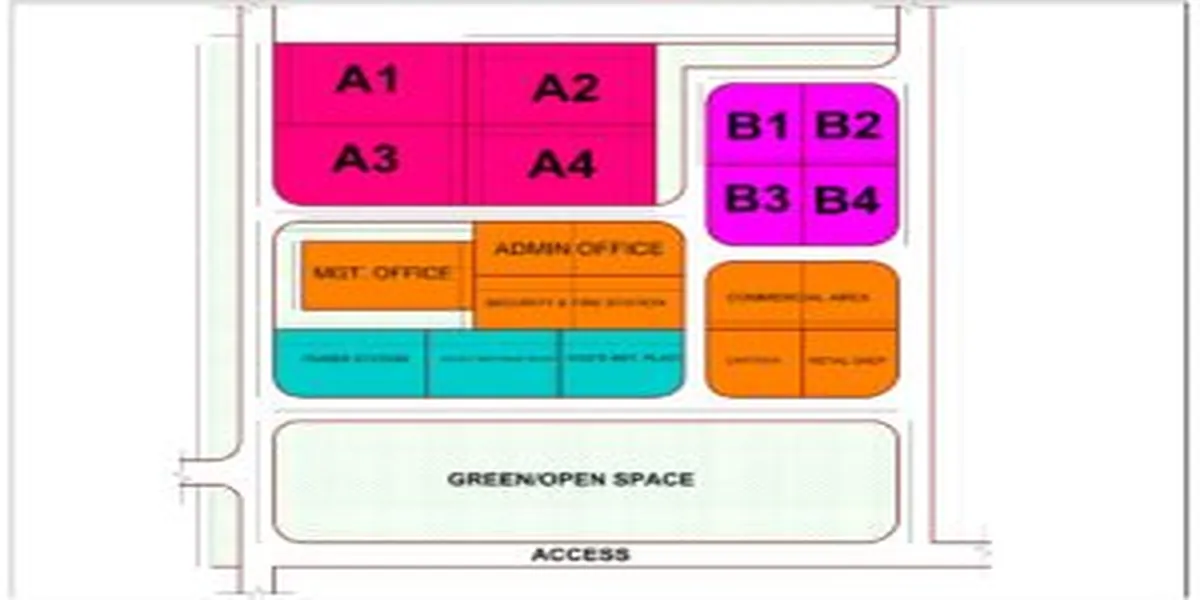
Industrial Estate Layout Design in Nigeria
Let me answer the question you actually came here with before anything else: yes, you can develop a functional, profitable industrial estate on a small plot of land in Nigeria, and no, you do not need ten hectares before the layout starts making sense. What you need is a master plan that is built around Nigerian realities from day one, not adapted from a foreign template that has never seen Port Harcourt rainfall or dealt with PHCN blackouts.
I have worked through enough Nigerian physical development planning to tell you that most industrial estate failures I have seen were not failures of money or location. They were failures of planning logic. The developer focused on subdividing land into sellable plots and forgot that an industrial estate must function as a complete system, one where trucks can turn, drainage can carry stormwater away, generators have a proper home, and factories do not bake their workers alive at two o’clock in the afternoon.
This guide will walk you through every element of smart industrial estate layout design for small Nigerian plots, from zoning and road widths to drainage strategy, building orientation, setbacks, parking, security, utilities, and construction costs. I will use real dimensions, real Nigerian city examples, and real planning logic. By the end, you will understand not just what to put on the layout but why each element belongs where it does.
What an Industrial Estate Layout Design Actually Is
An industrial estate layout design is a master plan document that organizes all physical elements of an industrial development into a working system. It is not just a land subdivision drawing. It decides where vehicles move, where infrastructure runs, where water drains, where workers walk, and where future expansion is possible.
A layout controls these elements:
Plot arrangement and dimensions, vehicle circulation and truck routing, utility placement, stormwater drainage, fire access corridors, pedestrian movement, security points, loading and unloading activity zones, and future expansion corridors.
The difference between a good layout and a bad one is not always visible at first glance on paper. It shows up three years after the estate opens, when trucks are blocking the main road because the turning radius was too tight, or when the rainy season floods half the plots because nobody modelled the stormwater properly before construction began.
Why Nigerian Industrial Estates Fail: Real Problems I Have Observed
Before I explain how to do this correctly, let me explain why many Nigerian industrial layouts fail. These are not theoretical scenarios. These are conditions that appear repeatedly across estates in Aba, Port Harcourt, Lagos, and Uyo.
Flooding. Many developers in the Niger Delta and South-South zones treat drainage as an afterthought. They grade roads, subdivide plots, and begin construction without a stormwater model. The first serious rainy season reveals every mistake at once.
Truck circulation that does not work. A 40-tonne articulated truck needs a turning radius of approximately 12 to 15 metres to navigate a junction without mounting curbs or blocking opposing lanes. Many Nigerian industrial layouts provide road widths of 7 metres and wonder why trucks damage road edges constantly.
Poor utility planning. Generators placed without a dedicated utility zone create noise conflicts with nearby administrative or production areas. Boreholes placed too close to septic or waste zones become contaminated within a few years.
Overcrowding plots. Developers who maximize the number of plots to maximize sale revenue often leave insufficient setbacks, no service access, no room for expansion, and no functional buffers between activities.
Heat buildup. Factory buildings oriented the wrong way under tropical sun without ventilation strategy become unbearable to work in without expensive mechanical cooling. This increases operational costs and reduces productivity.
Weak security layout. Gatehouses placed at an angle or offset from the main entrance cannot adequately monitor vehicle entry and exit. In Nigerian industrial contexts, this creates real security vulnerabilities.
Every one of these problems has a planning solution. The solution must be designed before construction begins.
Real Nigerian Industrial Estates: What Worked and What Didn’t
Theory is easier to accept when it’s backed by something you can actually visit. Let me point to two Nigerian industrial layouts that illustrate exactly what I’ve been describing.
Agbara Industrial Estate, Ogun State
Agbara, along the Lagos-Badagry Expressway, is one of the older deliberately planned industrial layouts in southwest Nigeria, developed from a formal master plan going back to the 1970s. It has hosted major manufacturing operations, including multinational plants, for decades. What Agbara got right from the outset was zoning discipline: industrial activity, worker housing, and supporting community infrastructure were planned as distinct zones rather than left to grow into each other. That separation is a large part of why it has remained functional and attractive to serious manufacturers for this long.
What it illustrates as a caution, even today, is something I have seen firsthand in similar mixed industrial-residential layouts: when industrial and residential zones sit close together without a strong buffer, tenants and residents both end up negotiating noise, traffic, and generator fumes that better zoning would have prevented from the start.
Trans-Amadi Industrial Layout, Port Harcourt
I mentioned Trans-Amadi earlier in this guide in the context of narrow roads, and it’s worth expanding on. Trans-Amadi has long served as a hub for oil servicing, fabrication, and marine-related industrial activity in Port Harcourt. Its core problem isn’t the industries it houses; it’s a road network that was never rebuilt to match the truck volumes those industries actually generate. I have assessed layouts in this corridor where a primary road never exceeded 9 metres, and the daily result is exactly what you’d predict: constant edge damage, trucks blocking through-traffic during loading, and a road maintenance bill that outpaces what the estate earns from the extra plots that narrow road made possible.
The lesson from both estates is the same one this guide keeps returning to: an industrial estate’s long-term success is decided by zoning and road design decisions made before the first plot is ever sold not by the quality of the industries that move in afterward.
How Big Should a Small Industrial Estate Be?
The word “small” means different things to different developers. Here is how I define industrial estate size categories for Nigerian planning purposes:
| Estate Category | Land Area | Suitable Industries |
|---|---|---|
| Compact Industrial Estate | 1 ha to 3 ha (10,000 to 30,000 sqm) | Fabrication workshops, packaging, agro-processing, furniture, small manufacturing |
| Small Industrial Estate | 3 ha to 7 ha | Mixed light manufacturing, warehousing, cold rooms, logistics |
| Medium Industrial Estate | 7 ha to 15 ha | Assembly plants, medium factories, logistics hubs, industrial storage |
| Large Industrial Estate | 15 ha and above | Heavy manufacturing, oil servicing, marine industries, large-scale logistics |
For the purposes of this guide, I am focusing on the compact and small categories, which are the most common among Nigerian developers who are entering industrial real estate for the first time. A 2-hectare site with proper planning can deliver functional industrial plots, proper roads, drainage, utility zones, and security infrastructure that works.
If you are also exploring residential development on small plots and want to see how residential layout thinking compares, I cover that in practical detail inside the Plans Library where you will find Nigerian-context designs for different plot sizes and building types.
Smart Zoning Strategy: How to Separate Activities Properly
The first and most important decision in any industrial layout is zoning. Zoning means separating different types of activity into dedicated areas so that they do not interfere with each other.
Think of it this way. In a poorly zoned industrial estate, you have a truck reversing into a loading bay while workers are walking back from lunch through the same area, while a generator is running ten metres from an administrative meeting, while a drainage channel is blocked by materials that were left in the wrong place. Everything conflicts with everything else.
In a properly zoned layout, each activity has its designated zone and the zones are arranged in a logical sequence.
The Five Primary Zones in a Functional Nigerian Industrial Layout
Zone 1: Administrative Zone
This is the first zone you encounter when you enter the estate. It contains the gatehouse, visitor reception, management offices, estate developer’s administrative building, and where necessary, a small canteen or welfare facility for workers.
The administrative zone should be located directly at the main entrance. This allows visitors to be received without penetrating the production and logistics areas. Security monitoring is easier because all pedestrian visitors pass through this zone first.
Zone 2: Production Zone
This is the main industrial area. It contains the factory units, manufacturing sheds, workshops, and processing buildings that are the core purpose of the estate. Individual plots in this zone should be rectangular and dimensioned to allow flexible building placement.
This zone should be positioned away from the main gate to reduce the noise and activity conflict with administrative functions.
Zone 3: Logistics and Loading Zone
Many Nigerian industrial layouts ignore this entirely and then wonder why trucks block internal roads. The logistics zone is where trucks load, unload, manoeuvre, and park while waiting for their turn. It should be positioned adjacent to the production zone but with its own dedicated access road and turning court.
A dedicated logistics zone with a turning court of at least 15 metres radius for articulated trucks prevents the situation I have seen repeatedly in Lagos and Aba estates where a single badly parked truck blocks four other businesses simultaneously.
Zone 4: Utility Zone
Every generator, transformer, borehole, water storage tank, and waste management facility needs its own dedicated zone. This zone should be positioned away from production and administrative areas, but accessible for maintenance vehicles.
In Nigerian industrial planning, this zone is often squeezed into leftover space. That is a mistake. Plan it deliberately from the beginning.
Zone 5: Green Buffer Zone
Green buffers between zones and at the estate perimeter serve multiple functions that many Nigerian developers dismiss as luxury. They reduce ambient heat within the estate, absorb dust from production activities, reduce noise transmission between zones, and improve the visual quality of the estate, which affects its commercial appeal and rental rates.
Aba Road industrial areas in Port Harcourt that have tree-lined perimeters maintain better air quality and worker comfort than fully paved estates. This is not an aesthetic preference. It is a functional planning decision.
Road Hierarchy: The System That Controls Everything Else
Road hierarchy is the most ignored planning element in Nigerian industrial estates. Without a proper road classification system, the entire circulation logic breaks down.
Here is how I structure industrial estate roads:
| Road Type | Recommended Width | Primary Purpose | Surface Recommendation |
|---|---|---|---|
| Primary Access Road | 15 m to 24 m | Main truck movement, emergency access, high-volume circulation | Reinforced concrete for heavy-duty areas |
| Secondary Circulation Road | 9 m to 12 m | Internal plot access, service vehicle movement | Asphalt with concrete edge drains |
| Service Road | 6 m to 8 m | Utility maintenance, rear service access | Concrete or stabilised laterite |
| Pedestrian Walkways | 1.5 m to 2.5 m | Worker movement separated from vehicle circulation | Concrete paved |
Why the Primary Road Must Be at Least 15 Metres Wide
A 15-metre primary road allows two lanes of traffic moving in opposite directions, with a dedicated drainage channel on each side, and still leaves enough shoulder width for an emergency vehicle to pass even if a truck is stopped on one side. Anything narrower than 12 metres on a primary industrial road creates recurring bottlenecks.
I have assessed industrial estates in Trans-Amadi, Port Harcourt where primary roads were designed at 9 metres because the developer wanted more sellable plot area. Those estates now have trucks mounting drainage channels and road edges every single day, causing progressive road failure that costs more to repair than the extra plot income ever generated.
The primary road must also be designed with a turning radius at every major junction that accommodates articulated trucks. The minimum turning radius for a 12-metre truck is 12 metres. For a full articulated truck, plan for 15 metres. These dimensions need to be physically tested on your layout drawing before construction begins.
Plot Arrangement and Dimensions
The shape and size of your industrial plots directly affect how usable they are. Irregular plots waste space and create building placement problems that cost tenants money during construction.
Recommended Industrial Plot Configurations
| Plot Configuration | Dimensions | Gross Area | Best Suited For |
|---|---|---|---|
| Compact Workshop Plot | 20 m x 40 m | 800 sqm | Small fabrication, artisan workshops |
| Standard Light Industrial | 30 m x 60 m | 1,800 sqm | Packaging, food processing, small manufacturing |
| Medium Industrial Plot | 40 m x 80 m | 3,200 sqm | Warehousing, assembly, medium-scale production |
| Large Industrial Plot | 50 m x 100 m | 5,000 sqm | Full factory units, logistics, large-scale storage |
Rectangular plots are always better than L-shaped or irregular plots in industrial planning. The reason is simple: industrial buildings are almost always rectangular, and a rectangular building placed on a rectangular plot uses the land efficiently. An L-shaped plot forces the building designer to either waste the corner or create a building shape that wastes structural materials.
When selling plots in a compact estate of 1 to 3 hectares, the 30 by 60 metre configuration is practical because it allows a standard-sized industrial shed, setback areas on all sides, parking at the front, and a service area at the rear.
Setbacks: What They Mean and Why They Matter
A setback is the minimum required distance between the boundary of a plot and the face of any building on that plot. Setbacks are not just regulatory requirements. They serve real physical functions.
| Setback Type | Minimum Distance | Key Function |
|---|---|---|
| Front Setback | 9 m to 15 m | Parking, loading court, truck manoeuvre space, landscaping |
| Side Setbacks | 3 m to 6 m | Ventilation, maintenance access, fire egress, drainage |
| Rear Setback | 6 m minimum | Generator placement, utility access, rear drainage, expansion |
Understanding Front Setbacks in Nigerian Industrial Context
A 9-metre front setback on an industrial plot might sound like wasted space at first. It is not. That 9 metres becomes:
A loading bay for a medium truck. A parking court for 2 to 3 cars. A turning and reversing area for delivery vehicles. A drainage corridor between the road edge and the building. A security sight line from the gatehouse.
Remove the front setback and you remove all of those functions. The building ends up touching the road, trucks park on the circulation road, and the entire circulation system breaks down within weeks of the estate becoming active.
Drainage: The Most Critical Element in Southern Nigerian Industrial Estates
Let me be direct about this: if you are developing an industrial estate in Port Harcourt, Uyo, Warri, Calabar, Yenagoa, Onitsha, or any part of southern or south-eastern Nigeria, drainage is not optional. It is the difference between a functional estate and a flooded disaster zone.
Port Harcourt receives between 2,300 and 2,800 millimetres of rainfall annually. During peak rainy season in August and September, it is not unusual for 80 to 100 millimetres to fall in a single two-hour storm event. That volume of water must go somewhere. If your drainage system is not designed to carry it efficiently, it stays on your estate, floods your plots, destroys road bases, undermines foundations, and makes the entire estate unusable during every rainy season.
How to Build a Proper Industrial Estate Drainage System
Step 1: Understand your site topography before designing anything.
Commission a topographic survey that shows the natural slope direction of your land. Water flows downhill. Your drainage design must work with this slope, not against it. I have seen estates in Uyo where drainage channels were placed running uphill relative to the natural grade because the designer never did a proper topographic survey. Those drains collected standing water and bred mosquitoes instead of draining the estate.
Step 2: Design a primary drainage channel along your estate boundary.
The primary drainage channel should run along the lowest boundary edge of the estate and connect to the nearest public storm drain or natural water course. This channel must be large enough to carry the peak stormwater discharge from the entire estate during a heavy rainfall event.
Step 3: Connect secondary drainage along your primary roads.
Every primary and secondary road in the estate should have a concrete-lined drain on both sides. These secondary drains receive runoff from plots and roof drainage and channel it toward the primary estate drain.
Step 4: Grade all plot surfaces.
Each plot should be graded so that surface water moves toward the road-side drain, not toward adjacent plots. A minimum slope of 1% is recommended. This sounds small but it is sufficient to prevent ponding.
Step 5: Provide catch pits at drainage junctions.
Catch pits are small chambers at key drainage junctions that trap silt, debris, and solid waste before they enter the main drainage system. Without catch pits, your drains block up within one rainy season and the entire drainage system fails.
| Drainage Component | Specification | Function |
|---|---|---|
| Primary Estate Drain | 600 mm to 900 mm wide, concrete-lined | Carries peak stormwater off the estate |
| Road Side Drains | 300 mm to 450 mm wide, concrete-lined | Collects road and plot runoff |
| Catch Pits | 600 mm x 600 mm, placed every 30 to 50 m | Traps silt and debris |
| Culverts under access points | 600 mm diameter minimum | Maintains drainage continuity under driveways |
| Plot grading slope | 1% minimum toward road drain | Prevents surface water ponding on plots |
If you want to understand how drainage decisions affect individual building design on Nigerian plots, the post on affordable bungalow planning for Port Harcourt plots goes into detailed site-level drainage thinking that complements the estate-level drainage strategy I am explaining here.
Ventilation and Heat Management in Nigerian Industrial Buildings
Nigeria’s tropical climate creates serious heat problems inside industrial buildings. A factory shed in Port Harcourt or Uyo that is poorly oriented and has no ventilation strategy will reach interior temperatures of 40 to 45 degrees Celsius during midday in the dry season. That is not a working environment. That is a health hazard.
Building Orientation
The most effective way to reduce solar heat gain in Nigerian industrial buildings is to orient the long axis of factory sheds in the north-south direction. This means the large roof area faces east and west, which receives morning and afternoon sun respectively. A north-south oriented shed intercepts less direct midday solar radiation than an east-west oriented one.
When you are planning an industrial estate layout, the road grid should ideally be oriented to allow this north-south building orientation on most plots. If road orientation conflicts with plot orientation, the buildings lose the ventilation benefit even if the road design is otherwise excellent.
Cross Ventilation in Factory Sheds
A factory shed without cross ventilation is an oven. Cross ventilation requires openings on opposite sides of the building so that prevailing wind can enter on one side and exit on the other, carrying heat with it.
In southern Nigeria, the prevailing wind direction is from the south-west for most of the year. Factory shed design should place larger openings on the south-west and north-east elevations to capture and release this wind effectively.
Roof Ventilation
Even with correct building orientation and wall openings, heat accumulates at the top of a factory shed because hot air rises. Roof ventilators, ridge ventilation strips, and high-level louvres allow this accumulated hot air to escape continuously. They cost relatively little to install during initial construction and deliver significant reduction in interior temperature throughout the building’s life.
| Ventilation Strategy | How It Works | Cost Implication |
|---|---|---|
| North-south building orientation | Reduces solar gain on main roof surface | No additional cost, only planning decision |
| Opposite wall openings | Creates airflow path through building | Minimal, included in wall design |
| Ridge ventilators | Allows hot air to escape at roof peak | Moderate, approximately 10 to 15% addition to roofing cost |
| High-level louvres | Continuous passive ventilation | Moderate, specified at design stage |
| Reflective roofing sheets | Reduces solar heat absorbed by roof | Moderate premium over standard sheets |
Roofing Options for Nigerian Industrial Buildings
The roof covers the largest surface area of any industrial shed and is the first line of defence against Nigerian weather. Choosing the wrong roofing system costs money in leaks, repairs, heat problems, and premature replacement.
For industrial buildings in southern Nigeria, I recommend the following roofing options:
Long-span steel roofing is the most common choice for Nigerian industrial sheds and works well for most light to medium manufacturing buildings. It covers large spans without internal columns, which is important for factory floor flexibility. The posts on roofing sheet selection for Nigerian weather cover the specific grades, coatings, and thickness specifications that matter in coastal and inland Nigerian environments.
Standing seam roofing offers better waterproofing performance than conventional corrugated long-span because the seam sits above the water flow path. This matters in high-rainfall areas like Port Harcourt and Calabar where roof leakage from poorly lapped conventional sheets is a constant problem.
Insulated sandwich panels are the correct choice for food processing facilities, pharmaceutical operations, cold rooms, and any industrial activity where temperature and hygiene control matter. They are more expensive but deliver energy savings that justify the cost over a 5 to 10 year period.
Parking Strategy for Industrial Estates
Parking is one of those planning elements that seems simple until you get it wrong and then the problem becomes obvious and expensive to fix.
Industrial estates require four distinct types of parking provision:
Staff parking should be positioned near the administrative zone, away from truck circulation routes. Workers arriving by car should not have to cross a truck manoeuvre area on foot.
Visitor parking should be at the estate entrance near the gatehouse and administrative reception. Visitors should never need to drive deep into the production zone to park.
Truck and logistics parking is the most demanding requirement. Trucks waiting to load or unload need dedicated holding space. Without it, they park on circulation roads and block the entire estate.
Motorbike and bicycle parking deserves mention in Nigerian industrial planning specifically. A large proportion of workers at Nigerian manufacturing facilities commute by okada or bicycle. If no motorcycle parking is designated, bikes park at building entrances, in setback areas, and along road edges, creating clutter and access problems.
| Parking Category | Recommended Provision | Positioning |
|---|---|---|
| Staff car parking | 1 space per 50 sqm of office area | Near administrative zone, away from truck routes |
| Visitor parking | Minimum 5 to 10 spaces at main entrance | Adjacent to gatehouse and reception |
| Truck holding area | Minimum space for 3 to 5 trucks depending on estate size | Dedicated logistics zone with turning court |
| Motorcycle and bicycle parking | 1 bay per 10 workers estimated | Near production zone entries, shaded |
Security Planning: Gatehouse Position and Perimeter Control
Security in Nigerian industrial developments is not an afterthought. Industrial estates house valuable equipment, stored goods, and business operations that attract theft and unauthorised access. Poor security planning creates ongoing losses for tenants, reduces estate reputation, and affects rental occupancy rates.
Gatehouse Position
The gatehouse must have a direct, unobstructed sight line to the main entrance gate. The gatehouse officer must be able to see every vehicle and person entering and exiting without turning away from the point of control. A gatehouse positioned at an angle to the gate, or placed inside a curve or kink in the entrance road, cannot perform this function.
The gatehouse should also be positioned so that both incoming and outgoing lanes pass beside it. A single-point gatehouse that controls traffic on only one side of the entrance road loses control of the other side during busy periods.
Recommended gatehouse configuration:
Place the gatehouse at a narrow point in the entrance road where the road width is controlled to exactly one vehicle per direction. The building straddles the pedestrian pathway with windows on both vehicle sides. Boom barriers or manual gates control both lanes independently. CCTV covers the entrance, the holding area in front of the gate, and the area behind the gatehouse extending into the estate.
Perimeter Fencing
The estate perimeter fence is the first physical security line. For Nigerian industrial estates, reinforced block walls of at least 2.4 metres height with barbed wire or broken glass at the top are the practical minimum. In high-security requirements, add electric fence topping.
The perimeter fence must be continuous. Any gap in the perimeter, including gaps at drainage culvert entry points or along the rear of the estate, becomes a security vulnerability that is exploited quickly in Nigerian urban contexts.
Generator and Utility Planning
PHCN electricity supply in Nigerian industrial areas is unreliable enough that every serious industrial estate must be planned around generator operation as the primary power source, with grid supply treated as supplementary.
This means every industrial plot must have a designated generator space built into its setback planning. A standard 100kVA standby generator requires a footprint of approximately 2 metres by 3 metres plus ventilation clearance of 1.5 metres on all operating sides. If your plot setbacks do not allocate space for this, tenants place generators in circulation areas, against building walls without ventilation clearance, or in locations that create noise and fume conflicts.
At the estate level, shared infrastructure planning can reduce individual tenant costs significantly:
| Shared Utility Infrastructure | Benefit | Planning Requirement |
|---|---|---|
| Shared medium-voltage transformer | Reduces individual connection costs | Dedicated utility zone with transformer pad |
| Central borehole and water reticulation | Provides reliable water to all plots | Utility zone positioning away from waste areas |
| Shared waste management area | Reduces cost and improves compliance | Downwind location at estate perimeter |
| Shared fuel storage facility | Safer than 15 individual fuel tanks | Dedicated zone with fire safety clearances |
On the question of building costs for the infrastructure itself, the building materials price guide for Nigeria gives you a current picture of what materials cost across Lagos, Abuja, and Port Harcourt, which is useful when you start estimating your infrastructure spend.
Construction Cost Estimates for Nigerian Industrial Estates
Construction costs in Nigeria change with inflation, exchange rates, and material availability. The figures I give here are indicative ranges based on current Nigerian market conditions. Always obtain current professional cost estimates before committing to a budget.
Infrastructure Costs
| Infrastructure Element | Approximate Cost Range |
|---|---|
| Primary estate road (reinforced concrete, per linear metre) | N180,000 to N350,000 per metre |
| Concrete drainage channel (per linear metre) | N45,000 to N90,000 per metre |
| Perimeter block wall fencing (per linear metre) | N65,000 to N120,000 per metre |
| Gatehouse building (standard) | N3,500,000 to N8,000,000 per unit |
| Street lighting (per pole, including installation) | N350,000 to N650,000 |
| Borehole with pump and storage tank | N2,500,000 to N6,000,000 |
Industrial Building Construction Costs
| Building Category | Approximate Cost Per Square Metre |
|---|---|
| Basic industrial shed (block walls, long-span roof, concrete floor) | N250,000 to N400,000 |
| Mid-range industrial building (plastered, offices included) | N400,000 to N700,000 |
| Specialist industrial facility (food processing, pharmaceutical) | N700,000 and above |
These figures vary based on location, soil conditions, material prices at time of construction, and exchange rate movements. For Port Harcourt specifically, the analysis in the current cost of building in Port Harcourt post explains the premium that applies to construction in that city compared to other Nigerian locations.
Recommended Materials for Nigerian Industrial Construction
| Element | Recommended Material | Why |
|---|---|---|
| Heavy-truck circulation roads | Reinforced concrete pavement | Asphalt fails rapidly under industrial truck loads |
| Lighter internal roads | Asphalt with concrete kerbs | More cost-effective for lower traffic volumes |
| Drainage channels | Reinforced concrete | Durability and hydraulic efficiency |
| Factory walls | Sandcrete blocks or precast concrete panels | Cost effectiveness and structural performance |
| External cladding | Steel cladding systems | Speed of construction for industrial sheds |
Space Optimisation for Small Industrial Plots
Land is expensive in every Nigerian urban corridor that has industrial demand. Every square metre of your estate must be accounted for deliberately.
Shared Infrastructure Reduces Waste
Instead of every plot having its own utility connections running independently, shared utility corridors can carry multiple services in a single strip of land. This reduces the total land dedicated to infrastructure and increases the net developable plot area.
A shared utility corridor of 3 metres width can carry water supply, electrical conduits, drainage, and telecommunications in a single co-ordinated strip along one side of each road. Without this consolidation, individual utility routing wastes significantly more land area.
Compact Road Widths for Secondary Roads
While primary roads should be 15 metres or more, secondary internal roads within the estate can be reduced to 9 metres if truck volumes on those roads are low. This saves land without sacrificing primary circulation performance.
Shared Truck Loading Courts
A shared loading court serving four to six smaller plots is more land-efficient than providing a separate loading court for each plot. For compact industrial estates where plots are 800 to 1,800 sqm, this shared approach is both practical and commercially sensible.
Understanding how to squeeze maximum value from constrained land is a principle that applies equally to residential and industrial planning. The post on smart house design ideas for 50×100 plots in Nigeria shows the residential application of this exact thinking, which informs the space efficiency principles I apply at estate scale.
Climate Responsive Planning: Designing for Nigeria Specifically
A Nigerian industrial estate is not a Swedish industrial estate with the heating turned off. It requires design decisions that respond specifically to tropical heat, heavy rainfall, high humidity, and intense solar radiation.
Rainfall management:
The stormwater management system I described in the drainage section must be sized for the actual rainfall intensities recorded in your specific location, not for average national rainfall. Southern Nigerian rainfall intensities are extreme by global standards, and underestimating them is the single most costly drainage design mistake.
Heat management:
Tree-lined roads within an industrial estate are not landscaping decoration. Mature tree canopy over circulation roads reduces ambient temperature in those areas by 4 to 8 degrees Celsius compared to fully paved, unshaded roads. This reduces the heat load on factory buildings along those roads and improves the working environment for any outdoor activity.
Shaded parking:
Worker motorcycle and bicycle parking that is shaded by roof structures or trees is noticeably more comfortable than exposed parking. Motorcycles parked in full sun for eight hours accumulate heat that makes them unpleasant to ride home on. This is a small detail, but it is the kind of detail that experienced Nigerian planners consider.
Solar reflective roofing:
Roofing sheets with reflective or light-coloured coatings can reduce roof surface temperature by 15 to 25 degrees Celsius compared to dark uncoated sheets. The interior temperature reduction that follows is measurable and directly reduces the ventilation and cooling load on the building.
Future Expansion Planning: Building the Estate to Grow
An industrial estate that cannot grow becomes a limitation for its tenants. Successful Nigerian industrial tenants expand their operations. If the estate has no expansion capacity, those tenants relocate rather than renew leases.
Reserve utility corridors: When you design your initial utility corridors, design them at a capacity 30 to 50% larger than your current need. Adding pipes, cables, and drainage capacity to an already-built estate is significantly more expensive than oversizing corridors at the beginning.
Flexible plot boundaries: Design your plot boundaries so that adjacent plots can be combined into a single larger plot if a tenant needs more space. This means no shared permanent structures should span plot boundaries, and road access should be available to the combined footprint without major reconfiguration.
Phase development: Plan your estate in phases from the beginning. Phase one might be 60% of the total site. The remaining 40% is documented in the master plan as phase two, with reserved access, utility connections, and drainage capacity already integrated into the phase one infrastructure.
If you want to understand how the physical planning profession approaches master planning and site analysis in a Nigerian context, the Plan School category covers spatial planning principles, site analysis methods, setback calculations, and climate-responsive design in a structured educational format.
Environmental and Planning Approval Requirements
Industrial estates in Nigeria require formal planning approval before development begins. The specific requirements vary by state and by the size and nature of the proposed development, but the following documents are commonly required across most states:
| Document | Purpose |
|---|---|
| Survey plan (registered) | Confirms land boundaries and ownership |
| Environmental Impact Assessment (EIA) | Required for most industrial developments by NESREA |
| Stormwater drainage report | Shows how water will be managed on site |
| Engineering drawings (structural and services) | Confirms building and infrastructure design integrity |
| Physical development master plan | Shows layout of the entire estate |
| Traffic impact statement | Required for large estates near major roads |
The Nigerian Environmental Standards and Regulations Enforcement Agency (NESREA) provides guidance on EIA requirements and environmental compliance obligations for industrial developments in Nigeria. Their resources are available at nesrea.gov.ng and are the authoritative reference for environmental approval processes that any industrial estate developer must follow.
Working with a professional with town planning, architecture, and environmental planning competence significantly reduces approval delays and prevents costly design revisions during the approval stage.
Which Government Office Approves Your Industrial Estate? A State-by-State Breakdown
One thing I have encountered many times with developers new to industrial planning is the assumption that “building approval” means the same office, the same forms, and the same timeline everywhere in Nigeria. In practice, the approving authority and the level of documentation scrutiny both shift depending on where your estate sits.
State/Territory | Approving Authority | What to Expect
Lagos State | Lagos State Physical Planning Permit Authority (LASPPPA), alongside the Lagos State Ministry of Physical Planning and Urban Development | Rigorous documentation review; industrial applications are checked closely against zoning maps, setback rules, and drainage requirements
Federal Capital Territory (Abuja) | Federal Capital Development Authority (FCDA), Department of Development Control | High documentation standard; enforcement against unauthorized industrial development is active and consistent
Rivers State (Port Harcourt) | Rivers State Ministry of Urban Development / Development Control agencies | Documentation requirements exist but process consistency can vary more than in Lagos or Abuja; local professional relationships help
Ogun State (including Agbara corridor) | Ogun State Ministry of Physical Planning and Urban Development, plus relevant Local Planning Authorities | Industrial zoning here has deep historical precedent, but new development still requires fresh approval, not reliance on old estate-wide masterplans
Abia State (Aba) | Abia State Ministry of Lands, Urban Planning and Survey | Smaller-scale industrial and workshop-cluster applications are common here; documentation standards are generally less rigid than Lagos, but still required in full
This is not something our lecturers back at university could have taught in a single lecture, and it’s something I did not learn from a textbook alone it comes from watching developers submit identical documentation packages to different states and get very different responses. If you’re developing outside Lagos or Abuja specifically, engaging a professional who already has a working relationship with that state’s specific Development Control office will save you more time than any amount of paperwork perfection on your own.
Common Mistakes Developers Make in Nigerian Industrial Estate Planning
I want to be specific here, not generic. These are mistakes I have seen in real Nigerian industrial development contexts.
Mistake 1: Designing the roads and then fitting drainage into the leftover space.
Roads should be designed together with drainage. The drainage channel is an integral part of the road cross-section, not something added along the edge afterward. When drainage is treated as an afterthought, it gets whatever width is left over, which is usually not enough.
Mistake 2: Providing truck access but not truck turning courts.
Getting a truck into an industrial estate through a wide gate is only half the problem. The truck must also be able to turn around or reverse into a loading position without blocking everything else. Turning courts require deliberate design and adequate area. Without them, the truck manoeuvres on the circulation road, blocking all other movement during the loading operation.
Mistake 3: Placing the borehole near the waste management or septic zone.
In a compact estate, it is tempting to group all utilities together for convenience. But a borehole placed within 30 metres of a septic tank or waste storage area has a high probability of groundwater contamination over time. These must be separated.
Mistake 4: Building perimeter fencing before confirming the drainage outlet.
If your drainage system must exit the estate through the perimeter, the fence design must accommodate this. I have seen estates where the fence was completed before the drainage engineer identified the outlet location, requiring expensive demolition and rebuilding of a section of newly constructed fence.
Mistake 5: Designing plot sizes that do not reflect actual industry demand in that location.
An industrial estate in Aba targeting local fabricators and light manufacturers needs different plot sizes than one in Lagos targeting logistics operators and warehousing. Market research on what industries are actually operating in your area and what plot sizes they can afford and need should inform your layout before design begins.
Investment Value of Small Industrial Estates in Nigeria
The economic case for small industrial estate development in Nigeria is strong, provided the planning fundamentals are correct.
Rising demand for organised industrial space: Small manufacturers, logistics operators, and agro-processors in Nigerian urban areas increasingly prefer organised industrial estates over informal compound arrangements because the infrastructure, security, and regulatory compliance of a formal estate reduces their operational risk.
Rental income potential: Industrial plots in well-managed Nigerian estates generate consistent long-term rental income. In cities like Lagos, Port Harcourt, and Aba, industrial plot lease rates range from N500,000 to N3,000,000 per year depending on plot size, location, and estate quality. Outright plot sales in the same markets generate significant capital returns for estate developers.
Lower vacancy rates than residential: Well-located industrial estates in Nigerian growth corridors tend to have lower vacancy rates than residential developments of equivalent investment size because industrial tenants sign longer leases and relocate less frequently.
City-specific opportunities:
| City | Industrial Strength | Best Estate Types |
|---|---|---|
| Lagos | Logistics, manufacturing, export processing | Warehousing, logistics hubs, light manufacturing |
| Port Harcourt | Oil servicing, fabrication, marine industries | Oil services support, fabrication, marine logistics |
| Aba | Light manufacturing, leather, local fabrication | Workshop clusters, small manufacturing |
| Abuja | Logistics, storage, commercial industrial | Logistics, cold storage, commercial support |
| Uyo | Agro-processing, small manufacturing | Agricultural processing, light industrial |
If you are working with a professional to develop your industrial estate master plan or need architectural and town planning services for a Nigerian development project, the professional services section of MassodihPlans covers how to approach professional engagement for built environment projects of this nature.
Worker Comfort and Human Conditions in Industrial Planning
Industrial planning is easy to discuss purely in terms of roads, drainage, and zones. But industrial estates are places where people spend eight to twelve hours a day. Their comfort, safety, and daily experience matter both ethically and practically, because uncomfortable working conditions increase absenteeism and reduce productivity.
Walkways: Separate pedestrian pathways from vehicle circulation routes. Workers walking to and from parking, canteens, or administrative buildings should not have to share road space with reversing trucks.
Shaded rest areas: A simple covered outdoor rest space near production buildings gives workers somewhere to sit during break times without retreating to a building. In the Nigerian heat, outdoor shade is genuinely valued.
Canteen or eating space: If the estate is large enough to justify a shared canteen, position it in a neutral zone between the administrative and production areas so both categories of workers can access it without excessive detours.
Natural lighting: Factory sheds should be designed with clerestory windows, translucent roofing panels, or skylights that bring daylight into the work area. Reducing dependence on artificial lighting during daytime hours lowers electricity consumption and creates a more pleasant working environment.
If you want to understand how natural lighting and ventilation principles translate into building design at the individual unit level, the Plan School tutorials cover these design principles in practical depth, using Nigerian building conditions as the reference throughout.
The Smart Industrial Estate Planning Checklist
Before any industrial estate master plan is approved and construction begins, the following elements should be addressed and confirmed in writing:
| Planning Element | Status to Confirm |
|---|---|
| Topographic survey completed | Slopes and drainage directions confirmed |
| Zoning strategy defined | Five zones clearly delineated on master plan |
| Primary road width confirmed | Minimum 15 m, truck turning radius verified |
| Secondary road widths defined | 9 m to 12 m depending on traffic volume |
| Plot dimensions fixed | Rectangular, consistent, market-tested |
| Setbacks compliant | Front, side, and rear confirmed against state regulations |
| Drainage system designed | Primary, secondary, catch pits, and outlet confirmed |
| Stormwater outlet identified | Legal outlet location confirmed before fencing |
| Utility zone designated | Generator, transformer, borehole, waste management |
| Security system planned | Gatehouse position, perimeter fence, CCTV coverage |
| Building orientation reviewed | North-south alignment on most production plots |
| Ventilation strategy confirmed | Ridge ventilators, wall openings, reflective roofing |
| Parking provision adequate | Staff, visitor, truck holding, motorcycles |
| Worker facilities included | Walkways, rest areas, lighting, canteen zone |
| Environmental approvals initiated | EIA and town planning submissions in process |
| Future expansion documented | Phase two footprint reserved in master plan |
Frequently Asked Questions
What is the minimum land size for a functional industrial estate in Nigeria?
A compact industrial estate can be functional on 1 hectare if circulation, drainage, security, and utility zones are properly planned. Below 1 hectare, the logistics and circulation requirements of industrial activity make it very difficult to create a workable layout.
What road width should a small Nigerian industrial estate have on its primary road?
The primary access road should be a minimum of 15 metres wide. This accommodates two-way truck movement, roadside drainage channels, and emergency vehicle access simultaneously.
Why is drainage design so critical in southern Nigerian industrial estates?
Because rainfall intensities in cities like Port Harcourt, Uyo, Warri, and Calabar are extreme. A single heavy storm can dump 80 to 100 millimetres in two hours. If the drainage system cannot carry this volume away from the estate efficiently, plots flood, roads fail, and foundations are progressively undermined.
Which roofing type is best for industrial sheds in Nigeria?
Long-span aluminium-zinc roofing in minimum 0.55 mm thickness is the standard for most Nigerian industrial buildings. In high-rainfall coastal areas, standing seam systems offer better waterproofing. For temperature-controlled facilities, insulated sandwich panels are necessary.
Can small industrial plots still generate good rental income?
Yes. Well-planned compact industrial estates in high-demand Nigerian cities generate consistent long-term rental income because industrial tenants have limited alternatives to organised estate space and tend to sign multi-year leases.
How important is building orientation for Nigerian industrial sheds?
Very important. North-south oriented sheds receive significantly less direct solar heat gain through their roofs than east-west oriented sheds. Combined with proper ventilation design, correct orientation can reduce interior temperatures by 5 to 10 degrees Celsius without any mechanical cooling.
What are the most common planning mistakes in Nigerian industrial estates?
Underdesigned drainage, inadequate truck turning space, poor setback planning, absence of a utility zone, and gatehouse positions that cannot effectively monitor the entrance.
Need a Professional Industrial Estate Master Plan?
At MassodihPlans, I help developers, investors, and landowners create industrial estate layouts that work in real Nigerian conditions. From zoning and road design to drainage modelling, parking strategy, utility planning, and climate-responsive orientation, every layout is built around what actually functions in Nigerian cities, not what looks organised on paper.
Explore the Plans Library for buildable Nigerian design references, learn practical planning principles in Plan School, or explore how professional services can support your industrial development project from concept to construction approval.
If you are planning an industrial estate in Nigeria, the right time to invest in a functional master plan is before the first block is laid, not after the problems have already been built in.
About Author
Massodih Okon is a built environment professional with a background in architecture and urban planning. He specializes in practical Nigerian house design guidance through MassodihPlans.com.. He has a Master’s degree in Urban and Regional Planning, a first degree in Geography and Environmental Management, and professional certificates in Architectural Design, Landscape Design, and GIS. With over 15 years of hands‑on experience in architecture, town planning, GIS, and building economics across Nigerian residential and institutional projects, he understands the real challenges Nigerians face when planning and building homes.
At MassodihPlans, Massodih shares practical Nigerian building guides, modern bungalow and duplex house plans, and built environment resources created specifically for Nigerian homeowners, developers, and property investors. His work is based on real‑life conditions in Nigeria, climate‑responsive design, and cost‑effective planning, aimed at helping everyday Nigerians make smarter, more confident building decisions.
Read these to complete this lesson
- Nigerian Estate Master Plan for Small Plots: Modern Residential Layout Strategies That Maximize Space
- Small Residential Estate Layout Design in Nigeria: Smart Master Plan Ideas for Limited Land
- The Proposed FutureGrid Nation Blueprint for Smarter Land Development
- The MegaRegion FlowPlan for Balanced Urban Expansion
- How a State Master Plan Works: A Complete Guide to Modern Infrastructure Development
- How to Build Cities That People Actually Want to Live In: The 2050 Urban Growth Blueprint
- What Happens When a City Develops Without a Master Plan
- 10 Problems Border Communities Face Without Proper Planning
- What Is a Structure Plan and Why Does It Matter for Nigerian Towns?
- Why Local Development Plans Matter for Communities
- How Much Does It Cost to Develop an Estate in Nigeria? A Town Planner’s Honest Breakdown
- How to Design an Estate Layout Plan That Works in Nigeria and Abroad
- What Is a Master Plan and Why Does Every Growing Community Need One?
- Estate Layout Design Services for Property Developers in Nigeria
- Estate Development Cost Breakdown: What Developers Should Budget For
- Layout Plan Cost in Nigeria and Abroad: What Every Landowner Must Budget Before Building
Other related articles
- Environmental Management Plan Cost Guide for Developers in Nigeria and Beyond
- Site Development Plan Cost: What Every Property Owner Must Know Before Building
- Why District Planning Is Important for Urban Development
- Commercial Development Planning Costs: What Every Investor Must Know Before Spending a Kobo
- Housing Estate Layout Plan: Why Every Estate Needs One in Nigeria and Beyond
- Master Plan Preparation Process Explained Step by Step
- Cost of Master Plan Preparation for Communities and Institutions
- What Makes a Good Estate Layout Plan? A Practical Guide for Nigeria and Beyond
- Estate Layout Planning Standards in Nigeria: Roads, Drainage, Open Spaces and Plot Sizes
- How to Plan a Residential Estate in Nigeria: Lessons from UK and US Communities
- Estate Layout Design in Nigeria: International Planning Principles That Actually Work
- Town Planning Services: Plans, Permits and Land Development
- Estate Layout Plan Explained for Property Developers and Landowners: Complete Guide
- Master Plan vs Site Plan: Key Differences Every Property Owner Must Know
- How Do I Get Land Survey and Building Approval in Nigeria From Switzerland? A Step-by-Step Guide for Diaspora Property Owners