Cost of Building a 4 Bedroom Duplex in Lagos (Complete Guide)
Last updated: October, 2026 | Prices reviewed against Lagos market rates for cement, iron rods, blocks, roofing sheets and labour.
Let me tell you something that most building guides will never say upfront.
The reason so many Lagos duplex projects stall at lintel level, or drag on for five years when they should have taken two, is almost never because the owner lost ambition. It is because somebody handed them a number that was never real. They believed it, they built their whole plan on top of it, and by the time the truth arrived, wearing the face of rising cement and iron prices, there was no clean road back. Only compromise, or worse, an abandoned slab sitting exposed to another rainy season.
This guide is not written for someone who wants to feel good about building. It is written for someone who wants to actually finish a duplex in Lagos, put a key in their own front door, and not spend the next decade explaining to their family why the upper floor still has no ceiling, why the fence stopped halfway, why “next year” keeps becoming next year.
Whether your land sits in Ajah, Ikorodu, Agege, Lekki, Surulere, or Badagry, the real cost of building a 4 bedroom duplex in Lagos comes down to four honest things: your location, how tightly you manage your site, the materials you actually choose versus the ones you say you’ll choose, and how truthfully you planned from day one. Everything else is just detail sitting on top of those four.
By the time you finish reading this, you will know the full cost stage by stage, what quietly drives prices up in specific parts of Lagos, the hidden costs that wreck budgets nobody warned you about, how to cut cost the right way without ever touching structural quality, and the practical mistakes that have turned promising projects into abandoned slabs all across this city the ones you drive past every day without knowing their story.
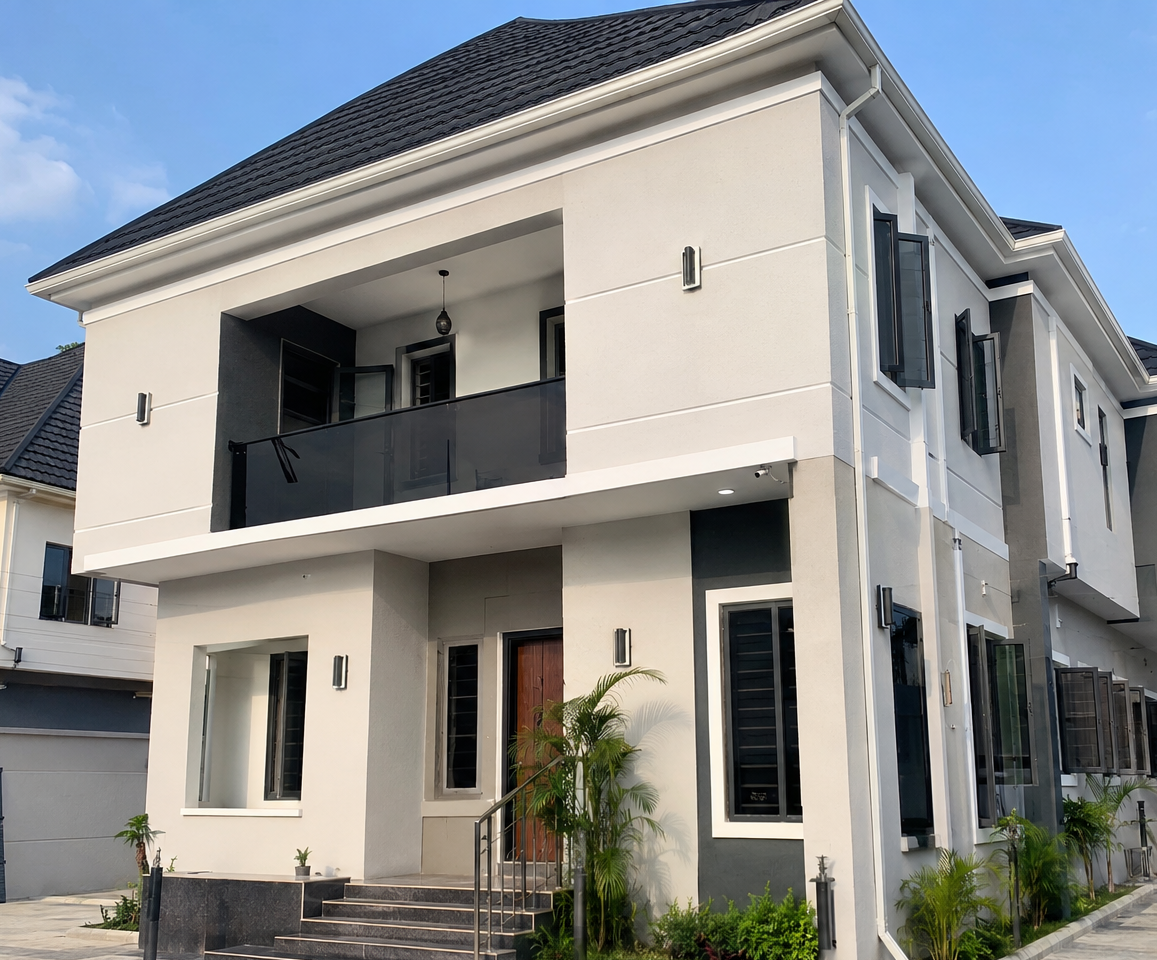
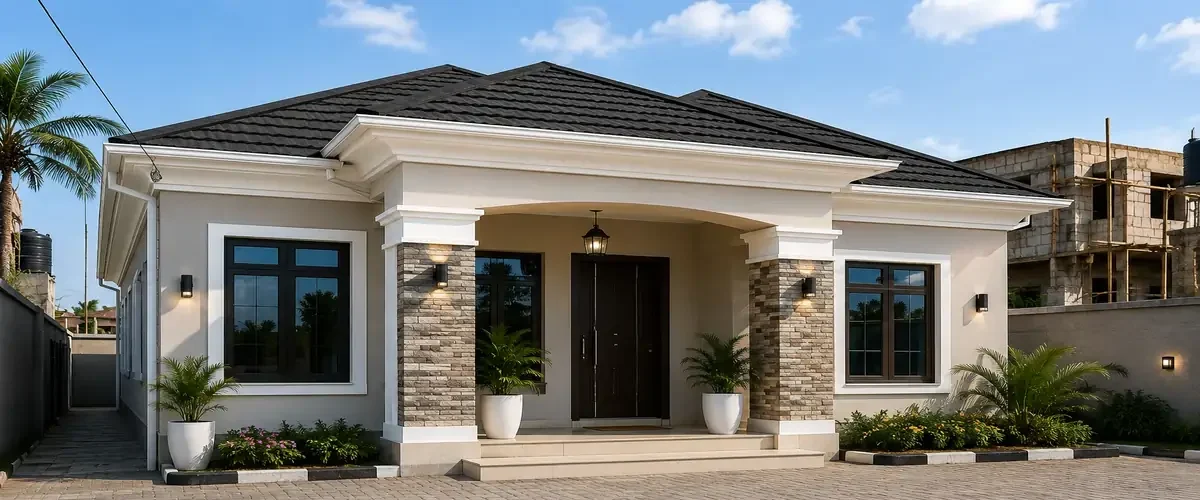
Cost of Building this type 4 Bedroom Duplex in Lagos and other states in Nigeria
What Are We Actually Building?
Before we talk money, we need to agree on what a 4 bedroom duplex actually involves in Lagos terms, because people use that phrase loosely.
A proper 4 bedroom duplex means:
Two floors of living space, ground floor and first floor 4 bedrooms, with either 3 upstairs and 1 downstairs, or all 4 upstairs A living room, dining area, and kitchen downstairs At least 3 bathrooms and toilets spread across both floors A balcony on the first floor for most modern designs Utility and storage areas External works including a perimeter fence, gate, drainage channels, and often a Boys Quarters (BQ)
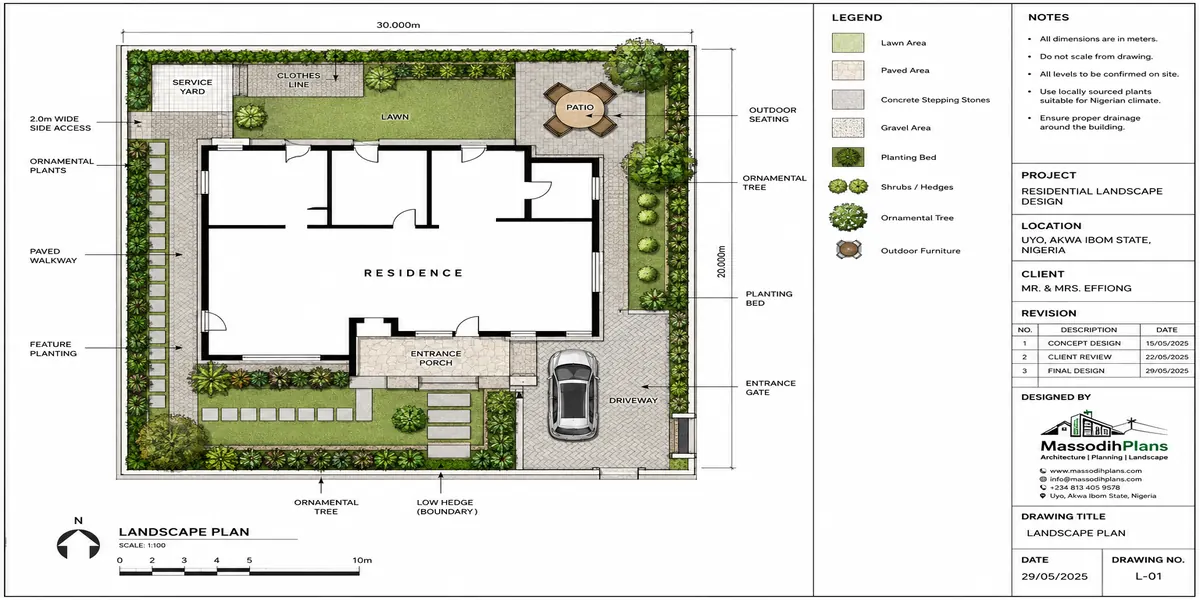
The built-up area for a well-designed 4 bedroom duplex typically runs from 280 to 400 square metres, depending on your plot size, how tight your design is, and how generous the rooms are.
On a standard Lagos plot of 450 square metres, usually 15 metres by 30 metres, you can build a solid duplex while still respecting government setback requirements, leaving room for a short driveway, and keeping proper ventilation around the structure.
Quick Comparison: Should You Build a Duplex or a Bungalow Instead?
If you’re still weighing your options, here’s a quick honest comparison:
A 4 bedroom duplex typically costs 20 to 40 percent more than an equivalent 4 bedroom bungalow on the same plot, mainly due to the staircase, upper floor structural work, and additional roofing area. In exchange, you get more living space on a smaller plot footprint, better ventilation on the upper floor, and generally stronger resale appeal in urban Lagos markets where land is limited.
A bungalow costs less to build and maintain, suits elderly residents better, and is often the more practical choice on very tight or narrow plots where a staircase would eat too much usable space.
If your plot is 450 square metres or larger and you want maximum long-term value, a duplex is usually the stronger investment. If your priority is keeping costs down or the household includes elderly residents, a well-designed bungalow may serve you better. This guide focuses on the duplex, but the same cost logic largely applies either way.
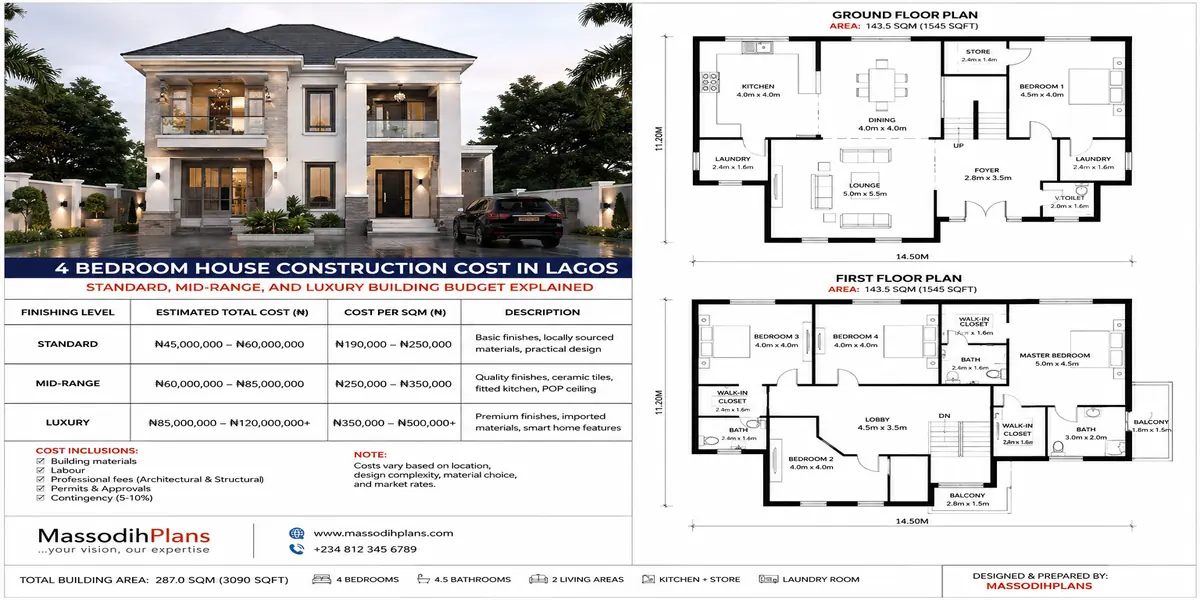
4 bedroom house construction cost lagos
Pricing baseline (Lagos-specific assumptions)
How These Figures Were Priced
Every figure in this guide rests on the following assumptions. If your situation differs, adjust accordingly.
- Pricing date: September, 2026
- Cement: about N12,000 to 13,000 per 50kg bag in Lagos
- 9-inch sandcrete block: N700 to N950 each (higher on the Island and in Lekki)
- Plot: 450 sqm (15m by 30m), flat, with mainland-type stable soil unless stated otherwise
- Built-up area: about 320 sqm across two floors
- Procurement: owner-managed, with materials bought directly and tradesmen paid directly
- Excluded: land, architectural drawings, council fees and professional supervision (covered separately below)
Material prices in Lagos move month to month, so treat these figures as a planning range and get fresh supplier quotes before you commit.
The Honest Cost of Building a 4 Bedroom Duplex in Lagos
There is no single figure that applies to every Lagos duplex project. The honest answer is a range, and that range depends heavily on your finishing choices. Here is a realistic breakdown based on current material prices and labour rates across Lagos:
| Finishing Level | Estimated Total Cost |
|---|---|
| Basic economy finishing | N55 million to N75 million |
| Standard mid-range finishing | N80 million to N120 million |
| High-end premium finishing | N130 million to N200 million and above |
These figures assume you are managing the build yourself, sourcing materials independently, and paying your tradesmen directly. If you hire a full construction company or developer to handle everything, add their management fee on top. That fee typically runs between 10 and 20 percent of the total material and labour cost.
If someone quotes you N30 million for a 4 bedroom duplex in Lagos, do not sign anything. That number means corners are being cut somewhere critical. You will finish the building and spend the next five years repairing what was skimped on.
Stage-by-Stage Cost Breakdown
This is the part that actually teaches you where your money goes. Go through every stage carefully, because each one affects the one that comes after it.
Stage 1: Site Preparation and Foundation
Your foundation is the most important decision you will make on this entire project. Everything else sits on top of it, literally. If the foundation fails, no amount of money spent on the superstructure will save the building.
In Lagos, soil conditions vary significantly from one part of the city to another. Lekki, Ajah, and much of the Island sit on soft, sandy, and sometimes waterlogged soil. That demands a deeper or more reinforced foundation approach. Mainland areas like Ogba, Agege, and Surulere tend to have more stable ground that can handle a conventional strip foundation without too much complication.
The mistake many Lagos builders make is treating the foundation as the cheapest stage rather than the most critical one. A structural engineer’s input here is not optional. It is the single best money you will spend on this project.
Realistic foundation costs:
Site clearing and initial excavation: N300,000 to N600,000 Setting out and levelling: N100,000 to N200,000 Concrete and reinforcement for strip foundation on stable ground: N2.5 million to N4 million Piled or raft foundation on soft or waterlogged ground: N5 million to N10 million Sand filling and compaction: N500,000 to N1.5 million depending on how much fill is required
One Lagos homeowner I know spent N8 million fixing cracks in a duplex that cost N60 million to build, all because the original contractor cut the foundation to save N1.5 million. The foundation is where you spend what is required, not what feels comfortable.
Stage 2: Blockwork
Once the foundation is done and cured, the walls go up. A standard 4 bedroom duplex in Lagos typically needs between 6,000 and 8,000 blocks, depending on the floor-to-ceiling height, wall thickness preferences, and the complexity of the design.
Blockwork cost estimates:
9-inch sandcrete blocks (per block): N700 to N950, higher on the Island and in Lekki due to transport 6-inch blocks (per block): N500 to N700 Total block cost including mortar and sundries: N3.5 million to N6.5 million Labour for laying blocks (per block rate): N120 to N200 per block Total blockwork labour: N900,000 to N1.5 million
Always source your blocks from a supplier close to your site. Blocks bought far away and transported add significantly to your unit cost. On the Mainland, you will almost always pay less than you would on the Island or in Lekki.
Pay your block layers per block, not per day. When you pay by the day, output becomes impossible to measure. When you pay per block laid, you can count progress every evening and know exactly what you have received for your money.
Stage 3: Structural Concrete Works
This covers your columns, beams, lintels, ring beams, and floor slabs. These are the bones of the building. If the blockwork is the skin, this is the skeleton, and it must be built to engineering specification without compromise.
Structural cost breakdown:
Reinforcement bars Y12 and Y16: N1.5 million to N2.5 million Binding wire, formwork, and props: N300,000 to N600,000 Concrete for columns and beams (ready-mix or site-mixed): N1.2 million to N2 million First-floor suspended slab including concrete and reinforcement: N3 million to N5.5 million Labour for all concrete works: N800,000 to N1.5 million
Total structural concrete stage: roughly N7 million to N12 million for a well-executed build.
Use only verified cement from reputable dealers. Fake and adulterated cement has been found circulating in Lagos markets. The structural stage is not where you price-hunt on cement quality. Buy from dealers who can show you batch documentation, and inspect what is being delivered to your site.
Stage 4: Roofing
The roof is one of the biggest single cost items in any Lagos duplex build. It is also one of the most important decisions you will make, because Lagos weather tests roofs hard. Heavy seasonal rainfall, strong winds from the Atlantic, and high humidity mean that a poorly designed or poorly executed roof will fail you within a few years.
The three most common roof types on Lagos duplexes are:
Hip roof: Offers the best wind resistance and handles Lagos weather better than any other type. It also reduces the amount of rainwater splashing against your walls. It costs a little more, but it earns that cost back in durability.
Gable roof: Common across many Lagos estates. Lower cost than a hip roof, but more vulnerable to wind pressure and wind-driven rain.
Flat roof with parapet: Suits contemporary designs and can look excellent when done well. Requires proper waterproofing to prevent leaks. Many flat roofs in Lagos leak within a few years because the waterproofing was skimped on during construction.
2026 roofing cost estimates:
Long-span aluminium roofing sheets: N2.5 million to N4 million Stone-coated steel roofing tiles: N5 million to N9 million Structural timber for rafters, purlines, and ridges: N1.2 million to N2.5 million Fascia boards, gutters, and downpipes: N300,000 to N700,000 Roofing labour: N600,000 to N1.2 million
A word specifically for Lagos builders: always install gutters with properly sized downpipes that direct water well away from your foundation. Lagos receives intense seasonal rainfall, and unmanaged roof runoff is one of the main causes of foundation erosion and compound flooding. This is not decorative. It is structural protection.
Stage 5: Windows and Doors
A typical 4 bedroom duplex in Lagos needs approximately 20 to 28 windows and 12 to 16 doors, depending on the design.
Window and door costs:
Casement aluminium windows per unit: N45,000 to N90,000 Sliding windows per unit: N35,000 to N70,000 Security burglar-proof frames per window: N15,000 to N35,000 Steel security main entrance door: N120,000 to N350,000 Wooden flush doors for interior rooms: N25,000 to N55,000 each Aluminium or uPVC sliding doors for balcony access: N150,000 to N300,000
Total window and door budget: N1.8 million to N4 million depending on the quality you choose.
Cross-ventilation is not a design preference in Lagos. It is a necessity. Lagos sits in a tropical zone with high heat and year-round humidity. A duplex where bedrooms and living rooms do not have windows positioned on opposite walls becomes uncomfortable and forces you to run air conditioning constantly, which drives up your generator and electricity running costs every month. Design your windows to work with the prevailing south-westerly breeze, not against it.
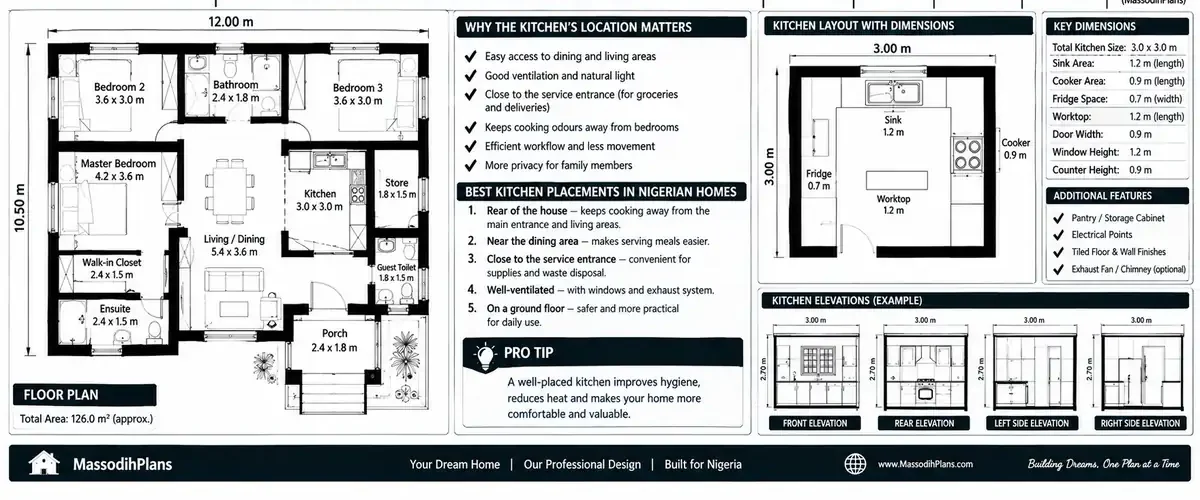
If you want to understand how floor plan decisions like window placement affect your building comfort and costs, the Plan School has practical guides on reading and evaluating house plans before committing to a design.
Stage 6: Plumbing and Water Supply
Plumbing in a Lagos duplex covers your internal water pipes, bathroom fittings, kitchen sink, overhead tank, underground storage tank, and borehole installation.
This is the stage where Nigerian builders consistently underbudget, especially on the water supply side.
Plumbing cost breakdown:
Internal plumbing pipes and fittings: N600,000 to N1.2 million Bathroom and toilet fittings including WC, basin, and shower per bathroom: N250,000 to N600,000 Kitchen sink and fittings: N80,000 to N200,000 Overhead plastic water tank 10,000 litres: N200,000 to N350,000 Underground storage tank: N300,000 to N600,000 Borehole drilling and casing in most Lagos locations: N1.5 million to N3.5 million Submersible pump and installation: N350,000 to N700,000 Plumbing labour: N400,000 to N800,000
Total plumbing budget including borehole: N4 million to N8 million for a complete system.
Do not treat the borehole as an optional extra you will sort out after you move in. LAWMA water supply is unreliable in the overwhelming majority of Lagos neighbourhoods. A 10,000-litre overhead tank combined with a 7,500-litre underground storage tank gives a realistic buffer for a household of six. Build this into your core budget from the start.
Stage 7: Electrical Works
Electrical cost estimates:
Internal wiring including conduits, cables, sockets, and switches: N800,000 to N1.8 million Distribution board and circuit breakers: N150,000 to N350,000 Lighting fixtures and fittings: N300,000 to N800,000 Generator connection point and transfer switch: N200,000 to N500,000 Solar inverter system which is increasingly practical: N1.2 million to N4 million External security lighting: N100,000 to N250,000 Electrical labour: N400,000 to N900,000
Total electrical budget: N2 million to N4.5 million for a well-wired duplex.
Given the realities of EKEDC and IKEDC supply across Lagos, budgeting for a solar inverter backup system is no longer a luxury decision. It is a practical one. The initial cost is recovered within a few years through reduced generator fuel costs.
Stage 8: Plastering and Screeding
Internal wall plastering: N600,000 to N1.2 million External wall rendering: N400,000 to N800,000 Floor screeding: N300,000 to N600,000 Labour where not already included: typically billed at N1,200 to N2,000 per square metre
This stage is often rushed on Lagos building sites to accelerate the schedule. Rushed plastering leads to plaster that cracks and peels within a year or two. Insist on proper curing time between coats, even if it slows the programme slightly.
Stage 9: Tiling
Tiling is one of the most common stages where Lagos homeowners run over budget without realising it early enough.
Floor tiles mid-range per square metre: N5,000 to N12,000 Wall tiles for bathrooms and kitchen per square metre: N4,500 to N10,000 Total tile area needed for a 4 bedroom duplex: 350 to 500 square metres Tile adhesive, grout, and sundries: N300,000 to N600,000 Tiling labour: N1,000 to N2,500 per square metre
Total tiling budget: N4.5 million to N10 million depending on the tile brand and quality you select.
The mistake is choosing premium tiles for every room. Choose your tile quality by the visibility and use of the space. The master bedroom and living room deserve better tiles than the utility room or the Boys Quarters bathroom. You can achieve a high-quality look without spending premium prices in every corner of the building.
Stage 10: POP Ceiling and Painting
POP ceiling installation: N800,000 to N2 million Cornices and decorative centrepieces: N200,000 to N600,000 Internal painting two coats: N600,000 to N1.5 million External painting and waterproofing paint: N400,000 to N900,000 Labour where not included: N600 to N1,200 per square metre
Do not skip the external waterproofing paint. Lagos rainfall is heavy and consistent during the rainy season. External walls without proper waterproofing treatment absorb moisture and begin to deteriorate from the inside. A good waterproofing paint application at this stage protects the entire building envelope for years.
Stage 11 Septic tank, soakaway and sewage
Most Lagos plots have no connection to a public sewer, so your duplex needs its own waste system. Many owners treat it as an afterthought, but it affects your layout, your compound levels and your neighbours.
What a 4 bedroom duplex typically needs: a two-chamber septic tank sized for a household of six or more, connected to a soakaway pit that lets treated liquid drain into the ground.
Lagos-specific warning: In Lekki, Ajah, Victoria Island and other coastal or low-lying areas, the water table is high. A conventional soakaway can flood or fail, and it can contaminate your borehole. In these areas, use a sealed, properly vented tank with a raised soakaway, or a biodigester system, and keep the septic system well away from your borehole. Your structural engineer or a licensed environmental professional should advise on the specification after the soil test.
Realistic cost estimates:
- Excavation and setting out: N150,000 to N400,000
- Septic tank (block and concrete, two-chamber): N800,000 to N2 million
- Soakaway pit (lined, with aggregate fill): N500,000 to N1.2 million
- Pipework, manholes, covers and vent pipes: N250,000 to N600,000
- Prefabricated or biodigester system (premium option): N2.5 million to N6 million installed
- Labour where not included: N200,000 to N500,000
Total budget: roughly N1.5 million to N3.5 million for a standard system, and N3.5 million to N6 million for a biodigester or high-water-table solution.
Placement tip: Locate the tank where a vacuum truck can reach it without crossing your finished driveway, and keep it away from boundary walls, the borehole and the foundation. Excavate and build it before final compound levelling and paving, or you will be breaking finished work later.
Stage 12: External Works
This is the most consistently underbudgeted section in Nigerian residential construction. People plan meticulously for the building itself and then discover in the final stage that external works will cost almost as much as an entire interior floor.
Perimeter block fence depending on plot size and fence height: N2 million to N5 million Gate and gatehouse: N600,000 to N2 million Driveway paving using interlocking or concrete: N800,000 to N2 million Drainage channels within compound: N300,000 to N700,000 Basic landscaping: N200,000 to N500,000 Boys Quarters if included: N3 million to N6 million
External works alone will add N4 million to N10 million to your total project cost. Budget for this from the beginning, not after you have already spent everything on the main structure.
Full Summary Cost Table: 4 Bedroom Duplex Lagos
| Construction Stage | Basic | Standard | High-End |
|---|---|---|---|
| Foundation | N3.5M | N6M | N10M |
| Blockwork | N4.5M | N6M | N8M |
| Structural Concrete | N5M | N7.5M | N10M |
| Roofing | N4M | N7M | N11M |
| Windows and Doors | N2M | N3.5M | N6M |
| Plumbing | N3.5M | N5.5M | N8M |
| Electrical | N2M | N3.5M | N5M |
| Plastering and Screeding | N1.5M | N2.5M | N4M |
| Tiling | N4.5M | N7M | N12M |
| POP Ceiling and Painting | N2M | N3.5M | N5.5M |
| Septic Tank and Soakaway | N1.5M | N2.5M | N4.5M |
| External Works | N4M | N7M | N12M |
| Stage Total | N38M | N61.5M | N96M |
How to apply contingency: Use two separate buffers, not one blanket figure.
- 10 to 15 percent of total project cost for unforeseen site issues such as rework, extra excavation and weather delays.
- 15 percent on the material budget only for price movement, rising to 20 to 25 percent if your build will run beyond 18 months.
Example: on a N60 million standard build, hold N6 million to N9 million for unforeseen costs, plus a separate price buffer on your materials line.
These figures do not include land cost, architectural drawings, council fees, or professional supervision. Add 10 to 15 percent contingency to every estimate you produce.
Labour summary
Labour at a Glance
Labour is priced inside each stage above. Here is the combined picture so you can plan your cash flow:
- Blockwork labour: N900,000 to N1.5 million
- Structural concrete labour: N800,000 to N1.5 million
- Roofing labour: N600,000 to N1.2 million
- Plumbing labour: N400,000 to N800,000
- Electrical labour: N400,000 to N900,000
- Tiling labour: about N350,000 to N1.25 million (N1,000 to N2,500 per sqm across 350 to 500 sqm)
- Plastering, POP and painting labour: billed per square metre (N600 to N2,000), so it scales with your floor area
Combined labour for the trades with fixed figures: roughly N3.5 million to N7 million, before per-sqm finishing labour.
Pay per unit of output (per block laid, per square metre tiled) rather than per day, and release payments against verified milestones.
A Note on Land Cost
The figures above cover construction only, deliberately, because land prices in Lagos vary too widely to give one honest number. As a general reference, a residential plot suitable for a 4 bedroom duplex can run anywhere from ₦15 million to ₦20 million in developing areas like Ikorodu or Ajah, and considerably higher, sometimes ₦50 million and above, in Lekki Phase 1 or similar premium locations. If you’re budgeting your full project from scratch, land and construction combined for a standard build in an accessible area typically starts around ₦75 million to ₦100 million all in.
Hidden Costs That Most Lagos Builders Never Plan For
This section separates experienced builders from those who run out of money halfway through. These costs are real. They are not avoidable. The only question is whether you knew about them before you started.
Council Approval and Documentation
In Lagos, the Lagos State Building Control Agency (LASBCA) requires building plan approval before any construction begins. Depending on your area and the size of your project, this can cost N500,000 to N2 million or more for a duplex. Skipping this creates serious legal exposure. LASBCA issues stop-work orders on unapproved buildings regularly, and in worst cases, structures are demolished. Always secure approval before you move a single bag of cement to site.
Professional Fees
Architectural drawings: N300,000 to N800,000 Structural engineering: N200,000 to N500,000 Quantity surveying for accurate material estimates: N150,000 to N400,000 Project supervision fee if using a consultant: 5 to 10 percent of construction cost
Generator Enclosure
A proper generator space is not optional in Lagos. Budget N300,000 to N700,000 for a dedicated enclosure with ventilation, exhaust channelling, and lockable housing. Running a generator without a proper enclosure is a safety hazard and a noise problem for your household and neighbours.
Material Price Fluctuation
Between January 2024 and early 2026, cement prices in Lagos rose from roughly N8,500 per bag to over N12,500 per bag at certain points. Steel rods and roofing sheets followed similar patterns. Build a minimum 15 percent price contingency into your material budget from day one. Where you can, lock in prices with suppliers through advance payments on critical materials, especially cement and iron rods.
Construction Water
In areas without reliable mains supply, buying water for concrete mixing and masonry work can cost N200,000 to N600,000 across the life of a full project. This almost never appears in contractor quotes.
Site Security
Site theft is a genuine problem in Lagos, particularly from lintel level upward when expensive roofing sheets, copper wiring, and tiles are on site. Budget for night security personnel or a professional watchman arrangement throughout the construction period.
How Building Costs Vary Across Lagos
Not every part of Lagos costs the same to build in. Here is a practical breakdown of the main areas:
Lekki Phase 1 and Victoria Island: Premium location, premium cost. Contractor rates run 20 to 40 percent higher than comparable Mainland jobs. Sand and block transportation costs more. Expect your total to sit at the upper end of whichever finishing level applies to your project.
Ajah and Sangotedo: More accessible land and a rapidly developing area. Costs are moderate. Parts of Ajah still have soil conditions that require a proper foundation investigation before you commit to a foundation type.
Ikorodu: One of the more affordable building environments in Lagos. Labour rates are lower, material access has improved with infrastructure development, and plot prices remain manageable. A very practical choice for budget-conscious builds without sacrificing quality.
Agege, Ojota, and Surulere: Established Mainland zones with moderate costs and generally good material access. The main consideration in these areas is neighbourhood density. You need to plan your drainage and ventilation carefully because neighbouring structures sit close on most plots.
Badagry: A lower-cost building environment overall. However, proximity to the lagoon in certain parts means soil investigation is essential before foundation design. Contractor availability is more limited than in central Lagos, which may require sourcing skilled tradespeople from farther away.
Building in Lagos: What the Climate Demands From Your Design
Lagos has specific environmental conditions that must directly shape your design and construction decisions. A duplex designed for Abuja or Enugu will not perform the same way in Lagos. Here is what the Lagos climate specifically requires.
Heat and Humidity Control
Lagos sits at sea level in a tropical zone. Heat and humidity are constants throughout the year, not just in the dry season. A properly designed 4 bedroom duplex in Lagos should orient the main living areas to capture the prevailing south-westerly breeze, include roof eaves of at least 900mm to shade walls from direct sun, use ventilated roof designs that prevent heat buildup on the first floor, and position windows to enable cross-ventilation in every room including bedrooms.
Flooding and Drainage
Lagos flooding is not a remote concern. From Lekki to Agege, poor drainage planning creates annual property damage across every part of the city. Your duplex must have the finished floor level set at least 600mm above natural ground level, perimeter drainage channels that direct surface water to the public drain or a proper soakaway, compound grading that ensures water flows away from the building, and waterproofing treatment on all external walls below slab level.
Power Supply
Build your electrical plan around the reality that grid power is unreliable. That means a properly sized generator space, an inverter and battery system for essential loads including lighting and fans, and solar panels if your budget allows.
Water Supply
As discussed in the plumbing section, borehole plus storage tank is the realistic primary water system for most Lagos locations. Treat it as core infrastructure, not an optional extra.
What Builders in Lagos Consistently Get Wrong
Here are the patterns that cause Lagos duplex projects to fail or overrun. These are not theoretical. They happen on real sites across the city regularly.
Underpricing the foundation, particularly on soft or waterlogged Lagos terrain where the cost difference between adequate and inadequate foundation work is a fraction of the eventual repair bill.
Buying all materials at once before confirming actual quantities from a bill of quantities, which leads to either critical shortages mid-project or expensive excess materials that cannot be returned.
Paying block layers by the day rather than by the block, which removes all accountability for output and turns supervision into a full-time babysitting job.
Treating drainage as something to figure out after construction is complete. Drainage must be planned during the design stage. Retrofitting it afterward costs more and is always poorly executed.
Building without qualified supervision. Projects without a site supervisor or consultant consistently underperform on quality and almost always exceed their budget due to rework and structural corrections.
Using substandard or adulterated cement, which is a real issue in Lagos. Structural failure from bad cement is not immediately visible. It shows up two or three years after completion when cracks appear in places they should never appear.
How to Build a 4 Bedroom Duplex on a Small Lagos Plot
Many Lagos plots are 450 square metres or smaller. Building a 4 bedroom duplex on a tight plot is entirely achievable if the design is intelligent and the floor plan is honest about what the household actually needs.
The most effective strategies for small Lagos plots:
Use a compact floor plan that maximizes internal liveable area without wasting space on oversized corridors or ceremonial circulation areas Eliminate non-essential passageways and combine circulation space with functional areas wherever the layout allows Incorporate built-in wardrobes and storage within rooms to reduce the furniture footprint Use the ground floor for shared family spaces and the first floor entirely for private bedrooms Design a slim but properly proportioned staircase that does not eat the centre of the plan.
A well-designed 4 bedroom duplex on a 13 by 30 metre plot in Lagos is entirely achievable. The discipline is in the design, not in sacrificing the rooms.
Before you commission drawings or buy a ready-made plan, spend time in the Building Materials Price Guide in Nigeria (Full Cost Guide) section to understand what makes a floor plan work for Lagos conditions and Nigerian family living. Good plan literacy saves you from approving a design that looks impressive on paper but fails in daily use.
Does This Duplex Design Actually Work for Your Family?
Cost is only half the story. I have reviewed beautiful, well-costed duplex plans that still failed the family that moved into them, simply because nobody asked how the household actually lives day to day before the drawing was finalised.
Family Lifestyle and Children’s Movement
In a 4 bedroom duplex, the natural instinct is to put all the bedrooms upstairs and call it done. In practice, what usually happens with young families is that parents spend the first year constantly walking up and down stairs to check on children, or worried about toddlers on a staircase with no proper handrail. If you have young children, consider keeping one bedroom on the ground floor for the early years, even if the plan is to convert it into a study or guest room later.
Guest Privacy
A common oversight in Lagos duplex plans is placing the visitor’s toilet and guest seating too close to the family’s private living areas. Visitors should be able to sit, use a toilet, and leave without walking past bedrooms or the family’s everyday living space. This is a small detail on paper, but it matters enormously in daily use, especially in Nigerian homes where visitors are frequent and sometimes unannounced.
Elderly Accessibility
If a parent or older relative will be staying with you, even occasionally, plan for at least one ground floor bedroom with a step-free path to a bathroom. Retrofitting this after construction is expensive and often structurally awkward. Deciding this at the drawing stage costs nothing extra.
Work-From-Home Considerations
Since 2023, this has become one of the most common requests I get from Lagos clients. A dedicated study nook, even a modest 2m by 2m space carved from an underused corner of the living room or landing, adds real daily value for anyone working remotely or managing a business from home.
Future Family Growth
If you’re a young couple building your first duplex, talk to your structural engineer about future flexibility before the foundation is poured. A foundation designed with slight extra capacity allows you to convert a store room into a fifth bedroom later, or add a small extension, without needing to reinforce an already-completed structure. This is far cheaper to plan for now than to retrofit in five years.
Getting this layer right is what separates a house that merely holds four bedrooms from a house that actually fits how your family lives.
The Investment Value of Building a 4 Bedroom Duplex in Lagos
If you are building in Lagos partly as a financial investment, your numbers need to make sense beyond just the construction cost.
Rental income potential:
A properly finished 4 bedroom duplex in Lekki can command N4 million to N8 million per annum in rent. In Ikorodu or Agege, the same building may rent for N1.5 million to N3 million per annum. Those are meaningful income figures that justify the construction investment when the building is well-located and properly finished.
Resale value:
Lagos property remains one of the most resilient asset classes available to Nigerians. A fully finished duplex in a good Lagos location that was acquired in 2020 has in many cases more than doubled in naira value. Even accounting for inflation, the trajectory is upward.
Estate considerations:
If you are building within an estate or gated community, ensure your design conforms to the estate’s design guidelines before construction begins. Non-conforming designs reduce your resale value and can attract planning sanctions from the estate management. This is a detail many first-time builders discover too late.
Cost-Saving Strategies That Actually Work in Lagos
These are practical approaches that reduce your building cost without touching structural integrity. They are not shortcuts. They are smart decisions.
Engage a quantity surveyor before you buy a single material. The QS fee is one of the best investments in the entire project. A proper bill of quantities tells you exactly what you need, stage by stage, so you are not guessing.
Buy cement, blocks, and steel in bulk during price dips rather than purchasing stage by stage at retail price.
Source windows and doors from local Lagos manufacturers rather than imported options for standard rooms. The quality difference is minimal for most rooms, and the price difference is significant.
Use long-span aluminium roofing sheets instead of stone-coated tiles if the budget is under pressure. Aluminium roofing performs excellently in Lagos weather, lasts for many years, and costs considerably less than stone-coated tiles.
Phase your finishing
Phase your finishing systematically. Get the structure to sealed roof level first, secure it properly, then work through finishing in a controlled sequence. This approach stretches your budget further than trying to do everything at once.
Use mid-range tile brands from established Nigerian importers for utility areas and secondary rooms. Reserve your premium tile budget for the living room, master bedroom, and main bathrooms where it will be seen and appreciated.
Manage your own labour with clear daily output agreements rather than appointing a main contractor who adds a margin to every trade. This requires more involvement from you but saves significantly on cost over a full project.
Avoid design changes after construction begins. Every change costs money in aborted work, additional materials, and delay. Make all your design decisions before the first concrete is poured.
If you need help choosing the right plan before you commit, browse our Plans library where you will find 4 bedroom duplex designs optimized for standard Nigerian plot sizes, Lagos soil conditions, and modern family living. Choosing the right plan before construction starts is the single most cost-effective decision you can make.
Common Mistakes That Blow Lagos Building Budgets
Starting construction without an approved building drawing and then having to demolish or redesign significant portions of the work.
Choosing a site in a known flood zone without budgeting for adequate mitigation, then spending heavily on remediation that could have been avoided.
Engaging unlicensed contractors who quote below market rate upfront but deliver work that requires expensive rework to fix.
Paying contractors too far in advance without tying payments to measurable, verifiable construction milestones.
Underestimating the cost of external works, which routinely adds N4 million to N10 million to a Lagos duplex build and almost never appears fully in early budget estimates.
Failing to account for inflation between project phases. A project that runs for two years will cost more in the second year than the first year’s prices suggested. Build this into your contingency planning from day one.
Soil Investigation in Lagos: Why It Matters More Than You Think
This is a section most building guides skip entirely, but it is critically important for Lagos specifically.
Lagos soil is not uniform. The city is built across a combination of firm lateritic mainland soils, coastal plain sands, river floodplains, and reclaimed swampland. Depending on where your plot sits, the ground beneath your foundation behaves completely differently.
On the Island, in Lekki, and in parts of Ajah, the soil is soft, sometimes waterlogged, and compressible. This means a conventional strip foundation that works perfectly well in Ogba or Agege will crack, settle, and fail on the same Island plot within a few years.
A simple soil test, called a borehole investigation or soil bearing capacity test, costs between N150,000 and N400,000 for a residential plot in Lagos. That cost tells your structural engineer exactly what foundation type the ground can support. Without it, your engineer is guessing.
The consequence of guessing wrong on a soft Lagos soil is not just cracks. It is differential settlement, which means different parts of the building sink at different rates. That causes structural damage that is extremely expensive to rectify and in severe cases cannot be adequately repaired at all.
Invest in a soil test before your foundation drawings are finalised. It is money that saves multiples of itself in potential foundation corrections.
For a deeper explanation of the different foundation types available for Lagos plots and how soil conditions determine which one your project needs, the plan school section covers this topic in practical terms that any homeowner can understand without an engineering background.
Understanding the LASBCA Approval Process in Lagos
Many first-time Lagos builders treat the approval process as something to deal with eventually. That is a costly misunderstanding.
The Lagos State Building Control Agency enforces the Lagos State Urban and Regional Planning and Development Law. All new construction in Lagos requires an approved building plan before work begins. The approval process involves submitting your architectural drawings and structural calculations to LASBCA or your local planning authority, paying the required assessment fees, and receiving a certified approval certificate before breaking ground.
The fees vary by location, floor area, and the classification of the building. For a standard 4 bedroom residential duplex in a mid-density Lagos area, the total approval costs including agency fees and related charges can run from N500,000 to over N2 million.
Building without approval exposes you to stop-work orders, which LASBCA issues and enforces regularly across Lagos. In cases where unapproved construction violates setback or density rules, demolition orders have been issued.
Start the approval process before you hire your first labourer. It takes time, and beginning without it is a gamble with the entire investment.
One practical reality worth mentioning: some clients budget a modest contingency, often in the range of ₦100,000 per approval stage, for informal processing costs at the agency level. I mention this only so you are not caught off guard by it, not as an endorsement of any particular practice. The safest approach remains working with a registered professional who understands the formal process and can advise you honestly on what is required versus what is not.
How to Hire the Right Contractor in Lagos
The contractor relationship is where many Lagos building projects succeed or fail. The cheapest contractor is almost never the right contractor. The contractor who quotes you a price significantly below every other quote you received is telling you something with that price, even if they are not saying it directly.
Here is how to approach contractor selection practically:
Get at minimum three written quotations from separate contractors before making a decision. Compare them line by line, not just at the total.
Visit at least one previous project the contractor has completed. Do not accept photographs. Visit the actual building, speak to the client if possible, and look at the quality of finish with your own eyes.
Check that the contractor has valid registration with the Council for the Regulation of Engineering in Nigeria (COREN) or the Nigerian Institute of Builders (NIOB) for their specific discipline.
Never pay more than 30 percent of a stage cost upfront before work on that stage begins. Structure your payment schedule around verified milestones, not calendar dates.
Agree on a written contract that specifies the scope of work, the materials to be used by brand and specification, the timeline for each stage, and the payment milestones. A handshake agreement is not a contract. It becomes a dispute the moment something goes wrong.
Include a retention clause in your contract. A standard retention holds back 5 to 10 percent of the contract value until a defects liability period, typically 6 to 12 months after completion, has passed. This gives you financial recourse if defects appear after handover.
For a complete breakdown of how to structure the contractor relationship, what to look for in a contract, and how to manage a Lagos building site without being cheated, see our guide on How to Practically Draw and Design a Duplex for Small Plots in the Plan School section.
If You Need Professional Help on Your Project
Building a 4 bedroom duplex in Lagos is a complex project. Most people do it once in their lives. That means the experience you gain by making mistakes on your first build is extremely expensive experience.
There are stages of this project where engaging a professional pays for itself many times over:
A quantity surveyor before purchasing any materials saves you from overspending on things you do not need and underspending on things you do.
A structural engineer for your foundation design is non-negotiable on any Lagos site with questionable soil conditions, and increasingly advisable even on apparently stable ground.
An architect who understands Lagos plot conditions, statutory setbacks, and Nigerian family living patterns will produce a design that functions well in daily use, not just one that looks good in a rendering.
A resident site supervisor or clerk of works who is present on site daily, inspects work quality, and reports directly to you is worth their fee in prevented rework and stolen materials alone.
If you are at the stage of scoping your project and need professional guidance on drawings, supervision, or documentation, our 7 Small Plot Design Mistakes Nigerians Make (And How to Fix Them) page outlines what is available to help you build confidently and avoid the most common and most expensive mistakes Lagos builders make.
Reference: What Nigerian Building Regulations Actually Require
The National Building Code of Nigeria sets minimum standards for structural design, materials quality, fire safety, ventilation, and occupancy requirements for all residential buildings. Every duplex in Lagos should be designed to meet or exceed these standards, not just the minimum required for plan approval. Nigerian Institute of Building (NIOB)
Frequently Asked Questions
How much does it cost to build a 4 bedroom duplex in Lagos?
A realistic budget for most standard builds ranges from N55 million to N120 million depending on location, materials, and finishing level. Premium builds in Lekki and the Island can exceed N150 million. Do not be convinced by any quote significantly below these figures without understanding exactly what has been left out.
How many blocks do I need for a 4 bedroom duplex in Lagos?
Depending on your design and floor-to-ceiling heights, a 4 bedroom duplex typically requires between 6,000 and 9,000 blocks. A quantity surveyor or your structural engineer can give you a precise figure based on your actual drawings.
Is it cheaper to build in Ikorodu than in Lekki?
Yes, significantly so. Land cost, labour rates, and material transportation costs are all lower in Ikorodu. However, factor commute, access infrastructure, and the specific neighbourhood into your overall decision, because these affect both daily living and long-term resale value.
What is the most expensive part of building a 4 bedroom duplex in Lagos?
For most builds, the combination of structural concrete work and finishing, specifically tiling, POP ceilings, and painting, represents the largest combined cost component. Roofing is also a major expenditure, particularly when stone-coated tiles are chosen.
Do I need LASBCA approval before building in Lagos?
Yes. Building without Lagos State Building Control Agency approval exposes you to stop-work orders, fines, and in some cases demolition orders. Obtain all required approvals before breaking ground.
Can I build a 4 bedroom duplex on a 450sqm plot in Lagos?
Yes. A 450sqm plot, typically 15 by 30 metres, can comfortably accommodate a well-designed 4 bedroom duplex while meeting statutory setback requirements and leaving adequate circulation space in the compound.
How long does it take to build a 4 bedroom duplex in Lagos?
With consistent funding and competent project management, 18 to 24 months is a realistic completion timeline. Projects with inconsistent funding or poor management often stretch to 3 to 5 years, during which material costs continue to rise and the building is exposed to weather damage.
What type of roof is best for Lagos weather?
A hip roof with long-span aluminium or stone-coated tiles performs best in Lagos, offering superior wind resistance and efficient rainwater shedding. Install proper gutters and downpipes that direct water well away from the foundation.
What is the difference between a raft foundation and a strip foundation?
A strip foundation runs as a continuous concrete beam under the load-bearing walls. A raft foundation is a solid reinforced concrete slab that covers the entire footprint of the building, distributing the load across the widest possible ground area. On soft or waterlogged Lagos soil, a raft foundation is often specified because it handles differential settlement better than a strip foundation.
How do I manage inflation during a long Lagos building project?
Build a 15 percent contingency into every material cost estimate from the beginning. Buy critical materials including cement, steel, and roofing in bulk when prices are stable rather than purchasing stage by stage at retail. Where possible, make advance payments to lock in prices with suppliers for future deliveries.
Can I get a mortgage to build a 4 bedroom duplex in Lagos?
Mortgage financing for self-build construction in Nigeria is still limited compared to buying a completed property, but some banks and the Federal Mortgage Bank of Nigeria offer construction financing for applicants with an approved building plan, verified income, and land title. It is worth speaking directly to a mortgage provider early in your planning, since approval timelines can affect your construction schedule.
If I’m building a twin duplex, does the cost simply double?
No. A twin duplex, two duplex units sharing a boundary or a common wall, typically costs less than exactly double a single duplex, because you share some foundation, wall, and roofing efficiencies between the two units. In practice, expect the combined cost to run around 1.7 to 1.9 times a single unit’s cost rather than a full 2x, depending on your specific design.
Formula and Mathematical Equations for Calculating the Cost of Building a 4-Bedroom Duplex in Lagos
1. The master formula for total building cost
The main mathematical equation is:
Where:
\(C_T\) = total project cost
\(C_F\) = foundation cost
\(C_S\) = structural construction cost, including columns, beams, slabs and walls
\(C_R\) = roofing cost
\(C_{FI}\) = finishing cost
\(C_E\) = electrical and plumbing installation cost
\(C_P\) = professional and statutory fees
\(C_O\) = other project costs, such as site preparation, external works and services
For a more complete budget, include a contingency allowance:
Where \(r\) is the contingency rate expressed as a decimal. For example, a 10% contingency means \(r=0.10\).
This master formula gives you the overall framework. The following equations show how to calculate the individual cost components.
2. The cost-per-square-metre formula
This is the quickest method for producing an initial estimate before a detailed Bill of Quantities (BOQ) is prepared.
Where:
\(C_B\) = estimated building construction cost
\(A_G\) = total gross floor area of all floors in square metres
\(R_M\) = construction cost per square metre
For a duplex, calculate the ground-floor and first-floor areas separately:
Worked example
Assume a proposed 4-bedroom duplex has the following dimensions:
| Item | Illustrative measurement |
|---|---|
| Ground-floor area | 150 m² |
| First-floor area | 130 m² |
| Total floor area | 280 m² |
| Assumed standard construction rate | ₦275,000/m² |
The calculation is:
Therefore, the illustrative construction estimate is ₦77 million, before any excluded costs.
For context, a Lagos construction guide published in October 2026 gives an indicative standard-finish range of ₦220,000–₦330,000 per square metre. Applying that range to 280 m² produces an estimate of ₦61.6 million–₦92.4 million. These are planning benchmarks, not a contractor’s quotation.
3. The detailed Bill of Quantities formula
For a more accurate estimate, calculate each construction item separately.
Where:
\(Q_i\) = measured quantity of a construction item
\(R_i\) = price per unit of that item
\(n\) = total number of measured items
\(\sum\) = add the costs of all items together
For example:
| Construction item | Quantity | Unit rate | Total cost |
|---|---|---|---|
| Cement | 1,000 bags | ₦12,500/bag | ₦12,500,000 |
| Blocks | 5,000 units | ₦850/unit | ₦4,250,000 |
| Reinforcement steel | 5 tonnes | ₦1,100,000/tonne | ₦5,500,000 |
| Subtotal | ₦22,250,000 |
These figures are hypothetical examples to demonstrate the formula, not the actual material requirements for the duplex. Quantities must be derived from the approved drawings and engineering specifications.
The central rule is:
This quantity-surveying principle is also explained in the Q4 2026 Nigerian construction rate guide.
4. Mathematical equations for estimating building materials
These formulas help you calculate quantities before applying supplier prices.
A. Concrete volume
Use this formula for foundations, ground beams, columns, suspended slabs and other concrete elements:
Where \(V\) is concrete volume in cubic metres.
Example: a concrete slab measuring 12 m long, 10 m wide and 0.15 m thick:
If the supplied concrete rate is ₦150,000 per cubic metre:
The rate is illustrative. Foundation and structural concrete should be measured from the structural drawings.
B. Number of blocks required
First calculate the net wall area:
Where:
\(L_j\) = length of each wall
\(H_j\) = height of each wall
\(A_O\) = total area of doors and windows
For standard nominal 450 mm × 225 mm sandcrete blocks, the approximate coverage is 10 blocks per square metre.
Where \(w\) is the waste allowance expressed as a decimal.
Example: for 200 m² of net wall area and 5% waste:
At ₦850 per block:
This is an approximate example. Block dimensions, mortar joints, wall thicknesses and breakages affect the actual requirement.
C. Floor tiles
Calculate the floor area to be tiled:
Then include cutting and breakage allowance:
Example: 180 m² of floor area, a 10% allowance and 0.36 m² per tile:
At ₦4,000 per tile:
This excludes adhesive, grout, screeding and installation labour unless included in the unit price.
D. Painting cost
For walls and ceilings, calculate the surface area to be painted:
Estimate paint quantity using the manufacturer’s coverage rate:
Where:
\(L_P\) = litres of paint required
\(n_c\) = number of coats
\(R_c\) = coverage in square metres per litre per coat
Then:
Use the actual product coverage, surface condition and number of coats specified for the project.
E. Roofing cost
For a simple roof, the sloping roof area can be calculated as:
Where \(L_i\) is each roof slope’s length and \(S_i\) is its sloping width.
Then:
The roof estimate should cover the trusses, covering sheets or tiles, underlay where required, fascia, gutters, ridges, fasteners and installation. Roof geometry and wastage must be considered.
5. Labour cost formula
Labour may be priced per square metre, cubic metre, item or workday.
Where \(R_{L_i}\) is the labour rate for the relevant trade.
For labour priced by workdays:
Where:
\(N_W\) = number of workers
\(D_W\) = number of working days
\(R_D\) = daily rate per worker
For example, 5 workers working for 20 days at ₦10,000 per worker per day:
This method is useful for checking labour-only quotations. Do not add labour twice if it is already included in a composite construction rate.
6. Professional fees and approval costs
Where fees are calculated as a percentage of an agreed fee basis:
Where \(B_F\) is the applicable fee basis and \(p\) is the fee percentage.
For example, if an agreed professional fee is 5% of a ₦77 million construction-cost basis:
This percentage is illustrative, not a prescribed professional fee. The actual basis and fee depend on the appointment and applicable professional scale.
Building approvals, soil investigation, surveying and other statutory charges should be calculated from their actual quotations or official fee schedules rather than assumed to be included in the building rate.
7. External works formula
External works can include perimeter fencing, gates, paving, drainage, septic tanks, soakaways, boreholes, water storage and landscaping.
If only a preliminary percentage estimate is available:
For instance, using a hypothetical external-works allowance of 15%:
The percentage method is suitable for preliminary budgeting only. Detailed quantities and quotations are preferable because external works vary significantly by site.
8. Contingency and final project budget
A contingency covers reasonable uncertainty, unforeseen work and price changes. It should not be used to conceal missing items in the estimate.
Where \(B_C\) is the total budget before contingency.
Worked example
Assume the following illustrative budget:
| Cost component | Amount |
|---|---|
| Building construction | ₦77,000,000 |
| Professional and approval costs | ₦5,000,000 |
| External works | ₦11,550,000 |
| Subtotal | ₦93,550,000 |
| Contingency at 10% | ₦9,355,000 |
| Total preliminary budget | ₦102,905,000 |
The mathematical equation is:
Land purchase, furniture, appliances, financing costs and other excluded items would need to be added if required. Ensure that every component is included only once.
Conclusion: Build on Truth, Not on the Cheapest Quote
Building a 4 bedroom duplex in Lagos is one of the largest financial decisions most Nigerians will make in their lifetimes. It deserves honesty, preparation, and professional support, not wishful thinking backed by a suspiciously low contractor quote.
The figures in this guide reflect 2026 market conditions in Lagos. They will shift as material prices respond to import dynamics, exchange rate movements, and local production capacity. The principle does not shift: plan with real numbers, supervise actively, build the foundation properly, and never compromise on structure to save on things that should not be optional.
Start with approved drawings. Engage a quantity surveyor before you buy a bag of cement. Investigate your soil before you finalise your foundation design. Plan your drainage as part of your design, not as an afterthought. Budget for power, water, and external works from the very beginning.
Lagos property remains one of the most valuable long-term investments available to Nigerians. Build it correctly the first time, and it returns that investment for generations.
When you are ready to take the first practical step, start by choosing a plan that was designed for Nigerian plots and Lagos conditions. Browse the Plans Library for downloadable 4 bedroom duplex floor plans with full dimensions, structural notes, and elevation drawings suitable for council submission. And if you need end-to-end guidance from drawings through to supervision, the Services and homepage explains exactly how we can support your project from the ground up.
To fully get everything about this lesson read the following guide below:
- Best Roofing Sheets for Nigerian Weather: Complete Guide
- How to Practically Draw and Design a Duplex for Small Plots
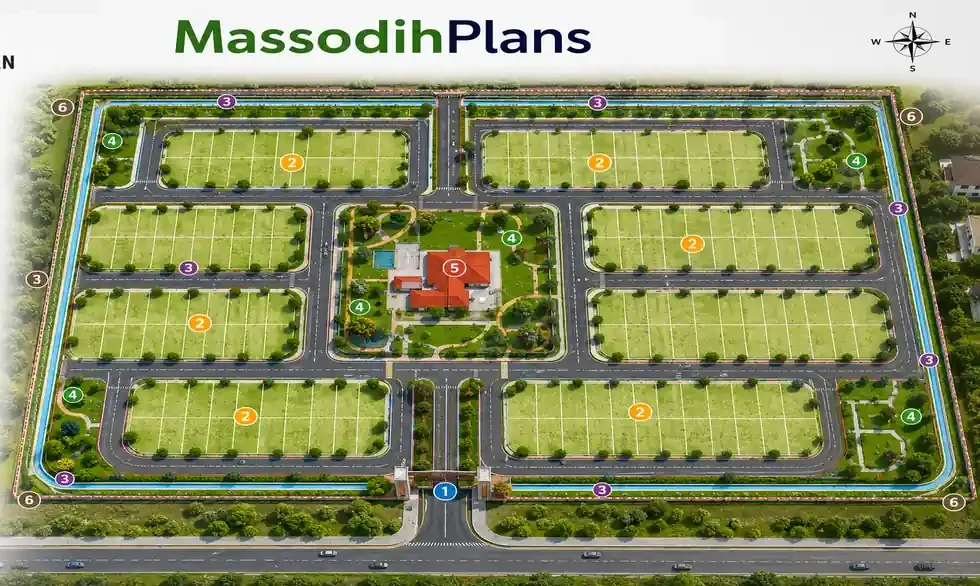
- Nigerian Estate Master Plan for Small Plots: Modern Residential Layout Strategies That Maximize Space
- Building Materials Price Guide in Nigeria (Full Cost Guide)
- Smart House Design Ideas for 50×100 Plots in Nigeria
- Affordable Bungalow Plan for 40×80 Plot in Port Harcourt
- Cost of Roofing a Bungalow and Duplex in Abuja Small Plot Now
- Best 4 Bedroom House Plan for Small Plots in Abuja
- Current Cost of Building a House in Port Harcourt (Professional Analysis)
- Smart Duplex Design for Narrow Plots in Lekki, Nigeria: Complete Practical Guide
- Small Residential Estate Layout Design in Nigeria: Smart Master Plan Ideas for Limited Land
- Industrial Estate Layout Design in Nigeria: Smart Master Plan for Small Industrial Plots
- Full Cost Breakdown for Building a Duplex on a Small Plot in Kano Nigeria
Others
- Building Approval in Nigeria: Costs, Requirements, Process and How to Get Your House Plan Approved Fast
- Modern Nigerian House Plan for a 30×60 Plot in Ibadan: The Complete Practical Guide
- Best Small Plot House Designs for Modern Urban Living
- How to Draw a 3 Bedroom Floor Plan in a Small Plot Step by Step
- How a State Master Plan Works: A Complete Guide to Modern Infrastructure Development
- Best Places to Buy Land in Uyo for Fast Development and High Property Value
- 7 Cheapest Areas to Buy Affordable Land in Uyo Before Prices Increase
- 4 Bedroom Duplex Plan for 100×150 Plot in Nigeria
- Nigerian duplex plans with modern roofing
- 25 Narrow PLot House Plans That Maximize Every Inch of Your Plot
- House Plan Design Services in Nigeria: What They Cover, Who Needs Them, and How to Choose Right
- Cost of Roofing a House in Uyo: Current Prices Explained
- Cost of Building a Modern Bungalow in Calabar (Updated Guide)
- Cost of Building a House in Uyo: Honest Budget Guide for Property Owners
- Estate Development Cost Breakdown: What Developers Should Budget For
- House and Home: Types of Houses, Homes, House Styles, Home Designs, and Modern House Designs
- Real Estate: How to Invest in Real Estate, Develop Property, and Build a Profitable Property Business
- Bungalow vs Duplex: Which is Better to build in Nigeria Today?
Author
Massodih Okon is a Nigerian built-environment professional with academic and professional experience in urban and regional planning, geography, architectural design, Landscape Design, GIS and land development.
He holds a Master’s degree in Urban and Regional Planning from the University of Uyo and a first degree in Geography and Regional Planning.
Through MassodihPlans, he publishes practical guides on Nigerian house plans, building design, physical planning, site planning, development approval and residential construction. Read the full author profile →